
中国早餐图鉴:从豆浆油条到肠粉米粉 | A Field Guide to Chinese Breakfast: From Soy Milk & Fried Dough to Rice Rolls & Noodles
中国早餐图鉴:从豆浆油条到肠粉米粉 | A Field Guide to Chinese Breakfast: From Soy Milk & Fried Dough to Rice Rolls & Noodles
清晨六点,天刚擦亮。
6 AM. The sky is barely lit.
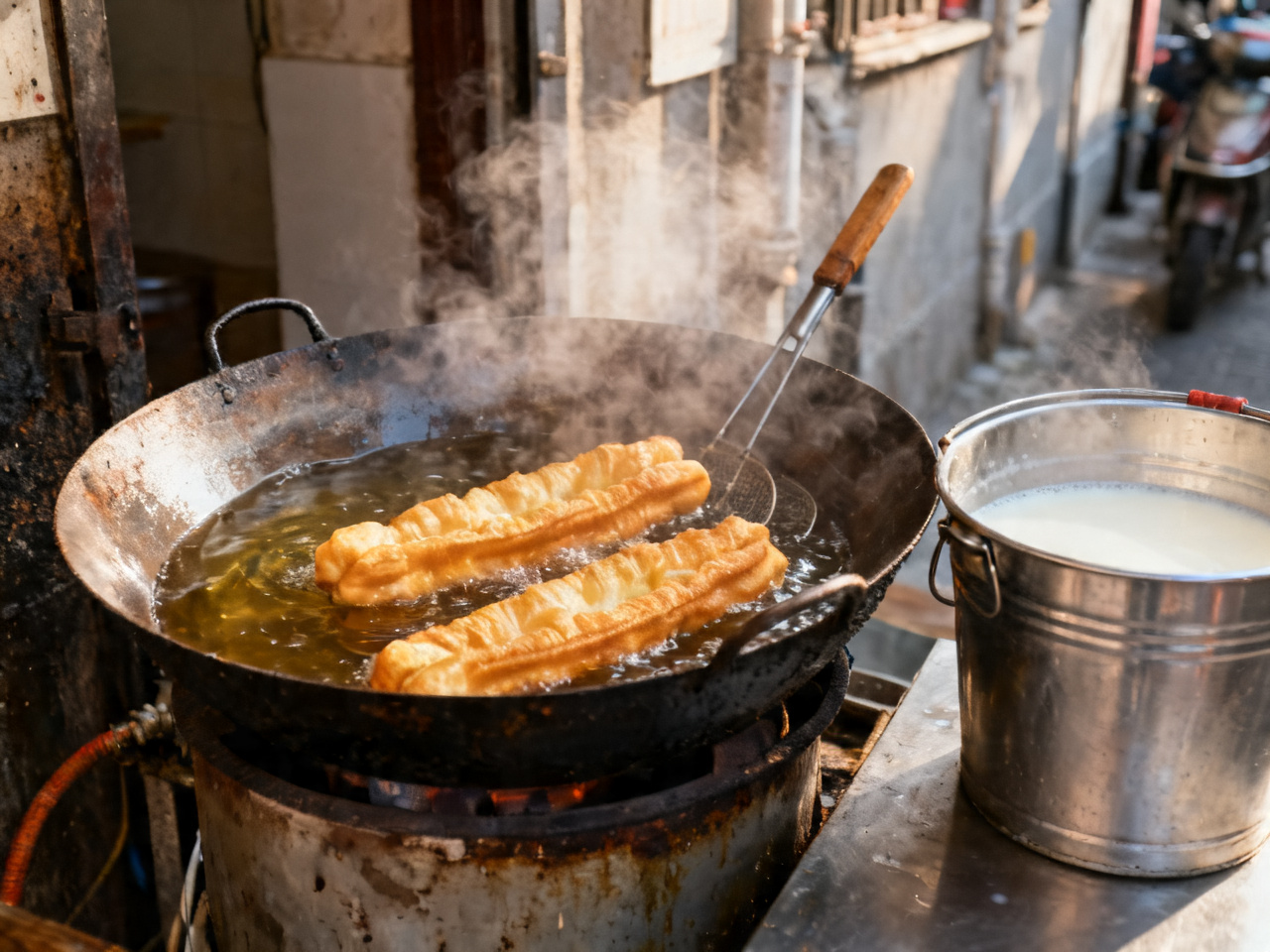
上海弄堂口,一口大铁锅里的油已经烧到起细泡,白胖的油条胚子被丢进去,滋啦一声,膨胀成金色。旁边的铝桶里,现磨的豆浆冒着热气,空气里是一种混着油香和豆腥的味道——闻到它,上海人才觉得这一天算是正式开始了。
In a Shanghai laneway, a big iron wok of oil is already bubbling. Plump strips of dough hit the surface — a violent sizzle — and puff into gold. Next to it, an aluminum barrel of freshly ground soy milk steams in the cool air. That smell, a mix of frying oil and raw bean warmth — Shanghainese don't feel the day has truly begun until they catch it.
同一时刻,两千公里外的广州。茶楼刚开门。三五个老伯已经占好了靠窗的位子,面前摆着一壶普洱,蒸笼还没上桌,但他们不急。"饮早茶"这件事,重点从来不在"早",而在"叹"——广东话里"叹"是享受的意思。虾饺、烧卖、肠粉、排骨,这些会慢慢来的。
At the same moment, 2,000 kilometers away in Guangzhou. A teahouse just opened its doors. A handful of old men have already claimed window seats, a pot of pu'er tea before them, no steamer baskets on the table yet, but they're in no rush. "Yum cha" (morning tea) was never about "morning" — it's about "taam," the Cantonese word for savoring. Shrimp dumplings, siu mai, rice rolls, spare ribs — they'll come in their own time.
中国没有一种"统一的早餐"。南方和北方的早餐可以差异到让人怀疑这是不是同一个国家。
There is no single "Chinese breakfast." The morning meals of the south and the north can differ so dramatically that a newcomer might wonder if they're in the same country.
北方 · 面食的天下 / The North: Kingdom of Wheat
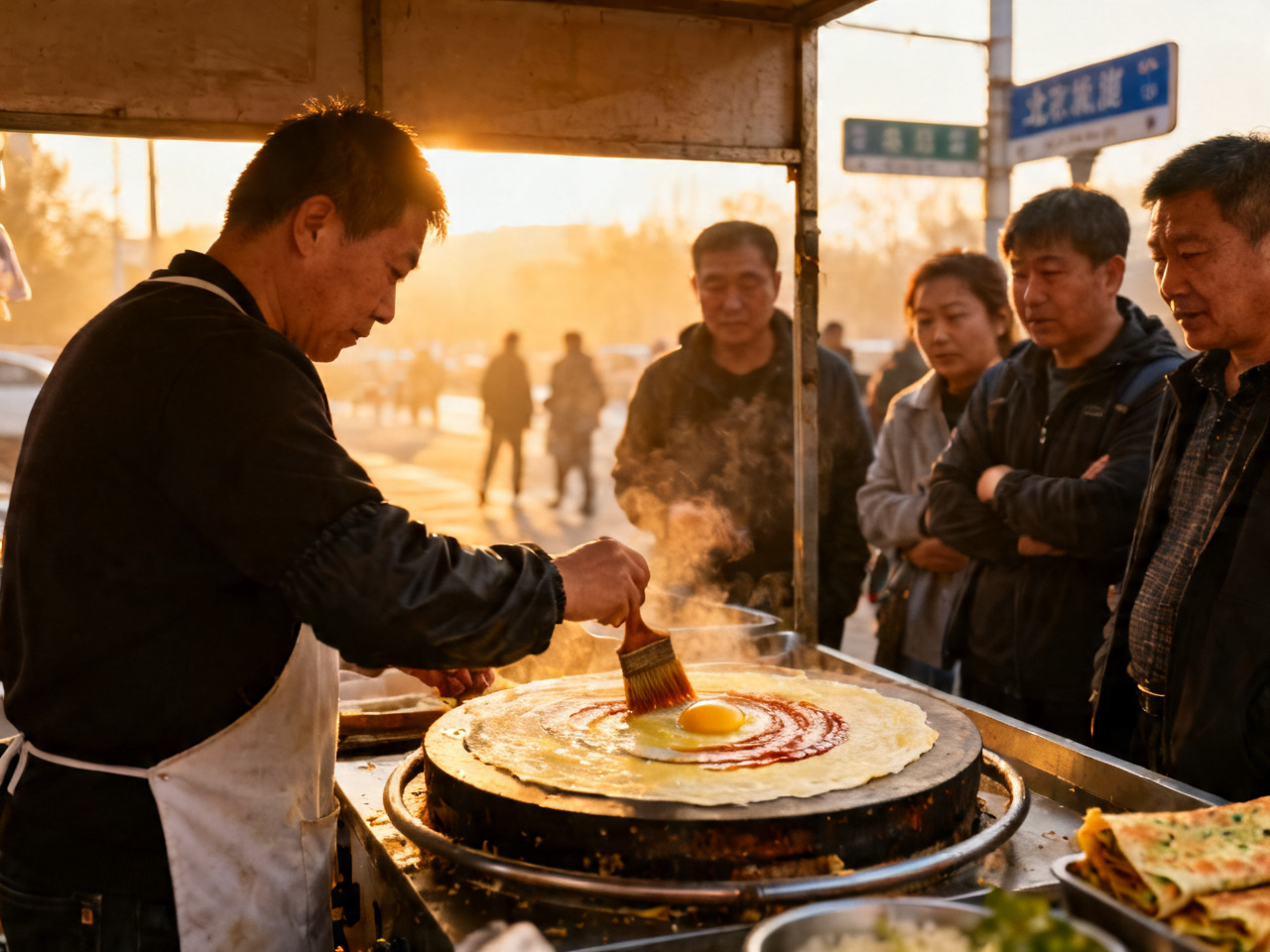
北京的早餐摊子六点半就热闹了。最典型的组合是豆浆 + 油条 + 煎饼果子。煎饼果子是一张杂粮面糊摊成的薄饼,摊主在铁板上把它转圆,打上一个鸡蛋,刷上面酱和辣酱,撒上葱花和香菜,中间夹一片薄脆——整个过程不到两分钟,递过来的时候还烫手。一套大约六到八块钱。
Beijing breakfast stalls are bustling by 6:30 AM. The quintessential combo: soy milk + fried dough sticks (you tiao) + jianbing guozi. Jianbing is a thin crepe made from multigrain batter, spread into a circle on a hot griddle. The vendor cracks an egg on top, brushes on fermented bean paste and chili sauce, scatters chopped scallions and cilantro, folds in a crispy cracker sheet — the whole operation takes under two minutes, and it's still burning hot when handed over. A set costs about six to eight yuan.
天津人会告诉你,煎饼果子是天津的——这场归属权争论已经持续了几十年,而且永远不会有结论。但有一点天津人绝对不让步:正宗的煎饼果子不加生菜不加火腿肠。加了?那叫"杂粮煎饼",不叫煎饼果子。
Tianjin locals will tell you jianbing guozi belongs to Tianjin — this ownership debate has raged for decades and will never be resolved. But there's one point Tianjin people absolutely refuse to budge on: a proper jianbing guozi does not include lettuce or ham sausage. If it does? That's a "multigrain crepe," not a real jianbing guozi.
再往西走。西安的早晨属于糊辣汤——一大碗浓稠的牛骨汤底,里面是切丁的土豆、胡萝卜、豆角、木耳、牛肉丁、豆腐皮,表面浇上一勺油泼辣子,红亮亮的。用勺子搅一搅,每一口都是不同的食材组合。西安人吃糊辣汤要配馍,自己掰成小块泡进汤里。第一次见到这个场景的外国游客通常会犹豫:这……真的是早餐?
Further west. Xi'an mornings belong to hu la tang (spicy pepper soup) — a big bowl of thick beef-bone broth loaded with diced potatoes, carrots, green beans, wood ear mushrooms, beef cubes, and tofu skin, topped with a ladle of bright red chili oil. Stir it with a spoon and every mouthful is a different combination of textures. Xi'an locals eat hu la tang with mo (flatbread), torn into small pieces and soaked in the soup. Foreign visitors witnessing this for the first time usually hesitate — this... is really breakfast?
是的。在北方,早餐可以很"重",因为接下来可能要干一上午的体力活。
Yes. In the north, breakfast can be heavy, because what follows might be a morning of physical labor.
南方 · 米的一千种变形 / The South: A Thousand Transformations of Rice
南方人的早餐基因里写着"米"字。
The southern Chinese morning is encoded with the character for "rice."
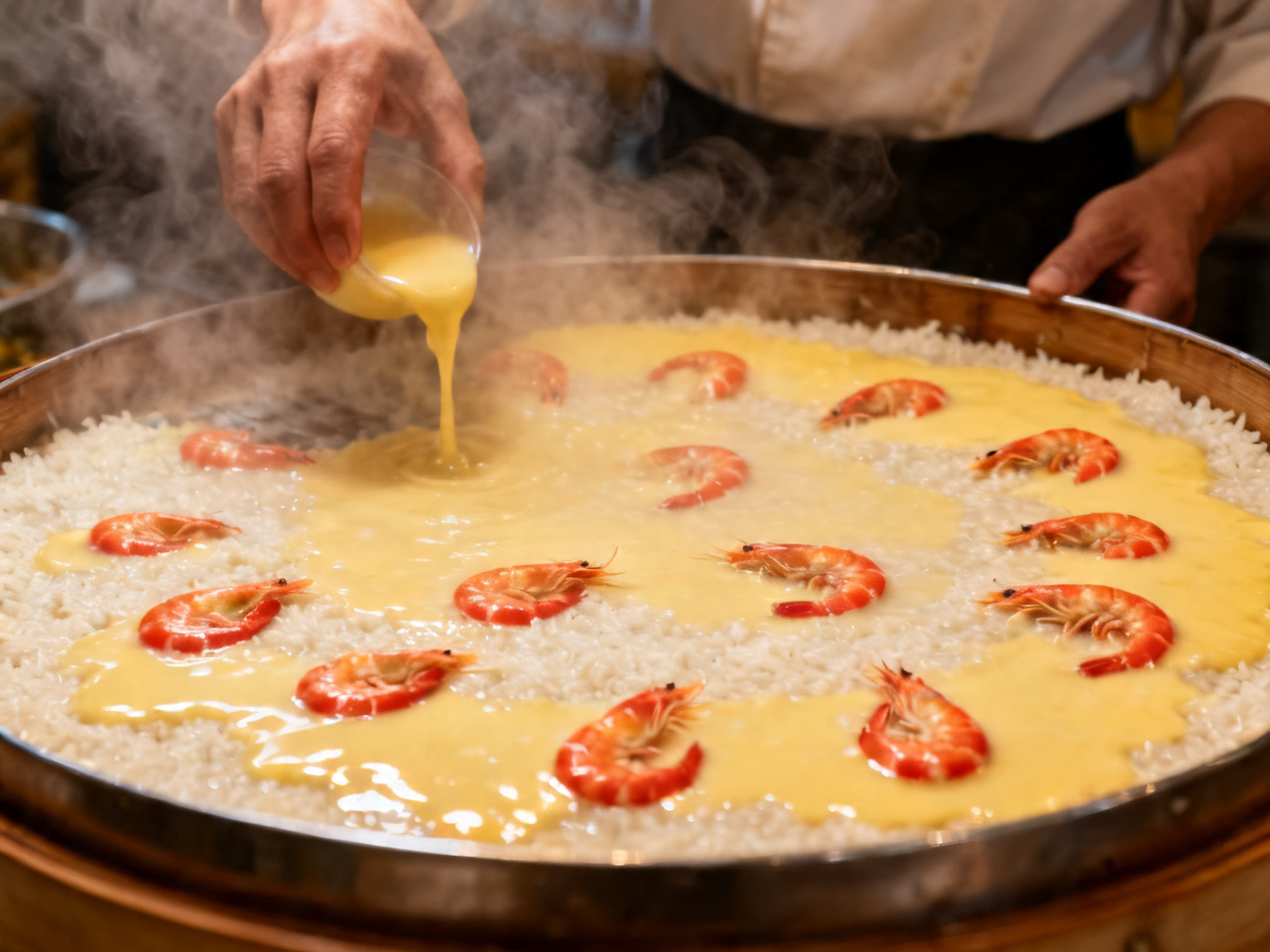
广州的肠粉是米浆蒸出来的。摊主把米浆倒在白布上,铺进蒸屉,几十秒后揭开,半透明的粉皮裹上鸡蛋或虾仁或叉烧,卷成一条,浇上酱油。吃的时候用筷子从中间一挑,能看到粉皮薄到透光。一碟肠粉,五到十二块钱。
Guangzhou's cheung fun (rice noodle rolls) are steamed from rice slurry. The vendor pours the slurry onto a cloth in a steamer, waits a few dozen seconds, lifts the lid, and the translucent sheet is wrapped around egg, shrimp, or char siu pork, rolled into a tube, and drizzled with soy sauce. When you eat, lift from the middle with chopsticks and you can see the skin is thin enough to let light through. A plate costs five to twelve yuan.
长沙人的早餐则是一碗米粉。不是桂林那种圆粉,是扁的,像宽面条但更滑。长沙人对浇头(配菜)极其认真——码子,他们叫码子——肉丝码、酸辣码、酱骨码、杂酱码,选择多到让人站在窗口前纠结五分钟。一碗粉下肚,再喝一口粉汤,早上的精神就有了。
Changsha's breakfast is a bowl of rice noodles. Not the round Guilin style — flat, like wide pasta but silkier. Changsha people are dead serious about their toppings — mazi, they call them: shredded pork mazi, sour-and-spicy mazi, braised bone mazi, minced meat sauce mazi. So many choices that you'll stand at the window agonizing for five minutes. One bowl down, a sip of the noodle broth, and the morning energy kicks in.
云南的过桥米线严格来说不算"早餐"——但在昆明,很多人就是早上吃。一大碗滚烫的鸡汤端上来,表面一层鸡油封住热气,旁边十几个小碟子装着生肉片、鹌鹑蛋、豆芽、韭菜、米线。自己按顺序涮进去。这个仪式感,让吃早餐变成了一件有乐趣的事情。
Yunnan's "crossing-the-bridge" rice noodles technically aren't "breakfast" — but in Kunming, many people eat them in the morning. A huge bowl of piping hot chicken broth arrives with a layer of chicken oil sealing in the heat, flanked by a dozen tiny plates of raw sliced meat, quail eggs, bean sprouts, chives, and rice noodles. You add them in sequence, dipping each ingredient in yourself. That ritual turns breakfast into something genuinely fun.
不南不北 · 有自己一套的城市 / Neither South nor North: Cities That Play by Their Own Rules
有些城市不按南北分类出牌。
Some cities refuse to be categorized as northern or southern.
武汉的热干面——碱水面条煮熟过凉水,拌上芝麻酱、酸豆角、萝卜丁、辣油。没有汤。干拌。第一口可能觉得"有点粘",第二口就上瘾了。武汉人吃热干面讲究"过早",意思是趁早去吃,来不及坐下就端着纸碗站在路边吃,甚至走着吃,边走边用竹筷挑面。
Wuhan's hot dry noodles (re gan mian) — alkaline noodles boiled and rinsed in cold water, then tossed with sesame paste, pickled beans, diced radish, and chili oil. No soup. Dry tossed. The first bite might feel "a little sticky," but by the second you're hooked. Wuhan people call breakfast "guo zao" — get it while it's early. No time to sit? Stand by the road with a paper bowl, or walk and eat, lifting noodles with bamboo chopsticks while navigating the sidewalk.
重庆的小面也是早餐选项——辣得够劲的碱水面,一早上把汗逼出来,人反而清醒了。重庆人对面馆的评价标准极其朴素:油辣子香不香。就这一条。
Chongqing's xiao mian (small noodles) is also a breakfast option — fiery alkaline noodles that make you sweat first thing in the morning, which paradoxically wakes you right up. Chongqing locals have a brutally simple standard for rating noodle shops: is the chili oil fragrant or not? That's it. One criterion.
福建和台湾地区的早餐里能见到面线糊——细如发丝的面线煮到几乎化掉,加卤大肠、醋肉、炸蛋。外表不好看,灰扑扑的一碗糊,但鲜味层次极其丰富。
In Fujian and Taiwan, you'll find mian xian hu (thin noodle paste) — thread-like noodles cooked until they nearly dissolve, topped with braised intestines, vinegar-marinated pork, and fried egg. It doesn't look pretty — just a gray, murky bowl of paste — but the umami layers are extraordinarily deep.
给第一次来中国的人:怎么找到好早餐 / For First-Time Visitors: How to Find Good Breakfast
看排队长度。早上七点到八点之间,如果一个早餐摊前面排了超过十个人,那基本不会踩雷。中国人对早餐的嘴很刁——难吃的摊子一周就倒闭了。
Follow the queue. Between 7 and 8 AM, if more than ten people are lined up at a breakfast stall, it's almost certainly good. Chinese people are ruthlessly picky about breakfast — a bad stall goes out of business within a week.
别怕路边摊的卫生。城市管理已经很严了,绝大多数有营业执照和健康证。你在北京、上海、广州这些大城市吃路边早餐不太会出问题。当然,如果你肠胃特别敏感,先从连锁品牌开始适应——比如"永和大王"(豆浆油条)或"嗦粉"类连锁米粉店。
Don't fear street stall hygiene. Urban management has gotten strict; the vast majority have business licenses and health certificates. You're unlikely to have stomach issues from street breakfast in Beijing, Shanghai, or Guangzhou. But if your stomach is sensitive, start with chain brands to acclimate — like "Yonghe King" (soy milk and fried dough) or chain rice noodle shops.
指着别人碗里的东西说"一样的"(yí yàng de),是完全可以接受的点餐方式。
Pointing at someone else's bowl and saying "yí yàng de" (same as that one) is a perfectly acceptable way to order.
价格方面:除了上海和北京市中心稍贵,中国大多数城市的早餐在 5-15 元之间(不到 2 美元)。这可能是你在中国吃到的性价比最高的一餐。
Price-wise: apart from slightly higher costs in downtown Shanghai and Beijing, breakfast in most Chinese cities runs 5–15 yuan (under $2 USD). It's probably the best value meal you'll have in China.
七点半,阳光完全亮了。早餐摊前的队伍开始变短——赶着上班的人已经端着豆浆走了。如果你是游客,不赶时间,现在去正好。排队的人少了,摊主有空跟你多说两句,说不定还会教你怎么把油条撕开泡到豆浆里——那是很多中国人从小吃到大的味觉记忆。
7:30 AM. Full daylight now. The breakfast queues are starting to thin — the office-bound crowd has already grabbed their soy milk and left. If you're a tourist with no schedule, this is your moment. Fewer people in line, the vendor has time for a chat, and might even show you how to tear the fried dough stick and dip it into the soy milk — a taste memory many Chinese people have carried since childhood.
延伸阅读 / Related Reads
- 中国八大菜系全览 | The 8 Great Cuisines of China
- 第一口就着了魔:一个外乡人在成都的麻辣沉沦 | Spellbound at First Bite: A Stranger's Descent into Chengdu's Heat
- 街头那碗热气,才是中国城市的真实体温 | Street Steam: The Real Pulse of Chinese Cities
- 花椒档案:一个植物学者眼中的四川味觉地图 | The Peppercorn Dossier: Sichuan's Flavor Map Through a Botanist's Eyes
- 华东五城10日经典环线 | 10-Day East China Five-City Loop
- 一锅潮汕牛肉的时间表:从早市吃到深夜粿条 | The Timetable of Chaoshan Beef: From Morning Market to Late-Night Noodles
- 昆明下雨的晚上,我在菌子火锅店学会了什么叫“鲜到发亮” | On a Rainy Night in Kunming, Mushroom Hot Pot Taught Me What Bright Freshness Means
- 脸谱绘制体验:我第一次明白一张脸为什么可以先于台词说话 | Opera Face-Painting Workshop: My First Time Understanding How a Face Can Speak Before the Lines
- 我在成都宽窄巷子喝盖碗茶:坐下来才看见成都节奏 | Sitting Down for Gaiwan Tea in Kuanzhai Alley, Chengdu
- 海口出门前那几分钟,天气、潮气和路线都先挤进了手机里 | In the Minutes Before Going Out in Haikou, Weather, Humidity, and Route All Crowd into the Phone
- 苗绣与蜡染:我在贵州看见布上的山河 | Miao Embroidery and Batik: In Guizhou, I Saw Mountains and Rivers Written on Cloth
- 七月在杭州安安静静避雨,我终于不再把下雨当行程损失 | My First Rainy July Plan in Hangzhou Taught Me to Stop Treating Rain as Lost Travel Time
- 手机支付失败后,我给自己准备了三套备用方案 | After Mobile Payment Failed, I Prepared Three Backup Plans
- 凌晨一点我还敢一个人走回酒店:在中国把安全感走成了日常经验 | At 1 a.m. I Still Walked Back to My Hotel Alone: How Safety in China Became Ordinary to Me
- 西北大环线自驾攻略:青海甘肃10日 | 10-Day Northwest Loop: Qinghai & Gansu Road Trip
Comments (0)