
烤鸭不只是一道菜,它是北京给世界的一封信 | More Than a Dish: Peking Duck as Beijing's Letter to the World
烤鸭不只是一道菜,它是北京给世界的一封信 | More Than a Dish: Peking Duck as Beijing's Letter to the World
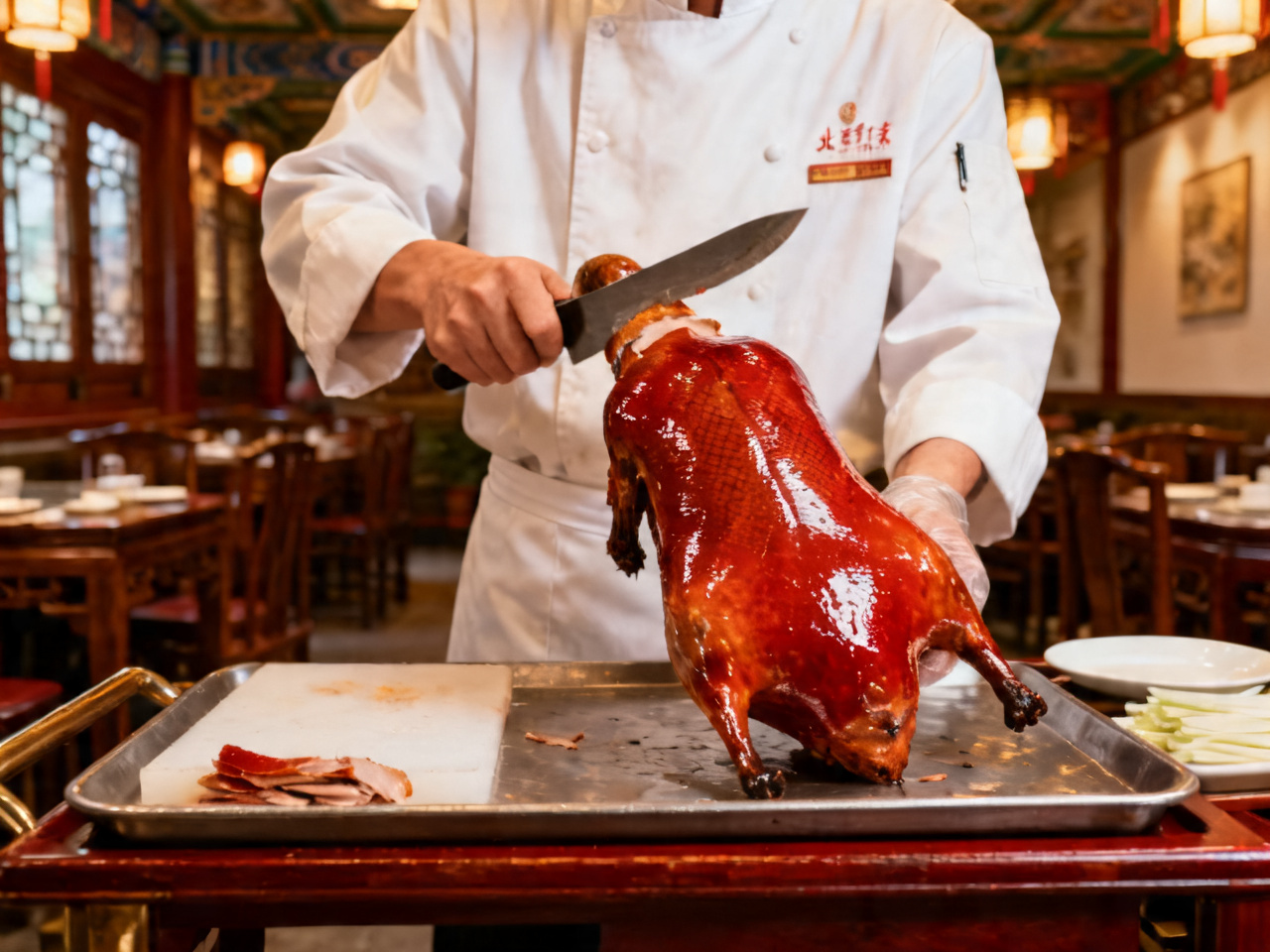
各位朋友,欢迎来到全聚德。在我带大家参观烤鸭的制作过程之前,我想先问一个问题:你们知道,一只北京烤鸭,从鸭子出生到端上餐桌,需要多少天吗?
Welcome, everyone, to Quanjude. Before I take you through the process of making Peking duck, I'd like to ask a question: do you know how many days it takes from the time a Peking duck is born to the moment it arrives at your table?
答案是六十五天。这六十五天里,鸭子要经过严格的饲养程序:前四十五天自由活动,后二十天进入"填鸭"阶段,每天定时定量喂食,让鸭子在短时间内积累足够的皮下脂肪。这层脂肪,正是烤鸭皮脆的关键。没有这层脂肪,再好的烤炉也烤不出那种琥珀色的、一咬就碎的脆皮。
Sixty-five days. During those sixty-five days, the duck undergoes a strict rearing program: forty-five days of free movement, then twenty days of force-feeding on a precise schedule, allowing the duck to accumulate sufficient subcutaneous fat in a short time. That fat is the key to the crispy skin. Without it, no oven — however fine — can produce that amber-colored skin that shatters at the bite.
我在全聚德做了十八年导游,每天带着来自世界各地的客人参观烤鸭的制作。我见过第一次看到片鸭师傅操刀时目瞪口呆的法国厨师,见过坚持要把鸭架带回去熬汤的日本老太太,也见过吃完一整只烤鸭之后还要打包鸭油的美国食客。烤鸭对不同的人,意味着完全不同的东西。
I've been a guide at Quanjude for eighteen years, taking visitors from around the world through the making of Peking duck every day. I've seen French chefs go slack-jawed watching the carving master work. I've seen a Japanese grandmother insist on taking the duck carcass home for soup stock. I've seen an American diner eat an entire duck and then ask to pack up the rendered fat. Peking duck means something completely different to each person.
但有一件事是相同的:当片鸭师傅把那把薄刀贴着鸭皮片下第一片的时候,所有人都会安静下来。那个动作,有一种仪式感,让人不由自主地屏住呼吸。
But one thing is always the same: when the carving master presses that thin blade against the skin and lifts the first slice, everyone goes quiet. There's a ritual quality to that motion that makes you hold your breath without thinking.
北京烤鸭的历史,可以追溯到明代。最初的烤法叫"焖炉烤鸭",鸭子放入密封的炉膛,靠炉壁余热焖烤,不见明火。后来出现了"挂炉烤鸭",鸭子挂在敞口炉中,用果木明火直接烘烤。两种烤法各有拥趸,争论延续至今。
The history of Peking duck traces back to the Ming Dynasty. The original method was "closed-oven roasting" — the duck placed in a sealed chamber, cooked by the residual heat of the oven walls, never exposed to open flame. Later came "hanging-oven roasting," with the duck suspended in an open-fronted oven and roasted directly over fruitwood fire. Both methods have devoted partisans, and the debate continues to this day.
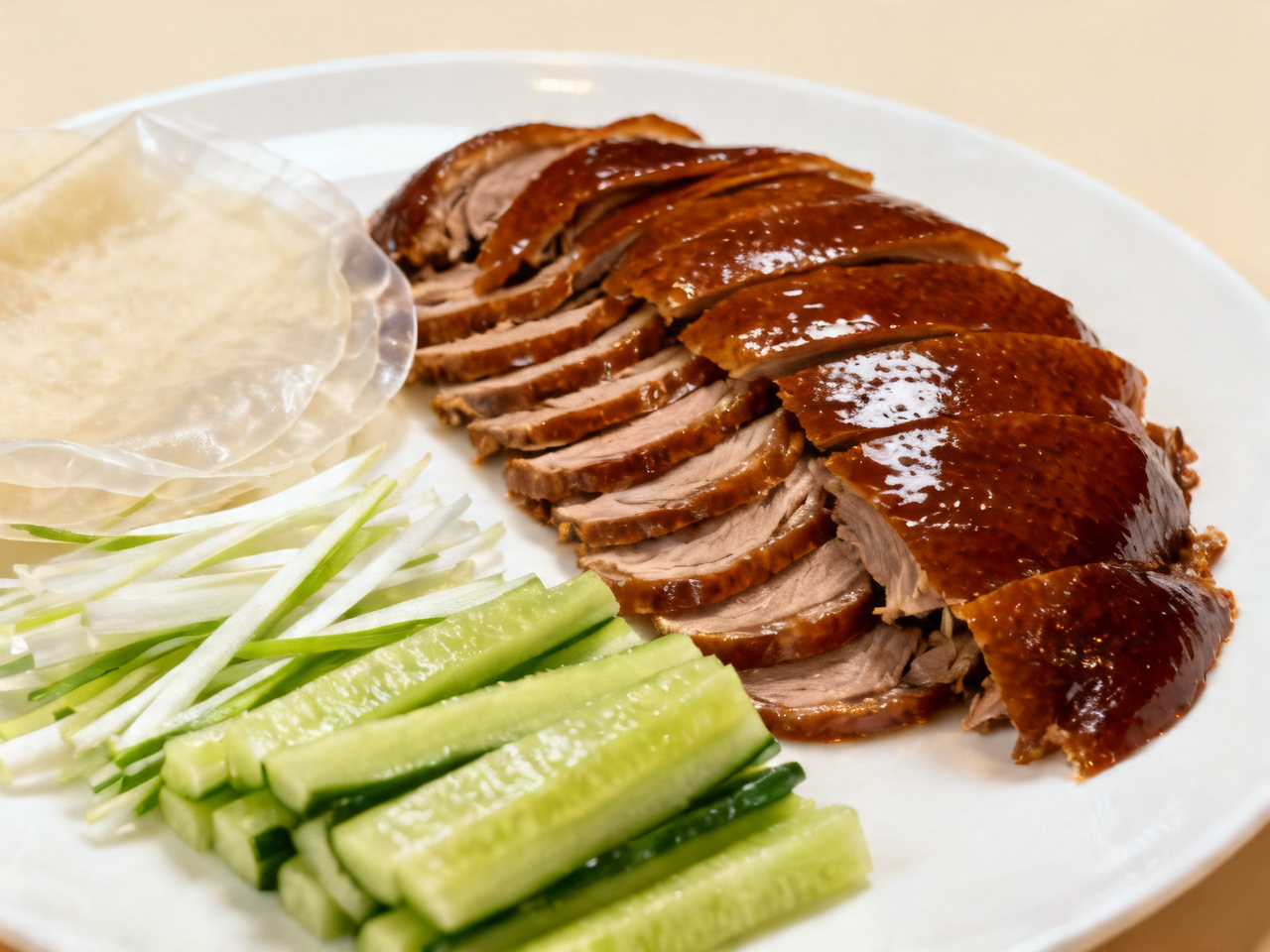
全聚德用的是挂炉,枣木和梨木是主要燃料。枣木火力稳定,梨木带有淡淡的果香,两者混合,赋予鸭皮一种微妙的烟熏甜香。炉温通常维持在270摄氏度左右,烤制时间约四十分钟。师傅每隔几分钟就要转动鸭子,确保受热均匀。这个转动的时机和角度,是需要多年练习才能掌握的技艺。
Quanjude uses the hanging oven, with jujube wood and pear wood as the primary fuel. Jujube wood burns steadily; pear wood carries a faint fruity fragrance. Together they give the skin a subtle smoky sweetness. The oven temperature is maintained around 270 degrees Celsius, roasting time approximately forty minutes. The master rotates the duck every few minutes to ensure even heat. The timing and angle of those rotations is a skill that takes years to master.
片鸭是整个仪式的高潮。一只标准的北京烤鸭,应该被片成108片,每片都要带皮带肉,厚薄均匀。这个数字不是随意的——108在中国文化中有特殊含义,但更重要的是,108片意味着每一口都能同时吃到脆皮、嫩肉和皮下那层薄薄的脂肪。
The carving is the climax of the whole ritual. A standard Peking duck should be sliced into 108 pieces, each carrying both skin and meat, uniform in thickness. This number isn't arbitrary — 108 carries special significance in Chinese culture — but more practically, 108 pieces means every bite contains crispy skin, tender meat, and that thin layer of fat beneath the skin simultaneously.
吃法也有讲究。正统的吃法是:取一张荷叶饼,铺开,放上两三片鸭肉,夹几根葱丝,抹一点甜面酱,卷起来,一口咬下去。甜面酱的咸甜、葱丝的辛辣、鸭皮的脆香、鸭肉的嫩滑,在嘴里同时展开,层次分明。有些客人喜欢加黄瓜丝,有些喜欢多抹酱,这些都可以,但有一点不能变:必须一口吃完,不能咬一半放下。
The eating method matters too. The orthodox approach: take a lotus-leaf pancake, lay it flat, place two or three slices of duck on it, add a few strips of scallion, spread a little sweet bean sauce, roll it up, and bite through in one go. The savory sweetness of the sauce, the sharpness of the scallion, the fragrant crunch of the skin, the silky tenderness of the meat — all unfold in the mouth simultaneously, in distinct layers. Some guests like to add cucumber strips, some prefer more sauce. All fine. But one thing cannot change: it must be eaten in a single bite. You cannot bite halfway and put it down.
每年来全聚德的客人里,有相当一部分是专程来"打卡"的——拍照、发朋友圈、证明自己来过北京。我理解这种心情,但我总是会多说一句:烤鸭最好吃的那一刻,是刚片完、还冒着热气的时候。如果你在拍照上花了太多时间,那层脆皮就会因为水汽而变软,那个最好的瞬间就错过了。
A significant portion of the visitors who come to Quanjude each year are here to "check in" — photograph, post to WeChat Moments, prove they've been to Beijing. I understand the impulse, but I always add one thing: the best moment to eat Peking duck is the instant after carving, while it's still steaming. If you spend too long on photos, the steam softens that crispy skin, and the best moment is gone.
有一次,一位来自意大利的厨师听了我这句话,立刻放下手机,拿起筷子。他吃了第一口,停顿了一下,然后用意大利语说了一句话。我不懂意大利语,但旁边的翻译告诉我,他说的是:"这是我吃过的最诚实的食物。"
Once, an Italian chef heard me say this, immediately put down his phone, and picked up his chopsticks. He took the first bite, paused, then said something in Italian. I don't speak Italian, but the interpreter beside me said he'd said: "This is the most honest food I have ever eaten."
我想,这大概是对北京烤鸭最好的评价了。不是最复杂的,不是最精致的,而是最诚实的。六百年的技艺,一只鸭子,一把刀,一炉果木火。没有什么需要隐藏的。
I think that might be the finest thing anyone has ever said about Peking duck. Not the most complex. Not the most refined. The most honest. Six hundred years of craft, one duck, one knife, one fire of fruitwood. Nothing to hide.
- 中国城市地铁出行技巧 | Tips for Using Metro in Chinese Cities
- 围炉而坐,这顿饭没有终点 | The Meal That Never Ends: China's Hot Pot Ritual
- 广州宵夜:凌晨两点,我在惠福东路吃炒螺 | Guangzhou After Midnight: Stir-Fried Snails at 2am on Huifu East Road
- 一笼一世界:在茶楼里读懂广东人 | One Basket, One World: Reading Cantonese Culture Through Dim Sum
- 云贵川大环线15日自驾 | 15-Day Yunnan-Guizhou-Sichuan Road Trip
- 中国四季节庆日历:每月最佳活动 | China Festival Calendar: Best Events by Month
- 二月冬末旅游:南方暖意正浓 | Late Winter Travel: Warmth in Southern China
- 中国旅游行李打包清单 | China Travel Packing Checklist
- 云南15天深度路线:大理丽江香格里拉 | 15-Day Yunnan Route: Dali, Lijiang & Shangri-La
- 中国旅游礼仪与文化禁忌 | Travel Etiquette & Cultural Taboos in China
Comments (0)