
Good Good Study, Day Day Up:那些让老外笑出腹肌的中式英语 | Chinglish That Makes Foreigners Laugh Till They Cry
Good Good Study, Day Day Up:那些让老外笑出腹肌的中式英语 | Chinglish That Makes Foreigners Laugh Till They Cry
在北京某个公园的长椅旁边,一块告示牌写着"Please don't disturb the tiny grass is dreaming"。一个英国游客站在那里拍了张照,发到 Instagram 上,三天收获两万个赞。评论区有人说:"This is the most poetic thing I've ever read on a sign."
Near a bench in a Beijing park, a sign reads "Please don't disturb the tiny grass is dreaming." A British tourist snapped a photo and posted it on Instagram — twenty thousand likes in three days. One comment said: "This is the most poetic thing I've ever read on a sign."
这就是中式英语的魔力。它不按语法出牌,但有时候比正经英语更有味道。
That's the magic of Chinglish. It doesn't play by grammar rules, but sometimes it hits harder than proper English.
"好好学习,天天向上" / The One That Started It All
"Good good study, day day up." 如果你在中国待过哪怕一个星期,你一定听过这句话。它来自毛泽东对学生的题词"好好学习,天天向上",被一代又一代中国学生逐字翻译成了英语。
"Good good study, day day up." If you've spent even a week in China, you've heard this one. It comes from Mao Zedong's inscription for students — "好好学习,天天向上" — and has been word-for-word translated by generation after generation of Chinese students.
正确的翻译应该是"Study hard and make progress every day",但说实话,谁记得住这个?"Good good study, day day up"朗朗上口,节奏感强,甚至有一种莫名的洗脑效果。一个在上海教了八年英语的美国老师跟我说:"我现在回美国,脑子里冒出来的第一句激励自己的话居然是 day day up。"
The proper translation would be "Study hard and make progress every day," but honestly, who remembers that? "Good good study, day day up" rolls off the tongue, has rhythm, and is oddly catchy. An American teacher who spent eight years in Shanghai told me: "When I went back to the States, the first motivational phrase that popped into my head was 'day day up.'"
路标上的诗意 / Poetry on Street Signs
中式英语最集中的展览馆不在任何博物馆里——在马路上。
The greatest Chinglish exhibition isn't in any museum — it's on the streets.
"小心滑倒"被翻译成"Slip and Fall Down Carefully"。仔细滑倒?谢谢提醒,我会优雅地摔的。"禁止践踏草坪"变成了"The Grass Is Smiling at You, Please Detour"——草在对你微笑,请绕道。这哪是警告,这是一首俳句。
"小心滑倒" (Be careful of slipping) gets translated as "Slip and Fall Down Carefully." Fall down carefully? Thanks for the tip — I'll make sure to tumble gracefully. "禁止践踏草坪" (Keep off the grass) becomes "The Grass Is Smiling at You, Please Detour" — the grass is smiling at you, please take another way. That's not a warning, that's a haiku.
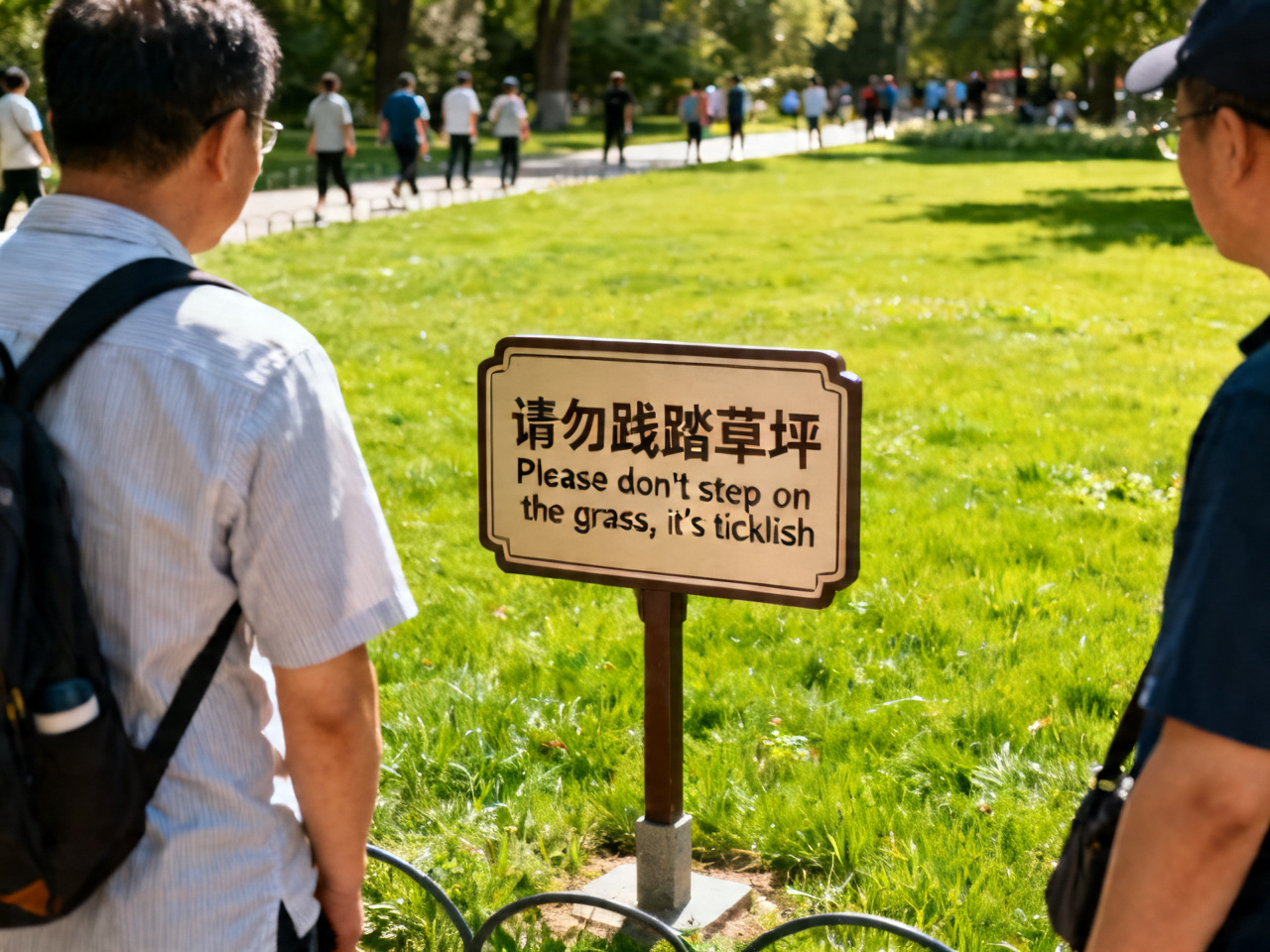
还有我个人最喜欢的一个:某景区的"此路不通"被翻译成"This Road Is Not Logical"。从哲学角度来说,它确实不合逻辑——一条路修到一半就断了,这合理吗?还有"禁止吸烟"被翻译成"No Smoking, No Dying"——不抽烟就不会死,逻辑上也没毛病。
And my personal favorite: "此路不通" (Dead end) at a scenic spot was translated as "This Road Is Not Logical." Philosophically speaking, it does lack logic — a road that just stops halfway? How is that reasonable? Then there's "禁止吸烟" (No smoking) rendered as "No Smoking, No Dying" — can't argue with that logic.
餐厅菜单:翻译的重灾区 / Restaurant Menus: Ground Zero
如果路标是中式英语的露天画廊,那餐厅菜单就是它的地下实验室。每一本中国餐厅的英文菜单,都是一场跨文化的冒险。
If street signs are the open-air gallery of Chinglish, restaurant menus are its underground laboratory. Every English menu in a Chinese restaurant is a cross-cultural adventure.
"干煸四季豆"翻译成"Dry Explosion Four Season Beans"——干燥的爆炸四季豆,听起来像一种生化武器。"红烧狮子头"变成了"Red Burned Lion Head"——红色燃烧的狮子头,这是在召唤什么上古神兽吗?"口水鸡"被翻译成"Saliva Chicken"——口水鸡,字面意思完全正确,但画面感太强了。"童子鸡"变成了"Chicken Without Sexual Life"——没有性生活的鸡,这大概是全世界最尴尬的菜名了。"夫妻肺片"最惨,直译成"Husband and Wife Lung Slice"——夫妻的肺切片。一个德国游客看到这道菜名,默默放下了菜单。
"干煸四季豆" (Dry-fried green beans) becomes "Dry Explosion Four Season Beans" — sounds like a biochemical weapon. "红烧狮子头" (Braised pork meatballs) turns into "Red Burned Lion Head" — are we summoning some ancient mythical beast? "口水鸡" (Mouth-watering chicken) becomes "Saliva Chicken" — technically correct, but the mental image is too vivid. "童子鸡" (Spring chicken) turns into "Chicken Without Sexual Life" — probably the most awkward dish name in the world. And "夫妻肺片" (Sliced beef and ox tongue in chili sauce) gets the worst treatment: "Husband and Wife Lung Slice." A German tourist saw this on a menu and quietly put it down.
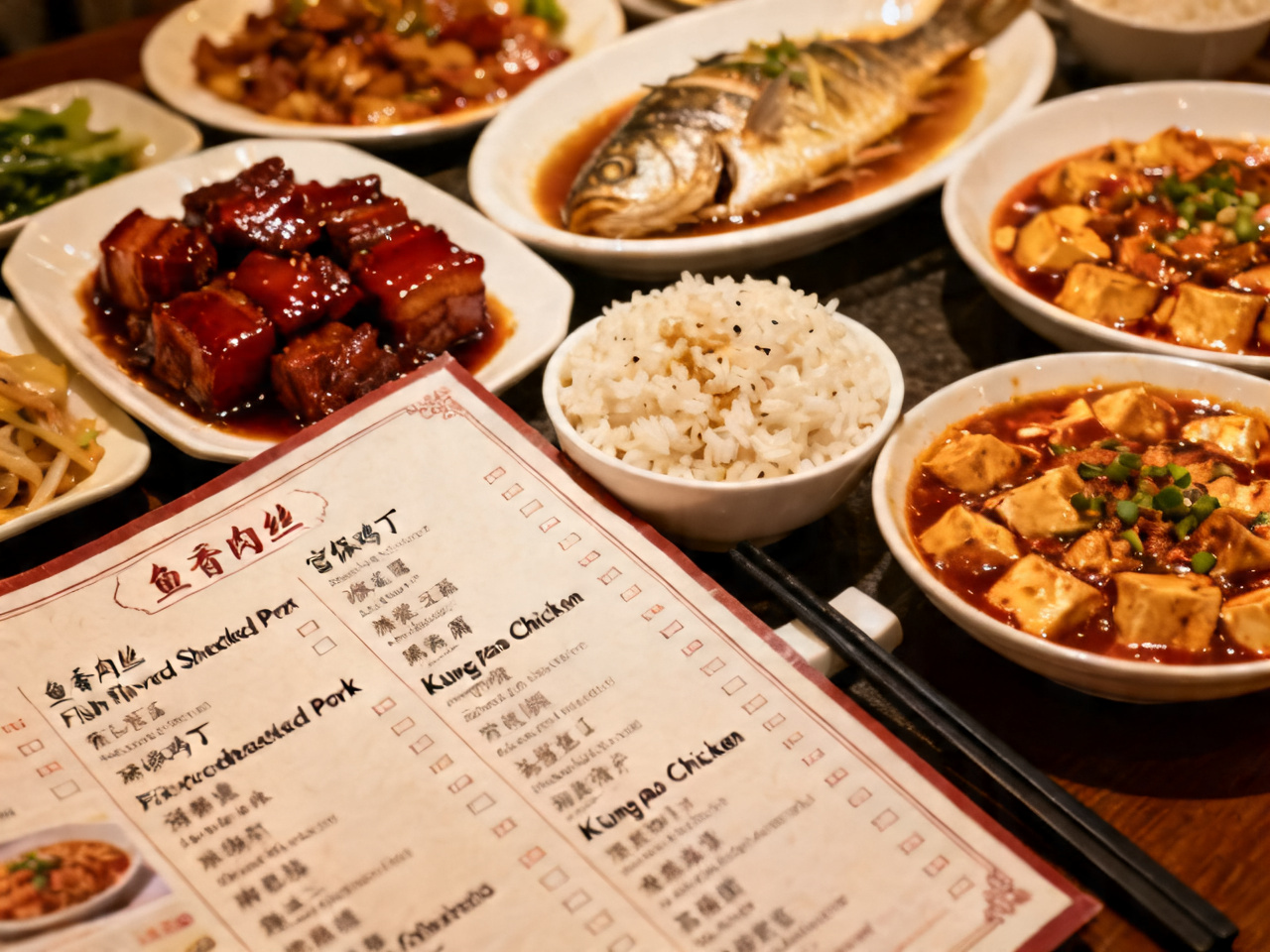
2017年,中国官方终于出手了。国家标准《公共服务领域英文译写规范》把"夫妻肺片"的官方翻译定为"Sliced Beef and Ox Tongue in Chili Sauce"。"红烧狮子头"变成了"Braised Pork Ball in Brown Sauce"。准确是准确了,但少了那种让人会心一笑的荒诞感。
In 2017, the Chinese government finally stepped in. The national standard "Guidelines for the Use of English in Public Services" officially translated "夫妻肺片" as "Sliced Beef and Ox Tongue in Chili Sauce" and "红烧狮子头" as "Braised Pork Ball in Brown Sauce." Accurate, sure — but missing that absurd charm that made you smile.
为什么中式英语长这样?/ Why Does Chinglish Look Like This?
中式英语不是因为中国人英语差——它是两种完全不同的语言逻辑碰撞的产物。
Chinglish isn't about Chinese people being bad at English — it's the product of two completely different linguistic systems colliding.
中文是"意合"语言,靠语境和语序传递意思,不太依赖语法标记。英语是"形合"语言,靠介词、连词、时态变化来组织句子。当你用中文的思维框架去装英文的词汇,就会出现"People Mountain People Sea"(人山人海)这样的神翻译。
Chinese is a "paratactic" language — it relies on context and word order to convey meaning, with minimal grammatical markers. English is "hypotactic" — it uses prepositions, conjunctions, and tense changes to structure sentences. When you pour English vocabulary into a Chinese thinking framework, you get masterpieces like "People Mountain People Sea" (人山人海, meaning a huge crowd).
一个语言学教授跟我聊过一个有趣的观点:中式英语其实暴露了中文思维中一些很美的东西。比如"小草在做梦"这个翻译,在中文里把草拟人化是很自然的修辞手法。翻译的人不是不会英语,而是他觉得草确实在做梦,为什么不能这么说呢?
A linguistics professor shared an interesting perspective with me: Chinglish actually reveals some beautiful aspects of Chinese thinking. Take "the tiny grass is dreaming" — personifying grass is a perfectly natural rhetorical device in Chinese. The translator wasn't bad at English; they genuinely felt the grass was dreaming, so why not say so?
中式英语正在消失 / Chinglish Is Disappearing
坏消息(或者好消息,取决于你怎么看):中式英语正在快速消失。
Bad news (or good news, depending on your perspective): Chinglish is disappearing fast.
北京在2008年奥运会前发起了大规模的英语标识纠错运动,动员了数千名志愿者走上街头逐块检查标牌。上海在世博会前做了同样的事。深圳、广州、成都也陆续跟进。到了2022年冬奥会,北京的公共标识英语已经相当规范了。全国各大城市都在推行标准化翻译,那些让人捧腹的路标正在被一块块替换掉。地铁里的"Way Out"取代了"Export","Emergency Exit"取代了"Peaceful Escape"。
Beijing launched a massive campaign to correct English signage before the 2008 Olympics, mobilizing thousands of volunteers to check signs street by street. Shanghai did the same before the World Expo. Shenzhen, Guangzhou, and Chengdu followed suit. By the 2022 Winter Olympics, Beijing's public English signage was remarkably polished. Major cities across China are implementing standardized translations, and those hilarious signs are being replaced one by one. In the metro, "Way Out" replaced "Export," and "Emergency Exit" replaced "Peaceful Escape."
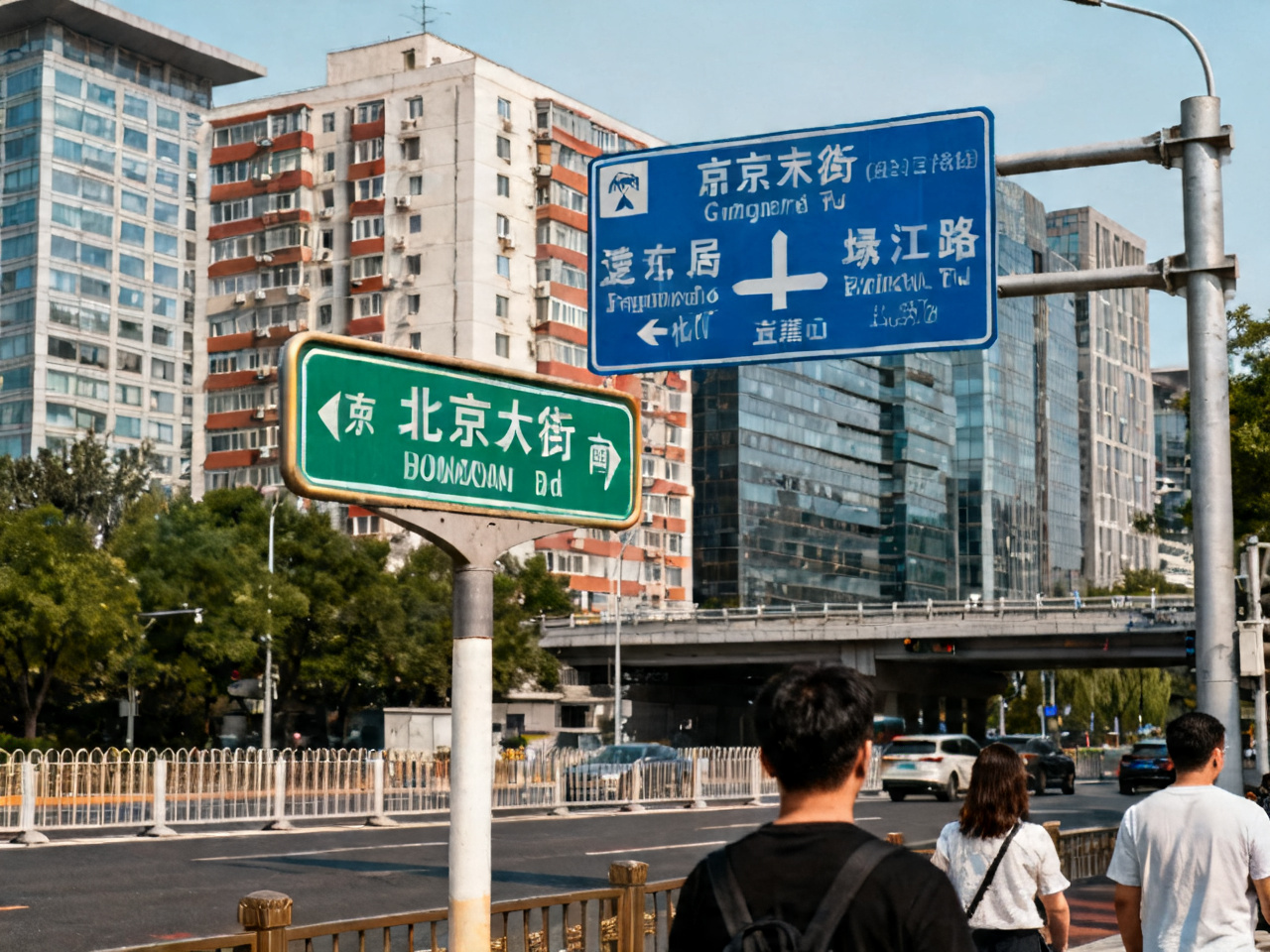
有人专门在做"中式英语抢救性记录"。一个叫 Oliver Lutz Radtke 的德国人写了一本书叫《Chinglish: Found in Translation》,收录了他在中国十几年拍到的中式英语照片。他在书的序言里写道:"每消失一块中式英语标牌,世界就少了一点幽默。"
Some people are doing "rescue documentation" of Chinglish. A German named Oliver Lutz Radtke wrote a book called "Chinglish: Found in Translation," collecting photos of Chinglish he'd taken over more than a decade in China. In the preface he wrote: "Every Chinglish sign that disappears takes a little humor out of the world."
但有些中式英语活下来了 / But Some Chinglish Survived
有趣的是,有些中式英语已经反向输出,变成了真正的英语表达。
Interestingly, some Chinglish has been reverse-exported and become actual English expressions.
"Long time no see"——很多人不知道这其实是"好久不见"的直译。语言学家追溯它的起源,发现最早出现在19世纪美国西部,很可能是华人劳工带过去的。现在它是完全标准的英语口语,没有人觉得它语法有问题(虽然严格来说,它确实不符合英语语法)。
"Long time no see" — many people don't realize this is actually a direct translation of "好久不见." Linguists traced its origin to 19th-century American West, likely brought over by Chinese laborers. Today it's perfectly standard English, and nobody questions its grammar (even though, strictly speaking, it doesn't follow English grammar rules).
"Lose face"(丢脸)和"brainwash"(洗脑)也是从中文直译过来的。"Add oil"(加油)在2018年被收入了牛津词典。谁说中式英语没有生命力?
"Lose face" (丢脸) and "brainwash" (洗脑) are also direct translations from Chinese. "Add oil" (加油) was added to the Oxford English Dictionary in 2018. Who says Chinglish has no staying power?
给来中国的你一个建议 / A Tip for Visitors
如果你在中国旅行时遇到了中式英语标牌,拍下来。不是为了嘲笑,而是为了记录。这些标牌是两种文化碰撞时溅出的火花,是翻译者努力沟通的痕迹,也是一个国家快速现代化过程中的有趣注脚。
If you spot a Chinglish sign while traveling in China, take a photo. Not to mock it, but to document it. These signs are sparks from two cultures colliding, traces of translators trying their best to communicate, and fascinating footnotes in a country's rapid modernization.
况且,"Slip and Fall Down Carefully"这种标牌,你在全世界任何其他地方都看不到。这不是语法错误,这是文化遗产。下次在中国看到一块让你困惑的英文标牌,别急着笑——先想想,也许翻译的人比你更懂浪漫。
Besides, a sign like "Slip and Fall Down Carefully" — you won't find that anywhere else in the world. That's not a grammar mistake. That's cultural heritage. Next time you see a confusing English sign in China, don't rush to laugh — think about it first. Maybe the translator understands romance better than you do.
延伸阅读 / Related Reads
- 中国高铁出行完全指南 | Complete Guide to China's High-Speed Rail
- 来华游客必备清单:证件/通讯/支付一站搞定 | Essential Checklist for Visitors to China
- 中国高铁乘车全攻略(境外游客版) | Complete HSR Guide for Foreign Tourists
- 中国景区门票预约与排队技巧 | Booking Tickets and Beating Queues at Chinese Attractions
- 华东五城10日经典环线 | 10-Day East China Five-City Loop
- 中国高铁出行完全指南 | Complete Guide to China's High-Speed Rail
- 北京最怕第一次来的人一上来就把所有重量景点挤在同一天 | Beijing Is Hardest on First-Time Visitors When They Pack All the Heaviest Sights into One Day
- 国庆出行避坑指南 | National Day Travel Tips: Avoiding the Crowds
- 在中国生活:完整指南 | Living in China: A Complete Guide
- 在上海弄堂里学会慢下来 | Learning to Slow Down in Shanghai's Lanes
- 去济南之前,我先把会让人慌张的那几样信息收进同一屏 | Before Jinan, I Gathered the Few Panic-Making Essentials onto One Screen
- Good Good Study, Day Day Up:那些让老外笑出腹肌的中式英语 | Chinglish That Makes Foreigners Laugh Till They Cry
- 大盘鸡:一盘端上来,整桌人都不说话了 | Dapanji: When This Plate Arrives, the Whole Table Goes Silent
- 微信支付开通全流程(境外用户) | WeChat Pay Setup for Foreign Visitors
- 六月毕业旅行目的地推荐 | June Graduation Trip Destinations in China
Comments (0)