
雨停以后,我在武夷山把茶路走成了溪边慢线 | After the Rain Stopped, I Turned Wuyi Mountain’s Tea Road into a Streamside Walk
雨停以后,我在武夷山把茶路走成了溪边慢线 | After the Rain Stopped, I Turned Wuyi Mountain’s Tea Road into a Streamside Walk
雨是在清晨停下来的。我住处的窗沿还在滴水,远处的山没有完全露出来,只在低云背后留出一层深绿色。我原来打算把这一天留给一段更高、更陡的步行:先赶早进山,再把午后的时间塞进几个观景点。可是我把鞋伸到门外试了一下,鞋底刚压过湿石板就轻轻打滑。那一下并不惊险,却足够让我把手机里的路线往回缩。雨后最容易犯的错,是看见天空亮了,就把地面也当成已经恢复干燥。
The rain stopped early in the morning. Water still dripped from the sill of my room, while the mountains remained half-hidden behind low cloud, showing only a dark green layer. I had planned a higher, steeper walk: enter early, then squeeze several viewpoints into the afternoon. But when I tested the wet paving outside with my shoe, the sole slid slightly. Nothing dramatic happened, yet it was enough to shorten the route on my phone. The easy mistake after rain is to see a brighter sky and assume the ground has dried as well.
我没有把缩短路线当成败兴,而是先给自己留出一个很朴素的问题:如果今天只能走一条线,哪一条能让我不赶、不冒险,还能把武夷山的雨后气息走进去?答案慢慢落到九曲溪沿线。它不要求我证明体力,也不逼我在湿滑台阶上追一个所谓“必须到”的高度。溪水、山脚、零散的树影和可以随时停下来的路,比一张打满钩的清单更适合那个上午。
I did not treat the shorter route as a disappointment. Instead, I asked a plain question: if I could walk only one line today, which one would let me avoid rushing and risk while still entering the post-rain character of Wuyi Mountain? The answer gradually became the paths along the Nine-Bend Stream. They did not demand a display of stamina or force me up slick steps for a supposedly mandatory height. Water, mountain feet, scattered shade, and places where I could stop suited that morning better than a checklist full of ticks.
出门前我换掉了那双看起来更上镜、其实纹路已经磨浅的鞋,改穿鞋底更稳的一双;背包里也少装了一瓶水和一件并不急用的东西。这个取舍很小,却改变了身体的感觉。包轻一点,脚下就更愿意慢一点;手里空出来,遇到湿处便能扶栏杆或把伞收好。雨后走路并不是把平日速度降半格那么简单,它会把每一次落脚、转弯和拍照的位置都变成判断。
Before leaving, I abandoned the shoes that looked better in photographs but had worn-down tread, and chose a steadier pair. I also removed a bottle of water and one nonessential item from my pack. It was a small trade-off, but it changed how my body felt. A lighter bag made it easier to slow down, and free hands meant I could use a railing or fold my umbrella at wet patches. Walking after rain is not merely ordinary walking at half speed; every footfall, turn, and photo stop becomes a decision.
到溪边时,水声比我预想的近。雨水把石头的颜色压深了,岸边的草叶上还有没落完的水珠。几位游客从我身旁过去,脚步很快,像是急着追回被雨耽误的时间;我也有过同样冲动,想把停雨当作发令枪。但沿线起步处就让我收住了:有些石面看起来平整,薄薄一层泥水却会让鞋底失去抓力。我开始不再盯着远处的山形,而是把视线放在前两三步。
When I reached the stream, its sound was closer than I expected. Rain had deepened the color of the stones, and drops still clung to grass along the bank. Several visitors passed me quickly, as if trying to win back the hours rain had taken. I knew that impulse—to treat the end of rain as a starting gun. But the first stretch made me pull back: some stones looked flat, while a thin film of muddy water removed all grip. I stopped staring at distant peaks and began watching the next two or three steps instead.
九曲溪沿线的好处,不在于它替人取消了所有选择,而在于它允许选择变得不那么昂贵。看到一段湿阶,我可以绕开;觉得雾把山遮得太严,我可以先靠水走;想等光线变化,也有栏边、树下和开阔处可以停。原定的高处路线一旦被我划掉,时间没有突然空掉,反而露出了细部:水面被风推开的小纹,竹叶滴水时有节奏的轻响,鞋边蹭过湿土留下的一圈暗色。
The virtue of the Nine-Bend Stream route was not that it removed every choice. It made choices less costly. When I met wet steps, I could go around them; when mist hid the mountain too completely, I could stay nearer the water; when I wanted to wait for changing light, there were rails, trees, and open edges to pause beside. Once I crossed the higher route off my plan, time did not suddenly become empty. Details appeared instead: ripples pushed by wind, the rhythmic light sound of water falling from bamboo, and a dark ring of wet earth brushed against my shoes.
走到一处转弯,我闻到一股比潮湿草木更厚的香气。它不是香水似的甜,也不是餐馆里猛然冲出来的油烟,而像热气从杯口慢慢散开,带一点焙火后的干净感。香气并没有从景区的说明牌上来,而是从路边一间开着门的茶店飘出来。门口没有夸张招呼,只有几把还带着潮气的椅子和一块被雨洗亮的地面。我本来只想避一会儿湿风,结果在那里停得比预计久。
At a bend, I caught a scent heavier than wet grass and trees. It was neither perfumed sweetness nor the sudden oil smoke of a restaurant. It rose slowly like steam from a cup, carrying a clean, roasted note. It did not come from an interpretive sign; it drifted from a tea shop with its door open beside the path. There was no exaggerated welcome, only a few chairs still damp with humidity and ground brightened by rain. I had meant to shelter from the wet wind for a moment, and ended up staying longer than planned.
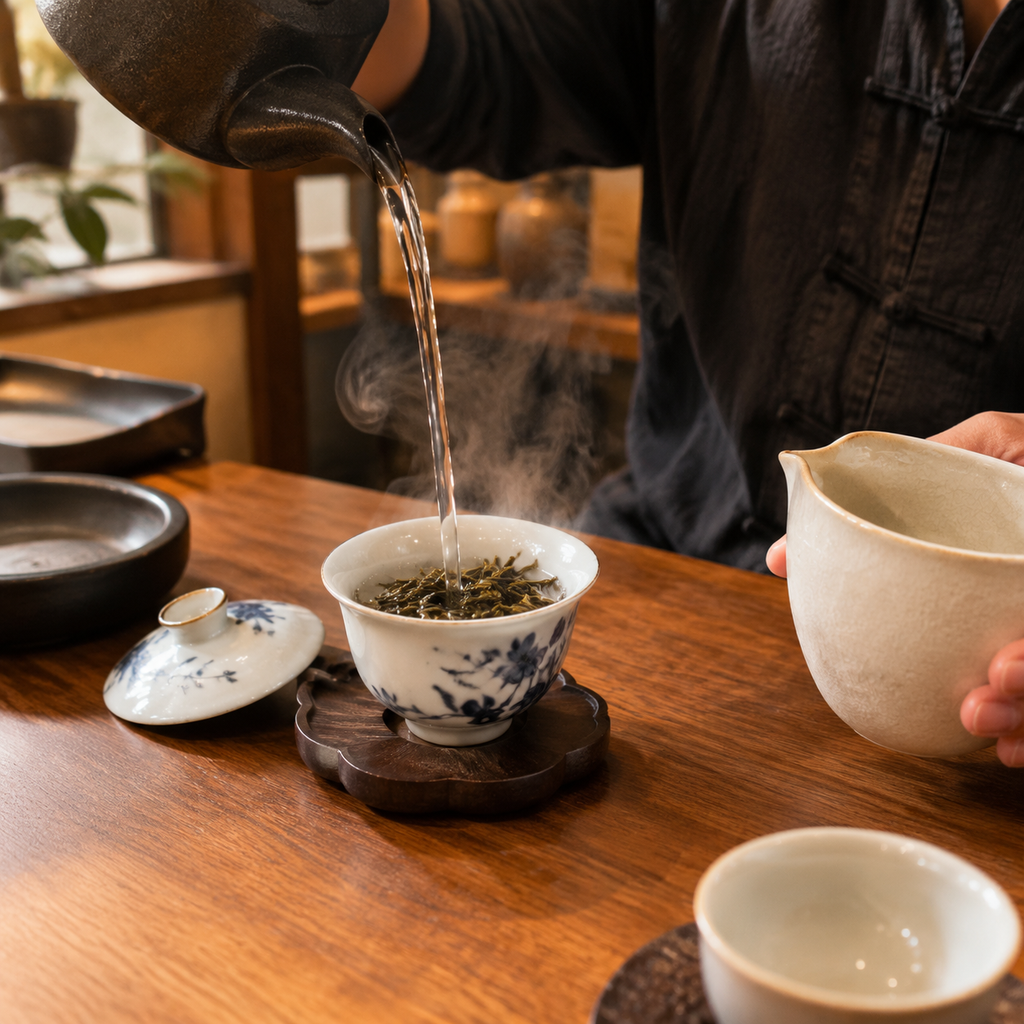
店里的人没有急着把茶讲成一套需要背下来的知识,只是先问我刚从哪里走来,又看了看我裤脚上的泥点。他说雨后别急着把衣服烘得太热,坐一会儿,鞋面也会慢慢干些。我没有把这当成某种传奇式的热情;更像是一句顺着现场说出的实用提醒。桌上摆着小杯,热水落下去,叶子在杯里舒开。我闻到的香气终于有了来源:不是山在抽象地“有茶味”,而是有人在潮湿的上午认真地烧水、温杯、出汤。
The person in the shop did not turn tea into a lesson I had to memorize. He first asked where I had walked, then noticed mud on my trouser hems. He suggested not blasting my wet clothes with too much heat after rain—sit for a while, he said, and the shoe uppers would dry gradually. I did not take it as theatrical hospitality; it was simply practical advice fitted to the moment. Small cups sat on the table. Hot water fell, and leaves opened in the cup. The scent finally had a source: not a mountain abstractly “smelling of tea,” but someone carefully boiling water, warming cups, and pouring tea on a damp morning.
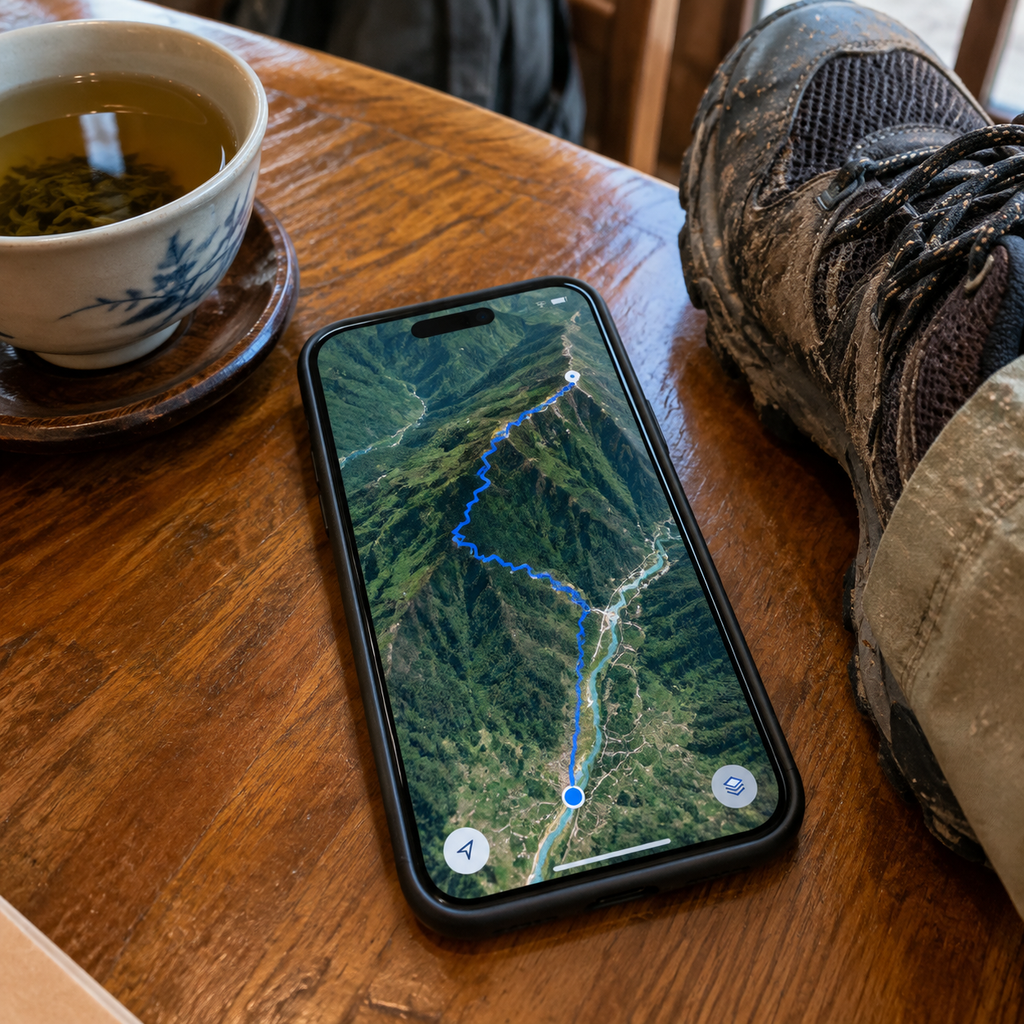
我在茶店里重新看了一次地图。原先那条登高路线仍在屏幕上,蓝线漂亮地拐上山坡;九曲溪边的路线却像一条不够雄心勃勃的细线。可我把早上试鞋时的打滑、溪边石面的水膜、云层压低的能见度一起放进去,答案就不再只由距离决定。我把折返点提前,把午饭后的“补走”删掉,也不再执着于从一个点赶到另一个点。路线不是被天气毁掉,而是被天气改成了更符合当天条件的版本。
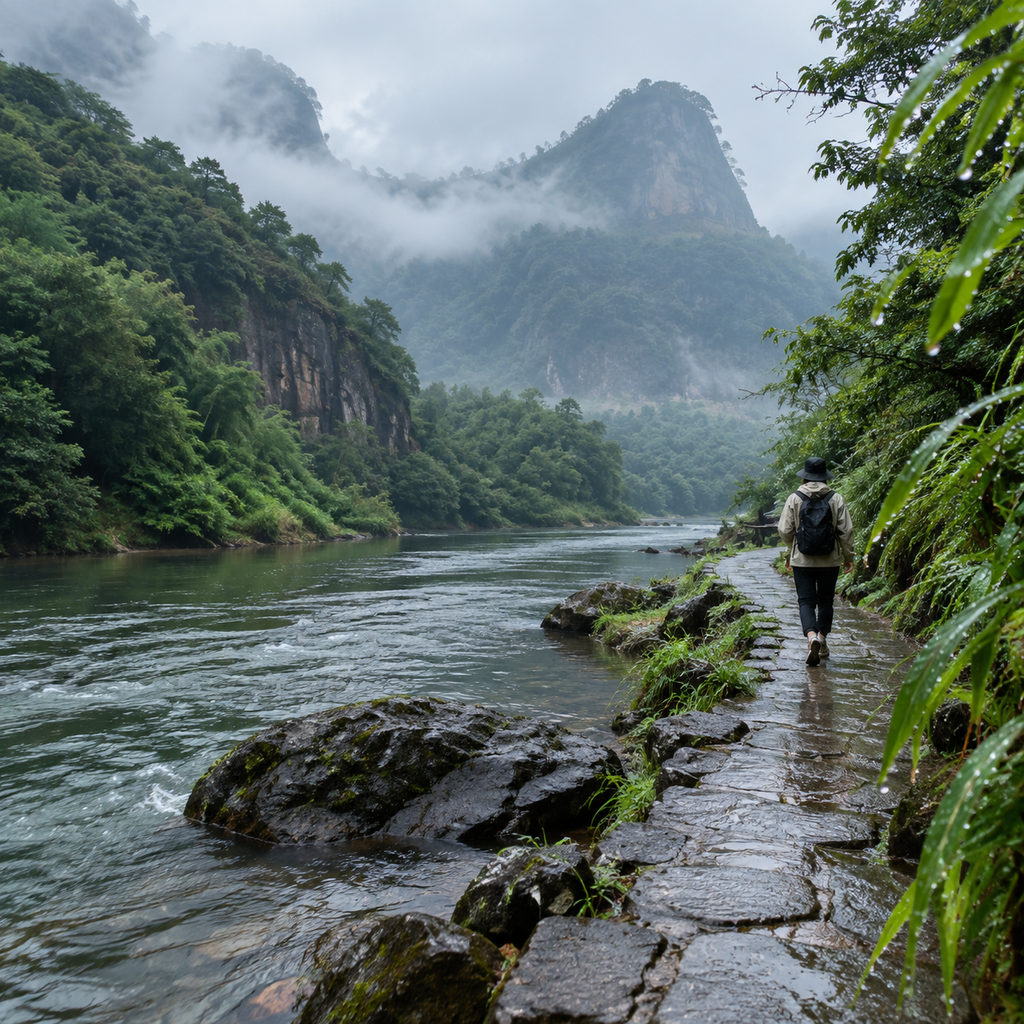
In the tea shop, I looked at my map again. The original uphill route still curved beautifully over the slope in blue, while the streamside route looked like an unambitious thin line. But once I included the slip outside my lodging, the film of water on riverside stone, and the low cloud that reduced visibility, distance alone no longer decided the answer. I moved the turning point closer, deleted the idea of “making up” the walk after lunch, and stopped insisting on racing from one marker to another. Weather had not ruined the route; it had rewritten it to fit the day.
茶让我停下来,也让我意识到休息并不只是为了恢复体力。刚进店时,我还在盘算能不能在半小时内喝完再继续赶;坐了片刻以后,耳朵先安静下来,才听见雨后屋檐偶尔落水的声音,也才感觉到袜口被潮气浸着的不舒服。要是我硬着头皮往上走,这些信号大概会被“不能落后”的念头压过去。真正值得保留的并非那一杯茶的名头,而是它给了我一个不必解释的暂停。
Tea made me stop, and it also reminded me that rest is not only for recovering strength. On entering, I was calculating whether I could finish in thirty minutes and hurry on. After sitting for a while, my ears quieted enough to catch water dropping now and then from the eaves, and I noticed how uncomfortable the dampness felt around my socks. If I had forced myself uphill, those signals would probably have been buried under the fear of falling behind. What mattered was not any grand name attached to the tea, but the pause it gave me without requiring an excuse.
离开茶店时,雨没有再下,但路面仍然没有完全可信。我把伞折好放在外侧口袋,没有因为天空透出一点亮色就收进包底;每到阴影更重的地方,我宁愿绕半步,也不踩那种被落叶盖住的石边。这样的走法看起来不够利落,却让我一路保持余裕。有人会把旅行的效率理解为少停、少绕、少改计划,我在这条溪边线学到的却是另一种效率:把本来会出问题的地方提前避开。
When I left the tea shop, the rain had not returned, but the ground was still not fully trustworthy. I folded the umbrella into an outer pocket instead of burying it in my bag just because a little light had broken through. In heavier shade, I preferred an extra half-step around a patch rather than stepping on a stone edge hidden by leaves. It may not have looked brisk, but it kept room in my day. Some people define travel efficiency as fewer stops, detours, and plan changes. On this streamside line, I found another kind: avoiding trouble before it has the chance to become an event.
后来沿着水走,我不再急着把每一处都拍下来。雨后的颜色很容易让人贪心:岩壁更深,树叶更亮,溪水的反光也更柔。我会先停住,确认脚下有干一点的站位,再抬起相机;如果没有合适的位置,就让那一段只留在眼睛里。这个做法听上去近乎保守,却让拍照变得更轻松。与其在湿石上摆姿势换取一张勉强的照片,不如承认有些画面适合经过,不适合占有。
As I followed the water, I stopped trying to photograph everything. Post-rain color invites greed: rock faces deepen, leaves brighten, and reflections on the stream soften. I would first stop, find a slightly drier place to stand, and only then lift my camera. If no good position existed, I let that view remain with my eyes. The habit may sound cautious, but it made photographs easier. Rather than pose on wet stone for a strained image, I accepted that some scenes are best passed through, not possessed.
午前的人流比我以为的更松。也许有人因为早雨晚出,也许很多人仍在等天气彻底稳定。无论原因是什么,九曲溪边没有那种必须抢位的紧张感。偶尔有脚步声从身后靠近,我会靠边让出较干的地方;别人经过时,也常用一个点头或一句简短提醒回应。这些细小的互相避让,和山水无关,却让雨后的步行不那么孤单。路滑时,人比平常更容易注意到彼此的速度。
The flow of people before noon was looser than I expected. Perhaps some had delayed their start because of the early rain, while others were waiting for weather to settle fully. Whatever the reason, the streamside path lacked the anxiety of having to seize a spot. When footsteps approached from behind, I moved aside to give the drier ground; people passing often answered with a nod or a short warning. Those small accommodations had little to do with scenery, yet made the wet walk less solitary. When paths are slick, people notice one another’s pace more readily.
我并没有假装自己因此看懂了所有茶。茶店里的停留只够我辨认出:同样叫作“茶香”的东西,落在山路上、杯口边、潮湿木桌旁,感觉完全不同。沿线空气里有植物和泥土的气味,杯中则更集中、更温暖;两者碰在一起,才让武夷山的上午有了层次。我不愿把短短一段停留写成专业品鉴,更愿意承认自己只是借它校正了走路的节奏。
I did not pretend that this taught me everything about tea. The stop was only enough to recognize that what we casually call “tea fragrance” changes completely on a mountain path, at the rim of a cup, and beside a damp wooden table. Along the route, the air carried plants and soil; in the cup, the aroma was more concentrated and warm. Together they gave the morning in Wuyi Mountain depth. I would rather not turn a brief stop into expert tasting notes. It simply corrected the rhythm of my walking.
到了原先计划要折返的地方,我看见通往更高处的方向仍旧藏在雾里。那一刻并没有遗憾得很戏剧化,只是很清楚:继续向上不会增加多少看见的东西,却会增加脚下的不确定。我在栏边站了一会儿,把水喝完,然后转身沿溪返回。这个决定之所以让我舒服,是因为它不是“放弃”,而是我已经得到当天想要的内容——雨后山脚的湿润、溪水的声音、茶店的一段热气,以及一路没有被催促的呼吸。
At the point where I had originally planned to turn, the direction uphill was still hidden in mist. There was no dramatic disappointment, only clarity: going higher would add little to what I could see and more to what I could not trust beneath my feet. I stood by a rail for a while, finished my water, and turned back along the stream. The decision felt easy because it was not “giving up.” I had already received what I wanted from the day: wet mountain feet after rain, the sound of water, warmth from a tea shop, and breathing that had not been hurried.
返程的路比去时熟一点,却也不能因此大意。湿地上的风险常常在“我已经走过了”之后出现:注意力一松,脚步就会自动加快。我仍旧在石缝、斜坡和叶子堆旁放慢,偶尔回头看见云从山腰一点点往上退。它没有把山全部交出来,却给了水面更多光。那种变化不像景区打卡点的即时奖励,更像天气慢慢松开拳头。
The return path was more familiar, but that was no reason to relax carelessly. The risk on wet ground often comes after the thought, “I have already walked this.” Once attention loosens, pace accelerates on its own. I still slowed at cracks, slopes, and piles of leaves, and occasionally looked back to see cloud retreat little by little from the mountainside. It did not reveal the whole mountain, but it gave the water more light. The change was not an instant reward from a checkpoint; it was more like weather slowly unclenching its fist.
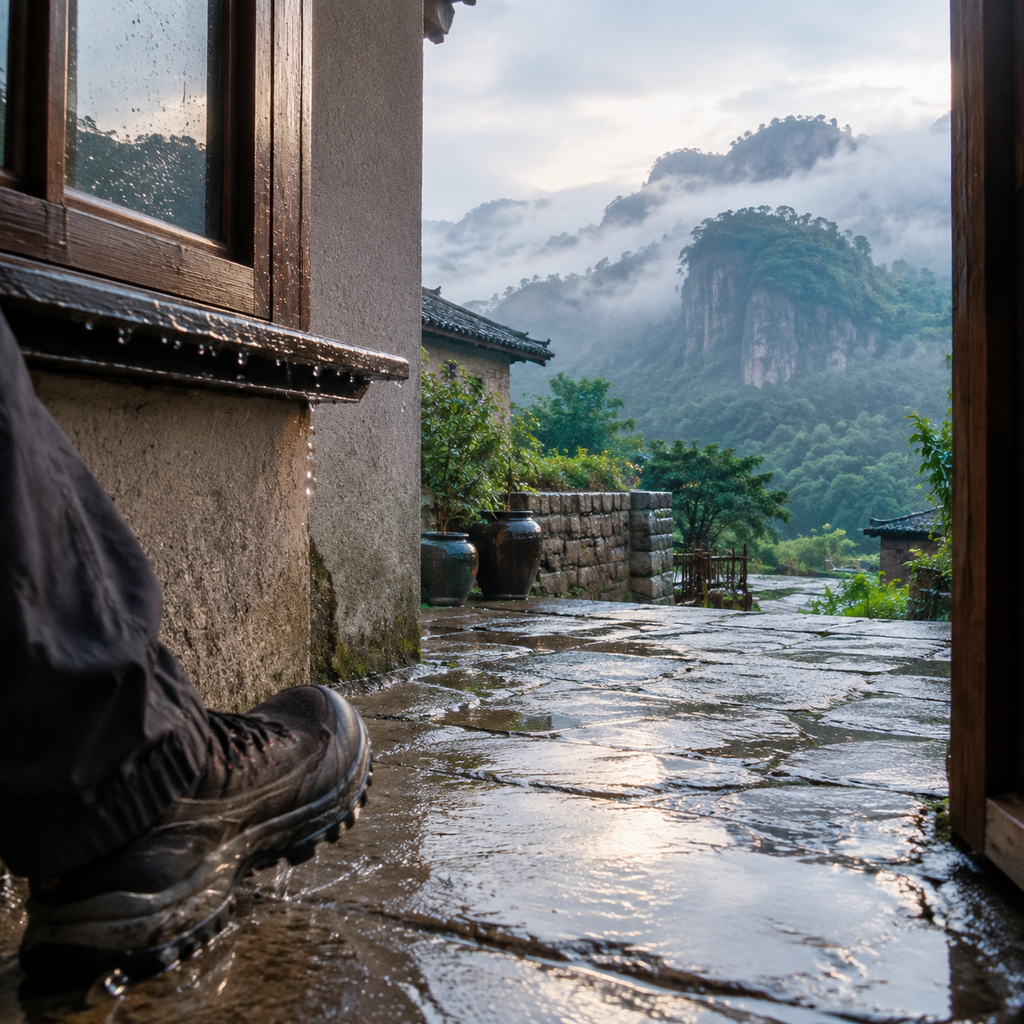
后来我想起这一天,最先浮现的不是某个最高处的视野,而是茶店门口那块湿亮的地面,和离开时鞋底重新踩稳的感觉。原计划没有完成,但路线并没有因此变得残缺。它只是从一条要证明“我去了很多地方”的线,变成一条让我在九曲溪边辨认脚感、气味和停留价值的慢线。雨停以后,武夷山没有要求我跑得更快;它只是提醒我,山路给出的条件,比行程表上的雄心更值得认真对待。
When I remember that day, the first image is not a view from the highest point. It is the rain-bright ground outside the tea shop and the feeling of my soles finding steady contact again when I left. The original plan was unfinished, yet the route was not incomplete. It changed from a line meant to prove that I had covered many places into a slower line along the Nine-Bend Stream, where I learned to read footing, scent, and the value of stopping. After the rain, Wuyi Mountain did not ask me to move faster; it asked me to take the conditions of a mountain path more seriously than the ambition written on an itinerary.
我把当天的判断拆开来看,先看鞋底,再看水从哪里流,再看前方的人是怎样落脚。鞋底的纹路如果已经磨平,哪怕只是短距离,也不适合拿来对付潮石;水若从坡上横过步道,边缘常比中间更滑;前面的人若忽然缩短步幅,不一定是为了拍照,可能已经踩到软泥。这样的观察不需要把自己变成户外专家,只是承认雨后道路和晴天道路不是同一种东西。
I broke my judgment into simple checks: the soles, the direction of water, and the way people ahead placed their feet. If the tread was worn flat, even a short wet-stone walk was a poor use for those shoes. Where water crossed a path from a slope, the edges were often slicker than the middle. When someone ahead suddenly shortened their stride, it might not be for a photograph; they may have met soft mud. None of this requires becoming an outdoor expert. It only means accepting that a post-rain path is not the same thing as a dry one.
我还发现,湿滑并不总以显眼的水坑出现。有些地方只是颜色深一点,有些地方被一层完整的落叶遮住,有些木质栏杆摸上去凉而潮。最麻烦的是眼睛觉得“应该没事”的时刻:路宽,坡不大,旁边又有人走过,于是我会自然加速。那天我给自己定的办法很笨——每逢看不清纹理的地面,就先把脚尖轻轻试一下,再把重心压过去。慢了几秒,却没有一次让身体突然紧张。
Slippery ground did not always announce itself with obvious puddles. Sometimes it was only darker in color, hidden under a complete layer of leaves, or suggested by a wooden rail that felt cool and damp. The troublesome moment was when my eyes said, “This should be fine”: the path was wide, the slope mild, and others had just passed. That was when I naturally sped up. My method that day was clumsy but useful—whenever I could not read the texture of the surface, I tested it lightly with the toe before shifting weight. It cost seconds and spared me any sudden jolt of tension.
九曲溪边的步行也让我重新理解“沿线”这两个字。它不是一根必须从头走到尾的线,而是一串可以进入、停留、退出的片段。我可以在靠近水声的地方走一段,在觉得脚底发黏时回到更宽的路面;可以在山色稍开时多停几分钟,在雾又压下来时不勉强等待。把路线看成片段,原本被删掉的登高部分就不再像损失,而是给这些小片段腾出了呼吸空间。
Walking beside the Nine-Bend Stream also changed what “along the route” meant to me. It was not a single line that had to be completed from end to end, but a chain of sections I could enter, linger in, and leave. I could walk close to the water for a while, then return to wider ground when my soles felt muddy; pause when the mountains opened a little, and move on when mist lowered again rather than forcing a wait. Seeing the route as segments made the deleted uphill portion feel less like a loss and more like room for those smaller sections to breathe.
有一段靠近溪水的地面铺得比较整齐,我原以为会轻松些,走近才发现石缝里积着细泥。旁边一位背着小包的游客没有说教,只用手指了指更靠内侧的一条干纹,自己也沿着那里走。我跟着调整,才意识到路面并非只有“能走”和“不能走”两种答案。选择一条更干的纹理,避开正在渗水的缝,已经足够让步子稳下来。旅行里的提醒有时就是这样,不需要陌生人停下来讲一大段。
One section near the stream was neatly paved, so I expected it to be easy. Up close, fine mud had collected in the joints between stones. A visitor with a small pack did not lecture me; he simply pointed to a drier strip farther inward and walked along it himself. I adjusted my line and realized that a path is not merely “walkable” or “unwalkable.” Choosing a drier texture and avoiding seams where water was seeping was enough to steady my stride. Travel advice can be like that; strangers do not need to stop and explain everything at length.
我原先给午饭留的时间很紧,想着下山后随便吃一点,再去补上午没走到的地方。茶店坐下来以后,这个安排显得很不合时宜。湿衣服、慢脚和低云都在提醒我,今天不适合用“补回来”三个字管理时间。我把午饭改成就近解决,把下午留成弹性,而不是把每一个空隙都塞满。这样的改动没有任何技巧感,却让我不用一边吃东西一边盯着表,也不用为了赶下一段在雨后地面上硬走。
I had originally left very little time for lunch, imagining that I would eat something quickly after coming down and then make up the ground I had missed in the morning. After sitting in the tea shop, that arrangement felt badly suited to the day. Damp clothes, slower feet, and low cloud all said that this was not a day to manage time with the phrase “make it up.” I changed lunch to something nearby and left the afternoon flexible instead of filling every gap. There was nothing clever about it, but I no longer had to watch the clock while eating or force myself across wet ground to reach the next section.
茶店里的桌面有些旧,杯底落下的水圈很快被抹布擦掉。窗外偶尔有人撑伞经过,伞尖滴下的水在门槛边敲出细碎的声响。我坐在那里,并没有急着拍茶叶、拍茶具、拍一张证明自己来过的照片。比起把每件东西变成素材,我更愿意先喝一口,感受热度从手指传到掌心。雨后身体容易被风吹凉,热杯在这时比任何宏大的叙述更有说服力。
The table in the tea shop was a little worn, and rings left by cup bottoms disappeared quickly under a cloth. Outside the window, umbrellas passed now and then; water from their tips made small broken taps by the threshold. I did not rush to photograph leaves, utensils, or an image that proved I had been there. Rather than turn each thing into material, I preferred to take a sip and feel warmth travel from my fingers into my palms. After rain, the wind can cool the body easily, and a warm cup is more persuasive than any grand description.
我问得最多的不是茶名,而是能不能坐一会儿、附近哪一边的路更平。这样问或许不够“懂行”,却更接近我当时真正需要的东西。对方没有替我安排完整行程,只说沿水慢慢走,觉得鞋底开始沾泥就不要再往窄处钻。我喜欢这种边界清楚的建议:它不把我当成必须消费一套答案的人,也不把天气说成可以被忽略的小插曲。
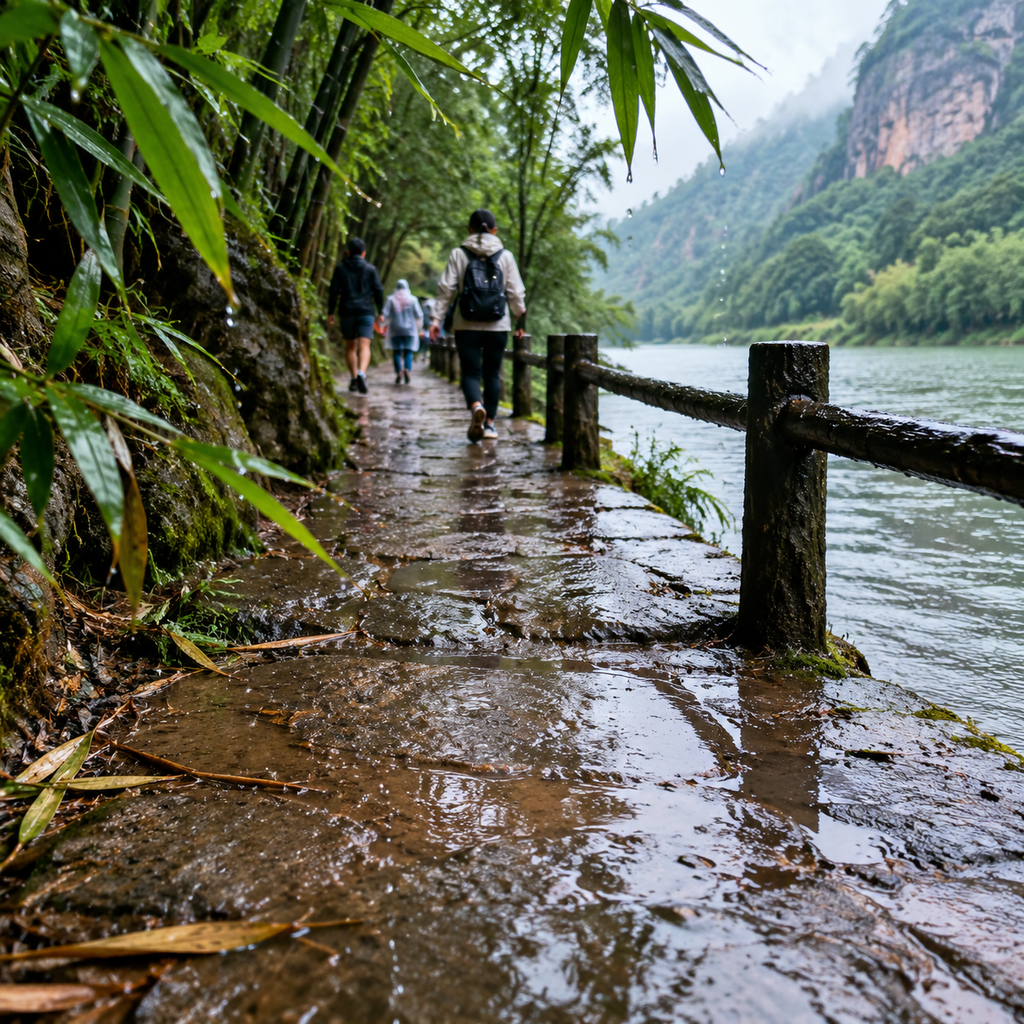
What I asked most was not the name of the tea, but whether I could sit for a while and which nearby side of the path was flatter. It may not have sounded knowledgeable, but it was closer to what I truly needed. The person there did not arrange a complete itinerary for me. He only said to follow the water slowly and not push into narrow ground once mud began clinging to my soles. I liked that clear boundary in the advice: it did not treat me as someone who had to buy a full package of answers, and it did not dismiss the weather as a minor interruption.
从茶店出来后,我特意没有立刻拿出手机导航。不是因为路线已经熟到不用看,而是想先用眼睛判断眼前的走向:哪边人少,哪边积水更浅,哪里有可以靠边停的余地。手机屏幕给的是抽象距离,雨后现场给的是材质和速度。等我走到下一个较明显的分岔,再核对位置,地图便成了确认工具,而不是催促工具。这个顺序让我少了很多无意义的来回折返。
After leaving the tea shop, I deliberately did not take out my phone for navigation at once. The route was not so familiar that I needed no map; I simply wanted my eyes to judge the immediate direction first: where there were fewer people, where standing water was shallower, and where I could step aside if needed. A screen offers abstract distance; the post-rain scene offers material and pace. When I reached the next clear fork, I checked my position. The map became a tool for confirmation rather than pressure, and that order spared me several pointless reversals.
云层偶尔裂开时,山壁会在几分钟里显出更清楚的轮廓。我起初总想等到“完全打开”的那一刻,后来发现那种等待未必划算。光线一变,风也可能跟着大起来;站在湿处不动,脚底反而更冷。于是我把观景变成移动中的小停顿:看见就停十几秒,拍到就继续,不为下一束光赌上二十分钟。这并不是降低期待,而是把期待调到天气真正能兑现的尺度。
When the cloud occasionally split, the mountain wall showed a clearer outline for a few minutes. At first I kept wanting to wait for the moment when everything would “fully open.” Later I saw that such waiting was not always worth it. A change in light could bring stronger wind; standing still on wet ground made my feet colder. I turned viewing into small pauses within movement: stop for ten or fifteen seconds when the scene appeared, photograph it if I could, then continue rather than gamble twenty minutes on the next break. That was not lowering expectations; it was setting them to the scale the weather could actually deliver.
沿着溪边走久了,我开始能分辨不同的声音:水撞在较大的石头上时较沉,流过浅处时更碎;远处偶尔传来的说话声被雾吸走一半;竹林滴水有一种不稳定的节奏。它们提醒我,雨后的景色并不只有视觉。当天山顶不清楚,反而让耳朵有更多位置。若我还执意冲向高处,大概只会听见自己赶路时的呼吸和鞋底摩擦声。
After walking beside the stream for a while, I began to distinguish sounds: water striking larger stones was deeper, while water passing shallow ground broke into finer notes; distant voices arrived half-absorbed by mist; dripping bamboo had an uneven rhythm. They reminded me that post-rain scenery is not only visual. Because the summit was unclear that day, my ears had more room. Had I insisted on rushing uphill, I would likely have heard only my own hurried breathing and the scrape of my soles.
有一次我为了绕开一片湿叶,走到较窄的边上,才发现那里正好能看见溪水拐过去的角度。这个小发现让我警惕另一件事:风景有时会奖励绕路,但不能把奖励当成理由。我要先确认边上是否结实,再决定能否多停一会儿;如果没有空间,就退回去。把安全放在画面前面,并没有减少我看见的东西,反而让我不必带着紧张欣赏它。
Once, while avoiding a patch of wet leaves, I moved toward a narrower edge and found a view of the stream turning away. The small discovery made me alert to another point: scenery sometimes rewards a detour, but the reward cannot be the reason for taking it. I had to check whether the edge was firm before deciding to linger; if there was no room, I stepped back. Putting safety ahead of the image did not reduce what I saw. It let me enjoy it without carrying tension along.
我在路边见到几处卖水和简单补给的小点,却没有因为东西触手可及就一一停下。雨后走路,停留也有成本:脚一旦冷下来,重新起步会更慢;背包越拿越乱,找伞和纸巾就越费劲。我只补了真正需要的水,把纸巾放到最容易摸到的位置,又把手机擦干后收进防水袋。行程缩短以后,物品管理反而更重要,因为我不再依赖“很快就结束”来掩盖小麻烦。
I passed several small roadside points selling water and simple supplies, but I did not stop at every one simply because things were within reach. After rain, stopping has a cost too: once feet get cold, starting again is slower; the more disorderly a pack becomes, the longer it takes to find an umbrella or tissues. I took only the water I needed, put tissues where I could reach them first, wiped my phone dry, and stored it in a waterproof pouch. Once the route was shortened, managing small items mattered more, because I could no longer rely on “it will end soon” to cover minor hassles.
中午前后,雾薄了一点,我没有因此把删掉的山路重新加回去。这个坚持对我来说很重要。计划一旦改过,人常常会想在天气稍有好转时立刻反悔,好像不把原方案救回来就算浪费。但路况、体力和衣物的潮湿程度不会随着一小片蓝天同时归零。我更愿意把好转当作沿溪多走一会儿的机会,而不是重新给自己加一段风险。
Around noon, the mist thinned a little, but I did not add the deleted mountain route back in. Holding that line mattered to me. Once a plan changes, people often want to reverse it at the first hint of better weather, as if failing to rescue the original plan means wasting the day. Yet ground conditions, energy, and damp clothing do not all reset with one patch of blue sky. I preferred to treat the improvement as an opportunity for a little more walking by the stream, not a reason to add risk back into the day.
我在一处较开阔的位置吃了随身带的小点心,没有坐在潮湿的石阶上,而是找了一张干些的长凳。食物并不特别,重要的是我终于把“边走边吃”的习惯停了下来。脚步慢的时候,胃也不该被行程催着工作。我看着溪面上的光一点点移动,等手指不再冰凉,才把包装收好继续走。这样的十分钟没有写在任何攻略里,却让下午不至于被上午的湿冷拖垮。
At a more open spot, I ate the small snack I carried. Rather than sit on damp stone steps, I found a bench that was drier. The food was nothing special; what mattered was that I finally stopped my habit of eating while walking. When feet slow down, the stomach should not be hurried by the itinerary either. I watched light move across the stream, waited until my fingers were no longer cold, packed the wrapper away, and continued. Those ten minutes were not written in any guide, yet they kept the damp chill of the morning from dragging down the afternoon.
雨后九曲溪边最让我放松的,是我不必不断解释为什么走得慢。有人停下来整理雨衣,有人靠着栏杆看水,有人干脆站着等同伴。大家的节奏没有整齐到需要比较。我在这种环境里更容易接受自己的取舍:少走一段,不代表少经历一天;在茶店多坐一会儿,也不代表把时间浪费掉。旅行中最耗人的,有时不是坡度,而是总觉得自己应该和别人一样快。
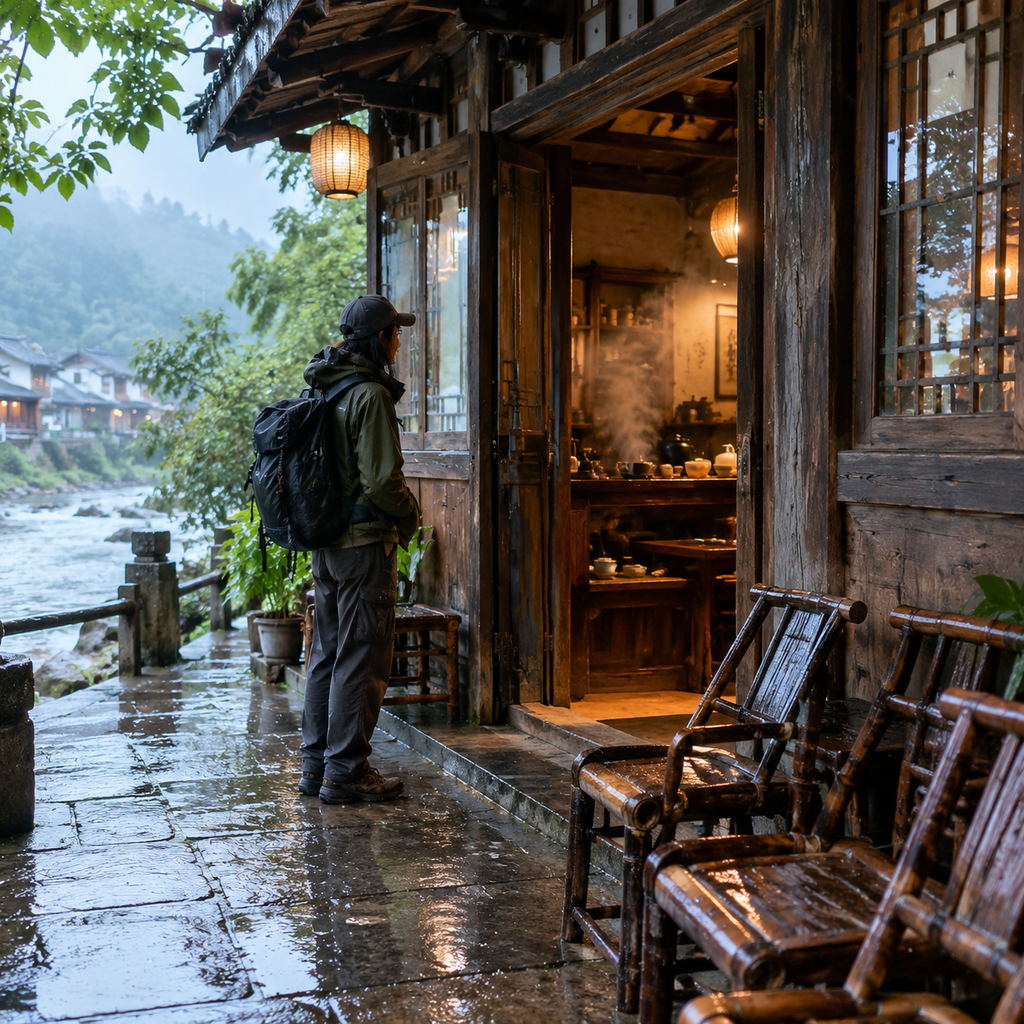
What relaxed me most beside the Nine-Bend Stream after rain was that I did not have to keep explaining why I was walking slowly. Some people stopped to adjust rain gear, some leaned on rails to watch water, and some simply waited for companions. No one’s pace was uniform enough to invite comparison. In that setting, I could accept my own trade-offs: walking one section less did not mean experiencing less of the day, and sitting longer in a tea shop did not mean wasting time. In travel, what exhausts us is sometimes not the slope but the feeling that we ought to move as fast as everyone else.
下午我没有去追一个遥远的终点,而是在靠近溪水的几处位置来回做短距离步行。这个安排听起来像重复,实际每一次光线和水色都不完全相同。第一次经过时,我注意脚下;第二次经过时,我闻到潮湿树皮的味道;第三次抬头,才看见雾边露出一小段岩壁。慢线的意思并非原地不动,而是允许同一段路在不同状态下重新被看见。
In the afternoon, I did not chase a distant endpoint. Instead, I made several short walks back and forth between places near the stream. It may sound repetitive, but the light and water color were never identical. On the first pass, I watched my footing; on the second, I caught the smell of wet bark; on the third, I looked up and saw a small strip of rock wall appear at the edge of the mist. A slow line does not mean standing still. It allows the same stretch to be seen again in different states.
回望这条路,我觉得最实用的不是某个“雨后必去”的建议,而是给计划留一个可撤回的结构。出发时把高风险段标成可选,把溪边和休息点当作主线;遇到路滑,就先保住主线,不用把整天判成失败。茶店停留、提前折返、午饭就近,这些看似零散的决定拼在一起,才让路线有了弹性。它们没有制造传奇,却让我在离开时仍有余力看路、听水、收伞。
Looking back, the most useful lesson was not a claim about some “must-see after rain” place. It was giving a plan a structure that could be withdrawn from. At the start, I marked higher-risk sections as optional and made the streamside path and rest points the main line. When the ground proved slick, I protected that main line instead of declaring the whole day a failure. The tea-shop stop, early turn, and nearby lunch were separate choices that together made the route flexible. They created no legend, but they left me with enough energy to watch the path, hear the water, and fold my umbrella as I left.
傍晚前,山色终于比早晨清楚一些。我没有再去计算自己少走了多少公里,也没有打开原路线对照“损失”了哪些点。鞋边的泥已经半干,溪水的声音仍在身后,手上还留着一点茶杯的暖意。我沿着较平的路回去,心里很明白:如果第二天放晴,我当然可以再安排登高;但这一天的价值不需要等明天来证明。雨把我从一条直冲的路线拉开,也让我在山脚和溪边过了一段更贴近身体的时间。
Before evening, the mountains finally became clearer than they had been in the morning. I no longer calculated how many kilometers I had walked less or opened the original route to measure which points had been “lost.” Mud at my shoe edges was half dry, the stream still sounded behind me, and a trace of warmth from the tea cup remained in my hands. I returned along flatter ground knowing this: if the next day was sunny, I could certainly plan an uphill walk then. But the value of this day did not need tomorrow to prove it. Rain pulled me away from a straight, charging route and gave me time at mountain foot and streamside that was closer to the body.
我后来把“路线缩短”具体化成了几个现场动作。不是简单地把终点往前挪,而是先保留最有代表性的路段,再删掉需要在湿滑状态下反复上下的部分;不是把茶店当作临时躲雨处,而是把它放在步行节奏里,允许身体恢复,也允许气味和声音成为旅程的一部分;不是一看到天气转好就恢复原计划,而是重新检查鞋、衣服、能见度和回程时间。这样安排以后,路线变短了,信息却没有变薄。
I later made “shortening the route” concrete through a few actions. It was not simply moving the endpoint closer. I kept the stretch that best represented the day and removed sections that would require repeated climbs and descents on wet ground. I did not treat the tea shop as a place to hide from rain; I placed it inside the walking rhythm, where my body could recover and scent and sound could become part of the journey. Nor did I restore the original plan at the first clear patch of sky. I rechecked shoes, clothing, visibility, and return time. The route became shorter without becoming thinner in meaning.
如果把九曲溪沿线看成一条线,容易只注意它的起点和终点;如果把它看成一张有厚度的地图,就会注意到水边与山脚之间的距离、湿地和干地的区别、开阔处与树荫下的温度变化。那天我走得慢,恰好有机会感受这些层次。溪水不是背景,它不断改变我站在哪里、看多久、什么时候继续。茶香也不是孤零零的主题,它把山里的植物、店里的热水和人的停顿连到了一起。
If the Nine-Bend Stream route is seen only as a line, it is easy to focus on the beginning and end. If it is seen as a map with depth, one notices the distance between water and mountain foot, the difference between wet and dry ground, and the temperature shift between open stretches and shade. Walking slowly gave me time to feel those layers. The stream was not a backdrop; it kept changing where I stood, how long I looked, and when I moved on. Tea fragrance was not an isolated theme either. It connected mountain plants, hot water in a shop, and a person pausing.
我也试着把自己和天气之间的关系说得诚实一点。晴天时,我很容易把景区理解成一组等着被我完成的目标;雨后,目标会变得不稳定,山顶可能隐藏,台阶可能变滑,照片可能没有预期漂亮。起初这让我有些不甘心,仿佛旅程被外界打断。可当我沿着溪水走开,发现一段路的价值不只在终点,我才慢慢接受:天气不是需要被我战胜的对手,而是当天路线的一部分条件。
I also tried to be honest about my relationship with the weather. On a clear day, I easily understand a scenic area as a set of goals waiting for me to complete. After rain, goals become unstable: a summit may disappear, steps may turn slick, and photographs may look less perfect than expected. At first this made me reluctant, as if an outside force had interrupted my journey. But as I moved beside the stream and found value in a stretch independent of its endpoint, I began to accept that weather was not an opponent to defeat. It was one of the conditions that shaped the route that day.
茶店的停留还让我想到一个常被忽略的尺度:旅行者与地方之间不一定要通过长时间消费或复杂体验建立联系。有时只是坐在门边,听人把热水倒进小杯,问一句路况,再按照自己的需要离开。停留太短,气味还没分辨就走了;停留太久,又可能让身体从放松变成发冷。我没有试图把这一刻延长成一个景点,时间到了便起身,把椅子让给后来的人。恰当的停留不是越久越好,而是离开时仍然觉得呼吸顺。
The tea-shop stop also made me think about a scale that is often overlooked. A traveler does not always need a long purchase or elaborate experience to connect with a place. Sometimes it is enough to sit by the door, hear hot water enter a small cup, ask one question about the path, and leave according to one’s needs. Stay too briefly and the scent is gone before it can be understood; stay too long and the body may shift from relaxed to chilled. I did not try to turn the moment into an attraction. When it was time, I stood and gave the chair to someone else. A proper pause is not the longest one; it is the one after which breathing still feels easy.
返程时我遇到一小段被游客踩得发亮的石面。去程我从内侧绕过,回程却因为熟悉而差点直走过去。脚尖刚触到边缘,我立刻收回重心,听见身后有人吸了一口气。那一瞬间并没有发生什么,却让我更信任早上做出的判断。雨后安全不是靠一次谨慎换来的,而是要在每一次“应该没事”的时候重新确认。路线短了,并不意味着规则可以松。
On the return, I met a patch of stone polished bright by passing feet. On the way out I had gone around on the inside, but on the way back familiarity nearly made me walk straight across it. My toe had just touched the edge when I pulled my weight back, and I heard someone behind me draw a breath. Nothing happened, but the moment made me trust the morning’s judgment more. Post-rain safety is not earned by one cautious decision; it must be checked again whenever a surface seems to say, “It should be fine.” A shorter route does not mean looser rules.
我在武夷山原本想寻找一条能够把风景尽量装满的路线,最后却得到一条更像呼吸练习的路。每次停下,都不是为了制造某种感悟,而是为了看清地面、擦干镜头、让鞋里的潮气不再继续积累;每次继续,也不是为了追赶别人,而是确认下一段值得走。九曲溪把速度拆成了许多小单位:一拐、一停、一杯茶、一次回头。行程因此没有那么“完整”,身体和注意力却更完整。
In Wuyi Mountain, I had wanted a route that could pack in as much scenery as possible. What I received was closer to a breathing exercise. Each pause was not meant to manufacture an insight; it was for reading the ground, drying the lens, and keeping dampness from building inside my shoes. Each continuation was not an effort to catch others, but a confirmation that the next section was worth taking. The Nine-Bend Stream divided speed into small units: a turn, a pause, a cup of tea, a look back. The itinerary became less “complete,” while my body and attention became more whole.
若有人问我雨后该不该沿九曲溪走,我不会只给一个轻率的“应该”。我会先问他鞋底是否适合湿地,是否愿意接受看不全山顶,是否能把折返当作正常选择,是否给茶店或其他休息留出余量。对我而言,这条线的好处恰恰在于它可以被缩短,也可以在某一处停下,不必用一次走完来证明价值。真正的路线判断不是找出最壮观的版本,而是找出在当天天气、体力和心情下仍然走得稳的版本。
If someone asked whether they should walk beside the Nine-Bend Stream after rain, I would not give a casual “yes.” I would first ask whether their shoes suit wet ground, whether they can accept not seeing the whole summit, whether turning back feels normal, and whether they have left room for a tea shop or another rest. To me, the strength of this route is precisely that it can be shortened and paused without needing completion to prove its worth. Good route judgment is not finding the most spectacular version. It is finding the version that remains steady for that day’s weather, energy, and mood.
天色再暗一点时,我终于走回较干的路面。伞面上残留的水珠被风吹成一串短暂的亮点,背包里那张被我反复折叠的路线图已经软了。它原本像一条命令,要求我向某个高处前进;现在却只是一张被雨打湿的参考。我把它收起来,没有觉得自己少完成了什么。武夷山的茶路在那天没有通向更多地方,却通向了一个更清楚的取舍:能安全地走、安静地停、闻见茶香,再带着余力离开,已经足够成为一次完整的抵达。
When the light darkened a little more, I finally reached firmer ground. Drops left on the umbrella flashed briefly in the wind, and the route map I had folded again and again inside my pack had gone soft. It had begun as an instruction sending me toward a higher point; now it was merely a rain-damp reference. I put it away without feeling that I had failed to complete something. The tea road in Wuyi Mountain did not lead to more places that day. It led to a clearer trade-off: walking safely, pausing quietly, smelling tea, and leaving with energy still in reserve was enough to make the arrival feel complete.
雨后路线还有一个现实问题:衣服会比想象中更慢干。我出门时只觉得肩膀附近有一点潮,走了一段以后,背带摩擦让那块湿意变得明显。于是我在茶店里把外层衣服稍微敞开,让空气进去,没有把它贴在身上继续赶路。这样的处理看似琐碎,却直接影响后面的心情。身体一直湿着,人就会更容易把每个小坡都看成负担,也更容易为了尽快结束而忽略脚下。
A post-rain route has another practical problem: clothing dries more slowly than expected. When I left, I noticed only a little dampness near my shoulders. After walking for a while, the strap rubbing against that spot made it much more obvious. In the tea shop, I opened the outer layer slightly so air could reach it instead of continuing with it pressed against my body. The adjustment was minor but directly affected my mood. When clothing stays damp, every small slope feels heavier, and the wish to finish quickly makes it easier to neglect the ground.
我也把拍摄设备的优先级往后放了。镜头上有水雾时,风景再好也会被一层模糊盖住;湿手去换镜头或翻包,反而增加掉落和受潮的机会。那天我只保留最容易取出的设备,拍完一段便用软布擦一次,再继续走。少拍一些并没有让记忆变少,反而让我更注意那些不适合被压缩成照片的东西:溪水靠近时的凉意,茶汤落杯的声音,还有鞋底在干湿交界处轻轻改变的摩擦感。
I also moved photography equipment down my list of priorities. When a lens fogs, even a beautiful view is covered by blur; changing lenses or rummaging through a bag with wet hands only increases the chance of a drop or dampness. I kept just the easiest equipment to reach, wiping it with a soft cloth after each stretch. Taking fewer photographs did not make the memory smaller. It made me notice what cannot easily be compressed into an image: the coolness when the stream drew near, tea entering the cup, and the subtle change in friction where dry and wet ground met.
在茶店坐下之前,我一度觉得自己只是临时躲进一个与路线无关的空间;离开时却发现,停留点本身也能帮助我判断接下来要不要走。热茶让我确认手脚没有继续发冷,窗边的光让我看清雨云正在移动,店门口来往的人则让我知道这一段路仍然有人正常经过。它不是替我作决定的服务台,而是一个把身体、天气和周围信息重新放到一起的观察位置。
Before sitting down in the tea shop, I briefly thought I had entered a space unrelated to the route. When I left, I saw that a pause can help decide whether to continue. The warm tea told me my hands and feet were no longer getting colder, light by the window showed that the rain clouds were moving, and people passing the doorway confirmed that this stretch was still being used normally. The shop was not a service desk deciding for me. It was an observation point where body, weather, and surrounding information came together again.
我很喜欢这条溪边慢线还有一点:它没有逼我把茶香解释得过分准确。闻到焙火的暖、湿树叶的青、泥土刚翻开的气息,就已经足够支撑当天的记忆。若一定要给它下一个整齐结论,反而会把那些混在一起的味道拆散。旅行中的感官常常先于知识抵达,我可以先记住一口茶让手掌暖起来,再慢慢了解它从哪里来、为什么会在这样的山路边被闻见。
Another reason I liked the streamside slow line was that it did not force me to explain tea fragrance too precisely. The warmth of roast, the green scent of wet leaves, and the smell of freshly turned earth were enough to hold the day in memory. A tidy conclusion would have separated what naturally belonged together. In travel, the senses often arrive before knowledge. I could first remember a sip warming my palms, then learn gradually where that tea came from and why it could be smelled beside a mountain path like this.
我最后还保留了一个很实际的判断:当天适合走到哪里,不应该由“已经到了武夷山”这件事决定。到达一个地方,并不会自动把所有景点都变成必须完成的任务。雨后的九曲溪让我把注意力从数量移到条件上:脚下是否有抓力,视线是否能及时发现变化,身体是否还有余力,茶店停下来之后是否真的恢复。只要其中一项给出否定答案,我就把下一段留给以后。这样的以后不是遗憾的尾巴,而是对山路负责的时间。
I kept one final practical judgment with me: where to stop on a given day should not be decided merely by the fact that I had reached Wuyi Mountain. Arrival does not automatically turn every attraction into an assignment. The post-rain Nine-Bend Stream shifted my attention from quantity to conditions: whether my feet had grip, whether my eyes could catch changes in time, whether my body still had energy, and whether the tea-shop pause had actually helped me recover. If any one answer was no, I left the next stretch for another day. That “another day” was not a disappointing afterthought, but time given responsibly to a mountain path.
我把沿溪行走的每一步都当成当天条件下的回答,而不是固定动作。遇到下坡,我会先把步幅收窄,让鞋底完整落在可以看清的石面上;遇到横向流水,我会停下来辨认水从哪边来,找没有被冲亮的落脚处;遇到拍照的人群,我会把相机放低,先给别人留出通过的宽度。雨后的路把这些礼貌和谨慎放大了,原本容易忽略的细节都变成身体能马上明白的信号。
I treated each step beside the stream as an answer to that day’s conditions, not as a fixed movement. On a descent, I shortened my stride so the whole sole landed on a stone surface I could read clearly. Where water crossed sideways, I stopped to see its direction and looked for ground that had not been polished by the flow. When I met people taking photographs, I lowered my camera and left enough width for them to pass. Rain enlarged these small courtesies and precautions; details that were easy to overlook became signals my body understood at once.
路线缩短之后,我反而更能分辨“值得走”和“只是顺手走过去”的区别。值得走的地方不一定最宽、最显眼,可能只是水声突然近了,或者一片茶园的气味从风里飘过来;顺手走过去的地方,则常常只是因为它出现在原计划上。把两者分开以后,我不用用里程给上午打分,也不用因为折返而急着证明自己没有白来。每一段路都可以凭现场重新获得价值。
After shortening the route, I became better at separating what was worth walking from what I would merely pass because it happened to be on the plan. A worthwhile place was not necessarily the widest or most visible. It might be where the water suddenly sounded close, or where the scent of a tea garden arrived on the wind. A place walked merely out of habit was often there only because it appeared on the original itinerary. Once I separated the two, I no longer graded the morning by mileage or hurried to prove that turning back had not made the visit pointless. Each stretch could earn its value from the scene itself.
茶店之后的那段路,我走得尤其慢,却没有觉得时间被掏空。热茶留下的温度从掌心退去,鞋子逐渐没有那么沉,雨云退开后,溪边的亮处一块一块移动。我偶尔会停下看水,再继续几步;没有把每次停下都包装成发现,也没有强迫自己把观察写成结论。旅途有许多内容只有在不急着解释时才会显露:湿木头的气味、远处人的脚步、雨后空气里清凉而略带茶叶干香的混合感。
I walked especially slowly after the tea shop, yet time did not feel emptied. The warmth left by the tea gradually faded from my palms, my shoes felt less heavy, and as the clouds moved away, bright patches shifted across the streamside one by one. I sometimes stopped to watch the water, then went on for a few steps. I did not dress every pause up as a discovery or force every observation into a conclusion. Much of travel appears only when it is not rushed into explanation: wet wood, footsteps in the distance, and air that mixed coolness with a faint dry-tea scent after rain.
这次调整也让我想到同行者之间怎样商量路线。即使一个人出行,脑子里也有一个催促的同行者,反复提醒“既然来了就多走一点”。我后来会把这个声音当作一个提议,而不是命令,再拿现场证据回应它。鞋底打滑是证据,雾遮住山脊是证据,茶店里恢复过来的体温也是证据。决定不必靠意志硬撑出来,它可以由这些具体事实共同完成。
The adjustment also made me think about how routes are negotiated with companions. Even when traveling alone, I carry an impatient companion in my head, repeating, “Since you came all this way, walk a little farther.” I began treating that voice as a proposal rather than an order, then answering it with evidence from the scene. A slipping sole was evidence. Mist hiding the ridge was evidence. The return of warmth in the tea shop was evidence too. A decision does not have to be forced out of willpower; concrete facts can make it together.
我没有购买一大堆茶叶,也没有把茶店的短暂停留变成消费清单。那时我更关心的是让自己继续走得舒服,听清楚店里和门外的声音,再决定下午是否还要沿溪走一段。旅行中的取舍有时也包括不买、不拍、不打卡,以及不把别人自然的招待改写成故事素材。对地方保持尊重,首先是知道自己只是经过的人,愿意留下合适的时间,也愿意在合适的时候离开。
I did not buy a large collection of tea or turn the brief shop stop into a shopping list. I cared more about walking comfortably, hearing the sounds inside and outside, and then deciding whether to follow the stream a little farther in the afternoon. Travel choices can include not buying, not photographing, not collecting a check mark, and not turning someone’s ordinary hospitality into material. Respect for a place begins with knowing that I am passing through: I can stay for an appropriate time, and I can also leave at the appropriate moment.
走回去时,我把路线上的几个节点重新按感受排列:最先是门外湿石板给我的提醒,其次是溪边石面的不确定,再是茶店里的热水和木桌,最后才是云层稍稍打开的山壁。这个顺序和地图上的顺序不同,却更接近我真正经历的一天。它让我明白,旅行记忆不总是由景点名称组成,也可以由一次收脚、一次绕行、一杯茶和一个提前折返组成。
On the way back, I rearranged the route’s points by feeling: first, the warning from wet paving outside the lodging; then the uncertainty of stone beside the stream; then hot water and the wooden table in the tea shop; only after that, the mountain wall appearing briefly through cloud. This order differed from the map but came closer to the day I actually experienced. Travel memory is not always made of attraction names. It can be made of pulling a foot back, taking a detour, drinking one cup of tea, and turning around early.
- 过节吃什么:中国三大节日的餐桌密码 | What to Eat at Chinese Festivals: The Table Code of Three Major Holidays
- 西北大环线自驾攻略:青海甘肃10日 | 10-Day Northwest Loop: Qinghai & Gansu Road Trip
- 长沙宵夜:嗜辣之城的深夜食堂 | Late-Night Changsha: The Spice Capital's After-Dark Kitchen
- 牛肉下锅前,潮州人先把时间切薄 | Before the Beef Enters the Pot, Chaozhou Cuts Time Thin
- 中国街头小吃十选:从北到南,一路吃过去 | Ten Chinese Street Snacks: Eating Your Way from North to South
- 中国城市地铁出行技巧 | Tips for Using Metro in Chinese Cities
- 桂林那晚,老板娘一句“别搜了”比榜单更会点菜 | In Guilin, the Owner’s “Stop Searching” Guided Dinner Better Than Any List
- 和大学朋友去嘉兴的五月周末,我们在南湖边把成年人的心事聊开了 | A Rainy May Weekend in Jiaxing Let My Old Friends and Me Finally Talk Through What Adulthood Had Done to Us
- 从高铁站到古镇,我终于不再慌:一条把换乘、寄存和吃饭都算进去的苏州落地路线 | From High-Speed Rail to Old Town Without Panic: My Suzhou Arrival Route with Luggage, Transfers, and Meals Built In
- 贵阳夜市里的一张塑料凳,让我放下了游客的架子 | A Plastic Stool in a Guiyang Night Market Made Me Drop My Tourist Distance
Comments (0)