
过节吃什么:中国三大节日的餐桌密码 | What to Eat at Chinese Festivals: The Table Code of Three Major Holidays
过节吃什么:中国三大节日的餐桌密码 | What to Eat at Chinese Festivals: The Table Code of Three Major Holidays
春节前三天,我妈开始备年货。
不是买玩具,不是买衣服——是买肉。五花肉、猪蹄、腊肠、整只鸡,冰箱塞得满满当当。她说,年夜饭的菜不能少,少一道就少一份运气。
Three days before Chinese New Year, my mother starts stocking up.
Not toys, not clothes — meat. Pork belly, pig's trotters, cured sausage, a whole chicken. The fridge gets packed to bursting. She says the New Year's Eve dinner must have every dish. Miss one, and you lose a piece of luck.
春节:一桌饭,吃的是团圆
年夜饭没有固定菜单,但有固定逻辑:必须有鱼(年年有余),必须有饺子(北方)或汤圆(南方),必须有整鸡(全家福)。
这套逻辑不是迷信,是仪式感。中国人用食物说那些平时说不出口的话——"我希望我们家今年过得好",不说,但摆在桌上。
There's no fixed menu for New Year's Eve dinner, but there's a fixed logic: fish is mandatory (the word for fish sounds like "surplus"), dumplings in the north or glutinous rice balls in the south, and a whole chicken symbolizing the whole family together.
This isn't superstition — it's ritual. Chinese people use food to say things they can't say out loud: I hope our family has a good year. They don't say it. They put it on the table.
北方人包饺子,这件事本身比吃饺子更重要。一家人围在桌边,擀皮的擀皮,包馅的包馅,老人教小孩捏褶子,捏得歪歪扭扭也没关系。有些家庭会在饺子里包一枚硬币,谁吃到谁今年有财运——这个传统现在很多家庭已经不做了,但说起来还是会笑。
In northern China, making dumplings matters more than eating them. The family gathers around the table — some roll the wrappers, some fill them, grandparents teach children to pleat the edges, lopsided and imperfect. Some families hide a coin inside one dumpling: whoever bites into it will have good fortune that year. Many families have stopped doing this, but they still smile when they talk about it.
端午:粽子是一场南北战争
每年端午前后,中国互联网都会爆发一场争论:粽子到底该是甜的还是咸的?
甜粽派:红豆、蜜枣、豆沙,糯米本来就该配甜馅。 咸粽派:猪肉、蛋黄、香菇,这才是粽子该有的层次感。
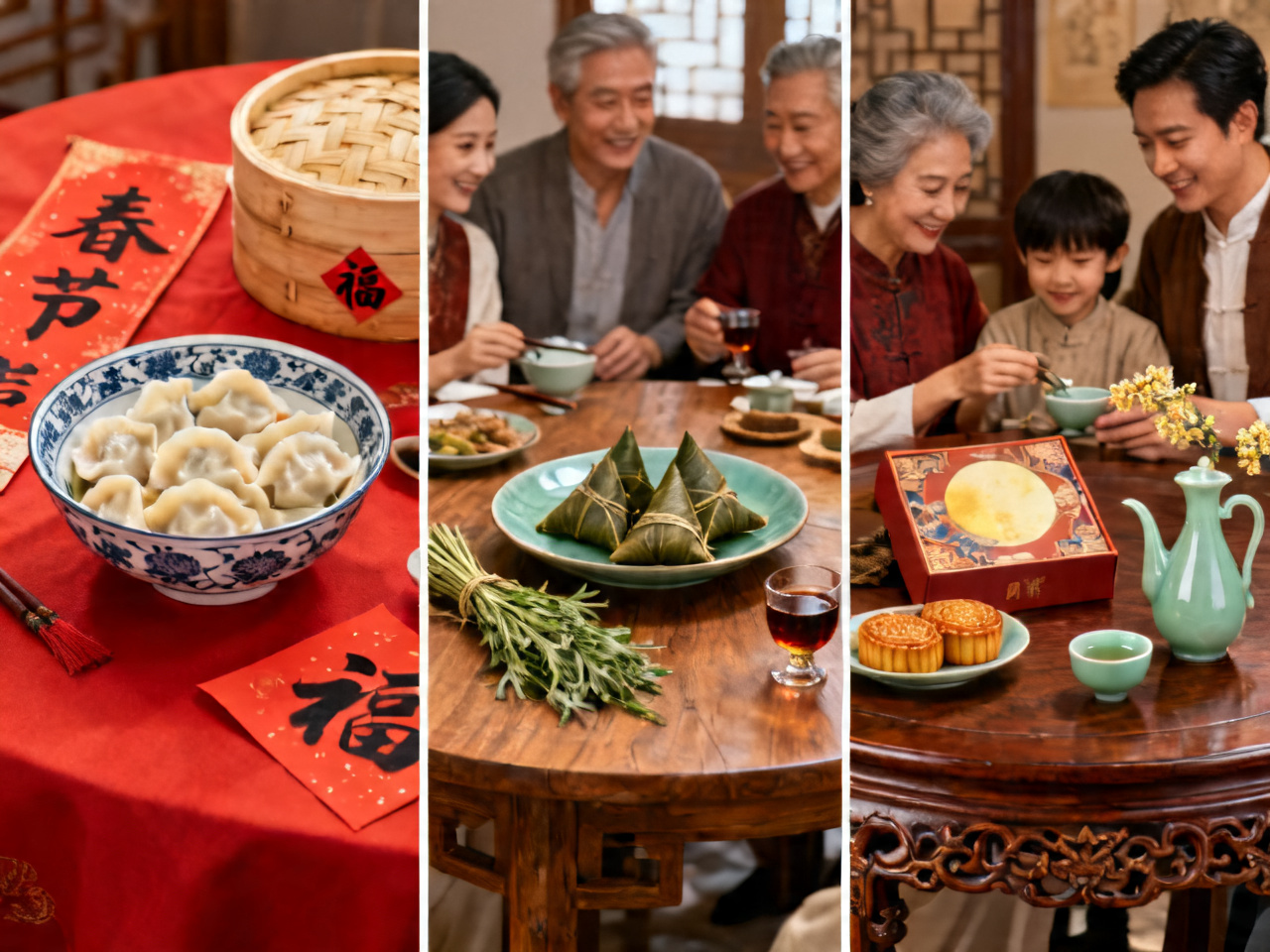
双方都觉得对方在吃奇怪的东西。
Every year around the Dragon Boat Festival, a war breaks out on Chinese social media: should zongzi be sweet or savory?
Sweet camp: red bean, candied dates, lotus paste — glutinous rice was made for sweet fillings. Savory camp: pork belly, salted egg yolk, shiitake mushroom — this is what real depth of flavor looks like.
Each side thinks the other is eating something bizarre.
这场争论的地理分界线大致沿着淮河走:北方偏甜,南方偏咸,但例外多得让这条线几乎没有意义。广东的咸肉粽可以大到一个人吃不完,浙江嘉兴的鲜肉粽油润得能滴油,四川的椒盐粽子又是另一个宇宙。
The geographic dividing line roughly follows the Huai River — north tends sweet, south tends savory — but there are so many exceptions the line barely means anything. A Cantonese savory zongzi can be too big for one person to finish. A Jiaxing fresh pork zongzi from Zhejiang glistens with fat. Sichuan's pepper-and-salt version is a universe of its own.
端午节吃粽子的起源,教科书版本是纪念屈原。但更诚实的说法是:这个时节正好是糯米成熟、苇叶茂盛的时候,食物与节气本来就是一体的。
The textbook origin of eating zongzi at Dragon Boat Festival is to commemorate the poet Qu Yuan. But the more honest answer is: this is exactly when glutinous rice ripens and reed leaves are at their fullest. Food and season were always one thing.
中秋:月饼的真相
月饼是中国最被高估、也最被低估的食物。
被高估:很多人买月饼不是为了吃,是为了送礼。精装礼盒、双黄莲蓉、五仁……买的人觉得体面,收的人放在家里忘了吃,最后扔掉。
被低估:真正好的月饼,是另一回事。
Mooncakes are simultaneously the most overrated and most underrated food in China.
Overrated: many people buy mooncakes not to eat, but to give as gifts. Fancy boxes, double-yolk lotus paste, five-nut filling — the giver feels dignified, the recipient leaves them on the shelf and forgets, then throws them away.
Underrated: a genuinely good mooncake is something else entirely.
苏式月饼,酥皮层层叠叠,咬下去会掉渣,鲜肉馅的趁热吃,油脂和肉香混在一起,跟广式月饼完全是两种食物。云南的鲜花饼,玫瑰花瓣做馅,甜而不腻,第一次吃的人通常会愣一下。潮汕的朥饼,猪油起酥,绿豆沙馅,是那种你吃完会想知道它叫什么名字的东西。
Suzhou-style mooncakes have flaky, layered pastry that crumbles when you bite in. The fresh pork filling eaten hot — fat and meat fragrance together — is a completely different food from Cantonese mooncakes. Yunnan's fresh flower cakes use rose petals as filling, sweet without being cloying; first-timers usually pause for a moment. Chaoshan's lard-pastry mooncakes with mung bean filling are the kind of thing you eat and then immediately want to know the name of.
中秋节的核心不是月饼,是"团圆"这件事本身。月饼只是一个载体——圆的形状,象征完整。在中国,很多重要的情感都需要一个食物来承载,因为直接说出来反而显得生分。
The heart of Mid-Autumn Festival isn't the mooncake — it's reunion itself. The mooncake is just a vessel: its round shape symbolizes wholeness. In China, many important feelings need a food to carry them, because saying them directly would feel strange.
如果你在中国赶上了这三个节日,不要只看庙会和灯笼。找一户人家,或者一家不起眼的小馆子,坐下来,点那道"节日才有"的菜。
那才是真正的中国。
If you happen to be in China during any of these three festivals, don't just look at the temple fairs and lanterns. Find a family, or an unremarkable little restaurant, sit down, and order the dish that only appears during the festival.
That's the real China.
延伸阅读 / Related Reads
- 成都大熊猫与宽窄巷子 | Chengdu: Giant Pandas & Kuanzhai Alley
- 天黑了才是正片开始 | When the Sun Sets, the Real Show Begins — China's Night Economy
- 北京到西安:穿越历史之旅 | Beijing to Xi'an: A Journey Through History
- 中国饮品文化:从功夫茶到网红奶茶 | Chinese Drink Culture: From Kung Fu Tea to Viral Milk Tea
- 广西山水5日行程:桂林阳朔龙脊梯田 | 5-Day Guangxi: Guilin, Yangshuo & Longji Terraces
- 杭州西湖:人间天堂 | Hangzhou West Lake: Paradise on Earth
- 美国人去中国旅行前必须知道的事 | What Americans Need to Know Before Traveling to China
- 风沙把莫高窟的时间吹慢了 | The Sandstorm Slowed Time at the Mogao Caves
- 中国旅游行李打包清单 | China Travel Packing Checklist
- 夜市烧烤摊的烟火气,教我别只找网红餐厅 | Smoke from a Night Grill Taught Me Not to Only Chase Viral Restaurants
Comments (0)