
贵阳的酸汤不是一道菜:从菜市场到晚饭桌 | Sour Soup in Guiyang Is More Than a Dish: From Market to Dinner Table
贵阳的酸汤不是一道菜:从菜市场到晚饭桌 | Sour Soup in Guiyang Is More Than a Dish: From Market to Dinner Table
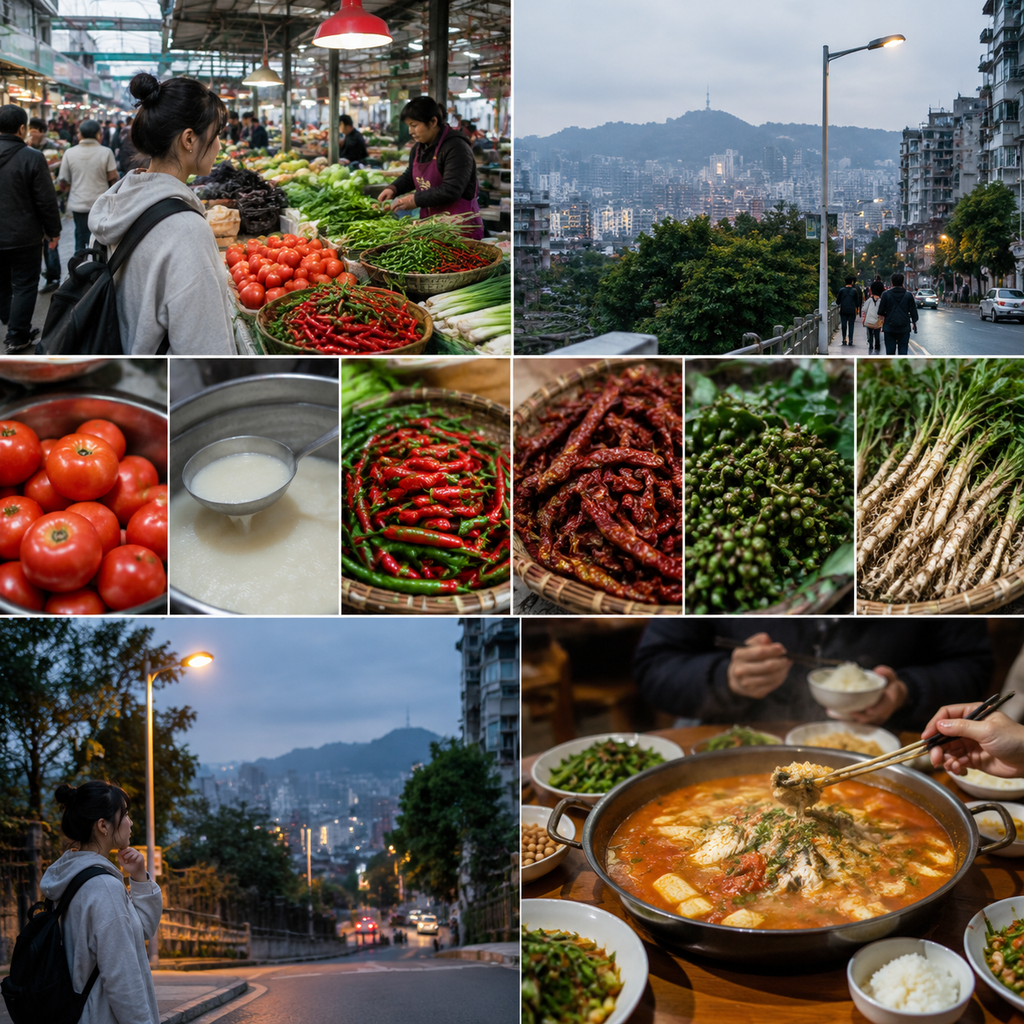
早上七点多,贵阳的天还带着一层没有散尽的灰白,我跟着住在附近的朋友钻进菜市场。入口处的地面湿漉漉的,塑料棚上不断落下细小水珠。卖菜的阿姨把一把红艳艳的小番茄推到我面前,又弯腰从筐底捞出几只青辣椒。她手指上沾着水,动作很快,像是在给熟客挑选一件合身的衣服。
A little after seven in the morning, Guiyang was still wrapped in pale gray light when I followed a local friend into a market nearby. The floor at the entrance was damp, and tiny drops kept falling from the plastic awning. A vegetable seller pushed a pile of bright red tomatoes toward me, then bent down to pull out a few green chilies. Her fingers were wet and her movements quick, as if she were fitting a familiar customer with the right garment.
我原以为酸汤的关键只是某一种酸味,最好能被清楚地装进一只瓶子里。可是市场里的答案并不整齐:发酵过的米汤装在大塑料桶里,表面浮着薄薄的乳白色;番茄被按个挑选,不能太硬,也不能熟到一碰就裂;木姜子、折耳根、蒜苗和小葱挤在一起,气味彼此穿插。朋友没有急着解释,只拿起一块姜闻了闻,又把它放回摊主指定的位置。
I had assumed the secret of sour soup was simply one particular sour flavor, something that could be neatly sealed in a bottle. The market offered a messier answer. Fermented rice broth sat in large plastic tubs, its surface covered by a thin milky film. Tomatoes were chosen one by one: not too firm, but not so ripe that they split at a touch. Litsea cubeba, fish mint, garlic chives, and scallions crowded together, their smells crossing and mingling. My friend did not explain. He only picked up a piece of ginger, smelled it, and returned it to the spot the vendor indicated.
走到鱼摊前,老板娘用刀背敲了敲盆沿,几条鱼立刻在水里翻身。她一边把鱼捞进蓝色塑料袋,一边问朋友今晚来了几个人。朋友伸出四根手指,她便多抓了一把番茄和一小撮辣椒,说酸汤要有“底气”,不能只酸得热闹。那句话我当时没完全听懂,却记住了她的手:拎袋子、掂重量、补食材,每个动作都在替晚饭预留余地。
At the fish stall, the owner tapped the rim of a basin with the back of her knife, and several fish turned sharply in the water. While slipping one into a blue plastic bag, she asked how many people would be eating that evening. My friend held up four fingers. She added another handful of tomatoes and a small pinch of chilies, saying that sour soup needed “a solid foundation,” not just a loud sourness. I did not fully understand her then, but I remembered her hands: lifting the bag, judging its weight, adding ingredients. Every motion was making room for the evening meal.
第一顿饭来得很快。傍晚,朋友的母亲把砂锅放在灶上,先倒进发酵米汤,再把拍碎的番茄、姜片和辣椒放进去。锅底刚开始冒泡,酸香便从厨房钻到客厅,像雨后石阶被太阳晒热的味道。她没有一次把所有东西倒完,而是尝一口,皱眉,再添半勺米汤。汤面翻滚时,鱼才被轻轻滑进去,折耳根最后才下锅。
The first meal arrived quickly. At dusk, my friend’s mother set a clay pot on the stove, poured in the fermented rice broth, and added crushed tomatoes, ginger, and chilies. As bubbles began to gather at the bottom, a sour fragrance traveled from the kitchen into the living room, like warm stone steps after rain. She did not add everything at once. She tasted, frowned, and poured in half a spoonful more rice broth. Only when the soup rolled did she slide in the fish, with fish mint added at the very end.
我第一次喝时犯了一个很典型的错误:把酸汤当成了需要被“挑战”的刺激性菜肴。我舀得太满,入口先是酸,随后是辣,舌头被一阵热意推着往后缩。我赶紧去拿水杯,朋友却笑着把一块鱼肉夹进我的碗里,说先别喝汤,吃鱼。鱼肉吸住了汤里的酸和鲜,紧接着浮上来的却是番茄的甜、木姜子的清凉,还有一点发酵味留下的厚度。我的判断在这一口里悄悄改了方向。
I made a very common mistake with my first sip: I treated sour soup as an aggressive dish meant to be conquered. I filled my spoon too high. Sourness arrived first, then heat, and my tongue pulled back. I reached for water, but my friend laughed, placed a piece of fish in my bowl, and told me not to drink the soup by itself—eat the fish first. The fish held the soup’s sourness and savoriness, followed by tomato sweetness, the cool lift of litsea cubeba, and a lingering fermented depth. With that bite, my judgment quietly changed direction.
后来我才明白,酸汤并不是餐桌上孤零零的一道菜,它从市场的选择开始,经过摊主的经验、厨房里的等待,最后才变成每个人碗里的味道。谁负责挑鱼,谁记得补辣椒,谁在锅边把火调小,谁把第一碗递给刚坐下的人,这些细小动作都在决定汤的性格。酸味也不是一条笔直的线,它会被鱼油、米香、蔬菜和人的吃法一层层托住。
Only later did I understand that sour soup is not an isolated dish on the table. It begins with choices in the market, passes through the experience of the vendors and the waiting in the kitchen, and finally becomes the flavor in each person’s bowl. Who chooses the fish, who remembers the chilies, who lowers the flame, and who serves the first bowl to the person just sitting down—all these small actions shape the soup’s character. Sourness is not a straight line; it is supported layer by layer by fish oil, rice fragrance, vegetables, and the way people eat.
饭吃到一半,锅里的汤已经少了一截,母亲又往里面加了些热水和番茄。朋友把碗沿推近,夹走一块鱼皮,顺手把葱花撒到汤面上。窗外有摩托车驶过,湿街被车灯划出一道短亮的弧线。那一刻我忽然觉得,贵阳的酸汤不需要被端上台解释,它更像一条看不见的线,把菜市场清晨的湿气、厨房里守火的人和晚饭桌旁不断伸出的筷子串在了一起。
Halfway through the meal, the soup had fallen by a third, so his mother added hot water and more tomatoes. My friend pushed his bowl closer, lifted off a piece of fish skin, and scattered scallions over the surface. Outside, a motorcycle passed, its headlight drawing a brief bright curve across the wet street. I suddenly felt that Guiyang’s sour soup did not need to be placed on a stage and explained. It was more like an invisible thread, tying together the damp morning market, the person tending the fire, and the chopsticks reaching across the dinner table.
第二天早晨,我在市场门口又闻到那股酸香,竟然没有立刻想到“酸”。它里面有湿木板、番茄皮、鱼鳞、辣椒籽和热锅边缘的气息,也有摊主招呼熟客时扬起的声音。朋友问我还要不要买一小袋木姜子,我点了点头。这一次,我没有问它究竟是什么味道,只想把那种还没完成的味道带回厨房,等它在另一顿饭里继续变化。
The next morning, I smelled that sour fragrance again at the market entrance, and “sour” was no longer the first word that came to mind. It contained damp wood, tomato skins, fish scales, chili seeds, and the scent of a hot pot’s rim, along with the raised voices of vendors greeting regulars. My friend asked whether I wanted a small bag of litsea cubeba. I nodded. This time I did not ask what flavor it was supposed to be. I only wanted to take that unfinished flavor back to a kitchen and let it keep changing in another meal.
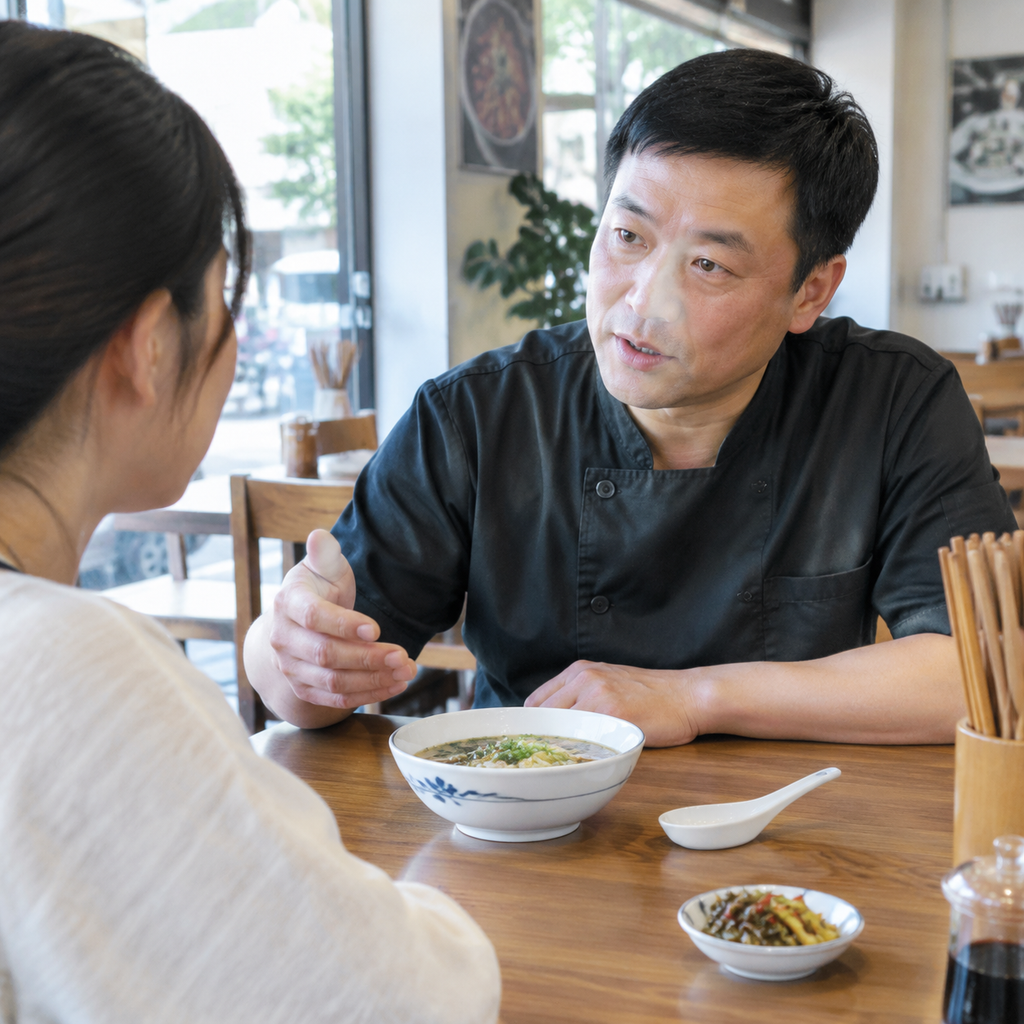
那天下午,我们没有回朋友家,而是绕到一间临街的小馆子。门口的白瓷碗摞得很高,蒸汽把玻璃窗熏出一片模糊的水雾。墙上的菜单写着鱼、排骨、豆花和几种蔬菜,酸汤两个字被红笔圈了出来。我站在柜台前,按照自己熟悉的方式说:“来一份酸汤鱼,再单独要一碗米饭。”老板抬头看了看朋友,朋友马上摆手,笑着替我纠正:“不是一份,是按人数点锅,鱼要现挑,饭不用先上。”
That afternoon, instead of returning to my friend’s home, we turned into a small restaurant facing the street. White porcelain bowls were stacked by the entrance, and steam had fogged the glass into a blurred sheet of water. The menu listed fish, ribs, bean curd, and several vegetables, while the words sour soup were circled in red. At the counter I used the ordering style I knew and said, “One serving of sour-soup fish, and a separate bowl of rice.” The owner looked at my friend, who immediately waved and laughed as he corrected me: “Not one serving. We order a pot according to the number of people, choose the fish fresh, and the rice does not need to come first.”
我这才意识到,第一次点单时我把酸汤当成了一个固定分量的菜名,好像只要说出菜名,厨房就会送来一个标准答案。可这里的顺序更像一次共同决定:先说几个人,老板再问能不能吃辣;鱼要看当天水箱里哪条精神,配菜则随着人数和胃口调整。朋友蹲下来指了指水箱里游得最慢的一条,老板用网兜一抄,放在秤盘上,又把秤往自己这边轻轻拨了一下。
I realized that my first order had treated sour-soup fish as a fixed portion, as if naming the dish were enough to summon a standard answer from the kitchen. Here, the order was more like a shared decision. First came the number of diners, then the owner asked how much heat we could take. The fish depended on which one in the tank looked lively that day, while the side ingredients changed with the group’s appetite. My friend crouched down and pointed to the slowest-swimming fish. The owner caught it with a net, placed it on the scale, and gently nudged the scale toward herself.
我又补了一句:“要最酸的。”朋友的手停在半空,转过来问我是不是还记得昨晚第一口的教训。老板没有笑我,只把勺子放在桌上,解释说酸度可以调,但不能把“最酸”当成唯一目标。汤如果太冲,鱼的甜味会被推到后面,蔬菜也没有机会说话。她让我们选中等辣,番茄多放一些,米汤先少一点,等锅开后再看颜色和香气。这个修正听起来很小,却让我第一次明白点菜也是学习的一部分。
I added, “Make it as sour as possible.” My friend’s hand paused in midair and he turned to ask whether I remembered the lesson from my first bite the night before. The owner did not laugh. She set a spoon on the table and explained that the sourness could be adjusted, but “the most sour” should not be the only goal. If the broth was too sharp, the fish’s sweetness would be pushed away, and the vegetables would have no chance to speak. She suggested medium heat, extra tomatoes, and less rice broth at first, so we could judge the color and aroma after the pot came to a boil. The correction sounded small, but it was the first time I understood that ordering was part of learning.
锅送上来时,鱼还在盘里微微摆尾,老板娘把它倒进汤里,动作干脆却不粗暴。她先用长柄勺沿锅边推开番茄,再把鱼身压到汤面下,提醒我们不要马上翻动。邻桌的小孩伸手去够漏勺,被父亲轻轻按住手腕;朋友则把蘸水的小碟往我面前推,说先少放一点折耳根,尝过原味再加。厨房里有人喊着添柴,服务员端来一盘豆腐,白色的块面在红汤旁显得格外安静。
When the pot arrived, the fish still flicked its tail faintly on the plate. The owner tipped it into the broth with a movement that was brisk but not rough. She used a long-handled ladle to push the tomatoes away from the rim, lowered the fish beneath the surface, and reminded us not to stir it immediately. At the next table, a child reached for the strainer and his father gently held his wrist. My friend slid a small dish of dipping sauce toward me and suggested starting with only a little fish mint, tasting the original flavor before adding more. Someone in the kitchen called for more firewood, while a server brought tofu whose white squares looked especially quiet beside the red broth.
这一次我没有把勺子装满。我先夹一小块鱼腹,蘸水只碰了一下,再送进嘴里。汤的酸仍然清楚,却没有迎面撞来;鱼肉的油脂把它接住,番茄的甜在咀嚼之后慢慢回返。朋友看见我没有找水杯,便把火调小,顺手将一片泡过汤的白菜夹到自己碗里。我们没有急着讨论哪种味道最突出,只听着锅里细密的咕嘟声,等下一块鱼在热气里变得更软。
This time I did not fill my spoon. I took a small piece from the fish’s belly, touched it lightly to the dipping sauce, and put it in my mouth. The sourness was still clear, but it did not strike me head-on. The fish’s fat caught it, and the tomato sweetness slowly returned after I chewed. Seeing that I had not reached for water, my friend lowered the flame and casually transferred a piece of cabbage soaked in broth to his own bowl. We did not hurry to decide which flavor was strongest. We listened to the fine bubbling of the pot and waited for the next piece of fish to soften in the steam.
晚饭桌上最忙的并不是筷子,而是每个人的手。有人把鱼骨挑到小碟里,有人把锅边的汤舀进空碗,有人发现辣椒浮得太多,便用勺背把它们拨到一旁。老板娘临走前又回来确认汤够不够,听见我们说还想加一点酸,才从后厨端来一小碗米汤。她没有直接倒进去,而是把碗放在朋友手边,让我们自己决定。朋友只加了两勺,锅里的颜色立刻柔下来,酸香也从尖锐变得圆润。
The busiest things at the dinner table were not the chopsticks but everyone’s hands. Someone moved fish bones to a small plate, someone ladled broth from the edge of the pot into an empty bowl, and someone noticed too many chilies floating on top and pushed them aside with the back of a spoon. Before leaving, the owner returned to check whether the broth was enough. When we said we wanted a little more sourness, she brought a small bowl of rice broth from the kitchen. She did not pour it in herself. She placed it beside my friend and let us decide. He added only two spoonfuls, and the color softened at once, the sharp fragrance becoming rounder.
离开小馆子时,市场已经收摊,清晨那些湿漉漉的菜叶被扫进路边的桶里,鱼摊的蓝色塑料袋也换成了干净的一批。我的衣服还留着火锅和木姜子的气味,走过街角时,竟觉得这股味道比菜单上的菜名更准确。所谓第一次点单修正,并不是把一句话说得更专业,而是承认自己还不懂,把选择交给当天的鱼、锅里的温度和坐在身边的人。
When we left the small restaurant, the market had already closed. The damp leaves from the morning had been swept into bins by the roadside, and the fish stall’s blue plastic bags had been replaced with a clean batch. My clothes still carried the smell of the hot pot and litsea cubeba. At the corner, I felt that scent was more accurate than any dish name on the menu. Correcting my first order was not about speaking more professionally. It was about admitting that I was still learning, and letting the day’s fish, the temperature of the pot, and the people beside me shape the choice.
回到住处,朋友把早上买来的木姜子倒在砧板上,挑出几颗颜色发暗的。他说下次可以试试鸡肉,也可以只煮蔬菜,让汤的底味慢慢露出来。我负责把小葱切碎,刀刃落在砧板上,发出轻而有节奏的声响。窗外又开始下雨,雨点敲着铁栏杆,像有人在催促下一锅汤。酸汤从市场走到晚饭桌,并没有在某一个瞬间结束;它还留在手上的香气、第二天的选择,以及我终于学会先吃鱼再喝汤的动作里。
Back at the house, my friend poured the litsea cubeba we had bought that morning onto a cutting board and picked out the darkened pieces. He said that next time we could try chicken, or cook only vegetables and let the broth’s deeper flavor emerge slowly. I chopped the scallions, the knife landing on the board in a soft, steady rhythm. Rain began again outside, tapping the metal railing as if urging on the next pot of soup. Sour soup did not end at a single moment when it traveled from market to dinner table. It remained in the fragrance on our hands, in the choices we would make the next day, and in the small action I had finally learned: eat the fish first, then drink the broth.
木姜子的香味很快从砧板上散开,带着一点柑橘似的清亮。朋友把它分成两小撮,一撮留到明早,一撮放进刚才剩下的汤里。他没有重新把锅烧沸,只让余温把香气慢慢逼出来。剩汤已经不像刚端上桌时那样鲜明,酸味沉在底部,辣椒的热度也退去不少,可鱼骨和豆腐留下的鲜味让它变得更厚。我们站在灶边各喝了半碗,谁也没有再说“最酸”或“最辣”。
The fragrance of litsea cubeba soon spread from the cutting board, bright and almost citrus-like. My friend divided it into two small portions, saving one for the morning and dropping the other into the soup left from dinner. He did not bring the pot back to a full boil; he let the remaining heat draw out the aroma slowly. The broth was no longer as vivid as when it first arrived at the table. Sourness had settled at the bottom, and the chili heat had eased, but the fish bones and tofu had given it a deeper body. We each drank half a bowl by the stove and did not mention “the sourest” or “the hottest” anymore.
我问他,如果客人真的吃不了辣,应该怎样调整。他先舀了一勺汤,想了想,说不要一开始就把辣椒全拿走,因为辣不只是疼,也是一种香气和温度。可以少放鲜辣椒,保留一点干辣椒;也可以先让番茄和米汤把底味煮开,最后再用蘸水补上刺激。这样同一锅汤里,能吃辣的人自己加,不太能吃的人也不会被逼着接受一个固定答案。酸度也是一样,先尝底味,再决定加发酵米汤还是番茄。
I asked how he would adjust the dish for someone who could not handle much spice. He ladled out a spoonful, thought for a moment, and said that the chilies should not all be removed at the beginning. Heat was not only pain; it also carried aroma and warmth. We could use fewer fresh chilies while keeping a little dried chili, or let the tomatoes and rice broth establish the base first and add intensity later through the dipping sauce. That way, people who loved heat could build it themselves, while those with a lower tolerance would not be forced into a fixed answer. Sourness worked the same way: taste the base first, then decide whether to add fermented rice broth or more tomato.
他说得很轻,却让我想起餐馆里那两勺米汤。酸度不是开关,不能简单地从零拨到最大;它更像屋檐上的雨,一阵一阵落下来,必须看锅里已有的味道能不能接住。发酵米汤带来的是柔和而持久的酸,番茄带来的是带甜意的酸,醋则会更直接。若鱼肉已经吸足了汤,继续加酸只会让舌头疲惫;若汤底偏淡,一点点补进去,反而能把香味重新提起来。
He spoke quietly, but I thought of the two spoonfuls of rice broth at the restaurant. Sourness was not a switch that could be moved from zero to maximum. It was more like rain falling from the eaves in uneven spells, and the pot had to be able to receive what was added. Fermented rice broth gave a soft, lasting acidity; tomatoes offered acidity with sweetness; vinegar would be more direct. If the fish had already absorbed enough broth, adding more sourness would only tire the tongue. If the base was still flat, a small addition could lift the aromas again.
我们把锅里的汤分成两碗做试验。一碗加了几滴蘸水里的辣椒油,另一碗只加米汤。前者入口更快,辣味先抵达,酸香被推得高而窄;后者颜色变浅,酸味却变得绵长,咽下后仍有一点谷物的回甘。我又往第二碗里放了一片白菜,白菜吸住汤汁后,辣和酸都被拉开了距离。朋友说,家常饭最有意思的地方,就是每个人的碗都可以略有不同。
We divided the remaining broth between two bowls for a small experiment. A few drops of chili oil went into one, while the other received only rice broth. The first arrived more quickly: heat came forward, pushing the sour aroma into a narrow, high note. The second grew paler, but its acidity lasted longer, leaving a faint grain-like sweetness after swallowing. I placed a piece of cabbage in that bowl, and the cabbage spread the sourness and heat farther apart. My friend said that this was what made a home meal interesting: each person’s bowl could be slightly different.
雨越下越密,厨房的窗玻璃又蒙上一层雾。朋友的母亲收拾完桌面,发现我们还守着那口小锅,便从柜子里拿出一只旧保温壶,把剩汤装进去。她说明早不用再做复杂的东西,煮一把米粉,放几片青菜,把汤重新热开就行。临出门前,她特意叮嘱我们别把木姜子一次放完,香味太满,反而会盖住鱼汤的清鲜。
The rain grew denser, and the kitchen window clouded again. After clearing the table, my friend’s mother found us still standing over the little pot. She took an old thermos from a cupboard and poured in the leftover broth. There would be no need to make anything elaborate in the morning, she said: cook some rice noodles, add a few green vegetables, and heat the broth again. Before leaving, she reminded us not to use all the litsea cubeba at once. If its aroma became too full, it would cover the clean freshness of the fish stock.
夜里我躺在床上,仍能分辨出衣袖上的三种气味:辣椒留下的干燥热意,木姜子的清凉,还有米汤发酵后的微酸。它们没有谁真正占上风,像晚饭时几个人轮流伸筷子,彼此让出一点位置。我以前总想把一道菜概括成一个最准确的词,仿佛记住“酸”就算认识了酸汤。现在我更愿意记住调味的过程:先少一点,尝一口,等它与鱼、菜和热气相遇,再决定下一勺放什么。
That night, lying in bed, I could still distinguish three scents on my sleeves: the dry warmth left by chili, the coolness of litsea cubeba, and the faint acidity of fermented rice broth. None truly dominated, just as the diners had taken turns reaching across the table and leaving room for one another. I used to want to reduce every dish to one precise word, as if remembering “sour” meant I understood sour soup. Now I preferred to remember the process of seasoning: begin with less, taste once, let it meet the fish, vegetables, and steam, and only then decide what the next spoonful should contain.
第二天清晨,保温壶里的汤果然还温着。我们在小锅里煮米粉,青菜刚变软便关火,再把汤一点点倒进去。没有鱼肉的支撑,酸味显得更直白,所以朋友只加了半勺番茄碎,又把昨晚留下的两颗木姜子压破。米粉吸住汤汁后,辣度反而显得温和,酸香沿着热气往上走,像把前一晚的晚饭从记忆里重新叫醒。
The next morning, the broth in the thermos was still warm. We cooked rice noodles in a small pot, turned off the heat as soon as the greens softened, and poured in the broth little by little. Without fish to support it, the acidity felt more exposed, so my friend added only half a spoonful of crushed tomato and split open the two litsea cubeba fruits saved from the night before. Once the noodles absorbed the broth, the heat seemed gentler. The sour aroma rose with the steam, calling the previous evening’s dinner back into memory.
我最后没有把那碗粉吃得很快。窗外的街道刚刚醒来,卖早点的推车经过巷口,车轮压过积水,发出短促的声响。我把剩下的汤喝完,舌尖先碰到一点酸,随后是辣椒留下的暖意,最后才是米香和木姜子的清亮。贵阳的酸汤晚饭就这样收了尾:不是用一句“好吃”盖住所有细节,也不是把酸和辣分出输赢,而是在一锅会继续变化的汤里,学会给每一种味道留出位置。
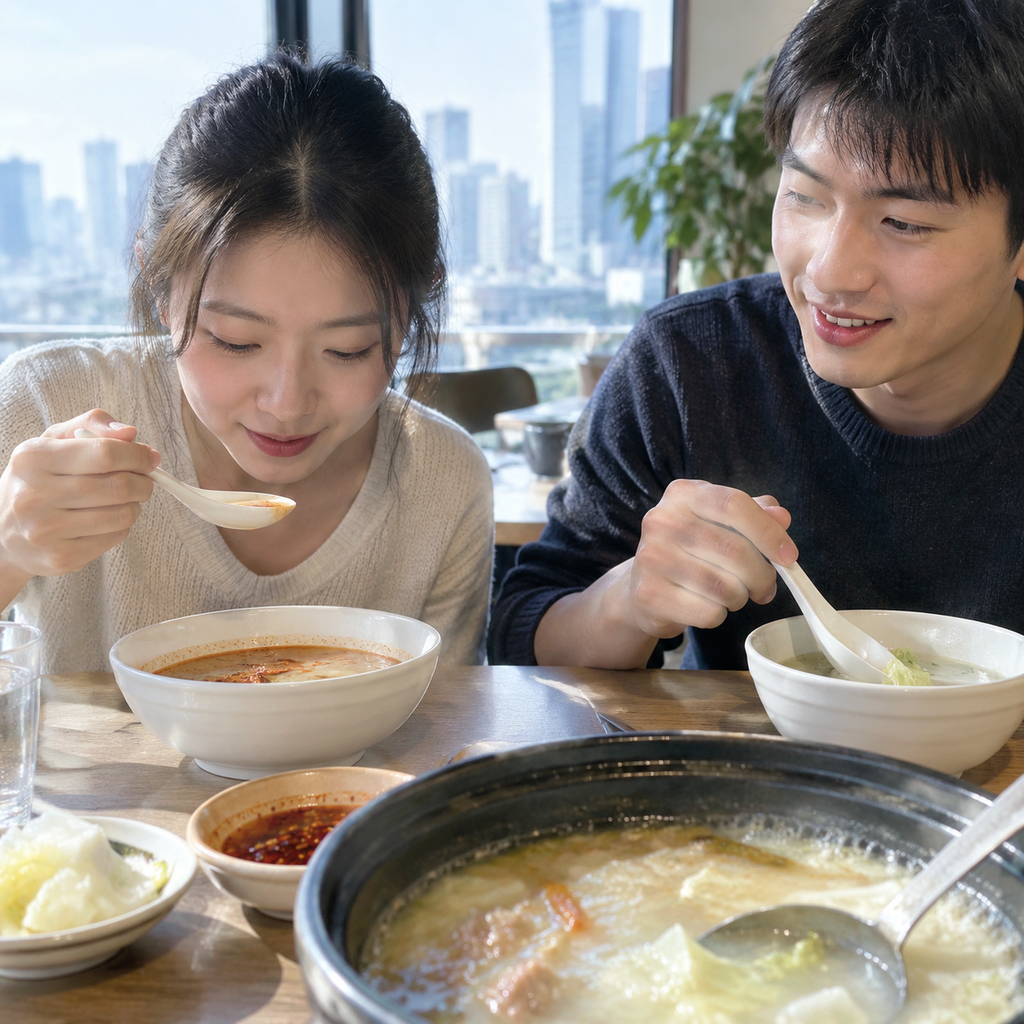
I did not eat that bowl of noodles quickly. Outside, the street was only beginning to wake. A breakfast cart passed the mouth of the lane, its wheels making a brief sound as they crossed a puddle. I finished the remaining broth. First came a touch of sourness, then the warmth left by chili, and finally the brightness of rice and litsea cubeba. That was how the Guiyang sour-soup dinner ended—not by covering every detail with the single word “delicious,” and not by declaring sourness or heat the winner, but by learning, in a pot that kept changing, to leave room for every flavor.
吃完早饭,我们没有马上回屋,朋友说应该沿着昨晚回来的路再走一遍。白天的巷子和夜里像是两种性格:屋檐下晾着的衣服被风吹得轻轻摆动,门口堆着刚买回来的青菜,昨晚亮着的餐馆招牌已经熄灭,只剩红纸边缘在晨光里微微卷起。墙脚有一排被雨水冲亮的青苔,旁边放着几只空啤酒瓶,瓶口朝着同一个方向,像是有人匆忙收拾过一场还没有完全散去的聚会。
After breakfast, we did not go straight back inside. My friend suggested walking the route we had taken home the night before. The lane had a different personality in daylight. Clothes under the eaves moved gently in the wind, fresh greens sat by doorways, and the restaurant signs that had glowed the previous night were dark, their red paper edges curling slightly in the morning light. Rain had polished a strip of moss along the wall, beside several empty beer bottles whose mouths pointed in the same direction, as if someone had hurriedly cleared away a gathering that had not quite disappeared.
拐过一个卖豆腐的摊位,空气里又出现了熟悉的酸香。摊主把豆腐切成厚片,刀面沾着水光,案板边摆着一只浅口木桶,里面是泡好的糟辣椒。她看见朋友,便问昨晚那锅鱼够不够吃。朋友说连汤都喝到见底,她笑着说那就说明火候没有错,又抓起一把蒜苗递给旁边的年轻人,让他回家时别忘了配一碗酸汤。这里的食材从来不是孤立摆放的,豆腐旁边总有辣椒,辣椒旁边总有葱蒜,仿佛每一种东西都在等待另一种东西把它的味道说完整。
After turning past a tofu stall, we found that familiar sour fragrance again. The vendor cut the tofu into thick slices, water shining on the blade. Beside the chopping board stood a shallow wooden tub filled with fermented chili paste. Seeing my friend, she asked whether the fish pot from the night before had been enough. He told her that we had finished even the broth. She smiled and said that meant the heat had been right, then handed a handful of garlic chives to a young customer and reminded him to take home some sour soup ingredients. The foods here were never displayed as isolated things. Tofu stood beside chilies, and chilies beside scallions and garlic, as though each ingredient waited for another to complete its sentence.
朋友带我去看一条更窄的后巷,那里没有店铺招牌,只有几扇半开的木门和一根根从楼上垂下来的水管。昨夜的雨水还从管口断续滴落,落在铁盖上,发出清脆的声响。一个老人坐在门边择菜,篮子里有青笋叶、芹菜和几枚颜色深红的番茄。他把不够新鲜的叶子一片片剥掉,剩下的菜并不多,却摆得很整齐。我问这些菜是不是也会放进酸汤,他抬头说,家里有什么就放什么,但每一样都要先尝一口,不能让锅替自己做决定。
My friend led me into a narrower back lane without shop signs, only half-open wooden doors and pipes descending from the upper floors. Rainwater still dripped from the pipes onto a metal cover, making a clear, regular sound. An older man sat by a doorway sorting vegetables: tender lettuce stems, celery, and several deep-red tomatoes. He removed the tired leaves one by one. There was not much left, but what remained was neatly arranged. I asked whether these vegetables would also go into sour soup. He looked up and said that one used whatever the household had, but every ingredient should be tasted first. The pot should not be allowed to make all the decisions by itself.
这句话让我在巷子里停了很久。旅行中最容易犯的错,是把地方味道当作一道已经完成的答案,急着寻找标准配方、必吃清单和最值得拍下来的那一碗。可贵阳的酸汤偏偏不肯停在原地:番茄的成熟度变了,米汤的发酵时间变了,鱼换成鸡或豆腐,桌边的人数变了,锅里的结果就会跟着改变。就连同一家的晚饭,也不会因为昨天好吃,今天便完全重复。味道记得过去,却不服从过去。
That sentence kept me standing in the lane for a long while. One of the easiest mistakes in travel is to treat a local flavor as a finished answer, then rush to find a standard recipe, a must-eat list, or the most photographable bowl. Guiyang’s sour soup refuses to stay still. The ripeness of the tomatoes changes, the fermentation time of the rice broth changes, fish may give way to chicken or tofu, and the number of people around the table alters the result. Even a meal in the same home will not repeat itself simply because it tasted good the day before. Flavor remembers the past, but it does not obey it.
傍晚再次降下来时,我们回到那家小馆子附近。街边的灯一盏接一盏亮起,雨后的地面映着橘黄色的光。有人在店门口剥蒜,有人端着刚煮好的米粉穿过马路,巷口的小孩踩着水洼,鞋面溅上细碎的泥点。朋友没有再点鱼,而是要了一锅番茄酸汤,加入豆腐、白菜和一把切短的蒜苗。老板娘认出我,问今天还要不要“最酸”,我摇头,说让她先按自己的判断来。她点点头,像是知道我终于学会了这顿饭的第一条规矩。
When evening settled in again, we returned near the small restaurant. Street lamps came on one after another, their orange light reflected on the wet pavement. Someone peeled garlic outside the doorway, someone carried freshly cooked rice noodles across the road, and children at the mouth of the lane stepped into puddles, flecking their shoes with mud. My friend did not order fish this time. He chose a tomato sour-soup pot with tofu, cabbage, and chopped garlic chives. The owner recognized me and asked whether I wanted it “as sour as possible.” I shook my head and told her to trust her own judgment first. She nodded, as if I had finally learned the first rule of this meal.
汤开以后,番茄皮在红色汤面上舒展开来,豆腐边缘吸进一圈橙红,白菜则在勺子碰到时缓慢散开。没有鱼油托住酸味,汤的轮廓显得更清楚,也更需要耐心。我们先吃豆腐,再吃白菜,最后把蒜苗拌进碗里。街上的声音一层层传进来:电动车刹车的尖响,楼上收衣架的碰撞,远处有人喊朋友下楼。锅里的咕嘟声并不宏大,却把这些零散的声音收拢成了一个可以坐下来的夜晚。
When the soup began to boil, tomato skins opened across the red surface, the tofu taking on an orange-red rim while the cabbage slowly loosened whenever the ladle touched it. Without fish oil to carry the acidity, the broth’s outline was clearer and required more patience. We ate the tofu first, then the cabbage, and finally mixed the garlic chives into our bowls. Sounds entered from the street in layers: the sharp brake of an electric scooter, hangers knocking upstairs, and someone in the distance calling a friend downstairs. The bubbling pot was not loud, but it gathered these scattered sounds into an evening where one could sit still.
饭后我们沿着石板路慢慢往前走,没有急着寻找一个适合结束旅程的景点。巷子尽头是一处小小的坡地,几栋旧楼把天空切成不规则的窄条。雨已经停了,屋檐还在滴水,路边的积水里倒映着招牌和行人的伞。朋友把装着剩余木姜子的纸袋递给我,说回去以后不要照着昨晚的味道复刻,可以先煮一锅很淡的汤,再根据当天买到的东西调整。我把纸袋收进外套口袋,闻到一缕清亮的香气,知道这趟晚饭并没有真正结束。
After dinner, we walked slowly along the stone-paved road, without trying to find a landmark suited to ending the journey. At the end of the lane was a small rise, where old buildings cut the sky into irregular narrow strips. The rain had stopped, though water still fell from the eaves. Signs and umbrellas trembled in the puddles beside the road. My friend handed me the paper bag of litsea cubeba and said that when I went home, I should not try to reproduce last night’s flavor exactly. I should begin with a very light broth and adjust it according to whatever I found that day. I slipped the bag into my coat pocket and caught a bright thread of its scent, knowing that the dinner had not truly ended.
站在坡地上回望时,贵阳的夜色没有把巷子抹平。厨房的窗里仍有暖黄的灯,某户人家把锅盖掀开,蒸汽短暂地涌到窗外;楼下的店铺正在关门,老板把塑料凳一张张倒扣起来;一只猫从墙角穿过,尾巴擦过湿漉漉的砖面。那些看似与旅行无关的动作,反而比一张匆忙拍下的照片更留得住这座城市。酸汤也正是在这些动作里完成:有人挑选,有人等待,有人添一勺,有人把最后一碗留给晚归的人。
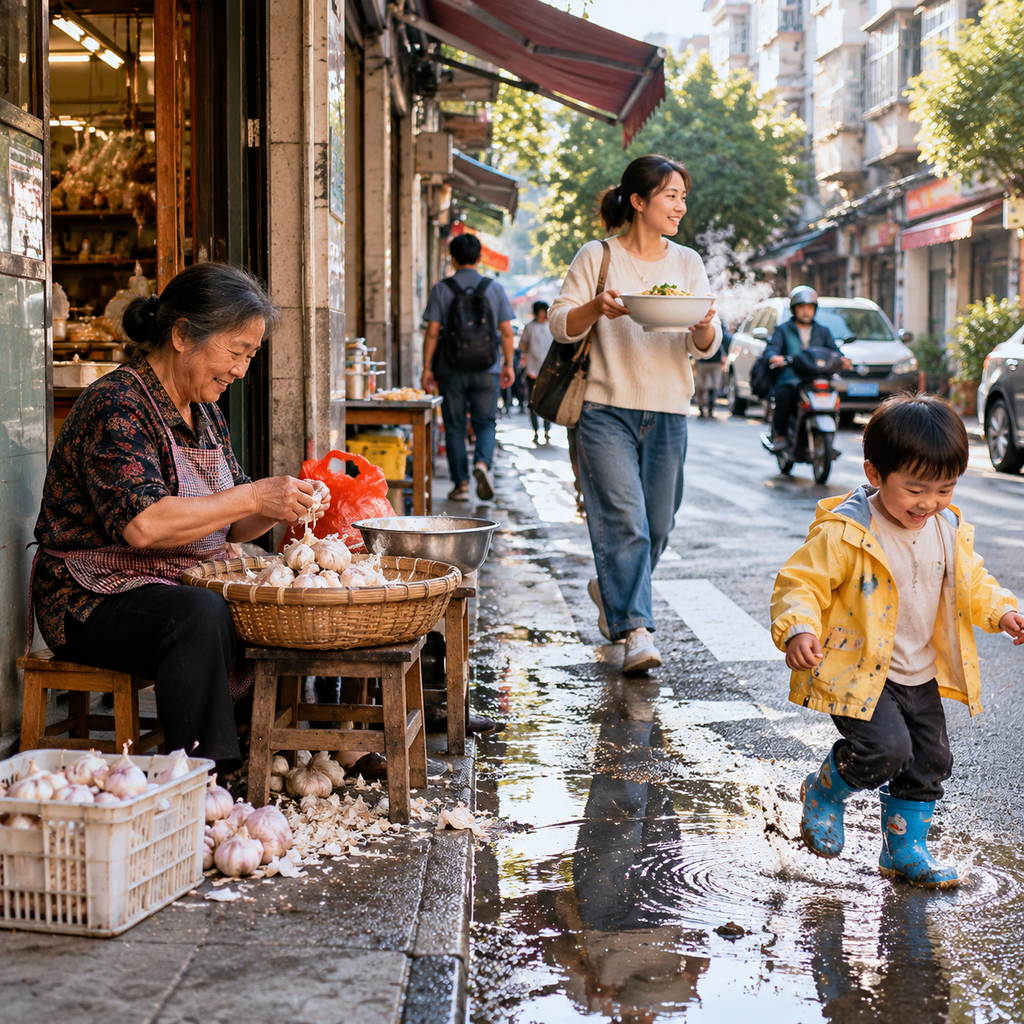
Looking back from the rise, I saw that Guiyang’s night had not erased the lanes. Warm yellow light still shone from kitchen windows. In one home, someone lifted a pot lid and steam briefly rolled outside. Shops downstairs were closing, their owners turning plastic stools upside down one by one. A cat crossed from a corner, its tail brushing the wet bricks. These actions, seemingly unrelated to travel, held the city more firmly than a hurried photograph. Sour soup was completed through such gestures: someone selected, someone waited, someone added one spoonful, and someone saved the last bowl for the person coming home late.
我在坡下的路灯旁停下来,把这几天记住的食材一一想过:番茄负责把酸味拉出甜意,发酵米汤让它有了时间的厚度,鲜辣椒带来明亮的热,干辣椒留下更深的香,木姜子像一束突然打开的光,折耳根则把泥土和水边的气息带进碗里。它们没有谁是绝对主角,真正让味道成立的,是火候、顺序和人的判断。于是我终于能用自己的话说出贵阳酸汤是什么:不是单一的酸,而是一顿饭从市场开始,在街巷里继续,最后落到舌尖和记忆中的共同过程。
Beside the streetlamp below the rise, I went over the ingredients I had come to remember: tomatoes drawing sweetness out of acidity, fermented rice broth giving it the depth of time, fresh chilies bringing a bright heat, dried chilies leaving a darker aroma, litsea cubeba opening like a sudden beam of light, and fish mint carrying the scent of soil and water into the bowl. None was an absolute protagonist. What made the flavor whole was heat, sequence, and human judgment. At last I could describe Guiyang sour soup in my own words: not a single sour taste, but a shared process that begins in the market, continues through the lanes, and finally settles on the tongue and in memory.
回到住处,我把外套挂在门边,纸袋里的木姜子放在窗台上。夜风从没有关严的窗缝钻进来,带走一点厨房的油烟,却没有带走那股清凉的香气。朋友在屋里洗锅,水流声时断时续,我则把明天要用的番茄、青菜和米粉摆在一起。没有人再讨论哪一种酸更正宗,也没有人为晚饭写下结论。锅已经洗净,巷子渐渐安静,可我知道下一次端起勺子时,仍会先少放一点,先尝一口,再让食材和时间告诉我,接下来该添什么。
Back at the house, I hung my coat by the door and placed the paper bag of litsea cubeba on the windowsill. Night air slipped through the window that had not been fully closed, carrying away some of the kitchen smoke but leaving the cool fragrance behind. My friend washed the pot inside, the sound of running water starting and stopping, while I arranged tomorrow’s tomatoes, greens, and rice noodles together. No one discussed which kind of sourness was more authentic, and no one wrote a conclusion for the dinner. The pot was clean and the lane was growing quiet, but I knew that the next time I lifted a spoon, I would begin with less, taste once, and let the ingredients and time tell me what to add next.
天刚亮,我们又回到前一天买鱼的市场。这个时间的摊位比昨晚安静,卷帘门只拉到一半,摊主先把积水扫到排水沟,再把一筐筐蔬菜搬出来。卖番茄的阿姨认出了朋友,问我们昨晚是不是把汤喝光了。朋友说连锅底都没有剩,她便从筐里挑出三个表皮略有皱纹的番茄,说这种更适合煮汤,甜味已经收进果肉里,不会只在表面热闹。
At first light, we returned to the market where we had bought the fish the day before. The stalls were quieter than in the evening. Shutters were raised only halfway, and the vendors swept standing water toward the drains before bringing out baskets of vegetables. The tomato seller recognized my friend and asked whether we had finished the broth. He told her that not even the bottom of the pot remained. She selected three tomatoes with slightly wrinkled skins and said they were better for soup: their sweetness had gathered inside the flesh instead of making only a loud first impression.
我把番茄放在掌心掂了掂,第一次注意到同一种食材也有不同的重量。太硬的番茄切开后水分清,香气却薄;过熟的番茄容易散,锅里会有甜,却少了支撑。阿姨没有给我们一张精确的挑选标准,只让我们按一下果蒂,再闻一闻。她说,市场上的经验不在于记住一个答案,而在于每天重新判断。昨天合适的番茄,今天未必仍然合适。
I weighed the tomatoes in my palm and noticed for the first time that the same ingredient could carry different kinds of weight. An underripe tomato released clear water when cut but had a thin aroma; an overripe one dissolved easily and brought sweetness, yet lacked structure. The vendor offered no exact checklist. She told us to press the stem end and smell the fruit. Market experience, she said, was not about memorizing one answer, but about judging again every day. A tomato that worked yesterday might not work today.
我们又走到鱼摊,水盆里换了新的清水,几条鱼贴着盆壁缓慢游动。老板娘把一条鱼捞起来,让我们看它的眼睛、鳃和腹部,说今天的鱼肉更紧,适合煮得久一点。朋友没有马上买,而是问如果只做两个人的晚饭,哪一条不会太大。老板娘重新挑了一条小些的,还把鱼肚里残留的血水冲干净。她的动作不像展示商品,更像在替一顿尚未开始的饭安排节奏。
At the fish stall, the basin held fresh water and several fish moved slowly along its edge. The owner lifted one out and showed us its eyes, gills, and belly, saying that today’s fish had firmer flesh and could withstand a longer simmer. My friend did not buy it immediately. He asked which fish would suit a dinner for two without being too large. The owner chose a smaller one and rinsed away the blood remaining inside its belly. Her movements felt less like displaying a product than arranging the rhythm of a meal that had not yet begun.
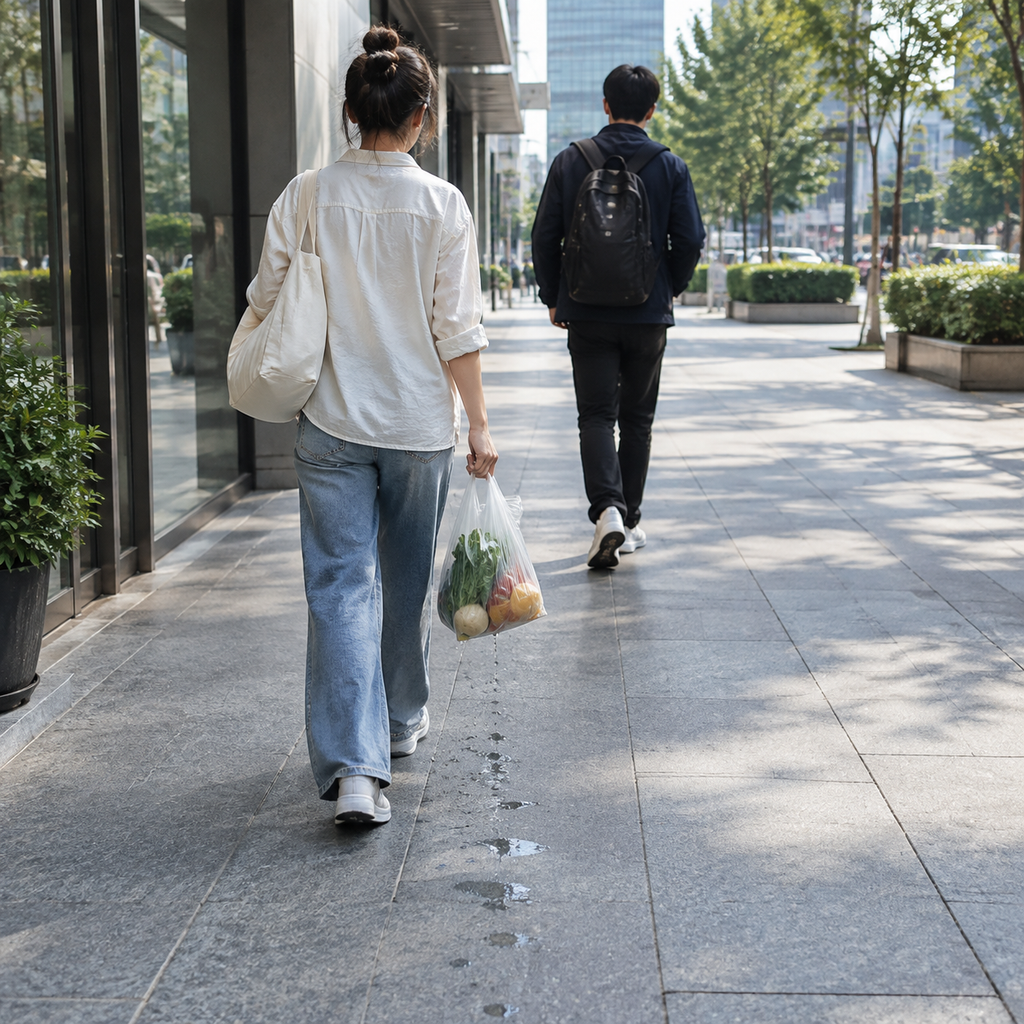
市场回访让我明白,酸汤的变化不是到了厨房才发生。鱼的大小、番茄的成熟、辣椒是否新鲜,都会提前改变火候和分量。朋友买了一小把芹菜和几块嫩豆腐,没有照着前一天的菜单补齐所有配菜。他说,回访市场不是为了复制昨天,而是看看今天有什么东西愿意加入锅里。我拎着菜袋跟在他身后,袋底渗出的水在地上留下断断续续的痕迹,像一条还没有画完的路线。
The market visit taught me that sour soup begins changing before it reaches the kitchen. The size of the fish, the ripeness of the tomatoes, and the freshness of the chilies all alter the heat and proportions in advance. My friend bought a small bunch of celery and several pieces of tender tofu instead of replacing every ingredient from the previous day. Returning to the market was not about copying yesterday, he said, but seeing what was willing to enter the pot today. Water seeped from the bottom of our bag and left a broken trail on the pavement, like a route not yet completed.
中午前,我们把买来的东西摊在案板上重新检查。芹菜叶不能全部丢掉,颜色深的部分反而有香气;豆腐要先切厚一点,才不会在翻汤时碎掉;番茄只用两个,剩下的留给第二天的早餐。朋友把发酵米汤倒进量杯,却没有按照昨天的两勺来加。他说锅里少了鱼油,酸味会更直接,所以要让番茄先撑住,再慢慢补米汤。每一个决定都像在回应昨天晚饭留下的问题。
Before noon, we spread the purchases across the chopping board and inspected them again. The darker celery leaves should not all be discarded, because they carried extra fragrance. The tofu needed to be cut thickly so it would not break when the broth was moved. Only two tomatoes would go into the pot; the rest were saved for the following breakfast. My friend poured fermented rice broth into a measuring cup but did not repeat yesterday’s two-spoon measure. Without fish oil, he said, the acidity would arrive more directly, so the tomatoes had to provide support before the rice broth was added little by little. Each decision answered a question left by the previous dinner.
傍晚的锅比前一天小,火也更稳。番茄煮开后没有立刻变成浓红色,而是先释放出一层淡淡的橙光。朋友把芹菜梗放进去,让它在汤里煮出清脆的香,再把豆腐一块块推到锅中央。老板娘后来送来一小碟糟辣椒,叮嘱我们不要全倒。她说剩下的可以拌饭,也可以留到下一次,真正会过日子的厨房,总会给味道留一条退路。
The evening’s pot was smaller than the day before, and the flame was steadier. After the tomatoes boiled, they did not immediately turn deep red; they first released a pale orange glow. My friend added celery stems so their clean fragrance could enter the broth, then pushed the tofu pieces gently toward the center. The owner later sent over a small dish of fermented chili paste and warned us not to use it all. The rest could season rice or wait for another meal. A kitchen that knew how to live, she said, always left flavor a way back.
这顿饭吃得比前一天慢。没有鱼肉需要抢在最嫩的时候夹起,我们反而有时间观察豆腐如何吸汤,芹菜叶怎样在碗里恢复一点绿色。朋友把第一勺汤递给我,让我先说变化。我说酸味更薄,却更清楚;辣味没有冲到前面,像藏在汤底的火。朋友点头,又加了半勺米汤。酸香立刻变得柔和,但没有失去边缘,这次调整让我们都安静了一会儿。
We ate this meal more slowly than the previous one. Without fish that had to be lifted at its tenderest moment, we had time to watch the tofu absorb broth and the celery leaves regain a little green in our bowls. My friend handed me the first spoonful and asked me to describe the difference. I said the acidity was lighter but clearer, while the heat no longer rushed forward and felt more like a hidden ember at the bottom. He nodded and added half a spoonful of rice broth. The sour fragrance softened immediately without losing its edge, and the adjustment left us quiet for a while.
晚饭后,我们把两次吃酸汤的细节写在一张旧购物单背面:第一次有鱼,汤厚,酸味被油脂托住;第二次是豆腐和蔬菜,味道更直,需要番茄和米汤慢慢接力。朋友在旁边补了一句,真正难记的不是配料,而是当天的天气、火力和大家的胃口。那张纸没有变成食谱,只留下几个会随时被改动的词。它提醒我,复盘不是给饭菜评分,而是找出下一次可以更早察觉的变化。
After dinner, we wrote down the details of both sour-soup meals on the back of an old shopping receipt. The first had fish, a fuller broth, and acidity carried by fat. The second used tofu and vegetables, so the flavor arrived more directly and needed tomatoes and rice broth to support one another. My friend added that the hardest things to remember were not the ingredients, but the weather, the strength of the fire, and everyone’s appetite that day. The paper never became a recipe. It held only a few words ready to be changed. It reminded me that reviewing a meal was not grading it, but noticing what could be sensed earlier next time.
我们把剩下的汤装进两个小碗,没有再加任何调料。第一碗留给夜里,第二碗放进保温壶,准备第二天带到路上。朋友说,酸汤最容易被误解成一种必须趁热解决的味道,其实它也能陪人走一段路。汤冷下来以后,番茄的甜会沉下来,芹菜的清香变得柔软,米汤的酸则更容易被察觉。不同温度不是好坏之分,而是同一锅饭的下一种状态。
We divided the remaining broth between two bowls without adding another seasoning. One was for the night, and the other went into a thermos for the road the next day. My friend said sour soup was often misunderstood as a flavor that had to be dealt with while piping hot, although it could also accompany someone for part of a journey. As it cooled, the tomato sweetness settled, the celery softened, and the acidity of the rice broth became easier to notice. Different temperatures were not a matter of better or worse, but another state of the same meal.
临走那天清晨,我独自去市场买最后一小袋木姜子。摊主没有认出我,只问是煮鱼还是煮菜。我说两种都可能,她便把几颗颜色偏浅的和几颗香味更重的混在一起,告诉我不要一次用完。她用旧报纸包好,折角处压得很紧,又顺手塞进两根蒜苗。那一刻我突然明白,带走的并不只是食材,还有市场里这种不把味道说死的办法。
On the morning of my departure, I went alone to the market for one last small bag of litsea cubeba. The vendor did not recognize me. She only asked whether I planned to cook fish or vegetables. I said it might be either, so she mixed a few pale, gentle pieces with others carrying a stronger aroma and told me not to use them all at once. She wrapped them in old newspaper, folded the corners tightly, and slipped in two garlic chives. I suddenly understood that I was taking away more than ingredients: I was taking away the market’s way of refusing to define flavor too early.
回到住处,我把保温壶里的汤倒进小碗,配上前一天剩下的米粉。阳光从窗框斜照进来,汤面不再像夜里那样红,却浮着一圈细小的油光。第一口仍然是酸,第二口出现了番茄的甜,第三口才尝到木姜子留下的清凉。我没有急着拍照,也没有把碗端到窗边寻找一个更好看的角度,只把最后一根米粉夹起来,认真吃完。
Back at the house, I poured the broth from the thermos into a small bowl and added the rice noodles left from the previous day. Sunlight slanted through the window. The broth was no longer as red as it had been at night, but a fine ring of oil floated on its surface. The first bite was still sour, the second revealed tomato sweetness, and the third carried the cool trace of litsea cubeba. I did not take a photograph or move the bowl toward the window in search of a better angle. I simply lifted the last noodle and ate it carefully.
临出门前,朋友把那张写着两次晚饭的购物单递给我。我想把它留下,他却说纸上的字已经不重要,回去以后还会遇到完全不同的番茄、辣椒和天气。于是我把纸折成四折,和木姜子一起放进包的内袋。门外的雨停了,街道上有人开始叫卖早点,远处传来公交车进站的声音。贵阳的酸汤没有给我一个固定答案,却给了我一套可以继续使用的判断方式。
Before I left, my friend handed me the shopping receipt with notes from the two dinners. I wanted to keep it flat, but he said the words on the paper were no longer important. At home I would meet different tomatoes, chilies, and weather. I folded it into quarters and placed it with the litsea cubeba in an inside pocket of my bag. The rain had stopped. Someone was calling out breakfast for sale, and a bus announced its arrival in the distance. Guiyang’s sour soup had not given me a fixed answer, but it had given me a way of judging that I could continue to use.
走到巷口,我回头看了一眼那间小馆子。门还没有完全打开,老板娘正在门槛上冲洗昨晚用过的长柄勺,水流沿着石板缝隙往下走。她抬头发现我,隔着街问了一句:“下次还要最酸的吗?”我笑着摇头,说下次先看当天有什么。她也笑了,继续低头洗勺。这个简单的回答,终于成为我在贵阳学会的具体结尾:先去市场,先看食材,先尝一口;让一锅汤在人的手里慢慢形成,也让一顿饭在离开之后继续留有余地。
At the mouth of the lane, I looked back at the small restaurant. It was not fully open yet. The owner was rinsing the long-handled ladle used the night before, water running down between the stones. When she saw me, she called across the street, “Next time, do you still want it as sour as possible?” I smiled and shook my head. I would first see what was available that day. She smiled too and returned to washing the ladle. That small answer became the concrete ending I learned in Guiyang: go to the market first, look at the ingredients, taste once, and let a pot take shape through human hands, while leaving enough room for a meal to continue after you have gone.

- 小区门口那段广场舞音乐,让我第一次不再把它只当成噪音 | The Square Dance Music at My Compound Gate Was the First Time I Stopped Hearing It as Just Noise
- 太原老街的灯不抢眼,却把回家、吃面和晚风都照得刚刚好 | Taiyuan’s Old-Street Lights Are Modest, Yet They Hold Homecoming, Noodles, and Night Wind Just Right
- 我在苏州园林里学会先找一把椅子坐下,再开始拍照 | In Suzhou Gardens, I Learned to Find a Place to Sit Before Starting to Take Photos
- 南京最动人的地方,常常不是讲出来的历史,而是人今天还在怎么顺手用它 | What Moves Me Most in Nanjing Is Not History as Told but the Way People Still Use It Today
- 中国旅游购物攻略:特产与纪念品 | China Shopping Guide: Local Specialties & Souvenirs
- 我在重庆学会先看楼层关系,再看地图距离 | In Chongqing I Learned to Read Vertical Space Before Map Distance
- 那次“低价团”之后,我学会了这样避开旅游强制消费 | After One Cheap Tour, I Learned How to Avoid Forced Shopping in China
- 手机支付失败后我学会准备备用方案 | After My Mobile Payment Failed, I Learned to Prepare a Backup Plan in China
- 第一次在中国面馆学会先看桌上调料再加辣 | The First Lesson I Learned in a Chinese Noodle Shop Was to Check the Table Seasonings Before Adding Chili
- 我在西安回民街试了三种肉夹馍:哪一家更值得排队 | I Tried Three Roujiamo in Xi'an Muslim Quarter
Comments (0)