
在洛阳看牡丹之外:一座古都的日常层次 | Beyond Peonies in Luoyang: The Everyday Layers of an Ancient Capital
在洛阳看牡丹之外:一座古都的日常层次 | Beyond Peonies in Luoyang: The Everyday Layers of an Ancient Capital
清晨六点半,我从西工一条居民街醒来似的慢慢走出去。卷帘门刚抬到一半,电动车从楼道口无声滑出,车筐里装着青菜;有人穿拖鞋下楼取牛奶,有人提着保温杯去河边。昨夜的凉气还压在梧桐影子里,早点铺的蒸汽却已经把玻璃蒙白。洛阳没有先用城门、宫阙或牡丹迎接我,它先递来塑料凳摩擦地面的声音,以及一句隔街喊出的“胡辣汤,两碗”。
At half past six, I walked slowly out of a residential lane in Xigong, as if the neighborhood itself were waking. Metal shutters were only halfway raised. Electric scooters slipped quietly from apartment entrances, baskets filled with greens; one resident came downstairs in slippers for milk, while another carried a thermos toward the river. The night’s coolness still rested beneath the plane trees, but steam from a breakfast shop had already clouded its windows. Luoyang did not greet me first with gates, palaces, or peonies. It offered the scrape of plastic stools on pavement and a voice calling across the street, “Two bowls of pepper soup.”
我最初误判了这座城。来之前,我把洛阳想成一张摊开的历史年表:龙门石窟、白马寺、隋唐遗址,再加四月花期,景点之间只需依次打卡。第一晚坐车进城,我还嫌沿途的商场、药店和连锁餐馆太普通,仿佛它们遮住了古都应有的样子。可第二天一早,那些“普通”开始反问我:一座活了很久的城市,难道只能以遗迹证明自己吗?
I misread the city at first. Before arriving, I imagined Luoyang as an unfolded historical timeline: the Longmen Grottoes, White Horse Temple, the ruins of the Sui and Tang dynasties, plus the April peony season, all to be checked off in order. Riding into town on my first evening, I even found the malls, pharmacies, and chain restaurants along the road disappointingly ordinary, as though they concealed the ancient capital I expected. The next morning, however, that “ordinariness” challenged me: must a city that has lived so long prove itself only through ruins?
早餐铺里没有菜单仪式。老板娘看我盯着汤锅,先问能不能吃辣,又指着旁边的牛肉汤说:“这个清一点,饼掰进去。”我照做,却把饼一次全泡软了。邻桌大叔笑着示范,只掰几块,吃完再添,边缘才留得住一点筋道。汤里葱花浮动,碗壁烫手,门外送孩子上学的家长不断进出。那顿早餐没有“千年古都”的讲解,却让我第一次跟上洛阳人的早晨节奏。
There was no ceremony of studying a menu in the breakfast shop. Seeing me stare at the stockpots, the owner first asked whether I could handle spice, then pointed to the beef soup beside it. “This one is milder. Tear the flatbread into it.” I followed her advice but soaked the entire bread at once. A man at the next table laughed and demonstrated: tear in only a few pieces, eat them, then add more, so the edges retain some chew. Chopped scallions drifted across the broth, the bowl was hot against my palms, and parents taking children to school moved constantly through the doorway. No one explained the “ancient capital,” yet over that breakfast I first caught the rhythm of a Luoyang morning.
七点多,街道忽然变得紧凑。校门口的队伍往前收,早餐摊把桌子向墙边挪,环卫工冲洗过的路面映着浅金色日光。公交车到站时,老人先让背书包的孩子上去;菜店老板则把一筐蒜苗搬到门口,顺手替隔壁看了一会儿摊。这里的秩序并不端着,它藏在让半步、搭把手和熟客不必开口的默契里。古都的重量,也许正靠这些轻小动作托住。
A little after seven, the street suddenly tightened into motion. The line at the school gate folded forward, breakfast vendors shifted tables closer to the wall, and pavement washed by sanitation workers reflected pale gold sunlight. When a bus arrived, older passengers let children with schoolbags board first. A vegetable seller carried a crate of garlic shoots outside, then casually watched the neighboring stall for a moment. Order here was not performed solemnly. It lived in yielding half a step, lending a hand, and knowing what a regular wanted before they spoke. Perhaps the weight of an ancient capital is supported by gestures this small.
我沿着街区继续走,旧砖墙后露出新装的空调机,院门上贴着褪色春联,快递车停在一块刻有旧地名的路牌下。过去与现在没有被隔成两个展厅:它们共用一条电线、一片树荫和同一个停车难题。理发店师傅扫开门前碎发,抬头告诉问路的游客,往前两个路口再右转,比手机导航绕得少。历史在这里不是静止背景,而是居民每天绕行、使用、修补的空间。
I kept walking through the neighborhood. New air-conditioning units protruded behind old brick walls; faded Spring Festival couplets clung to courtyard gates; a delivery tricycle stood beneath a street sign engraved with an older place-name. Past and present were not separated into two galleries. They shared electrical wires, patches of shade, and the same difficulty of finding parking. A barber swept clipped hair from his doorway, then looked up to tell a lost visitor to go two intersections ahead and turn right—a shorter route than the phone suggested. Here, history was not a motionless backdrop but space that residents navigated, used, and repaired each day.
上午九点以后,游客渐渐填满老城较醒目的街面,我却拐进菜市场旁的小巷。修鞋摊前摆着两双等取的皮鞋,五金店把钥匙胚挂成一排,社区公告栏上既有书法班通知,也有燃气检修日期。一位买豆腐的阿姨跟摊主讨论午饭,几句话就定下蒜苗炒豆腐的做法。所谓洛阳生活,并非处处提醒人十三朝古都的身份;更多时候,它认真处理今天这一顿饭、一把钥匙和一只开胶的鞋底。
After nine, visitors gradually filled the more conspicuous streets of the old city, but I turned into a lane beside a produce market. Two pairs of leather shoes waited at a repair stand, blank keys hung in rows inside a hardware shop, and the community noticeboard advertised both calligraphy classes and a gas inspection date. A woman buying tofu discussed lunch with the vendor and settled, within a few sentences, on stir-fried tofu with garlic shoots. Life in Luoyang does not constantly remind people that this was a capital of thirteen dynasties. More often, it attends carefully to today’s meal, a key, or a shoe sole coming loose.
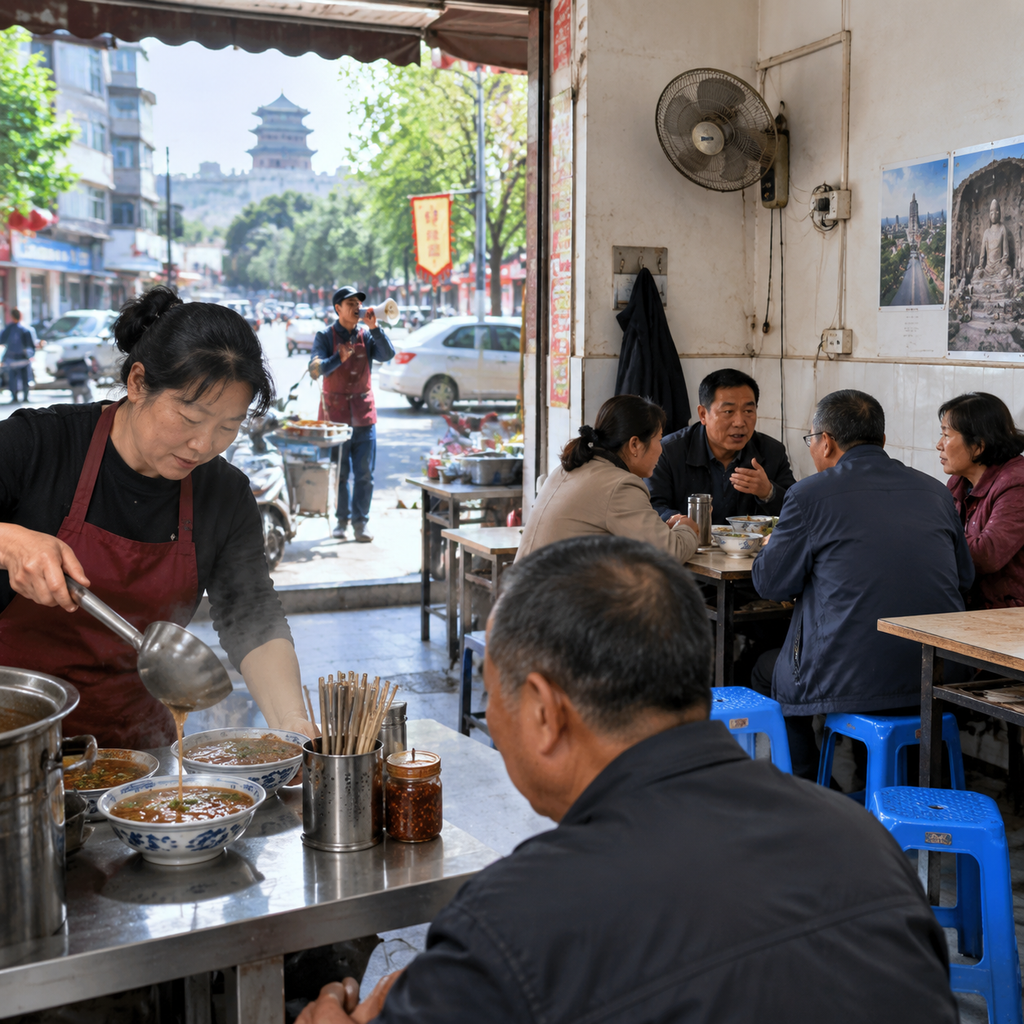
这并不意味着宏大的历史消失了。它只是改变了出现方式:路口的方向感仍受旧城格局影响,居民说起某片区域时会自然带出旧称,公园里练剑的人身后可能就是遗址保护区。远处塔檐进入视线时,近处晾晒的床单仍在风里鼓起。两者没有争夺画面,反而彼此校正——遗址提醒日常从何而来,日常则证明历史并未被封存。
This does not mean the larger history has vanished. It simply appears differently: the old urban plan still shapes how people orient themselves at intersections, residents naturally use older names for certain areas, and people practicing sword forms in a park may have a protected archaeological site behind them. When distant eaves enter the view, bedsheets drying nearby still billow in the wind. The two do not compete for the scene; they correct each other. Ruins remind daily life where it came from, while daily life proves that history has not been sealed away.
临近中午,我又经过最早那家汤铺。蒸汽淡了,老板娘正把空碗摞进塑料筐,早晨教我的大叔早已不见。门边还剩半块没来得及擦掉的水渍,一辆买菜车碾过去,留下弯弯的轮印。我终于明白,牡丹当然值得专程来看,但若只在花期和名胜之间认识洛阳,就会错过它更耐看的部分:古都并未站在高处摆姿态,它每天系好围裙、推开院门,在一碗热汤凉下来以前,把漫长岁月过成寻常日子。
Near noon, I passed the breakfast shop again. The steam had thinned, the owner was stacking empty bowls in a plastic crate, and the man who had taught me how to soak my bread was long gone. A patch of water remained by the doorway; a grocery cart rolled through it and left a curved track. I finally understood that the peonies are certainly worth a special journey. But to know Luoyang only through flower season and famous monuments is to miss its more enduring layer. The ancient capital does not pose above ordinary life. Each day it ties on an apron, opens a courtyard gate, and turns immense stretches of time into an ordinary morning before a bowl of hot soup grows cold.
第二天我起得更早,特意换了一条路去老城。天刚发蓝,十字街附近已有卖豆腐汤和丸子汤的小店亮灯。一个骑电动车的年轻人把车支在门口,头盔都没摘,先对老板说“老样子,少盐”。老板没追问,手腕一转便把汤舀进粗瓷碗,又从案板上抓起一撮香菜。我坐在靠墙的小桌旁,看见年轻人喝到一半才取下头盔,额角被压出一道红印。他并不慢慢品味,几分钟后便赶去上班;可老板记得他的口味,也记得他今天比平常晚了些。早餐店像街区的钟,谁来早了,谁缺席了,它都悄悄知道。
I rose even earlier the next day and deliberately took another route toward the old city. The sky had only begun to turn blue, yet shops near Cross Street selling tofu soup and meatball soup were already lit. A young man parked his electric scooter at the door and, without removing his helmet, told the owner, “The usual, less salt.” No questions were needed. With a turn of the wrist, the owner ladled soup into a heavy ceramic bowl and caught a pinch of cilantro from the chopping board. From my small table against the wall, I watched the man remove his helmet only halfway through breakfast, revealing a red pressure mark across his forehead. He did not linger over the meal; within minutes he was off to work. But the owner remembered his taste and noticed that he was later than usual. A breakfast shop can serve as a neighborhood clock, quietly registering who arrived early and who did not appear.
街口另一只锅里翻着浆面条,酸香气顺着晨风飘出去。我问掌勺的师傅为什么有人一大早就吃这种味道,他递给我一只小碗,让我先别加辣椒。入口并不是尖锐的酸,而是发酵后柔和的香,面条软,芹菜粒却脆,花生在齿间突然冒出来。旁边一位带孙女的奶奶说,小孩第一次也皱眉,现在放学还会惦记。女孩听见自己的事被讲出来,低头用筷子把花生一颗颗拨到碗边,最后又全吃掉。师傅看着笑,却没借机夸手艺,只提醒她书包拉链没合好。摊上的人聊的是迟到、降温和作业,地方味道便在这些不郑重的对话里一代代留下来。
In another pot at the corner, jiangmian noodles rolled in a lightly fermented broth, their mellow sour fragrance drifting with the morning air. I asked the cook why people wanted such a flavor so early, and he handed me a small bowl, telling me not to add chili yet. The first taste was not sharply sour but gently fermented; the noodles were soft, the celery crisp, and peanuts appeared unexpectedly between my teeth. A grandmother beside me said her granddaughter had frowned at the dish the first time but now asked for it after school. Hearing herself discussed, the girl lowered her head and pushed each peanut to the rim with her chopsticks, then eventually ate every one. The cook smiled but did not praise his own food. He simply reminded her that her schoolbag was unzipped. Around the stall, people talked about being late, the falling temperature, and homework. In such unceremonious conversation, a local taste passes quietly from one generation to the next.
吃完后,我顺着洛邑古城外围慢慢绕,没有急着往灯笼最多的地方走。晨光里的老街和夜间照片很不一样:门面还未全开,石板缝里留着昨晚冲洗后的湿意,卖文创的小铺正把纸箱从屋里搬出来。一个木匠模样的老人坐在门槛上修矮凳,先把松动的榫头退出,再薄薄刮下一层木屑。他身后的墙经过翻修,砖色整齐,他手里的凳子却显然用了许多年。有人问他为何不买新的,他只说坐惯了,腿的高低也合适。那句回答让我觉得,保护旧城有时不只是保存一面墙,也包括允许一张旧凳继续待在它熟悉的位置。
After eating, I made a slow circuit around the edge of Luoyi Ancient City instead of heading straight toward the streets with the most lanterns. In morning light, the old quarter looked unlike its nighttime photographs. Not every storefront was open; dampness from the previous evening’s washing remained between the paving stones, and souvenir sellers carried cardboard boxes out from their shops. An elderly man who looked like a carpenter sat on a threshold repairing a low stool. He eased out a loose joint, then shaved away a thin curl of wood. The wall behind him had been restored to a neat, even brick color, while the stool in his hands had plainly served for years. When someone asked why he did not buy a new one, he replied that he was used to it and that its height suited his legs. His answer made me think that preserving an old quarter is not only about retaining a wall. It can also mean allowing an old stool to remain where it belongs.
再往里走,商业声量逐渐升高,汉服店开始往衣架上挂长裙,摄影师带客人寻找没有逆光的位置。可只隔一条窄巷,住户正晒被子、择韭菜、给自行车打气。一个穿着精致襦裙的姑娘提着裙摆让路,一位端着菜盆的阿姨也侧过身,两人相互说了声谢谢,各自继续走。这个瞬间比刻意安排的古装画面更有意思:被想象出来的盛唐与正在进行的星期二,共用不足两米宽的巷子。老城并没有拒绝表演,也没有因此失去生活;它只是不断协商,哪里留给镜头,哪里还要让买菜的人先过。
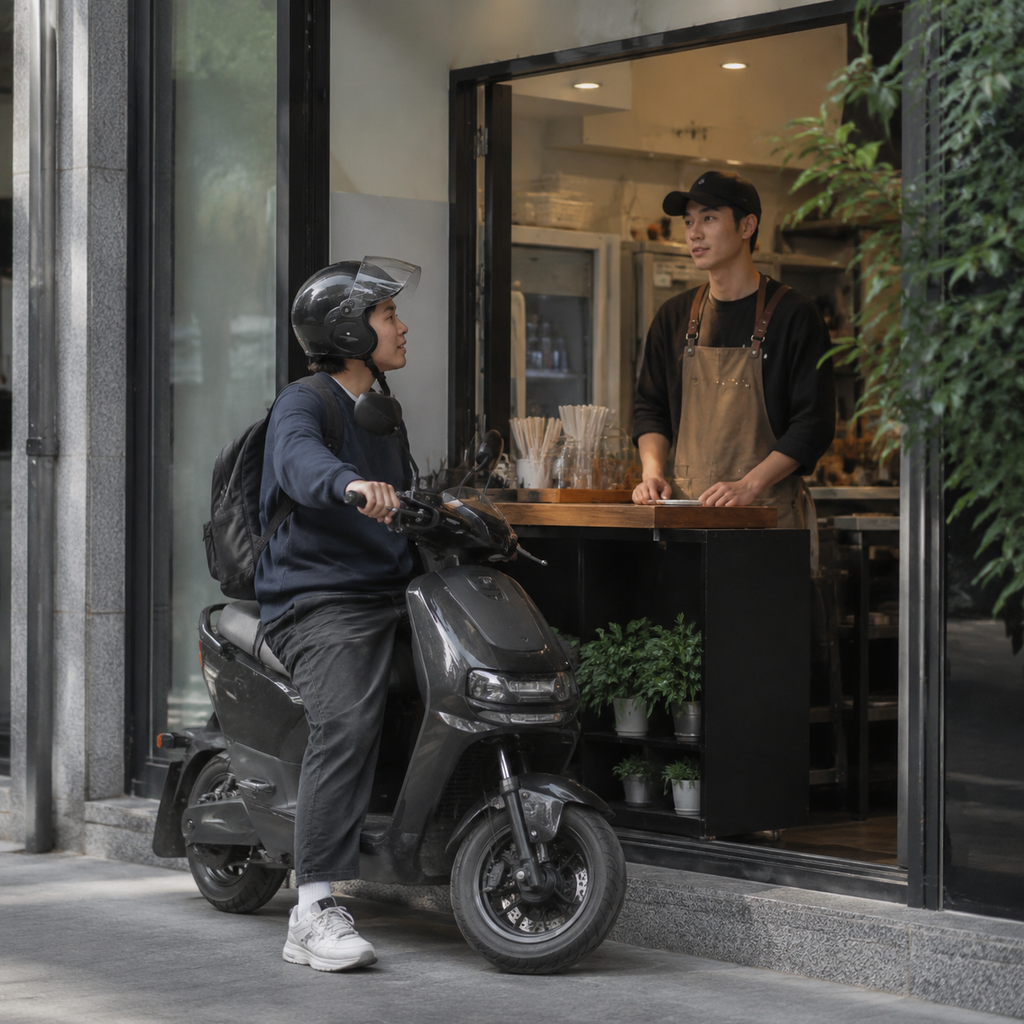
Farther in, the commercial volume rose. Hanfu shops began hanging long skirts on racks, while photographers guided clients toward spots without backlight. Yet only one narrow lane away, residents aired quilts, trimmed chives, and pumped bicycle tires. A young woman in an elaborate ruqun lifted her skirt to make room, and an aunt carrying a basin of vegetables turned sideways as well. They thanked each other and continued on. I found this moment more compelling than any carefully arranged historical portrait: an imagined High Tang and an ordinary Tuesday shared a lane less than two meters wide. The old quarter did not reject performance, nor did it surrender daily life to it. It simply kept negotiating—where the camera could pause and where someone returning from the market needed to pass first.
中午前后,我在一间没有醒目招牌的小店停下。店里四张桌,墙角立着旧风扇,老板给熟客盛汤时会顺便问一句家里老人恢复得怎样。一名快递员进门,只来得及喝半碗,电话就响了。老板把他的碗端到后厨,盖上盘子,说回来再热;快递员点点头,跑出去时差点忘了桌上的钥匙,被全屋人一起喊住。几分钟的插曲没有戏剧性,却把陌生人之间的距离缩得很短。洛阳街坊似乎擅长这种轻微的照看,不追问太多,也不把善意说得很重,只在钥匙将被落下时及时喊一声。
Around noon, I stopped at a small restaurant without a conspicuous sign. It held four tables and an old electric fan in one corner. While filling a regular’s bowl, the owner casually asked how an elderly relative was recovering. A courier came in and had time for only half his soup before his phone rang. The owner carried the bowl to the kitchen, covered it with a plate, and said he would warm it when the courier returned. The man nodded and rushed outside, almost leaving his keys on the table until everyone in the room called after him at once. Nothing about the brief episode was dramatic, yet it shortened the distance among strangers. People in these Luoyang lanes seem skilled at this light form of looking after one another: they do not ask too much or make kindness sound grand; they simply call out at the moment a set of keys is about to be forgotten.
午后街面松下来,我在一处树荫下看修车师傅补胎。他把内胎浸进水盆,气泡在水面连着冒出,旁边等候的外卖骑手蹲下来看,顺手扶住将要歪倒的工具箱。师傅找到漏点,用粉笔画圈,嘴里问今天单多不多。骑手说上午绕路,抱怨完又笑,说幸好客人没催。两个人显然并不熟,却能围绕一只破胎交换几句真实的疲惫。几米外,游客正举手机拍檐角;镜头之外,城市靠补胎、换锁、送餐和等公交继续转动。这些职业没有古装的轮廓,却构成古都今天最清楚的人物群像。
The street loosened in the afternoon, and I watched a bicycle repairman patch a tire beneath a tree. He submerged the inner tube in a basin; a chain of bubbles rose to the surface. The delivery rider waiting beside him crouched for a closer look and steadied a toolbox that was about to tip over. The repairman found the leak, marked it with chalk, and asked whether orders were busy that day. The rider complained that a detour had slowed his morning, then laughed and said at least the customer had not rushed him. The two men clearly did not know each other well, yet around a punctured tire they exchanged a few honest words about fatigue. Only meters away, visitors raised phones toward an old roofline. Outside their frames, the city kept turning through patched tires, replaced locks, delivered meals, and waits for buses. These occupations have none of the silhouette of historical costume, but together they form the clearest portrait of the ancient capital today.
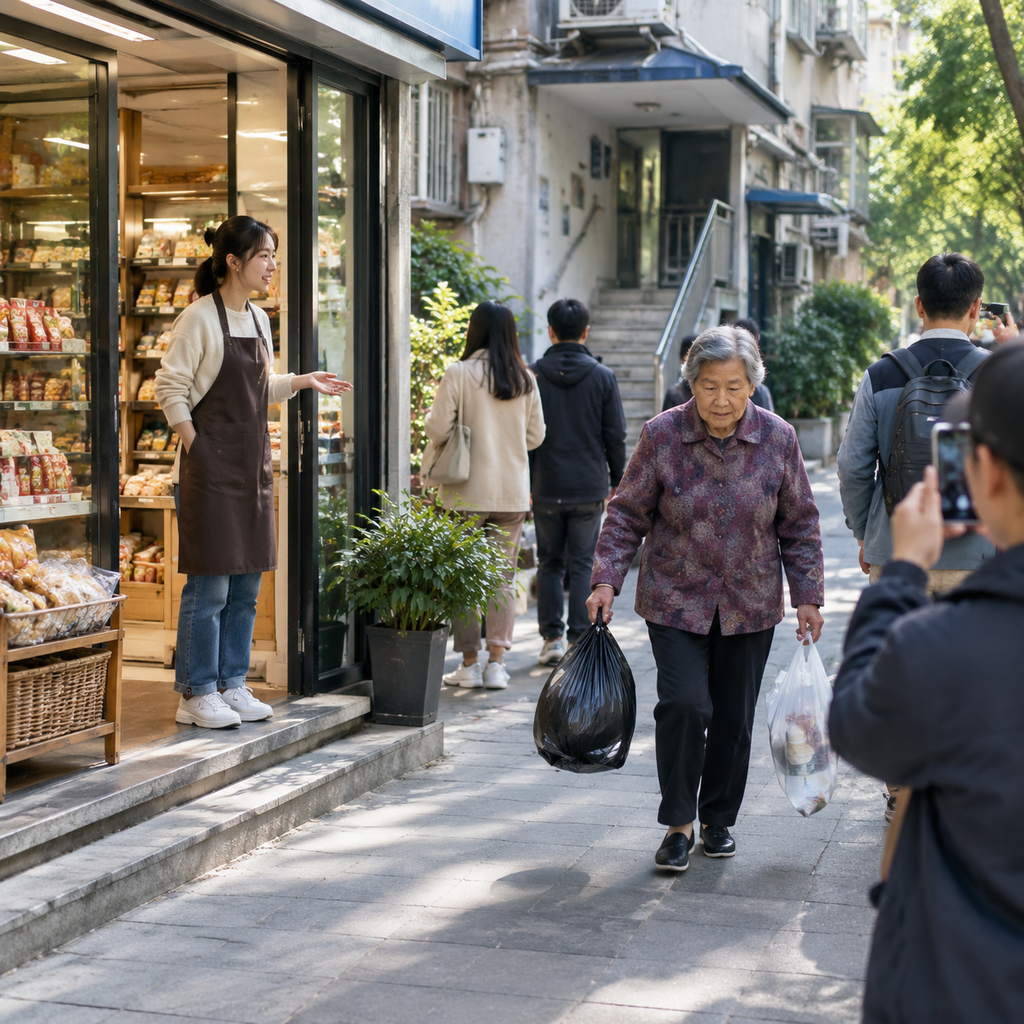
傍晚我回到十字街,白天收拢的灯笼已经亮起,人流也把巷子填满。早晨安静摆货的店员此时站在门边招呼客人,住在楼上的老人则提着垃圾袋,从拍照的人群中熟练穿过。一个小男孩拉着父亲停在糖画摊前,父亲说只能选一个,他盯了半天,最后要了一只最简单的小鸟。糖液在铁板上迅速凝住,摊主递过去时提醒拿直,孩子便像捧着一件易碎文物那样严肃。洛阳的夜色当然适合拍照,但我记住的不是最亮的灯,而是那只小鸟在孩子手里轻轻晃动,身后还有居民推门回家。
I returned to Cross Street at dusk. Lanterns that had seemed folded away by daylight were glowing, and people now filled the lane. Shop workers who had quietly unpacked goods in the morning stood at their doors calling to customers, while an elderly resident from an upstairs apartment carried a rubbish bag deftly through groups posing for photographs. A boy tugged his father to a sugar-painting stall. Told that he could choose only one, he considered the designs for a long time and finally asked for the simplest bird. The syrup hardened quickly on the metal slab. As the vendor handed it over, he warned the boy to keep it upright, and the child held it with the solemnity reserved for a fragile relic. Luoyang’s night is certainly photogenic, but what stayed with me was not the brightest lantern. It was that small bird trembling in the child’s hand while a resident opened a door and went home behind him.
离开时,我又想起那张“历史年表”。它容不下汤锅掀盖时扑出的热气、修凳老人落在裤脚上的木屑,也容不下店主替快递员盖住半碗汤。我不再急着补一串景点,而会建议来客留一个没有安排的早晨:坐进居民常去的小店,沿老城边缘多拐一次弯,观察人们怎样招呼熟客、给陌生人让路。等店铺陆续开门,扫帚声从一条巷子传到另一条巷子,古都便不再只是过去式。它就在眼前醒来,先盛好一碗汤,再开始普通而具体的一天。
As I left, I thought again of the historical timeline I had imagined on my first day. It could not contain the steam released when a stockpot lid lifts, the wood shavings on an old carpenter’s trouser leg, or an owner covering half a courier’s soup for later. Instead of rushing to supply another list of attractions, I would suggest leaving one morning unplanned: sit in a shop favored by residents, take one extra turn along the edge of the old quarter, and notice how people greet regulars and make room for strangers. As shutters rise and broom sounds travel from one lane into the next, the ancient capital ceases to exist only in the past tense. It wakes directly before you, serves a bowl of soup, and begins another ordinary, particular day.
不过第三天下午,我还是遇到了一个旅行中躲不开的取舍:只剩半天,是进博物馆,还是继续留在老城?同行的阿岚已经把手机地图放大,标出几处展厅;我却望着窗外,舍不得刚刚熟悉起来的街巷。出租车司机听见我们争论,在红灯前笑了一声:“都想看,就都看不好。”他建议先挑一个真正关心的展馆,用两个小时看完最想看的部分,闭馆后再回老城,不要在城南城北之间反复折返。那句话不漂亮,却把我们从“一个都不能错过”的焦虑里拽了出来。
On the third afternoon, however, I faced a choice that travel rarely lets anyone avoid. With only half a day left, should we enter a museum or remain in the old quarter? My companion, Lan, enlarged the map on her phone and marked several galleries, while I looked through the window, reluctant to leave streets I had only just begun to understand. Our taxi driver overheard the debate and laughed at a red light. “Try to see everything, and you won’t see anything properly.” He advised us to choose the museum we genuinely cared about, spend two hours on its most important rooms, then return to the old city after closing instead of shuttling repeatedly between north and south. It was not a polished piece of wisdom, but it pulled us out of the anxiety of missing something.
我们最后没有追求展馆数量,只进了一座综合性博物馆。阿岚喜欢器物纹样,我更在意物件如何进入普通人的生活,于是进门便约好不必并肩走,也不替对方规定重点。她在铜镜前停得久,我绕到陶俑与生活器具旁,看碗沿的磨损、俑袖的弧度和模型院落里窄窄的门。展柜很安静,鞋底摩擦地面的声音反而格外清楚。一个带孙子的老人蹲下来,把孩子的视线引到陶灶上,问他:“你看,这像不像太奶奶家的灶台?”历史忽然不再按朝代排队,而是从一个家庭记忆搭到另一个家庭记忆。
In the end, we did not chase a high museum count; we entered just one general museum. Lan cared most about decorative patterns, while I was interested in how objects belonged to ordinary lives, so we agreed at the entrance that we need not walk side by side or choose each other’s highlights. She lingered before bronze mirrors. I moved toward pottery figures and household objects, studying wear along a bowl’s rim, the curve of a figurine’s sleeve, and the narrow gate of a model courtyard. The cases were quiet enough that the scrape of shoes sounded unusually distinct. An elderly man crouched beside his grandson, directed the boy toward a pottery stove, and asked, “Doesn’t this look like the stove at your great-grandmother’s house?” History suddenly stopped lining up by dynasty and became a bridge between one family memory and another.
闭馆广播响起时,阿岚带着两张明信片来找我。我们没有比较谁看得更完整,只交换各自记住的细节:她说铜镜背面的纹样像一座可以握在手里的花园,我说陶灯让我重新注意老街窗边那些并不华丽的灯。出了门,下午的亮白已经变成偏暖的金色,风里有尘土,也有路边烤饼的面香。我们按司机说的没有再加景点,而是坐公交回老城。车厢里有人抱着放学孩子的书包,有人拎着刚买的菜;博物馆中的器物退到记忆里,眼前的人继续使用今日的杯子、布袋与钥匙。
When the closing announcement sounded, Lan found me with two postcards in hand. We did not compare who had seen the museum more completely; we exchanged the details each of us remembered. She said the pattern on the back of a bronze mirror resembled a garden small enough to hold. I told her the pottery lamp had made me notice the plain lights beside old-street windows anew. Outside, the hard white of afternoon had warmed to gold. The wind carried dust and the smell of flatbread baking by the road. Following the driver’s advice, we added no further attraction and took a bus back to the old quarter. One passenger held a schoolchild’s backpack; another carried newly bought vegetables. Museum objects receded into memory while the people before us continued using the cups, cloth bags, and keys of the present day.
公交在老城外停下时,太阳已经贴近屋顶。白天卖文创的店开始点灯,真正做晚饭的住户也推开窗,锅铲碰到铁锅,声音从二楼落进街面。我们避开最拥挤的主街,跟着一位提菜篮的阿姨穿进侧巷。她发现我们犹豫,回头问是不是找十字街,又说若不赶着拍灯笼,可以先沿巷子走到城墙边,那里风大、人少,等天暗一点再折回来。她指路时篮里的芹菜叶不断晃,讲完便快步上楼。这个建议让傍晚有了呼吸,也让老城不只剩一条游客必须挤过的路线。
When the bus stopped outside the old quarter, the sun was already near the rooftops. Shops that sold souvenirs by day began switching on their lights, while residents preparing dinner opened windows. The knock of spatulas against iron woks dropped from second floors into the street. Avoiding the busiest road, we followed an aunt carrying a vegetable basket into a side lane. She noticed our hesitation, turned back to ask whether we were seeking Cross Street, then said that if lantern photographs were not urgent, we should walk toward the wall first, where there was more wind and fewer people, and return once the sky darkened. Celery leaves shook in her basket as she pointed the way, and then she hurried upstairs. Her advice gave the evening room to breathe and showed that the old city held more than one route through a tourist crowd.
城墙边的风果然凉。几位老人坐在折叠椅上聊天,一个卖烤红薯的小贩用铁夹翻动炉里的炭,甜味混着微微的烟。阿岚把外套拉链拉到下巴,说幸好没有再塞进第二座馆;我们的脚已经发沉,脑子也需要一点空白。我们买了一只红薯,两个人掰开,热气立刻从橙黄色的瓤里冒出来。小贩看见我烫得换手,递来一小片硬纸板垫着,还提醒别把皮丢在风口。那一刻,旅行中的取舍不再像损失:少看一排展柜,换来的是还有体力听风、尝到甜味,并看见天色怎样落在城砖上。
The wind by the wall was indeed cool. Several older residents talked from folding chairs while a sweet-potato vendor turned coals with iron tongs, releasing a sugary smell threaded with smoke. Lan zipped her jacket to her chin and said she was glad we had not forced in a second museum. Our legs were heavy, and our minds needed empty space. We bought one sweet potato and split it; steam rose at once from the orange flesh. Seeing me pass it hastily from hand to hand, the vendor offered a piece of stiff cardboard and reminded us not to drop the skin where the wind could catch it. At that moment, choosing ceased to feel like losing. We had traded one more row of display cases for enough energy to hear the wind, taste something sweet, and watch dusk settle onto the bricks.
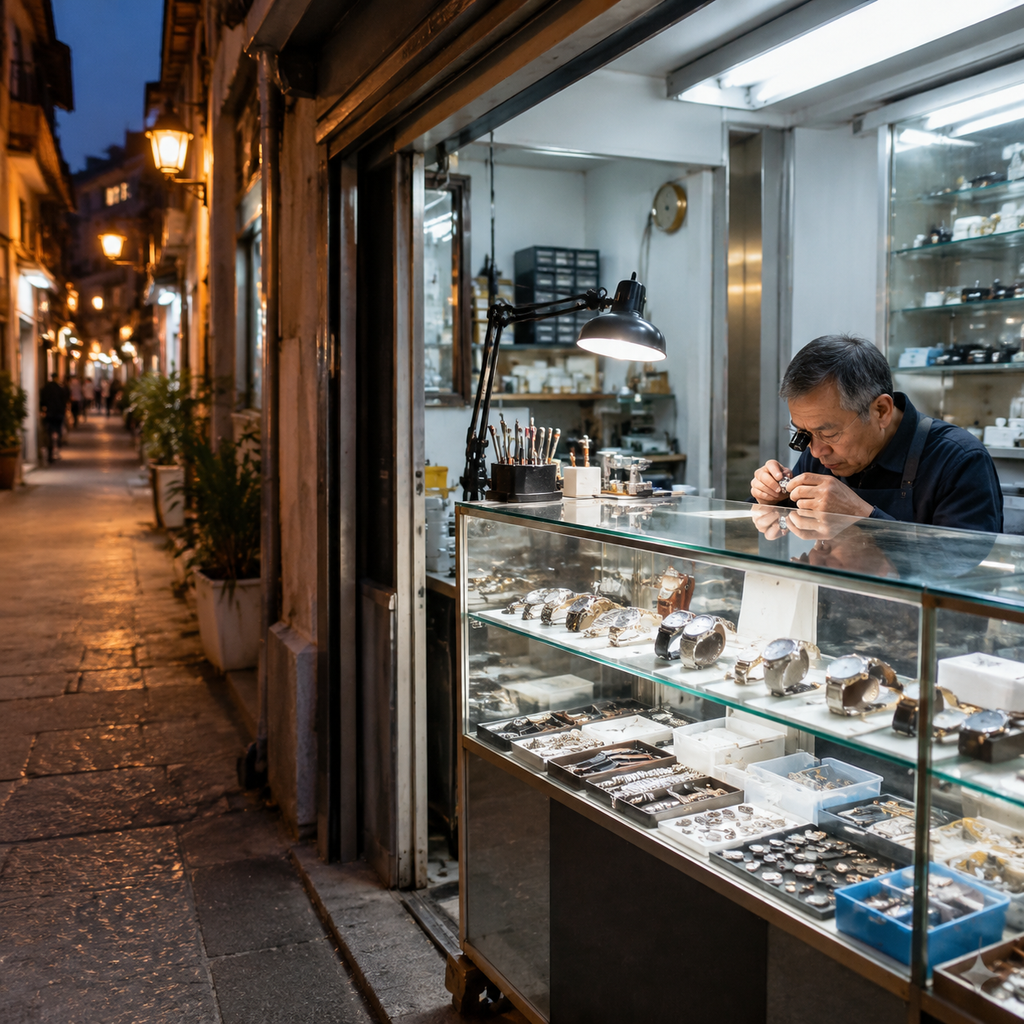
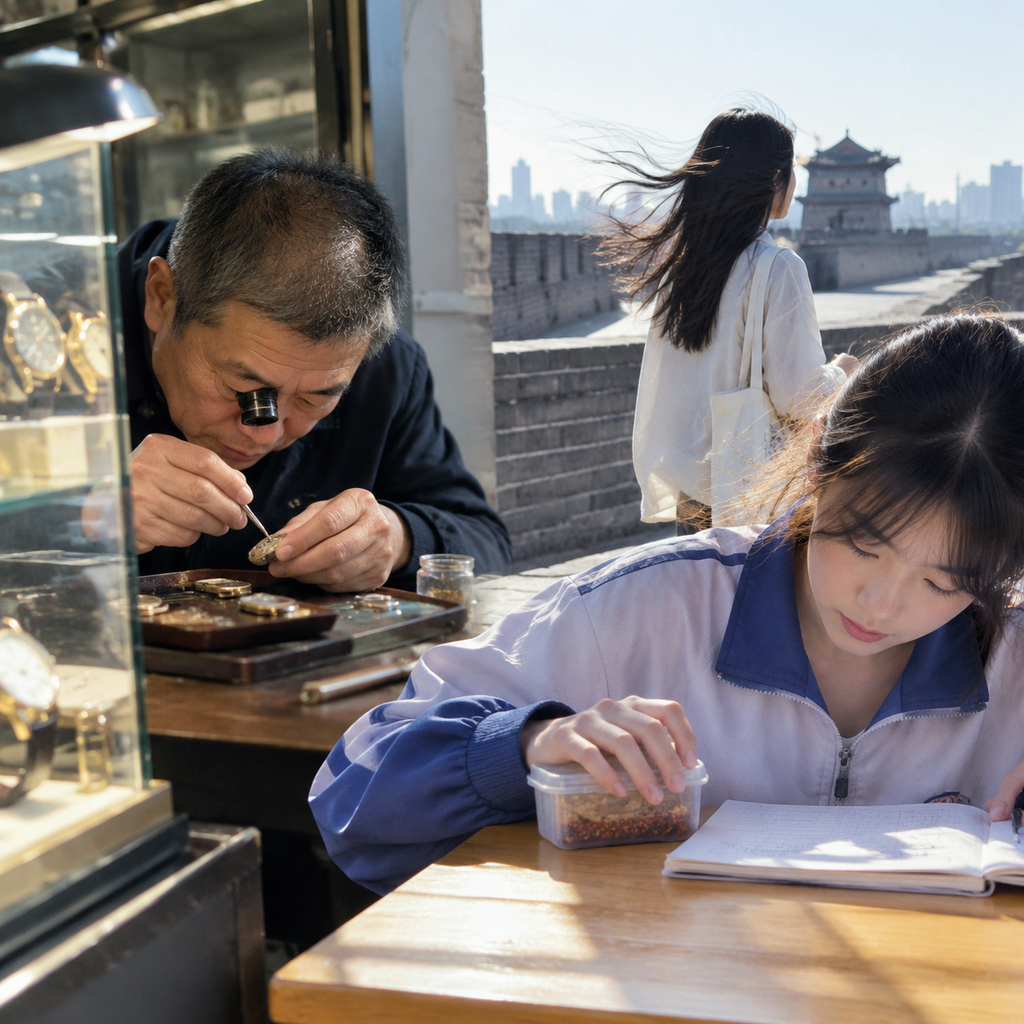
天完全暗下来以前,我们沿城墙又走了一段。巷口有家修表铺还亮着白灯,玻璃柜里摆的不是仿古纪念品,而是拆开的表带、纽扣电池和几只等主人来取的旧手表。店主戴着放大镜,正替一位卖菜的老人调日期。老人说表慢五分钟不碍事,赶不上接孙女才碍事。店主拧好后盖,没有立即递出去,先贴到耳边听了几秒,又把表面擦干净。我想起下午展柜里的铜镜:隔着玻璃时,我们讨论纹样与年代;到了街上,一件器物的意义却常常落在“别误了接人”这样具体的要求里。若把博物馆和街区排成高低,反而会错过两者互相照亮的时刻。
Before darkness fully settled, we walked a little farther along the wall. A watch-repair shop at the mouth of a lane still shone with white light. Its glass counter held no imitation antiques, only detached straps, button batteries, and several old watches waiting for their owners. Wearing a magnifying lens, the shopkeeper adjusted the date for an elderly vegetable seller. The man said that a watch running five minutes slow did not matter, but being late to collect his granddaughter did. After fastening the back, the repairer did not return it immediately. He held it to his ear for several seconds, then wiped the crystal clean. I remembered the bronze mirrors behind glass that afternoon, where we had discussed patterns and dates. On the street, however, the meaning of an object often rested in a need as specific as “do not be late for someone.” Ranking museums above neighborhoods, or the reverse, would miss the moments when they illuminate one another.
转入背街后,游客的声音忽然变远,只有抽油烟机低低作响。几张方桌摆在屋檐下,一家三口正在剥蒜,女孩写完一页作业便把本子压在调料盒下,免得风翻页。阿岚问附近还有没有值得看的老建筑,女孩的母亲没有报一串名字,只抬手指向前方:“过那棵大槐树,别进最亮的门,往右看院墙。”我们照她说的走,果然看见灯影没有照全的砖券门,墙脚还靠着居民收回来的折叠车。它不够完整,也没有说明牌,却让人能读出街巷真实的尺度:门洞容得下一辆车推过,墙边要给晾衣、停车和邻里说话留位置。老城若只剩被照亮的立面,反倒会失去这种可居住的分寸。
When we turned into a back lane, the tourist noise abruptly receded, leaving only the low hum of kitchen exhaust fans. Several square tables stood beneath the eaves. A family of three peeled garlic together, and their daughter tucked a finished page of homework beneath a condiment box so the wind would not turn it. Lan asked whether there were any old buildings nearby worth seeing. The mother did not recite a list. She pointed ahead and said, “Pass the big scholar tree. Don’t enter the brightest gate; look to the right at the courtyard wall.” We followed her directions and found a brick-arched doorway only partly touched by lamplight, with a resident’s folded cart leaning at its base. It was incomplete and had no interpretive sign, yet it revealed the true scale of the lanes: a doorway wide enough for a cart, a wall edge that must still accommodate laundry, parking, and neighbors stopping to talk. If an old quarter preserves only illuminated façades, it loses this habitable sense of proportion.
夜色再深一些,主街的气味也变了。白天能闻到木料、灰尘和刚拖过地的潮气,这时则是烤肉孜然、糖浆、汤锅和桂花饮混在一起。一个穿汉服拍完照的姑娘站到路边脱下绣鞋,换回运动鞋,摄影师替她提着裙摆,笑说今晚终于能正常走路。她旁边的保洁阿姨正把散落的竹签扫进簸箕,提醒大家靠里站,别挡住送货三轮车。片刻后,三轮车贴着人群过去,车上装着成箱矿泉水和蔬菜。游客制造的夜景与居民维持的夜晚在这里同时发生:一边要让灯笼好看,一边也得让明早的豆腐和青菜准时进门。
As the night deepened, the main street smelled different. By day there had been wood, dust, and the dampness of freshly mopped floors; now cumin from grills mixed with syrup, soup stock, and osmanthus drinks. A young woman who had finished a hanfu photo session stepped aside, removed her embroidered shoes, and put her trainers back on. Her photographer held up the hem and joked that she could finally walk normally. Nearby, a sanitation worker swept scattered bamboo skewers into a dustpan and reminded everyone to stand closer to the storefronts so a delivery tricycle could pass. A moment later it edged through the crowd carrying cases of bottled water and vegetables. The night created for visitors and the night maintained by residents were happening together: lanterns had to look beautiful, but tomorrow morning’s tofu and greens still had to arrive on time.
我们在一家汤馆门口坐下,只点了两小碗和一盘凉菜。店员是个声音很轻的年轻姑娘,她看出我们累,先把靠背椅从里面搬出来,又把扫码牌转向灯下。隔壁桌四位本地人正讨论周末带外地亲戚去哪儿,其中一人坚持龙门石窟不能省,另一人却说若老人腿脚不好,不如少走一处,去博物馆后找个安静街区吃饭。他们争了几句,最后决定先问亲戚喜欢看造像还是喜欢看生活器物。听到这里,我和阿岚相视一笑:所谓正确路线,本来就不该由城市名气决定,而该由同行者的兴趣、脚力和当天状态共同决定。店员端汤来时听见半句,也补了一句:“晚上别排太满,走累了,灯再亮也看不进去。”
We sat outside a soup restaurant and ordered only two small bowls and a plate of cold vegetables. The server, a soft-spoken young woman, noticed our fatigue, brought out chairs with proper backs, and turned the payment code toward the light. At the next table, four locals debated where to take visiting relatives that weekend. One insisted the Longmen Grottoes could not be omitted; another argued that if the older guests had weak legs, it would be better to see fewer places, visit a museum, and then eat in a quiet neighborhood. After several exchanges, they decided first to ask whether their relatives preferred Buddhist sculpture or objects from everyday life. Lan and I smiled at each other. A good route should not be determined by a city’s fame alone, but by the interests, stamina, and condition of the people traveling together. Hearing part of the conversation as she served our soup, the young woman added, “Don’t pack the evening too tightly. Once you’re exhausted, even bright lights stop going in.”
汤馆关门前,街上的人群开始出现空隙。父母牵着困倦的孩子往停车处走,外卖骑手把手机音量调高,店主们一边招呼最后几桌,一边收回摆到路中的凳子。修表铺的白灯已经熄了,只有门缝下还留着一线暖光,大概店主正在里面收工具。我们经过那棵大槐树时,先前写作业的女孩也收了桌子,她抱着调料盒上楼,父亲端着剥好的蒜跟在后面。白天在展馆里看到的院落模型,此刻有了声音:楼梯上的脚步,钥匙碰门锁,楼上有人问水烧了没有。这样的夜景无法装进一张全景照片,却让“古都仍在生活”不再是一句方便的赞美。
Near the restaurant’s closing time, gaps began to open in the crowd. Parents led sleepy children toward parked cars; delivery riders turned up their phone volume; shopkeepers welcomed the last few tables while pulling stools back from the roadway. The white lamp of the watch shop had gone dark, though a narrow band of warm light remained beneath the door, perhaps while the repairer put away his tools. When we passed the scholar tree, the girl who had been doing homework was clearing the table too. She carried the condiment box upstairs while her father followed with the peeled garlic. The courtyard models we had seen in the museum now seemed to acquire sound: footsteps on stairs, a key touching a lock, someone above asking whether the water had boiled. This kind of nightscape cannot fit into a panoramic photograph, yet it made the phrase “the ancient capital is still alive” feel less like convenient praise.
临上公交前,阿岚忽然把那张铜镜明信片拿出来,对着街灯转了转。纸面当然不会反光,但背纹在黄色灯下显得更深。站牌旁等车的中学生瞥了一眼,问是不是博物馆买的,又告诉我们他小时候被学校带去时只顾着找出口,去年陪外婆重看,才发现镜子背后“那么热闹”。外婆年轻时做过缝纫,总能从纹样里认出花叶的走向。他说完,车来了,便先扶外婆上台阶。一天里哪些东西能真正留下,常常不由第一次观看决定;城市允许人隔几年再回来,也允许一件旧物借另一个人的眼睛重新开口。
Just before boarding the bus, Lan took out the bronze-mirror postcard and tilted it beneath the streetlamp. The paper could not reflect light, of course, but the pattern looked deeper in the yellow glow. A secondary-school boy waiting beside us glanced at it and asked whether it came from the museum. He said that on a school visit as a child he had cared only about finding the exit. When he returned with his grandmother the previous year, he finally noticed how “busy” the back of the mirror was. His grandmother had once worked as a seamstress and could trace the direction of leaves and blossoms in its design. As the bus arrived, he helped her up the steps first. What stays from a day is not always decided by the first viewing. A city lets people return years later, and lets an old object speak again through someone else’s eyes.
公交驶出老城时,车窗依次掠过药店、还在营业的面馆和已经落锁的布店。阿岚靠着玻璃打了个哈欠,明信片夹在掌心。我发现自己已经不再计算少看了几件展品,只记得修表人听表的姿势、女孩压住作业本的调料盒,以及城砖变暗前那阵风。洛阳这一晚没有替我们完成清单,却把白天看见的器物送回了人的手里。
As the bus left the old quarter, the windows passed a pharmacy, a noodle shop still serving, and a cloth store already locked. Lan yawned against the glass, the postcard held between her fingers. I was no longer counting how many exhibits we had missed. I remembered the watchmaker listening to a watch, the condiment box holding down a girl’s homework, and the wind just before the bricks darkened. That evening in Luoyang did not complete our checklist; it returned the objects we had seen by day to human hands.
我们没有再寻找“最佳机位”。阿岚收好明信片,我把最后一口红薯皮叠好,丢进巷口垃圾桶。身后有人招呼朋友去占桌,头顶晾衣杆上的一件小衫被夜风吹得轻轻转动。博物馆与老城并非必须二选一,真正要舍弃的是贪多:让展柜教会眼睛看细,让街巷让那些细节重新呼吸。离开前,卖糖画的摊主正收起多余的木签,远处公交报站声越过灯笼传来。我们顺着声音往站牌走,不再遗憾未去之处,只觉得终于看清了洛阳一角。
We no longer searched for the “best” camera angle. Lan slipped the bronze-mirror postcard into her notebook, while I folded the last piece of sweet-potato skin and dropped it into a bin at the mouth of the lane. Behind us, someone called to friends to save a table; above, a child’s shirt on a drying pole turned gently in the night wind. A museum and an old quarter need not be absolute alternatives. What must be abandoned is the urge to collect too much: let the display case teach the eye to notice closely, then let the lanes give those details breath again. Before we left, the sugar-painting vendor gathered his unused sticks, and a bus-stop announcement traveled beneath the lanterns from farther away. We followed the sound toward the bus stop, no longer regretting the places left unseen. It was enough to feel that, for one day, we had truly seen one small corner of Luoyang.
真正离开的那天,我把闹钟定在五点四十分。不是为了赶某个景点,而是九点零七分的高铁不等人,退房前还得把借来的充电器还到前台。窗外仍暗,楼下却先传来拖把拧水的声音。前台值夜班的小伙子趴在桌边打盹,听见电梯响便立刻坐直,核对房号后接过充电器,又问我要不要装一杯热水带走。他说地铁来得及,但若行李重,最好先走到大路口再叫车,清晨巷内常有送菜车卸货。我照他说的把背包重新收紧,在门厅喝了两口水。玻璃门外,一位卖早餐的阿姨正用抹布擦三轮车的挡风板,车厢里码着保温桶和成袋的烧饼。洛阳的第二个清晨没有为告别停顿,它只是比我更早开始工作。
On the morning I actually left, I set my alarm for 5:40. I was not trying to fit in another sight; my high-speed train departed at 9:07, and I still had to return a borrowed charger before checking out. The street outside was dark, but from downstairs came the sound of a mop being wrung dry. The young man on the night shift had dozed off at the reception desk. At the sound of the lift, he sat upright, checked my room number, accepted the charger, and asked whether I wanted a cup of hot water for the road. The metro would be early enough, he said, but with heavy luggage I should walk to the main intersection before calling a car because produce vans often unloaded inside the lane at dawn. I tightened my backpack and drank a little water in the lobby. Beyond the glass door, a breakfast vendor wiped the windscreen of her three-wheeler; insulated tubs and bags of flatbread were stacked behind her. Luoyang did not pause for my farewell on this second morning. It had simply begun work before I did.
六点刚过,巷口果然被几辆送货车占去一半。塑料筐落地时发出闷响,豆腐店的人抬着白色周转箱往里走,菜叶上还挂着水。昨晚满是灯笼和相机的老城方向,此刻只剩零星路灯;穿校服的孩子却已经坐在早餐车旁背单词,母亲一边盛粥一边纠正他的读音。清扫店门的老人把灰尘拢成一小堆,遇见遛狗的邻居便问腰还疼不疼。药店卷帘门升起后,店员先把门口的体重秤擦了一遍,再扶一位等候的老人进去量血压。几天里我看过石窟造像、馆藏器物与修复过的街面,可到了要走时,最舍不得的反而是这种没有门票的连续性:昨晚收摊的人今晨重新摆货,放学的孩子变成赶早课的学生,古都不是重复昨天,而是用熟练动作把今天接上。
A little after six, delivery vans did indeed occupy half the lane entrance. Plastic crates landed with muffled thuds. Workers from a tofu shop carried in white containers, droplets still clinging to the vegetable leaves around them. In the direction of the old quarter, where lanterns and cameras had filled the previous night, only a few streetlights remained. Yet a schoolchild was already reciting vocabulary beside a breakfast cart while his mother ladled porridge and corrected his pronunciation. An old man sweeping his storefront gathered dust into a small pile and asked a dog-walking neighbor whether his back still hurt. When the pharmacy shutter rose, an employee wiped the scale at the entrance before helping an elderly customer inside to have her blood pressure checked. Over several days I had seen grotto sculptures, museum objects, and restored streets, but as departure approached, what I was most reluctant to leave was this ticketless continuity: those who packed up last night set out their goods again this morning; yesterday’s schoolchildren became today’s students hurrying to early lessons. The ancient capital did not repeat yesterday. Through practiced gestures, it joined one day to the next.
走到大路口后,我没有立刻上车,而是在便利店买了两只鸡蛋和一瓶水。收银员刚交接班,把硬币一枚枚推齐;门外公交站已有提菜篮的老人、戴安全帽的工人和拖行李箱的旅客。一个女孩发现父亲把豆浆落在店里,跑回去取,收银员早已把杯子放在柜台最外侧。父女赶上公交后,女孩隔着车窗朝店里挥了一下手。这样的配合并不需要互相认识,它依赖的是每个人都愿意多看一眼。过去几天,我总在寻找洛阳如何保存历史,此刻才意识到,这座城保存的不只有砖、石和名称,还有日常生活中对时间与他人的细小照应。它们无法陈列,却每天被重新实践。
At the main road, I did not get into a car immediately. I stopped at a convenience shop for two eggs and a bottle of water. The cashier had just changed shifts and was aligning coins into neat rows. At the bus stop outside waited an elderly shopper with a basket, workers in safety helmets, and travelers pulling suitcases. A girl realized that her father had left his soy milk in the shop and ran back. The cashier had already placed the cup at the outer edge of the counter. After father and daughter caught their bus, the girl waved toward the shop through the window. Such coordination does not require people to know one another; it depends on each person looking up for an extra second. For days I had been asking how Luoyang preserved history. Only then did I realize that the city preserves more than bricks, stone, and names. It also carries small forms of care for time and for other people. They cannot be displayed in cases, but they are practiced anew each day.
网约车司机把后备厢里自己的折叠桶挪开,替我放平行李箱。他听说我去龙门站,先问车次,再看导航上的拥堵颜色,决定绕开正在修路的路口。途中经过一座晨练刚散场的公园,老人们把扇子合起,年轻父母推着婴儿车往家走;高架桥下,早餐摊的桌边坐满刚下夜班的人。司机说自己下午要去接女儿放学,所以只跑到中午。他指给我看远处一线被薄雾遮住的山,又提醒进站后东西两个安检口都能走,靠近哪边就去哪边,没必要拖箱子横穿大厅。这些话把“离开洛阳”拆成一连串可执行的小事:避开施工,放稳行李,选近的入口,别因告别而误车。古都的体贴也可以非常现代,显示在导航路线、后备厢腾出的空间和一句及时的站内提醒里。
The ride-hailing driver moved his folding bucket aside so my suitcase could lie flat in the boot. When he heard that I was going to Luoyang Longmen Station, he asked for my departure time, studied the congestion colors on his map, and chose a route around roadworks. We passed a park where morning exercise had just ended: older people folded their fans, young parents pushed prams home, and breakfast tables beneath an overpass were occupied by workers coming off night shifts. The driver said he would stop taking fares at noon because he had to collect his daughter from school. He pointed out a line of hills veiled in thin mist, then explained that both the east and west security entrances at the station were usable. I should simply choose the nearer one instead of dragging my case across the hall. His advice broke “leaving Luoyang” into manageable actions: avoid construction, secure the luggage, choose the nearest entrance, and do not miss the train for the sake of sentiment. An ancient capital can express care in thoroughly modern ways—through a navigation route, space cleared in a boot, and a timely reminder about the station.
七点四十抵达洛阳龙门站,我比开车前预计的时间早了十多分钟。司机把箱子提到路沿上,确认拉杆卡稳才离开。我没有直接进候车厅,而是在站前广场回头看了一次。城市的天光已经彻底亮了,出租车一辆接一辆靠边,保洁车沿地砖缓慢驶过,广播提醒送客车辆即停即走。这里没有适合抒情的安静,分别必须服从车流、闸机和发车时刻。我把酒店装来的热水倒进杯盖,吃掉便利店的鸡蛋,手指还沾着一点蛋壳碎屑。远处并看不见老城,也看不见牡丹,可我知道那些汤锅已经沸起来,修表铺晚些时候会开门,昨天巷中的女孩也已坐进教室。城市离开我的视野,并不等于它结束了当天的生活。
I reached Luoyang Longmen Station at 7:40, more than ten minutes earlier than the driver had predicted. He lifted my suitcase onto the curb and checked that the handle had locked before leaving. Instead of entering the waiting hall at once, I turned for one last look across the forecourt. Daylight had fully arrived. Taxis pulled in one after another, a cleaning vehicle moved slowly over the paving, and announcements reminded drivers to stop only long enough for passengers to get out. This was not a quiet setting designed for farewell. Parting had to obey traffic, gates, and departure times. I poured the hotel’s hot water into the cup lid and ate the eggs from the convenience shop, tiny pieces of shell still clinging to my fingers. The old quarter and its peonies were nowhere in sight. Yet I knew the soup pots were boiling, the watch shop would open later, and the girl from the lane was already sitting in class. The city disappearing from my view did not mean its day had ended.
进站后,我在候车区把最后一张明信片写给自己,没有抄名句,只记了三个时间:五点四十分还充电器,六点十五看见豆腐送进巷子,七点四十到车站。检票提示亮起,我把明信片夹进书里,拉箱子排到队尾。九点零七分,列车准时滑出站台。窗外先是成排住宅、工地塔吊和晨雾中的道路,随后屋顶变疏,田地向远处展开。一位乘务员推车经过,我买了杯茶,杯盖扣紧时发出清脆一声。那声音成了这趟洛阳之行真正的句点:没有回头补拍,也没有临时增加告别仪式。我只看着城市退到车窗后方,想起早餐店老板记得熟客少盐,司机记得女儿放学,而我终于记住,古都最具体的时间并不只刻在碑上,也落在每天准时开门、接人、送货与出发的时刻里。
Inside the station, I wrote the final postcard to myself. I copied no famous quotation, only three times: returning the charger at 5:40, seeing tofu carried into the lane at 6:15, and reaching the station at 7:40. When the boarding notice lit up, I slipped the card into my book and wheeled my suitcase to the end of the queue. At 9:07, the train glided out on time. Apartment blocks, construction cranes, and roads in the morning haze passed first; then the roofs thinned and fields opened toward the distance. A carriage attendant came by, and I bought a cup of tea. The lid made a crisp click as it closed. That sound became the true full stop of my Luoyang journey. I did not turn back for another photograph or invent one more farewell ritual. I watched the city recede beyond the window and thought of the breakfast owner remembering that a regular preferred less salt, and the driver remembering when his daughter finished school. At last I understood that an ancient capital’s most tangible sense of time is not carved only into stone. It also rests in the daily hours when doors open, people are collected, goods are delivered, and trains depart.
- 我在中国小区菜市场过了一个早晨,才明白“新鲜”原来是被声音和水气一起托出来的 | One Morning in a Neighborhood Wet Market in China Taught Me That “Fresh” Is Carried as Much by Sound and Moisture as by the Food Itself
- 木拱廊桥雨天慢行:听一座桥把山水说轻 | Walking Slowly Across a Wooden Covered Bridge in the Rain
- 广州早茶桌上,孩子先学会了听,再学会了说 | At a Guangzhou Dim Sum Table, My Child Learned to Listen Before Speaking
- 五月去绍兴的那场朋友旅行,最后记住我们的不是黄酒,是雨里那段走错的路 | On a May Friend Trip to Shaoxing, What Stayed with Us Was Not the Wine but the Road We Missed in the Rain
- 本人带着德国式行程表到中国后,真正救场的不是攻略,而是这份工具清单 | I Came to China With a German-Style Itinerary, but What Actually Saved Me Was This Tool Kit
- 阿坝雨后的路面只给我半个答案 | Aba’s Wet Road Gave Me Only Half an Answer
- 甘南:被遗忘的藏区秘境七日行 | Gannan: A 7-Day Journey Through Tibet's Forgotten Frontier
- 磁湖边跑步者递来的纸巾,让我重新安排黄石的一天 | A Runner’s Tissue Changed How I Planned a Day by Cihu Lake in Huangshi
- 中国对游客安全吗?一个在华生活多年的人告诉你真相 | Is China Safe for Tourists? An Honest Answer from Someone Who Lives Here
- 中国四季节庆日历:每月最佳活动 | China Festival Calendar: Best Events by Month
Comments (0)