
从武夷山下来,在茶桌上理解岩韵 | Understanding Rock Rhyme at a Wuyi Tea Table
从武夷山下来,在茶桌上理解岩韵 | Understanding Rock Rhyme at a Wuyi Tea Table
从武夷山景区的山路走下来,鞋底还带着细沙,腿也有一点被石阶拉紧的酸。山风停在衣领里,溪水的凉意却没有散去。走到山脚,最想做的不是立刻赶车,而是在一张安静的茶桌前坐下。武夷山的岩茶常被写成产地、品种和焙火的组合,可真正的理解,往往从一次徒步后的疲惫开始:身体慢下来,舌头才有机会听见茶里的层次。
After walking down from the Wuyi Mountain scenic area, fine sand still clung to my shoes, and my legs carried the gentle soreness of the stone steps. The mountain wind remained tucked inside my collar, while the coolness of the stream had not yet faded. At the foot of the mountain, I wanted less to hurry for a bus than to sit at a quiet tea table. Wuyi rock tea is often described through origin, cultivar, and roasting, yet real understanding often begins with the tiredness after a hike: when the body slows down, the tongue finally has time to hear the tea’s layers.
茶桌并不需要铺得很隆重。一只盖碗,几只小杯,一壶刚烧开的水,旁边放着剪开的茶袋,就足够开始。主人把茶叶投入盖碗时没有急着解释山场,也没有先报出价格,只提醒我们闻一闻干茶。条索带着烘焙后的温暖气息,像潮湿岩壁晒过太阳,又有一点木头和熟果的甜。这样的气味不会大声宣布自己,却让人想起刚才经过的石缝、苔痕和被阳光照亮的岩面。
The tea table does not need an elaborate arrangement. A gaiwan, a few small cups, a kettle of freshly boiled water, and an opened packet are enough to begin. As the host placed the leaves in the gaiwan, there was no rush to explain the mountain’s exact plot or announce the price; we were simply asked to smell the dry leaves. Their roasted warmth suggested a damp rock wall touched by sun, with hints of wood and ripe fruit. These aromas did not proclaim themselves loudly, but they recalled the cracks in the stone, traces of moss, and sunlit rock faces along the trail.
第一泡茶出来得很快。汤色不深,入口也不像想象中那样强烈,甚至显得有些收敛。我当时很自然地把这种收敛理解成“茶不够好”,觉得香气没有扑上来,回甘也不明显。主人只是笑着把杯子收回去,说第一泡像是开门,不一定负责讲完整个故事。这个比喻让我重新端起第二杯,也开始怀疑自己的判断是不是太依赖第一秒的刺激。
The first infusion came quickly. Its color was not dark, and the entry was far more restrained than I had expected, almost quiet. I instinctively interpreted that restraint as a sign that the tea was not very good. The aroma did not rush forward, and the sweetness did not appear immediately. The host only smiled while collecting the cups and said that the first infusion was like opening a door; it was not required to tell the whole story. I lifted the second cup again and began to question whether my judgment depended too heavily on the stimulation of the first second.
第二泡的变化并不戏剧化,却更完整。水温把叶片慢慢推开,香气从杯底升起,先是烤坚果,再转成花香,最后留下一点矿物感。所谓岩韵,不是喝到嘴里一块石头,也不是某种固定的“岩石味”,而是茶汤在口腔里形成的质地:有支撑,有长度,吞下以后仍像山路一样向前延伸。它不一定讨好,却让人愿意多停留几秒。
The second infusion did not change dramatically, but it felt more complete. The hot water gradually opened the leaves, and the aroma rose from the bottom of the cup: toasted nuts first, then flowers, and finally a mineral impression. Rock rhyme is not the taste of an actual stone, nor a fixed “rock flavor.” It is the texture the liquor builds in the mouth: supported, lingering, and still extending after the swallow like a mountain path. It may not flatter you at once, but it makes you willing to stay with it for a few more seconds.
走山路时,我们常把风景分成一个个打卡点;喝茶时,也容易把口味分成香、不香,甜、不甜,贵、不贵。这样的分类很快,却会漏掉许多正在发生的细节。茶汤经过舌面时的厚薄、两侧生津的速度、喉咙里留下的温度,甚至下一口之前那段短暂的空白,都是判断的一部分。岩韵尤其需要空白,因为它常常不是第一个跳出来的词,而是喝完后仍然没有离开的感觉。
On a mountain trail, we often divide scenery into check-in points; at a tea table, we similarly reduce taste to fragrant or not fragrant, sweet or not sweet, expensive or not expensive. Such categories are quick, but they overlook many details in motion. The liquor’s thickness across the tongue, the speed of saliva gathering at the sides, the warmth left in the throat, and even the brief silence before the next sip all belong to the judgment. Rock rhyme needs that silence in particular, because it is often not the first word to appear, but the feeling that has not left after the drink is gone.
后来几泡,茶味逐渐柔和,焙火不再停留在表面,花果香也变得清楚。主人聊起不同岩茶时,仍然会说到品种和工艺,但更多时候是在听我们描述身体的反应:是舌根发紧,还是喉头打开;是香气短促,还是回到鼻腔;是喝完觉得干,还是忍不住再添一点水。茶桌上的交流因此不像考试,没有唯一答案。每个人从山上带下来的疲惫不同,舌头读到的岩韵也会不同。有人在意入口的清甜,有人更在意咽下后的回响;有人把那份沉着叫作厚度,有人只觉得它像一块安静的石头,放在记忆深处。重要的不是把感受说得漂亮,而是让它真实地停在自己身上。
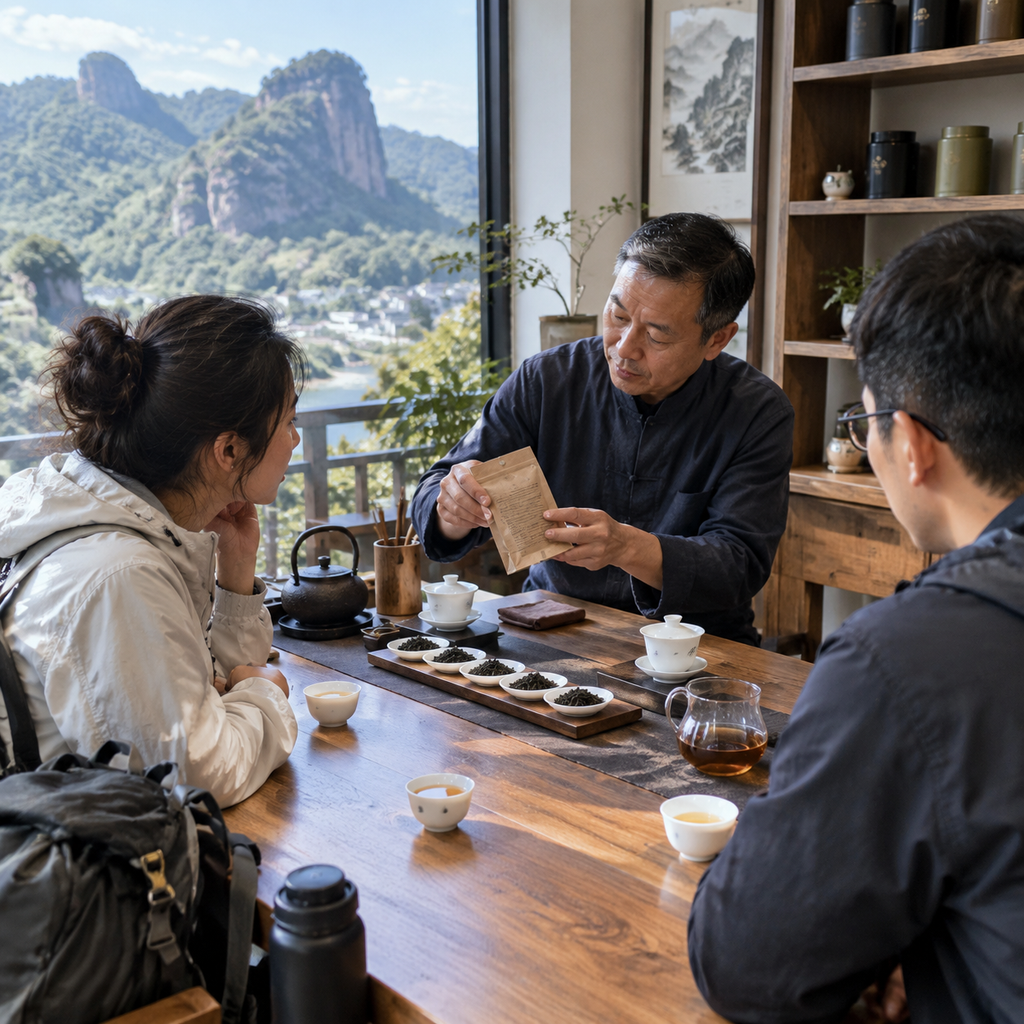
In the later infusions, the tea softened gradually. The roast no longer sat on the surface, and the floral and fruity notes became clearer. When the host discussed different rock teas, cultivar and craft still mattered, but he more often listened to how our bodies responded: whether the root of the tongue tightened or the throat opened, whether the aroma was brief or returned through the nose, whether the finish felt dry or made us reach for more water. Conversation at the table was therefore not an examination with one correct answer. Each person brought down a different fatigue from the mountain, and each tongue read rock rhyme differently. Some noticed the clean sweetness at the entrance, while others cared more about the echo after swallowing; one called that calm presence thickness, while another felt it as a quiet stone resting deep in memory. What mattered was not making the sensation sound elegant, but allowing it to remain honestly within the body.
我也终于承认,自己对第一泡的误判来自一种熟悉的期待:好茶应该马上证明自己,香气要快,滋味要满,回甘要及时。可武夷山教人的恰恰不是急着抵达。山路有转弯,岩茶有舒展,人的感受也需要从片刻退让中长出来。离开茶桌时,天色已经偏晚,鞋上的沙还在,口中却多了一条看不见的山路。那条路不指向某个标准答案,只提醒我下一次喝茶时,先少说一句“我懂了”,再多等一泡。
I finally admitted that my misjudgment of the first infusion came from a familiar expectation: a good tea should prove itself immediately, with fast fragrance, full flavor, and prompt sweetness. Yet the mountain teaches the opposite of haste. Trails turn, leaves unfold, and perception also needs time to grow through moments of apparent restraint. When I left the tea table, dusk had begun to settle. Sand was still on my shoes, but an invisible mountain path had entered my mouth. It did not lead to a standard answer. It simply reminded me that next time I drink tea, I should say “I understand” a little less quickly and wait for one more infusion.
回到住处后,我又把白天记下的冲泡细节重新想了一遍。岩茶并不是把水倒进去就结束了,盖碗的容量、投茶量、注水的位置和出汤速度,都会改变同一片叶子的表达。水沿着碗壁绕一圈,香气往往更圆;直接冲在条索上,滋味可能更快、更有冲击力。第一泡若出汤稍慢,焙火感容易显得重,第二泡以后便要适当缩短停留。所谓会泡,不是背下一个固定秒数,而是看叶片打开的程度,听汤色和香气告诉你下一步该快还是该慢。
Back at my lodging, I reconsidered the brewing details I had noted during the day. Rock tea does not end when water is poured over the leaves. The gaiwan’s capacity, the amount of tea, the position of the pour, and the speed of decanting can all change how the same leaves speak. Water circling the wall of the bowl often produces a rounder aroma, while water striking the leaves directly may bring faster, more forceful flavor. If the first infusion is held too long, the roast can seem heavy, so later infusions may need to be shortened. Brewing well is not memorizing a fixed number of seconds; it is watching the leaves open and letting color and aroma tell you whether to move faster or slower.
如果入口觉得火气明显,不必立刻把茶判成“太燥”。先确认是不是刚吃过辛辣食物,或者口腔还留着薄荷、酒精和甜点的味道;也要看看水是否滚得过久,器具是否预热过度。可以把水温略微放低,出汤更干净,再用小口慢慢喝。若滋味偏苦,通常不是简单地加糖,而是减少投茶或缩短浸泡,让茶汤重新获得空间。若觉得香气够却缺少回味,则可以提高水温,或者在下一泡多等片刻。口味修正不是迎合舌头,而是把干扰拿走,让茶本来的骨架重新显现。
If the first sip feels noticeably fiery, there is no need to label the tea “too dry” immediately. First consider whether the mouth still carries traces of spicy food, mint, alcohol, or dessert. Check as well whether the water boiled for too long or the vessel became excessively hot. Lowering the temperature slightly and decanting cleanly can help, followed by slow, small sips. If the flavor is bitter, adding sugar is not usually the answer; reduce the amount of leaf or shorten the steep so the liquor has room again. If the aroma is present but the finish is short, raise the temperature or hold the next infusion a little longer. Correcting taste is not about pleasing the tongue at any cost, but about removing interference so the tea’s structure can reappear.
茶桌上最有用的判断,常常来自一杯已经放凉的茶。热的时候,香气会把许多问题遮住,凉下来以后,苦涩是否拖尾、喉咙是否发干、甜感是否仍在,反而更容易辨认。主人把几口不同温度的茶并排放着,让我们不急着比较高低,只描述它们各自留下什么。那一刻我发现,所谓耐泡,并不只是泡数多;更重要的是茶在变化中有没有秩序。前段有香,中段有味,后段仍有清晰的水感和回甘,才是让人愿意把时间交给它的原因。
One of the most useful judgments at a tea table often comes from a cup that has cooled down. When hot, aroma can conceal many problems; once cooler, lingering bitterness, dryness in the throat, and whether sweetness remains are easier to recognize. The host placed several cups at different temperatures side by side and asked us not to rank them too quickly, but to describe what each left behind. I realized then that endurance is not merely a matter of producing many infusions. More important is whether the tea changes with order. Fragrance in the early stage, flavor in the middle, and a clear texture and sweetness toward the end are what make the tea worthy of our time.
临走前,主人替我们把剩下的叶底摊在盖碗里。叶片经过数次冲泡,边缘柔软,脉络清楚,焙火留下的颜色也不再像干茶时那样紧。叶底不能独自替一款茶下结论,却能提醒人回看刚才的判断:它是否舒展得均匀,是否还有弹性,是否在后段突然失去滋味。我们没有带走一套复杂术语,只带走一个很实际的习惯——下次遇到陌生岩茶,先观察,再冲泡;先接受它的第一种样子,再给它一次改变自己的机会。
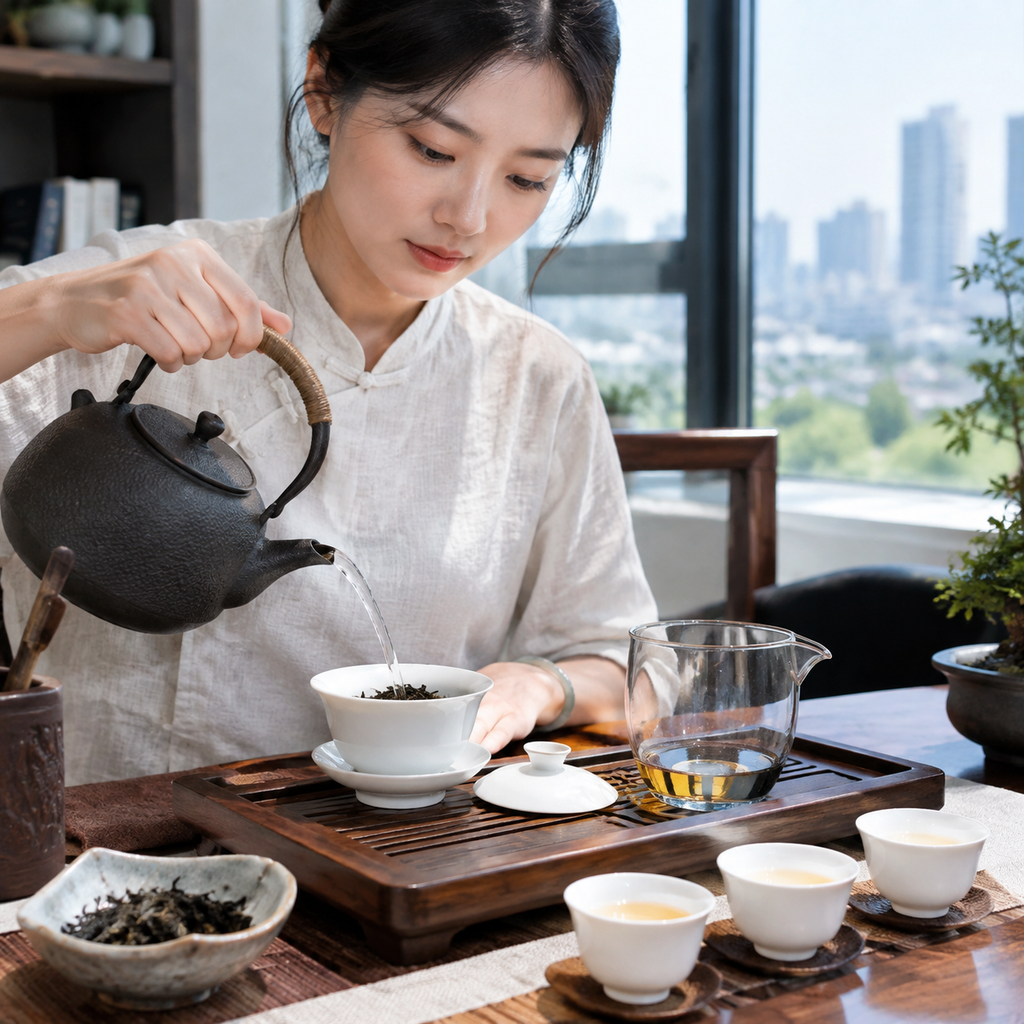
Before we left, the host spread the spent leaves across the gaiwan. After several infusions, their edges had softened, their veins were visible, and the roast-colored surface was no longer as tight as it had been when dry. Spent leaves cannot judge a tea on their own, but they can send us back to our earlier impressions: did they open evenly, retain some resilience, or suddenly lose their flavor toward the end? We did not leave with a complicated vocabulary. We left with a practical habit: when meeting an unfamiliar rock tea, observe first and brew second; accept its first form, then give it a chance to change.
武夷山的茶桌因此像一段缩短的山路。山场、品种和焙火是地图上的名字,水温、时间和入口后的停留则是脚下真正的路面。有人会在第一杯就找到喜欢的方向,也有人需要几泡才分辨出自己在意的是清香、醇厚还是喉韵。没有必要为了显得懂茶而追逐标准答案,更不必因为一次苦涩就否定整壶茶。把每一泡记成一个小小的转弯,下一次便知道如何调整:少一点叶,多一点水,快一点出汤,或者只是安静地等它再展开。
Wuyi’s tea table is therefore like a mountain trail compressed into a small space. Origin, cultivar, and roast are names on the map; water temperature, timing, and the pause after swallowing are the actual ground beneath the feet. Some people find their preferred direction in the first cup, while others need several infusions to discover whether they value freshness, fullness, or throat resonance. There is no need to chase a standard answer to appear knowledgeable, and no need to reject an entire pot because of one bitter sip. Treat each infusion as a small turn in the trail, and next time you will know how to adjust: less leaf, more water, a faster pour, or simply the patience to let it open.
如果再去武夷山,我仍会走那条有石阶和溪声的路,但不会把目的地只放在某个观景台。下山以后,我会留出一段不赶时间的下午,找一张不喧闹的茶桌,先喝一杯温度合适的水,再让第一泡只负责打开门。等第二泡把香气推远,第三泡把口感拉长,再根据自己的舌头调整。茶喝到最后,杯底也许只剩淡淡的甜,山风却会重新回来。那时可以收起盖碗,带着清醒而不急切的满足离开;岩韵不必被带回家解释,它已经在一次次等待里,变成了记忆中很具体的路。
If I return to Wuyi Mountain, I will still follow the path of stone steps and stream sounds, but I will not place the destination only at a viewpoint. After descending, I will reserve an unhurried afternoon, find a quiet tea table, drink a cup of suitably warm water, and let the first infusion do no more than open the door. I will wait for the second infusion to carry the aroma farther and the third to lengthen the texture, then adjust according to my own tongue. At the end, perhaps only a faint sweetness will remain in the cup, while the mountain wind returns. I can then close the gaiwan and leave with a clear, unhurried satisfaction. Rock rhyme does not need to be taken home and explained; through all that waiting, it has already become a very particular path in memory.
若要把这份经验带给第一次喝岩茶的人,我会建议从小份量开始,不要同时摆出太多品种。先让鼻子闻干茶,再观察第一泡的颜色,入口后把杯子放下十秒,感受香气是停在舌面,还是向喉咙和鼻腔继续移动。接着记录三个简单问题:它哪里最舒服,哪里需要修正,下一泡准备怎样改变。这样的记录不求专业,只为避免被别人的形容牵着走。喝茶本来就是一件亲身的事,山场的名字可以慢慢学习,自己的感受却应该从第一杯开始被认真对待。
If I were introducing rock tea to someone drinking it for the first time, I would suggest starting with a small amount and avoiding too many cultivars at once. Smell the dry leaves, observe the color of the first infusion, then set the cup down for ten seconds after sipping and notice whether the aroma remains on the tongue or continues toward the throat and nose. Next, record three simple questions: what feels most comfortable, what needs adjustment, and how the next infusion might change. The notes do not need to sound professional; they simply prevent other people’s descriptions from taking over your own experience. Tea is fundamentally personal. The names of mountain plots can be learned gradually, but one’s own response deserves attention from the very first cup.
到了第二天早晨,窗外的雾还没有完全散开,旅店楼下已经有人提着竹篓经过。空气里有湿润的草木味,也有街边早餐摊升起的米香。我没有急着把昨晚的茶叶丢掉,而是用冷水洗净盖碗,把叶底重新放进去,慢慢看它在晨光里舒展。叶片的颜色比昨夜更沉,边缘却透出柔软的亮意。原来一款茶的旅程并不只发生在沸水注入的几分钟里,也发生在我们离开茶桌之后,对那些细节的回想之中。
The next morning, the mist outside had not fully lifted, and someone was already passing below the inn with a bamboo basket. The air carried the damp scent of plants and the rice fragrance rising from a breakfast stall. I did not throw away the leaves from the previous night. After rinsing the gaiwan with clean water, I placed the leaves back inside and watched them slowly unfold in the morning light. Their color had deepened, yet their edges showed a soft brightness. A tea’s journey does not happen only during the few minutes when boiling water enters the bowl; it also continues in the memories of details after we leave the table.
早餐后,我沿着溪边走了一小段,遇见昨晚茶桌上的一位年轻茶农。他正把几只样茶装进纸袋,准备送到镇上的店里。我们聊到同一片山坡在不同天气里的变化:晴天时香气容易上扬,阴天时滋味显得更稳,雨后采下的叶子则更考验制作人的判断。他说,做茶像是在和天气讨价还价,不能只凭经验照搬昨天的手法。人也一样,旅行不能完全复制,茶汤的感受更不能复制;每一次相遇,都要留一点位置给当时的风、光线和心情。
After breakfast, I walked briefly beside the stream and met a young tea farmer from the tea table the night before. He was putting sample teas into paper bags to deliver to a shop in town. We talked about how the same hillside changes in different weather: on sunny days the fragrance rises easily, on cloudy days the flavor feels steadier, and leaves picked after rain demand more judgment from the maker. He said making tea is like bargaining with the weather; yesterday’s method cannot simply be copied. Travel is the same, and neither can the sensation of tea be reproduced exactly. Every meeting needs room for the wind, light, and mood of that particular moment.
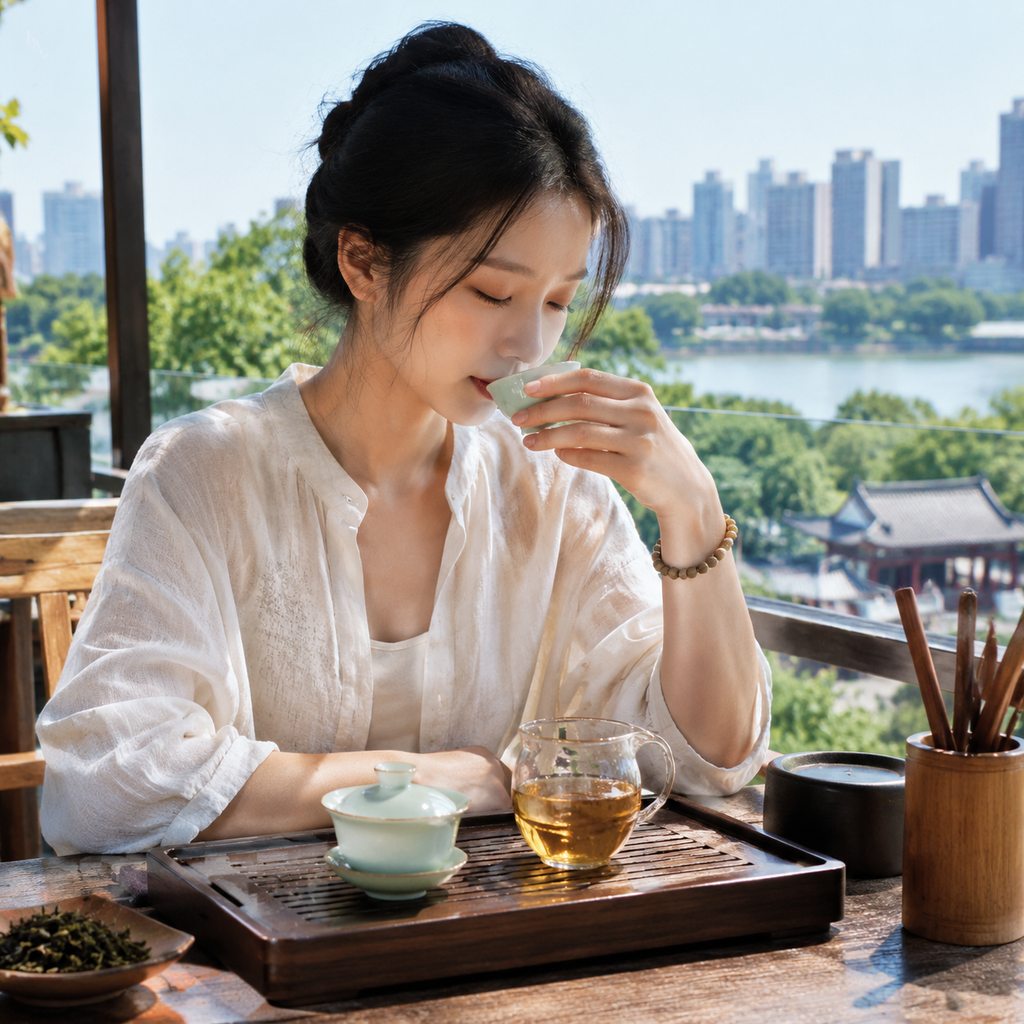
临别时,他送我一小撮尚未开封的茶,并叮嘱不要用太大的壶去泡。回到房间,我把茶分成两份,一份留作路上,一份准备带回家。路上那份没有追求完整的仪式,只在候车时借用一只普通玻璃杯,先放入少量茶叶,再沿杯壁缓缓注水。透明的杯子让叶片下沉、翻身、重新浮起的动作一览无余。没有盖碗的遮挡,香气显得直接,却也更容易散去,这让我想起旅途中许多短暂的风景:它们不够深,却因为没有重来一次,反而格外清楚。
Before parting, he gave me a small portion of unopened tea and reminded me not to brew it in an oversized pot. Back in the room, I divided it into two parts: one for the journey and one to take home. The portion for the road did not require a complete ritual. While waiting for the bus, I used an ordinary glass, added a small amount of leaf, and poured water slowly along the wall. The transparent vessel revealed every movement as the leaves sank, turned, and rose again. Without the gaiwan’s cover, the aroma felt more direct but also disappeared more quickly. It reminded me of many brief scenes on a journey: not deep enough to repeat, yet especially clear because they would not return.
车子离开武夷山时,窗外的岩壁一块块向后退去,茶园在雾气里变成深浅不同的绿色。同行的人开始整理照片,有人问我这次喝到的茶到底值不值得专程来一趟。我想了很久,没有用价格、名气或某个品种回答。值得的部分,是终于明白一杯茶怎样把地貌、手艺和人的耐心放在同一张桌上;也是在疲惫的时候,没有急着给感受盖章,而是允许它多停留一会儿。旅行若只留下景点清单,很快便会变薄;若留下身体记住的温度和味道,回程也会成为旅程的一部分。
As the vehicle left Wuyi Mountain, the rock faces outside moved backward one by one, while the tea gardens became layers of green in the mist. My companions began sorting their photographs, and someone asked whether the tea I had tasted was worth making a special trip for. I thought for a long time and did not answer with price, reputation, or cultivar. What made it worthwhile was realizing how a cup of tea could place landscape, craft, and human patience on the same table. It was also learning not to stamp a final judgment on a tired feeling, but to let it remain a little longer. If travel leaves only a list of sights, it soon becomes thin; when it leaves a temperature and flavor remembered by the body, the return journey becomes part of the trip.
回家后的第一周,我没有立刻向朋友复述“岩韵是什么”。每当有人问起,我会先说那天的水声、茶汤从热到温的变化,以及主人在我们误判时没有打断的笑容。后来我才发现,人物让茶真正有了尺度:茶农的手知道叶片什么时候该停,泡茶人的手知道水该落在哪里,客人的舌头则必须承认自己并不总是正确。岩韵不是抽象的赞美词,而是这些具体动作共同留下的回声。它既属于山,也属于把时间交给一杯茶的人。
During the first week at home, I did not immediately try to explain “rock rhyme” to my friends. Whenever someone asked, I began with the sound of the water, the change in the liquor from hot to warm, and the host’s smile when we misjudged the tea. I later realized that people give tea its true scale: the farmer’s hands know when the leaves should stop, the brewer’s hands know where the water should fall, and the guest’s tongue must admit that it is not always right. Rock rhyme is not an abstract word of praise, but an echo left by these concrete actions. It belongs to the mountain, and also to anyone willing to give time to a cup of tea.
那张茶桌后来在记忆里越来越清楚,不只因为茶,也因为围桌而坐的人。主人姓陈,五十岁上下,说话慢,右手虎口有常年碰热盖碗留下的浅红印。他的女儿小岚负责烧水和换杯,刚从外地读书回来,解释香型时不用夸张的词,只把杯子推近一点,让人自己闻。靠窗坐着老周,是附近做青多年的师傅,指甲缝里还留着茶梗染出的褐色;另一边是一对从泉州来的夫妻,丈夫总想问哪款最贵,妻子却一直记着哪一杯喝完后喉咙最舒服。我坐在他们中间,起初怕说错,只把杯沿捏得很紧。陈师傅看见后没有考我,反而问:“你下山时哪一段路最记得?”我说是潮湿岩壁旁那阵忽冷忽热的风。他点点头:“那就从这个感觉说,茶也不用先找标准词。”一句话把桌上的拘谨拆开了。此后每个人说的都不是答案,而是自己的身体:小岚说香到了鼻后,老周说汤在舌根站得住,泉州来的妻子说像吞下一小口温泉水。人物的声音交叠起来,岩韵才从一个悬空的名词,变成可以触摸的经验。
The people around that table grew clearer in my memory, not merely because of the tea. The host, Mr. Chen, was around fifty and spoke slowly; a pale red mark crossed the web of his right hand from years of handling hot gaiwan lids. His daughter Xiaolan kept the kettle and changed the cups. Recently returned from university elsewhere, she never used extravagant language for aroma, but simply nudged a cup closer and let us smell for ourselves. Old Zhou sat by the window. After years of overseeing the bruising and oxidation of tea leaves, he still had brown traces of stems beneath his nails. Across from him was a couple from Quanzhou: the husband kept asking which tea cost the most, while his wife remembered only which cup left her throat most comfortable. Sitting among them, I was afraid of saying something foolish and gripped the rim of my cup. Mr. Chen did not test me. Instead he asked, “Which part of the descent do you remember best?” I mentioned the wind beside a damp cliff, cold one moment and warm the next. He nodded. “Begin with that feeling. Tea does not require a standard term first.” The stiffness around the table dissolved. From then on, everyone described the body rather than an answer: Xiaolan felt aroma return behind the nose, Old Zhou said the liquor could stand firmly at the root of the tongue, and the visitor from Quanzhou compared it to swallowing a small sip of warm spring water. Through their overlapping voices, rock rhyme ceased to be a floating expression and became something tangible.
陈师傅随后摆出四只没有标签的盖碗,让差异从同一壶水里出现。第一只是肉桂,香气扬得高,辛锐感像桂皮,却不是厨房香料那种直接的辣;入口有力量,咽下后两颊很快生津。第二只是水仙,香没有抢到前面,茶汤却更厚、更软,木质和兰花似的气息沉在水里,喉部的停留也更长。第三只是大红袍拼配,前几泡显得均衡,花香、熟果香与焙火互相托住,不容易有哪一项突然冒尖。最后一只是黄观音,香气明亮得近乎轻快,杯盖上有甜花和成熟水果的气息,但汤体比水仙轻。若只在第一秒选茶,我大概会被黄观音吸引;喝到第四泡,我却更愿意回到水仙。老周说,这不是谁胜过谁,而是“香在水上走,还是在水里走;力气在嘴里冲一下,还是一路送到喉咙”。我第一次明白,品种差异不只是香气标签,更是茶汤运行的方式。
Mr. Chen then set out four unlabeled gaiwans and let one kettle reveal their differences. The first held Rougui. Its aroma rose high, with a cinnamon-like edge that was forceful without tasting literally like kitchen spice; the liquor had drive, and saliva gathered quickly along both cheeks after swallowing. The second was Shuixian. Its fragrance did not rush ahead, but the liquor felt thicker and softer, with woody and orchid-like notes embedded in the water and a longer presence in the throat. The third was a blended Dahongpao, balanced through the early infusions as floral, ripe-fruit, and roasted tones supported one another without any single feature leaping out. The last was Huangguanyin, whose bright, almost buoyant fragrance suggested sweet flowers and ripe fruit on the lid, though its body was lighter than the Shuixian. Had I chosen within the first second, Huangguanyin would probably have won me over; by the fourth infusion, I preferred returning to Shuixian. Old Zhou said this was not a contest, but a question of “whether aroma travels above the water or inside it, and whether strength strikes the mouth once or carries all the way to the throat.” For the first time, I understood cultivar differences not as a set of aroma labels, but as different ways tea moves through the mouth.
泡到下一轮,陈师傅又把同一款水仙分成轻火与足火两种。轻火那杯花香靠前,汤色更亮,入口清爽,但喝到后面骨架收得较快;足火那杯初闻有烤谷物和木炭退去后的温热,前两口并不张扬,第三泡后反而显出更稳的甜与熟果气。小岚提醒我们,焙火并不是越重越高级,也不是轻火就一定更新鲜。火候应当服务原料:叶子内质足,较深的火能把杂气收住并让汤感融合;原料偏薄却勉强重焙,可能只剩焦味和干涩。陈师傅还把两杯放凉,让我们再喝。轻火的香仍清楚,足火的茶汤则在冷后保住了一点圆润。比较到这里,“火香”和“焦味”终于分开:前者会退到茶汤后面,给滋味添温度;后者则压住叶子的声音,冷下来尤其粗糙。
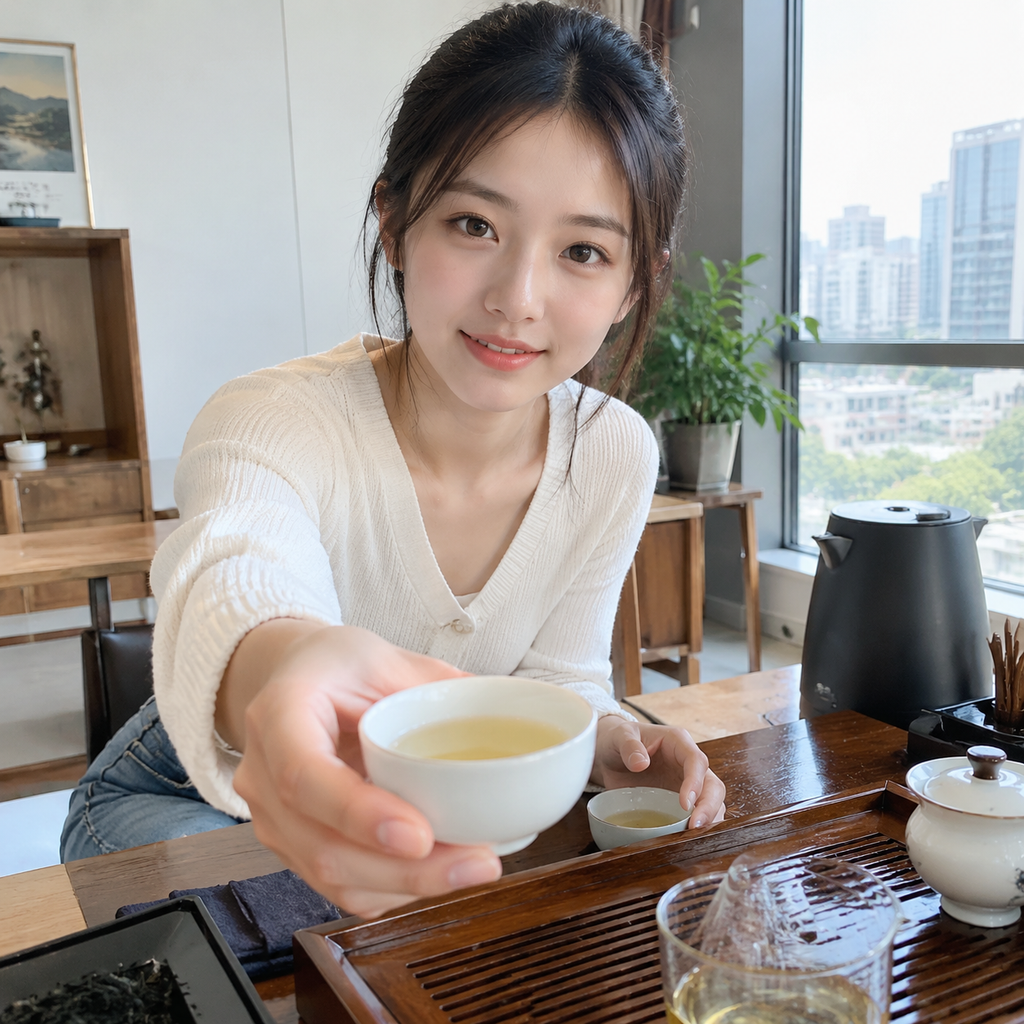
In the next round, Mr. Chen brewed two versions of the same Shuixian, one lightly roasted and one more fully roasted. The lighter roast placed floral aroma forward, with a brighter color and refreshing entry, though its structure tightened sooner in later infusions. The fuller roast initially suggested toasted grain and the warmth left after charcoal had receded. It was modest in the first two sips, but by the third infusion showed steadier sweetness and ripe-fruit depth. Xiaolan reminded us that heavier roasting is not automatically superior, just as lighter roasting is not necessarily fresher or better. Fire must serve the leaf. Substantial material can use deeper roasting to gather stray aromas and integrate texture, while thin material forced through heavy fire may be reduced to char and dryness. Mr. Chen let both cups cool before we tasted again. The lightly roasted tea retained a distinct fragrance, while the fuller roast kept a measure of roundness even when cool. Only then did “roasted aroma” separate clearly from “burnt flavor”: the former steps behind the liquor and lends it warmth; the latter suppresses the leaf’s voice and becomes especially coarse after cooling.
老周接着谈的不是品种,而是山场。他不让我们把“正岩”当作万能奖章,只说同一品种长在日照、坡向、土壤含石量和水分条件不同的地方,叶片积累与成熟节奏会变,做出来的茶自然有不同的紧实感。有些坑涧环境湿润、日照相对短,茶的香不一定最高,却可能更幽、更沉,汤也细;开阔处日照足,香气往往更活跃,制作若控制不好,也容易显得奔得太快。最让我信服的不是这些解释,而是他承认盲喝很难仅凭一杯准确指出哪一道岩壁、哪一块茶园。山场可以帮助理解,却不能代替品饮,更不该变成抬高价格的故事。陈师傅把茶袋翻到背面,不让我们先看名字,说:“先把杯里的差异喝明白,再去记地图。”这句话让茶桌重新安静,只剩电水壶将沸未沸的低响。
Old Zhou then shifted from cultivar to growing site. He would not let us treat “Zhengyan,” the core rocky area, as a universal medal. He explained only that the same cultivar changes when grown under different sunlight, slope direction, rocky soil, and moisture; the leaves accumulate substance and mature at different rhythms, so the finished tea naturally develops a different compactness. In humid gullies with shorter periods of direct sun, aroma may not rise highest, yet it can feel quieter and deeper, with a finer liquor. In open, sunnier places fragrance often becomes more animated, although careless processing can make it run forward too quickly. What convinced me most was not the explanation, but his admission that blind tasting rarely allows someone to identify a precise cliff or garden from one cup. Site can aid understanding, but it cannot replace tasting and should not become merely a story used to inflate price. Mr. Chen turned the packets face down so we could not read their names. “First understand the difference in the cup,” he said. “Then learn the map.” The table fell quiet again, with only the low sound of the kettle nearing a boil.
他们还把“好喝”拆成了更实际的取舍。若早晨空腹,香高而刺激感强的肉桂未必最合适,温和些的水仙更容易让身体接受;若饭后想清口,清香型品种的明亮感会更讨喜;若准备与三四位朋友慢慢坐一晚,滋味转换有秩序、后段不塌的茶,比第一泡惊艳更重要。买茶时也可以要求用相同克数、相同器具和相近出汤时间比较,避免一款泡得浓、一款泡得淡,却把冲泡差别误认成品质差别。更不用急着学会“岩骨花香”之类的大词。先说清杯里是厚还是薄、香是浮还是沉、咽下后口腔是润还是干,这些朴素判断已经足够可靠。小岚在旁边记水温,偶尔把我们说乱的词划掉。她笑着说,认真喝茶并不是把话说复杂,而是让每一个形容都能回到某一口茶。
They also broke the idea of “delicious” into practical choices. On an empty stomach in the morning, a highly aromatic, forceful Rougui may not be ideal, while gentler Shuixian can be easier on the body. After a meal, the brightness of a fragrant cultivar may cleanse the palate more pleasantly. For an evening shared slowly with three or four friends, orderly transitions and a finish that does not collapse matter more than a spectacular first infusion. When purchasing tea, it is useful to compare equal leaf weights in the same vessels with similar infusion times; otherwise one tea may be brewed strong and another weak, and differences in technique can be mistaken for differences in quality. There is no need to master grand phrases such as “rock bones and floral fragrance” at once. Begin by saying whether the liquor is thick or thin, whether aroma floats or settles, and whether the mouth feels moist or dry after swallowing. These plain judgments are already dependable. Xiaolan recorded the water temperature beside us and occasionally crossed out words when our descriptions became tangled. Serious tasting, she laughed, does not mean making language complicated; it means ensuring every description can return to a particular sip.
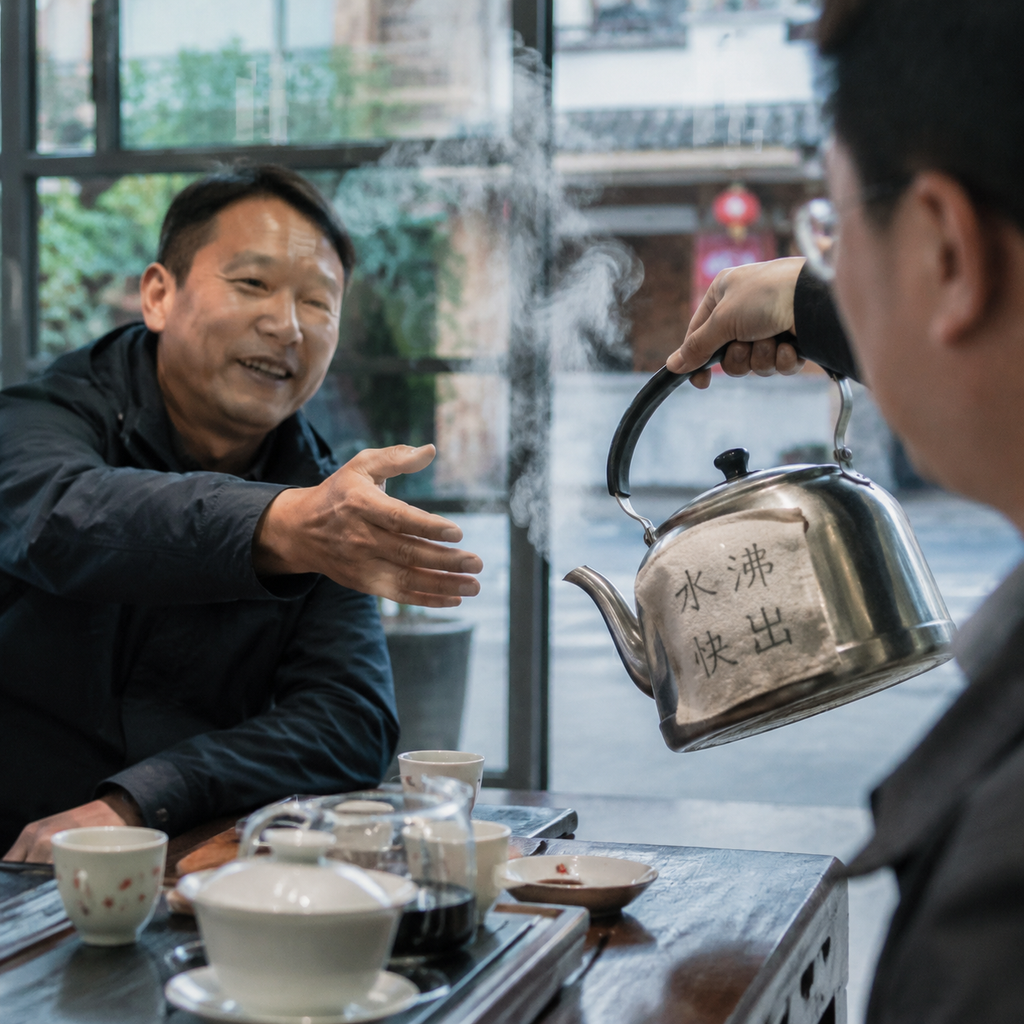
分别之前,泉州来的妻子请陈师傅把她最喜欢的那泡再冲一次。她没有买最贵的茶,只选了那款喝完喉咙舒服的水仙。丈夫笑她挑得不够“有名”,她把温杯递过去,让他先别看袋子。他喝完沉默几秒,承认这杯确实比刚才那款香气猛烈的茶更适合带回家。老周已经起身,却又转回来替我们看了一眼叶底,说这批茶后段还有劲,家里用盖碗时不要闷。小岚在纸袋上写了四个小字:“水沸,快出。”陈师傅则把我先前握得发热的小杯冲净,倒扣在竹席上。桌边没有谁宣布品鉴结束,大家只是各自收起东西,椅脚轻轻擦过地面,窗外卖笋的小车正好摇着铃经过。原来一场茶会最好的收束,不是所有人得出相同结论,而是每个人都知道下一次该怎样泡给自己喝。
Before we parted, the woman from Quanzhou asked Mr. Chen to brew her favorite infusion once more. She did not buy the most expensive packet, choosing instead the Shuixian that had left her throat comfortable. Her husband teased her for selecting something insufficiently “famous,” so she handed him the warm cup and asked him not to look at the packet. After drinking, he paused for several seconds and admitted that this tea suited their home better than the more aggressively fragrant one. Old Zhou had already stood up, but turned back to inspect the opened leaves and told us that the batch still had strength in its later infusions, so it should not be trapped too long in a gaiwan. Xiaolan wrote four Chinese characters on the paper packet: “water boiling, pour fast.” Mr. Chen rinsed the little cup I had held until warm and placed it upside down on the bamboo mat. No one announced that the tasting was over. People simply gathered their things; chair legs brushed softly across the floor as a vegetable cart outside passed with a ringing bell. The best ending to a tea gathering, I realized, is not for everyone to reach the same conclusion, but for each person to know how to brew the next cup for themselves.
三个月后一个下雨的星期六,我才打开那包带回家的水仙。窗外是城市楼房,不是武夷山的岩壁;厨房里的水壶也没有茶馆那只烧得快。我照着袋上的提醒,把水烧透,沿盖碗边缘注入,几乎立刻出汤。第一杯仍有一点仓促的木香,第二杯开始变软。朋友问我岩韵到底像什么,我没有背诵定义,而是把第三杯推给他,叫他喝完后等十秒。他先说没什么,片刻后却摸了摸喉咙:“这里还有一点甜。”雨点正敲在空调外机上,我把第四泡分进两只杯,终于给这趟武夷山之行找到了具体结尾:不是我带回了一个神秘答案,而是陈师傅、小岚和老周教会我,把判断放慢到一杯茶足以发生变化的时间。朋友伸手要再添一杯,我提起水壶,袋上“水沸,快出”四个字已经被蒸汽洇得微微发软。
Three months later, on a rainy Saturday, I finally opened the packet of Shuixian I had brought home. Apartment buildings stood outside instead of Wuyi cliffs, and my kitchen kettle heated more slowly than the one in the tea room. Following the note on the packet, I brought the water fully to a boil, poured along the gaiwan’s edge, and decanted almost immediately. The first cup still had a slightly hurried woody note; the second began to soften. A friend asked what rock rhyme actually resembled. Rather than reciting a definition, I pushed the third cup toward him and asked him to wait ten seconds after swallowing. At first he said there was nothing unusual. A moment later he touched his throat. “There is still a little sweetness here.” Rain tapped against the outdoor air-conditioning unit as I divided the fourth infusion between our cups. At last, the Wuyi journey had a concrete ending: I had not brought home a mysterious answer. Mr. Chen, Xiaolan, and Old Zhou had taught me to slow judgment until a cup of tea had enough time to change. My friend reached out for another serving. I lifted the kettle, and the four characters on the packet—“water boiling, pour fast”—had softened slightly in the steam.
所以,武夷山之行的结尾并不是把茶叶装进行李箱,而是把冲泡时形成的节奏带回日常。忙碌的早晨可以少放一点茶,缩短等待;有完整的夜晚,则可以把盖碗预热,听水沸后稍稍安静,再让一泡一泡的变化展开。偶尔泡得苦了,也不必懊恼,记下原因,下一次重新开始。真正留下来的旅行记忆,往往不是最响亮的那一刻,而是某个普通下午,杯中忽然浮起熟悉的焙火香,窗外没有山,却让人再次听见溪流。那一刻,岩韵已经从武夷山出发,走进了生活。
The conclusion of a Wuyi journey is therefore not simply placing tea leaves in a suitcase. It is bringing the rhythm of brewing back into ordinary life. On a busy morning, use fewer leaves and shorten the wait; on an unhurried evening, warm the gaiwan, let the water settle after boiling, and allow the infusions to unfold one by one. If a brew turns bitter, there is no need for frustration: note the reason and begin again next time. The memories that remain are often not the loudest moments, but an ordinary afternoon when a familiar roasted fragrance rises from the cup. There may be no mountain outside the window, yet the stream can be heard again. At that moment, rock rhyme has left Wuyi Mountain and entered daily life.
后来陈师傅寄来一条很短的语音,问我那包水仙有没有被城市里的硬水泡坏。我把周末的冲泡过程告诉他,他没先评论茶,只问盖碗多大、用了几克、从烧水到出汤隔了多久。听说我用一百二十毫升的盖碗塞了近九克茶,他在语音里笑出声:“难怪第一杯挤得慌,叶子连转身的位置都没有。”第二天我照他说的减到七克,先用热水烫杯,却不让空盖碗在沸水里闷太久。注水时避开叶心,手腕转半圈,茶汤沿公道杯内壁落下。原来那股被我当成品种特征的紧涩,竟有一部分来自自己的手。茶桌教人的并非只会辨茶,也包括承认冲泡者参与了味道;同一泡水仙换一个动作,木香便不再堵在入口,兰花似的气息从温热的汤里慢慢抬起。
Later, Mr. Chen sent a brief voice message asking whether the hard city water had ruined the packet of Shuixian. I described my weekend brewing, and instead of judging the tea, he asked about the gaiwan’s size, the leaf weight, and the interval between boiling and decanting. When he heard that I had crowded nearly nine grams into a 120-milliliter bowl, he laughed in the recording. “No wonder the first cup felt cramped. The leaves had no room even to turn around.” The next day I reduced the dose to seven grams, warmed the cups, but did not leave the empty gaiwan trapped in boiling water. I poured away from the center of the leaves, turning my wrist half a circle, and let the liquor run down the wall of the fairness pitcher. Part of the tightness I had mistaken for a cultivar trait had come from my own hands. A tea table teaches more than recognition; it asks the brewer to admit participation in flavor. With one changed movement, the woody note no longer blocked the entrance, and an orchid-like aroma slowly rose through the warm liquor.
为了弄清自己究竟喜欢什么,我把剩下的水仙、朋友送来的肉桂和一小包奇兰排成一场朴素的横向比较。三只盖碗同样大小,每只七克,水来自同一只壶,前三泡都采用快出汤。肉桂最先说话,杯盖上的辛香高而利落,茶汤像一条窄而有劲的线,穿过舌面后在两颊留下清凉感;水仙的声音低些,入口宽,木质气息与柔甜藏在汤中,吞下后喉部仍有圆润的停顿;奇兰则把花香铺得明亮,前段轻盈讨喜,到后段水感来得比前两款快。朋友原以为“香气最浓就是最好”,盲喝后却选择了水仙,因为它让他不知不觉把杯子喝空。我选择肉桂,不是因为它更贵或更有名,而是那股克制的辛锐与当天阴冷的天气很合。偏好终于不再是假装客观的排名,而是品种、身体和当下共同做出的决定。
To understand what I actually preferred, I arranged the remaining Shuixian, a Rougui from a friend, and a small packet of Qilan for a plain side-by-side tasting. The three gaiwans were identical, each held seven grams, and all received water from the same kettle with quick decanting for the first three infusions. Rougui spoke first: its spicy fragrance was high and clean on the lid, while the liquor crossed the tongue like a narrow, forceful line and left a cooling sensation along the cheeks. Shuixian had a lower voice, a broader entry, and woody sweetness held within the liquid, followed by a rounded pause in the throat. Qilan spread bright floral aroma across the early cups and felt charmingly light, though its later infusions became watery sooner than the other two. My friend had assumed that the strongest aroma must indicate the best tea, yet in the blind tasting he chose Shuixian because he emptied the cup without noticing. I chose Rougui, not because it was more famous or expensive, but because its restrained spice suited the cold, overcast day. Preference was no longer a ranking disguised as objectivity, but a decision made jointly by cultivar, body, and moment.
又过了一阵,小岚到城里参加茶叶展,顺路来看我。她没有带展台上包装漂亮的新茶,只从背包里拿出三个牛皮纸小袋,分别写着“春水仙”“中火肉桂”和“去年足火水仙”。我们把餐桌上的电脑、果盘和调味瓶全部移开,铺一块洗净晾干的竹席;白瓷盖碗放在中央,公道杯靠右,闻香杯和饮杯分开,烧水壶的电线绕到桌后,免得伸手时碰翻。她先让我喝一口温水,又切了几片味道清淡的梨,提醒不要让香水、咖啡和厨房油烟抢走茶香。武夷山那张茶桌此刻被搬进城市,却没有刻意复制山里的样子。楼下快递车倒车的提示音、窗边晾着的雨伞、桌角一道旧划痕都留在现场,茶也因此不再是供起来的风景,而是能够进入普通生活的东西。
Some time later, Xiaolan came to the city for a tea exhibition and stopped by to see me. Instead of bringing a beautifully packaged showpiece from the exhibition hall, she took three brown paper packets from her backpack, marked “spring Shuixian,” “medium-roast Rougui,” and “last year’s full-roast Shuixian.” We cleared the computer, fruit bowl, and seasonings from the dining table and laid down a clean, dry bamboo mat. A white porcelain gaiwan sat in the center, the fairness pitcher to its right, aroma cups separate from drinking cups, and the kettle cord looped behind the table so no reaching hand would overturn it. She first asked us to drink warm water and cut a few slices of mild pear, warning that perfume, coffee, and kitchen fumes could steal the tea’s aroma. The Wuyi tea table had entered the city, yet we made no attempt to imitate the mountain room. A delivery van’s reversing alert sounded below, an umbrella dried by the window, and an old scratch remained at the table’s corner. Tea was no longer scenery placed on an altar, but something able to enter ordinary life.
三袋茶把“差异”讲得比任何术语都清楚。春水仙香气细,汤柔,像雨停后叶面缓慢变亮,适合从第一泡安静喝到第六泡;中火肉桂有更明确的辛香与收口,第二、三泡的力量集中,配合快出汤尤其利落;放过一年的足火水仙没有新焙茶那股表面的热,熟果、木香和甜感已经揉到一起,冷杯也不显干。小岚让我们轮流掌壶。朋友把肉桂闷了十多秒,汤立刻发苦,她没有接手补救,只叫他把下一泡缩短,并把两泡各留半杯混在一起。浓与淡相遇后,苦感退开,香气仍在。她说制作中的拼配、冲泡时的调整,都不是掩饰错误,而是在理解叶子的边界。那晚我们还谈到老丛水仙:树龄可以提供理解线索,常见的木质、粽叶或幽沉气息也确有辨识度,但“老丛”三个字不能自动保证干净、厚实与耐泡,仍要回到杯里,看茶汤是否连续,看后段有没有只剩概念。
The three packets explained “difference” more clearly than any terminology. Spring Shuixian carried a fine fragrance and soft liquor, brightening slowly like leaves after rain, and rewarded quiet attention from the first infusion through the sixth. Medium-roast Rougui had a more defined spicy lift and firmer finish, with concentrated force in the second and third rounds when decanted quickly. The year-rested full-roast Shuixian no longer carried the surface heat of recent firing; ripe fruit, wood, and sweetness had integrated, and even a cooled cup did not feel dry. Xiaolan had us take turns with the kettle. My friend trapped the Rougui for more than ten seconds and made it bitter. Instead of taking over, she asked him to shorten the next infusion and then blend half a cup of each. As strong and light met, the bitterness receded while the aroma remained. Adjustments in brewing, like blending during production, were not ways of hiding mistakes, she said, but of understanding the leaf’s boundaries. We also discussed old-bush Shuixian. Tree age can provide a useful clue, and woody, bamboo-leaf, or quietly deep notes may indeed be recognizable, but the words “old bush” cannot guarantee cleanliness, thickness, or endurance. Judgment must return to the cup: does the liquor remain coherent, and does the later stage offer more than a concept?
夜里十一点,小岚要赶最后一班地铁。她把三种叶底依次摊开,叫我们摸一摸叶片的厚薄与弹性,然后只装走空纸袋,把剩茶留给我练习。电梯门合上前,她伸手比了一个倾斜盖碗的动作:“别怕快,先把水倒干净。”我回到餐桌,把椅子推回原位,发现最后一杯足火水仙已经凉了。喝下去仍有微甜,喉咙没有发紧,杯底留着很轻的熟果香。我给陈师傅发去一张凌乱茶桌的照片:竹席上有水痕,三只盖碗的盖子方向各不相同,朋友忘带走的地铁票压在纸袋旁。陈师傅只回了六个字:“喝明白了就好。”我关掉烧水壶,擦干桌面,却把那张票留到第二天。武夷山没有再次出现在窗外,但这一次故事确实停住了——停在一只倒净水的盖碗、一张被茶汽熨平的车票,以及我终于能为下一泡作出具体选择的手上。
At eleven that night, Xiaolan had to catch the last metro. She spread the three sets of opened leaves in order and asked us to feel their thickness and resilience. Then she took only the empty paper packets, leaving the remaining tea for me to practice with. Before the elevator doors closed, she tilted one hand like a gaiwan and called, “Do not be afraid of speed. Just pour the water out completely.” Back at the table, I pushed the chairs into place and found that the final cup of full-roast Shuixian had gone cold. It was still faintly sweet, left no tightness in the throat, and held a light ripe-fruit scent at the bottom. I sent Mr. Chen a photograph of the untidy table: water marks crossed the bamboo mat, the lids of three gaiwans pointed in different directions, and a metro ticket my friend had forgotten lay beside a packet. Mr. Chen replied with only six Chinese characters: “It is enough if you drank it clearly.” I switched off the kettle and dried the table, but left the ticket there until morning. Wuyi Mountain did not reappear outside the window, yet this time the story truly came to rest—in a gaiwan emptied cleanly, a ticket pressed flat by tea steam, and a hand finally able to make a specific choice for the next infusion.
- 三月桃花源:寻访世外桃源 | March Peach Blossom: Finding Utopia in China
- 昆明蓝花楹城市漫步:把春天走成一条紫色街巷 | A Jacaranda Walk in Kunming: Turning Spring into a Purple Street
- 我在成都住满一周后,才学会不慌不忙地过日子 | After a Week in Chengdu, I Finally Learned How to Live Without Rushing
- 绍兴黄酒的慢饮法:从乌篷船到晚饭桌 | A Slow Way to Drink Shaoxing Wine: From Black Canals to the Dinner Table
- 元旦跨年旅游目的地盘点 | New Year's Eve Travel Destinations Roundup
- 我带父母第一次来中国,不是先去最红景点,而是先把一天过顺 | When I Brought My Parents to China for the First Time, I Focused on a Smooth Day Before Famous Sights
- 我们带着孩子在杭州遇上五月细雨,才知道西湖不用一路赶 | Traveling Hangzhou with a Child in May Rain Taught Us West Lake Never Needed Rushing
- 我们一家在上海去朱家角的五月雨天里学会,短途旅行也能像长假一样松弛 | A Rainy Day Trip from Shanghai to Zhujiajiao Taught Our Family That Even a Short Outing Can Feel Spacious
- 五月在南浔陪孩子看雨落到河面,我们全家第一次接受“今天少去一个景点也没关系” | Watching Rain Touch the Canal in Nanxun, Our Family Finally Accepted That One Less Stop Could Still Mean a Full Day
- 我在苏州园林里学会先找一把椅子坐下,再开始拍照 | In Suzhou Gardens, I Learned to Find a Place to Sit Before Starting to Take Photos
Comments (0)