
大运河边读一座城市 | Reading a City Along the Grand Canal
大运河边读一座城市 | Reading a City Along the Grand Canal
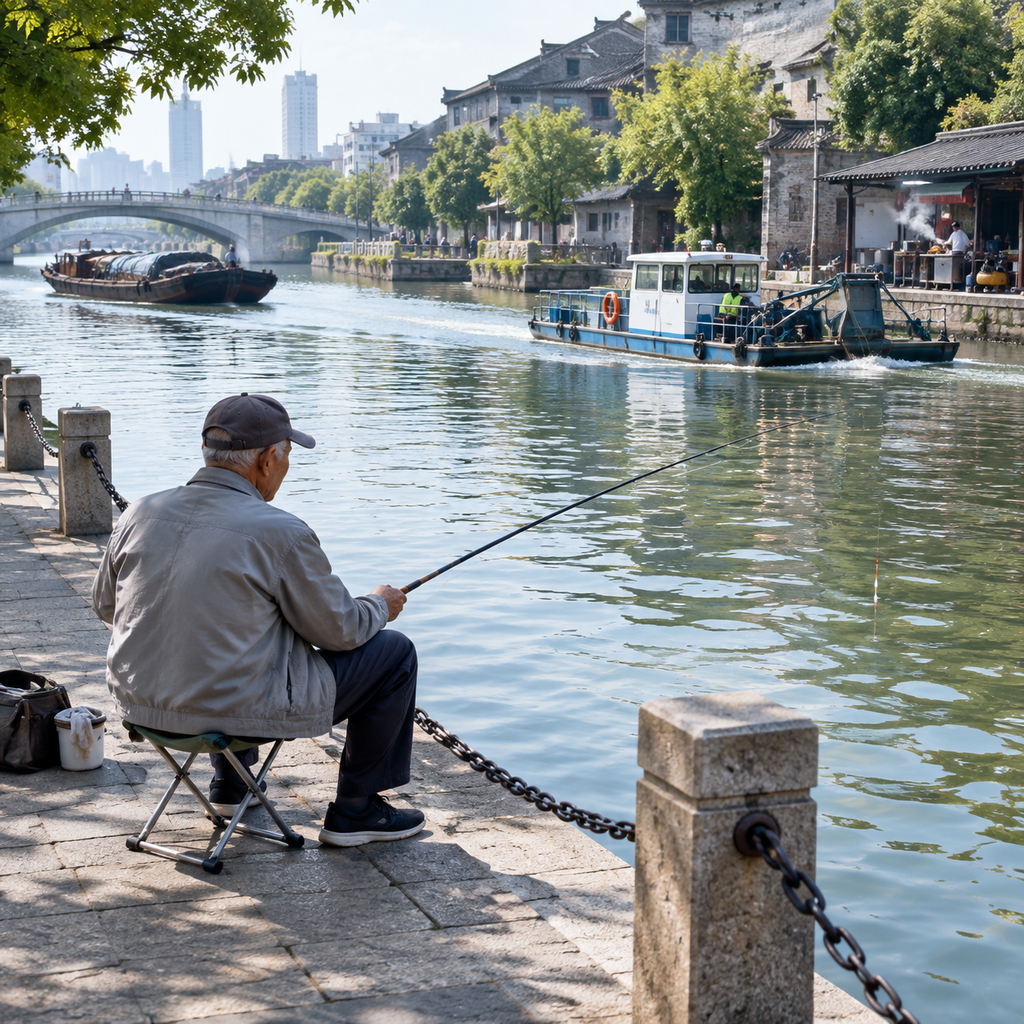
清晨五点四十,天还没有完全亮,运河水面先接住了桥洞里几盏未熄的黄灯。沿岸的石栏带着夜露,摸上去该是凉的;一名穿灰色夹克的老人却没碰栏杆,只把折叠凳朝后挪了半尺,甩开鱼线,让浮标落在一艘清洁船刚刚驶过的水纹之外。船头的女工握着长柄网兜,弯腰捞起一团水草,又直身避开桥墩。发动机压得很低,声音像隔着门传来的闷雷。城还未露出白日的轮廓,水上的人已经各自找准了位置。
At 5:40 in the morning, before the sky was fully light, the canal caught the glow of several yellow lamps still burning beneath the bridge arches. Night dew chilled the stone railing. An elderly man in a gray jacket did not touch it; he shifted his folding stool half a foot backward, flicked out his line, and dropped the float beyond the wake of a passing cleaning boat. At the bow, a woman bent over with a long-handled net, lifted a clump of weeds, then straightened to avoid a pier. The engine ran low, rumbling like thunder behind a closed door. The city had not yet shown its daytime outline, but the people on the water had already found their places.
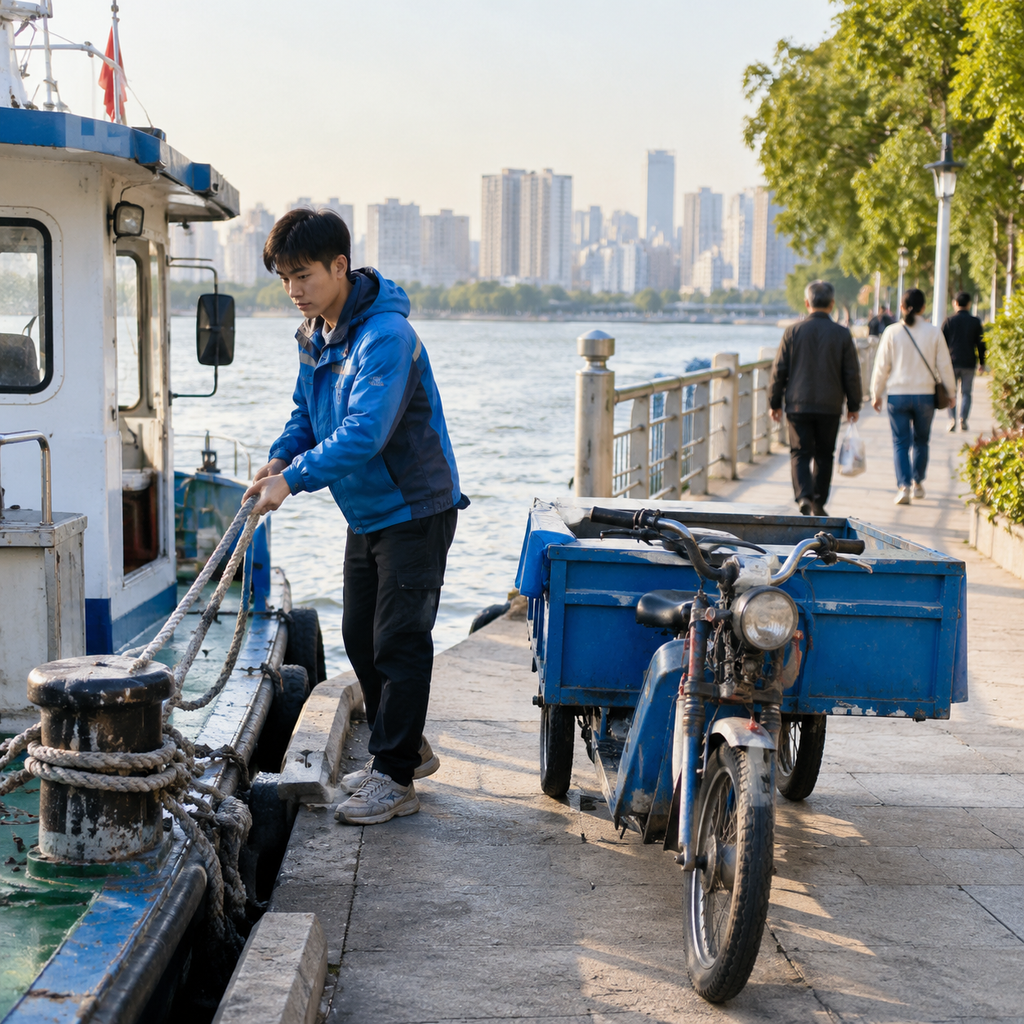
从东岸台阶下来的年轻人背着一只方正的黑包,走得很急。他在亲水平台停住,先看手机,再看河对岸亮着顶灯的小船,随后抬手招了两次。观察者起初也把那船当成早班渡船,以为年轻人正担心错过过河的第一班。船靠近后却没有放下跳板,舱里的人只递出一只蓝色保温箱。年轻人扫码、签字,把箱子背带绕上肩,转身跑向街口。那是一箱给沿河餐馆送来的鲜鱼;所谓“赶船”,其实是城市最早的一次交货。
A young man came quickly down the steps on the east bank with a square black bag on his back. He stopped on the waterside platform, checked his phone, looked toward a small boat whose cabin light was on, and raised his hand twice. At first, an observer might have taken it for the first commuter ferry and assumed that he feared missing the morning crossing. Yet when the boat drew near, no gangway came down. Someone in the cabin simply passed him a blue insulated box. He scanned a code, signed for it, looped its strap over his shoulder, and ran toward the street. The box held fresh fish for a canal-side restaurant. What looked like a rush to catch a boat was actually one of the city’s earliest deliveries.
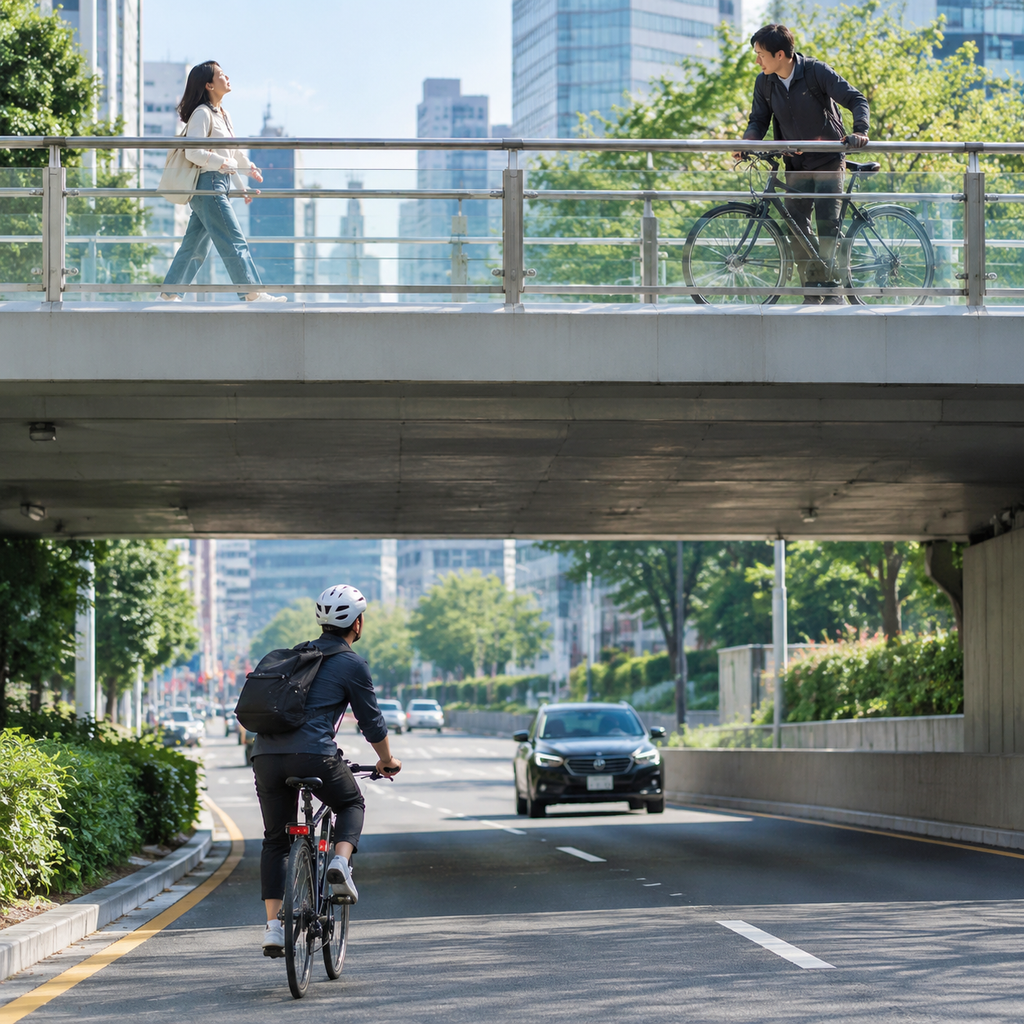
六点过后,桥面开始增重。先是三两辆电动自行车从薄雾里滑出来,随后外卖骑手、拎电脑袋的职员和送孩子上早自习的父亲接连上桥。那位父亲单脚撑地,把女儿歪掉的红领巾重新压进衣领;绿灯一亮,女孩立刻抱紧他的腰,两个人跟着车流越过拱顶。桥下,运菜的小艇恰好反向穿过。桥上的车轮与桥下的船尾各走各的线,却在同一刻把这座城从睡梦里往前推了一截。
After six, the bridge began to gain weight. First, two or three electric bicycles glided out of the mist. Then came delivery riders, office workers carrying laptop bags, and a father taking his daughter to early study. He steadied the bike with one foot and tucked her crooked red scarf back beneath her collar. When the light turned green, she clasped both arms around his waist, and they crossed the crown of the bridge with the flow. Below them, a vegetable boat passed in the opposite direction. The wheels above and the stern below followed separate lines, yet together they nudged the city another step out of sleep.
六点二十分,年轻人把那箱鱼送进临河巷口的一家面馆。卷帘门只升到一半,老板娘弯着腰验货,手指在鱼鳃边轻轻一拨,又让他把空箱带回码头。她见观察者盯着河面,顺手指向下游:“等会儿还有豆腐和藕,路上堵不堵,要看桥;今天菜齐不齐,要看水。”这句平常话第一次拆开了误会。水路并非供人怀旧的布景,也不只是偶尔运鱼的捷径,它和灶台上的第一锅汤、市场摊位能否准时开张紧紧相连。
At 6:20, the young man carried the fish into a noodle shop at the mouth of a canal-side lane. Its shutter was only halfway up. The owner bent to inspect the delivery, brushed a finger beside a fish's gills, and told him to take the empty box back to the landing. Noticing the observer watching the canal, she pointed downstream. “Tofu and lotus roots will come later. Whether people are delayed depends on the bridge; whether today's stalls are fully stocked depends on the water.” Her ordinary remark first broke apart the earlier misconception. The canal was neither nostalgic scenery nor merely an occasional shortcut for fish. It was tied directly to the first pot of broth and to whether market stalls could open on time.
继续往北,河岸由石栏变成低矮埠头。两名装卸工把窄木板搭上船舷,一个在船里递筐,一个在岸上接。青菜叶尖挂着水珠,竹筐落地时发出干脆的碰响;装藕的袋子较沉,岸上那人先用膝盖顶住,再侧身挪到三轮车里。观察者原以为这些船速度慢、载量又不大,早该被货车取代。接货的摊主却解释,老街巷窄,清晨校门和桥口又不能久停大车,船把货分送到几个小埠头,三轮车只跑最后几百米,反而少绕路,也不堵住居民出门。
Farther north, the stone railing gave way to a low landing. Two handlers laid a narrow plank across the gunwale, one passing baskets from the boat and the other receiving them ashore. Drops clung to the tips of vegetable leaves, and bamboo baskets struck the ground with a crisp knock. The lotus-root sacks were heavier; the man onshore braced one with his knee before turning it into a three-wheeled cart. The observer had assumed that boats this slow and small must long ago have been replaced by trucks. A stallholder explained otherwise. The old lanes were narrow, and large vehicles could not linger near the school gate or bridge approach in the morning. Boats divided the goods among several small landings; tricycles covered only the final few hundred metres, saving detours without blocking residents leaving home.
临近七点,第一座平桥前聚起了短短一列船。桥孔不高,船夫收起遮雨篷,装卸工也把最高的空筐平放下来。岸上的交通协管员没有催桥面车辆停下,反而朝最前面的船比了个稍等的手势。几分钟后,一辆社区接驳车载着老人驶过,两个推婴儿车的居民也顺利到达对岸,桥边护栏才缓缓落下,活动桥面抬起。等待的船依次通过,没有鸣笛。桥并不是单纯阻隔水路的障碍;它每天都在替步行、骑行、公交与船运分配时间。
Near seven, a short line of boats formed before the first low bridge. Because the opening was shallow, boatmen folded down their rain canopies, while handlers laid the tallest empty baskets flat. The traffic steward ashore did not stop the vehicles on the bridge. Instead, he signalled for the leading boat to wait. Minutes later, a community shuttle carrying elderly residents crossed, followed by two people pushing prams. Only then did the barrier descend and the movable span rise. The waiting boats passed in order without sounding their horns. The bridge was not simply an obstacle dividing the waterway; each day it allocated time among walkers, cyclists, buses, and freight boats.
桥重新合拢时,刚才送女儿上学的父亲已经折返。他把电动车停在河边早餐摊,买了两只烧饼,又替摊主把一捆纸碗从船上提到桌后。原来他白天在对岸修电器,早晨先送孩子,再沿桥去店里;遇上桥起落,熟悉的居民会看一眼河湾里排船的长度,决定等三分钟还是绕下一座桥。他说这话时并未把它当成诀窍,只低头拧紧保温杯。观察者这才明白,通勤者并非被运河被动牵制,他们早已把船速、桥时和车流读成了一张不断变化的时刻表。
When the bridge closed again, the father who had taken his daughter to school was already returning. He parked his electric bicycle beside a breakfast stall, bought two sesame flatbreads, and helped the vendor carry a bundle of paper bowls from a boat to the back of the table. He repaired appliances across the canal during the day: first he took his daughter to school, then crossed to his shop. When the bridge opened, residents merely glanced at the length of the boat queue around the bend and chose whether to wait three minutes or detour to the next crossing. He did not present this as special knowledge; he tightened the lid of his flask as he spoke. The observer finally understood that commuters were not passively inconvenienced by the canal. They had learned to read boat speed, bridge timing, and road traffic as a timetable that changed by the minute.
七点半,菜市场的布棚下已经亮满白灯。刚从埠头转来的藕堆在湿麻布上,鱼箱旁的碎冰冒着淡淡白气,豆腐摊主用铜勺舀去木桶表面的水。面馆老板娘提着空篮来补一把香葱,与卖菜人只说了句“还是早船这批”,对方便从里侧挑出叶子最挺的两捆。年轻送货员也回来了,这回没背保温箱,而是帮一位腿脚慢的老太太把小推车抬过市场门口的排水沟。他身上的工作在送货、回收空箱和顺手搭把手之间自然转换,水路抵达市场之后,并没有结束,而是被这些人的脚步继续拆散到每家厨房。
By 7:30, white lamps filled the covered market. Lotus roots from the landing lay on damp burlap, faint mist rose from crushed ice beside the fish boxes, and the tofu seller skimmed water from a wooden tub with a brass ladle. The noodle-shop owner arrived with an empty basket for more spring onions. She said only, “The batch from the early boat,” and the vegetable seller chose two of the firmest bunches from the inner stack. The young courier returned too, no longer carrying his insulated box. Instead, he helped an elderly woman lift her trolley across the drainage channel at the market entrance. His role shifted naturally among delivering goods, collecting containers, and lending a hand. Once the water route reached the market, it did not end; these people's footsteps divided it onward toward individual kitchens.
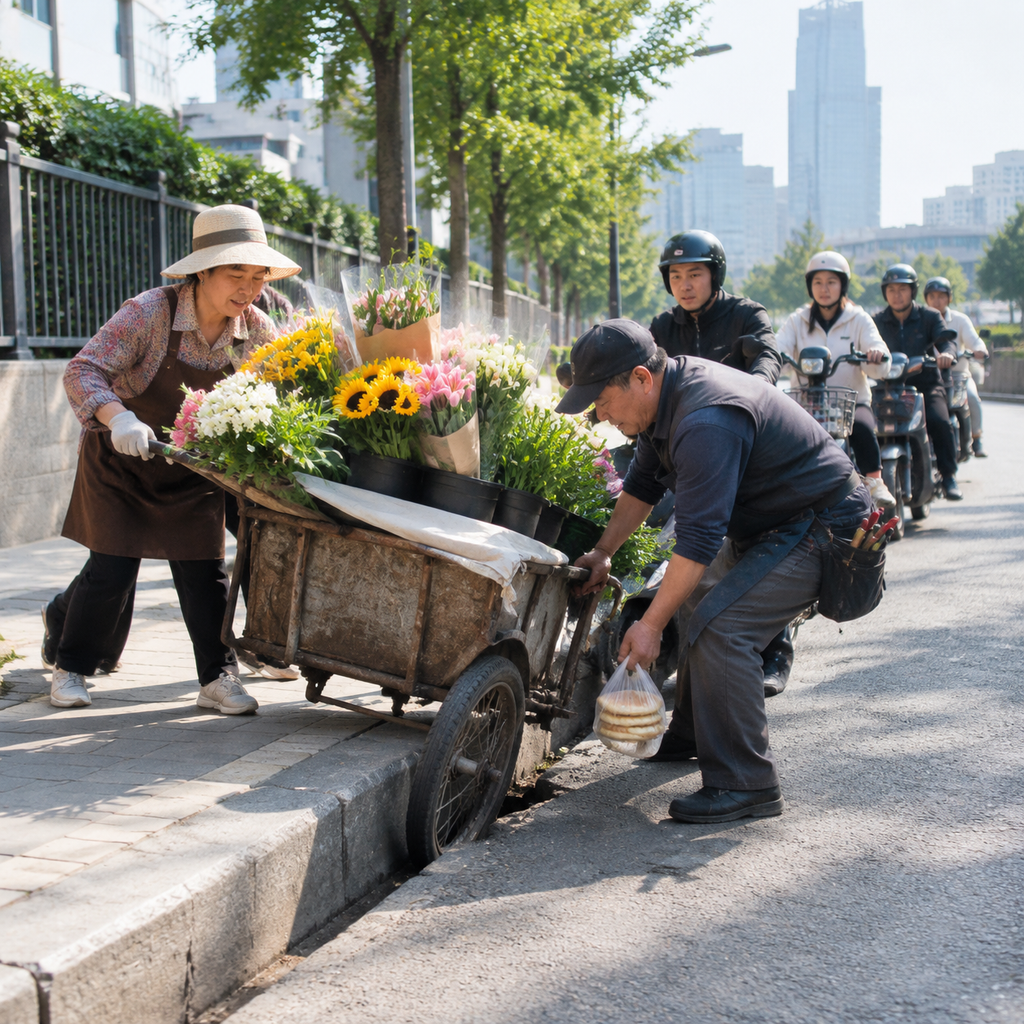
市场另一侧连着一座较高的石拱桥。游客常在桥顶停下拍水面,早高峰里,本地人却把桥当作精确的坡道:上坡前减速,让载菜三轮车先行;下坡时不并排,给迎面的校车留出转弯余地。一名卖花的女人推车推到半坡,后轮卡进石缝,修电器的父亲放下烧饼帮她抬了一下,后面的骑手便默契地停成一线。不到半分钟,花车过顶,人流重新散开。桥的价值不只在于“跨过河”,还在于居民共同维护的通行节奏。
A higher stone arch bridge joined the far side of the market. Visitors often paused at its crest to photograph the water, but during the morning rush residents treated it as a precisely managed slope. They slowed before climbing to let produce tricycles go first, and avoided riding side by side downhill so that the school shuttle had room to turn. Halfway up, the rear wheel of a flower seller's cart caught in a crack. The appliance repairman set down his flatbreads and helped lift it, while riders behind him quietly stopped in a single line. Within half a minute the flowers cleared the crest and the flow loosened again. The bridge mattered not only because it crossed the canal, but because residents collectively sustained its rhythm of passage.
八点左右,阳光越过屋脊,先照亮桥栏,再落到船舱顶。清洁船沿原路返回,女工的网兜里已装了两袋水草和漂浮杂物;她在市场后门停了一会儿,接走摊主们扎紧的泡沫箱与菜叶袋。观察者此前把清洁船理解为维护风景的工具,此刻才看清它还承担着市场清运的一环。送进来的鱼、菜、豆腐与带出去的空箱、废叶、河面杂物走的是同一条窄水道,只是方向和时辰不同。水路的效率不在某一艘船有多快,而在每一次抵达都顺便接住下一项需要。
Around eight, sunlight crossed the rooftops, touching the bridge rail before reaching the cabin roofs. The cleaning boat returned along its earlier route, its net now holding two sacks of weeds and floating debris. It paused at the market's rear entrance to collect tied foam boxes and bags of discarded leaves. The observer had first regarded it as a tool for preserving the view; now it became clear that the boat also formed part of the market's waste run. Fish, vegetables, and tofu came in, while empty boxes, waste leaves, and canal litter went out along the same narrow waterway, only in different directions and at different hours. Its efficiency did not depend on any one boat moving quickly, but on each arrival picking up the next need.
等早市最拥挤的一阵退去,老人收起鱼竿,把折叠凳夹在腋下。他没有沿岸散步,而是登上一艘带篷的小渡船,在下一处居民码头下船,显然也要去办自己的事。观察者望见年轻送货员将空箱一只只平码回舱,老板娘端出第一碗面,桥上的父亲已经混入去对岸上班的车流。清晨最初那幅安静水景至此完全变了含义:灯影和薄雾仍然好看,但运河真正醒来的标志,是货物被接住、桥面懂得让行、居民准时抵达,而一条水路在这些普通人的反复使用中继续活着。
After the morning market's busiest surge subsided, the elderly fisherman packed his rod and tucked the folding stool beneath his arm. Instead of strolling along the bank, he boarded a small covered ferry and stepped off at the next residential landing, evidently with errands of his own. The observer watched the young courier stack empty boxes evenly inside a cabin, the noodle-shop owner serve her first bowl, and the father merge into the traffic heading across the canal for work. The tranquil waterscape seen before dawn had now changed meaning entirely. Lamp reflections and mist remained beautiful, but the canal truly awakened when goods were received, bridges knew when to yield, residents arrived on time, and the waterway stayed alive through their ordinary, repeated use.
九点以后,卖藕的摊主把湿麻布重新盖好,坐到竹椅上削一截碰伤的藕。桥边修伞的老周推开木窗,先将三把长柄伞挂到檐下,再用抹布擦去柜台上的潮气。年轻送货员来还借用的麻绳,老周却叫住他,从抽屉里取出一枚磨亮的铜牌。牌面只剩模糊的船号,背后还有一道被绳索磨出的深槽。几十年前,老周的父亲在货船上押运米袋,每过一道桥,便把铜牌交给桥头账房核验。年轻人用拇指摸过凹槽,又把牌子双手递回,没有急着拍照。
After nine, the market shifted from the urgency of deliveries to scattered retail trade. The lotus-root seller covered his produce again with damp burlap, sat on a bamboo chair, and trimmed a bruised root. Beside the bridge, Old Zhou opened the wooden window of his umbrella-repair shop, hung three long-handled umbrellas beneath the eaves, and wiped the moisture from his counter. When the young courier returned a borrowed rope, Zhou stopped him and took a polished brass token from a drawer. Only a blurred boat number remained on its face; the back bore a deep groove worn by rope. Decades earlier, Zhou’s father had escorted sacks of rice by cargo boat and presented this token to the clerk at every bridge. The young man ran his thumb over the groove, then returned it with both hands instead of immediately taking a photograph.
老周随后抬起下巴,指向石拱桥下游的一排旧墙脚。那里嵌着几块高低不一的铁环,有的已经被水锈染成褐红色。他说,过去满载粮食和木料的船逆水而上,船工会跳上岸,把纤绳套进铁环稍作停靠;遇到桥洞水急,岸上还要有人弓着背拉一程。说话间,他并没有摆出讲古的姿态,只把一根新伞骨压进钳口,腕部轻轻一转。市场里的塑料篷布被风鼓起,又落下,遮住了那排铁环。等风过去,年轻送货员走到墙边,蹲下清理缠在环上的一段尼龙线,让旧铁重新露出来。
Old Zhou then tilted his chin toward a row of old wall footings downstream from the stone arch. Iron rings were embedded there at uneven heights, some stained reddish brown by water and rust. In the past, he said, boats heavy with grain and timber travelled upstream, and crewmen jumped ashore to loop tow ropes through the rings while they paused. When the current ran hard beneath the arch, men on the bank bent their backs and hauled the vessel forward. Zhou did not strike a storyteller’s pose. He pressed a new umbrella rib into his pliers and turned his wrist gently. Wind lifted the market’s plastic awnings and dropped them again, briefly hiding the rings. When the gust passed, the young courier crouched beside the wall and cleared away a length of nylon line, exposing the old iron once more.
临近中午,一艘装着空竹筐的平底船在木桥前慢下来。桥不能抬,船上的筐又叠得太高。掌舵的女人没有喊岸上帮忙,而是踩住舱沿,依次把顶层竹筐抛给船头的少年。少年接一个、压一个,最后趴在筐堆上用胳膊收紧。船顶擦着桥底阴影穿过时,桥上的孩子们趴在栏杆边数筐,数到二十七便乱了。卖花女人从人群后提醒他们退开车道,同时接住一只被风吹落的纸袋。船出桥洞后,少年重新把竹筐码高,还特意将破边朝内,免得返程时勾住桥下垂落的水草。
Near noon, a flat-bottomed boat loaded with empty bamboo baskets slowed before a wooden bridge. The bridge could not rise, and the baskets were stacked too high. Rather than calling ashore for help, the woman at the tiller braced a foot against the cabin rim and passed the top baskets one by one to a boy at the bow. He caught each one, pressed it flat, and finally lay across the pile to hold it tight with his arms. As the boat slipped through the bridge’s shadow with inches to spare, children leaning over the railing tried to count the baskets but lost track at twenty-seven. The flower seller called from behind them to step out of the traffic lane, then caught a paper bag lifted by the wind. Beyond the arch, the boy rebuilt the stack, turning every broken edge inward so it would not snag trailing weeds on the return journey.
午后的桥影缩到最短时,老周端着搪瓷杯走到市场后门。他指给年轻人看石阶上两道颜色不同的磨痕:靠水的一道宽而发白,是从前搬运工扛麻袋时踏出的;靠墙的一道窄些,是独轮车长期滚过的路线。如今石阶上更多是三轮车的胶轮印和快递箱留下的水渍,可搬货的人仍会下意识走那条宽槽。年轻人背起一袋退换的干货试了几步,身体果然自然向河侧偏。老周笑了一声,伸手拍正他的肩膀,叫他别学旧船工那样用一边硬扛,随后替他把袋口重新扎紧。
When the bridge shadow shortened to its narrowest in the afternoon, Old Zhou carried an enamel mug to the market’s rear entrance. He showed the courier two differently coloured wear marks on the stone steps. The broad, pale track near the water had been made by porters climbing with sacks on their shoulders; the narrower one beside the wall belonged to generations of wheelbarrows. Today, rubber tracks from tricycles and wet marks from delivery boxes appeared more often, yet people carrying loads still unconsciously followed the broad groove. The young man shouldered a sack of returned dry goods and tested a few steps; his body naturally leaned toward the canal. Zhou laughed, tapped his shoulder straight, and told him not to strain one side as the old boatmen had. Then he retied the mouth of the sack for him.
傍晚,白灯再次亮起,市场却换了一副面孔。剩下的青菜被扎成小把降价出售,鱼摊冲洗石台,水沿沟槽流向沉淀池。早晨那位父亲从修理铺回来,车后座绑着一台旧风扇。他在拱桥顶停了片刻,不是看景,而是等一位推满空筐的摊主先下坡。桥下,清洁船减速让过晚班渡船;船上的老人把折叠凳挪到脚边,为抱着熟睡孩子的女人腾出座位。桥上桥下都没有口令,几个人只凭一次抬头、一个刹车动作,便完成了彼此让路。
At dusk, the white market lamps came on again, but the place wore a different face. Remaining greens were tied into small discounted bundles, while fish sellers rinsed their stone counters and sent the water along grooves toward a settling tank. The father from the morning returned from his repair shop with an old electric fan strapped to the back of his bicycle. At the crown of the arch bridge he paused, not for the view, but to let a stallholder pushing a cartful of empty baskets descend first. Below, the cleaning boat slowed for the evening ferry. On board, the elderly fisherman moved his folding stool beside his feet, making room for a woman holding a sleeping child. No command was given above or below the bridge. A lifted head and the touch of a brake were enough for strangers to make way for one another.
老周关窗前,把铜牌包回旧报纸,仍放进原来的抽屉。年轻送货员已把最后两只空箱搬上船,却又跳回岸边,帮老板娘拉下卡住的卷帘门。门落到底,金属声顺着水面传到桥洞,惊起檐下一小群麻雀。平底船离岸,船尾灯从一座桥移向下一座桥,经过铁环、旧磨痕和收空的菜摊。旧运输的痕迹没有被陈列起来,也无人专门守着讲解;它们留在绳槽、脚步和让行的习惯里,被今天搬筐、推车、撑船的人继续使用。夜色压低后,运河并未停止,只把白日的忙碌收进缓慢移动的灯影。
Before closing his window, Old Zhou wrapped the brass token in old newspaper and returned it to the same drawer. The young courier had loaded the final two empty boxes, yet jumped ashore once more to help the noodle-shop owner pull down a jammed shutter. When it struck the ground, the metallic sound travelled across the water and startled a cluster of sparrows beneath the eaves. The flat-bottomed boat then drew away, its stern light moving from one bridge to the next, past the iron rings, worn steps, and emptied vegetable stalls. Traces of the old transport system had not been put on display, and no one stood guard to explain them. They remained in rope grooves, footwork, and habits of yielding, still used by those carrying baskets, pushing carts, and steering boats today. As darkness lowered over the canal, it did not stop working; it merely folded the visible labour of the day into slowly moving reflections.
第二天下午两点,日光把西岸晒得发白,运河上却有一层从桥洞里漫出来的凉意。午市散后,摊主们把竹椅搬到檐影下,卖花女人拆开几束早晨没有卖完的栀子,剪掉发黄的叶缘,再分给附近几户老人。年轻送货员没有像清晨那样奔跑,他把空保温箱扣在三轮车上,沿水边逐家收回餐馆用过的鱼筐。经过修伞铺时,老周正替一名小学生缝书包带,孩子趴在柜台上看针脚,祖母坐在旁边择毛豆。水面偶尔传来木桨碰船舷的轻响,午后的运河没有早晨急促,却把一条街的零碎事情慢慢拢到一起。
At two the following afternoon, sunlight bleached the west bank while cool air drifted out from beneath the bridge arches. With the lunch market over, vendors moved bamboo chairs into the shade. The flower seller untied several unsold bunches of gardenias, trimmed their yellowing leaves, and divided them among elderly neighbours. The young courier no longer ran as he had at dawn. He fastened empty insulated boxes to his tricycle and followed the water, collecting fish baskets from restaurants one by one. At Old Zhou’s shop, Zhou was sewing the strap of a schoolchild’s bag while the boy leaned over the counter to watch the stitches and his grandmother shelled green soybeans nearby. Now and then, a wooden oar tapped a hull. The afternoon canal lacked the morning’s urgency, yet it slowly gathered the street’s scattered errands together.
三点左右,一艘低矮的工作船停在旧铁环旁。船上没有货,只有卷好的粗绳、两根木杠和一只掉漆的红水壶。掌舵的女人上岸买冰棍,老周认出她的船曾由父亲驾驶,便从铺里搬出铜牌。她接过去看了很久,说旧船以前运米,也运过煤球和建筑用的青砖;返程若空舱,船身浮得高,过桥反而更难,船工便到沿岸作坊捎走木箱和废铁,把重量压下来。她指着船腹一道补丁,那里原是装砖时磕裂的。年轻送货员听见后看了看自己的空箱,忽然懂得今日顺路回收容器,并不只是省事,而是旧水运留下的一套不肯让返程白跑的算法。
Around three, a low workboat stopped beside the old iron rings. It carried no cargo, only coiled rope, two wooden poles, and a red kettle with chipped paint. The woman at the tiller stepped ashore to buy ice pops. Recognising the boat once steered by her father, Old Zhou brought out the brass token. She studied it for a long moment and said the old vessel had carried rice, coal briquettes, and grey bricks for building. On an empty return journey, the hull rode too high and could be harder to take beneath bridges, so crews collected wooden crates and scrap iron from workshops along the bank, adding weight while avoiding a wasted trip. She pointed to a patch on the hull where bricks had once cracked the planking. Hearing this, the courier glanced at his empty boxes and understood that collecting containers on the way back was more than convenience; it continued an old transport rule that refused to let a return journey run empty.
桥边很快围来几位午睡醒来的老人。他们没有争着补充传奇,只校正彼此记错的细节:哪处码头收棉花,哪座仓库堆盐,洪水年份船该系在第几个铁环。一位曾做装卸工的老人脱下布鞋,把右脚掌侧给年轻人看,那里仍有一块厚茧。他解释,肩扛麻袋时不能直冲石阶,要斜着落脚,让袋子的摆幅朝空处去;若两个人迎面相遇,靠水的人停,靠墙的人先过。这套规矩没有写在墙上,却能避免货袋相撞后把人带进河里。说完,他穿回鞋,顺手替择毛豆的祖母把装满豆荚的簸箕端进屋,旧日的搬运动作便轻轻落进了今日邻里的家务。
Several elderly residents, newly awake from their naps, soon gathered beside the bridge. They did not compete to embellish the past. Instead, they corrected one another’s details: which landing received cotton, which warehouse stored salt, and which iron ring boats used during flood years. A former porter slipped off a cloth shoe and showed the courier a thick callus along the side of his right foot. When carrying a sack, he explained, a worker could not charge straight up the steps. He had to place each foot diagonally so the load swung toward open space. If two porters met, the one nearer the water stopped and the one against the wall passed first. The rule was never written down, but it kept colliding sacks from dragging men into the canal. Afterward he put his shoe back on and carried the grandmother’s tray of bean pods indoors. An old freight-handling movement quietly settled into an ordinary neighbourly chore.
四点过后,河边重新有了孩子的声音。放学的小学生把书包堆在石凳上,有人隔着栏杆看工作船换绳,有人蹲在台阶最高一级折纸船。先前补好书包带的男孩想把纸船放进水里,卖花女人用剪刀背轻敲栏杆,叫他别踩湿滑的下层石阶。她找来一只长柄捞网,让孩子把纸船放进网兜,再慢慢送到水面。纸船绕着铁环转了半圈,被回流推回岸边。孩子们笑着重来,掌舵女人则把一段旧麻绳剪成短截,教他们辨认麻纤维与如今尼龙绳的不同:前者吸水后沉重,会在掌心留下细刺;后者轻,却更容易勒紧。旧运输记忆不再只是老人说过的话,它在孩子避开湿阶、握住网柄和摸过绳结时,有了可以被身体记住的形状。
After four, children’s voices returned to the canal bank. Pupils out of school piled their bags on a stone bench. Some watched the workboat replace a rope, while others crouched on the highest step folding paper boats. The boy whose schoolbag Zhou had repaired wanted to launch his boat, but the flower seller tapped the railing with the back of her scissors and warned him away from the slippery lower steps. She found a long-handled net, told him to place the paper boat inside, and helped him lower it gently to the surface. It circled an iron ring and drifted back in the eddy. The children laughed and tried again. Meanwhile, the woman at the tiller cut off short pieces of old hemp rope and taught them how it differed from modern nylon: hemp grew heavy with water and left tiny splinters in the palm, while nylon was light but tightened more sharply. The memory of old transport was no longer merely something elders recounted. As the children avoided wet steps, held the net, and felt the knots, it acquired a shape their bodies could remember.
稍晚一些,沿岸厨房陆续响起切菜声。祖母把剥好的毛豆倒进锅里,窗内冒出的蒸汽带着盐水气;面馆老板娘把午后收回的鱼筐刷净,倒扣在埠头晾干。年轻送货员帮工作船换好绳后,没有立刻离开,而是把三轮车挪开,给下班归来的居民留出靠河的一段路。有人拎西瓜,有人牵着刚会走路的孩子,还有人端一碗饭坐到门槛上等风。桥影逐渐拉长,铜牌已经收回抽屉,旧船的补丁也随水光时明时暗。运河的过去并未盖过眼前生活;它更像石阶里那道宽槽,平日不声张,却继续提醒每一个经过的人怎样落脚、怎样让路,也怎样把一趟返程带回家的东西装满。
Later, the sounds of chopping rose from kitchens along the bank. The grandmother tipped her shelled soybeans into a pot, and steam carrying a salty scent drifted through the window. The noodle-shop owner scrubbed the fish baskets collected that afternoon and left them upside down to dry at the landing. After helping the workboat fit its new rope, the courier did not leave at once. He moved his tricycle aside, clearing the waterside stretch for residents returning from work. One carried a watermelon, another led a toddler just learning to walk, and someone else sat on a doorstep with a bowl of rice, waiting for a breeze. As the bridge shadow lengthened, the brass token was already back in its drawer, while the patch on the old boat appeared and vanished in the reflected light. The canal’s past did not overwhelm the life before it. It resembled the broad groove in the steps: quiet in ordinary hours, yet still telling each passer-by where to place a foot, when to yield, and how to bring something useful home on the return journey.
太阳贴近仓库屋脊时,西岸的红砖墙一块块转成暗金色。那几座旧仓库早已不再整船收粮,临水的大门却仍保留着高门槛和包铁木板。一间被改成社区木工房,退休木匠在门口刨长凳,刨花卷得像薄薄的桂皮;另一间分给修车铺和米店共用,卷帘门升起后,墙上褪色的吨位标记正好露在成袋大米后面。下班居民经过时,有人留下松动的椅腿,有人提走预订的小袋米,仓库没有空成一副怀旧外壳,而是缩小尺度,继续收纳一条街当天的需要。
As the sun neared the warehouse roofs, the red-brick walls on the west bank turned, one section at a time, to deep gold. The old buildings no longer received grain by the boatload, but their waterside doors still had raised thresholds and iron-clad timber panels. One had become a community woodworking room, where a retired carpenter planed a long bench at the entrance, producing shavings curled like thin cinnamon bark. Another was shared by a bicycle-repair shop and a rice store. When its shutter rose, faded load markings appeared behind stacked sacks. Residents returning from work left a loose chair leg for repair or collected a small bag of rice they had ordered. The warehouses had not become empty shells for nostalgia; they had reduced their scale and continued to hold the day's needs of one street.
六点半,旧码头边的水位尺只剩下半截还照得到夕阳。年轻送货员推着三轮车来取晾干的鱼筐,发现最下层石阶被涨水漫过,便没有照惯例把筐直接递上船。他和掌舵女人将一块窄跳板移到较高的平台,又叫住两个追逐的孩子。孩子们退到系缆柱后,帮忙数清十二只筐;最后一只筐底裂了缝,女人用旧麻绳临时兜住,说明早带回船厂补。码头的变化不是一场表演,水涨了多少、脚该踩在哪里、坏掉的容器何时修,都由眼前的人边做边判断。
At half past six, only the upper part of the gauge beside the old landing still caught the evening sun. The young courier arrived with his tricycle to collect the dried fish baskets. Finding the lowest stone step submerged by the rising water, he did not pass them directly aboard in the usual way. He and the woman at the tiller shifted a narrow gangplank to a higher platform, then stopped two children who were chasing each other nearby. From behind the mooring post, the children helped count all twelve baskets. A split had opened in the bottom of the last one, so the woman made a temporary sling from old hemp rope and said she would take it to the boatyard in the morning. Nothing at the landing was staged: the people present judged the water level, the next safe foothold, and the time to repair a broken container as they worked.
仓库背后的窄巷也在此时热起来。几户人家把折叠桌搬到墙根,搪瓷盘里盛着拍黄瓜、毛豆和切开的咸鸭蛋。修电器的父亲卸下车后的旧风扇,拆开外壳试转,邻居便从窗里接出一根插线板;扇叶一动,孩子们立刻挤到风口,额发被吹得竖起。卖花女人端来白天剩下的栀子,插进装过酱油的玻璃瓶。锅铲声、修车铺打气筒的喘息和船缆摩擦木桩的吱呀混在一起,旧仓库厚重的墙面把这些细碎声音挡住一半,又温和地送回河面。
At the same hour, the narrow lane behind the warehouses warmed into life. Several households carried folding tables against the wall and set out enamel plates of smashed cucumber, soybeans, and sliced salted duck eggs. The appliance repairman removed the old fan from his bicycle, opened its casing, and tested the motor while a neighbour passed an extension lead through a window. As soon as the blades turned, children crowded into the breeze, their fringes blown upright. The flower seller brought the day's remaining gardenias and placed them in a soy-sauce bottle. The strike of spatulas, the breathing pulse of a bicycle pump, and the creak of mooring ropes against timber posts mingled together. The warehouses' thick walls softened half those small sounds before returning them gently to the canal.
天色再暗一层,曾经堆盐的仓库亮起两排暖灯。里面没有布置展柜,社区把空旷的一角留给老人打牌,另一角铺着软垫,供孩子写作业和练轮滑。退休装卸工坐在门边削苹果,看见一个女孩把数学本压在旧磅秤台上,便把自己的杯子挪开。女孩算完题,又跑去替祖母摸牌,念牌面时把“八万”喊得很响。隔壁米店的老板端来一壶凉茶,先给搬筐回来的人倒满,再把剩下的递给围观棋局的邻居。仓库曾按货物种类划分空间,如今则按谁需要一张桌、一阵风或一处宽地来重新分配。
As the sky darkened another shade, two rows of warm lights came on inside the warehouse that had once stored salt. There were no display cases. The community had left one open corner for older residents to play cards and covered another with mats for children doing homework or practising on roller skates. A retired porter sat by the door peeling an apple. When a girl laid her mathematics book on the old weighing platform, he moved his cup aside. After finishing a problem, she ran over to draw a tile for her grandmother and loudly called out its name. The owner of the neighbouring rice shop brought a kettle of cool tea, filling the cups of the returning basket handlers before passing the rest to neighbours watching a chess game. The building had once divided space by type of cargo; now it redistributed that space according to who needed a table, a breeze, or a broad patch of floor.
七点多,晚班渡船靠上码头,船头轻轻碰了一下包着旧轮胎的木桩。最先下来的是拎菜的两位老人,随后是穿工装的年轻母亲和刚睡醒的孩子。孩子脚软,站在跳板中间不肯走,年轻送货员便蹲在岸边伸出双手,掌舵女人从后面稳住他的书包。等孩子踩上石阶,母亲没有匆忙离开,而是接过一袋米,顺路替米店送到巷尾独居老人的门口。渡船带来的不只是乘客,每个人手中多拿的一样东西,也借这一段回家的路完成了交接。
After seven, the evening ferry came alongside, its bow lightly touching a timber post wrapped in an old tyre. Two elderly residents carrying vegetables stepped off first, followed by a young mother in work clothes and a child who had just awakened. His legs were unsteady, and he froze halfway across the gangplank. The courier crouched ashore and reached out both hands while the woman at the tiller steadied the child's schoolbag from behind. Once he reached the steps, his mother did not hurry away. She picked up a bag of rice and delivered it on her way home to an elderly resident living alone at the end of the lane. The ferry carried more than passengers; each extra object placed in someone's hands completed another exchange along the route home.
夜里八点,木工房最后关门。退休木匠把新刨好的长凳抬到仓门外,几个吃完饭的居民自然坐了上去,没人问它算旧仓库的陈设还是街坊的新家具。对岸住宅的窗灯一盏盏亮起,水里便多出被船尾划碎的橙色长线。老周锁好修伞铺,从码头带回一小段换下的麻绳,准备垫在抽屉里那枚铜牌下面。年轻送货员则推车沿河离开,车上只剩需要修补的破筐。白天的货物已经进了厨房,空箱回到船舱,居民在仓墙下乘凉;运河把一天收拢之后,仍给第二天留下了绳结、篮筐和会再次被推开的门。
At eight, the woodworking room was the last to close. The retired carpenter carried the newly planed bench outside the warehouse, and several residents who had finished dinner sat down without asking whether it was an exhibit from the old building or new furniture for the neighbourhood. Across the canal, apartment windows lit one by one, laying long orange lines on the water for each stern to break apart. Old Zhou locked his umbrella shop and carried home a short piece of replaced hemp rope to place beneath the brass token in its drawer. The courier pushed his tricycle away along the bank with only the split basket left aboard. The day's goods had entered kitchens, empty boxes had returned to cabins, and neighbours were cooling off beneath the warehouse wall. Even after gathering the day to a close, the canal left behind knots, baskets, and doors ready to open again the next morning.
第二天五点二十五分,昨夜那段麻绳果然又回到水边。雾比前一天薄,桥洞里的灯已经熄了,只有维修船上的白色工作灯斜照着水面。掌舵女人把破筐放在船尾,年轻送货员蹲在前舱,将新绳从滑轮里穿过。桥墩下方挂着一条被水泡胀的旧防撞木,两个工人站在浮台上拆螺栓:一人用扳手缓慢加力,另一人把安全绳扣在腰侧铁环上。每拧半圈,他们都停下来听桥上传来的震动。第一辆公交尚未经过,桥下已经在为它检查支撑。
At 5:25 the next morning, the short length of hemp rope from the night before had indeed returned to the water. The mist was thinner than on the previous day, and the lamps in the arch were out; only the white work light of a maintenance boat slanted across the surface. The woman at the tiller set the split basket at the stern while the young courier crouched in the forward cabin, feeding a new rope through a pulley. Beneath the pier hung an old fender swollen by the water. Two workers on a floating platform removed its bolts, one leaning gradually into a spanner while the other clipped a safety line to an iron ring at his waist. After every half-turn they paused to listen for vibrations from above. Before the first bus crossed, the space below was already inspecting what would carry it.
五点五十分,维修船临时占住靠东的一半桥孔,河道管理员便把一盏红灯挂到低处,又在西侧放下绿色导向灯。运豆腐的小船驶近时没有硬挤,船夫先收油,伸出竹篙轻点桥脚,等浮台上的工人把工具箱挪进黄线以内才通过。船顶离拱券只剩一臂高,船夫仰头看,岸上的管理员则盯着船尾与浮台之间的水缝。两边没有喊口号,只交换了一个抬手和一个点头。船过后,工人继续抬换下的木料,湿木一离水便滴下黑褐色的水,露出里面仍结实的纹理。
At 5:50, the maintenance boat occupied the eastern half of the arch, so the waterway steward hung a red lamp low on that side and lowered a green guide light to the west. When the tofu boat approached, its boatman did not force his way through. He eased the throttle, touched a bamboo pole lightly against the bridge footing, and waited until the workers shifted their toolbox inside the yellow line. The cabin roof cleared the arch by barely an arm's length. The boatman watched overhead while the steward ashore kept his eyes on the strip of water between the stern and the floating platform. No one shouted instructions; a raised hand and a nod were enough. Once the boat passed, the workers lifted out the old timber. Dark brown water streamed from it, revealing grain that remained sound within.
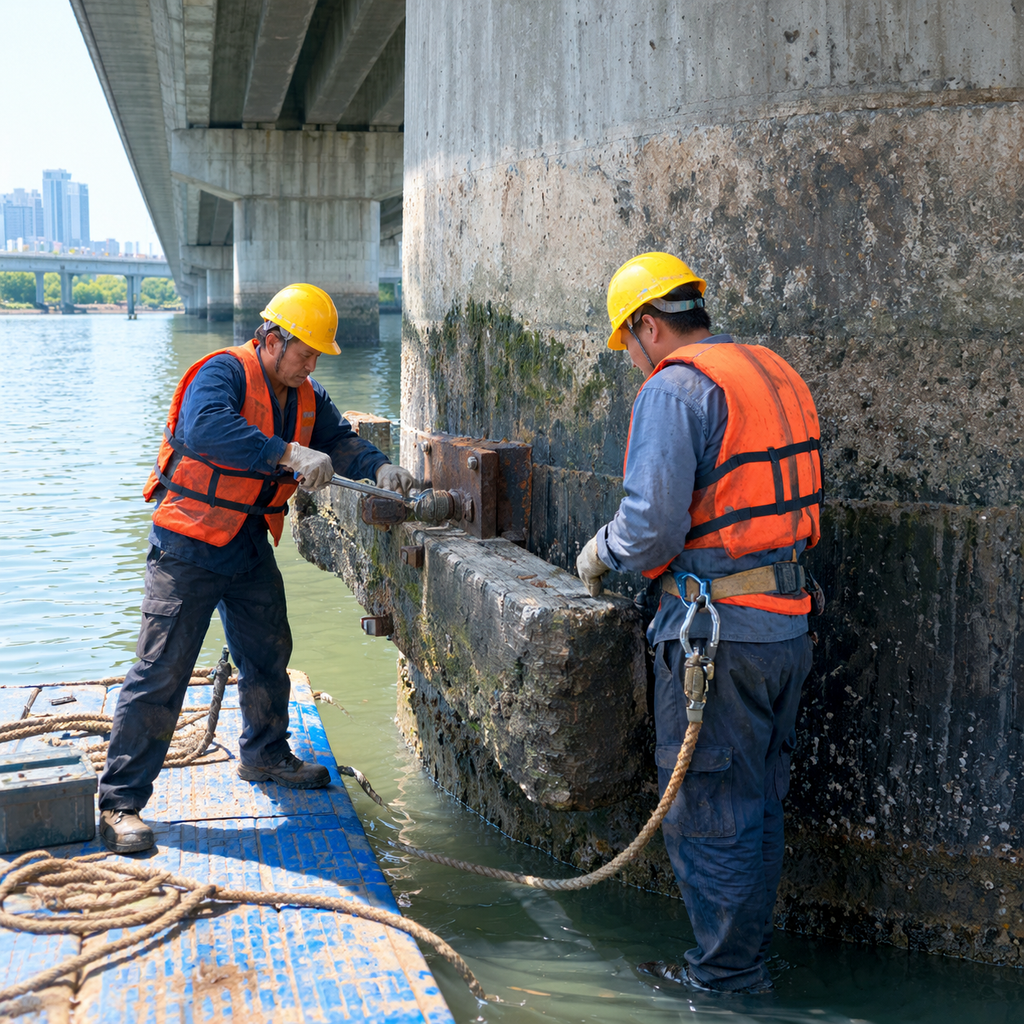
六点十五分,桥面上的第一拨通勤者到了。围挡把车道收窄,修电器的父亲没有像往常一样直接上坡,而是在桥脚下车,推着电动车跟在卖花女人的三轮车后面。社区接驳车停在坡口,让下行的骑手先清空窄道;车里的老人隔窗看见桥下吊起的新防撞木,指着它议论昨日还没有这层浅黄颜色。赶早班的年轻母亲牵着孩子从人行侧通过,孩子听见电钻声缩了缩肩,她便让他看工人帽檐上的反光条,说桥今天不是坏了,只是在换一块每天会被船轻轻碰到的垫木。
At 6:15, the first commuters reached the bridge. Barriers narrowed the roadway, and instead of riding straight up the slope as usual, the appliance repairman dismounted and wheeled his electric bicycle behind the flower seller's tricycle. The community shuttle waited at the foot of the incline until descending cyclists had cleared the narrow lane. Through its windows, elderly passengers saw the new fender being hoisted beneath the bridge and pointed out its pale yellow surface, which had not been there the day before. A young mother heading to an early shift led her child along the pedestrian side. He flinched at the drill, so she showed him the reflective strips on the workers' caps and explained that the bridge was not broken; it was receiving a new block where boats brushed it each day.
桥下的作业没有为了早高峰完全停掉,而是改成短促的间歇。接驳车经过时,工人放下电钻,扶稳悬在半空的木料;桥面安静后,他们再拉紧手葫芦,让垫木贴上石座。老周提着装伞骨的小布袋走来,把一壶热茶放在护栏外,没越过围挡。他认得其中一名工人,问的不是“几点修完”,而是新木能不能挨过夏天的涨水。工人用手套抹掉额角的汗,说铁件还要涂一遍防锈层,上午退潮前结束。老周点点头,转身去开铺,茶壶留在不妨碍工具的位置。
Work beneath the bridge did not stop entirely for the morning rush; it shifted into brief intervals. As the shuttle passed overhead, the workers set down the drill and steadied the timber hanging in mid-air. When the deck fell quiet, they tightened the chain hoist again and drew the fender against its stone seat. Old Zhou arrived carrying a cloth bag of umbrella ribs and placed a flask of hot tea outside the barrier without crossing it. He recognised one of the workers. Instead of asking when they would finish, he asked whether the new wood would withstand the summer's high water. Wiping sweat from his brow with a glove, the worker said the metal fittings still needed an anti-rust coat and that they would finish before the morning ebb. Zhou nodded and went to open his shop, leaving the flask where it would not obstruct the tools.
七点零五分,新垫木固定好,管理员撤下西侧绿灯。第一艘菜船穿桥时,船夫故意把速度放得很慢,船舷贴近新木,却没有撞出重响,只发出一声短而沉的摩擦。浮台上的工人俯身查看螺帽,确认没有位移,才朝船尾竖起拇指。桥面也随之恢复双向通行:父亲重新跨上电动车,卖花女人摇响车铃,接驳车在前方站点放下提菜篮的老人。刚才因围挡而排成一列的人并未突然抢道,而是在桥顶自然散开,各自转进学校、市场、修理铺和住宅巷。
At 7:05, the new fender was secured and the steward removed the green light on the western side. The first vegetable boat took the arch deliberately slowly. Its hull came close to the fresh timber but produced no heavy impact, only a brief, dull rub. A worker on the platform bent over the nuts, confirmed that nothing had shifted, and raised a thumb toward the stern. Two-way traffic resumed above at the same moment. The father mounted his electric bicycle, the flower seller rang her bell, and the shuttle dropped off elderly passengers carrying shopping baskets at the next stop. Those who had formed a single line beside the barrier did not surge forward. They loosened naturally at the crest and turned toward the school, market, repair shops, and residential lanes.
观察者最后一次站到桥顶时,太阳已把新垫木照成温暖的浅黄,木工房门前则摆着拆下来的旧木。退休木匠正准备把尚可用的中段锯开,做成码头边两块踏脚板;腐朽的两头会送去清运。昨日那只破筐跟着送货员重新上路,早班母亲已经在对岸打卡,修电器的父亲也推开店门。至此,这趟沿河观察有了具体的句点:不是在纪念牌前结束,也不是以一艘船远去作结,而是旧木被量尺标下切口,新木承住第一下擦碰,桥上桥下的人都准时抵达各自要去的地方。
When the observer stood on the bridge one last time, the sun had warmed the new fender to pale yellow, while the removed timber lay outside the woodworking room. The retired carpenter was marking its sound middle section for cutting into two step boards beside the landing; only the rotten ends would be taken away. Yesterday's split basket was back on the road with the courier, the early-shift mother had clocked in across the canal, and the appliance repairman was opening his shop. The walk along the water thus reached a specific full stop—not at a memorial plaque, nor with a boat disappearing into the distance, but with a ruler marking a cut in old wood, new timber absorbing its first gentle scrape, and people above and below the bridge arriving where they needed to be on time.
到次日晚间,桥脚那块新木已被水浸成较深的蜜色。八点四十分,河风把米店门口的塑料帘吹得一张一合,最后一班小渡船从灯影里靠岸。掌舵女人没有立刻熄火,她先把手电筒贴近船舷,检查白天试航留下的浅浅擦痕,再朝桥上的管理员喊了一声“没松”。管理员俯身看完固定件,在巡查簿上写下时间。卖花女人收摊经过,把两枝没卖掉的栀子搁在新做的踏脚板旁;晚归的孩子踩着那块旧木改成的板子上岸,鞋底带起一点水,花香、柴油味和河泥的潮气便在窄窄的码头碰到一起。此刻的夜景不靠满河灯船撑场面,只靠窗灯落水、车铃过桥,以及每一件被检查妥当的小东西。
By the following evening, the new timber at the foot of the bridge had darkened to a honey colour in the water. At 8:40, the river breeze made the plastic curtain outside the rice shop lift and fall as the final ferry emerged from the reflected lights. The woman at the tiller did not cut the engine at once. She held a torch close to the hull, inspected the faint mark left by the daytime trial passage, and called up to the steward that nothing had come loose. He leaned over the railing to check the fittings and entered the time in his inspection log. Passing after closing her stall, the flower seller left two unsold gardenias beside the newly made step board. A child returning late stepped ashore on that piece of reclaimed wood, flicking a little water from his soles. For a moment, flower fragrance, diesel, and damp river mud met on the narrow landing. The canal needed no procession of illuminated boats to make a night view—only window light on the water, a bicycle bell crossing the bridge, and small things checked and left secure.
天亮后再经过码头,新踏脚板上已有三组湿鞋印。面馆老板娘把第一盆洗菜水提到后巷,不往河里倒;送货员把修好的竹筐放稳,里面的豆腐用白布盖着,边角一块也没碎。昨夜巡查簿上的墨迹已经干了,管理员撤走手电,换回白日用的蓝色袖标。桥下,新垫木安静承住菜船转弯时的一次轻碰;桥上,背书包的女孩回头看了一眼水纹,仍被父亲载向学校。观察至此才真正结束:夜里有人确认桥可以放心睡下,清晨则由一筐完整的豆腐、一串没有打滑的脚印和准点响起的上课铃,证明这条运河又把城市稳稳送进了一天。
At daybreak, three sets of wet footprints already marked the new step board. The noodle-shop owner carried her first basin of vegetable-washing water into the back lane rather than pouring it into the canal. The courier steadied the repaired bamboo basket; beneath its white cloth, not one corner of the tofu had broken. The ink in the previous night's inspection log was dry, and the steward put away his torch and changed into the blue armband he wore by day. Below the bridge, the new fender quietly received a vegetable boat's light touch as it turned. Above, the schoolgirl looked back once at the ripples while her father carried her onward. Only then did the observation truly end: someone had made sure the bridge could rest safely at night, and morning answered with an intact basket of tofu, footprints that had not slipped, and the school bell sounding on time as the canal delivered the city steadily into another day.
- 成都茶馆里的一下午,比三个景点更让我记住这座城 | An Afternoon in a Chengdu Teahouse Stayed With Me More Than Three Attractions
- 西街到古港的慢行课:在泉州听见海风 | A Slow Walk from West Street to the Ancient Port in Quanzhou
- 我在重庆学会先看楼层关系,再看地图距离 | In Chongqing I Learned to Read Vertical Space Before Map Distance
- 中国寺庙参观礼仪完全指南 | The Complete Guide to Temple Etiquette in China
- 丽江古城深度游:纳西文化与雪山美景 | Lijiang Old Town: Naxi Culture & Snow Mountain Views
- 我在服务区吃到一碗热汤,才懂中国公路旅行的细节 | A Hot Soup at a Highway Service Area Showed Me the Details of Road Trips in China
- 我第一次看懂明代衣服,不是在博物馆,而是在裁缝铺里看人怎么站 | I First Understood Ming Clothing Not in a Museum, but in a Tailor's Shop Watching How People Stood
- 现金还是手机支付?来华前必读 | Cash or Mobile Pay? What You Need to Know Before Visiting China
- 螺蛳粉:一碗臭出国界的粉 | Luosifen: The Stinky Noodle That Conquered the World
- 在中国用手机支付:支付宝和微信支付外国人能用吗? | Mobile Payments in China: Can Foreigners Use Alipay and WeChat Pay?
Comments (0)