
很多人第一次敢把中国行程定下来,往往是因为先在上海找到了顺手感 | Many People Finally Commit to a China Trip Because Shanghai Gives Them a First Sense of Ease
他们把上海拍得很顺,不是因为它简单,而是因为它会把第一次来的人接住 | They Make Shanghai Look Smooth Not Because It Is Simple, but Because It Catches First-Time Visitors Well
在国外旅行博主拍中国的内容里,上海常常有一种很特别的位置。它不像重庆那样靠立体城市感先声夺人,也不像张家界那样第一眼就靠地貌奇观形成压倒性记忆。可真正能让很多第一次来中国的人把机票计划往前推一步的,反而经常是上海。原因并不神秘:这座城市很会接人。它能让一个对中国还带着距离感的旅行者,在很短时间里把交通、支付、步行、吃饭和城市节奏接成一条相对顺的线。
Among foreign creator videos about China, Shanghai occupies a very particular place. It does not seize attention first through vertical drama the way Chongqing does, nor does it overwhelm memory in one glance through landscape spectacle the way Zhangjiajie can. Yet the city that often persuades first-time visitors to move a flight search one step closer is Shanghai. The reason is not mysterious. Shanghai knows how to receive people. In a short span, it allows a traveler still holding some distance from China to connect transport, payment, walking, eating, and urban rhythm into a line that feels relatively smooth.
像一些偏城市观察、路线体验型的国外博主,到了上海以后常常不会只写“天际线很现代”。他们真正公开传达出来的,是另一种更关键的信息:这里的中国旅行可以先从“顺”开始。对第一次来中国的人来说,这种顺,比任何一张大楼照片都更有说服力。因为它让人意识到,来中国的第一步不一定得是最硬核、最复杂、最具挑战的地方,也可以是一座先把你接稳,再慢慢把你往更深处送的城市。
When city-observation or route-experience creators arrive in Shanghai, they often do not stop at saying that the skyline feels modern. What their public material really communicates is something more useful: China travel here can begin with smoothness. For first-time visitors, that kind of smoothness is more persuasive than any tower photograph. It suggests that the first step into China does not have to be the hardest, most complex, or most intimidating place. It can be a city that receives you first and only gradually pushes you deeper.
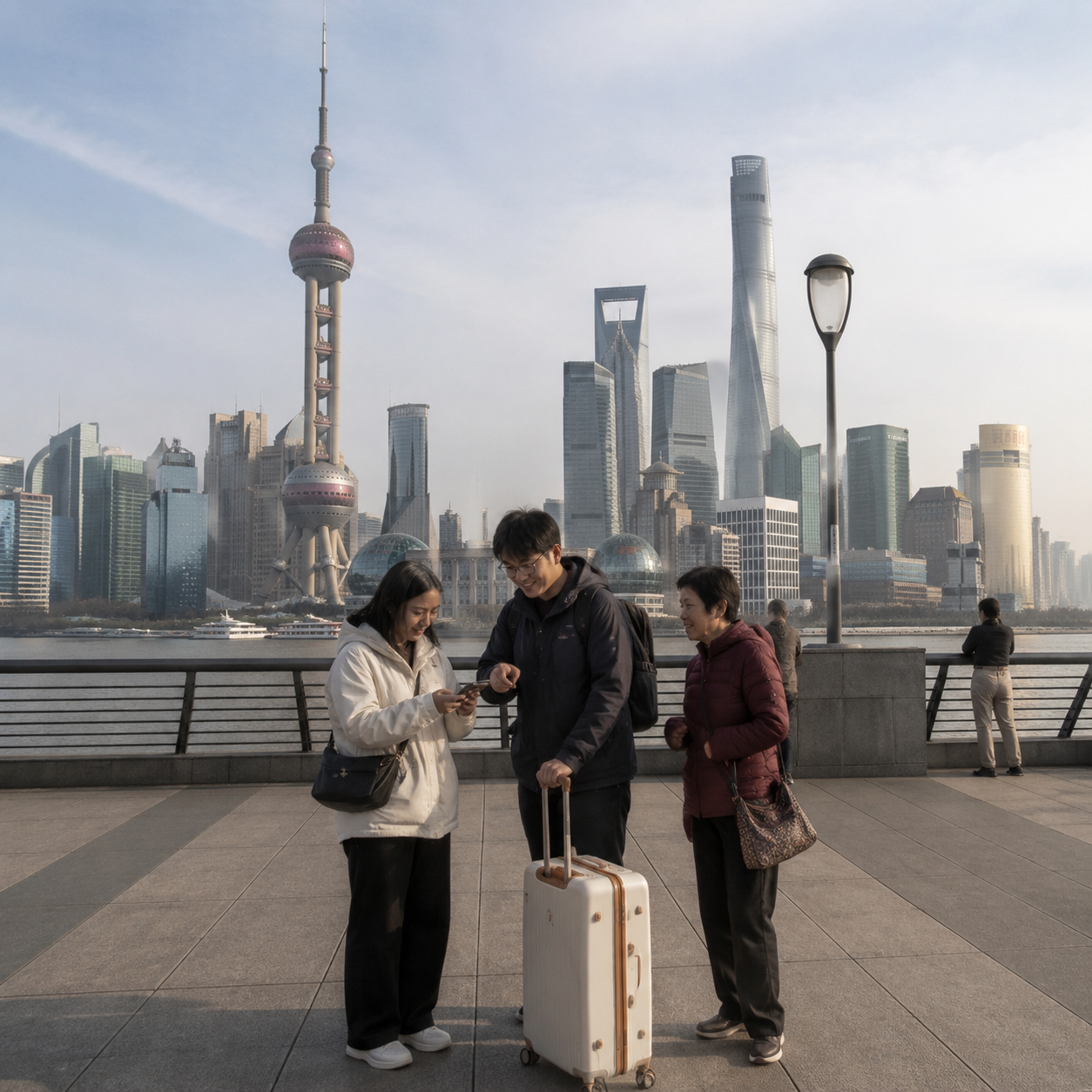
上海为什么总被拿来做“第一次来中国”的入口 / Why Shanghai Keeps Becoming an Entry City for First-Time China Travelers
一座城市适不适合当入口,不只取决于它有多少地标,而取决于它能不能让陌生人尽快建立起行为上的自信。上海最大的优势之一,正是它能让旅行者在比较短的时间里,确认一些最关键的判断:地铁能懂、步行线能接、用餐环境不难进入、河边和城区之间的切换不会太伤体力。你只要在第一天把这些基础动作做顺,后面几天就会明显轻下来。
Whether a city works as an entry point does not depend only on the number of landmarks. It depends on whether strangers can build behavioral confidence there quickly. One of Shanghai’s greatest strengths is that a traveler can confirm several essential judgments in a relatively short period: the metro is readable, the walking lines connect, restaurants are not hard to enter, and moving between the riverfront and the city core does not punish the body too severely. Once those basic actions go smoothly on day one, the following days become noticeably lighter.
这也是为什么,很多国外博主在上海拍出来的,不只是“我看到什么”,而是“我在这里怎么动”。从站内运营角度看,这种视频特别值得转写。因为普通读者不是靠知道“这里有东方明珠”才决定是否来,他们更需要知道的是:如果我刚落地中国,这座城会不会让我立刻慌起来。上海在这件事上的答案,往往比很多更戏剧化的城市更温和,也更有效。
That is also why many foreign creators in Shanghai end up filming not only what they saw, but how they moved. From a site-operations perspective, this kind of video is especially worth rewriting. Readers do not decide to come merely because they learn that the Oriental Pearl exists. What they need to know is whether the city will panic them the moment they land in China. On that question, Shanghai often gives a gentler and more effective answer than more dramatic destinations.
真正适合写进报道体的,不是“摩登”,而是“可进入性” / What Truly Belongs in a Reported Format Is Not Modernity, but Enterability

笔者一直觉得,把上海写成“现代中国的窗口”当然没错,但只写到这里,文章很快就会变空。因为“现代”这个词本身太容易悬在空中。真正能落到旅行者身上的,是可进入性:一座大城市是否容易被第一次来的外国人接近,是否允许他在不太狼狈的情况下,完成支付、换乘、步行、吃饭和看夜景这些动作。
The writer has always felt that describing Shanghai as a window into modern China is not wrong, but stopping there makes the article empty very quickly. The word modernity floats too easily in the air. What actually lands on the traveler is enterability: whether a large city can be approached by a first-time foreign visitor, and whether it allows that person to complete payment, transfers, walking, meals, and night views without too much embarrassment or friction.
如果国外博主把这种“可进入性”拍出来,TravelCN 最该做的,不是继续重复“它很国际化”,而是把这层经验拆开:上海哪些片区适合第一天,哪些路线适合晚上,哪些街区适合缓慢步行,哪些地方更像“看一眼就够”的都市背景。这种拆法,会让文章从普通城市推荐文,变成一篇真正能帮助读者决定“我该不该把上海放在第一站”的内容。
If foreign creators succeed in filming this kind of enterability, what TravelCN should do next is not merely repeat that the city feels international. It should break the experience apart. Which districts suit day one? Which routes belong to the evening? Which neighborhoods reward slower walking? Which areas are better treated as urban scenery to glance at once and move on from? That kind of breakdown changes the article from a generic city recommendation into something that helps readers decide whether Shanghai should become stop number one.
对第一次来中国的人来说,上海最大的作用可能不是“最惊艳”,而是“先把手感建立起来” / For a First-Time Visitor, Shanghai’s Biggest Role May Not Be Maximum Wonder, but the Building of Travel Feel
中国很大,强度很高,城市差异也非常明显。第一次来的人,最容易在前两天里把很多事情都理解成“我是不是还没适应这里”。上海的价值,在于它常常能帮人更快度过这段试探期。它不一定是你整趟旅程里记忆最猛烈的一站,但它可能是最适合拿来建立手感的一站。一旦手感起来了,后面无论去杭州、西安、重庆还是更远的地方,整个人都会更稳。

China is large, intense, and dramatically varied from city to city. A first-time visitor often spends the first two days translating many small uncertainties into the question, am I still not adapted to this place? Shanghai’s value lies in helping people move through that testing period more quickly. It may not become the most emotionally overwhelming stop of an entire trip, but it may be the best place to build travel feel. Once that feel is in place, later cities—whether Hangzhou, Xi’an, Chongqing, or something farther away—tend to become steadier.
从第三方报道者的角度说,这是一种很值得被反复强调的中国旅行逻辑:第一站不一定要最猛,第一站应该最会接人。上海之所以总能在国外旅行内容里保有稳定位置,也正因为它在这件事上非常强。它不只是展示中国的某一面,它还替后续更复杂的路线做了缓冲。
From a third-person reporting perspective, this becomes a China travel principle worth repeating: the first stop does not need to be the most intense. It should be the place best able to receive the traveler. One reason Shanghai keeps a stable position in foreign-facing travel content is that it does this exceptionally well. It does not merely display one face of China. It buffers the route before more complex segments begin.
公开素材来源 / Public Source Notes
- 基于公开可见的国外博主中国城市路线内容切口重写,偏“上海作为首次来华入口城市”的报道体分析。
- 本文不做整段搬运,重点转写其路线与进入逻辑。
Public source note:
- Rewritten from publicly visible foreign-creator China city-route angles, focusing on Shanghai as an entry city for first-time visitors.
- No wholesale reproduction is used; the emphasis is on route and entry logic.
- 把天气留在行程里:秋天去喀纳斯的公路节奏 | Leave Weather in the Itinerary: An Autumn Road Rhythm for Kanas
- 支付宝微信支付境外使用教程 | Alipay & WeChat Pay Guide for Foreign Visitors
- 银川清晨的羊肉汤,让我重新理解“清淡”和“厚重” | A Morning Bowl of Mutton Soup in Yinchuan Changed How I Understand Light and Rich
- 小区门口那段广场舞音乐,让我第一次不再把它只当成噪音 | The Square Dance Music at My Compound Gate Was the First Time I Stopped Hearing It as Just Noise
- 丝绸之路探险之旅 | The Silk Road Adventure
- 酒店前台帮我确认订单时,我学会别只依赖邮箱 | At a Hotel Front Desk, I Learned Not to Rely Only on Email
- 那张被擦亮的桌子,让我看见沙县小吃如何成为日常 | The Polished Table Showed Me How Shaxian Snacks Became Everyday Food
- 和爸爸在周庄躲雨的半天,我第一次发现他其实比我更会旅行 | A Rainy Half Day in Zhouzhuang with My Father Showed Me He Was Better at Traveling Than I Was
- 十一月最适合旅游的城市 | Best Chinese Cities to Visit in November
- 情人节浪漫旅游路线 | Valentine's Day Romantic Travel Routes
Comments (0)