
银川清晨的羊肉汤,让我重新理解“清淡”和“厚重” | A Morning Bowl of Mutton Soup in Yinchuan Changed How I Understand Light and Rich
银川清晨的羊肉汤,让我重新理解“清淡”和“厚重” | A Morning Bowl of Mutton Soup in Yinchuan Changed How I Understand Light and Rich
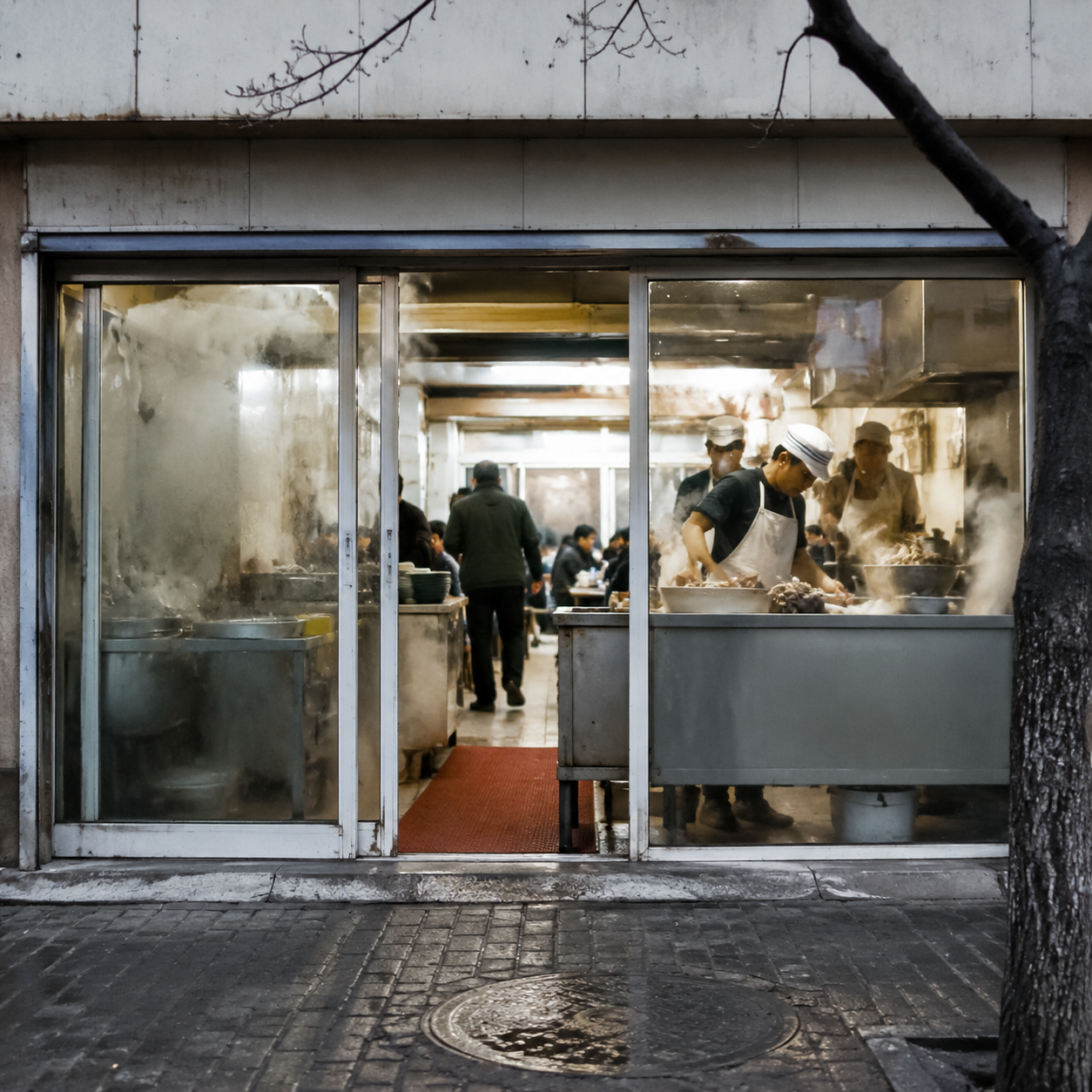
到银川的第二天,我起得比闹钟还早。窗外的天色像被冷水洗过,街边树影细而清楚,出租车从空荡路口滑过去,车灯在晨雾里拖出短短的线。我原本只是想找一顿热早餐,没想到被旅馆前台一句“去喝碗羊肉汤吧”带到了一条还没完全热闹起来的巷子。门脸不大,招牌旧得发白,玻璃上有蒸汽留下的水痕。可门一推开,羊汤的气味就把清晨撑开了:不是浓烈到压人的膻,也不是调料堆出的香,而是一种贴着空气慢慢铺开的暖。
On my second morning in Yinchuan, I woke before the alarm. The sky outside looked rinsed with cold water, the trees along the street were thin and clear, and taxis slid through empty intersections with short lines of light behind them. I had only meant to find a hot breakfast, but the hotel receptionist’s suggestion, “go have a bowl of mutton soup,” led me into an alley that had not fully become busy. The storefront was small, the sign had faded, and steam had left watery marks on the glass. Yet as soon as I pushed the door open, the smell of the soup opened the morning. It was not an aggressive gaminess, nor a fragrance built from piles of seasoning, but a warmth spreading slowly through the air.
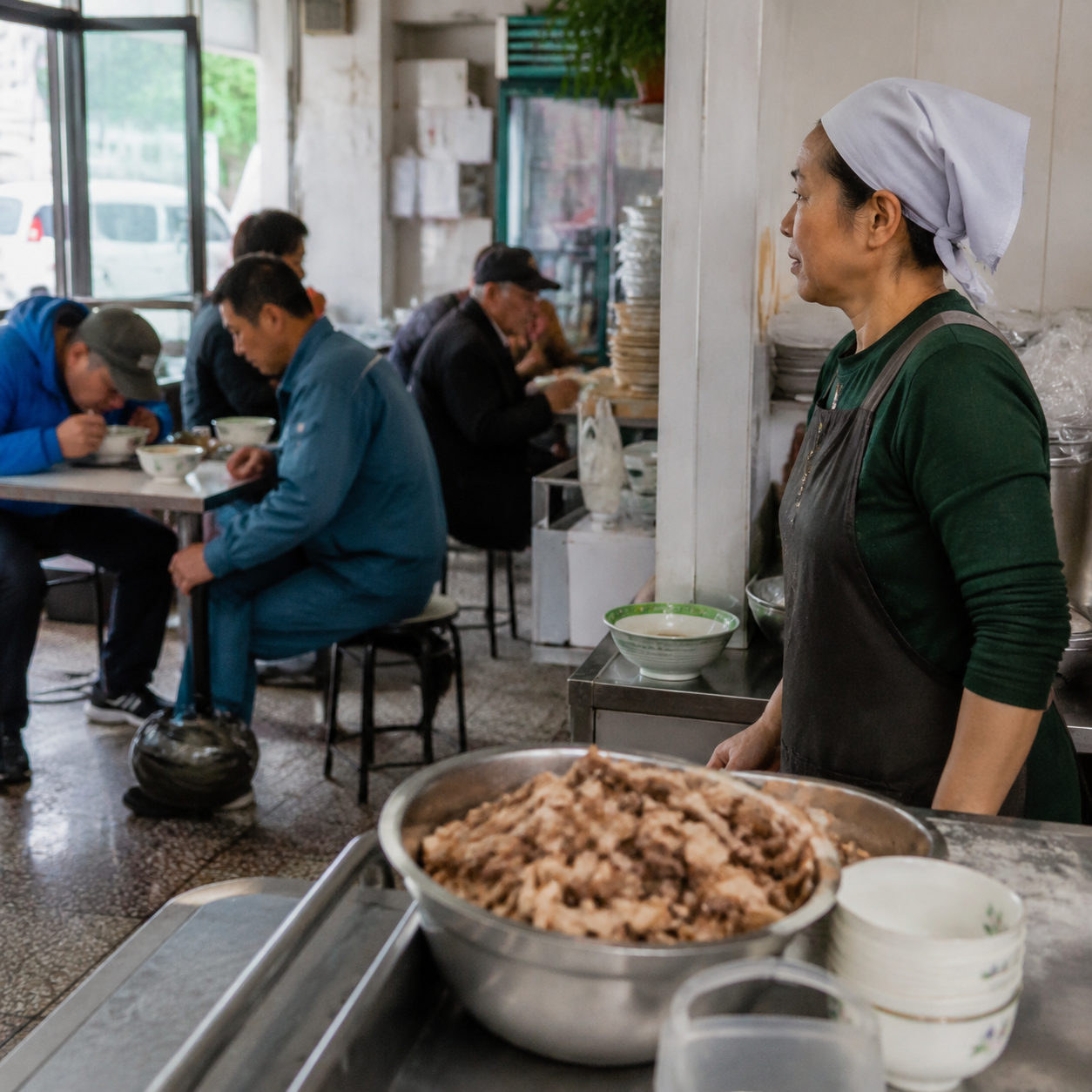
店里坐着的大多是本地人。有人穿着工装,帽檐上还有夜班留下的灰;有人把自行车头盔搁在脚边,手里攥着一小把零钱;也有老人独自坐在角落,把馍掰得很碎,像在进行一件需要耐心的手工活。老板娘没有给我菜单,只问我要大碗还是小碗,肉多一点还是普通。我站在柜台前犹豫,她看了看我的背包,语气平常地说:“第一次喝就普通,汤热,慢点。”这句话像一把钥匙,把我从游客的比较和选择里暂时放了出来。
Most people in the shop seemed local. One man wore work clothes with dust from a night shift still on the brim of his cap. Another placed a bicycle helmet beside his feet and held a small handful of change. An elderly man sat alone in the corner, tearing flatbread into tiny pieces as if doing a patient piece of handwork. The woman behind the counter did not hand me a menu. She only asked whether I wanted a large or small bowl, extra meat or regular. I hesitated in front of the counter, and she glanced at my backpack before saying in an ordinary tone, “If it is your first bowl, get the regular. The soup is hot, drink slowly.” That sentence felt like a key, releasing me for a moment from the tourist habit of comparison and choice.
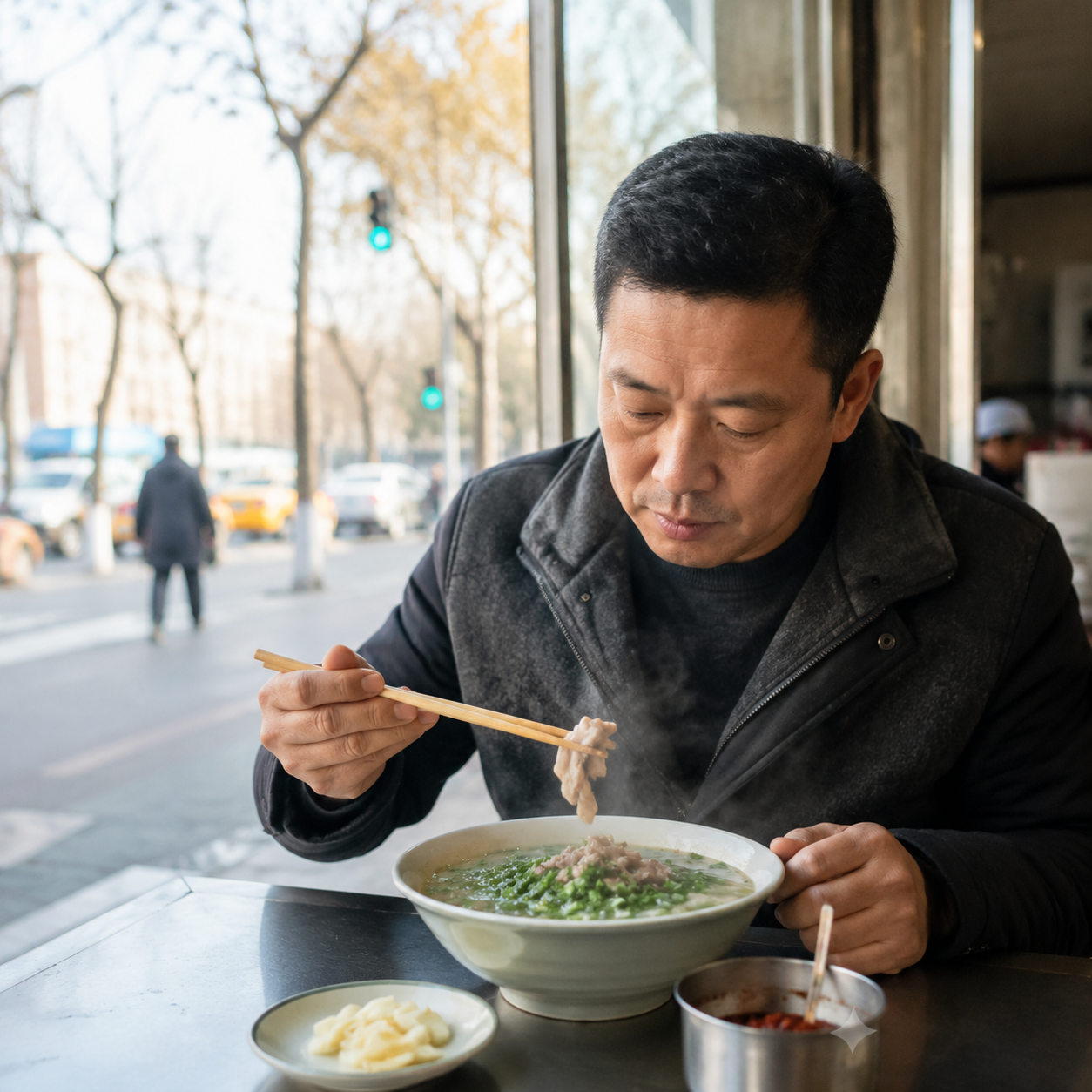
碗端上来时,我先看见的是汤色。它不是我想象里浓到发白的样子,而是带着微微乳光的清亮,表面漂着几粒葱花和香菜,羊肉片沉在下面,边缘被热气晃得柔软。旁边配了一小碟盐、一小碟辣椒面,还有切开的馍。这样的摆法让我意外,因为它看起来没有要证明自己多么丰盛,甚至有点克制。可勺子一碰到汤面,热气立刻涌上来,肉香、骨香和一点点胡椒的辛味分开又合拢,像一条并不喧哗却很深的河。
When the bowl arrived, the first thing I noticed was the color of the broth. It was not the thick white liquid I had imagined, but a clear soup with a faint milky sheen. A few bits of scallion and cilantro floated on the surface, while slices of mutton rested underneath, their edges softened by rising steam. Beside it were small dishes of salt and chili powder, along with pieces of flatbread. The arrangement surprised me because it did not seem eager to prove abundance; it even looked restrained. But when my spoon touched the surface, heat rose immediately, and the aromas of meat, bone, and a little pepper separated and gathered again, like a river that was quiet but deep.
我过去总把“清淡”理解成味道少,把“厚重”理解成调料多。到银川之前,一碗羊肉汤在我的想象里应该是热烈的、粗粝的、带着草原和炉火的直白气息。可是第一口汤进嘴,我发现自己错得很具体。它入口轻,几乎没有多余的油腻;咽下去以后,热意却从喉咙一直落到胃里,慢慢扩散。清淡不是空,厚重也不是堵。它们在这只碗里不是对立的,而是先后出现的两层意思:前者让你愿意靠近,后者让你留下记忆。
I used to understand “light” as having little flavor and “rich” as having many seasonings. Before Yinchuan, I imagined a bowl of mutton soup as something fiery, rough, direct, full of grassland and stove heat. But with the first sip, I realized how specifically wrong I had been. The soup entered lightly, with almost no unnecessary greasiness. After I swallowed, warmth traveled from my throat into my stomach and spread slowly. Light did not mean empty, and rich did not mean heavy in the mouth. In this bowl they were not opposites, but two layers arriving in sequence: the first made me willing to come closer, and the second made the taste stay.
我把馍掰进汤里,动作笨拙,碎块大小不一。旁边的老人看了一眼,没有纠正,只把自己的碗往我这边略微转了转,让我看见他碗里的馍已经吸足汤汁,像一片片软下来的月光。我学着把大块再撕小,等它们在汤里沉一会儿。馍吸汤以后,口感变得完全不同,外层温软,中心还留一点麦香和嚼劲。羊肉片夹起来不厚,纤维却清楚,盐不用多加,只要一点就把肉的甜味托起来。那一刻我明白,这碗汤的重点不是刺激,而是把每样东西放到刚好能被看见的位置。
I tore the flatbread into the soup clumsily, making pieces of uneven sizes. The elderly man beside me glanced over, said nothing, and simply turned his own bowl slightly toward me so I could see that his pieces had already absorbed the broth, like small softened patches of moonlight. I followed him, tearing the larger pieces smaller and letting them sink for a while. After absorbing the soup, the bread changed completely: warm and tender outside, with a little wheat aroma and chew still in the center. The slices of mutton were not thick, but their fibers were clear. Only a little salt was needed to lift the meat’s sweetness. At that moment I understood that the bowl was not about stimulation. It was about placing each element where it could be noticed.
银川的清晨和这碗汤有相似的气质。街道开阔,风从路口吹过来时带着干爽的冷,建筑线条不密,人的声音也不急。你会以为这座城市很淡,淡到需要游客主动去找亮点。可坐在羊汤店里,看老板把一锅汤从天黑熬到天亮,看熟客进门不用多说就知道坐哪儿、加不加辣、馍要几个,你会发现它的厚其实藏在日常的重复里。不是每种深度都要用强烈的颜色表达,有些深度是靠时间熬出来的。
Yinchuan’s morning shared a temperament with the soup. The streets were broad, the wind at intersections carried a dry chill, the buildings were not crowded together, and people’s voices did not hurry. You might think the city was pale, so pale that a visitor had to search actively for points of brightness. But sitting in the mutton soup shop, watching the owner tend a pot from darkness into morning, watching regulars enter without many words and already know where to sit, whether to add chili, and how much bread to take, I found that its richness was hidden in repetition. Not every depth has to announce itself in strong color. Some depth is simmered out by time.
我注意到店里没有人把吃饭变成表演。大家低头喝汤,偶尔抬头说一句今天风大、哪条路修了、孩子考试如何。话题像汤面上的葱花,点到为止,却让一碗早餐有了生活的方向。一个年轻人进来给同事打包,报了四份不同的要求,老板娘听完只重复了关键处,手上没有停。塑料袋被撑开,纸碗一个个放进去,汤勺碰到锅沿的声音短促而稳定。这样的早晨让我觉得,所谓地方风味并不只在舌头上,也在一套被反复使用的默契里。
I noticed that no one in the shop turned eating into a performance. People lowered their heads to drink, occasionally looking up to mention the strong wind, a road under repair, or a child’s exam. The topics were like scallions on the surface of the soup, brief but enough to give breakfast a direction in daily life. A young man came in to buy takeout for coworkers, listing four different requests. The owner repeated only the essential parts and never stopped moving. Plastic bags were opened, paper bowls placed inside one by one, and the ladle struck the rim of the pot with a short, steady sound. That morning made me feel that local flavor does not live only on the tongue. It also lives in a repeatedly used understanding between people.
很多旅行经验会鼓励人去寻找“最正宗”的那一家,可我在银川喝羊肉汤时反而不太想用这个词。正宗像一枚印章,盖上以后容易把复杂的东西压平。眼前这家店也许不是城市里最有名的,也没有漂亮介绍,可它诚实地处理了清晨的饥饿、寒意和需要出门谋生的人。汤要热,肉要干净,馍要能泡,座位要翻得快,熟客和生客都要能在几分钟内找到自己的位置。这样的准确,比“正宗”更让我信服。
Many travel experiences encourage people to look for the “most authentic” place, but while drinking mutton soup in Yinchuan, I did not want to use that word too quickly. Authenticity can become a stamp that flattens complicated things once it is pressed down. The shop in front of me might not have been the most famous in the city and had no polished introduction, but it honestly handled morning hunger, cold air, and the needs of people heading out to make a living. The soup had to be hot, the meat clean, the bread suitable for soaking, the seats quick to turn over, and both regulars and strangers had to find their places within minutes. That precision convinced me more than the word authentic.
我又加了一点辣椒面。红色落进汤里,并没有立刻改变全局,只在勺子搅过的地方散出细小的热。这个细节很有意思:辣椒不是主角,却能让汤的边缘更亮;香菜不是主角,却能把羊肉的香气往上提;馍也不是主角,却能让汤从一口饮品变成一顿饭。银川的美食经验似乎常常如此,不靠单一的惊艳,而靠配合。它让人把注意力从“这味道够不够强”转向“这些味道怎样彼此留空间”。
I added a little chili powder. The red fell into the broth but did not immediately change everything; it released a small heat only where the spoon had passed. That detail interested me. Chili was not the main character, yet it brightened the edges of the soup. Cilantro was not the main character, yet it lifted the aroma of the mutton. The bread was not the main character either, yet it turned the soup from something to sip into a meal. Food in Yinchuan seemed to work this way often, not through one dazzling element but through cooperation. It shifted my attention from whether a flavor was strong enough to how different flavors left room for one another.
喝到碗底时,汤色变得更浑一些,馍屑和肉末沉在那里,像一段早晨留下的注脚。我没有急着放下勺子,而是把最后几口慢慢喝完。身体暖起来以后,门外的冷风不再显得尖。街上的店铺陆续开门,卖牛羊肉的摊位挂起新鲜的肉,早点铺外有人端着碗站着吃,公交站前的队伍也开始变长。城市没有突然变得热烈,但它的轮廓比刚才清楚了。我像从一碗汤里看见了银川的底色:干净、克制、耐熬,也并不单薄。
Near the bottom of the bowl, the broth became a little cloudier, with bread crumbs and tiny pieces of meat resting there like a footnote left by the morning. I did not put down the spoon quickly. I finished the last few sips slowly. Once my body warmed, the wind outside no longer felt sharp. Shops along the street opened one after another, fresh meat was hung at stalls selling beef and mutton, people stood outside breakfast places eating from bowls, and the line at the bus stop grew longer. The city did not suddenly become dramatic, but its outline became clearer. It was as if I had seen Yinchuan’s base color through one bowl of soup: clean, restrained, able to endure long heat, and not thin at all.
离开小店前,我把碗送到回收处,老板娘抬头问我:“喝得惯吗?”我说比想象中清爽,也比想象中有劲。她笑了一下,说好汤不能糊嘴,糊嘴就腻了。这个判断很朴素,却让我记了很久。很多地方在介绍自己时,总担心别人觉得不够浓、不够满、不够有冲击力,于是把味道、故事和姿态一层层加上去。可真正耐喝的东西,往往知道在哪里停。它不把你围住,只把你安稳地送进一天。
Before leaving the shop, I carried my bowl to the return area. The owner looked up and asked, “Can you get used to it?” I said it was fresher than I had imagined and also stronger than I had expected. She smiled and said a good soup should not coat the mouth too much; if it coats too much, it becomes greasy. The judgment was simple, but I remembered it for a long time. Many places, when introducing themselves, seem afraid of not being rich enough, full enough, or forceful enough, so they keep adding flavor, story, and posture. But something truly worth drinking often knows where to stop. It does not surround you. It steadies you into the day.
那天以后,我在银川又吃了手抓羊肉、烩小吃、凉皮和八宝茶。它们各有性格,有的朴实,有的甜润,有的带着明显的回族饮食传统,有的则吸收了西北城市的混合气质。可是回想起来,最先改变我味觉尺度的,仍是清晨那碗羊肉汤。它让我不再把清淡看成退让,也不再把厚重看成用力。清淡可以是一种把杂音滤掉的能力,厚重可以是一种不急着显摆的积累。二者相遇时,食物就不只是好吃,而是有了性格。
After that day, I also ate hand-grabbed mutton, stewed snacks, cold noodles, and drank eight-treasure tea in Yinchuan. Each had its own personality: some plain, some sweet and smooth, some clearly shaped by Hui food traditions, and others carrying the mixed temperament of a northwestern city. Yet when I look back, the bowl that first changed my scale of taste was still that morning mutton soup. It taught me not to see lightness as retreat, and not to see richness as force. Lightness can be the ability to filter out noise. Richness can be an accumulation that does not rush to show itself. When the two meet, food becomes more than delicious; it gains character.
旅行中最容易被记住的,常常不是最大的一顿饭,而是某个时刻里恰好合身的味道。银川清晨的羊肉汤合身,是因为它没有试图替整座城市发言,却把城市的一部分说得很准:风冷,所以汤要暖;土地干,所以味道要净;生活不慢,所以端上来要快;人心不浮,所以后劲要长。它让我带着一种新的分辨力继续往前走。再遇到一碗看似清淡的汤,我会先等一等,看看它是不是把厚重藏在了更深的地方。
What stays with us most easily during travel is often not the largest meal, but a flavor that fits a particular moment exactly. The mutton soup of a Yinchuan morning fit because it did not try to speak for the entire city, yet it described one part of it accurately: the wind is cold, so the soup must be warm; the land is dry, so the flavor must be clean; life is not slow, so the bowl must arrive quickly; people are not restless, so the aftertaste must last. It sent me forward with a new way of distinguishing taste. When I meet another bowl of soup that seems light, I will wait before judging, and see whether its richness is hidden deeper down.
- 鸡鸣寺到城墙下那一段夜路,让我读懂南京为什么适合慢慢看 | The Night Stretch from Jiming Temple to the Foot of the Wall Showed Me Why Nanjing Rewards Slow Looking
- 中国高铁出行完全指南 | Complete Guide to China's High-Speed Rail
- 成都茶馆里的一下午,比三个景点更让我记住这座城 | An Afternoon in a Chengdu Teahouse Stayed With Me More Than Three Attractions
- 雨后的绍兴黄酒馆里,老板一句话让我重新理解“慢” | In a Shaoxing Yellow Wine Tavern After Rain, One Sentence Changed How I Understood Slowness
- 在西安城墙下走慢一点,历史才不是一张照片 | Walking Slowly Under Xi’an City Wall Made History More Than a Photo
- 冬季冰雪旅游完全指南 | Complete Guide to Winter Ice & Snow Tourism
- 中国地理概览 | China Geographic Overview
- 在中国乘坐公共交通 | Using Public Transportation in China
- 我站在屋檐下面,才明白中国古建筑为什么先让人慢下来 | I Understood Why Traditional Chinese Architecture Slows the Body Only After Standing Under the Eaves
- 天津海河边的傍晚,不适合用打卡速度走完 | An Evening by Tianjin’s Haihe River Is Not for Check-In Speed
Comments (0)