
中国寺庙参观礼仪完全指南 | The Complete Guide to Temple Etiquette in China
Posted: 2026-04-29 09:14:25Views: 152
 1|# 中国寺庙参观礼仪完全指南 | The Complete Guide to Temple Etiquette in China
 2|
 3|你站在杭州灵隐寺的山门前,空气里飘着檀香的味道,耳边是悠远的钟声。你想进去看看,但又有点犹豫——该怎么走?要不要烧香?能不能拍照?别担心,这篇指南会帮你从容地走进中国的每一座寺庙。
 4|
 5|You're standing at the gate of Lingyin Temple in Hangzhou. The air smells of sandalwood incense, and a distant bell echoes through the hills. You want to go in, but you hesitate — how should you walk? Should you burn incense? Can you take photos? Don't worry. This guide will help you navigate every temple in China with confidence and respect.
 6|
 7|## 佛寺还是道观?先分清再进门 | Buddhist or Taoist? Know Before You Go
 8|
 9|很多人第一次来中国,分不清佛教寺庙和道教宫观的区别。其实很简单:佛寺里供奉的是佛像和菩萨,僧人剃光头、穿灰色或黄色袈裟;道观里供奉的是三清、玉皇大帝等神仙,道士留长发挽成发髻、穿青色道袍。建筑风格上,佛寺通常有大雄宝殿,道观则常见三清殿。比如少林寺是佛教禅宗祖庭,而武当山则是道教圣地。两者的参拜方式也不同——佛教是双手合十,道教是抱拳拱手。搞清楚这一点,你就不会在道观里双手合十闹笑话了。
10|
11|Many first-time visitors to China can't tell a Buddhist temple from a Taoist temple. It's actually straightforward: Buddhist temples house statues of Buddha and Bodhisattvas, and monks shave their heads and wear grey or saffron robes. Taoist temples enshrine deities like the Three Pure Ones and the Jade Emperor, and priests keep their hair long in topknots, wearing dark blue robes. Architecturally, Buddhist temples feature a Mahavira Hall, while Taoist temples have a Hall of the Three Pure Ones. Shaolin Temple is the ancestral home of Chan Buddhism, while Wudang Mountain is a sacred Taoist site. The prayer gestures differ too — Buddhists press palms together, Taoists clasp one fist with the other hand. Get this right, and you won't accidentally use the wrong gesture in the wrong place.
12|
13|IMAGE_PLACEHOLDER_1
14|
15|## 穿什么?你的衣服就是你的态度 | What to Wear — Your Outfit Is Your Attitude
16|
17|你不需要穿得多正式,但请尊重这个空间。避免穿无袖上衣、超短裙、短裤或过于暴露的衣服。我有一次在普陀山看到一位外国游客穿着比基尼上衣就往观音殿走,被工作人员礼貌地拦下了。寺庙不是海滩,这是最基本的尊重。颜色上没有严格要求,但建议避免大面积的黑色或白色——在中国传统文化中,这两种颜色与丧事相关。穿一件素色T恤、长裤、舒适的平底鞋就很合适。进入某些殿堂时可能需要脱鞋,所以穿一双容易穿脱的鞋子会方便很多。
18|
19|You don't need to dress formally, but please respect the space. Avoid sleeveless tops, mini skirts, shorts, or overly revealing clothing. I once saw a foreign tourist at Mount Putuo trying to walk into the Guanyin Hall in a bikini top — she was politely stopped by staff. A temple is not a beach; this is basic respect. There are no strict color rules, but it's wise to avoid large areas of black or white — in traditional Chinese culture, these colors are associated with funerals. A plain-colored T-shirt, long pants, and comfortable flat shoes work perfectly. Some halls require you to remove your shoes, so slip-ons are a smart choice.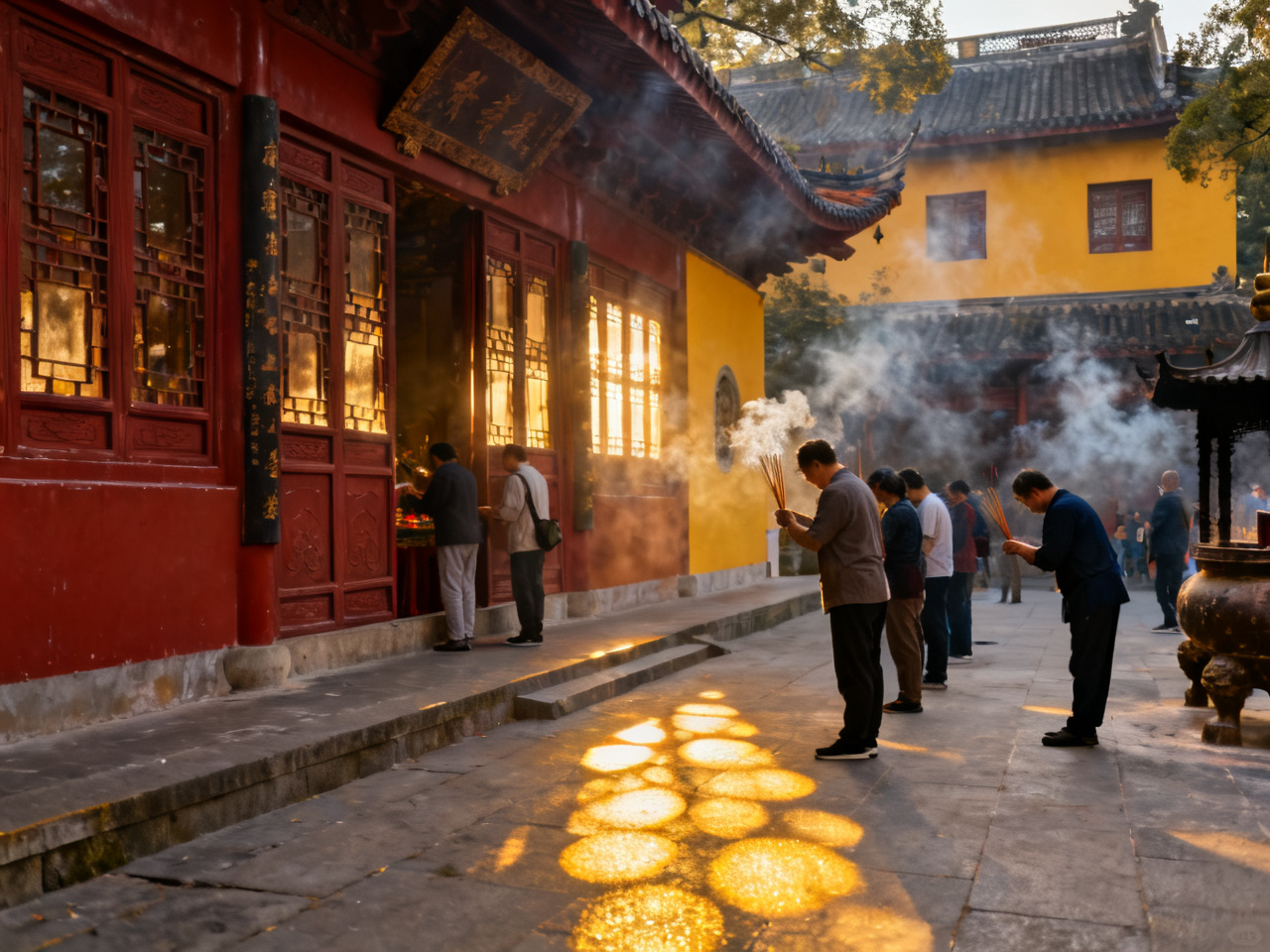
20|
21|## 烧香拜佛的正确姿势 | How to Burn Incense and Pray Properly
22|
23|烧香是寺庙体验中最有仪式感的部分。通常在寺庙入口或香炉旁可以请到香,一般是三支。点燃后不要用嘴吹灭火焰——这被认为是不敬的,应该用手轻轻扇灭或自然熄灭。然后双手持香,举过头顶,面朝佛像方向三鞠躬。之后将香插入香炉中,每次一支,三支一排。在佛寺中跪拜时,通常是三跪九叩,但作为游客,你只需要真诚地鞠躬即可,没有人会要求你必须跪下。在道观中,上香的方式类似,但鞠躬时用的是抱拳礼。记住,心诚则灵——形式可以简化,但态度要真诚。
24|
25|Burning incense is the most ritualistic part of a temple visit. You can usually get incense sticks — typically three — near the entrance or by the censer. After lighting them, never blow out the flame with your mouth; this is considered disrespectful. Instead, gently fan the flame out with your hand or let it die naturally. Hold the three sticks with both hands, raise them above your head, and bow three times facing the statue. Then place the sticks into the censer one by one, in a row. In Buddhist temples, the full prostration involves kneeling three times with nine kowtows, but as a visitor, a sincere bow is perfectly fine — nobody expects you to kneel. In Taoist temples, the incense process is similar, but you use the clasped-fist gesture when bowing. Remember, sincerity matters more than form.
26|
27|## 拍照这件事,别踩雷 | Photography — Don't Cross the Line
28|
29|这可能是外国游客最容易犯错的地方。大多数寺庙的室外区域允许拍照,但殿堂内部通常禁止拍照,尤其是对着佛像或神像。你会看到"禁止拍照"的标志,请务必遵守。为什么?因为在信众眼中,佛像不是艺术品,而是神圣的存在,对着它们拍照就像对着别人家的祖先牌位自拍一样不合适。我在西安大慈恩寺(大雁塔所在地)见过一位游客偷偷用闪光灯拍壁画,被僧人严肃地制止了。如果你实在想记录殿内的美,可以用眼睛和心去记住,或者在允许的区域拍摄建筑外观。
30|
31|This is probably where foreign visitors slip up most often. Outdoor areas of most temples allow photography, but the interiors of halls usually don't — especially when facing Buddha or deity statues. You'll see "No Photography" signs; please follow them. Why? Because to believers, these statues aren't art — they're sacred presences. Photographing them is like taking a selfie in front of someone's ancestral shrine. I once saw a tourist at Da Ci'en Temple in Xi'an (home of the Giant Wild Goose Pagoda) secretly use flash to photograph a mural — a monk firmly stopped him. If you want to capture the beauty inside, use your eyes and heart, or photograph the exterior architecture where it's permitted.
32|
33|IMAGE_PLACEHOLDER_2
34|
35|## 功德箱与捐赠:随心随缘 | Donation Boxes — Give from the Heart
36|
37|你会在几乎每座寺庙里看到功德箱。投入多少完全随你——一元、十元、一百元都可以,没有最低标准。这不是门票,也不是消费,而是一种随缘的布施。有些寺庙是免费开放的(比如厦门南普陀寺),有些需要购买门票(比如少林寺门票80元)。请注意区分门票和功德捐赠——门票是景区管理费用,功德箱里的钱用于寺庙的日常维护和僧人的生活。如果有人在寺庙外主动拉你烧高价香或做法事,请保持警惕,正规寺庙不会强制消费。
38|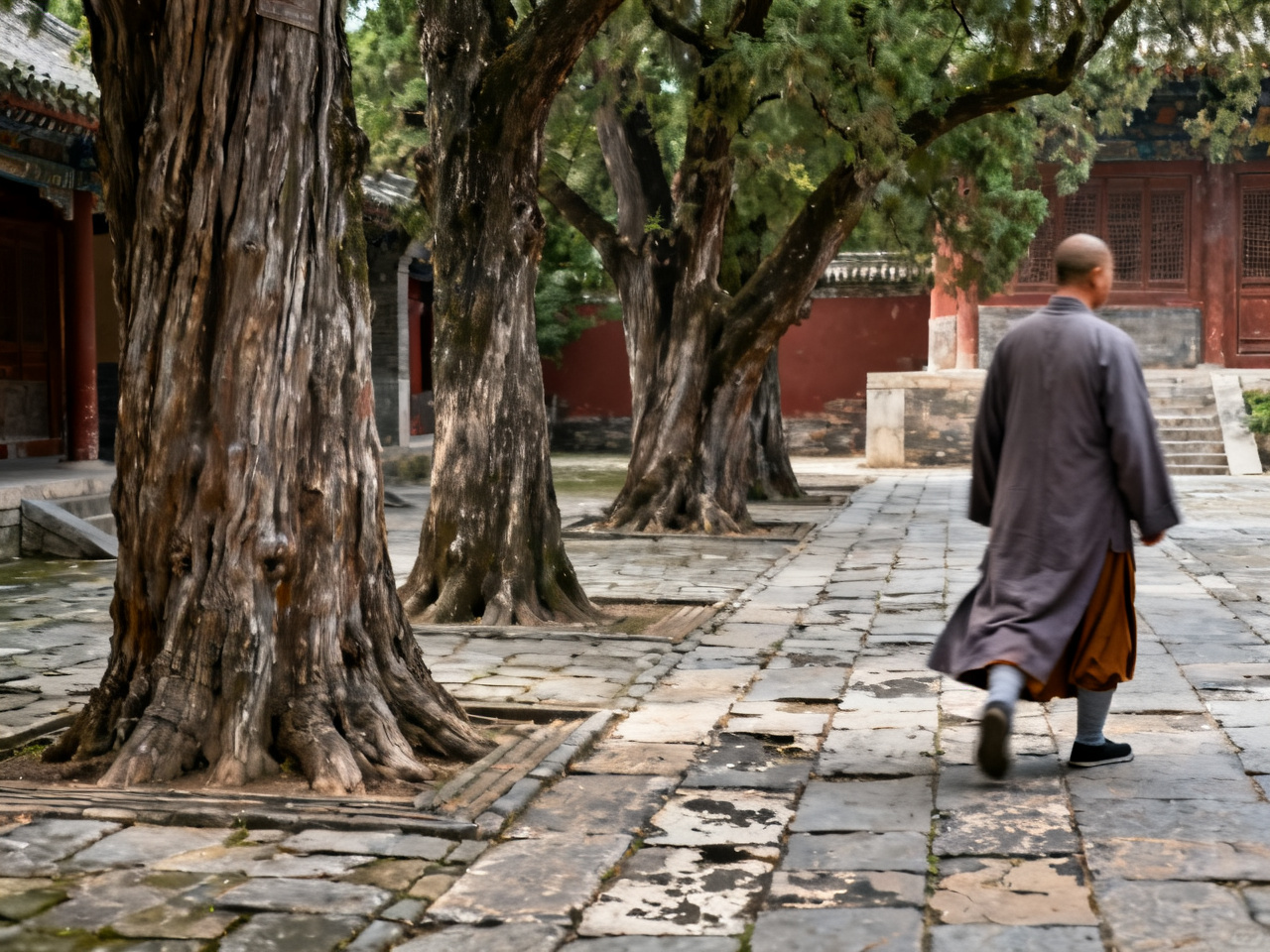
39|You'll find donation boxes in almost every temple. How much you put in is entirely up to you — one yuan, ten, a hundred, it's all fine. There's no minimum. This isn't a ticket or a purchase; it's a voluntary offering. Some temples are free (like Nanputuo Temple in Xiamen), while others charge admission (Shaolin Temple costs 80 yuan). Note the difference between admission fees and merit donations — tickets cover site management, while donation box funds support the temple's upkeep and the monks' livelihood. If someone outside a temple aggressively tries to sell you expensive incense or ritual services, be cautious — legitimate temples never pressure you to spend.
40|
41|## 素斋:寺庙里的美食惊喜 | Vegetarian Dining — A Delicious Temple Surprise
42|
43|如果你有机会在寺庙里吃一顿素斋,千万别错过。很多大型寺庙都设有素斋餐厅,价格亲民,味道出乎意料地好。杭州灵隐寺旁边的法云安缦虽然是高端酒店,但灵隐寺本身的素面馆只要十几块钱一碗,汤鲜面滑。上海的龙华寺素斋、成都的文殊院素餐厅也都值得一试。吃素斋时请注意:不要浪费食物,这在佛教文化中是很大的忌讳;用餐时保持安静,不要大声喧哗;有些寺庙的斋堂有特定的用餐规矩,比如过堂(僧人集体用餐的仪式),如果你有幸参与,跟着做就好。这种体验本身就是一种修行。
44|
45|If you get the chance to eat a vegetarian meal at a temple, don't miss it. Many large temples have vegetarian restaurants with affordable prices and surprisingly delicious food. While the Amanfayun resort near Lingyin Temple is high-end, the temple's own noodle shop serves a bowl of vegetarian noodles for just over ten yuan — the broth is rich and the noodles silky. Longhua Temple's vegetarian kitchen in Shanghai and Wenshu Monastery's restaurant in Chengdu are also worth trying. When dining, don't waste food — this is a serious taboo in Buddhist culture. Keep your voice down. Some temple dining halls follow specific rituals like guotang (communal monastic meals); if you're lucky enough to join, just follow along. The experience itself is a form of practice.
46|
47|## 那些值得你专程去的寺庙 | Temples Worth a Special Trip
48|
49|中国有太多值得一去的寺庙,这里推荐几座风格各异的:杭州灵隐寺,藏在飞来峰下的千年古刹,香火鼎盛;嵩山少林寺,功夫的发源地,你可以看到武僧表演;武当山的道教宫观群,建筑与山势融为一体,仙气飘飘;拉萨大昭寺,藏传佛教的圣地,转经筒和酥油灯的光影让人心生敬畏;山西悬空寺,悬挂在峭壁上的建筑奇迹,佛道儒三教合一。每一座寺庙都有自己的故事和性格,就像中国文化本身一样丰富多元。这种多元性你也能在其他传统文化中感受到,比如[佛山醒狮](/home/home/article/detail/uuid/1e79915916bd419bb209aa9d8a4f8292.html)的热烈奔放,或者[皮影戏](/home/home/article/detail/uuid/dc505161087d42769da5a5b8f4419b01.html)等传统艺术的精巧细腻,都是中华文明不同侧面的表达。
50|
51|There are countless temples worth visiting in China. Here are a few with distinct personalities: Lingyin Temple in Hangzhou, a thousand-year-old monastery nestled beneath Feilai Peak, always bustling with worshippers. Shaolin Temple on Mount Song, birthplace of kung fu, where you can watch warrior monks perform. The Taoist temple complex on Wudang Mountain, where architecture and landscape merge into something ethereal. Jokhang Temple in Lhasa, the holiest site in Tibetan Buddhism, where prayer wheels and butter lamp light inspire awe. And the Hanging Temple in Shanxi, an architectural miracle clinging to a cliff face, uniting Buddhism, Taoism, and Confucianism. Each temple has its own story and character, as rich and diverse as Chinese culture itself. You can feel this diversity in other traditions too — like the passionate energy of [Foshan lion dance](/home/home/article/detail/uuid/1e79915916bd419bb209aa9d8a4f8292.html), or the delicate artistry of [shadow puppetry](/home/home/article/detail/uuid/dc505161087d42769da5a5b8f4419b01.html), each expressing a different facet of Chinese civilization.
52|
53|## 最后的话:带着敬意,带走平静 | A Final Word — Bring Respect, Take Peace
54|
55|参观中国的寺庙,不仅仅是一次旅游打卡,更是一次与千年文明的对话。你不需要是佛教徒或道教徒,也不需要懂所有的规矩。你只需要带着一颗尊重的心走进去,安静地感受那份属于东方的宁静与智慧。当你离开时,也许你会发现,你带走的不只是照片,还有一种说不清的平静。而这种平静,正是这些古老寺庙存在了千百年的意义所在。就像[中国龙](/home/home/article/detail/uuid/099e601eb6714fb4b03a37bb52c14ae8.html)象征着力量与吉祥一样,寺庙象征着中国人内心深处对安宁与超越的追求。
56|
57|Visiting a Chinese temple isn't just a tourist checkbox — it's a conversation with a thousand years of civilization. You don't need to be Buddhist or Taoist, and you don't need to know every rule. Just walk in with a respectful heart and quietly absorb the tranquility and wisdom of the East. When you leave, you might find that you're taking away more than photos — you're carrying a sense of peace you can't quite put into words. And that peace is exactly why these ancient temples have endured for centuries. Just as the [Chinese dragon](/home/home/article/detail/uuid/099e601eb6714fb4b03a37bb52c14ae8.html) symbolizes power and good fortune, temples represent the Chinese people's deepest longing for serenity and transcendence.
58|
推荐文章
- 海口出门前那几分钟,天气、潮气和路线都先挤进了手机里 | In the Minutes Before Going Out in Haikou, Weather, Humidity, and Route All Crowd into the Phone
- 端午龙舟节旅游攻略 | Dragon Boat Festival Travel Guide
- 在泉州老城听见海风的回声 | Hearing the Sea Wind in Quanzhou's Old Town
- 五一去哪儿?8个你可能没听过的宝藏目的地 | Where to Go for May Day? 8 Hidden Gems You Probably Haven't Heard Of
- 我在中国早餐摊第一次学会热包子要先撕口放气 | The First Time at a Chinese Breakfast Stall, I Learned to Tear Open a Hot Baozi First to Let the Steam Out
- 在北京一节低年级语文课后,作者终于明白小朋友为什么总先学量词 | After a Beijing Language Class, I Finally Understood Why Kids Learn Measure Words So Early
- 人民币使用常识:面额、兑换与防伪 | RMB Basics: Denominations, Exchange & Counterfeit Tips
- 五月在婺源的雨后清晨,我跟着民宿老板去看一片刚亮起来的白墙黑瓦 | One Rain-Washed Morning in Wuyuan, I Followed a Guesthouse Owner Toward White Walls Just Beginning to Glow
- 读一面敦煌壁画的次序:从洞窟入口开始 | How to Read a Dunhuang Mural: Begin at the Cave Entrance
- 第一次在中国自助快餐学会先找托盘回收口 | The First Thing I Learned in a Chinese Self-Service Fast Food Place Was to Find the Tray Return Area First
Comments (0)