
中国麻将文化:规则、礼仪与社交密码 | Chinese Mahjong Culture: Rules, Etiquette & the Social Code
中国麻将文化:规则、礼仪与社交密码 | Chinese Mahjong Culture: Rules, Etiquette & the Social Code
你第一次被邀请打麻将,大概率是这样的场景:
Your first mahjong invitation probably goes something like this:
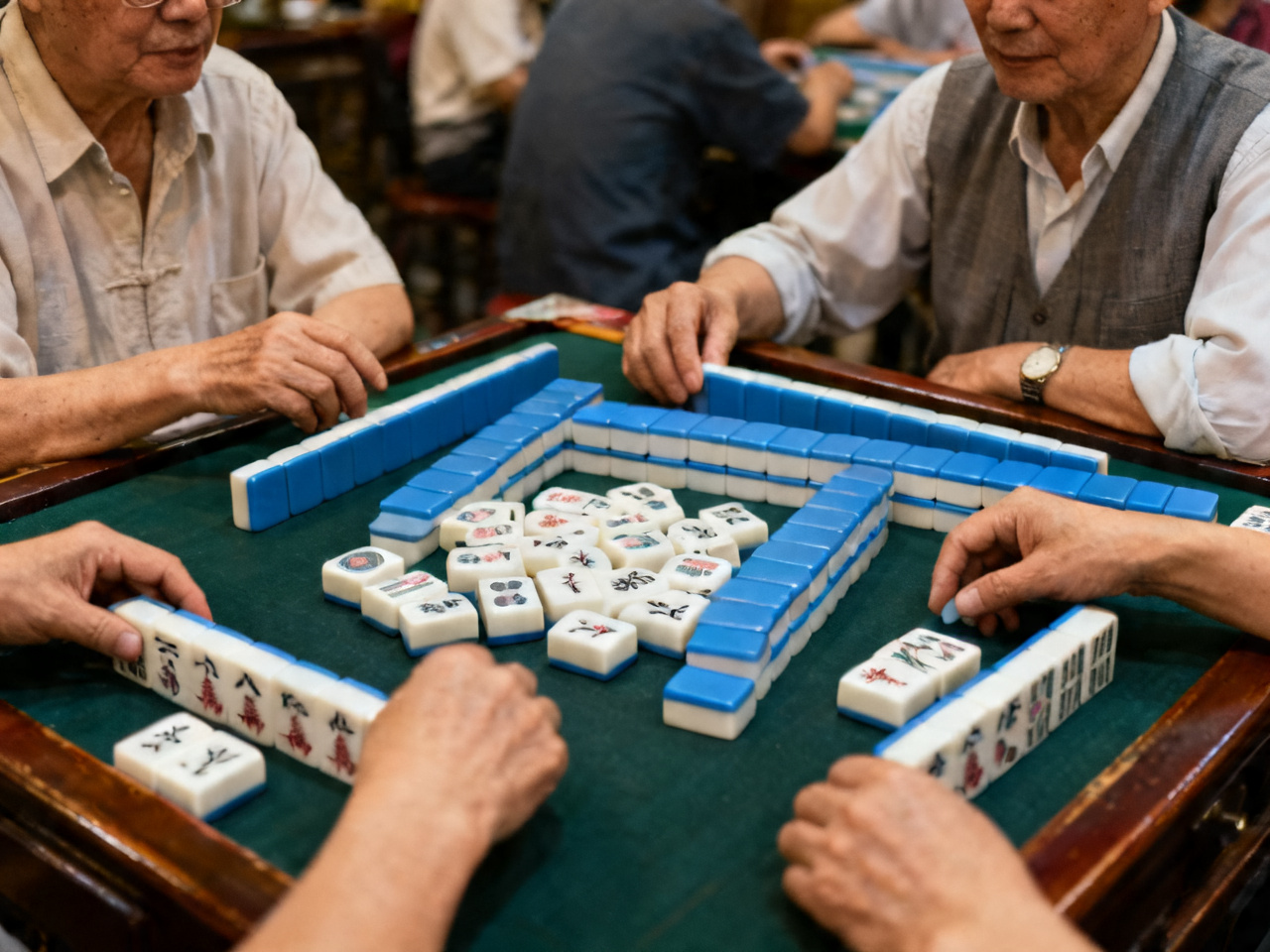
春节,你在中国朋友家做客。饭吃完了,碗还没收,桌子一推,四把椅子摆好,一副麻将哗啦啦倒在桌上。你朋友的妈妈说:"来,三缺一,教你打。"你还没来得及说"我不会",她已经开始给你码牌了。
Spring Festival, you're visiting a Chinese friend's home. Dinner is over, dishes still on the counter, the table is cleared, four chairs arranged. A set of mahjong tiles clatters onto the table. Your friend's mother says: "Come, we need a fourth — I'll teach you." Before you can say "I don't know how," she's already stacking your tiles.
两小时后,你输了三百块钱,但你学会了一件事:麻将不是游戏,麻将是中国人的社交操作系统。
Two hours later, you've lost 300 yuan, but you've learned one thing: mahjong is not a game. Mahjong is the social operating system of the Chinese people.
麻将到底是什么 / What Exactly Is Mahjong?
麻将是四个人玩的桌面游戏,用 144 张刻有图案的牌(各地规则不同,牌数也略有差异)。目标是通过摸牌、出牌,把手里的牌组成特定的组合——"胡牌"。
Mahjong is a four-player tabletop game using 144 tiles engraved with patterns (rules and tile counts vary by region). The goal is to draw and discard tiles until you form a winning combination — "hú pái."
听起来像扑克牌?表面上是。但麻将比扑克牌复杂得多——它同时考验运气、记忆力、概率计算和心理博弈。一个高手能记住所有已经打出的牌,推算出其他三家手里可能有什么牌,然后决定自己打哪张牌风险最小。
Sounds like poker? On the surface, yes. But mahjong is far more complex — it simultaneously tests luck, memory, probability calculation, and psychological warfare. An expert can memorize every tile that's been discarded, deduce what the other three players likely hold, and decide which tile to discard with the least risk.
基本牌型:
Basic tile types:
麻将牌分三大类:万(wàn,数字1-9配"万"字)、条(tiáo,竹子图案1-9)、筒(tǒng,圆饼图案1-9)。加上风牌(东南西北)和箭牌(中、发、白)。有些地方还有花牌(春夏秋冬、梅兰竹菊)。
Mahjong tiles fall into three main categories: Characters (wàn, numbers 1-9 with the character for "ten thousand"), Bamboo (tiáo, bamboo patterns 1-9), and Dots (tǒng, circle patterns 1-9). Plus Wind tiles (East, South, West, North) and Dragon tiles (Red, Green, White). Some regional variants add Flower tiles (Spring, Summer, Autumn, Winter, Plum, Orchid, Bamboo, Chrysanthemum).
胡牌的基本要求:14张牌,组成4组"面子"(三张一组的顺子或刻子)加1对"雀头"(两张相同的牌)。听起来简单,但变化有上千种。
Basic winning requirement: 14 tiles forming 4 "melds" (sets of three — either sequential runs or matching triplets) plus 1 "pair" (two identical tiles). Sounds simple, but there are thousands of variations.
中国各地麻将流派 / Regional Mahjong Styles Across China
麻将在中国没有"统一规则"。每个地方都有自己的打法,而且每个地方的人都坚信自己的打法才是正宗的。
There are no "unified rules" for mahjong in China. Every region has its own style, and people from every region firmly believe their style is the authentic one.
四川麻将(血战到底):四川人打麻将是全国出了名的。"血战到底"的意思是:一个人胡了不算结束,要继续打,直到只剩一个人没胡。这意味着每一局都要打完,没有"一个人赢了就收桌"的说法。四川麻将还有一个特点——没有"条"牌,只用万和筒,加上风牌箭牌,节奏更快。
Sichuan Mahjong (Blood Battle to the End): Sichuan people's mahjong obsession is nationally famous. "Blood battle to the end" means: when one person wins, the game doesn't stop — play continues until only one player hasn't won. Every round is played to completion, no "one winner and we're done." Sichuan mahjong has another feature — no Bamboo tiles, only Characters and Dots plus Winds and Dragons, making the pace faster.
成都的茶馆里,下午两点到晚上十一点,几乎每张桌子都在打麻将。成都人有句话:"人生苦短,及时打牌。"这不完全是玩笑。
In Chengdu's teahouses, from 2 PM to 11 PM, nearly every table has a mahjong game going. Chengdu people have a saying: "Life is short — play mahjong while you can." This is not entirely a joke.
广东麻将(推倒胡/鸡平胡):广东人打麻将讲究"食胡"——胡牌的方式越特殊,得分越高。"十三幺"(thirteen orphans,所有幺九牌加一对)是最高级别的胡牌,在广东麻将里能赢很多钱。广东人打麻将喜欢"打大"——赌注比北方高,但他们不叫赌博,叫"娱乐"。
Cantonese Mahjong: Cantonese players emphasize "eating the win" — the more special your winning combination, the higher the score. "Thirteen Orphans" (one of each terminal and honor tile plus one pair) is the highest-level win and can earn a lot of money. Cantonese players like to "play big" — stakes tend to be higher than in the north, but they don't call it gambling — they call it "entertainment."
北京麻将:规则相对简单,但有一个独特的概念——"混儿"(hùnr),即万能替代牌。北京麻将节奏较慢,因为北京人打麻将的主要目的不是赢钱,而是聊天。一局打四十分钟很正常,其中二十分钟在说话。
Beijing Mahjong: Rules are relatively simple, but with a unique concept — "hùnr," a wild card that can substitute for any tile. Beijing mahjong is slower-paced because Beijingers' main purpose isn't winning money — it's chatting. A round lasting forty minutes is normal, twenty of which are spent talking.
上海麻将:上海人打麻将最精细。上海麻将有"花牌"系统,摸到花牌额外加分。还有"百搭"(universal wild card)和复杂的算分体系。上海人打牌时话不多,眼神交流频繁——一个眼神就知道对面那个人在做什么牌。
Shanghai Mahjong: Shanghai players are the most meticulous. Shanghai mahjong features a "flower tile" bonus system — drawing flower tiles earns extra points. It also has "universal wild cards" and a complex scoring system. Shanghai players talk less during games but exchange frequent glances — one look and they know what the person across the table is building.
| 流派 | 特点 | 节奏 | 赌注 | 氛围 |
|---|---|---|---|---|
| 四川 | 血战到底,去条 | 极快 | 中等 | 热闹、吵 |
| 广东 | 番种多,算分复杂 | 快 | 较高 | 认真、专注 |
| 北京 | 有混儿,规则简单 | 慢 | 低 | 聊天为主 |
| 上海 | 花牌百搭,算分精细 | 中等 | 中等 | 安静、眼神多 |
| Style | Features | Pace | Stakes | Atmosphere |
|---|---|---|---|---|
| Sichuan | Blood battle, no Bamboo | Very fast | Medium | Lively, loud |
| Cantonese | Many bonus types, complex scoring | Fast | Higher | Serious, focused |
| Beijing | Wild cards, simple rules | Slow | Low | Chatting mostly |
| Shanghai | Flower tiles, wild cards, precise scoring | Medium | Medium | Quiet, lots of eye contact |
麻将桌上的社交密码 / Social Codes at the Mahjong Table
麻将不只是打牌。它是中国社交的微缩版——面子、关系、人情,全在牌桌上。
Mahjong is not just about playing tiles. It is a microcosm of Chinese social life — face, guanxi, renqing, all condensed onto the table.
故意放水:如果你和老板打麻将,你赢了三把,他一把没赢——你最好"不小心"打出一张让他胡的牌。这不是作弊,这是"给面子"。在中国商务文化里,麻将桌上的输赢有时候比会议室里的PPT更重要。
Deliberately losing: If you're playing mahjong with your boss and you've won three rounds while he hasn't won any — you'd better "accidentally" discard a tile that lets him win. This isn't cheating — this is "giving face." In Chinese business culture, wins and losses at the mahjong table sometimes matter more than PowerPoint presentations in the conference room.
打牌看人品:中国人有一句话——"牌品如人品"。你在牌桌上的行为反映你的性格。赢了得意忘形的人,被认为不靠谱。输了摔牌骂人的人,被认为脾气差。最受欢迎的牌友是那种:赢了请大家吃宵夜,输了笑着说"你们今天运气真好"的人。
Playing reveals character: Chinese people have a saying — "your mahjong manners reflect your character." Your behavior at the table mirrors your personality. Someone who gloats when winning is considered unreliable. Someone who slams tiles and curses when losing is considered bad-tempered. The most popular playing partners are those who treat everyone to late-night snacks when they win, and smile saying "you all had great luck today" when they lose.
麻将社交的潜规则:
Unwritten rules of mahjong socializing:
第一,被邀请打麻将是一种信任的信号。中国人不会随便邀请陌生人上桌——牌桌是"熟人圈"的社交空间。如果你被邀请了,说明你已经进入了对方的社交圈。
First, being invited to play mahjong is a signal of trust. Chinese people don't casually invite strangers to the table — the mahjong table is a social space for the "inner circle." If you're invited, it means you've entered their social circle.
第二,输赢的钱不要太在意。在大多数家庭麻将中,一晚上输赢不超过几百块钱。这笔钱的真正意义不是"赌资",而是"趣味成本"——有了输赢,打牌才有动力。如果你坚持"我不玩钱的",反而会让气氛变得尴尬。
Second, don't take the money too seriously. In most family mahjong games, a night's wins or losses don't exceed a few hundred yuan. The real meaning of this money isn't "gambling stakes" but "entertainment cost" — having something at stake keeps the game exciting. If you insist "I don't play for money," it actually makes things awkward.
第三,零食和茶水是标配。麻将桌上一定有瓜子、花生、水果和茶。打牌的间隙嗑瓜子聊天,是麻将社交的重要组成部分。有些地方(特别是四川)还会叫外卖,边打边吃火锅——这是一种终极享受。
Third, snacks and tea are standard. The mahjong table always has sunflower seeds, peanuts, fruit, and tea. Cracking seeds and chatting between rounds is an essential part of mahjong socializing. In some places (especially Sichuan), people even order delivery and eat hotpot while playing — this is the ultimate indulgence.
自动麻将机:中国家庭的"第二台电视" / Automatic Mahjong Tables: The Chinese Home's "Second TV"
2010年代以后,自动麻将机开始普及。这台机器价格从两千到两万元不等,核心功能是:按一个按钮,所有牌自动洗好、码好,从桌面中间升上来。省去了手动洗牌码牌的时间(大约五分钟),让打牌效率大幅提升。
Since the 2010s, automatic mahjong tables have become widespread. These machines range from 2,000 to 20,000 yuan, and their core function is: press a button, and all tiles are automatically shuffled, stacked, and raised from the center of the table. This eliminates the five minutes of manual shuffling and stacking, dramatically improving playing efficiency.
在很多中国家庭,自动麻将机的地位仅次于电视机。装修新房时,专门留一个"棋牌室"放麻将机已经是标准操作。有些高端麻将机还带USB充电口、杯托、加热功能——冬天打牌手不冷。
In many Chinese households, the automatic mahjong table ranks second only to the television. When renovating a new home, dedicating a "game room" for the mahjong table is standard practice. Some high-end models even include USB charging ports, cup holders, and heating functions — so your hands don't get cold playing in winter.
旅行者的麻将体验指南 / Mahjong Experience Guide for Travelers
在哪里能体验:
Where to experience it:
| 地点 | 方式 | 费用 | 适合人群 |
|---|---|---|---|
| 成都茶馆 | 自行组队或旁观 | 茶位¥20-50,牌资自定 | 想体验最地道的麻将氛围 |
| 北京胡同棋牌室 | 棋牌室提供牌桌和教学 | ¥30-80/小时 | 零基础想学的游客 |
| 朋友家 | 被邀请参加家庭麻将 | 免费(但你可能会输钱) | 有中国朋友的旅行者 |
| 手机APP | "欢乐麻将"等App | 免费 | 想先学规则再实战 |
| Location | Format | Cost | Best For |
|---|---|---|---|
| Chengdu teahouses | Join a group or observe | Tea seat ¥20-50, stakes flexible | Experiencing the most authentic atmosphere |
| Beijing hutong game rooms | Rooms provide tables and teaching | ¥30-80/hour | Zero-experience tourists wanting to learn |
| A friend's home | Invited to family mahjong | Free (but you might lose money) | Travelers with Chinese friends |
| Mobile apps | "Happy Mahjong" etc. | Free | Learning rules before playing in person |
给外国玩家的建议:
Tips for foreign players:
-
先学会认牌。万、条、筒长得很不一样,但对新手来说容易混淆。花十分钟记住它们,你就赢了一半。
-
不要怕慢。新手打牌慢是正常的,中国人对教新人打牌有极大的耐心——特别是对外国人,他们会很热情地教你。
-
带现金。麻将一般用现金结算。准备几百块零钱。
-
学几句麻将术语:碰(pèng,三张一样)、吃(chī,三张顺子)、杠(gàng,四张一样)、胡了(hú le,我赢了)。喊出这些词的时候要干脆利落,这是牌桌礼仪。
-
Learn to recognize the tiles first. Characters, Bamboo, and Dots look quite different, but beginners often confuse them. Spend ten minutes memorizing them and you're halfway there.
-
Don't be afraid to play slowly. It's normal for beginners to take their time. Chinese people have enormous patience for teaching new players — especially foreigners, whom they'll teach with great enthusiasm.
-
Bring cash. Mahjong is usually settled in cash. Have a few hundred yuan in small bills ready.
-
Learn a few mahjong terms: Pèng (three matching tiles), chī (three sequential tiles), gàng (four matching tiles), hú le (I win). Say these words crisply and decisively — that's table etiquette.
麻将的哲学 / The Philosophy of Mahjong
中国人喜欢说"人生如牌"——发到什么牌是命,怎么打是技术。
Chinese people like to say "life is like mahjong" — the tiles you're dealt are fate, how you play them is skill.
这话有一层更深的意思:麻将是一个不完全信息博弈。你永远不知道其他三个人手里有什么牌,你只能通过他们打出的牌来推测。这和真实生活一模一样——你永远不可能掌握全部信息,你只能根据已知条件做出最优决策。
This saying has a deeper layer: mahjong is a game of incomplete information. You never know what tiles the other three players hold — you can only deduce from what they discard. This is exactly like real life — you can never have complete information, you can only make the best decision based on what you know.
还有一句话:"牌运三分,牌技七分。"好牌打烂了是蠢,烂牌打好了是本事。中国人欣赏的不是运气好的人,而是逆风翻盘的人。
There's another saying: "Thirty percent luck, seventy percent skill." Ruining a good hand is foolish; making the most of a bad hand is talent. Chinese people don't admire those who are lucky — they admire those who turn the tide against all odds.
下次有人邀请你打麻将,别拒绝。你可能会输几百块钱,但你会赢得一个理解中国人的新视角——和四个新朋友。
Next time someone invites you to play mahjong, don't refuse. You might lose a few hundred yuan, but you'll gain a new perspective on understanding the Chinese people — and four new friends.
延伸阅读 / Related Reads
- 和爸爸在周庄躲雨的半天,我第一次发现他其实比我更会旅行 | A Rainy Half Day in Zhouzhuang with My Father Showed Me He Was Better at Traveling Than I Was
- 十个值得你慢下来的中国古镇 | Ten Chinese Ancient Towns Worth Slowing Down For
- 保持联网:中国SIM卡与WiFi指南 | Staying Connected: China SIM Cards and WiFi
- 国庆出行避坑指南 | National Day Travel Tips: Avoiding the Crowds
- 和妈妈在福州三坊七巷躲五月阵雨时,我们终于把很多不好意思问出口的话说出来了 | Sheltering from a May Shower in Fuzhou, My Mother and I Finally Said Things We Had Long Left Unspoken
- 中国高铁乘车全攻略(境外游客版) | Complete HSR Guide for Foreign Tourists
- 开元路那盏旧灯亮起来时,我才走进厦门的夜里 | I Entered Xiamen’s Night When That Old Lamp Lit Up on Kaiyuan Road
- 中国街头小吃十选:从北到南,一路吃过去 | Ten Chinese Street Snacks: Eating Your Way from North to South
- 一个普通工作日的公交站,让我学会了中国排队不是只看队形 | On an Ordinary Weekday Bus Stop, I Learned That Queueing in China Is Not Just About the Shape of the Line
- 哈尔滨冬天的第一口热汤,救了我冻僵的旅行计划 | The First Bowl of Hot Soup in Harbin Saved My Frozen Travel Plan
Comments (0)