
苏州夜里最会骗人的,不是方向,而是那种“看着很轻松”的安静 | What Misleads Most at Night in Suzhou Is Not Direction but the Quiet Ease It Seems to Promise
夜里的苏州不是更危险,而是更容易让人误判“安静就等于简单” | Suzhou at Night Is Not Necessarily More Dangerous, but It More Easily Makes People Mistake Quiet for Simplicity
很多第一次来中国的人,白天走苏州会觉得很轻:桥不高,路不宽,河也不急,整座城像是很懂得把声音压低。可到了晚上,这种轻和安静反而容易制造一种误判——以为路线天然就简单,以为只要跟着水边走就不会出问题。苏州夜里最该提醒人的,并不是“别出门”,而是别把安静误读成没有结构。水巷、小桥、转角和较暗的巷口,一到夜里都会把方向感变得比白天更依赖判断。
Many first-time visitors to China find Suzhou light during the day: the bridges are low, the lanes are narrow, the water is calm, and the whole city seems to know how to keep its voice down. At night, however, that same lightness and quietness can create a misleading impression—that the route must therefore be simple, and that following the canal automatically guarantees an easy line. What deserves emphasis at night is not don’t go out, but do not confuse quiet with a lack of structure. Waterside lanes, little bridges, turns, and dimmer corners all make orientation depend more strongly on judgment than they do in daylight.
对 TravelCN 来说,这种题材特别适合慢线报道体。因为夜里的苏州不需要被写得惊悚,也不该被写得空泛。真正有价值的是告诉读者:怎样在不破坏这座城温柔气质的前提下,仍然保留路线意识。换句话说,这不是一篇“夜里不要去”的文章,而是一篇“夜里该怎么走才不把轻误读成松”的文章。
For TravelCN, this kind of subject is especially suitable for a slow-route reported format. Suzhou at night does not need to be made frightening, but it should not be written vaguely either. The useful layer is to show readers how to preserve route awareness without damaging the city’s gentleness. In other words, this is not an article saying do not go out at night. It is an article about how to walk at night without mistaking lightness for looseness.
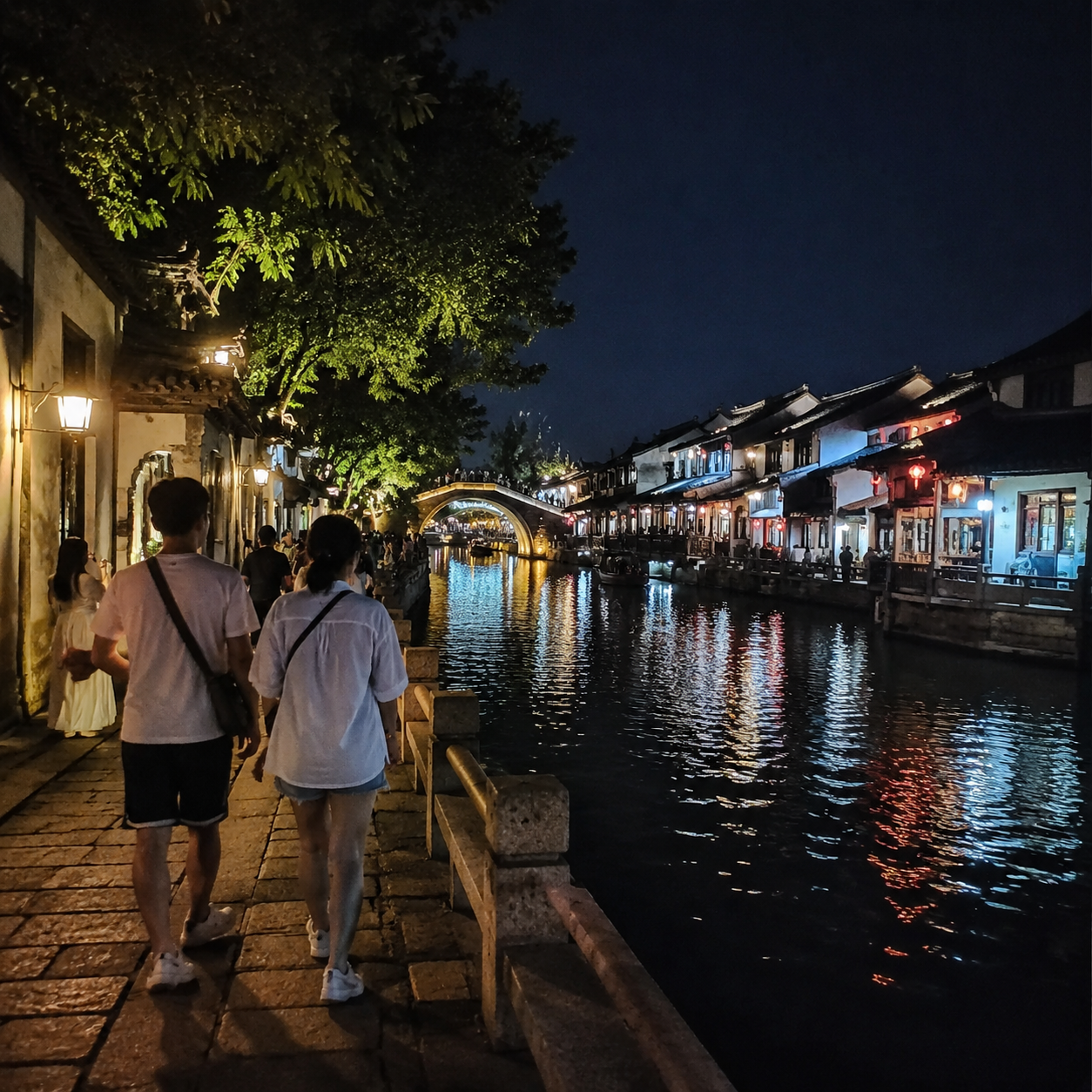
夜里的苏州,最先该读的不是景,而是边界 / In Suzhou at Night, the First Thing to Read Is Not the View, but the Boundary
白天你看苏州,先看到的是水和墙;晚上你看苏州,最先该注意的反而是边界。哪一段有灯,哪一段灯更稀,哪一座桥过去以后人流会明显变少,哪一处沿河看着很漂亮但其实不适合一个人继续深入太远。很多人白天已经把城市走得很顺,到了晚上会本能地觉得“我已经熟悉这里了”,可夜里的小城经常不是靠熟悉感走稳,而是靠重新确认边界走稳。
In daylight, Suzhou first presents water and walls. At night, what should be noticed first is boundary. Which segment has reliable lighting, where the lamps thin out, after which bridge the pedestrian flow suddenly falls, and which beautiful canal stretch should not be pursued too far alone. Many people move smoothly through the city by day and then instinctively feel that they already know the place by evening. But a smaller city at night is rarely stabilized by familiarity alone. It is stabilized by confirming boundaries again.
真正好的夜线,不是走得最远,而是停得最对 / A Good Night Route Is Not the One That Goes Furthest, but the One That Stops in the Right Place
苏州夜里很容易让人贪。因为安静、水声和灯影会让你觉得,前面再多走一点应该也没关系。可真正稳的夜线,往往不是靠多走,而是靠会停。什么时候该回到更亮一点的主线,什么时候该让一杯热的东西或一顿安静的饭把路线收住,什么时候只看这一小段河面的反光就够了——这些判断会直接决定你带走的是夜色的余韵,还是无意义的绕路疲惫。
At night Suzhou easily tempts the traveler into excess. Quietness, water sound, and reflected light create the feeling that a little more walking should always still be fine. But a stable night route is usually built not through distance, but through stopping well. When should one return to a brighter main line? When should a hot drink or one quiet meal close the route properly? When is one stretch of reflected canal already enough? These judgments decide whether the traveler leaves with aftertaste or with pointless fatigue from wandering.

夜里的苏州真正教人的,是“轻并不等于散” / What Suzhou at Night Ultimately Teaches Is That Lightness Does Not Mean Diffusion
苏州白天会教你眼睛慢下来,夜里则会教你把这种慢继续收住。真正成熟的进入法,不是白天懂得看细节,晚上就完全交给感觉,而是白天学会的细节判断到了夜里还继续工作:看灯、看桥、看人、看哪里还在持续说话,哪里已经开始只剩你自己。只要这条判断线还在,苏州夜里就不会只是温柔,它还会很稳。
By day, Suzhou teaches the eye to slow down. By night, it teaches that same slowness to hold its shape. A mature method of entry does not mean noticing detail by day and then surrendering entirely to feeling at night. It means that the same detail judgment continues to work after dark: reading the lights, the bridges, the people, and which parts of the city are still speaking through movement while others have fallen into near-solitude. As long as that line of judgment remains active, Suzhou at night is not only gentle. It is also stable.
真正好的夜路判断,常常是“现在回去刚刚好” / The Best Night Judgment Is Often the Sense That This Is Exactly the Right Moment to Turn Back
很多人把“再多走一点”当成旅行的诚意,可在苏州夜里,真正成熟的诚意有时恰恰是懂得什么时候回去。不是因为怕,而是因为这座城最值钱的夜色往往刚刚够。你在最好的反光、最好的风和最好的安静里停住,反而比一直追下一座桥更完整。对第一次来中国的人来说,这种“刚刚好”的判断,会比多走一公里更难得,也更值得带走。
Many travelers treat one more stretch of walking as proof of commitment. In Suzhou at night, however, the most mature form of commitment is sometimes knowing exactly when to head back. Not out of fear, but because the city’s most valuable night beauty is often already sufficient. If the traveler stops at the best reflection, the right breeze, and the right degree of quiet, the route may feel more complete than if it kept chasing one more bridge. For a first-time visitor to China, this judgment of enough is often more valuable than another kilometer.

真正稳的夜线,总会留一段“回头路” / A Stable Night Route Always Leaves One Deliberate Return Segment
很多游客会把回头路理解成浪费,可在苏州夜里,回头有时反而是路线成立的一部分。你白天经过的一座桥,夜里再从另一侧看,会完全变成另一段经验;你傍晚走过的一条河边线,回程时因为灯和人都变了,也会像重新被读一遍。苏州夜里不是越新越好,常常是越熟一点,越容易走稳。
Many travelers treat retracing one’s steps as wasted motion. In Suzhou at night, however, the return path is often part of what makes the route work. A bridge crossed in daylight becomes another experience when seen from the other side after dark. A canal-side line walked at dusk may feel newly read on the way back because the light and people have changed. In Suzhou at night, newer is not always better. Familiarity, when used lightly, often produces steadiness.
夜线最后要留住的,不只是风景,还要留住第二天的体力 / A Night Route Must Preserve Not Only the View, but Also the Next Day’s Energy
夜里的苏州如果走得太贪,最容易损失的不是这一晚,而是第二天。你当晚也许多看了一座桥、多追了一条巷,可第二天早上的眼睛和脚步都会慢很多。真正成熟的判断,是愿意让夜色在还最完整的时候结束,而不是一直追到身体先散掉。这样一来,城市会在第二天继续成立,而不是只剩昨晚的照片。
If one becomes too greedy in Suzhou at night, what is most easily lost is not the night itself, but the next day. A traveler may squeeze in one more bridge and one more lane, yet the eye and the legs will move more heavily the next morning. The mature judgment is to let the night end while it is still whole, rather than chasing it until the body falls apart first. That way, the city continues to work the next day instead of surviving only in photographs.
- 酒店前台帮我确认订单时,我学会别只依赖邮箱 | At a Hotel Front Desk, I Learned Not to Rely Only on Email
- 在中国使用手机支付的每日避坑清单 | Daily Mobile Payment Tips in China
- 在中国穷游要花多少钱?每日预算全拆解 | How Much Does It Cost to Travel China on a Budget?
- 皮蛋:一颗被误解的中国蛋 | Century Egg: China's Most Misunderstood Delicacy
- 汉服:传统中国服饰 | Hanfu: Traditional Chinese Clothing
- 我在中国早餐摊第一次学会热包子要先撕口放气 | The First Time at a Chinese Breakfast Stall, I Learned to Tear Open a Hot Baozi First to Let the Steam Out
- 在成都看川剧,不踩坑的门道都在这 | How to Watch Sichuan Opera in Chengdu Without Tourist Traps
- 花椒烫过舌尖之后,你才算见过川菜 | Sichuan Cuisine Begins Where the Pepper Numbs You
- 中国节假日全解:春节、黄金周与调休制度 | Chinese Holidays Explained: Spring Festival, Golden Week & the Adjusted Schedule System
- 腾冲:火山热海之间的边地温度 | Tengchong: A Borderland Journey Between Volcanoes and Hot Springs
Comments (0)