
在成都公园里,孩子跟下棋爷爷聊了二十分钟 | My Child Spent Twenty Minutes Talking with Elder Chess Players in a Chengdu Park
在成都公园里,孩子跟下棋爷爷聊了二十分钟 | My Child Spent Twenty Minutes Talking with Elder Chess Players in a Chengdu Park
成都的上午不着急。我们到人民公园的时候,阳光还没完全热起来,树叶上有一层很轻的亮,湖边有人散步,也有人提着刚买的早餐慢悠悠往里走。女儿穿着一条浅黄色裙子,头发扎得松松的,一进公园就被路边下棋的一群老爷爷吸引住了。她原本只是远远看着,后来越站越近,最后干脆蹲在旁边,不肯走了。
Mornings in Chengdu do not rush. When we arrived at People’s Park, the sunlight was still mild, the leaves held a soft shine, and people were drifting in with fresh breakfast in hand. My daughter wore a pale yellow dress and a loosely tied ponytail. The moment we entered the park, she was drawn to a group of elderly men playing Chinese chess by the path. At first she watched from far away. Then she moved closer and closer until she was squatting right next to them, unwilling to leave.
棋盘边的木凳有些旧,边角被摸得发亮。一位戴草帽的爷爷正把棋子“啪”地一声落下,周围立刻有人笑起来。女儿听不懂他们刚才说的成都话,却能从表情里判断出,这一步棋很厉害。她忍不住回头问我:“妈妈,这个怎么走?”我还没说话,那位草帽爷爷先笑了:“小朋友,你会不会下象棋?”
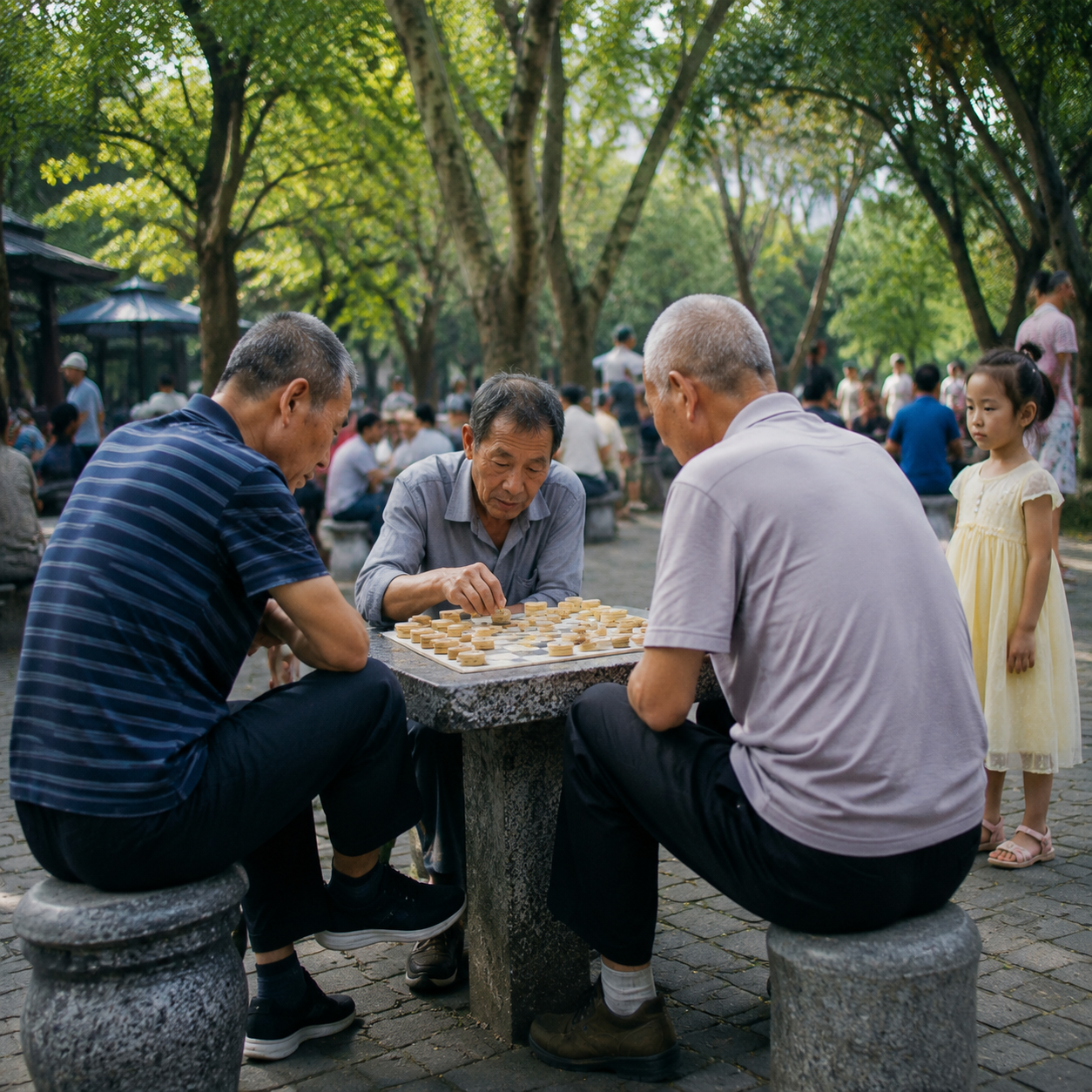
The wooden stools beside the board were old and polished smooth at the edges. One grandfather in a straw hat dropped a piece with a sharp clap, and the people around him burst into laughter. My daughter could not understand the Chengdu dialect they had just spoken, but from their faces she knew the move must have been a good one. She turned to me and whispered, “Mom, how does this move?” Before I could answer, the man in the straw hat smiled and asked, “Little one, do you know how to play?”
她摇头,却很诚实:“我不会,但是我想学。”这句话一出来,整个气氛都松了。爷爷把一枚车放到她手里,告诉她“车走直路”;旁边另一位爷爷接着说“马走日”;还有人补一句“炮要隔山打”。原本只是一个普通的围观场景,突然就变成了一节露天的小课堂。更难得的是,没有人嫌她问题多,也没有人用大人逗小孩的口气敷衍她。大家是真的把她当成一个认真参与的人。
She shook her head and answered honestly, “I can’t, but I want to learn.” The moment she said that, the whole mood softened. One grandfather placed a rook in her hand and explained that it moved in straight lines. Another added that the horse moved in an L shape. A third man explained how the cannon attacked across a piece. What had been simple park-side spectating turned into an open-air lesson. More importantly, no one treated her questions as a nuisance, and no one brushed her off in that fake adult way of talking to children. They treated her like a real participant.
接下来的二十分钟里,女儿一直在学着跟他们对话。她问:“为什么这个不能走?”爷爷们就慢慢解释;她又问:“那我是不是可以吃掉这个?”大家便一起笑,说她胆子挺大。我坐在一边看着,心里很受触动。很多父母担心带孩子旅行时,孩子会无聊、会乱跑、会只想着买零食。可中国公园最珍贵的地方,恰恰就是这种自然发生的交流:一个孩子因为好奇停下来,一群陌生长辈因为愿意解释而打开话题,知识就在闲聊里慢慢传过去。

For the next twenty minutes, my daughter kept practicing conversation with them. “Why can’t this one move?” she asked, and they explained patiently. “Then can I capture this one?” she asked next, and everyone laughed, saying she was bold. I sat nearby and felt unexpectedly moved. Parents often worry that children will get bored while traveling, run around too much, or think only about snacks. But one of the most valuable things about Chinese parks is exactly this kind of spontaneous exchange: a child pauses out of curiosity, a group of older strangers opens a conversation because they are willing to explain, and knowledge passes quietly through casual talk.
后来我们去喝盖碗茶。她一边学着掀茶盖,一边还在念“车走直路,马走日”。她没有因为刚学会几条规则就变成高手,可她明显开始明白,旅行不是只能“看”,还可以“问”,还可以“坐下来聊”。吃午饭时,她甚至主动跟服务员说:“我想要一碗不辣的面,可以吗?”这句话放在平时也许不算什么,可在陌生城市里,它意味着她把刚才在公园里建立起来的自信,继续带进了别的场景。
Later we sat down for tea. As she learned how to lift the lid of a covered bowl, she was still murmuring, “The rook goes straight, the horse goes in an L.” She had not become an expert after learning a few rules, of course. But she had clearly begun to understand that travel is not only for looking. It is also for asking, for sitting down, and for talking. At lunch she even told the server, “I’d like a bowl of noodles without spice, please.” In ordinary life that sentence might seem small. In a strange city, it meant that she was carrying the confidence built in the park into another situation.
成都很适合带孩子,不只是因为吃的多、节奏慢,也因为这里有一种很松弛的学习氛围。大人不急着赶,小孩就更容易停下来观察;陌生人不急着结束对话,孩子就更愿意继续开口。这样的地方会让小朋友觉得,交流不是考试,而是一件好玩又正常的事。中国很多城市都有这种公共生活的温度,但成都尤其明显,因为它允许人慢一点,也允许孩子在慢里面长出耐心。

Chengdu is wonderful for traveling with children not only because the food is abundant and the pace is easy, but because the city holds such a relaxed atmosphere for learning. When adults are not rushing, children have more room to observe. When strangers are not eager to end a conversation, children are more willing to keep speaking. Places like this help children feel that communication is not a test. It is something natural and enjoyable. Many Chinese cities carry this warmth in public life, but Chengdu shows it especially clearly because it allows people to slow down, and it allows children to grow patience inside that slowness.
临走前,女儿认真跟那位草帽爷爷挥手,说:“谢谢您教我下棋。”爷爷把草帽往后推了一点,笑着回她:“以后再来成都,我们接着学。”那句“接着学”让我记了很久。亲子旅行最好的样子,也许不是孩子一天记住多少知识点,而是他在某个城市里,第一次发现原来陌生人也可以成为老师,原来学习可以发生在树荫下、棋盘边、笑声里。
Before we left, my daughter waved seriously to the grandfather in the straw hat and said, “Thank you for teaching me chess.” He pushed his hat back slightly and smiled. “Come back to Chengdu another time. We’ll keep learning.” I remembered that sentence for a long time. Perhaps the best form of family travel is not how many facts a child memorizes in one day. It is the moment a child discovers that strangers can also become teachers, and that learning can happen under tree shade, beside a chessboard, inside shared laughter.
如果带孩子来成都,我很建议别把时间排得太满。公园、社区书店、老茶馆、博物馆互动区,这些地方看起来不一定最“打卡”,却最适合孩子练习交流。你甚至可以故意给孩子留一个观察任务:听听别人是怎么说话的,看看人家是怎么耐心解释的,再试着自己问一句“我能看看吗?”旅行里,这样的问题越多,孩子带走的东西往往越深。
If you bring a child to Chengdu, I strongly suggest not packing the schedule too tightly. Parks, neighborhood bookstores, teahouses, and museum activity corners may not look like the most famous check-in spots, but they are often the best places for children to practice communication. You can even give your child one small task: listen to how people speak, notice how patiently they explain things, and then try asking, “May I take a look?” On a trip, the more questions a child dares to ask, the deeper the memories they usually carry home.
- 英歌舞:潮汕街头的战鼓与脸谱 | Yingge Dance: War Drums and Painted Faces on Chaoshan Streets
- 五月黄山脚下的一场雨,让本人第一次明白赶景点不如先安顿情绪 | A Rainy May Day at the Foot of Huangshan Taught Me to Settle My Mood Before Chasing Views
- 深夜便利店里那几分钟,让我第一次觉得自己也进入了中国城市的夜班节奏 | A Few Minutes in a Late-Night Convenience Store Made Me Feel I Had Entered the Night Rhythm of a Chinese City
- 广州雨后那条骑楼街,让我重新理解城市散步 | A Rain-Washed Arcade Street in Guangzhou Changed How I Understand City Walks
- 元旦跨年旅游目的地盘点 | New Year's Eve Travel Destinations Roundup
- 八月节庆旅游:赶上最热闹的庙会 | August Festival Travel: Catch the Liveliest Temple Fairs
- 中国的户籍制度到底是怎么回事? | What Exactly Is China's Hukou System?
- 中国医疗就诊指南:看病买药与保险 | Medical Care in China: Hospitals, Pharmacies & Insurance
- 北京周边3日精华短线 | 3-Day Quick Getaway Around Beijing
- 广州最厉害的地方,是你很难说清自己到底是在逛街,还是已经坐进了一顿饭里 | Guangzhou’s Gift Is That You Can Hardly Tell Whether You Are Walking the City or Already Sitting Inside a Meal
Comments (0)