
广州最厉害的地方,是你很难说清自己到底是在逛街,还是已经坐进了一顿饭里 | Guangzhou’s Gift Is That You Can Hardly Tell Whether You Are Walking the City or Already Sitting Inside a Meal
广州真正厉害的不是把吃和城并排摆出来,而是让两者根本分不开 | Guangzhou’s Real Power Lies Not in Placing Food Beside the City, but in Making the Two Impossible to Separate
很多城市的旅行文章都能轻松分成两半:白天看什么,晚上吃什么;景点一栏,美食一栏。广州最大的不一样,就是这种分法在这里很快会失效。你越往街里走,越会发现食物并不是路线旁边的补充说明,而是路线本身的一部分。骑楼下的人怎么停,市场边的气味怎么扩,茶楼里的人声怎么把早上按慢,夜宵档口又怎样把一天收住——这些不是“饭点细节”,它们本身就是广州的城市句法。
Many travel articles about cities can easily be divided into two halves: what to see by day and what to eat by night, one section for attractions and another for food. Guangzhou’s biggest difference is that this division quickly stops working. The deeper one goes into the streets, the clearer it becomes that food is not an annotation beside the route. It is one of the route’s central materials. The way people pause under arcade streets, the way smells expand near markets, the way teahouse voices slow the morning, and the way late-night stalls gather the day back in—these are not just dining details. They are part of Guangzhou’s urban grammar.
国外博主如果只是把广州拍成“什么都很好吃”的地方,其实只抓到了最浅的一层。真正让一座城站得住的,不是好吃本身,而是这些吃法怎样改变人对空间的理解。你坐下来以后,街就变了;你站在店门口边吃边看,人流也变了;你等一碗汤、一屉点心,时间感都会跟着变。广州的强处,正是在于它让吃和走互相改造,而不是互相排队。
If foreign creators film Guangzhou simply as a place where everything tastes good, then they have caught only the shallowest layer. What makes a city stand firmly is not good food by itself, but how those eating habits reshape the traveler’s understanding of space. The street changes once one sits down. Crowd movement changes once one stands at a doorway eating and watching. Even the sense of time changes when one waits for a bowl of soup or a basket of dim sum. Guangzhou is powerful because eating and walking keep modifying one another instead of waiting politely in sequence.
一座城市什么时候会从“可吃”变成“可读” / When a City Stops Being Merely Edible and Becomes Readable
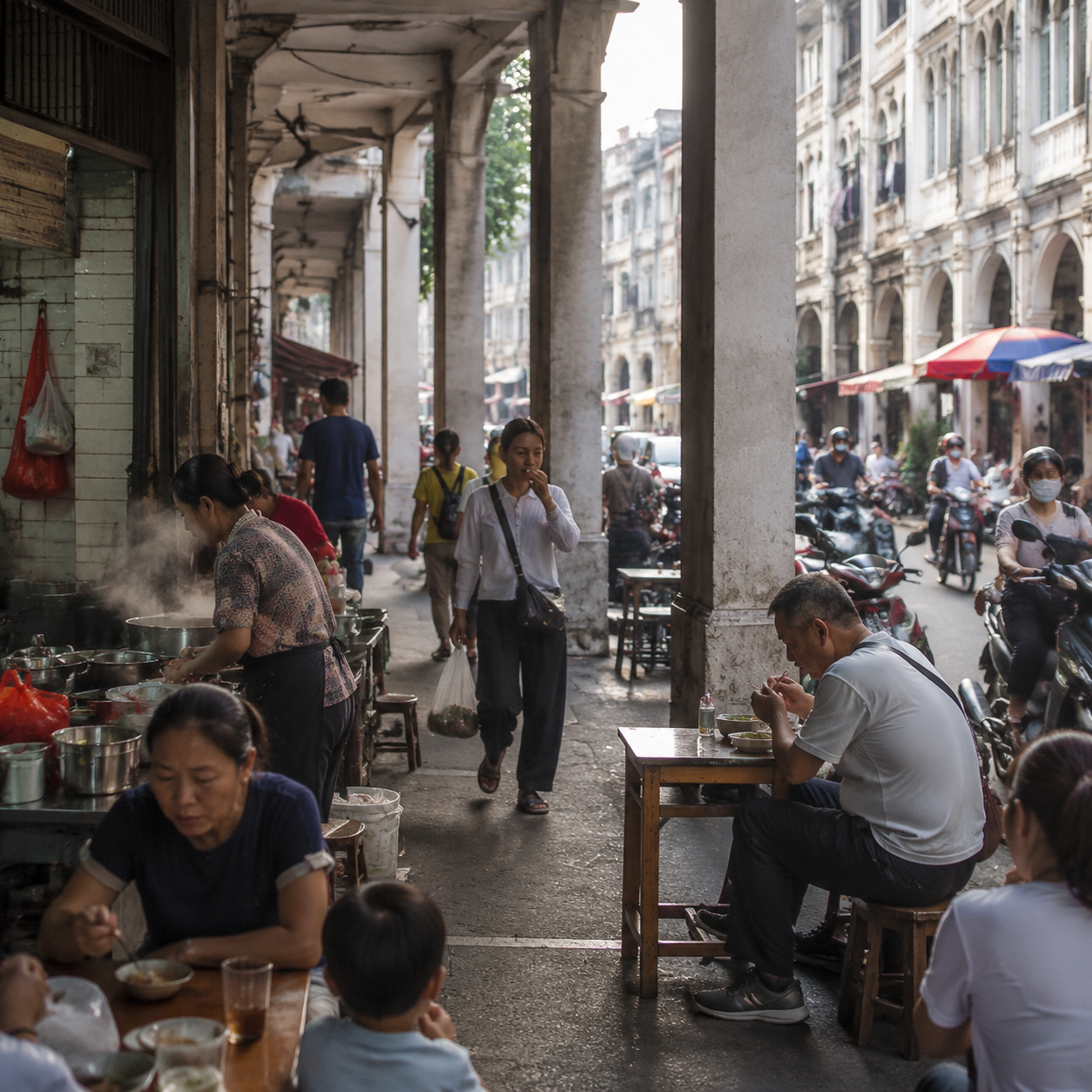
广州真正有意思的地方,是它不会让你只记住味道。味道当然会留在记忆里,但更深一点的东西,是你最后会连同味道一起记住街道、天气、湿度、桌面、噪音和行人速度。也就是说,你不是在孤立地记住一顿饭,而是在记住一段城市条件下完成的饭。国外博主如果把这种联动拍出来,TravelCN 最该做的,就不是再多堆几种菜名,而是把“城市如何通过吃变得可读”写清楚。
What makes Guangzhou interesting is that it does not allow taste to remain isolated. Flavor certainly stays in memory, but what settles even deeper is that one remembers flavor together with the street, the weather, the humidity, the tabletop, the noise, and the speed of passersby. That means the traveler is not remembering a meal in isolation. They are remembering a meal completed under a specific urban condition. If foreign creators capture this linkage, TravelCN’s job is not to add longer lists of dishes. It is to explain how a city becomes readable through eating.
这种可读性,对第一次来中国的人特别重要。因为很多人一开始面对陌生城市时,最怕自己看不懂密度、看不懂秩序、看不懂人为什么在这里停或为什么在那里挤。广州反而会通过一顿饭、一家茶楼、一处骑楼转角,先把这些问题变得没那么可怕。你先跟着桌子上的节奏走,后面才会慢慢跟得上街上的节奏。
This readability matters especially for first-time visitors to China. Many newcomers are most afraid of failing to read density, failing to read order, and failing to understand why people stop in one place or bunch up in another. Guangzhou often softens these fears through one meal, one teahouse, or one turn beneath an arcade. One first learns the rhythm at the table, and only afterward becomes able to follow the rhythm of the street.
广州的路线价值,常常不是“高潮”,而是“不断接上” / Guangzhou’s Route Value Often Lies Not in a Single Peak, but in Constant Reconnection
很多城市会给你一个明显高潮:最好的夜景、最响的地标、最需要拍照的位置。广州不完全这么运作。它真正厉害的,是把一段接一段自然接上。吃完不会断,走完也不会空,白天的街会在晚上继续有回声,早上的茶会把中午的人流预告出来。对旅行者来说,这意味着广州并不要求你不停寻找“下一处更值得的东西”,它更像是在说:只要你肯继续往前,这条线自己会长。

Many cities offer one obvious peak: the best skyline, the loudest landmark, or the most photographable point. Guangzhou does not work entirely that way. Its real strength is the natural reconnection of one segment to the next. The route does not break after a meal, nor does it go empty after a walk. Streets from the daytime echo again at night, and the morning tea atmosphere quietly predicts the noon crowd to come. For the traveler, that means Guangzhou does not require constant searching for the next more worthy stop. It says something else instead: if you keep moving with patience, the line will keep extending itself.
这正是为什么广州特别适合被写成复盘体。复盘一座城市,最重要的不是把最好吃的和最好看的分别列出来,而是回头看:是什么让一整天没有散掉。广州的答案往往不是某个单点,而是连续的小连接。正因为它们都不算夸张,才更容易被低估;也正因为它们一直存在,路线才更容易成立。
That is exactly why Guangzhou is especially suited to a retrospective format. When reviewing a city, the most important task is not to list separately what tasted best and what looked best. It is to look back and ask what prevented the day from falling apart. In Guangzhou, the answer is rarely one single point. It is more often a chain of small reconnections. Because they are not dramatic, they are easy to underestimate. Because they are constant, they are what make the route hold together.
最后留下来的,往往不是“我吃过什么”,而是“我懂了这座城怎么运转一点点” / What Often Remains in the End Is Not Only What One Ate, but the Feeling of Understanding a Little More of How the City Works
很多旅行经验最后都会变成一串项目名,可广州更容易留下另一种记忆:我明白一点它怎么动了。我知道什么时候该先坐下,什么时候该先走到下一条街;我知道什么时候不该急着找最红的一口,而该先看这一段街自己怎么组织人;我知道有些城市要先看大景,而广州要先看普通位置怎样一层层把人接住。等这种理解慢慢长出来以后,你对广州的好感,就不再只是味觉反应,而会变成一种更稳定的信任。
Many travel experiences eventually collapse into a list of items. Guangzhou more often leaves behind another kind of memory: I understand a little more of how it moves. I know when to sit first and when to continue to the next street. I know when not to search immediately for the most famous bite, but to watch first how the street organizes people on its own. I know that some cities must be entered through grand views, while Guangzhou asks to be entered through the ordinary places that keep receiving the traveler layer after layer. Once that understanding grows, affection for Guangzhou stops being only a matter of taste and becomes a steadier form of trust.

真正适合复盘的,不是“哪一口最强”,而是“哪一次停顿最对” / What Best Suits Retrospective Writing Is Not Which Bite Was Greatest, but Which Pause Was Most Correct
如果把广州写成一篇复盘,最值得回头看的,往往不是哪家店最有名,而是一天里哪一次坐下最关键。也许是一顿早茶把上午压稳,也许是一碗热汤把午后的烦躁拉了下来,也许是一份夜宵让前面那些街、灯和人流忽然全部接上。对普通读者来说,这种“正确停顿”的判断比一百家店铺名更有价值,因为它决定的不是一顿饭,而是整座城会不会在你脚下变得越来越顺。
If Guangzhou is written as a retrospective, what deserves the strongest second look is often not which restaurant was the most famous, but which pause during the day mattered most. Perhaps one morning tea service steadied the entire first half of the day. Perhaps one hot bowl pulled the irritation out of the afternoon. Perhaps one late-night meal suddenly connected all the streets, lights, and crowd rhythms that came before it. For an ordinary reader, this judgment about the right pause is more valuable than a list of a hundred restaurant names, because it does not determine one meal alone. It determines whether the whole city begins to feel smoother underfoot.
广州最后教人的,也许不是“怎么吃”,而是“怎么在一座忙城里先把自己放稳” / What Guangzhou May Finally Teach Is Not Only How to Eat, but How to Steady Oneself Inside a Busy City
很多第一次来中国的人,最怕的是一座大城一下子扑上来。广州的厉害之处,在于它明明忙,却会通过一顿顿饭、一段段骑楼和一处处普通街面,把这种忙拆成你能接住的小块。你不需要一上来就赢过这座城,你只需要先找到第一次坐下的时机,第一次看懂人流的时机,第一次明白“原来这座城是在用吃带我往前走”的时机。到了那个时候,广州就不再只是一个以食闻名的城市,而会变成一座你已经开始会读的城市。
What Guangzhou may teach in the end is not only how to eat, but how to steady oneself inside a busy city. Many first-time visitors to China fear the moment when a large city rushes toward them all at once. Guangzhou’s strength is that although it is busy, it breaks that busyness into small pieces the traveler can catch through one meal after another, one arcade stretch after another, and one ordinary street after another. One does not need to defeat the city immediately. One only needs to find the first moment to sit down, the first moment to read the crowd, and the first moment to realize that the city is using food to lead the route forward. Once that happens, Guangzhou stops being only a famous food city and becomes a city the traveler has begun to read.
- 在洛阳看牡丹之外:一座古都的日常层次 | Beyond Peonies in Luoyang: The Everyday Layers of an Ancient Capital
- 桂林那晚,老板娘一句“别搜了”比榜单更会点菜 | In Guilin, the Owner’s “Stop Searching” Guided Dinner Better Than Any List
- 中国纪念品选购指南 | Chinese Souvenirs Guide
- 洛阳牡丹花期里,我学会把热闹拆成几个小时 | During Luoyang Peony Season, I Learned to Divide Crowds by the Hour
- 我在武汉学会先看早餐店的节奏,再决定要不要排队 | In Wuhan I Learned to Read the Breakfast Rhythm Before Joining the Line
- 端午龙舟节旅游攻略 | Dragon Boat Festival Travel Guide
- 我在成都学会把夜间抵达拆成一连串小判断 | In Chengdu I Learned to Break a Night Arrival into Small Judgments
- 中国时区与营业时间指南 | China Time Zones and Business Hours
- 夏季避暑胜地:高原与海岛 | Summer Escapes: Plateaus & Islands
- 四个人一桌火锅,谁来先付?我在成都学会了中国式AA的真正节奏 | Four People, One Hot Pot Bill: In Chengdu I Learned the Real Rhythm of Splitting Cost
Comments (0)