
澳门找零钱的三次停顿,让我重新安排过关路线 | Three Change-Making Stops Rebuilt My Macao Route
澳门找零钱的三次停顿,让我重新安排过关路线 | Three Change-Making Stops Rebuilt My Macao Route
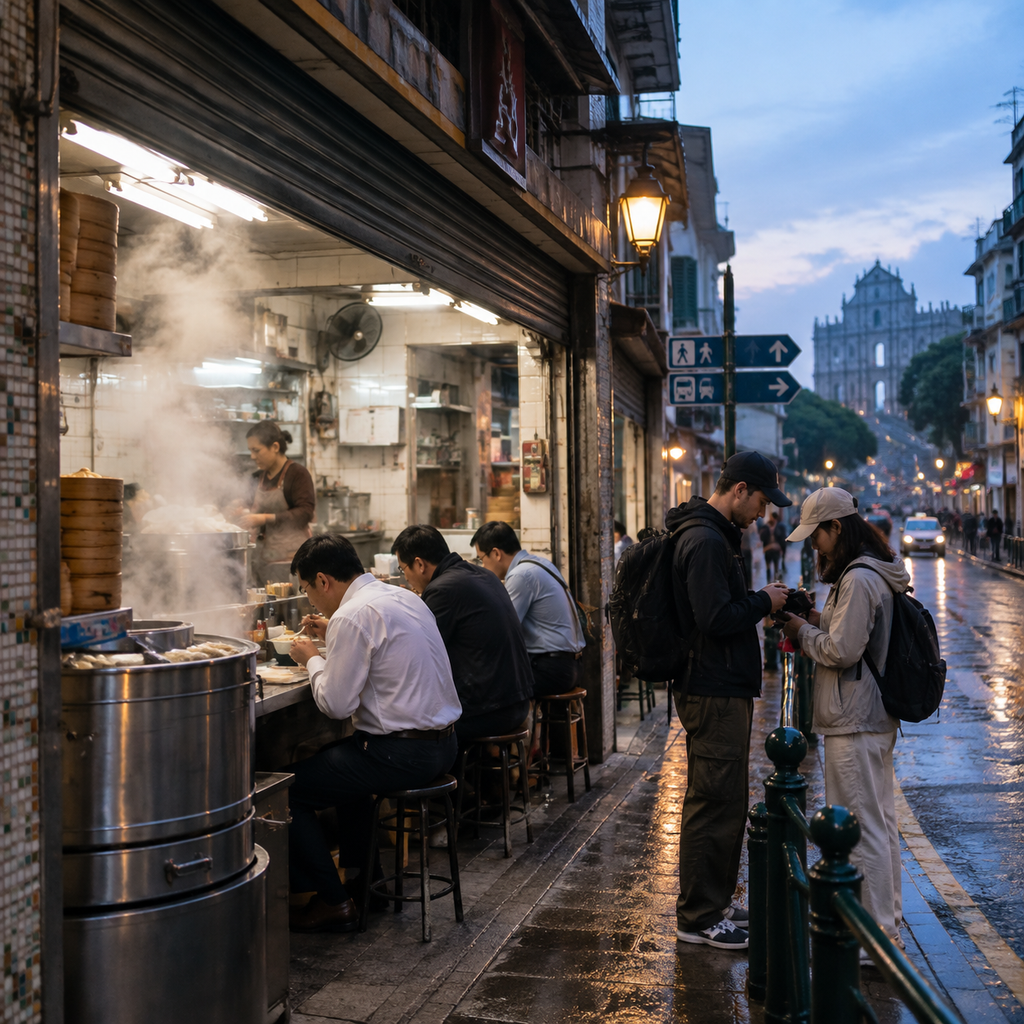
早上天还没有完全亮,我和同行的艾琳在澳门一处街口下车。她把手机地图停在过关后的第一站,我则把银行卡、手机和一张已经折出白痕的纸巾塞进外套口袋。街边早餐店刚拉起半扇卷帘,蒸汽从不锈钢锅边往外冒,几位上班的人靠着柜台吃东西。我们本来把上午排得很紧:先在旧城区走一小圈,再去小店买些东西,最后在过关前留出不多的缓冲。那时我以为支付只要手机有电、网络正常,就不会成为路线问题。
The sky was only beginning to brighten when Irene and I got off near a street corner in Macao. She had paused the map at our first stop after crossing, while I tucked a bank card, my phone, and a tissue folded into a white crease into my jacket. A breakfast shop had just lifted half its shutter; steam drifted from a stainless-steel pot as commuters ate at the counter. We had packed the morning tightly: a short walk through the old quarter, a few purchases from small shops, and then a modest buffer before crossing. I assumed payment could not affect a route as long as my phone had power and a network connection.
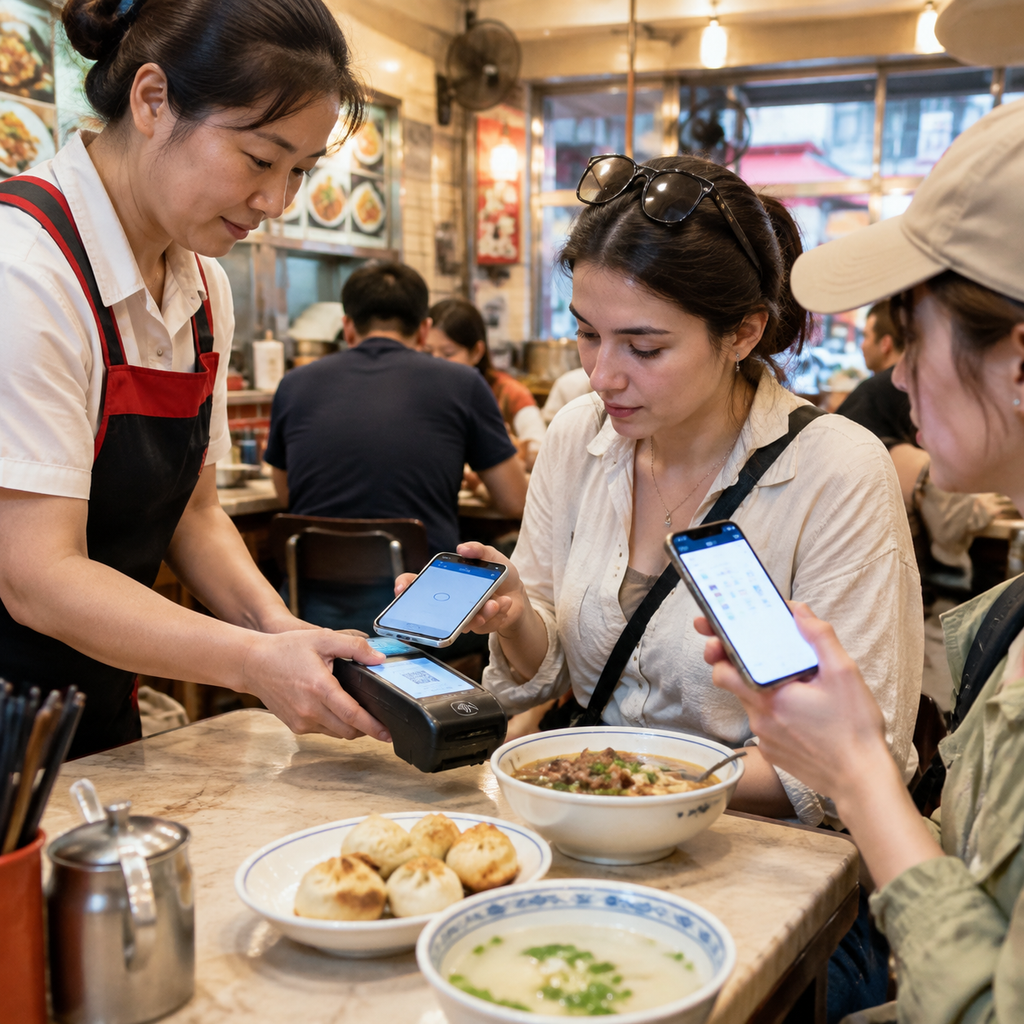
第一处停顿发生在早餐店。店员把点单和收款设备往我面前推,我习惯性地打开手机里的电子支付页面,却发现自己准备的方式和柜台需要的方式并不完全接得上。那不是一个戏剧化的失败,没有警报,也没有人催我;只是页面停在等待状态,身后队伍安静地向前挪。我看见艾琳已经把手机亮度调高,试着切换另一种方式,店员则把装着食物的小碟先放到一旁,耐心等我们把付款弄明白。
The first pause came at breakfast. The cashier pushed the ordering and payment device toward me. I opened my usual mobile-payment screen, only to find that the method I had prepared did not quite connect with what the counter could accept. It was not a dramatic failure: no alarm sounded, and nobody scolded us. The page simply remained in a waiting state while the quiet line behind us moved forward. Irene raised her screen brightness and tried another option, while the cashier set our small dishes aside and waited for us to sort it out.
我那时才意识到,“能电子支付”和“每一笔小额消费都能顺利电子支付”是两件事。手机里的工具再多,也可能遇到地区设置、账户验证、网络切换或设备界面不配合的瞬间。小店的收款节奏通常比大型商场更直接,柜台没有太多空间让客人慢慢研究。我没有把问题归咎于店员,因为她已经给出了足够的处理时间;真正没有准备好的是我对小额现金的轻视。
That was when I understood that being able to make electronic payments is different from being able to complete every small purchase electronically. Even with several tools on a phone, a customer can meet a moment involving regional settings, account verification, a changing connection, or an unfamiliar interface. A small shop often has a more immediate rhythm than a large mall, and there is little room at the counter for a visitor to study every option. I did not blame the cashier; she had already given us enough time. The weak point was my assumption that a little cash was unnecessary.
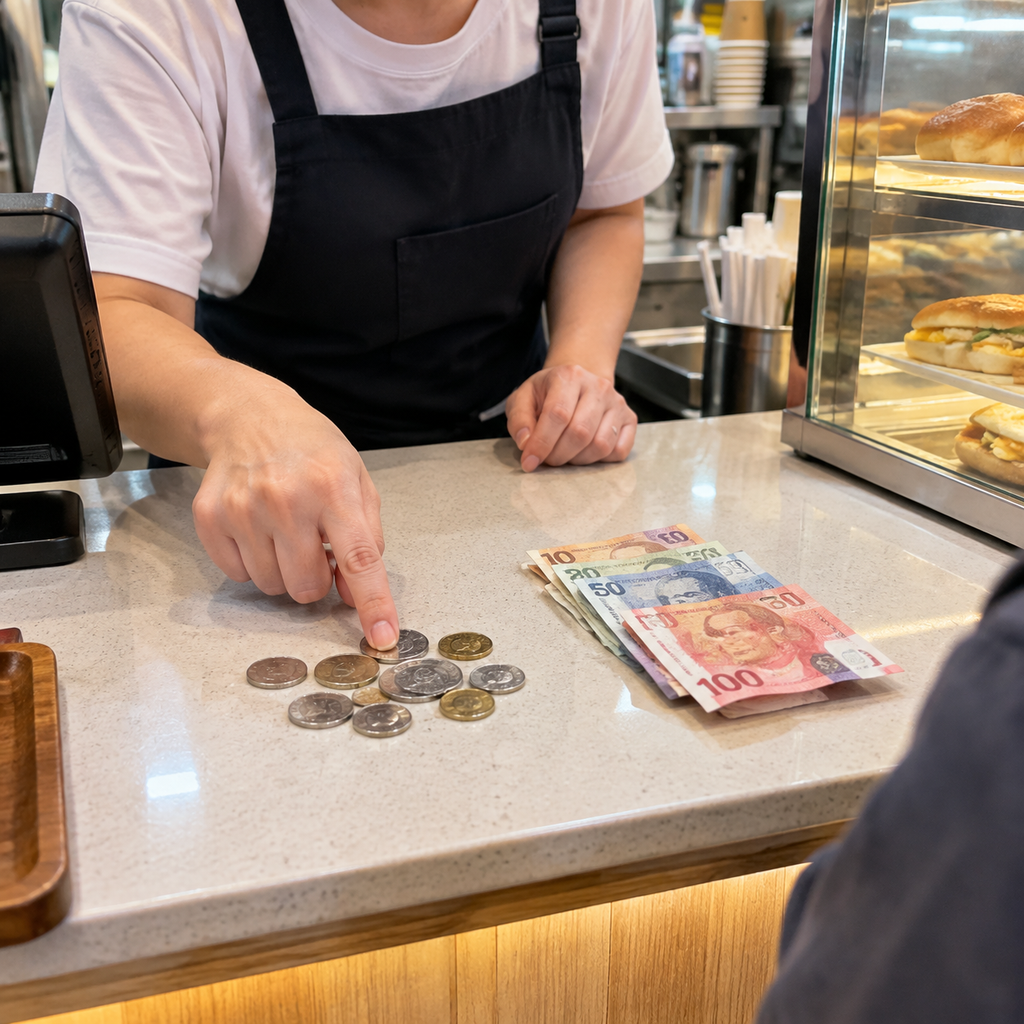
艾琳先从钱包里找出一张较小面额的纸币,店员接过后没有急着把整叠零钱推回来,而是把硬币和纸钞分开摆在柜台边缘。她用手指轻轻点了一下其中几枚,又指向钱夹,意思是让我确认找回的部分。我原先只想把东西拿走,没想到这个慢动作反而让我看清了钱的组成,也明白在不熟悉当地币种时,收钱的人需要把找零过程做得可读,而付款的人也要给对方核对的余地。
Irene found a smaller note in her wallet. The cashier did not hurriedly slide the change back as one pile; she separated coins from notes along the counter’s edge. She tapped a few coins with one finger and then pointed toward the wallet, giving me a chance to confirm what had been returned. I had only wanted to collect the food and leave. That small, deliberate movement made the money legible and reminded me that, when a currency is unfamiliar, the receiver needs to make change easy to check, while the payer needs to leave room for that check.
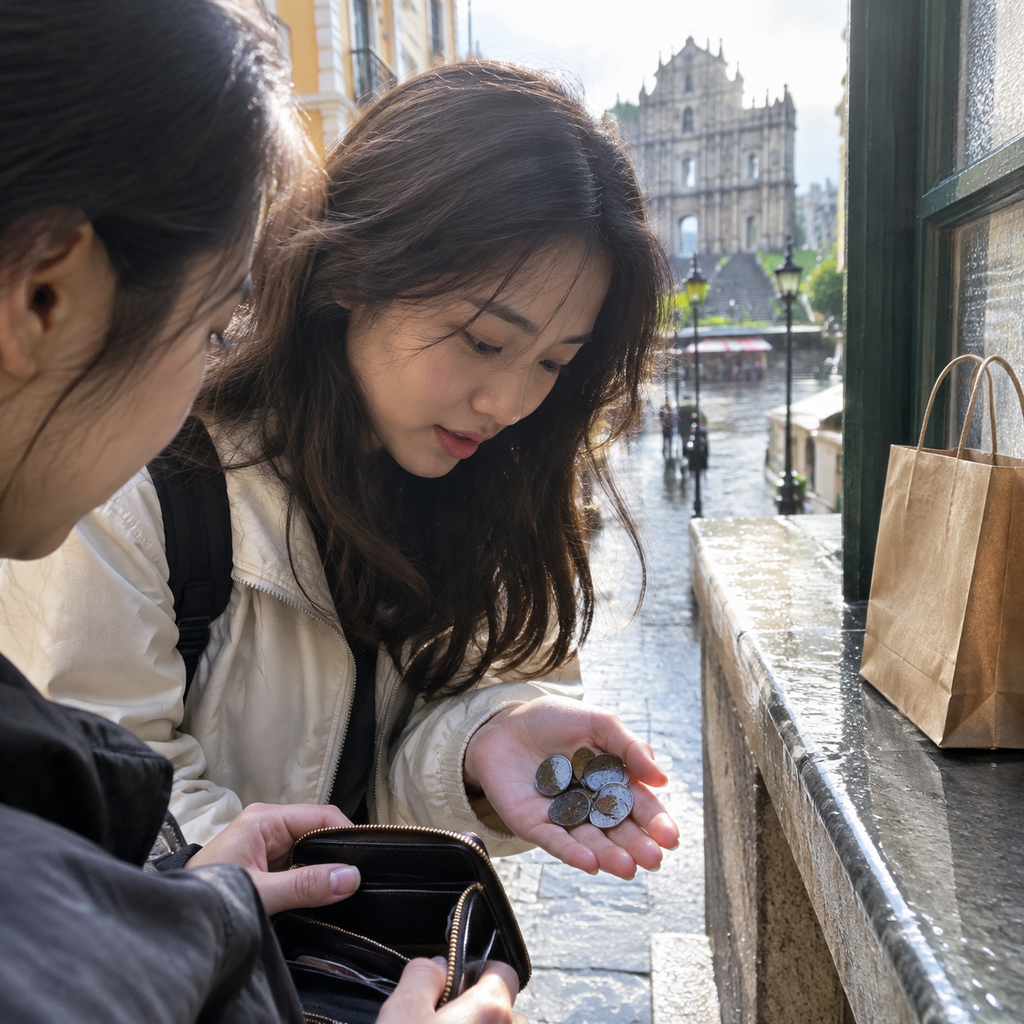
我们端着早餐走到店外的窄檐下,艾琳没有马上催我看地图。她把刚才的纸袋放在窗台上,问我是否带了可以单独使用的备用支付方式。我说有银行卡,也有两部手机里的应用,却没有把“现金备用”当成独立项目。她没有讲大道理,只是把钱包里剩下的零钱摊开,让我看见其中几枚硬币已经被雨水弄得发暗。她的动作把一个抽象的准备问题变成了眼前的数量和重量。
Under the narrow awning outside, Irene did not immediately ask me to reopen the map. She placed the breakfast bag on the windowsill and asked whether I had a payment backup that could work on its own. I said I had a bank card and apps on two phones, but I had never treated cash backup as a separate item. She did not give me a lecture. She simply spread out the remaining coins, some darkened by moisture, so I could see their number and feel their weight as a real preparation issue rather than an abstract one.
我们决定先不改大路线,只把下一个停留点改成“能顺手处理零钱和网络问题的地方”。我没有把这个地方想象成某个保证成功的柜台,也没有假定所有商户都接受同一套方式;我只是给自己加了一个观察节点。路线规划第一次从景点顺序变成了支付条件的顺序:先去哪里可以确认手机状态,再去哪里适合小额购买,什么时候必须停止尝试而改用备用方案。
We decided not to abandon the larger route. Instead, we changed the next stop to a place where we could conveniently deal with cash and connection issues. I did not imagine it as a counter guaranteed to solve everything, nor did I assume that every merchant accepted the same methods. I added an observation point. For the first time, route planning became an order of payment conditions: where to check the phone, where a small purchase would be less stressful, and when to stop trying and use a backup.
街道刚开始热起来,公交站旁的风把纸袋吹得轻轻碰到我的手腕。我们没有立刻上车,而是站在不挡住候车人流的位置,把手机电量、网络和银行卡逐项看了一遍。艾琳负责看手机设置,我负责把现金按纸币和硬币分开。这个动作只花了一会儿,却改变了我们对时间的感受。原先我把等车看成路线中的空白,现在它变成了可以完成检查的缓冲,不必把每一分钟都压在抵达某个地点上。
The street was beginning to fill, and wind near the bus stop made the paper bag brush lightly against my wrist. We did not board immediately. Standing clear of the waiting passengers, we checked the phone battery, connection, and bank card one by one. Irene handled the settings; I separated notes from coins. It took only a short while, but it changed our sense of time. I had treated waiting for transport as empty space in the itinerary. Now it became useful buffer for a check, rather than another minute to squeeze between fixed destinations.
车来了以后,我们坐在靠边的位置,没有把所有注意力都放在屏幕上。窗外的店面、斑马线和上坡路一段段退后,车内报站声和硬币轻碰钱包的声音交替出现。我把几枚零钱放进容易取出的夹层,把大面额纸币留在内袋,把银行卡和手机分开收好。这个安排不是因为现金一定优于电子支付,而是因为不同支付方式在不同速度的场景里承担的任务不同:手机适合预先确认,现金适合在柜台前迅速结束一个小动作。
Once the bus arrived, we sat to one side rather than staring at our screens. Shopfronts, crossings, and uphill streets moved past the window while the announcements alternated with the soft clink of coins in my wallet. I placed a few coins in an easy-to-reach compartment, kept larger notes in an inner pocket, and stored the card separately from the phone. This did not mean cash was always better. Different methods serve different speeds: a phone is useful for checking in advance, while cash can finish a tiny counter transaction without turning it into a technical session.
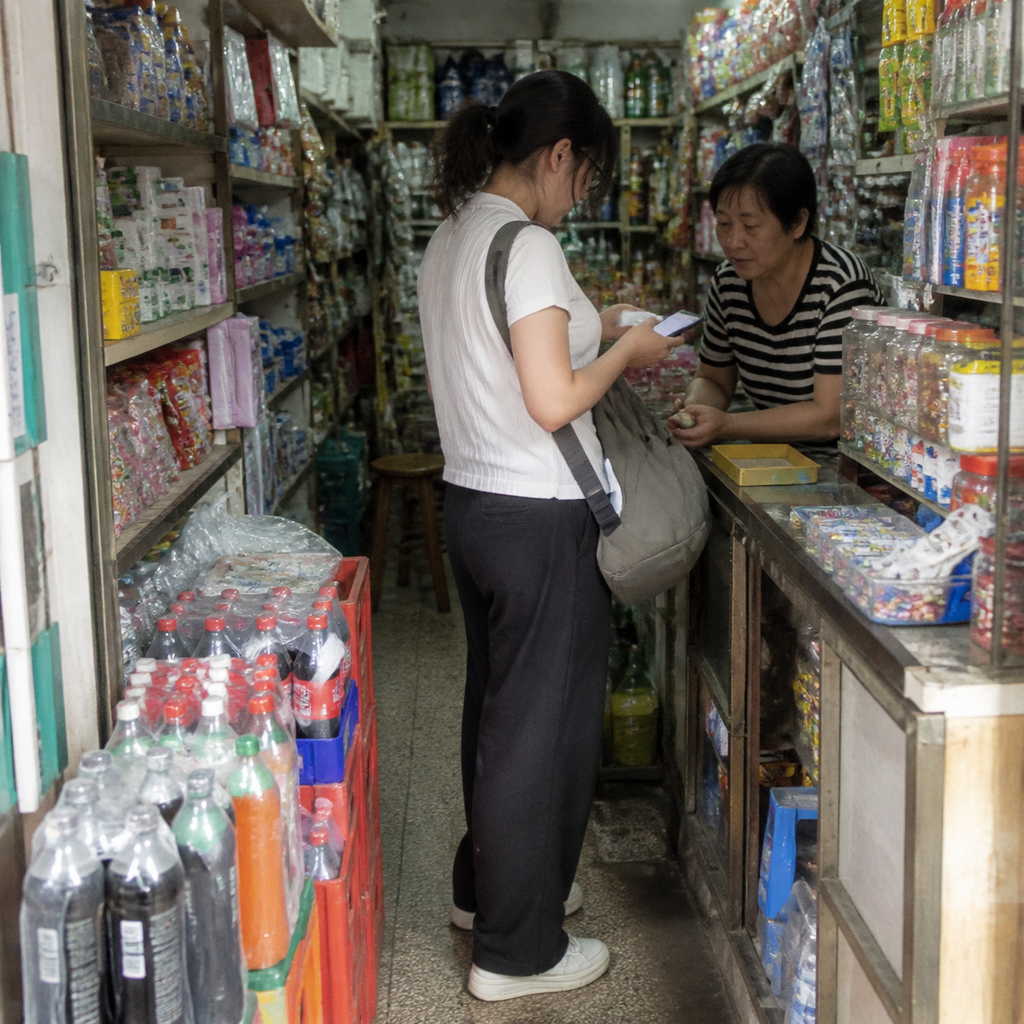
第二处停顿出现在一家很小的杂货店。店门口摆着几箱饮料和日用品,过道窄得只能让一个人侧身通过。我们买的东西并不复杂,真正拖慢动作的是我再次试图用手机完成付款。屏幕亮着,确认按钮也出现了,可最后一步没有顺利完成。店里的年轻店员看了看我的屏幕,又看了看我手上的硬币,没有替我做决定,只把收款台旁一只小托盘往前挪了挪。
The second pause came in a tiny grocery shop. Boxes of drinks and daily goods stood by the entrance, and the aisle was so narrow that one person had to turn sideways. Our items were ordinary; what slowed us down was my second attempt to pay by phone. The screen was bright and the confirmation button appeared, but the final step did not go through smoothly. The young clerk looked at my screen and then at the coins in my hand. He did not decide for me; he merely moved a small tray beside the register closer to us.
那个托盘让我明白,现场解决问题不一定要靠一句解释,有时是给人一个清楚放钱、取钱、重新整理物品的位置。我把硬币放上去,先让店员看见,再按面额逐个取回找零。艾琳站在货架边,把已经买好的东西往袋子深处压,避免我们边付款边掉东西。店里冷气不强,纸箱有一股干燥的纸味,门外车辆经过时,玻璃门会轻轻震一下。小环境里的每个动作都被放大了。
The tray showed me that solving a problem in person does not always require a long explanation. Sometimes it requires a clear place to put money, collect change, and reorganize your belongings. I set the coins down so the clerk could see them, then collected the change by denomination. Irene stood beside the shelves and pressed our purchases deeper into the bag so nothing would fall while we paid. The air-conditioning was mild, the cartons smelled dry and papery, and the glass door trembled whenever a vehicle passed. In a small space, every movement becomes more visible.
我以前以为支付备用就是多装一个应用,或者把同一张卡绑定到另一部手机。那天之后,我把备用拆成四层:手机能用时的主方法,银行卡能单独工作的第二方法,随身现金的小额部分,以及完全不依赖网络的最后退路。四层不需要同时发挥作用,但必须在脑子里分清。尤其是小店、车站周边、临时买水或买纸巾时,支付金额小,不代表支付环节就一定简单。
I used to think a payment backup meant installing another app or linking the same card to a second phone. After that morning, I divided backup into four layers: the main method when the phone works, a bank card that can stand alone, a small amount of cash, and a final option that does not depend on a connection. They do not all need to be used, but they must be distinct in my mind. A small purchase near a shop or station is not automatically a simple payment just because the amount is small.
艾琳在店外把零钱重新分配了一次。她没有把所有硬币塞回钱包,而是留出一部分给可能遇到的下一次小额付款,又把几张纸币放进我能摸到的口袋。她说话时没有把这件事包装成旅游技巧,反而像是在整理一天里会反复用到的工具。她的做法让我注意到,现金不是越多越安心;太多硬币会增加翻找时间,也会让自己在拥挤处分心。适量、分层、容易辨认,才是备用的价值。
Outside the shop, Irene redistributed the change. She did not push every coin back into her wallet. She kept some available for the next small purchase and put a few notes into a pocket I could reach by touch. She did not present this as a travel trick; she treated it like arranging tools that would be used repeatedly during the day. I realized that more cash does not automatically create more security. Too many coins slow the search and distract you in a crowd. The useful backup is moderate, separated, and easy to recognize.
我们继续往前走,计划中的小店停留原本只占很短时间,现在却被支付试错拉长。地图上的距离没有变,人的注意力却已经变了。我开始在每次进入店铺前观察柜台:有没有明显的收款提示,店员是否需要先确认订单,自己是否应该把现金夹层打开。这样的观察并不意味着把商户当成测试对象,而是尊重现场的节奏,不在柜台前临时制造一个复杂问题。
We kept walking, but the brief shop visit had stretched because of payment attempts. The distances on the map had not changed; our attention had. Before entering another shop, I began to look at the counter: whether payment instructions were visible, whether the clerk needed to confirm the order first, and whether I should open the cash compartment in advance. This was not about treating merchants as test subjects. It was about respecting the rhythm of the place instead of creating a complicated question at the counter.
中午前,我们来到一个人流明显增加的交通节点。这里的声音比早上更杂,轮子压过地面的摩擦声、广播、交谈和手机提示音混在一起。我们需要决定是继续往原定方向走,还是先完成一件不那么有趣但很必要的事:确认过关前后的支付安排。艾琳打开备忘录,把必须在过关前完成的事项和可以延后的购物分开。我第一次看见,所谓时间留量不只是预留十几分钟,而是把不可预测的事情提前从关键时段挪走。
Before noon, we reached a busy transport interchange. The soundscape was thicker than in the morning: wheels rubbing over the ground, announcements, conversations, and phone alerts layered together. We had to choose between continuing toward the planned direction and doing something less exciting but necessary—checking our payment arrangements before and after crossing. Irene opened her notes and separated tasks that had to happen before crossing from shopping that could wait. I saw that time buffer is not merely adding a few minutes; it is moving uncertain tasks away from a critical period.
我们没有把“过关”写成一个可以随意压缩的动作。因为我不能凭空给出某个固定通关时长,也不想把任何具体规定说成人人相同的经验,所以我们只按现场能观察的队伍、开放窗口信息和自己的体力来判断。对我们而言,关键不是猜一个精确数字,而是避免在临近过关时还要处理找零、网络、购物袋和路线选择。只要这些事情堆在一起,原本看似充裕的时间就会迅速变薄。
We did not treat crossing as an action that could be compressed at will. I cannot responsibly assign one fixed crossing time or pretend that every traveler has the same experience, so we judged from the visible queue, the information available at the facility, and our own energy. The point was not to guess an exact number. It was to avoid dealing with change, connectivity, shopping bags, and route decisions right before crossing. When those tasks pile up, apparently comfortable time thins very quickly.
第三处停顿没有发生在柜台,而发生在我们准备上车的时候。艾琳忽然发现她的手机电量下降得比预想快,地图和支付页面都开过几次,屏幕也一直保持较高亮度。她没有慌张,而是把路线截图保存下来,再把手机放进省电状态。我则检查卡片和现金,确认它们没有和护照、车票或其他重要物品混在一起。两个人分工之后,原本令人烦躁的停顿变成一次安静的重新整理。
The third pause did not happen at a register. It came as we were preparing to board when Irene noticed that her phone battery had fallen faster than expected. We had opened the map and payment screens several times, and the display had stayed bright. She did not panic. She saved the route information for offline viewing and switched to a lower-power setting. I checked the card and cash, keeping them separate from passports, tickets, and other important items. Dividing the work turned an irritating delay into a quiet reset.
这件事也让我重新理解交通。交通不是把人从甲地搬到乙地的单一工具,它还决定了我有没有机会整理支付、辨认零钱、观察下一站的拥挤程度。步行时,我可以在街边停下;乘车时,我可以利用车行时间检查;进入人多的节点后,我则不应该一边走一边翻钱包。路线安排得好,不是每个空隙都塞进景点,而是给不同动作留下合适的空间。
The episode changed how I understood transport. Transport is not only a device for moving from A to B; it also determines whether I have a moment to arrange payment, identify coins, and notice how crowded the next stop may be. On foot, I can pause by a street edge. During a ride, I can check things safely. At a crowded interchange, I should not search through a wallet while walking. A well-planned route does not fill every gap with attractions; it gives different actions the right kind of space.
过关前的最后一段,我们把购物目标缩小了。原计划里有几样想在小店慢慢挑的东西,但那时我已经知道,挑选本身也会耗掉注意力:看包装、确认是否需要袋子、检查携带是否方便、再决定怎样付款。我们没有因为怕麻烦而放弃所有小店,只把容易临时犹豫的项目延后。对旅行来说,延后不是失败,它常常是把选择从最紧张的时段拿开。
In the final stretch before crossing, we narrowed our shopping list. We had planned to browse several small shops, but I now understood that browsing also consumes attention: reading packages, deciding whether a bag is needed, checking whether something is easy to carry, and choosing how to pay. We did not abandon small shops because they were inconvenient; we postponed the items most likely to invite last-minute hesitation. In travel, postponement is not failure. It often means moving a choice away from the most pressured part of the day.
我把零钱放在外套前侧的浅口袋,手机放在另一边,银行卡放在拉链夹层。这个顺序听起来琐碎,却让我在队伍移动时不必把所有东西拿出来。艾琳则把购物袋的提手绕在手腕上,空出一只手处理手机。我们都没有把贵重物品放在同一个位置,也没有在移动的人群中长时间低头。支付准备和个人安全在这里不是两个彼此无关的主题,它们都依赖于少翻找、少暴露、少临时决定。
I put coins in a shallow front pocket, the phone on the other side, and the card in a zipped compartment. It sounded trivial, but it meant I did not need to take everything out when the line moved. Irene looped the shopping-bag handle around her wrist and kept one hand free for her phone. Neither of us kept valuables in one place or looked down for long in moving crowds. Payment preparation and personal safety were not separate topics here. Both depended on searching less, exposing less, and making fewer last-second decisions.
在等待进入过关区域时,我注意到身边的人处理小物品都很快:有人把证件提前拿在手边,有人把袋子收紧,有人先把手机锁屏。没有谁停下来给我讲一套规则,但这些动作本身已经构成了环境里的信息。我不把它们当成可以机械模仿的规定,因为每个人的证件、交通安排和支付工具都不同;我只学到一个原则:进入关键节点前,先把会阻碍自己前进的东西整理好。
While waiting to enter the crossing area, I noticed how quickly people around us handled small items. Some kept documents ready, some tightened their bags, and some locked their phones before moving on. Nobody stopped to explain a complete set of rules, yet those actions carried information. I did not treat them as regulations to copy mechanically, since everyone’s documents, transport plans, and payment tools differ. I took away one principle: before a critical point, arrange whatever might interrupt your movement.
过关之后,我们没有马上冲向下一处目的地。艾琳先看手机是否恢复稳定,再确认银行卡和现金仍在各自的位置。我去附近的小店买了一件很简单的东西,故意把这次付款当作一次低压力检查,而不是挑战。柜台前我先看清提示,再选择最顺手的方式;如果需要现金,我就提前把零钱放在掌心,不在别人面前翻找。这个小动作让“备用”从纸面上的计划变成了身体记得的顺序。
After crossing, we did not rush straight to the next destination. Irene checked whether her phone connection had settled and confirmed that the card and cash were still in their separate places. I bought one simple item nearby, treating the payment as a low-pressure check rather than a challenge. At the counter, I read the instructions first and chose the method that made the exchange clearest. If cash was needed, I prepared the coins in my palm instead of searching in front of others. Backup became a sequence my body remembered, not just a note on paper.
过关后的这次小购买让我感觉到一种反差。上午我一直担心电子支付失败会让路线失控,下午却发现,只要不把每个停留点都安排成必须成功的任务,支付问题就不会自动扩大成情绪问题。小店的店员专注于手上的工作,交通节点也只是继续流动。我需要做的不是把环境变得完全可控,而是在不确定出现时有一条不会拖累别人的处理路径。
That small purchase after crossing created a useful contrast. In the morning I had feared that a failed electronic payment would derail the route. By afternoon, I saw that a payment issue did not have to become an emotional crisis if every stop was not treated as a task that must succeed immediately. The shopkeeper continued working, and the transport hub continued moving. My job was not to make the environment perfectly controllable, but to have a way through uncertainty that did not burden everyone around me.
我们后来经过一间卖日用品的小店,店里一位年长的女店员看见我把零钱按顺序排在手边,便用手势提醒我把较大的纸币收好,不要和硬币混在一起。她没有评价我的旅行安排,也没有追问我从哪里来。她的提醒很短,却让我想起早上那位早餐店员的动作:把钱放在可见的位置,让双方都有核对的机会。不同的人用不同方式推动我,我也在这些细节里学会了更少打扰、更快确认。
Later we passed a household-goods shop. An older woman at the counter noticed the coins arranged in front of me and gestured that I should keep a larger note separate rather than mixing it with the coins. She did not comment on our itinerary or ask where we came from. The reminder was brief, but it echoed the breakfast cashier’s movement: keep the money visible so both sides can check it. Different people nudged me in different ways, and through those details I learned to disturb the transaction less and confirm more quickly.
我没有把这两位店员写成替我解决一切的“好心人”。她们做的事情很普通,甚至没有留下适合宣传的漂亮台词;真正重要的是,她们让一个陌生人能够按照现场节奏完成交易。旅行故事里常常只记录景点和大事件,支付却藏在桌面边缘、收银托盘和钱包夹层里。正是这些小地方,决定我是否会因为一次卡顿而错过车、压缩吃饭时间,或者在过关前变得手忙脚乱。
I do not describe the two cashiers as rescuers who solved everything for me. What they did was ordinary, and there was no polished line suitable for a promotional story. Their value was in allowing a stranger to complete a transaction at the pace of the place. Travel stories usually record landmarks and major events, while payment hides at the edge of a counter, in a change tray, or inside a wallet compartment. Those small places can decide whether a delay makes me miss transport, rush a meal, or become flustered before crossing.
我也开始留意小额现金和交通之间的关系。搭车、下车、临时买水、使用小店服务时,动作都很短,人的手却需要连续完成拿出、确认、收回、收好。只要零钱藏得太深,或手机在这时突然需要重新验证,短动作就会变成长停顿。交通越紧凑,越应该把这些可能发生的停顿放到站点之间,而不是放在必须准时完成的节点上。
I also began to notice the connection between small cash and transport. Boarding, getting off, buying water, or using a small shop’s service may take only a moment, but the hands still have to retrieve, confirm, receive, and store. If coins are buried too deeply, or the phone suddenly asks for verification, a short action becomes a long pause. The tighter the transport plan, the more these possible pauses should sit between major points rather than at a moment that must happen on time.
艾琳把这套方法做得比我自然。她每次离开柜台都会轻拍一下钱包外侧,确认拉链合上;上车后先坐稳,再打开手机;进入人流密集处前,会把购物袋换到身体内侧。她没有把这些动作解释成仪式,我却从她身上看到,可靠的备用并不靠临时聪明,而靠重复到不需要思考。对我这个总想同时看地图、拍照、回消息的人来说,少做一件事,反而能让真正重要的动作更快。
Irene performed this routine more naturally than I did. Whenever she left a counter, she tapped the outside of her wallet to make sure the zipper was closed. After boarding, she sat down before opening her phone. Before entering a dense crowd, she moved the shopping bag to the inside of her body. She did not call these actions a ritual, but I saw that reliable backup comes from repetition, not last-minute cleverness. For someone like me, always trying to map, photograph, and answer messages at once, doing one less thing made the essential action faster.
那天没有出现需要夸张描述的意外。没有人丢失物品,也没有哪家店拒绝我们;只是两次电子支付没有按照我预想的速度完成,一次找零钱让我意识到自己没有准备好。正因为问题不大,我才看清旅行中的脆弱点往往不是灾难,而是许多个很小的摩擦叠在一起:手机电量少一点,队伍快一点,袋子多一个,零钱难找一点,原本的缓冲就会被磨掉。
Nothing happened that required a dramatic retelling. Nobody lost anything, and no shop turned us away. Two electronic payments simply failed to complete at the speed I expected, and one exchange of change showed me that I was underprepared. Because the problems were minor, I could see how travel becomes fragile: not through one disaster, but through small frictions layered together—slightly less battery, a faster-moving queue, one extra bag, coins harder to find. The buffer is worn away one tiny piece at a time.
我把这次经历整理成一个很朴素的现场顺序。出门前,不只检查支付应用,也准备能独立工作的卡和少量容易辨认的现金;进入小店前,先看柜台提示,不要把手机贴到设备上就默认会成功;交易出现停顿时,给店员一个清楚的选择空间,必要时直接换备用方法;离开柜台后,再检查钱、卡、手机和袋子;临近过关时,停止新增那些必须即时付款、即时决定的任务。
I reduced the lesson to a plain sequence. Before leaving, I check not only payment apps but also a card that can work independently and a small amount of easy-to-identify cash. Before entering a small shop, I read the counter’s instructions instead of assuming that placing a phone near a device will work. When a transaction pauses, I give the cashier room to offer a clear option and switch methods if needed. Afterward I check money, card, phone, and bag. Near a crossing, I stop adding tasks that require instant payment and instant decisions.
这个顺序没有告诉我哪种支付方式永远正确,因为那样的结论本身就不可靠。不同商户、不同设备、不同网络状态,会让同一种方法表现得不一样。对游客更实际的做法,是把支付当成路线的一部分来观察:今天要经过多少家小店,是否会频繁换乘,手机会不会长时间开着地图,过关前有没有必须完成的事情。问题越具体,备用越容易准备;只说“带好支付工具”反而太空泛。
This sequence does not claim that one payment method is always right, because that conclusion would be unreliable. Different merchants, devices, and connection conditions can make the same method behave differently. A more practical approach is to observe payment as part of the route: how many small shops are involved, whether transport changes often, whether the map will stay open for a long time, and what must be finished before crossing. The more specific the questions, the easier the backup is to prepare. “Bring payment tools” alone is too vague.
我们在过关后的一间小咖啡店坐了一会儿。桌面有细小的木纹,窗外的光线从人行道边缘慢慢移到墙面,艾琳把两部手机都放在桌上,却没有继续打开支付页面。她说先喝完再走。我本来想趁等待时重新规划下午,后来只检查了一次电量和路线,就把屏幕扣在桌面上。身体放松下来后,我才发现一上午真正消耗我的不是走路,而是不断猜测下一次付款会不会顺利。
We sat for a while in a small café after crossing. Fine wood grain showed through the tabletop, and the light outside moved from the edge of the pavement onto the wall. Irene placed both phones on the table but did not open another payment screen. She wanted to finish her drink before moving on. I had planned to redesign the afternoon while waiting, but I checked the battery and route once, then turned the screen face down. Only after relaxing did I realize that the morning’s real fatigue came less from walking than from repeatedly guessing whether the next payment would work.
这段停留也改变了我对“留时间”的理解。留量不是为了把所有可能的麻烦都预测出来,而是承认人会疲劳、设备会有状态、店员要服务其他客人,交通也不会完全按照我的个人节奏运行。只要我在关键节点前留出可以坐下、整理、重新判断的空间,路线就不会因为一次小额交易而被迫全面改写。时间留量的作用,是让调整变得不狼狈。
That rest changed how I understood leaving time. Buffer is not an attempt to predict every possible inconvenience. It is an admission that people get tired, devices have changing conditions, cashiers serve other customers, and transport does not follow one traveler’s private rhythm. If I leave room to sit, reorganize, and reassess before a critical point, the route does not need to be rewritten because of one small transaction. The purpose of buffer is to make adjustment feel ordinary rather than embarrassing.
我还记住了小店里的一个细节:柜台通常同时承担点单、包装、收款和交接,店员的注意力会在几件事之间移动。游客如果只盯着自己的手机,很容易错过对方已经给出的提示。后来我会先抬头看一次,再低头操作;付款完成后不立刻转身,而是等物品、找零和袋子都拿稳。这个动作不增加多少时间,却减少了重复询问和回头寻找,也让身后的人更容易继续前进。
I also remembered a detail from small shops: the counter often handles ordering, packing, payment, and handover at the same time, so the cashier’s attention moves among several tasks. A visitor staring only at a phone can miss a signal already given. I began looking up once before operating the screen, and after payment I stopped long enough to secure the item, change, and bag before turning away. It added little time, but reduced repeated questions and the need to turn back, allowing the next person to move forward.
如果同行者使用不同支付工具,最好不要把所有事情交给其中一个人。艾琳的手机当时更稳定,我却负责保管现金和银行卡;她看路线,我看柜台和随身物品。这样的分工不是为了制造紧张,而是避免一个人同时承担导航、付款、拿袋子和看证件。尤其是在过关前后,大家都容易把注意力集中到方向上,反而忘记手里正在进行的交易。两个人各看一半,常常比一个人全包更稳。
When companions use different payment tools, it is better not to hand every task to one person. Irene’s phone was more stable, so I handled cash and the card; she watched the route while I watched the counter and our belongings. The division was not meant to create anxiety. It prevented one person from navigating, paying, carrying bags, and monitoring documents at the same time. Around a crossing, attention naturally shifts toward direction, and people can forget the transaction already in progress. Two people watching half each can be steadier than one person doing everything.
我没有记录某个店铺一定接受什么,也没有把一次顺利或不顺利推导成普遍规则。能核实的只有自己的经历:准备好的电子方式出现了卡顿,现金在小额场景里更快结束动作,银行卡和第二部手机让我们多了一层选择,而时间留量使这些选择不必在最拥挤的时刻被迫做出。写给后来的人时,我更愿意保留这种边界,因为支付经验最怕被说成保证。
I did not record that a particular shop must accept a particular method, nor did I turn one success or failure into a universal rule. What I can verify is my own experience: a prepared electronic method stalled, cash completed small exchanges more quickly, a card and a second phone gave us additional options, and buffer meant we did not have to choose among them at the busiest moment. I prefer to keep those limits visible, because payment advice becomes dangerous when it sounds like a guarantee.
下午我们再次乘车,路线已经和早上的地图不一样。不是因为某个景点突然失去吸引力,而是我把能随时取消的停留放到了后面,把需要更专注处理的过关前事项提前完成。车窗上的反光掠过艾琳的脸,她靠着椅背闭眼休息,我则把零钱夹层里的硬币重新数了一遍。这次数得很快,因为我已经知道它们在哪里,也知道不必为了证明准备充分而反复翻动。
In the afternoon we rode again, and the route no longer matched the morning map. No attraction had suddenly become uninteresting. I had moved flexible stops later and completed the more attention-demanding crossing preparations earlier. Reflections from the window passed across Irene’s face as she rested against the seat. I counted the coins in their compartment once. It was quick now because I knew where they were and no longer needed to rummage repeatedly to prove that I was prepared.
我以前喜欢把旅行安排成一条没有回头路的链条:早餐后必须去哪里,下一站必须接上什么,购物必须在某个时间结束。零钱事件之后,我开始允许路线出现小小的回旋。小店可以换一家,某样东西可以不买,电子支付可以暂停,车站附近可以坐下来整理。所谓重新安排,不是把计划全部推倒,而是让计划承认现场的人、设备和速度都是真实变量。
I used to like itineraries that behaved like chains with no loose link: one place after breakfast, one connection after that, shopping finished by a certain time. After the change-making episode, I allowed small loops. A shop could be replaced, an item could remain unbought, electronic payment could pause, and we could sit near transport to reorganize. Rebuilding a route does not mean destroying the plan. It means admitting that people, devices, and pace on the ground are real variables.
在一个不熟悉的城市里,小额现金还有另一个作用:它让我更容易把消费停在自己真正需要的地方。每次都靠手机付款时,我会下意识觉得动作没有重量,买水、买小点心、买一件随手物品似乎都可以顺便完成。手里有需要辨认和收好的零钱,我反而会多看一眼物品,确认是否真的值得占用袋子和时间。这不是鼓励只用现金,而是提醒我,支付形式也会影响消费判断。
In an unfamiliar city, small cash has another effect: it makes me more conscious of where a purchase should end. When every payment is made by phone, an item can feel weightless; water, a snack, or a small object seems easy to add. When I must identify and store change, I look once more and ask whether the item deserves space in the bag and in the schedule. This is not an argument for cash-only travel. It is a reminder that the form of payment can influence how we judge consumption.
我们准备离开时,艾琳把那只早上的纸袋折平,放进大袋子侧面。她说这样如果临时需要装零钱或小物件,就不用再找新的袋子。我笑她把早餐包装也纳入路线管理,她却指了指我们手里的东西:每一件物品都可能在拥挤处变成需要照看的对象。这个小动作让我再次看到,旅行中的备用不只关于钱,也关于容器、手的数量、注意力和下一次移动是否方便。
As we prepared to leave, Irene flattened the breakfast bag and tucked it into the side of the larger bag. If we needed to hold coins or a small item later, we would not need to look for another bag. I teased her for including breakfast packaging in route management, and she pointed at everything we were carrying: each object could become something to watch in a crowded place. I saw again that backup is not only about money. It is also about containers, free hands, attention, and the ease of the next movement.
回看那天,三次停顿各自处理了不同问题。早餐店让我看见电子支付和柜台节奏之间的缝隙;杂货店让我学会把零钱摆在可核对的位置;上车前的停顿则提醒我,手机电量和路线信息同样属于支付准备。它们没有发生在同一个地方,也没有由同一个人推动,但最后都指向同一件很具体的事:不要等到过关前最后一刻,才发现自己没有给小问题留位置。
Looking back, the three pauses handled three different problems. Breakfast exposed the gap between electronic payment and a counter’s rhythm. The grocery shop taught me to place change where it could be checked. The pause before boarding reminded me that battery and route information are part of payment preparation too. The moments happened in different places and were pushed by different people, yet they pointed to one practical idea: do not wait until the last minute before crossing to discover that small problems have no room in the plan.
如果我再安排一段类似的澳门行程,我会先画出必须准时完成的节点,再在它们之间放入小店、早餐和可以舍弃的散步。电子支付仍然会是主方法,因为它方便、轻便,也能减少携带负担;但我会让少量现金承担它擅长的工作,并给银行卡和电量留出独立位置。最重要的是,我不会把“付款成功”当成路线默认条件,而会把支付检查、整理和切换都视为可能发生的普通动作。
If I planned a similar Macao day again, I would mark the points that truly require punctuality and place breakfast, small shops, and optional walks between them. Electronic payment would still be my main method because it is convenient and light. I would simply let a small amount of cash do the work it handles well, while giving the card and battery their own backup roles. Most importantly, I would not treat successful payment as an automatic condition of the route. Checking, organizing, and switching methods are ordinary actions that may occur.
离开那间咖啡店后,我们没有再赶着填满下午。艾琳走在靠街内侧,我把钱包轻轻按在口袋上,零钱没有发出杂乱的碰撞声。前方的交通声音一阵阵靠近又退开,手机地图只在需要确认方向时亮起。那几枚硬币没有改变城市的大小,却改变了我在城市里移动的方式:我开始给柜台留几秒,给车辆留余地,给过关前后的自己留一个不必慌张的空档。那一天的路线,最后就是这样被重新拼起来的。
After leaving the café, we did not rush to fill the afternoon. Irene walked on the inside of the pavement, and I rested a hand lightly over my wallet; the coins no longer clattered loosely. Traffic sounds approached and receded ahead of us, while the map lit only when we needed to confirm direction. Those coins did not change the size of the city, but they changed how I moved through it. I left a few seconds for the counter, room for the vehicle, and a calm gap before and after crossing. That was how the route was rebuilt.
离开后我又想起一个容易被忽略的环节:小额付款结束,并不等于这一次停留已经结束。东西要装好,零钱要分清,手机要收回,同行的人要确认已经跟上,下一段交通的方向也要重新看一眼。以前我常把这些动作压缩成“买完就走”,一旦其中一个动作被打断,就会在路边重新翻找。那天我把收尾也算进停留时间,哪怕只是在店门旁让出一小块位置整理,也比边走边处理从容。
After leaving, I thought again about a step people often overlook: finishing a small payment does not mean the stop is finished. The item must be packed, the change sorted, the phone put away, the companion checked, and the direction of the next ride confirmed. I used to compress all of that into “pay and go,” then end up searching beside the road when one step was interrupted. That day I included the closing actions in the stop itself. Even moving aside near the shop to organize was calmer than sorting everything while walking.
艾琳还提醒我观察自己的手,而不是只观察支付页面。我的手如果沾到早餐袋上的油,拿硬币时会不自觉地捏得更紧;刚下车时手里有袋子,掏卡就会变得笨拙;雨后空气潮,纸币边缘也容易贴在一起。它们都不是特殊事件,却会改变一个动作需要的时间。支付备用如果只存在于手机设置里,便没有包含这些身体条件;真正可用的准备也要考虑手上是否空着、口袋是否好取、东西是否已经装稳。
Irene also reminded me to watch my hands, not just the payment screen. If my fingers were oily from the breakfast bag, I gripped coins more tightly. If I had a bag after getting off a vehicle, reaching for a card became awkward. In humid air after rain, paper notes could cling together. None of these was an exceptional event, but each changed how long a simple action took. A backup that exists only in phone settings ignores the body. Useful preparation also asks whether a hand is free, a pocket is reachable, and belongings are secure.
我们在一个有遮挡的地方停下来,把下午剩下的选择分成两类:不需要再次付款、只要按方向走就能完成的散步,以及需要进入店铺、挑选物品、付款并带走的消费。前一类可以放在过关后任何比较合适的空档,后一类则不宜紧贴着必须移动的时间。这样分开后,路线看起来少了几项内容,却多了一种可调整性。只要手机临时不顺、队伍变长或体力下降,我们还有可以删掉的部分。
We stopped under a covered area and divided the afternoon’s remaining choices into two groups: walks that required no further payment and could be completed simply by following the direction, and shopping that required entering a store, choosing something, paying, and carrying it away. The first group could fit into a suitable gap after crossing; the second should not sit directly beside a time when we had to move. The itinerary looked shorter after this split, but it became more adjustable. If the phone faltered, a queue grew, or our energy dropped, we still had something to remove.
这也是我后来不再把“备用支付”理解成越复杂越好的原因。应用装得太多,反而可能让我在柜台前反复比较;卡片全放在同一个夹层,寻找时又会把其他物品一起带出来;现金混在各种票据里,找零时还要先清理纸片。我的做法变得简单:主支付方式只保留一个最熟悉的入口,卡放在固定位置,零钱不与收据混放,另一部手机只在需要时使用。少一点选择,现场反而更清楚。
That is why I no longer think a payment backup should be as complicated as possible. Too many apps can make me compare options at the counter. Keeping every card in one compartment means other items come out during the search. Mixing cash with receipts creates another sorting job when change is needed. My approach became simpler: keep one familiar main entry point, place the card in a fixed location, keep coins separate from receipts, and use the second phone only when necessary. Fewer choices can make the moment clearer.
过关前,我们还遇到一位正在整理小推车的清洁工作人员。她看见我们站在通道边反复看手机,便指了指不妨碍人流的旁侧位置。这个提醒没有涉及支付,却直接影响了支付准备:我把钱包和手机在不挡路的地方收好,艾琳也把袋子提到身前,随后才继续走。那一刻我感到,公共空间里的礼貌不是额外负担,而是让自己处理问题时不把压力传给经过的人。
Before crossing, we met a cleaning worker arranging a small cart. Seeing us check the phone repeatedly beside the passage, she gestured toward a side area where we would not obstruct the flow. Her reminder was not about payment, yet it changed how we prepared to pay. I put away the wallet and phone out of the way, and Irene brought the bag in front of her before we continued. I felt that courtesy in a public space is not an extra burden. It lets us handle a problem without passing the pressure to people moving through.
这个动作让我补上了一个以前没有写进计划的判断:支付失败时,先找一个不影响别人的位置,再决定是否继续尝试。很多人遇到页面卡住会站在原地不停点按,越急越难看清提示,也越容易挡住柜台或通道。把身体移开,既给自己留出判断空间,也让店员和其他乘客不用围着等待。支付备用不仅是换一张卡、拿几枚硬币,还包括知道什么时候暂停手上的操作。
That movement added a judgment I had never written into a plan: when payment stalls, first find a place that does not interfere with others, then decide whether to keep trying. People may stand still and tap repeatedly when a page freezes. The urgency makes the prompt harder to read and can block a counter or passage. Moving aside gives space for judgment and keeps cashiers and other passengers from waiting around us. Payment backup is not only changing cards or taking out coins; it also means knowing when to pause.
下午的天色比早上亮,街面上的水痕逐渐变浅,鞋底踩过接缝时发出轻微的摩擦声。我们在一间小店门前看了看,没有马上进去,因为袋子已经有些重,而下一段交通需要我们保持双手利落。店里传出包装纸摩擦的声音,门口却没有必须立即作出的选择。我们把这次放弃当成一次正确的路线判断:不是所有看见的东西都要在当下买,也不是每个支付条件都值得现场试验。
The afternoon was brighter than the morning, the wet marks on the pavement fading, and my soles making a faint scrape over the joints in the ground. We looked at a small shop but did not enter because the bags were already getting heavy and we needed both hands clear for the next stretch of transport. The rustle of wrapping paper came from inside, but there was no choice we had to make immediately. Leaving became a sound route decision: not everything we notice must be bought now, and not every payment condition needs to be tested on the spot.
艾琳把刚才那位店员提醒的顺序又做了一遍:先把袋子贴近身体,再摸到钱包,最后才拿出手机确认方向。她的动作没有打断行走,也没有让手机成为视线的中心。我跟着做时,才发现自己以前常常先打开地图,走了几步才发现钱包没有收好。对陌生城市而言,方向感固然重要,但把物品和支付工具放到稳定位置,才能让方向判断不被小事反复打断。
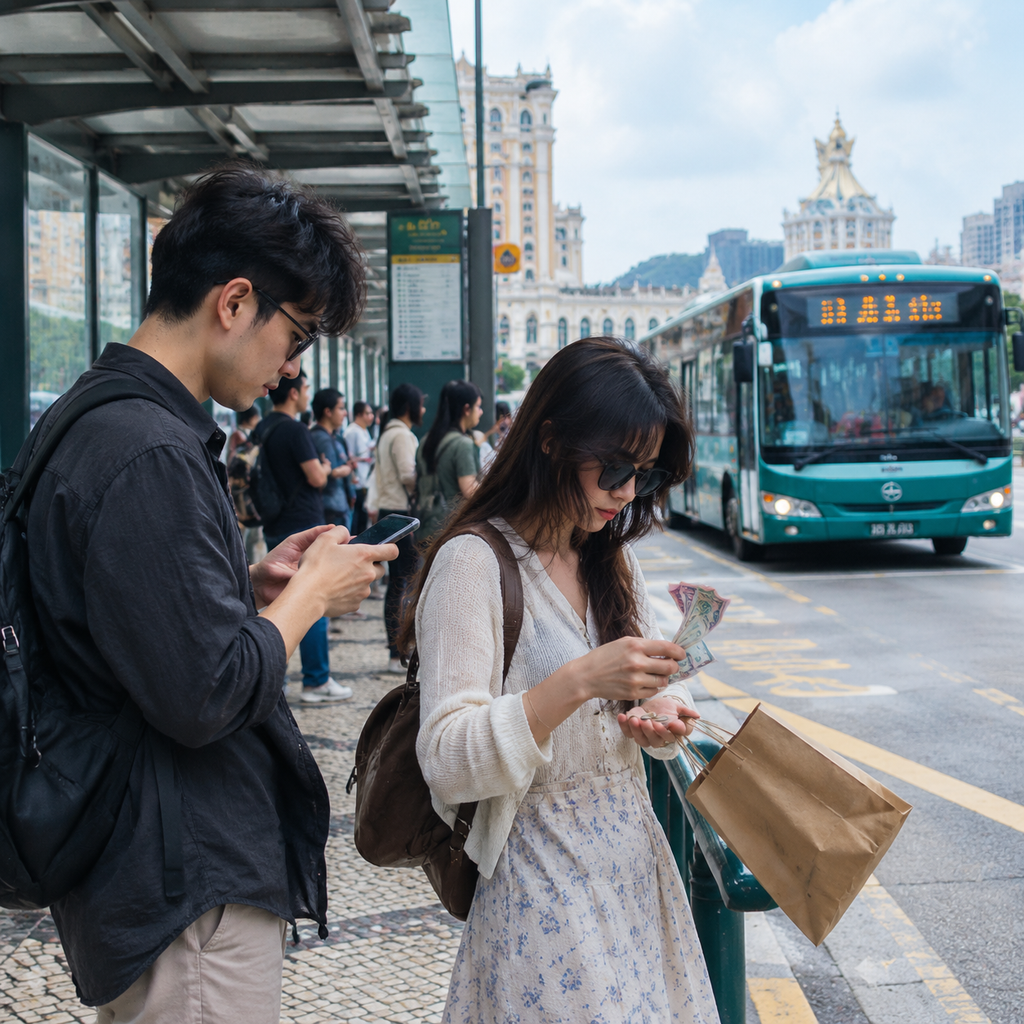
Irene repeated the order suggested by the earlier reminder: bring the bag close to the body, locate the wallet by touch, and only then take out the phone to confirm direction. Her movement did not interrupt the walk or make the screen the center of attention. When I copied it, I realized that I often opened the map first and only noticed a few steps later that my wallet was not secure. In an unfamiliar city, direction matters, but stable placement of belongings and payment tools prevents small issues from interrupting it again and again.
我们最后决定把一处原本想顺路进入的小店留给下次。这个决定没有带来遗憾,反而让过关后的交通衔接更宽松。到了新的停靠点,我还有时间喝水、观察人流、看清要去的方向,也不必在手里拿着一堆刚买的东西时处理付款。路线因此没有变得贫乏,只是把“想做”和“必须做”分开。支付冲突真正影响的,常常不是某一笔消费,而是它会不会挤占后面所有动作的余地。
In the end, we left one small shop we had hoped to enter for another visit. The choice caused no regret; it made the transport connection after crossing more spacious. At the next stop, I had time to drink water, watch the flow of people, and confirm the direction without handling a payment while carrying newly bought items. The route did not become poorer. We simply separated what we wanted to do from what we had to do. A payment conflict often affects not one purchase, but the room available for every action afterward.
如果有人问我这次最实用的准备是什么,我不会只回答带现金,也不会只回答准备银行卡。对我来说,更重要的是在出发前把三个问题问清:哪些小额场景可能连续出现,哪一种备用方式不依赖当前那部手机,过关前后哪一段时间不能被购物和找零占用。问题明确以后,现金应该放多少、卡放在哪里、何时停止尝试,才有机会变成适合自己的安排,而不是照搬别人的清单。
If someone asked me for the most practical preparation from that day, I would not answer only “carry cash,” nor only “bring a bank card.” I would ask three questions before leaving: which small-payment situations may occur repeatedly, which backup does not depend on the current phone, and which period before or after crossing must not be occupied by shopping and change-making. Once those questions are clear, the amount of cash, the card’s location, and the moment to stop trying can become a personal arrangement rather than a copied checklist.
我也会把同行者的习惯纳入安排。艾琳擅长在出门前把路线截图、把袋子收窄、把手机调到省电状态;我更习惯在柜台前观察提示、处理硬币和确认物品。我们没有争论谁的方式更好,而是让各自擅长的动作互相补上。同行旅行最怕两个人都以为对方已经准备好了,结果到了柜台才发现没有人带现金、没有人看电量、没有人记得下一段交通的方向。明确分工,比临时互相责备有用得多。
I would also include a companion’s habits in the arrangement. Irene was good at saving route information, narrowing the bags, and switching to a lower-power phone setting before leaving. I was more comfortable reading counter prompts, handling coins, and checking the items. We did not argue about whose method was better; we let our strengths cover different actions. The hardest situation for companions is assuming the other person has prepared, then discovering at the counter that nobody has cash, checked the battery, or confirmed the next direction. Clear division is more useful than blaming each other later.
回到街面时,艾琳把一枚刚整理过的硬币在指尖转了一下,又放回容易找到的位置。她没有把它当作纪念物,我也没有把它神秘化;它只是当天许多普通交易留下的一个小结果。可我看着它时,想到的已经不是“电子支付好不好用”,而是“我有没有给不同场景准备不同速度”。这两个问题差别很大,前者容易争成观点,后者可以在下一次出门前真正检查。
Back on the street, Irene turned one of the sorted coins between her fingers and returned it to an easy-to-find place. She did not treat it as a souvenir, and I did not make it symbolic. It was simply a small result of several ordinary transactions. Looking at it, I was no longer asking whether electronic payment was good or bad. I was asking whether I had prepared different speeds for different situations. The distinction matters: the first question invites an argument, while the second can be checked before the next outing.
那晚我们没有继续追赶原先想看的所有内容,而是沿着一段较安静的街面走回去。店铺灯光落在湿过的地砖上,远处车辆转弯时带起一阵风,钱包里的零钱安静地贴在夹层里。艾琳走到路口才拿出手机,我先确认袋子、卡和现金都在固定位置,随后才看方向。三次停顿并没有把这趟行程切成失败的片段,反而让我学会在每一次小额支付之后给自己留出收尾,在每一次交通转换之前给路线留出呼吸。
That night we did not chase every item from the original plan. We walked back along a quieter stretch of street. Shop lights fell across wet paving, a turn of distant traffic brought a brief gust, and the coins rested quietly in their compartment. Irene took out her phone only at the corner. I first checked that the bag, card, and cash were in their fixed places, then checked the direction. The three pauses did not divide the trip into failures. They taught me to leave a closing moment after each small payment and room for the route before each change of transport.
回到住处后,我把当天用过的物品全部放在桌面上,没有急着把它们塞回行李。零钱、银行卡、手机、充电线和购物袋看起来互不相关,实际上每一样都曾经影响过移动速度。我按照使用顺序重新摆放:最容易拿到的是小额现金,卡片放在不会被硬币刮到的位置,手机和充电线分开,纸袋折平后靠在行李侧边。整理不是为了把旅途变成一套严格程序,而是为了让下一次临时付款不必从混乱开始。
Back at our accommodation, I placed everything used that day on the table instead of immediately pushing it back into the luggage. Coins, bank cards, phones, charging cables, and shopping bags looked unrelated, yet each had affected how quickly we moved. I rearranged them in the order of use: small cash within easy reach, the card away from rubbing coins, the phone separate from the charging cable, and the folded paper bag against the side of the luggage. The purpose was not to turn travel into a rigid procedure, but to keep the next unplanned payment from starting in confusion.
我还把几次付款的情形写成了简短记录,但没有写成商户名单或接受方式的保证。记录里只留下自己的条件:手机当时是否有电,网络页面是否停顿,柜台是否拥挤,现金是否容易辨认,交易结束后有没有马上找到收好的物品。这样的记录比“某种方式一定可以”更有用,因为它提醒我,下次遇到相似场景时要先看自己的状态,再观察现场,而不是拿一次经历去套住另一家店。
I also made brief notes about the payment situations, without turning them into a merchant list or a promise about accepted methods. I recorded only my own conditions: the phone’s battery state, whether the connection paused, how crowded the counter was, whether the cash was easy to identify, and whether I secured everything immediately afterward. This was more useful than writing that one method would always work. It reminded me to check my own condition and observe the setting before applying any past experience to a different shop.
澳门的街道给我的另一个提醒,是交通转换时人的手会变得特别忙。下车时要让出位置,走到路边要看方向,手里还可能拎着刚买的东西;如果这时才发现零钱混在行李深处,或者支付页面需要重新登录,问题就不再只是付款本身。后来我们在每次移动前都先完成一个很小的收尾:确认交易已结束,物品已收好,手机回到能迅速取出的地方,然后才跟着人流离开柜台或车门。
The streets of Macao gave me another reminder: people’s hands become especially busy during a transport change. After getting off, we need to clear the way, find the direction, and perhaps carry something just purchased. If we then discover that coins are buried in luggage or that a payment screen needs a new login, the problem is no longer payment alone. We began completing one small closing action before each move: confirm the transaction is over, secure the items, return the phone to an accessible place, and only then follow the flow away from the counter or vehicle door.
小店里的现金交易还改变了我对“快”的理解。快不是把纸币硬塞出去,也不是在设备前连续点击,而是让双方都能在看清楚的情况下少走回头路。钱放在托盘或柜台可见处,找零接过后先停一下,物品和袋子拿稳再转身,这些步骤看上去比急忙离开多了几秒,却避免了重新确认、掉落物品和回到柜台寻找的时间。真正省下来的,往往是后面那段混乱。
Cash transactions in small shops also changed my idea of speed. Speed is not forcing out a note or tapping repeatedly at a device. It is allowing both sides to see clearly and avoid backtracking. Placing money where it is visible, pausing briefly after receiving change, and securing the item and bag before turning away may appear to take a few extra seconds. Yet these actions prevent repeated questions, dropped belongings, and a return to the counter. The time truly saved is often the confusion that comes afterward.
| 场景 | 主方法 | 备用动作 |
|---|---|---|
| 小店柜台 | 先看提示再操作电子支付 | 现金或银行卡在手边 |
| 交通移动前 | 确认路线与电量 | 保存路线信息并分开放置支付工具 |
| 过关前 | 完成必要购买与整理 | 不再新增需要即时决定的消费 |
| Situation | Main method | Backup action |
|---|---|---|
| Small-shop counter | Read the instructions before using electronic payment | Keep cash or a bank card ready |
| Before transport movement | Check the route and battery | Save route information and separate payment tools |
| Before crossing | Finish necessary purchases and organize belongings | Stop adding purchases that require instant decisions |
这张小表不是规定,也不能替代现场判断。它只是把我当天反复做的动作压缩出来,方便在出门前扫一眼。真正需要提前确认的,不是某个城市是否存在一种万能支付,而是自己有没有把主方法、备用方法和停止尝试的时机分开。若电子页面迟迟没有回应,我不再把继续点击看成唯一选择;若现金已经足够清楚,就让交易回到简单的手上动作。
This small table is not a rule and cannot replace judgment on the ground. It only condenses the actions I repeated that day, making them easy to review before leaving. The useful question is not whether a city has one universal payment method, but whether I have separated the main method, the backup, and the moment to stop trying. If an electronic screen does not respond, repeated tapping is no longer the only choice. If cash is clear and ready, I let the exchange return to a simple movement of the hands.
| 过关前后 | 我会观察的信号 | 我会避免的安排 |
|---|---|---|
| 接近关键节点前 | 队伍移动速度、手上物品、手机状态 | 把找零和购物拖到临近时刻 |
| 刚完成移动后 | 连接是否稳定、卡和现金是否仍在原位 | 一下车就边走边翻钱包 |
| 需要继续赶路时 | 同行者是否都已整理好 | 让一个人同时导航、付款和提袋 |
| Around a crossing | Signals I watch | Arrangements I avoid |
|---|---|---|
| Before a critical point | Queue movement, items in hand, and phone condition | Delaying change and shopping until the last stretch |
| Just after moving | Whether the connection is stable and card and cash remain in place | Searching through a wallet while walking away |
| When continuing the route | Whether both companions are organized | Making one person navigate, pay, and carry bags at once |
我把“避免的安排”写出来,是因为旅行计划常常只写想做什么,却不写什么时候应该停止加任务。过关前若已经有需要关注的证件、交通和同行者状态,新增一项小额购物也可能让注意力分散。过关后则不必急着证明路线没有受到影响,可以先在附近确认设备、物品和方向,再决定是否继续。这样的弹性不会让一天变得松散,反而让每个节点之间有了可以吸收变化的空间。
I wrote down the arrangements to avoid because itineraries often list what to do but not when to stop adding tasks. Before crossing, attention may already be needed for documents, transport, and a companion’s condition; adding one small purchase can split that attention. After crossing, there is no need to prove immediately that the route was unaffected. We can first confirm the device, belongings, and direction nearby, then decide whether to continue. This flexibility does not make the day shapeless. It gives each interval room to absorb change.
| 付款完成后的收尾 | 具体动作 | 对下一段路的帮助 |
|---|---|---|
| 钱与卡 | 看一眼找零和卡片,再放回固定位置 | 减少下次翻找 |
| 手机 | 锁屏或保存必要页面,避免一直亮着 | 保留电量和注意力 |
| 物品 | 检查袋子、包装和手上空位 | 方便上下车和转身 |
| After payment | Concrete action | Help for the next stretch |
|---|---|---|
| Cash and card | Check the change and card, then return them to fixed places | Less searching next time |
| Phone | Lock it or save the needed page instead of leaving it bright | Preserve battery and attention |
| Belongings | Check bags, packaging, and free hand space | Make boarding and turning easier |
这些收尾动作让我不再把支付看成一个孤立的按钮。支付结束以后,钱包和手机仍然要陪我走到下一个街口,购物袋也会跟着交通转换一起移动。如果只确认屏幕上出现了完成提示,却没有确认东西已经收好,路线仍可能在下一步被打断。把交易当成“开始、处理、收尾”三个连续环节,我才真正知道一次小额消费什么时候算结束。
These closing actions stopped me from treating payment as an isolated button. After payment, the wallet and phone still have to travel with me to the next corner, and the shopping bag moves through every transport change. If I confirm only that a completion message appeared, without checking that everything is stored, the route can still be interrupted at the next step. Treating a transaction as three connected phases—start, handle, and close—shows me when a small purchase is truly finished.
同行时也要允许两个人对支付风险有不同感觉。我更容易担心页面卡住,艾琳更注意物品和人流;她愿意先停下来,我却常想马上跟上地图上的箭头。我们后来约定,任何一方只要发现手上的东西没有收好、手机状态不明或付款仍未结束,就先说出来,不因为另一方看起来着急而继续走。这个约定没有制造更多争论,反而让临时决定变得更短。
Traveling together also means allowing two people to feel payment risk differently. I worry more about a stalled screen, while Irene watches belongings and the flow of people. She is willing to pause, whereas I tend to follow the arrow on the map immediately. We eventually agreed that either person could speak up if an item was unsecured, the phone condition was unclear, or the payment was unfinished. We would not keep walking simply because the other person looked impatient. The agreement did not create more arguments; it made temporary decisions shorter.
我不再把现金和电子支付放在互相替代的两端。它们更像两种不同的工作方式:电子工具适合提前查看、减少携带和记录,现金适合在设备或网络不配合时提供清楚的现场路径,银行卡则让备用不必全部依赖手机。哪一种更顺手,取决于柜台、交通、人流和我当时是否有空整理。把它们都准备好,不等于每一种都要用,而是避免临时才发现自己只有一种答案。
I no longer place cash and electronic payment at opposite ends where one must replace the other. They are different ways of working. Electronic tools help with checking ahead, carrying less, and keeping records. Cash offers a clear physical path when a device or connection does not cooperate, while a bank card keeps backup from depending entirely on a phone. Which feels easier depends on the counter, transport, crowd, and whether I have room to organize. Preparing all of them does not mean using all of them; it prevents discovering too late that I have only one answer.
夜里收拾当天照片时,我发现真正留下来的不是某家店的招牌,而是那些短短的手部动作:把零钱摊开,把卡片放回夹层,把手机从高亮调低,把购物袋换到身体内侧。它们很难成为行程表上的景点,却把路线从纸面带回现实。城市不会因为我准备了备用支付就变得完全可预测,但我可以让自己的动作更有顺序,让电子支付和现金各自承担合适的部分。
While sorting the day’s photos at night, I found that the lasting memory was not a shop sign but a series of brief movements: spreading out change, returning the card to its compartment, lowering the phone’s brightness, and moving the shopping bag to the inside. These actions would never become attractions on an itinerary, yet they brought the route from paper back into reality. The city did not become fully predictable because I prepared backup payment, but my movements became more ordered, and electronic payment and cash could each do the work suited to them.
如果把这段经历留给下一次出发,我只会记住一个可以执行的提醒:在还来得及调整的时候处理支付,在还不拥挤的时候整理零钱,在过关前后都不要把所有事情压到同一个瞬间。小店的柜台、交通的等待、手机的电量和钱包的夹层,本来就是同一条路线上的不同部分。看见它们之间的联系之后,找零钱不再是计划外的麻烦,而成了帮助我判断速度、取舍和留量的一个小信号。
If I carry one executable reminder into the next trip, it is this: handle payment while there is still time to adjust, organize change before the surroundings become crowded, and do not press every task into one moment before or after crossing. The small-shop counter, transport waiting time, phone battery, and wallet compartment are all parts of the same route. Once I saw their connection, making change was no longer an interruption outside the plan. It became a small signal that helped me judge pace, choices, and buffer.
- 如何在中国使用网约车应用 | How to Use Ride-Hailing Apps in China
- 学打中国结之后,我终于理解“吉祥”为什么可以握在手里 | After Learning Chinese Knotting, I Finally Understood How Auspicious Meaning Can Be Held in the Hand
- 文创好物推荐:故宫文创到地方博物馆 | Creative Souvenirs: Palace Museum to Local Museums
- 我一直以为唐代早点只是“种类多”,直到我站在晨市里闻见锅边和胡饼一起冒热气 | I Thought Tang Breakfast Was Only About Variety Until I Stood in the Morning Market and Smelled Pan Steam and Sesame Flatbread Rising Together
- 去济南之前,我先把会让人慌张的那几样信息收进同一屏 | Before Jinan, I Gathered the Few Panic-Making Essentials onto One Screen
- 我们班来了一个新同学,他把“可以”说成“可乐”之后,大家反而更快熟起来了 | When the New Kid in Class Said “Cola” Instead of “Okay,” Everyone Somehow Became Friends Faster
- 一张桌角二维码,让我先核对店名再付款 | A Table-Corner QR Code Taught Me to Check the Shop Name Before Paying
- 我在中国高铁上学会安静地分享空间,不是靠规则,而是靠先读懂别人的节奏 | On a Chinese High-Speed Rail Trip, I Learned to Share Space Quietly Not Through Rules, but by Reading Other People’s Rhythm First
- 北京三日线:第一次来中国,怎么走才不赶路 | Beijing in 3 Days: A First-Time Route Without Rush
- 漆扇体验之后,我第一次发现“流动的颜色”也能有秩序 | After Trying Lacquer Fans, I Realized for the First Time That Flowing Color Can Also Have Order
Comments (0)