
从兰州牛肉面开始理解一座河谷城市 | Understanding a River-Valley City Through Lanzhou Beef Noodles
从兰州牛肉面开始理解一座河谷城市 | Understanding a River-Valley City Through Lanzhou Beef Noodles
清晨六点半,兰州的天刚从灰蓝里透出一点亮,我推开街角面馆的玻璃门。蒸汽扑到脸上,牛骨汤的香气混着辣椒油、香菜和刚擦过桌面的潮气。师傅站在开放式案板后,手里的面团抻长、对折,再抻长,细白面线落进沸水,动作快得像一段练熟的鼓点。门外公交车开始进站,骑电动车的人停下来买早餐;门内没有游客式的迟疑,大家坐下、吃完、起身,把一天最要紧的第一顿饭处理得干净利落。
At half past six, as Lanzhou’s gray-blue sky was beginning to brighten, I pushed open the glass door of a noodle shop on a street corner. Steam rushed over my face, carrying the smell of beef-bone broth, chili oil, cilantro, and the dampness of freshly wiped tables. Behind an open counter, the cook stretched and folded a lump of dough again and again. Pale strands dropped into boiling water, his hands moving with the rhythm of a well-practiced drumbeat. Outside, buses were pulling into their first stops and e-bike riders paused for breakfast. Inside, no one lingered like a sightseeing visitor: people sat, ate, and left, dispatching the day’s first essential meal with brisk efficiency.
轮到我点单时,柜台阿姨只问了几个短问题:要粗的还是细的,要不要辣子,蒜苗香菜都加吗?我原以为“牛肉面”只是一个固定答案,站在这里才发现,点单其实是一套个人坐标。面可以细、二细、三细,也可以宽到像带子;辣子不是单纯追求刺激,它把汤里的油香和咸鲜托起来;一碟牛肉、一只鸡蛋或一份小菜,则决定这顿早餐是匆匆垫胃,还是认真坐上十几分钟。我照着前面那位本地人的说法,要了二细、多蒜苗、辣子适中。阿姨把票递给我,像是在说:先别研究兰州,先吃。
When my turn came, the woman at the counter asked only a few clipped questions: thick noodles or thin, chili oil or none, and should she add both garlic shoots and cilantro? I had assumed “beef noodles” was a fixed answer. Here, ordering revealed itself as a set of personal coordinates. Noodles might be fine, medium-fine, thicker, or broad as a ribbon. Chili oil was not there merely for heat; it lifted the broth’s richness and savor. A plate of sliced beef, an egg, or a side dish decided whether breakfast was a quick stop or fifteen unhurried minutes at the table. Copying the local customer ahead of me, I asked for medium-fine noodles, extra garlic shoots, and moderate chili. The woman handed me my ticket as if to say: do not study Lanzhou yet—eat first.
吃完面,我沿着街道向黄河走。几分钟后,楼群之间出现一条宽阔的亮色,河水在早光里缓慢移动,北岸和南岸被桥梁、坡地与道路串在一起。兰州不是把河谷藏在城市背后,而是让生活贴着它展开:面馆靠近通勤路线,居民顺着河边散步,桥上车辆持续穿行,远处山体把视线收拢成一条纵深的线。站在岸边,我才明白那碗面为什么有这样的分量——它不是孤立的地方风味,而是适应河谷节奏的日常燃料。
After breakfast, I walked toward the Yellow River. A few minutes later, a broad band of brightness appeared between the buildings. The water moved slowly in the early light, while bridges, slopes, and roads stitched the north and south banks together. Lanzhou does not hide its river valley behind the city; daily life unfolds right beside it. Noodle shops sit along commuter routes, residents walk by the water, traffic keeps crossing the bridges, and distant mountains narrow the view into a long, deep corridor. Standing on the bank, I understood the weight of that bowl: it was not an isolated local flavor, but everyday fuel shaped by the rhythm of a river valley.
这条河谷也解释了城市的紧凑。可建设的平地被山与河限定,街道因此沿河延伸,市场、车站、住宅和饭馆挨得很近。牛肉面的效率正适合这种空间:进门不用翻厚菜单,口味可以用几句话调准,后厨以稳定节奏接住不断变化的人流。有人吃完去上班,有人拎着菜进来,有人把书包放在腿边。每只碗看似相同,粗细、辣度和配菜却各有选择,就像兰州在有限的河谷里,仍给每种生活留出自己的位置。
The valley also explains the city’s compactness. Mountains and river limit buildable ground, so streets extend along the water and markets, stations, homes, and restaurants press close together. Beef noodles suit this geography of efficiency: there is no thick menu to study, a few words calibrate the flavor, and the kitchen’s steady rhythm absorbs a constantly changing flow of customers. One person leaves for work, another enters carrying vegetables, while a student keeps a backpack on their knees. The bowls may look alike, yet noodle width, heat, and side dishes remain personal—much as Lanzhou leaves room for different lives within the narrow space of its valley.
牛肉面不只是一项“必吃美食”,也是观看兰州的方法:听懂柜台前简短准确的语言,感受热汤如何配合清晨的速度,再走到黄河边,看山、河、桥与街道怎样规定人们的距离和时间。河风吹起衣角时,汤香似乎还在鼻腔。兰州给我的第一课很朴素:要认识一座城,先看普通人如何开始一天。
Beef noodles are more than a dish one must try; they offer a way of reading Lanzhou: learn the brief, precise language at the counter, feel how hot broth fits the speed of early morning, then stand beside the Yellow River and watch mountains, water, bridges, and streets shape people’s distances and time. As the river breeze lifted my coat, the fragrance of the soup seemed still present. Lanzhou’s first lesson was simple: to know a city, begin with how ordinary people begin their day.
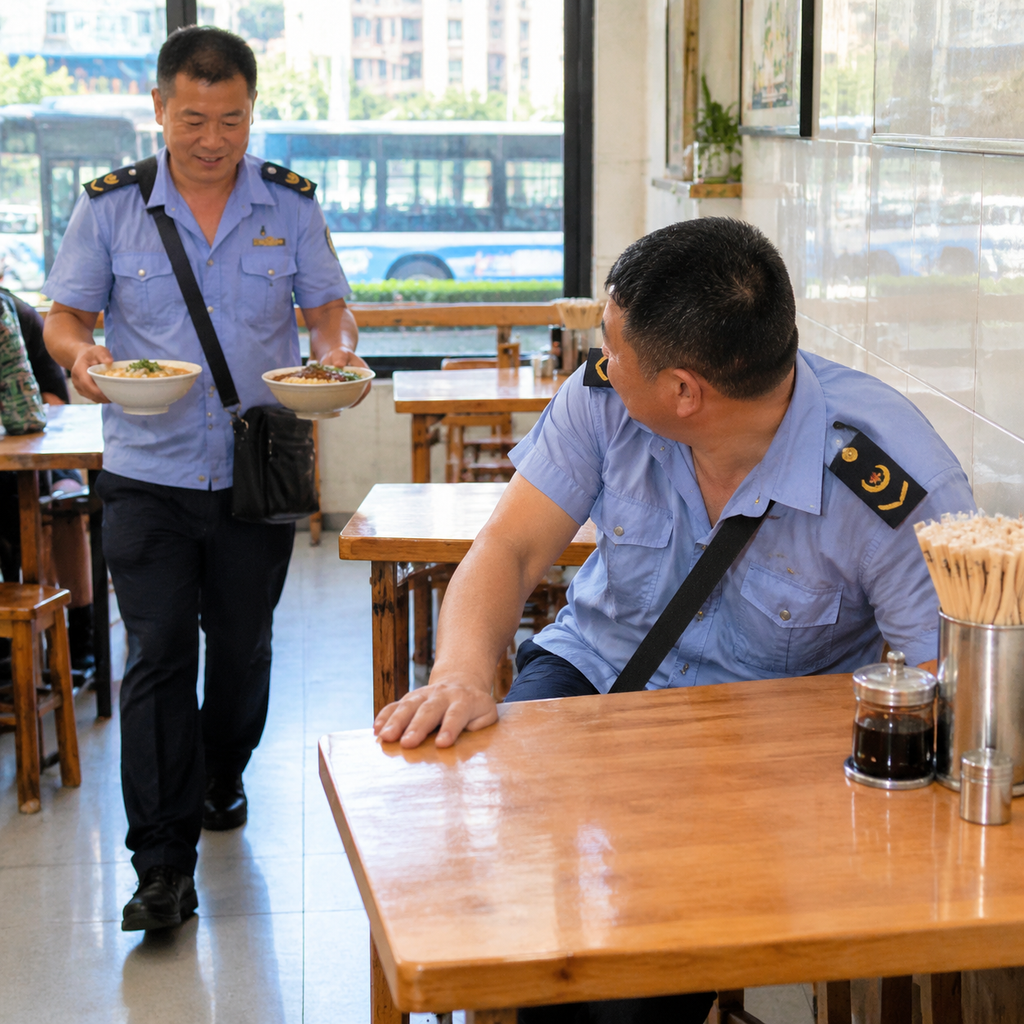
不过,我后来发现自己在柜台前仍漏听了一层。第二天再去时,我学着说“二细、辣子少些、蒜苗香菜都要”,以为已经像熟客,端到桌上却觉得汤味偏重。邻桌一位穿深蓝工装的男子没有评价我的吃法,只把醋壶往这边推了推,又指着取餐口说:“想清一点,下次说辣子少、汤宽些。”我先前把他的沉默当成不耐烦,其实他只是等我自己尝过,再给一个刚好够用的提醒。
Yet I later realized that I had missed another layer of the exchange at the counter. When I returned the next morning, I confidently ordered medium-fine noodles, less chili, and both garlic shoots and cilantro, imagining that I now sounded like a regular. At the table, however, the broth still tasted too rich for me. A man in dark-blue work clothes at the next table did not judge my choice. He simply slid the vinegar bottle toward me, pointed to the pickup window, and said, “If you want it lighter, ask for less chili and more broth next time.” I had mistaken his silence for impatience. In fact, he had waited until I tasted the bowl before offering exactly the amount of help I needed.
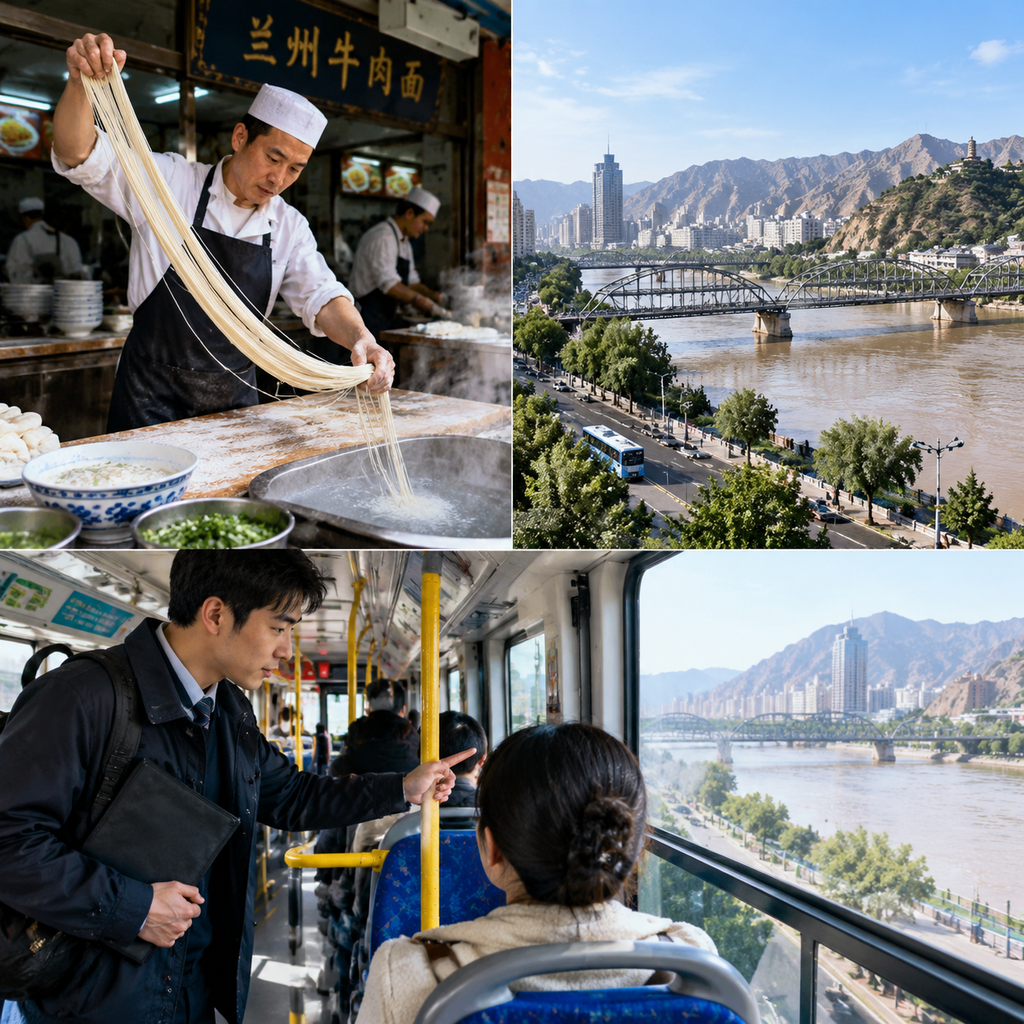
牛肉面点单的难处,不在记住一串术语,而在知道哪些词管面,哪些词管汤,哪些东西要另外付钱。初次来,可以先抓住三个决定:面条粗细、辣子多少、香菜蒜苗是否保留。若饭量大,再问能不能加面;若想吃到更明显的肉香,就单点一碟牛肉,不要误以为碗面名称里的“牛肉”必然等于铺满肉片。说不清时,用手比宽窄、指一指前桌的面也不失礼,柜台更在意队伍顺畅,而不是测试游客会不会背行话。
The difficulty of ordering beef noodles is not memorizing a string of local terms, but knowing which words control the noodles, which alter the broth, and which additions cost extra. On a first visit, focus on three choices: noodle width, amount of chili oil, and whether to keep the cilantro and garlic shoots. If you have a large appetite, ask whether extra noodles are available. If you want a stronger taste of the beef itself, order a separate plate rather than assuming that the words “beef noodles” guarantee a bowl covered in slices. When vocabulary fails, showing the width with your fingers or pointing politely to another bowl is acceptable. The counter staff care more about keeping the line moving than testing whether a visitor knows the jargon.
我也改掉了对拉面师傅的另一种想象。隔着案板看,他们手势利落、很少抬头,我一度把这种专注读成冷淡。那天一个小女孩趴在玻璃边,看面团越拉越细,师傅忽然放慢一下,把两手拉开的距离做得夸张,女孩立刻笑了。他随即把面投入锅里,继续接下一张票,没有招手,也没有表演式寒暄。那一瞬间我才懂,这里的友好未必表现为长谈;在早高峰里,稳稳接住你的订单、记得不要香菜、让孩子看清一个动作,本身就是照顾。
I also corrected another assumption about the noodle pullers. Watching them across the counter, I saw quick hands and lowered eyes, and at first read their concentration as aloofness. That morning, a little girl leaned against the glass as the dough divided into finer strands. The cook suddenly slowed for a second and exaggerated the distance between his hands. She burst into a smile. Then he dropped the noodles into the pot and moved straight to the next ticket, without waving or turning the moment into a performance. I finally understood that friendliness here does not always arrive as conversation. During the breakfast rush, handling your order reliably, remembering that you asked for no cilantro, or letting a child see one movement clearly can itself be a form of care.
带着这层修正再看黄河,河谷也不再只是“两山夹一河”的地理图。午后我从南岸走上桥,风在桥面忽然加大,骑车人收紧外套,老人把帽檐压低;下桥后风又被楼群挡住,小摊的塑料帘只轻轻摆动。短短一段路,体感已经变了两次。山体约束了城市的展开方向,河流提供连续的开阔面,桥则把被水分开的日常重新缝合。所谓河谷城市,不只适合从高处俯瞰,更要用脚走过迎风、背风、上桥和下桥。
With that correction in mind, the Yellow River valley no longer looked like a simple diagram of “one river between two mountain ranges.” In the afternoon, I walked from the south bank onto a bridge, where the wind abruptly strengthened. Cyclists tightened their coats and an elderly man pressed down the brim of his cap. Once I came off the bridge, buildings blocked the gusts again and the plastic curtain of a food stall moved only slightly. The physical sensation changed twice over a very short distance. The mountains constrain the direction of urban growth, the river provides a continuous open corridor, and bridges stitch together routines divided by the water. A river-valley city is not understood only from a high viewpoint; it must be walked through headwind and shelter, over a bridge and back down to street level.
我原来还把黄河边散步的人都看作来消闲的游客。傍晚细看,才发现有人拎着刚买的菜抄近路回家,有人穿运动服沿护栏计时跑步,也有人坐在长椅上接工作电话。卖饮料的年轻人告诉我,周末人多时拍照的会停得久,平日更多是附近居民经过。这个区别很重要:河岸不是从城市生活里切出来的观景台,而是通勤、锻炼、会面和喘口气共同使用的一条公共走廊。若只盯着水面拍照,就会错过兰州人如何把壮阔景色过成普通日子。
I had also assumed that everyone walking beside the Yellow River was a visitor out for leisure. Looking more carefully at dusk, I noticed one person carrying fresh vegetables home by a shortcut, another timing a run along the railing, and someone else taking a work call on a bench. A young drinks vendor told me that photographers linger on crowded weekends, while on weekdays most people are residents passing through. The distinction matters. The riverbank is not a viewing platform cut off from city life, but a shared corridor for commuting, exercise, meetings, and brief pauses. If I looked only at the water through a camera, I would miss how Lanzhou residents turn a monumental landscape into an ordinary day.
这些误判有一个共同根源:我太急着用表情判断态度,用景观判断人物,用菜名判断一碗面。兰州却要求更慢一点的观察。柜台阿姨的短句是为了让后面的人少等,拉面师傅不抬头是因为手里正控着面条粗细,河边的人不向景色惊叹,是因为那条河本来就在他们回家的路上。把这些动作放回具体时间和空间,冷淡、匆忙、麻木之类的标签便站不住了,留下的是一套与河谷尺度相适应的生活方法。
Those mistaken judgments shared one cause: I was too quick to infer attitude from facial expression, identity from scenery, and the contents of a bowl from its name. Lanzhou asks for slower observation. The woman at the counter uses short phrases so the next person waits less. The noodle puller keeps his eyes down because his hands are controlling the width of the strands. People beside the river do not gasp at the view because the Yellow River is already part of their route home. Once these actions are placed back in their actual time and space, labels such as cold, hurried, or indifferent no longer hold. What remains is a way of living adapted to the scale of the valley.
第三次进店,我没有再模仿前面的人。我清楚地说要二细、微辣、蒜苗香菜都加,再添一碟牛肉;取餐时先看票号,不堵在窗口。深蓝工装的男子那天不在,柜台阿姨却认出了我,抬眼问了一句:“今天汤宽?”我点头。吃完走到河边,桥灯刚刚亮起,水面没有变成夸张的金色,只把一串细碎的光拖向下游。风仍旧硬,嘴里还留着汤和蒜苗的余味,而我终于不急着替这座城、也不急着替任何一个人下结论。
On my third visit, I stopped copying the customer ahead of me. I clearly ordered medium-fine noodles, very little chili, both garlic shoots and cilantro, plus a separate plate of beef. At pickup, I watched the ticket numbers and did not block the window. The man in dark-blue work clothes was not there, but the woman at the counter recognized me and looked up to ask, “More broth today?” I nodded. When I reached the river after eating, the bridge lights had just come on. The water did not turn theatrically golden; it merely pulled a broken chain of light downstream. The wind was still sharp, and the taste of broth and garlic shoots remained in my mouth. At last, I felt no hurry to pass judgment on the city—or on any person in it.
接下来几天,我试着不再把面馆和河岸分成两个景点,而是把它们放进同一条移动路线。早晨从住处步行到面馆,吃完搭公交过桥,再沿北岸走一段;午后若风太大,就钻进临街小店歇脚,等车流稍缓再回南岸。这样走,兰州的距离会变得具体:地图上很近的两个地方,可能被一次过桥排队拉长;看似绕远的公交线,却因为少爬坡、少顶风,反而让人保留更多体力。
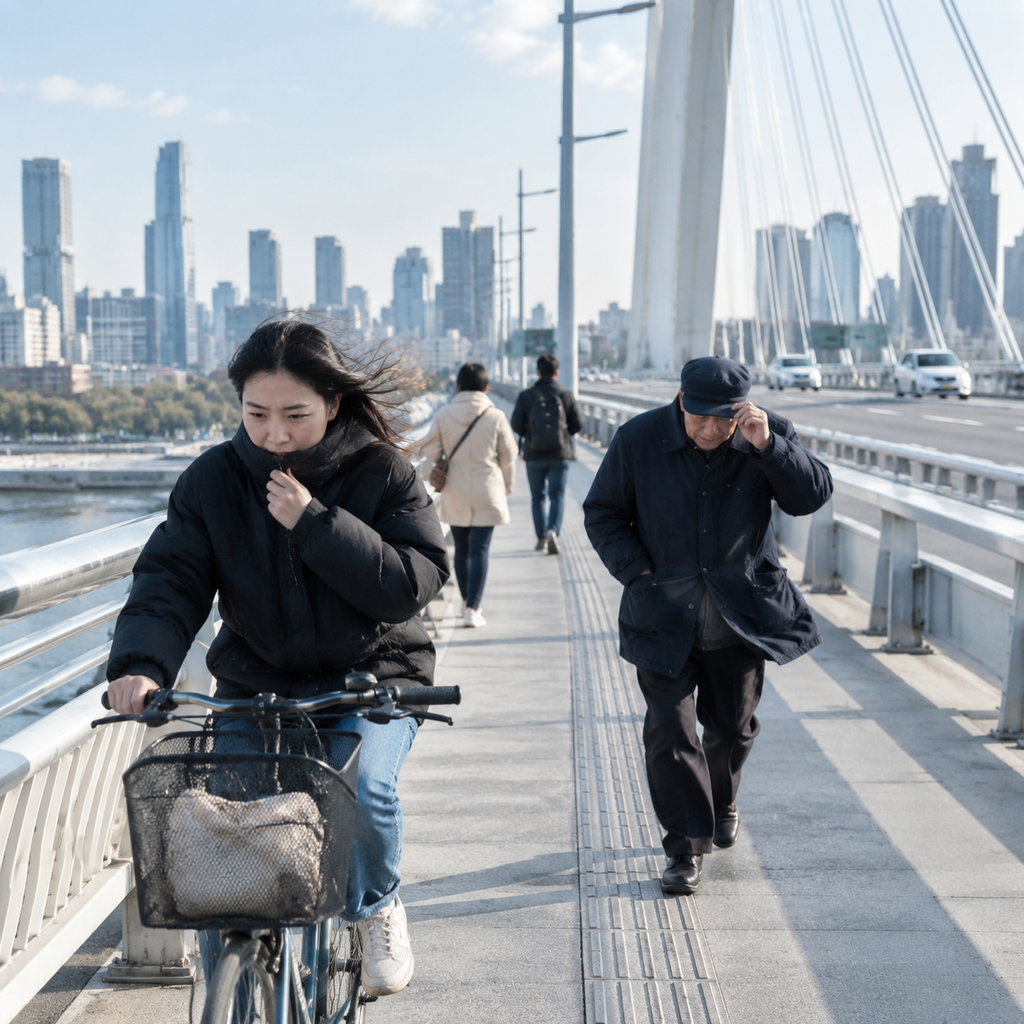
Over the next few days, I stopped treating noodle shops and the riverbank as separate attractions and placed them on the same line of movement. I would walk from my lodging to breakfast, take a bus across the river after eating, and continue for a while along the north bank. If the afternoon wind grew too strong, I stepped into a small street-side shop and waited until traffic eased before returning south. Distances in Lanzhou became tangible this way. Two points that looked close on a map could be stretched by a queue at a bridge, while a bus route that seemed indirect might preserve far more energy by avoiding slopes and headwinds.
有一回我在站牌下盯着手机,明明车辆已经进站,却因为只看线路图,没有留意车头方向,差点坐向相反的一端。一位抱着保温饭盒的阿姨见我退回来,问清目的地后没有讲复杂方位,只让我记住“河在右手边时再下车”。这句话比屏幕上的蓝线好用。车开动后,我一路看河的位置,第一次意识到本地人辨认城市,未必先靠东南西北,也会靠桥、山影、河水和坡度建立方向感。
Once, I was staring at my phone beneath a bus-stop sign. The bus had already arrived, but because I had studied only the route diagram and not the direction shown on the front, I nearly boarded the wrong way. A woman holding an insulated lunch container saw me step back. After asking where I was going, she gave no complicated compass directions; she simply told me to get off when the river was on my right. Her sentence proved more useful than the blue line on my screen. As the bus moved, I watched the river’s position and realized that local orientation is not always built from north, south, east, and west, but also from bridges, mountain shadows, water, and slope.
公交里的节奏和面馆很像,都讲究在有限空间里提前准备。快到站的人会先起身挪向车门,手机或乘车码早已亮好;上车的人不在门口慢慢整理包,而是先往里走,把通道让出来。一次急刹车时,靠窗的中学生伸手扶住一位提菜的老人,老人站稳后只说了句“好着呢”,两人随即各自看向窗外。动作很短,既没有郑重道谢,也没有刻意渲染,却让拥挤车厢重新恢复了秩序。
The rhythm inside a Lanzhou bus resembles that of a noodle shop: in a limited space, people prepare before their turn arrives. Passengers nearing their stop stand and move toward the door, with a phone or transit code already ready. Those boarding do not pause in the doorway to arrange their bags; they move inward first and clear the aisle. During one sudden stop, a secondary-school student by the window reached out to steady an older shopper carrying vegetables. Once balanced, the older passenger merely said, “I’m all right,” and both returned their gaze to the window. The gesture was brief, without solemn thanks or display, yet it restored order to the crowded carriage.
到了中午,面馆的速度与清晨又不一样。早晨的人像沿着一条直线穿过店堂,中午则多了同事拼桌、外卖员取餐和临时改口的顾客。师傅手上仍快,柜台却需要不断确认“带走还是堂食”。我坐在靠墙的位置,看见两名公交司机轮班来吃面,一个人先替同伴占座,另一个端回两碗不同粗细的面。他们没有讨论哪家最正宗,只核对下午几点发车。牛肉面在这里不是被郑重安排的美食仪式,而是城市班次之间可靠的一小段空白。
At noon, the noodle shop moved differently from the early morning. Breakfast customers had passed through the room in straight lines, but now colleagues shared tables, delivery riders collected orders, and diners changed their minds at the counter. The cook’s hands remained fast, while the cashier repeatedly confirmed whether each order was to go or to be eaten inside. From a seat against the wall, I watched two bus drivers arrive between shifts. One saved the seats while the other returned with two bowls of different noodle widths. They did not debate which shop was the most authentic; they checked the departure time for the afternoon. Here, beef noodles were not a ceremonious culinary event, but a dependable interval between the city’s scheduled runs.
再往河边走,交通留下的痕迹处处可见。桥下阴影里停着共享单车,坡道入口有人推车而不是逞强骑上去,公交站与步道之间的小路被无数脚步磨得发亮。年轻人通常走得快,却会在护栏缺口处突然停下拍水面;老人走得慢,反而很少停,因为他们知道哪一段有背风的长椅。外来者容易追着最开阔的视角走,本地人则在选择一条身体更舒服的线。两种走法没有高下,却呈现了观看与生活的区别。
Signs of transport were visible everywhere on the way back to the river. Shared bicycles stood in the shade beneath bridges. At the entrance to a slope, some riders dismounted and pushed rather than forcing their way upward. A shortcut between a bus stop and the riverside path had been polished by countless shoes. Young people usually walked quickly but stopped suddenly at gaps in the railing to photograph the water. Older residents moved more slowly yet paused less often, because they knew which stretch had benches sheltered from the wind. Visitors chased the widest view; residents chose the line that felt easiest on the body. Neither way was superior, but together they revealed the difference between viewing a place and living in it.
傍晚的河岸开始换班。白天卖水的小车收起遮阳布,夜跑的人逐渐增多,接孩子放学的家长牵着书包从步道穿过去。桥上车灯一盏接一盏,车流的低响被河面托得更远。一个男孩停下来问父亲水为什么看起来发黑,父亲没有讲大道理,只说“天亮时再来看,就不是这个颜色”。男孩点点头,又被下一辆亮灯的公交吸引。城市观察常常就是这样被打断的:一个问题还没说完,另一件移动的东西已经来到眼前。
At dusk, the riverbank changed shifts. Vendors folded the awnings of their water carts, evening runners appeared in greater numbers, and parents collecting children from school crossed the path with small hands and backpacks in tow. Headlights followed one another across the bridge, while the low sound of traffic carried farther over the water. A boy stopped to ask his father why the river looked black. Rather than offer a grand explanation, the father said, “Come back in daylight and it won’t be this color.” The boy nodded, then became absorbed by the next illuminated bus. Urban observation is often interrupted in exactly this way: before one question is finished, another moving object arrives in view.
我也开始用吃面的速度安排一天。若要赶早班车,就选细一点的面,少加配菜,吃完直接去站台;若上午只沿河走路,就点一碟牛肉,慢慢喝完最后几口汤。食物不再只是出发前补充热量,它像一只可以调节的节拍器。面条粗细、汤的多少、坐多久,都会改变之后步行和换乘的状态。难怪熟客点单时很少犹豫,他们并非每天想吃同一种味道,而是知道今天的行程需要什么样的一碗。
I also began using the pace of breakfast to organize the day. If I needed an early bus, I chose thinner noodles, ordered fewer sides, and went straight to the stop after eating. If the morning held only a riverside walk, I added a plate of beef and slowly finished the last of the broth. Food was no longer merely fuel before departure; it became an adjustable metronome. Noodle width, amount of soup, and time at the table all changed how walking and transfers felt afterward. Regulars rarely hesitated not because they wanted the same flavor every day, but because they knew what kind of bowl that day’s route required.
最后一个晚上,我搭公交回住处,车在桥中央遇上缓行。没人抱怨,司机把车稳稳往前送,乘客的脸在路灯明暗之间轮流出现。抱花的姑娘低头护着包装纸,工装男子靠门打盹,刚下课的学生隔着起雾的玻璃认站。到站提示响起时,几个人同时侧身让路,动作熟练得几乎不必交谈。黄河在下面只露出一小截反光,远不如步道上看得完整。我却觉得这个角度更接近兰州:一碗面接住早晨,一辆车接住散开的人,河流则在所有路线下面,安静地把城市带向同一个方向。
On my final evening, the bus slowed in traffic halfway across a bridge. No one complained. The driver eased the vehicle forward, and the passengers’ faces emerged and vanished in alternating bands of streetlight. A young woman carrying flowers protected the wrapping paper with her hands; a man in work clothes dozed beside the door; students coming from class identified their stop through a fogged window. When the stop announcement sounded, several people shifted aside at once, moving with a practiced ease that required almost no words. Below us, the Yellow River showed only a narrow strip of reflected light, far less complete than the view from the riverside path. Yet this angle felt closer to Lanzhou: a bowl of noodles received the morning, a bus gathered people who had scattered across the day, and beneath every route the river quietly carried the city in one shared direction.
第二天清早,我特意换了一条不经过主桥的路线,想看看河谷城市在住宅区里是什么样子。小区门口的早餐摊把桌子支在树荫下,蒸笼盖一掀,白雾便把玻璃上的字迹遮住。一个送孩子上学的父亲一手拿豆浆,一手替女儿把围巾塞进校服领口;卖包子的老人记得某位邻居不要葱,见人走近便先把那只纸袋放到台边。这里没有黄河边的开阔风景,却有另一种紧密感:楼门、菜店、修鞋摊和早餐桌彼此挨着,居民只走几步就能完成出门前的许多事情。
The next morning, I deliberately took a route that avoided the main bridge, wanting to see what the river-valley city felt like inside its residential neighborhoods. A breakfast stall had set its tables beneath the trees. Whenever the steamer lid lifted, white vapor blurred the writing on the glass. A father taking his child to school held soy milk in one hand while tucking the girl’s scarf into her uniform collar with the other. The baozi seller remembered that one neighbor wanted no scallions and placed that paper bag at the edge before the customer even reached the stall. There was no wide river view here, but another kind of closeness: entrances, vegetable shops, a shoe-repair stand, and breakfast tables pressed together, allowing residents to finish many small departures within a few steps.
我在小区外的修鞋摊停了一会儿。摊主把一只鞋翻过来,先用手指摸鞋底磨损的位置,再从抽屉里找出颜色相近的线。他听说我是外地来的,并没有马上聊景点,反而问我是不是走了很多路。我说这几天一直在河边和桥上走,他便指着我的鞋跟说:“兰州风大,路也有坡,鞋底软一点,人会轻松。”这句话让我重新理解旅行准备。很多建议并不写在路线图上,而是由真正看见你走路姿势的人说出来;他们谈的不是城市名片,而是脚掌落地时那一点真实的疲劳。
I paused at a shoe-repair stall outside the neighborhood. The cobbler turned one shoe over, felt the worn part of the sole with his finger, and searched a drawer for thread of a matching color. When he heard I was visiting from elsewhere, he did not immediately talk about attractions. Instead, he asked whether I had been walking a lot. I told him I had spent several days along the river and across bridges. Pointing at my heel, he said, “Lanzhou has strong wind and plenty of slopes. A softer sole will make things easier.” His remark changed how I thought about travel preparation. Many useful suggestions never appear on a route map; they come from someone who has actually noticed the way you walk. They concern not a city’s public image, but the small fatigue of a foot meeting the ground.
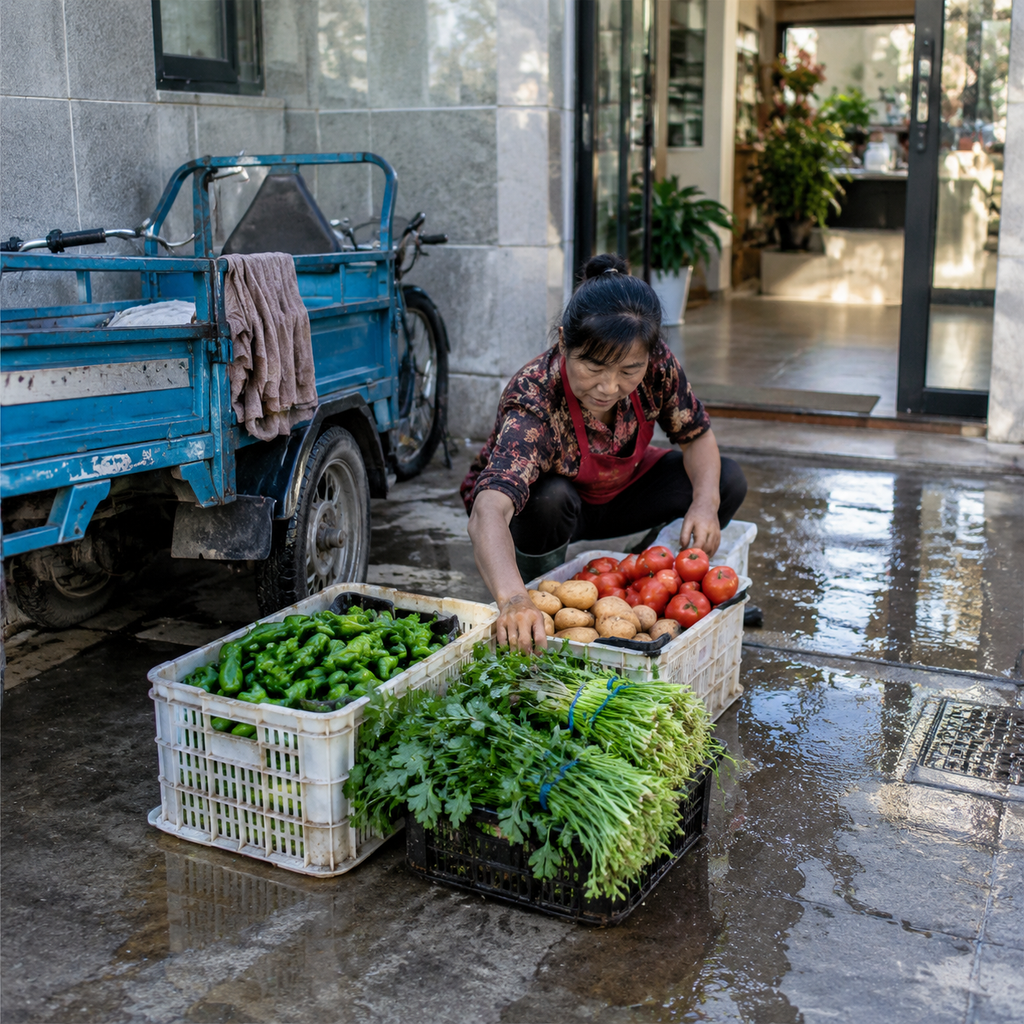
后来我沿着居民区的小路走到一处菜市场。入口处的地面有昨夜冲洗后留下的水痕,三轮车挨着墙停放,塑料筐里是青椒、土豆、番茄和一把把湿漉漉的香菜。买菜的人很少停在正中间,他们总是侧身让出通道,问价时顺手把袋子往脚边收。一个年轻妈妈让孩子数摊位上的鸡蛋,孩子数到七个就忘了,摊主没有催,只把鸡蛋重新排成两行。那一刻,市场既是交易场,也是孩子练习数量、顺序和礼貌的地方。城市的学习氛围不一定在安静的教室里,也可能藏在一只菜篮子旁边。
Later I followed a residential lane to a wet market. Water marks from the previous night’s washing still traced the entrance. Tricycles stood against the wall, while plastic crates held green peppers, potatoes, tomatoes, and bunches of wet cilantro. Shoppers rarely stopped in the middle; they turned sideways to keep the passage open and pulled their bags toward their feet while asking prices. A young mother asked her child to count the eggs on a stall. The child reached seven and forgot where to continue. The vendor did not hurry him; she simply arranged the eggs into two rows again. In that moment, the market was both a place of trade and a place where a child practiced quantity, order, and courtesy. A city’s learning atmosphere does not always live in a quiet classroom. Sometimes it hides beside a vegetable basket.
中午前后,太阳把楼影推到街边,我才发现自己已经走得比计划远。手机上的路线看起来仍然短,脚底却开始发热,肩膀也因为相机背带发紧。我没有继续追赶下一个“必须到达”的点,而是在一家小店门口坐下,买了瓶常温水。店主把门口的小凳往里挪,免得挡住进货的人,又顺手把一把蒲扇递给我。风从巷口穿过来,带着洗衣粉和炒菜的味道。休息十分钟后,我删掉了下午原本安排的两个远处停留点,只保留一段能慢慢走完的河岸。对兰州的理解,恰恰是在放弃赶路之后变得更清楚。
Before noon, the sun pushed the building shadows toward the street, and I realized I had walked farther than planned. The route on my phone still looked short, but the soles of my feet were hot and the camera strap had tightened my shoulders. Instead of chasing the next “must-see” point, I sat outside a small shop and bought a bottle of room-temperature water. The shopkeeper moved a little stool inward so it would not block the delivery workers, then handed me a palm fan. Air passed through the lane carrying the smells of laundry detergent and stir-fried food. After ten minutes, I removed two distant stops from my afternoon plan and kept only one stretch of riverside path that I could walk slowly. My understanding of Lanzhou became clearer precisely after I stopped trying to hurry through it.
休息之后,我没有立刻回到河岸,而是在十二点四十分走到西关十字,想验证自己刚学会的河谷方向感。路口的公交站分散在不同街边,同一站名并不意味着所有线路都停在同一块站牌下。我跟着导航绕了半圈,仍站在错误的候车区,直到一名提着工具箱的维修工问我要去哪里。他没有接过手机替我操作,只带我走到斑马线边,指着对面药店的绿招牌说:“过两次灯,到招牌下面等。”我原先以为换乘失败是看不懂线路,后来才发现,更常见的问题是没有读懂路口的尺度。
After resting, I did not return to the riverbank immediately. At 12:40, I walked to Xiguan Shizi to test the sense of valley orientation I thought I had learned. Bus stops around the intersection were spread along different sides of the streets; sharing one stop name did not mean that every route used the same sign. I followed my navigation app around half the junction and still ended up in the wrong waiting area. A maintenance worker carrying a toolbox asked where I was going. Instead of taking my phone and doing it for me, he led me to the zebra crossing, pointed at the green sign of a pharmacy opposite, and said, “Cross at two lights, then wait under that sign.” I had assumed a failed transfer meant misunderstanding the route. More often, I now realized, it meant failing to read the scale of the intersection.
一点十分,开往七里河方向的公交终于进站。车门一开,冷气、报站声和街面的热风撞在一起。我先挤到后排,觉得离车门越远越省事,几站后才明白这是另一个误判:沿线乘客上下得快,背着相机站在狭窄过道里,反而要不停侧身。一位拿文件袋的年轻人轻敲扶手,让我把背包转到胸前,又示意我在下一站有人下车时换到门边。他没有替我腾出一个“游客座位”,而是教我如何减少自己的体积。等车厢重新顺畅起来,我才体会到本地交通里的礼貌常常不是优先照顾谁,而是每个人少占一点通道。
At 1:10, the bus toward Qilihe finally arrived. When its doors opened, cool air, the stop announcement, and heat from the street collided at the entrance. I pushed toward the rear, assuming that the farther I stood from the doors, the less trouble I would cause. A few stops later, I recognized another bad judgment. Passengers along this route boarded and left quickly, and with a camera on my back in the narrow aisle, I kept forcing others to turn sideways. A young man holding a document envelope tapped the rail, showed me how to move my backpack to my chest, and suggested that I shift toward the door when several people left at the next stop. He did not offer me a special “visitor’s seat.” He taught me how to occupy less space. Once the aisle flowed again, I understood that courtesy on local transport often means not giving one person priority, but having everyone surrender a little of the passage.
我在小西湖附近下车时,河风把站牌背后的广告纸吹得啪啪作响。地图显示河岸就在北边,可高架、辅路和围栏把直线切成几段,最近的方向并不等于最好走的入口。我跟着两个推婴儿车的老人,多走了一个有缓坡的路口,才安全到达步道。老人说前面的楼梯确实近,但车轮下不去,他们每天宁愿多走七八分钟。这个细节让我改掉了“导航给出的最短步行就是标准答案”的想法。在河谷里,坡度、过街次数、风向和手里拿着什么,会把每个人的最短路线改写成不同形状。
When I got off near Xiaoxihu, the river wind snapped an advertisement sheet behind the bus sign. The map showed the riverbank directly to the north, but an overpass, service roads, and railings divided that apparent straight line into several pieces. The nearest direction was not necessarily the easiest entrance. I followed an older couple pushing a baby stroller and took a gentler crossing one junction farther away before reaching the path safely. They explained that the stairs ahead were indeed closer, but the wheels could not descend them, so they willingly added seven or eight minutes every day. That detail broke my habit of treating the shortest walking route on a map as the standard answer. In a valley, slope, road crossings, wind direction, and whatever a person carries reshape the shortest route for every body.
一点五十分,太阳正落在没有树荫的一段步道上,我看到一位外卖骑手把车停在桥墩阴影里。他摘下头盔,没有马上看手机,而是先拧开水杯喝了三口,再用湿纸巾擦掉眼角的灰。订单提示响起后,他才把手机夹回车把,确认楼号,又把保温箱扣带逐个压紧。我问附近哪座桥骑车更省力,他先看我的鞋,再看我手里的相机,说步行不必追着车道走,前面公共交通更稳妥。他把“最快”拆成两件事:车轮怎样过河,人的膝盖怎样保留力气。旅行者常只问时间,本地工作者却把身体也算进路线成本。
At 1:50, the sun lay directly across a treeless stretch of path. A delivery rider parked in the shadow of a bridge pier, removed his helmet, and did not look at his phone at once. He first took three drinks from his bottle and wiped dust from the corner of his eyes with a damp tissue. Only when the order alert sounded did he clamp the phone back onto the handlebar, check the building number, and press each strap on the insulated box into place. I asked which nearby bridge was easiest for cycling. He looked first at my shoes and then at the camera in my hand, and said that a pedestrian did not need to follow the vehicle route; public transport ahead would be more dependable. He divided “fastest” into two questions: how wheels crossed the river and how knees preserved their strength. Travelers tend to ask only about minutes, while local workers include the body in the cost of a route.
我在一座社区公交站又停了二十分钟。电子屏显示车辆将到,数字却因前方车流两次跳回去,队伍里没有人跟着屏幕来回挪动。戴草帽的老人把菜篮放在脚边,一名穿校服的女孩靠着立柱背英语单词;车真正转过街角时,老人先用鞋尖把篮子勾近,女孩合上小册子,两人几乎同时让出下车口。我原本依赖倒计时决定何时准备,后来学会先看人的动作:手机收进口袋、袋子提离地面、身体朝车道转过去,这些信号往往比屏幕早半分钟告诉我,城市的下一步已经开始。
I waited another twenty minutes at a neighborhood bus stop. The electronic display said the vehicle was approaching, but congestion ahead made the number jump backward twice. No one in the queue shuffled back and forth in obedience to the screen. An elderly man in a straw hat set his vegetable basket beside his feet, while a schoolgirl leaned against a post memorizing English words. When the bus finally turned the corner, he hooked the basket closer with the toe of his shoe and she closed her booklet; almost simultaneously, both cleared space for passengers getting off. I had relied on countdowns to decide when to prepare. I began instead to watch people: a phone disappearing into a pocket, a bag lifting from the pavement, shoulders turning toward traffic. Such signals often announced the city’s next movement half a minute before the screen did.
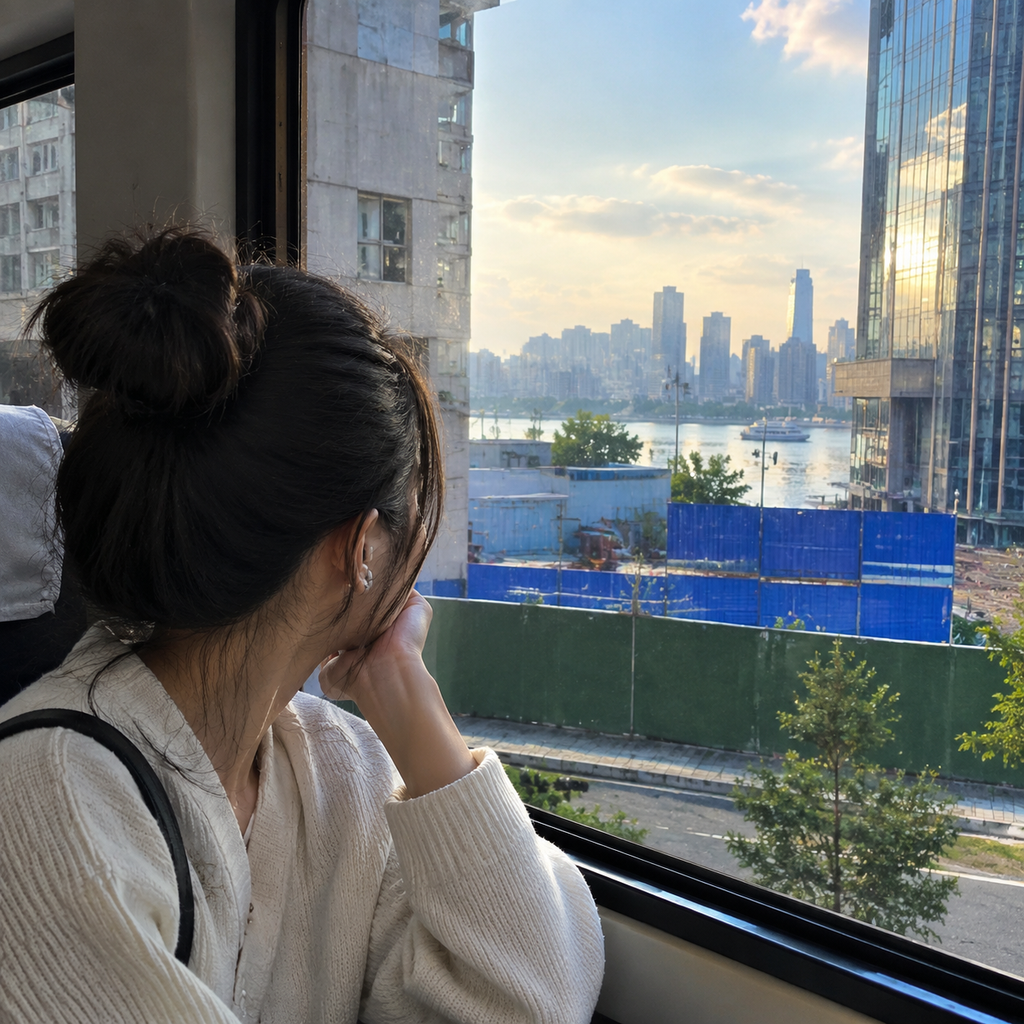
回程时我没有原路折返,而是在两点二十五分坐上一辆沿河南岸行驶的公交。靠窗位置时而看见水,时而只看见商铺后墙和施工挡板,完整河景被城市用途一截截遮住。司机经过一处弯道前提前收油,车厢里站着的人同时抓紧扶手;转过弯,白塔山才从楼缝里露出来。我这才明白,公交不只是把景点连接起来,它本身就是读取兰州纵向结构的移动剖面:临河的开阔、路口的停顿、山脚的抬升和桥头的拥堵,都按几分钟一次的节奏轮流出现。两点五十分下车后,我没有觉得绕远,反而比直线步行更清楚自己身处河谷的哪一层。
On the return trip, I did not retrace my steps. At 2:25, I boarded a bus running along the south bank. From the window I sometimes saw water, and sometimes only the rear walls of shops or construction barriers; the supposedly complete river view was repeatedly interrupted by the city’s practical uses. Before a bend, the driver eased off the accelerator and every standing passenger tightened a hand around the rail. After the turn, Baita Mountain appeared through a gap between buildings. I realized then that a bus does more than connect attractions. It is a moving cross-section through Lanzhou’s long valley structure: riverside openness, pauses at junctions, the rise near the mountain foot, and congestion at bridgeheads take turns appearing every few minutes. When I got off at 2:50, the route did not feel like a detour. It had shown me more clearly which layer of the valley I occupied.
下午三点,我从河岸转向白塔山脚,原本只想找一处能看桥的高点。入口旁的台阶并不陡,却一层接一层地把呼吸切成短促的节拍。一个背着红色水壶的男孩跑两级、停一级,母亲在后面提醒他不要踩湿边;卖矿泉水的大叔把纸箱往阴影里拖了拖,给上山的人留出转身的位置。走到半坡,我回头看中山桥,桥身没有旅游海报里那么完整,行人、公交和护栏把它切成许多片段。城市的标志一旦被正在使用的人遮住,反而更像生活,而不是布景。
At three in the afternoon, I turned from the river toward the foot of Baita Mountain, hoping only to find a high point from which to see the bridge. The steps were not steep, but their repeated rise broke my breathing into short rhythms. A boy with a red water bottle ran up two steps at a time and paused on the third, while his mother warned him away from the damp edges. A vendor dragged a carton of bottled water into the shade, leaving climbers room to turn around. Halfway up, I looked back at Zhongshan Bridge. It was not as visually complete as in a travel poster; pedestrians, buses, and railings divided it into many pieces. Once a landmark is partly hidden by the people using it, it looks more like life than a set.
山腰的凉亭里坐着一位姓马的退休邮递员。他把帽子放在膝头,听我问哪边看黄河更顺,先指向桥,再指向一条被树叶遮住的旧路。他说年轻时送信,最熟的不是门牌,而是哪座楼的住户会在下午开窗,哪条巷子下雨后积水最深。说到这里,他从口袋里摸出一张折得发软的旧地图,边角已经磨白,红笔圈着几座后来改名的街道。我问他是否还会走那条路,他笑着说腿脚慢了,但看见快递员在同一条巷子里转弯,仍能猜出他们下一站该往哪里。对他而言,城市记忆不是景点名单,而是一张由投递、等待和熟人回应织成的路线。
In a pavilion halfway up the slope, I met a retired postal worker named Ma. He rested his hat on his knees. When I asked where the Yellow River looked best, he pointed first toward the bridge and then toward an old path hidden by leaves. He said that when he was young, he knew a neighborhood less by its door numbers than by which residents opened their windows in the afternoon and which lane collected the deepest water after rain. He pulled a soft, folded map from his pocket; its corners had turned white, and a red pen circled streets that had since been renamed. I asked whether he still walked there. He smiled and said his legs were slower, but when he saw a courier turn into the same lane, he could still guess the next stop. To him, urban memory was not a list of attractions, but a route woven from deliveries, waiting, and familiar replies.
从白塔山下来时,天色开始发黄,我沿着正宁路附近的街巷寻找晚饭。白天收着卷帘门的店铺陆续亮灯,摊主先把桌脚垫稳,再把调料瓶按使用频率排开。卖酿皮的姑娘把一份切好的凉菜递给外卖骑手,骑手没有立刻走,而是低头确认小区名称和楼栋。她提醒他那一带有两个相似的门,最好看清门卫室旁的树。几句话说完,骑手才把餐盒放进保温箱。这里的夜食并不只是香味更重,它还暴露出城市如何依靠许多微小的确认,避免一个人把热饭送到错误的门口。
Coming down from Baita Mountain, I followed the yellowing light through lanes near Zhengning Road in search of dinner. Shops that had kept their shutters down during the day began to glow. Each vendor first steadied the table legs and then arranged the condiment bottles according to how often they were used. A young woman selling stuffed cold noodles handed a prepared order to a delivery rider, who did not leave at once. He checked the residential compound, building, and entrance. She warned him that two entrances looked alike and told him to look for the tree beside the guard booth. Only after this short exchange did he place the boxes into his insulated bag. Night food here was not merely more aromatic; it also revealed how a city relies on countless small confirmations to keep a hot meal from reaching the wrong door.
我点了一份热卤和一碗甜醅子,坐在靠近巷口的位置。隔壁桌是一名刚下晚班的护士,她把口罩收进包里,先给同事发消息说已经安全到家附近,再慢慢吃第一口。摊主认识她,少放了辣油,又把一小碟腌萝卜推过去。护士说自己白天没有时间好好吃饭,晚上这十几分钟不能被手机完全占走。她的判断很明确:一座城市是否宜居,不只看有没有大商场和宽马路,也看一个疲惫的人能不能在回家前找到一张不催促他的桌子。那碗甜醅子的凉意,让她紧绷的肩膀终于落下来。
I ordered a hot braised dish and a bowl of sweet fermented rice and sat near the mouth of the lane. At the next table, a nurse who had just finished a late shift put her mask into her bag. Before eating, she messaged a colleague that she had reached the area near home, then took her first slow bite. The vendor knew her, used less chili oil, and slid over a small dish of pickled radish. She said she had no time for a proper meal during the day, and these fifteen minutes at night should not be entirely taken by her phone. Her judgment was clear: whether a city is livable depends not only on shopping centers and broad roads, but also on whether a tired person can find a table before going home where nobody hurries them. The coolness of the fermented rice finally let her tense shoulders drop.
夜里九点多,我再走到黄河边,白天那些跑步的人已经换成散步的家庭和收摊的商贩。一个带着三脚架的年轻摄影师对着桥灯调整曝光,旁边清洁工阿姨推着车经过,提醒他别把脚架横在盲道上。他连忙收窄支架,向她道谢。过了一会儿,他拍到的照片里,桥灯仍然漂亮,但画面边缘多了一辆慢慢经过的清洁车。我原来总想把兰州拍成静止的河、山和桥,后来才承认,真正有辨识度的夜色恰恰来自这些会移动、会让路、会纠正彼此的人。
After nine at night, I returned to the Yellow River. The runners from daytime had been replaced by families taking walks and vendors packing up. A young photographer adjusted the exposure on his tripod while a cleaner pushed her cart past him and warned that the legs were crossing the tactile paving. He quickly narrowed the tripod and thanked her. Later, his photograph still showed the beautiful bridge lights, but a slowly moving cleaning cart appeared at the edge of the frame. I had wanted to photograph Lanzhou as a still arrangement of river, mountains, and bridges. I came to admit that the city’s most recognizable night scene comes from people who move, make room, and correct one another.
第二天离开前,我把剩下的时间交给一条没有列在计划里的短路线:从住处走到菜市场,再沿小坡下到河岸,最后在面馆喝一碗清汤。市场门口的出租车司机帮一位拄拐的老人把折叠车放进后备箱,司机没有催促后面的车,只抬手示意大家绕开。小坡上,一个中学生背着琴盒逆风走,琴盒带子滑到肩下,他停在墙边重新系紧才继续。面馆里,柜台阿姨看见我没有点辣子,问是不是今天要赶路;我说要去车站,她便把汤盛得稍宽一些。这个“稍宽”没有写在菜单上,却是她根据我的步子做出的判断。
Before leaving the next day, I gave my remaining time to a short route that had never appeared in my plan: from my lodging to the market, down a small slope to the river, and finally into a noodle shop for a bowl of clear broth. At the market entrance, a taxi driver helped an elderly man with a cane load a folding cart into the trunk. He did not hurry the cars behind him, but raised a hand to ask them to go around. On the slope, a secondary-school student carrying a violin case walked into the wind. When the strap slipped below his shoulder, he stopped beside a wall, retied it, and continued. In the noodle shop, the cashier noticed that I had ordered no chili and asked whether I was in a hurry. I said I was going to the station, so she served a little more broth. That “little more” was not on the menu; it was her judgment based on the way I was moving.
车站候车时,我把几天里记下的词重新排列:面宽、桥高、风硬、坡长、汤清、路熟。它们不像景点介绍那样整齐,却能互相解释。面馆教我在拥挤中迅速表达,公交让我借助河水和桥判断方向,菜市场与修鞋摊提醒我注意身体和邻里,夜岸则让我看见公共空间如何被不同班次的人轮流使用。兰州并没有用一条宏大的故事替我总结自己,而是把答案分散在一碗面、一张旧地图、一把蒲扇和一段让路的动作里。离开河谷时,我带走的不是“看过哪些地方”,而是知道下一次抵达陌生城市后,应该先观察谁在赶路、谁在停下,以及他们如何让彼此继续前进。
At the station, I rearranged the words I had written down over several days: wide noodles, high bridge, hard wind, long slope, clear broth, familiar route. They were less orderly than an attraction guide, yet they explained one another. The noodle shop taught me to express myself quickly in a crowded room. The bus taught me to use the river and bridges as orientation. The market and shoe stall reminded me to notice bodies and neighbors. The riverside at night showed me how public space is shared by people on different schedules. Lanzhou did not offer one grand story to summarize itself. It scattered its answers among a bowl of noodles, an old map, a palm fan, and a gesture of making way. Leaving the valley, I carried away not a list of places seen, but a better question for the next unfamiliar city: who is hurrying, who is pausing, and how do they help one another keep moving?
- 在上海弄堂里学会慢下来 | Learning to Slow Down in Shanghai's Lanes
- 保温杯没有拧紧的那一刻,我才懂宜春的温泉不是赶场项目 | When My Thermos Came Loose, I Understood That Yichun’s Hot Springs Are Not a Race
- 五月黄山脚下的一场雨,让本人第一次明白赶景点不如先安顿情绪 | A Rainy May Day at the Foot of Huangshan Taught Me to Settle My Mood Before Chasing Views
- 从兰州牛肉面开始理解一座河谷城市 | Understanding a River-Valley City Through Lanzhou Beef Noodles
- 中国旅游语言障碍解决方案 | Overcoming Language Barriers in China
- 西藏:世界屋脊 | Tibet: The Roof of the World
- 五一黄金周最热门目的地 | Top Destinations for May Golden Week
- 中国陶瓷文化之旅:景德镇与官窑遗址 | Ceramic Heritage Trail: Jingdezhen & Imperial Kilns
- 暑期汛期去旅行:那场山里暴雨教我的安全课 | A Mountain Rainstorm Taught Me the Real Safety Lesson of Summer Travel in China
- 一锅潮汕牛肉的时间表:从早市吃到深夜粿条 | The Timetable of Chaoshan Beef: From Morning Market to Late-Night Noodles
Comments (0)