
我一直以为唐代早点只是“种类多”,直到我站在晨市里闻见锅边和胡饼一起冒热气 | I Thought Tang Breakfast Was Only About Variety Until I Stood in the Morning Market and Smelled Pan Steam and Sesame Flatbread Rising Together
我一直以为唐代早点只是“种类多”,直到我站在晨市里闻见锅边和胡饼一起冒热气 | I Thought Tang Breakfast Was Only About Variety Until I Stood in the Morning Market and Smelled Pan Steam and Sesame Flatbread Rising Together
天色刚从灰里翻出一点白,街口已经热了。不是很响的那种热,而是一种带着水汽、脚步和铁勺碰锅声的热。我是跟着一个总把袖子挽得很高的行脚商一起走进晨市的,他一边走一边提醒我别只盯着摊子看,要先看人都往哪里站。前面卖热汤的摊位边上已经围出半个弧形,旁边烤胡饼的人正把一排面饼贴到炉壁上,手收回来时指尖还带着一点面粉。我原本以为唐代早市最吸引人的会是“东西多”,可真正把我钉在原地的,反而是不同热气在同一条街上同时冒出来的那种层次感。
The sky had only just begun to turn pale from gray, and the street entrance was already warm. Not loud warm, but a warmth made of moisture, footsteps, and the sound of iron ladles striking pots. I entered the morning market behind a traveling merchant who always rolled his sleeves high. As we walked, he told me not to stare only at the stalls. First, he said, watch where people choose to stand. A half-circle had already formed around the hot soup vendor. Beside it, a man baking sesame flatbread was slapping rounds of dough against the inside wall of the oven, drawing back his fingers dusted lightly with flour. I had assumed the most striking thing about Tang breakfast markets would be sheer variety. But what truly held me in place was the layered feeling of different kinds of heat rising from the same street at once.
我后来越来越觉得,中国古代饮食最难写清楚的地方,不是菜名太多,而是它和时间、动作、人流绑得太紧。唐代尤其如此。你不能只说“有胡饼、有粥、有汤”,那样太像菜单了。真正的早点生活,是谁先停在汤摊前,谁把饼买走边走边吃,谁明明赶路还要回头加一口热汤,谁站在雾气里先搓了搓手再把铜钱递出去。食物不是单独摆着等人来欣赏的,它是在人和街一起动的时候才真正成立。
The longer I stayed in China, the more I felt that the hardest thing to write clearly about historical food is not the number of dishes, but how tightly food is tied to time, gesture, and moving crowds. This is especially true of the Tang period. You cannot simply say there was flatbread, porridge, and soup. That sounds like a menu. Real breakfast life depends on who stops first at the soup stall, who buys bread and keeps walking while eating, who is clearly in a hurry yet still turns back for one extra swallow of hot broth, and who rubs cold hands together in the steam before extending copper coins. Food is not an object placed alone for admiration. It becomes fully real only when street and people move around it together.
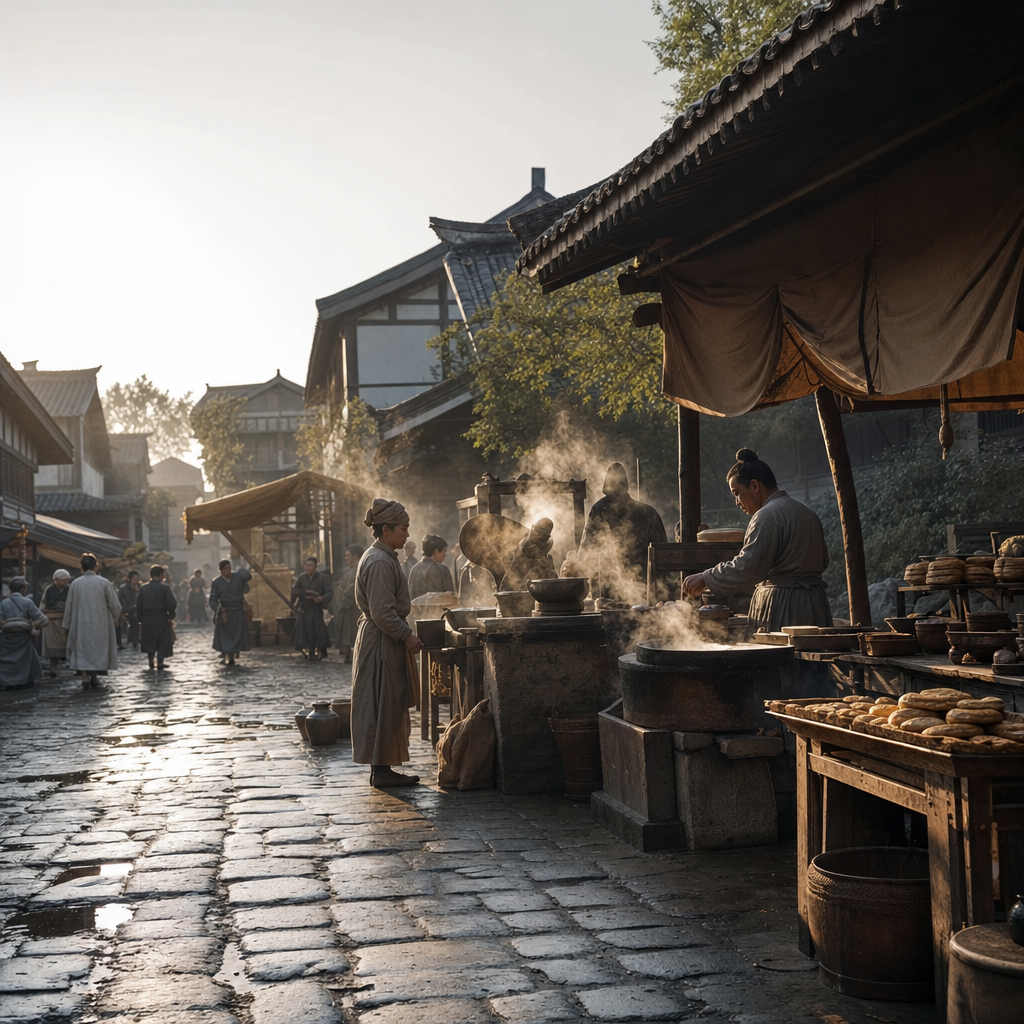
带我进市的那位行脚商姓韩,走得快,说话却不急。他停在一口大锅前,先不买,只低头闻了一下,然后偏头跟我说,早市先闻汤,再看饼。我听完差点笑出来,因为这话听着像规矩,其实又特别具体。汤决定你这条街今天醒得够不够快,饼决定你这顿早饭能不能带着走。唐代城里人流杂,节奏快,外来商旅也多,所以早点不能只图坐下来慢慢吃,很多时候还得照顾“边走边续一口热”的现实。正因为这样,早点摊才会显得格外聪明:它知道人不是为吃而停,而是在赶路里给身体补一口稳。
The traveling merchant who brought me in was surnamed Han. He walked fast, but he never rushed his words. He stopped before a large pot, did not buy anything yet, only lowered his head to smell the broth and then turned to tell me that in a morning market, soup must be smelled first and bread judged second. I nearly laughed when I heard it, because the line sounded like a rule and yet was so concrete. Soup tells you whether the street has properly awakened. Bread tells you whether the meal can continue moving with you. Tang urban life was crowded, quick, and full of outside merchants, so breakfast could not be only about sitting down slowly. Very often it had to serve the reality of adding one mouthful of stability while already in motion. That is why the breakfast stalls felt so intelligent to me. They understood that people were not stopping merely in order to eat. They were pausing inside movement to give the body one hot moment of balance.
唐代早点最厉害的不是丰富,而是接得住赶路的人 / Tang Breakfast Was Powerful Not Because It Was Rich, but Because It Could Catch People in Motion
我以前总觉得古代早点如果花样多,大概就是一种富庶象征。后来站在这种晨市里,我才发现更重要的是“接得住”。有人刚从家门出来,胃口还没完全醒,只要一碗带热气的薄汤;有人已经走了半条街,需要能顶一会儿的饼;还有人边买边和旁边摊主问今天路况、天气或货队什么时候进城。早点摊因此不只是卖吃的,它还像一排把城市清晨接起来的小节点。
I used to think that if an old breakfast market offered many options, that probably meant prosperity. But once I stood in a street like this, I realized that what mattered more was whether it could catch people properly. Some had only just left home and their stomachs were not fully awake, so they needed only a thin hot soup. Others had already walked half the street and needed a bread that could hold them for longer. Still others bought while asking nearby vendors about road conditions, weather, or when trade caravans were expected into the city. Breakfast stalls therefore did more than sell food. They formed a row of small points holding the city together at daybreak.
韩姓商人后来替我买了一张刚出炉的胡饼,边缘还烫,表面有一层轻轻裂开的芝麻香。他没让我马上咬,而是先带我靠近那口汤锅,说你先闻这个,再吃那个,才知道早市为什么不是乱的。果然,当我先闻见热汤里一点葱香和肉气,再去咬那口干香的饼时,整个早晨的层次一下清楚了。一个是把人从冷里拉出来,一个是把人往路上推回去。它们不是互相竞争,而是在分工。
Later Han bought me a sesame flatbread just out of the oven. Its edge was still hot, and its surface carried the fragrance of sesame from a lightly cracked crust. He did not let me bite it immediately. Instead he drew me first toward the soup pot and said that only by smelling this before eating that would I understand why the market was not chaotic. He was right. Once I first caught the broth's faint scent of scallion and meat and then bit into the dry aromatic bread, the whole structure of the morning suddenly became clear. One element pulled the body out of the cold. The other pushed it back toward the road. They were not competing. They were dividing the work.
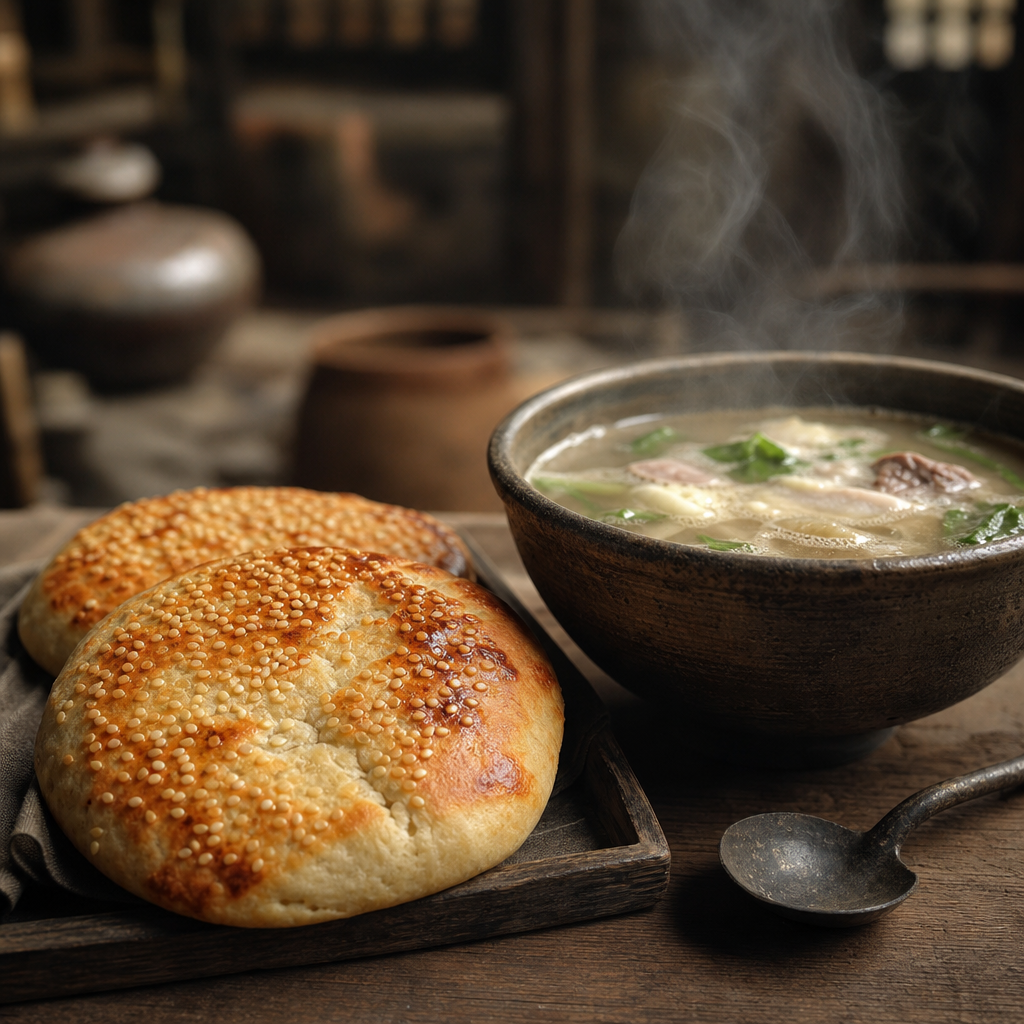
真正热闹的不是叫卖声,是摊位之间怎么配合 / The Real Liveliness Was Not the Shouting, but How the Stalls Supported One Another
很多人写古代市场,总喜欢把重点放在吆喝声上,好像越大声越有烟火气。可我那天感受到的唐代晨市,并不是靠喧闹取胜。真正有意思的是不同摊位之间那种几乎不必讲明的配合。卖汤的前面站着想先暖胃的人,卖饼的旁边聚着准备带着走的人,稍远一点卖热粥的地方则更像给年纪大些的人留出的慢半拍空间。你站在街心看一会儿,就会发现人流自己会把这些位置分出来。
Many people write about old markets by emphasizing the cries of the vendors, as though louder meant more life. But the Tang morning market I felt that day did not win by noise. What was truly interesting was the almost wordless coordination between different stalls. In front of the soup sellers stood the people who wanted to warm their stomachs first. Near the bread sellers gathered those preparing to carry food onward. A little farther off, the hot porridge area felt like a half-beat slower space reserved for older customers. If you stood in the middle of the street and watched for a while, you would see that the crowd itself separated these zones naturally.
这让我忽然想起中国古建筑里那种会安排人脚步的长廊和柱列。食物摊位虽然是临时的,可它们也在做差不多的事:让急的人有急的入口,让慢的人有慢的停靠。中国古代城市真正成熟的地方,也许就在这里。不是把所有人都挤到一起,而是让不同节奏的人都能在同一条街上找到自己的那一口热。
That made me suddenly think of the corridors and column lines in traditional Chinese architecture that guide the pace of movement. Food stalls may be temporary, yet they do something very similar. They create an entry for the hurried and a resting place for the slower. Perhaps this is one of the real signs of an old Chinese city reaching maturity. It is not that everyone is forced into the same cluster, but that people moving at different speeds can all find their own portion of heat on the same street.
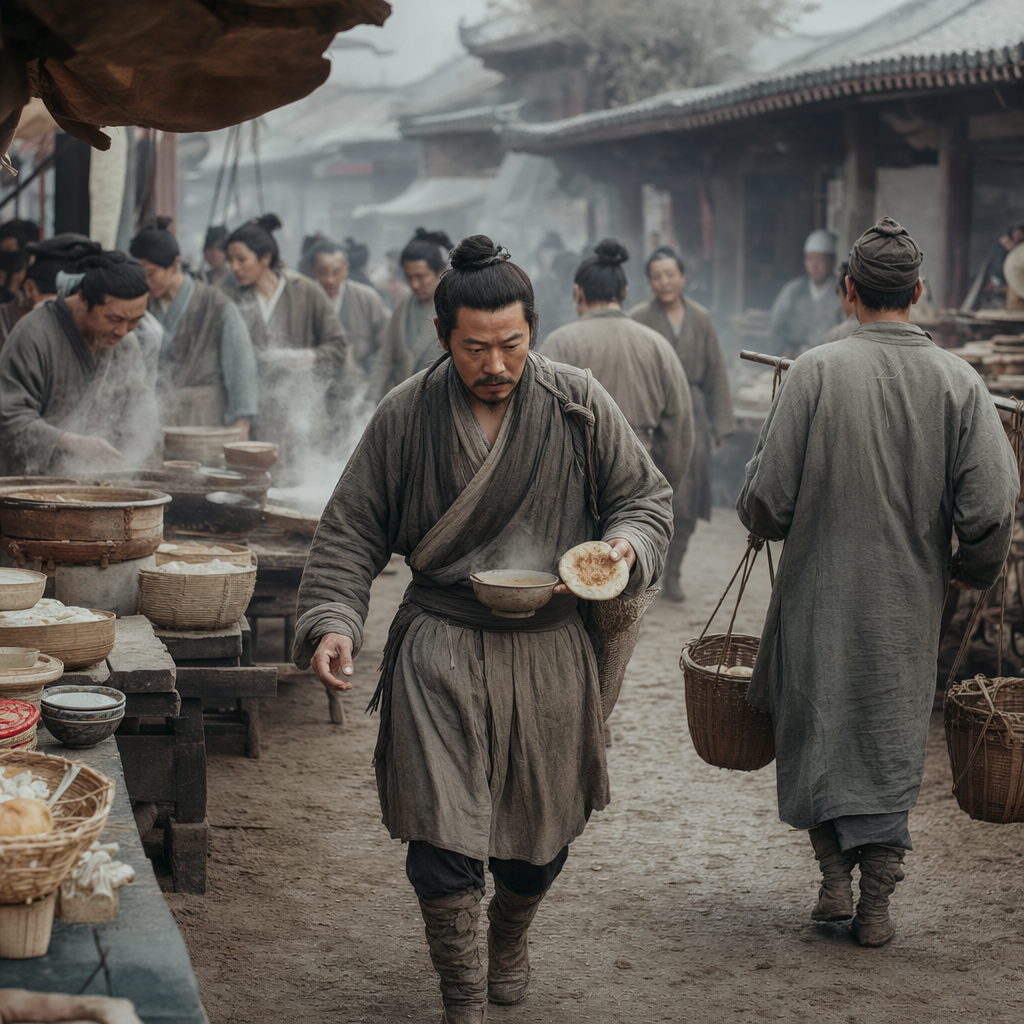
后来我站在街边,看一个挑担的人一手捏着胡饼,一手端起半碗汤,喝得很快,却没有半点狼狈。他喝完把碗递回去,肩上的担子轻轻晃了一下,人就顺着街继续走。那一瞬间我突然明白,为什么唐代早点让我这么难忘。不是因为它展示了多少“名物”,而是因为它准确地照顾到了人的早晨。人还没完全醒,路已经开始了,胃要先被热气扶一下,脚才能继续往前。这种理解人身体节奏的能力,比单纯的丰富更高级。
Later I stood by the side of the street watching a man with carrying poles hold a flatbread in one hand and raise half a bowl of soup with the other. He drank quickly, yet there was nothing clumsy about him. When he handed the bowl back, the load over his shoulders swayed once lightly, and he simply continued down the road. In that moment I understood why Tang breakfast remained so unforgettable to me. Not because it displayed many famous foods, but because it cared so accurately for the human morning. The body had not fully awakened, yet the road had already begun. The stomach needed one lift of heat before the feet could go on. That ability to understand bodily rhythm is more impressive than richness alone.
- 牛肉下锅前,潮州人先把时间切薄 | Before the Beef Enters the Pot, Chaozhou Cuts Time Thin
- 婚礼与节庆中的传统服饰 | Traditional Dress in Chinese Weddings & Festivals
- 十个值得你慢下来的中国古镇 | Ten Chinese Ancient Towns Worth Slowing Down For
- 中国凉菜:一桌好饭从凉菜开始 | Chinese Cold Dishes: Every Great Meal Starts Here
- 作者在中国一路张口学会的10句中文 | 10 Chinese Phrases the Writer Learned to Actually Use While Traveling in China
- 山城重庆那条上坡路,教我别低估城市地形 | My First Chongqing Hill Road Taught Me Not to Underestimate City Terrain
- 灯彩作坊里的一小时:我第一次发现光也可以被“做出来” | In a Lantern Workshop: The First Time I Realized Light Can Be Crafted by Hand
- 糖画摊前的几分钟,让我第一次觉得“甜”也可以被画出来 | At a Sugar Painting Stall, I Realized for the First Time That Sweetness Can Be Drawn
- 新疆最容易拍出大片,可真正决定一条线能不能走顺的是那些留白路段 | Xinjiang Is Easy to Film Spectacularly, but the Blank Stretch Between Highlights Determines Whether the Route Works
- 厦门老街小店的午饭,让我明白“本地味道”不是网红菜单 | Lunch in a Small Xiamen Old-Street Shop Taught Me Local Flavor Is Not a Viral Menu
Comments (0)