
大理风停下来的那一刻,我才看清洱海边的节奏 | When the Wind Paused in Dali, I Finally Saw the Rhythm Beside Erhai
大理风停下来的那一刻,我才看清洱海边的节奏 | When the Wind Paused in Dali, I Finally Saw the Rhythm Beside Erhai
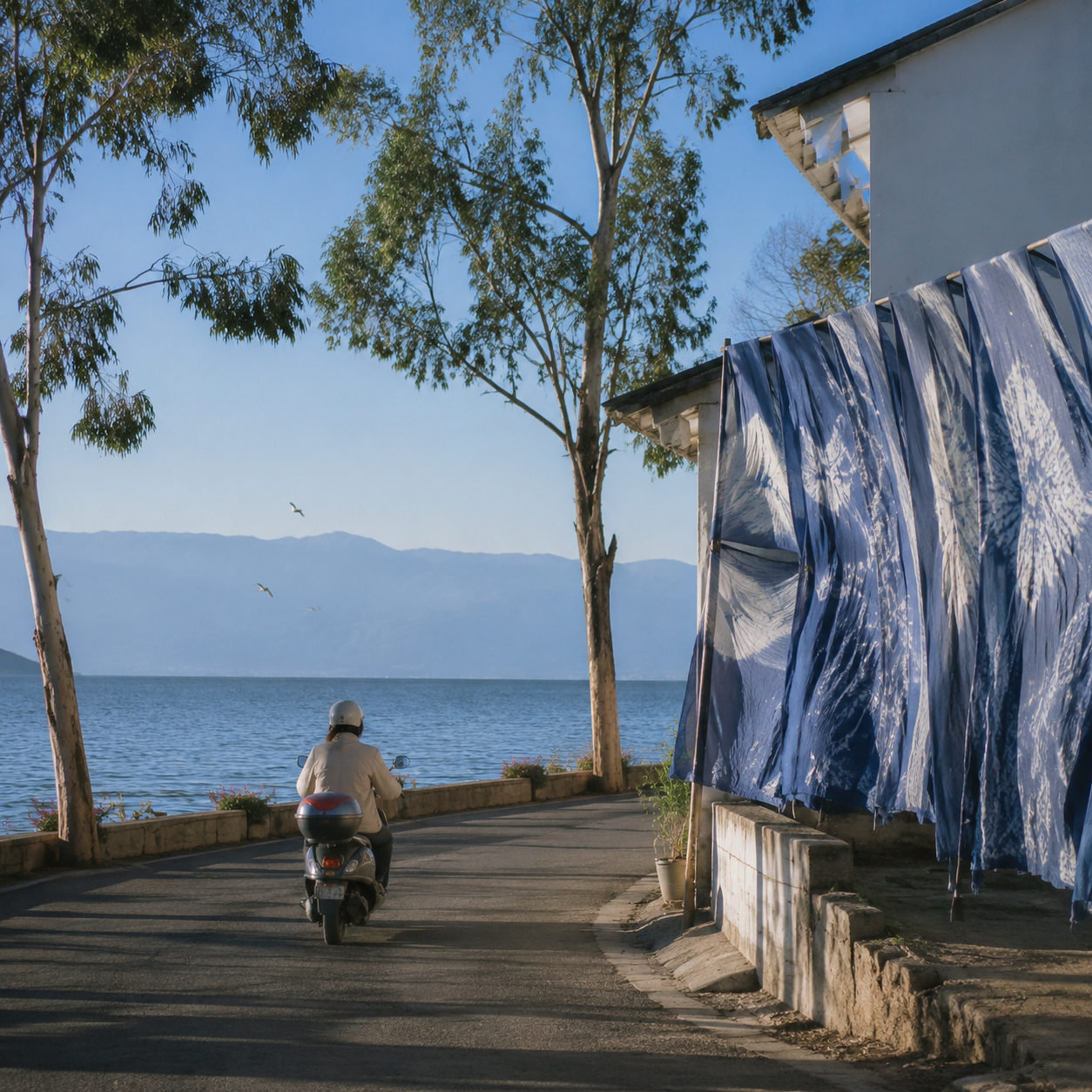
到大理的第一天,我以为自己要追的是洱海的蓝、苍山的线条、古城里被游客反复举起的招牌。可真正让我停下来的,是下午四点多的一阵风。它从海面上吹来,绕过路边的桉树,掀起白族民居外晾着的蓝布,又忽然像想通了什么似的停住。那一刻,电动车的声音变远了,海鸥也不再急着叫,我才意识到,洱海边的旅行并不适合被安排得太满。
On my first day in Dali, I thought I had come for the blue of Erhai, the ridgeline of Cangshan, and the signs in the old town that travelers keep photographing. What actually stopped me was a gust of wind after four in the afternoon. It came across the water, circled the eucalyptus trees, lifted blue cloth outside a Bai courtyard, and then suddenly rested as if it had made up its mind. In that pause, the scooters sounded farther away, the gulls stopped hurrying their calls, and I understood that travel beside Erhai should not be packed too tightly.
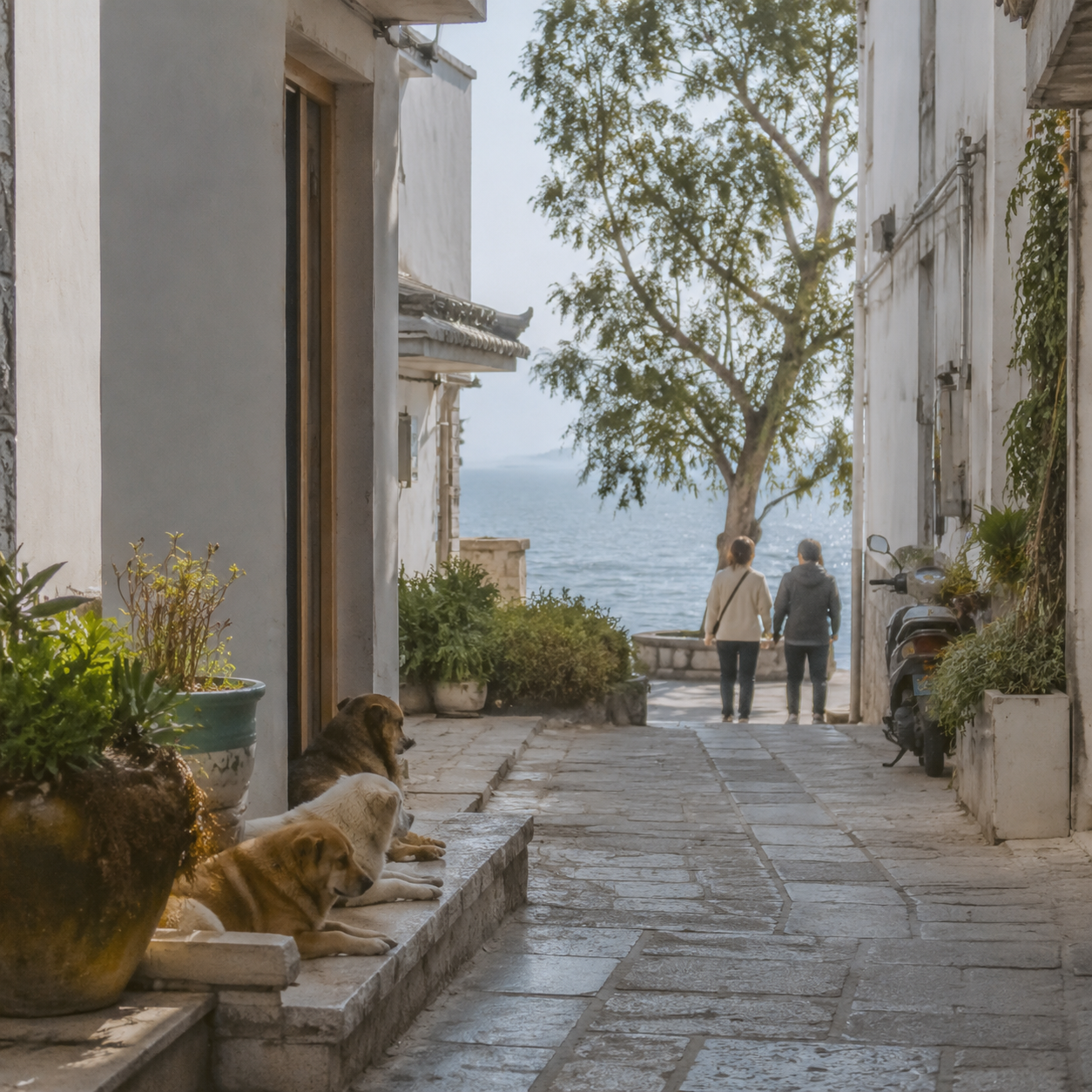
我住在才村附近,客栈的院门离湖边不远。清晨出门时,石板路还带着夜里的凉意,几只狗趴在门槛边,像比我更懂这里的时间。老板娘递给我一杯热水,说今天风小,适合慢慢走。她没有推荐路线,也没有打开地图,只是指了指海边的方向,好像真正的建议都藏在那一个手势里:别急,先让脚步自己找路。
I stayed near Caicun, in a guesthouse whose courtyard gate was only a short walk from the lake. In the morning, the stone lane still held the coolness of night, and a few dogs lay by doorsteps as if they understood local time better than I did. The owner handed me a cup of hot water and said the wind would be gentle, good for walking slowly. She did not recommend a route or open a map. She simply pointed toward the water, as if the real advice lived in that gesture: do not rush; let your feet discover the way first.
我沿着生态廊道往前走,起初还像个赶行程的人,看到一处观景平台就想拍照,看到租车摊就想问价格,看到咖啡馆就想比较哪一家更出片。走了二十分钟,手机相册已经多了十几张相似的海面。可洱海并没有因为我拍得多就显得更完整,反而在镜头里变成一块块被切开的蓝。我把手机收起来,才发现水面的颜色一直在变,近处偏绿,远处偏银,云影经过时又暗下来。
I followed the ecological corridor, and at first I still behaved like someone chasing an itinerary. When I saw a viewing deck, I wanted a photo; when I saw a bike stand, I wanted a price; when I saw a café, I compared which one would look better in pictures. After twenty minutes, my gallery already held a dozen nearly identical views of the lake. Yet Erhai did not become more complete because I photographed it more. In the lens, it became pieces of blue cut apart. Only after putting my phone away did I notice that the water kept changing: green nearby, silver in the distance, darker when a cloud passed over.
上午的才村很轻。卖烤乳扇的小摊还没完全热闹起来,摊主把炭火拨得很细,乳扇受热后微微鼓起,边缘泛出淡淡的焦香。我买了一份,站在树影下吃。甜味并不夸张,奶香也不急着冒出来,而是慢慢贴住舌尖。旁边一位老人推着自行车经过,车筐里放着青菜和一束不知道从哪儿摘来的野花。他没有看海,却像把海带在了身上。
Caicun in the morning felt light. The stall selling roasted rushan had not fully become busy. The vendor tended the charcoal carefully, and the milk fan puffed slightly as it warmed, its edges carrying a soft toasted smell. I bought one and ate under the shade of a tree. The sweetness was modest, and the milky flavor did not hurry to announce itself; it settled slowly on the tongue. An older man pushed a bicycle past me with vegetables and a small bunch of wildflowers in the basket. He did not look at the lake, yet seemed to carry it with him.
洱海慢旅行最难的地方,不是找不到景点,而是要承认自己可以少看一点。以前我总觉得来一趟远方,应该把每个名字都走到,把每个角度都拍下,才算不亏。可在这里,亏不亏的标准松了。坐在一条长椅上,看一片叶子被风吹到脚边,再被另一阵风吹走,竟然也成了行程的一部分。它不提供成就感,却把身体从紧绷里放出来。
The hardest part of slow travel around Erhai is not the lack of sights; it is accepting that you may see less. In the past, I believed that a distant trip should include every named spot and every angle worth photographing, otherwise it would feel incomplete. Here, that standard loosened. Sitting on a bench, watching a leaf blown to my feet and then carried away by another breath of wind, somehow became part of the journey. It offered no achievement, but it released my body from its constant tightness.
中午我没有去人最多的餐厅,而是进了村口一家小店。菜单写在白板上:砂锅鱼、炒海菜、凉拌树花、雕梅扣肉。店里只有三张桌子,靠窗的位置能看见一小段水面。我点了砂锅鱼和一碗米饭,老板把锅端上来时,汤还在咕嘟咕嘟地响。鱼肉不算精致,却很鲜,酸味把油脂压下去,薄荷和葱花浮在表面,像给午后的热气开了一扇窗。
At noon, I skipped the busiest restaurants and entered a small place near the village entrance. The menu was written on a whiteboard: clay-pot fish, fried lake greens, cold tree flower salad, pork with carved plum. There were only three tables, and the seat by the window showed a narrow strip of water. I ordered the fish and a bowl of rice. When the owner brought the pot over, the soup was still bubbling. The fish was not delicate, but it was fresh. A bright sourness held down the richness, while mint and scallions floated on top like a window opened into the warm afternoon.
吃饭的时候,我听见隔壁桌两个本地人聊今年的雨。他们说某几天云压得低,洱海像被灰布盖住,船都懒得出门。我听不懂所有方言,却能听懂语气里那种熟悉的亲近。对他们来说,天气不是背景,而是日常里会影响心情、菜价、衣服能不能晒干的具体事情。我第一次觉得,风景在本地人的句子里会变得更厚。
While eating, I heard two locals at the next table discussing this year's rain. They said that on certain days the clouds hung so low that Erhai looked covered by gray cloth, and even the boats seemed unwilling to go out. I could not understand every word of the dialect, but I understood the intimacy in their tone. For them, weather was not background; it was something specific that shaped mood, vegetable prices, and whether laundry could dry. For the first time, I felt that scenery becomes thicker inside local sentences.
下午我租了一辆自行车,没有设定必须骑到哪里。车行老板提醒我,有些路段适合下来推,不要跟风抢速度。我点点头,心里却还残留着一点游客式的胜负感,觉得骑得远才算认真。可真正上路后,海边的节奏把这种念头慢慢磨掉。路过一片芦苇时,我停下来听它们摩擦;路过一段低矮石墙时,我停下来摸被太阳晒热的墙面;路过一只在阴影里睡觉的猫时,我甚至不忍心让车铃响。
In the afternoon, I rented a bicycle without deciding where I had to reach. The shop owner reminded me that some sections were better walked than ridden, and that I should not compete with other people's speed. I nodded, though a little tourist-like competitiveness remained in me. I still thought riding farther meant doing the trip properly. Once on the road, however, the rhythm by the lake slowly wore that idea down. Passing reeds, I stopped to hear them rub together; passing a low stone wall, I stopped to touch its sun-warmed surface; passing a cat asleep in the shade, I did not have the heart to ring my bell.
有一段路靠近水,风从侧面来,吹得人不得不把速度放低。那不是阻碍,更像提醒。风让身体重新知道自己在这里:手臂在用力,背包压着肩,额头有汗,脚下的踏板一圈一圈地转。城市里的我常常只剩一个脑袋,在屏幕和任务之间快速切换。洱海边的风却把我拆回一个完整的人,让我知道疲惫、口渴、舒服和安静都可以被认真感受。
One stretch ran close to the water, and the side wind forced me to slow down. It was not an obstacle; it felt more like a reminder. The wind returned my body to the present: my arms working, the backpack pressing my shoulders, sweat on my forehead, the pedals turning again and again under my feet. In the city, I often become only a head, switching quickly between screens and tasks. The wind beside Erhai put me back together as a whole person, making fatigue, thirst, comfort, and quiet all worth noticing.
我在一处小码头停了很久。码头边没有华丽的装饰,只有几只木船、几根缆绳和被水泡得发深的木桩。一个孩子蹲在岸边看小鱼,他的母亲在旁边整理帽子,两个人几乎不说话。水拍在石头上,声音很小,却重复得很有耐心。我忽然明白,慢旅行不是把时间浪费掉,而是把时间还给原本被忽略的细节。
I stopped for a long time at a small pier. There was no elaborate decoration, only a few wooden boats, several ropes, and posts darkened by water. A child crouched by the shore watching tiny fish, while his mother adjusted her hat nearby. They barely spoke. Water tapped the stones with a small sound, repeating itself patiently. I suddenly understood that slow travel is not wasting time; it is returning time to details that usually go unseen.
傍晚之前,我骑到一片视野开阔的地方。苍山在云后露出几道深色褶皱,洱海像一面正在呼吸的镜子。很多人停在同一个角度拍照,我也拍了一张,但没有马上检查效果。那一刻,照片已经不重要了。重要的是我知道自己为什么站在那里:不是为了证明到过,而是为了在风、光和水的合奏里,短暂地学会不插话。
Before evening, I reached an open stretch of view. Cangshan showed several dark folds behind the clouds, and Erhai looked like a mirror that was breathing. Many people stopped at the same angle to take photos. I took one too, but I did not check it immediately. In that moment, the photo mattered less. What mattered was knowing why I stood there: not to prove that I had arrived, but to briefly learn not to interrupt the conversation among wind, light, and water.
晚饭后我回到客栈,院子里的灯一盏盏亮起来。有人在公共桌上写明信片,有人把湿衣服挂到竹竿上,还有人低声讨论第二天要不要去喜洲。我泡了一杯茶,坐在门边听风重新起势。白天那种停下来的安静没有消失,它只是换了形状,藏进杯沿的热气、远处的犬吠和客栈木门轻轻开合的声音里。
After dinner, I returned to the guesthouse, where the courtyard lights came on one by one. Someone wrote postcards at the shared table, someone hung damp clothes on bamboo poles, and someone quietly discussed whether to visit Xizhou the next day. I made tea and sat by the door, listening as the wind gathered again. The afternoon's stillness had not disappeared. It had simply changed shape, hiding in the steam at the rim of the cup, a distant dog bark, and the soft opening and closing of the wooden gate.
第二天我去了喜洲。很多人会先想起稻田、转角楼和粑粑,可我记住的是一个修鞋的摊子。摊主坐在窄窄的阴影里,手上动作很稳,锥子穿过鞋底时发出细小的声响。旁边游客一拨拨经过,举着手机寻找漂亮的门头。他没有抬头,也不显得被打扰。那份安定让我羡慕,好像他并不需要从远处来的目光确认自己生活的价值。
The next day, I went to Xizhou. Many people first think of rice fields, old corner buildings, and local baba pancakes, but what I remembered was a shoe repair stall. The repairman sat in a narrow strip of shade, his hands steady, the awl making a tiny sound as it passed through a sole. Groups of travelers moved past, phones raised as they searched for photogenic doorways. He did not look up, nor did he seem disturbed. I envied that steadiness, as if he did not need the gaze of visitors to confirm the worth of his life.
午后的稻田边,风又停了一次。稻叶不再起伏,远处的白墙静得像刚洗过。我站在田埂旁,听见自己呼吸的声音。那一刻没有戏剧性,也没有所谓顿悟,只有一种很朴素的轻:原来旅行可以不急着把我变成更厉害的人,它也可以只是让我短暂地不跟自己较劲。
By the rice fields in the afternoon, the wind paused again. The rice leaves stopped moving, and the white walls in the distance looked freshly washed by stillness. I stood beside the ridge and heard my own breathing. There was no drama in that moment, no grand revelation, only a plain lightness: travel did not have to make me a more impressive person. It could simply allow me, for a while, to stop arguing with myself.
离开大理前,我又回到洱海边坐了一会儿。清晨的水面比前几天更亮,路过的人也更少。我没有写总结,也没有给这趟旅行下定义。只是把鞋带系紧,把剩下的半瓶水喝完,然后看着一只鸟贴着水面飞过去。它飞得很低,却很确定,像完全相信自己的方向。那一刻,我觉得自己从洱海带走的不是风景,而是一种可以放慢的勇气。
Before leaving Dali, I returned to the shore of Erhai for a while. The morning water was brighter than it had been on previous days, and fewer people passed by. I did not write a summary or define the trip. I simply tied my shoes, finished the last half bottle of water, and watched a bird fly low over the surface. It flew close to the water, yet with certainty, as if it fully trusted its direction. In that moment, I felt that what I carried away from Erhai was not scenery, but the courage to slow down.
后来在火车上,我翻看手机里的照片,发现最喜欢的几张都不够标准:一角被树枝挡住的湖面,一只模糊的猫,砂锅鱼升起的白雾,长椅旁那片被风推走的叶子。它们不像明信片,却更像我真实待过的时间。大理没有替我解决什么问题,它只是让我看见,生活里也许还有一种节奏,不靠催促推动,而靠风停下来的空隙慢慢显形。
On the train afterward, I looked through my photos and realized that my favorites were not the most polished ones: a lake view partly blocked by branches, a blurred cat, white steam rising from the clay-pot fish, the leaf that the wind pushed away beside the bench. They did not look like postcards, but they felt like time I had actually inhabited. Dali did not solve anything for me. It simply showed me that life may hold another rhythm, one not driven by urgency, but slowly revealed in the spaces where the wind rests.
- 中国十大旅游路线 | Top 10 Travel Routes in China
- 我在青岛学会把海边步行和补水当成一件事 | In Qingdao I Learned to Treat Waterfront Walking and Hydration as One Task
- 面塑摊前的半个下午:我第一次看见面团也能有表情 | At a Dough Figurine Stall: The First Time I Saw Flour and Dough Grow a Face
- 广州雨后那条骑楼街,让我重新理解城市散步 | A Rain-Washed Arcade Street in Guangzhou Changed How I Understand City Walks
- 中国货币与支付指南 | China Currency and Payment Guide
- 上海到苏州两天慢线:园林、评弹和夜船都不赶 | Shanghai to Suzhou in Two Slow Days: Gardens, Pingtan, and Night Boats
- 海口出门前那几分钟,天气、潮气和路线都先挤进了手机里 | In the Minutes Before Going Out in Haikou, Weather, Humidity, and Route All Crowd into the Phone
- 北京到西安:穿越历史之旅 | Beijing to Xi'an: A Journey Through History
- 洛阳牡丹花期里,我学会把热闹拆成几个小时 | During Luoyang Peony Season, I Learned to Divide Crowds by the Hour
- 南昌第一碗拌粉还没吃完,我就先看懂了这座城路口的脾气 | Before Finishing My First Bowl of Rice Noodles in Nanchang, I Had Already Read the Temper of Its Crossings
Comments (0)