
海口出门前那几分钟,天气、潮气和路线都先挤进了手机里 | In the Minutes Before Going Out in Haikou, Weather, Humidity, and Route All Crowd into the Phone
在海口出门前,我把手机准备做得更笨也更稳 | Before Going Out in Haikou, I Made My Phone Setup Simpler and Safer
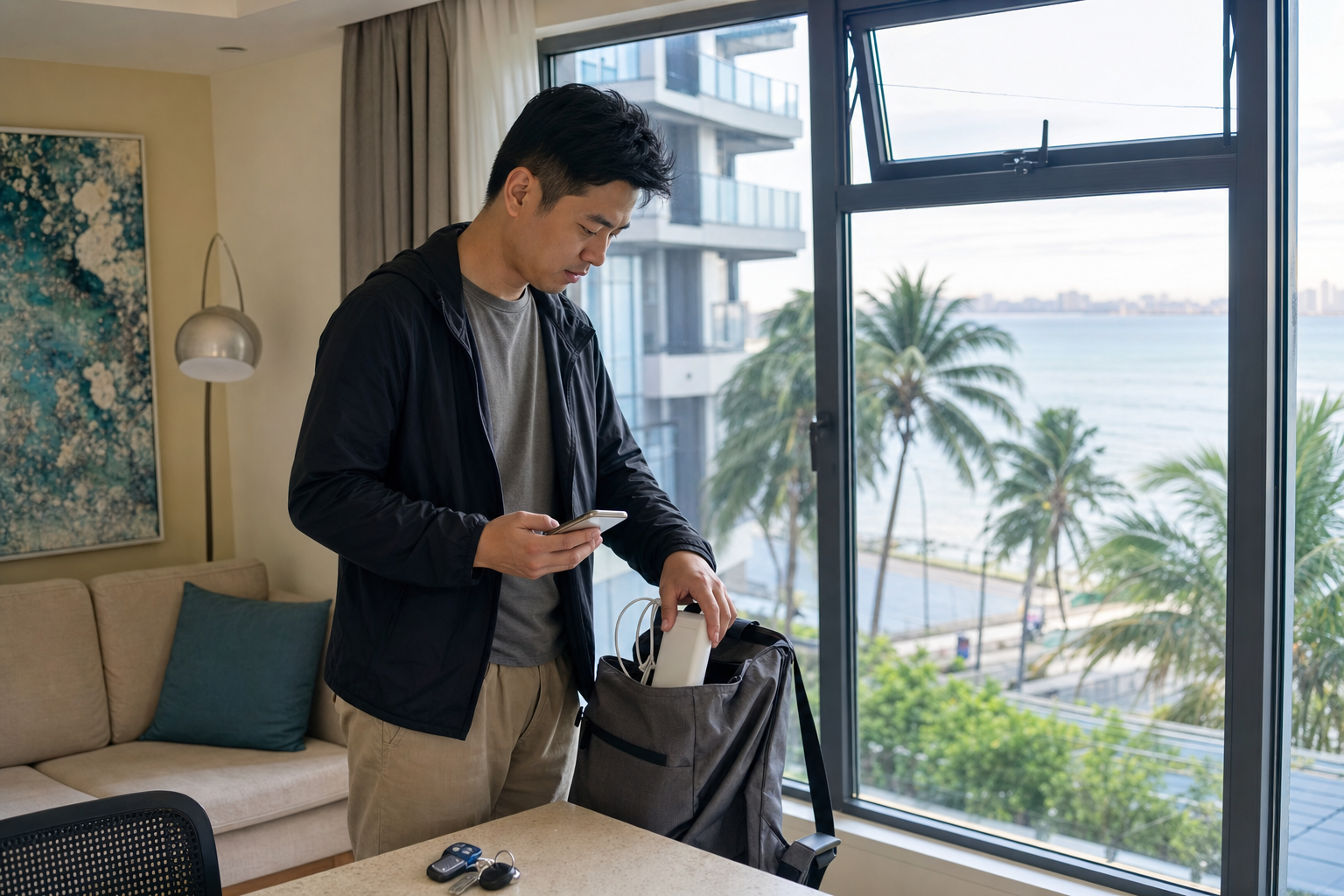
在海口准备出门,手机常常比钥匙更早被拿到手里。不是因为人们离不开屏幕,而是这座海边城市的日常,早已把许多细节折进一块小小的玻璃里。出门前看一眼天气,确认午后会不会突然下雨;查一下公交或者网约车,看海甸岛到国贸那段路是否堵住;把健康、支付、地图、拍照、消息都检查一遍;再把充电宝塞进包里,像给一天备好一只备用的船桨。窗外椰子树在热风里摇,手机屏幕亮起,早晨也跟着有了方向。
When preparing to go out in Haikou, the phone is often picked up before the keys. It is not simply because people cannot leave the screen, but because the daily life of this seaside city has folded many details into a small piece of glass. Before leaving, one checks the weather to see whether sudden afternoon rain will arrive, looks at buses or ride-hailing routes to know whether the road from Haidian Island to Guomao is blocked, and reviews payment, maps, camera, and messages. Then a power bank is placed in the bag, like packing a spare oar for the day. Outside the window, coconut trees sway in the warm wind; the phone screen lights up, and the morning gains direction.
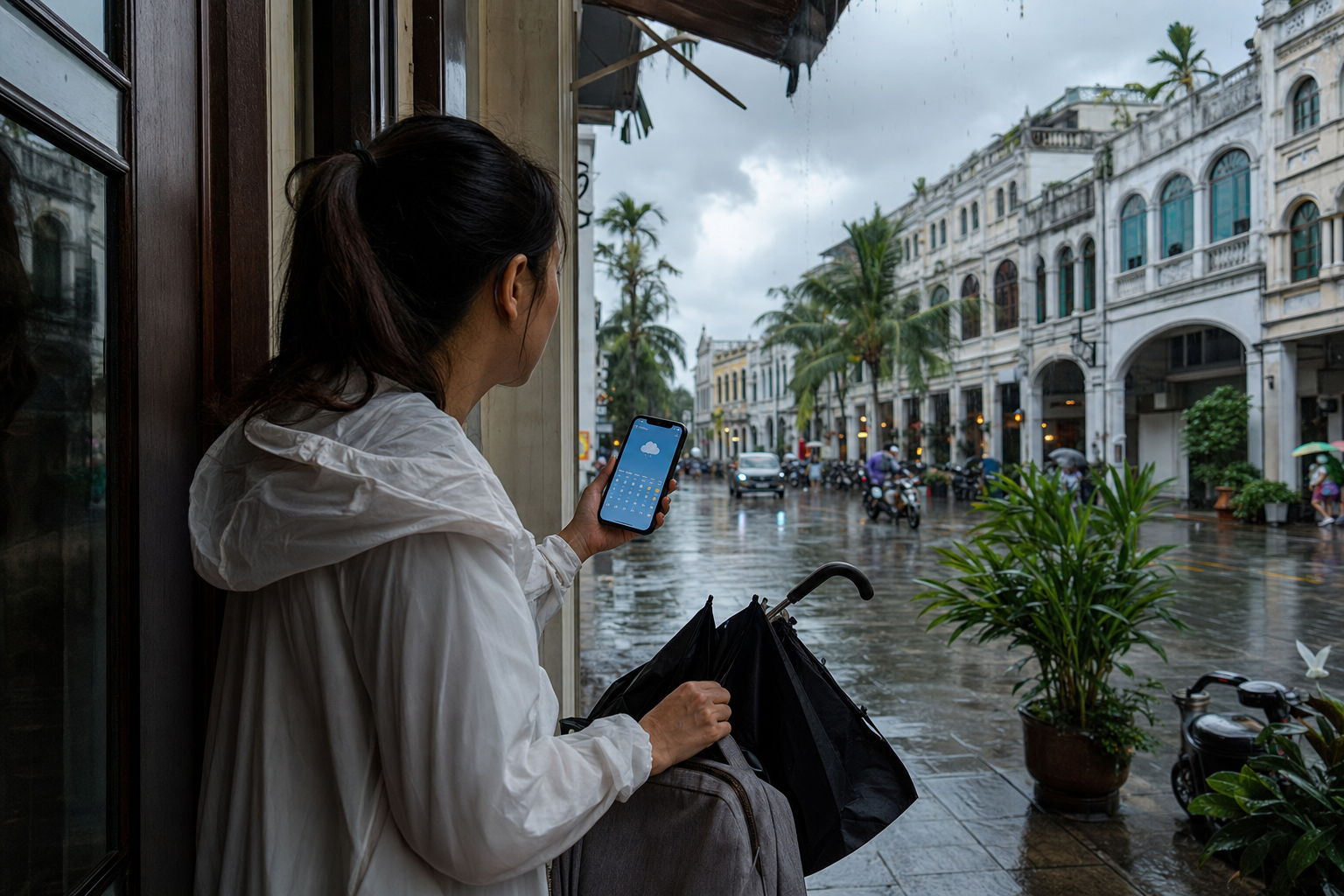
海口的天气让手机准备显得格外必要。天空可能在十分钟前还是明亮的蓝,转眼就有云从海面压过来,雨点大而急,打在骑楼老街的屋檐上,声音像一把豆子撒进铁盘。天气软件里的小图标不一定完全准确,却能给人一点心理准备:要不要带伞,要不要穿不怕湿的鞋,要不要把原本步行的路改成公交。手机里的预报,和窗外真实的风一起,构成了海口人出门前的判断。这里的准备不是严肃的计划,而是和天气商量。
Haikou’s weather makes phone preparation especially necessary. The sky may be bright blue ten minutes earlier, and then clouds press in from the sea, bringing large urgent raindrops that strike the eaves of the old arcade streets like beans scattered into an iron pan. The little icon in the weather app is not always completely accurate, but it offers psychological readiness: whether to carry an umbrella, whether to wear shoes that can get wet, whether to change a planned walk into a bus ride. The forecast in the phone, together with the actual wind outside the window, forms the judgment people make before leaving. Preparation here is not a strict plan; it is a negotiation with the weather.
准备手机,也是在准备一天的移动。海口的路并不总是拥挤得让人焦躁,却有自己的节奏。电动车很多,树荫很多,桥也很多。地图上显示的路线有时看起来简单,真正走起来却要考虑太阳、雨、施工和海风。去菜市场的人会先看支付余额,去机场的人会确认航班动态,去海边散步的人会看看潮汐和日落时间,去办事的人会把预约码截屏存好。手机像一个小小的行前清单,把城市可能提出的问题提前列出来,让人不至于临时慌张。
Preparing the phone also means preparing the day’s movement. Haikou’s roads are not always congested enough to irritate people, but they have their own rhythm. There are many electric scooters, much shade, and many bridges. Routes on a map may look simple, yet actually moving through them requires considering sun, rain, construction, and sea wind. Someone going to the market checks the payment balance first. Someone going to the airport confirms flight status. Someone walking by the sea looks at tides and sunset time. Someone handling errands saves an appointment code as a screenshot. The phone becomes a small pre-departure checklist, listing in advance the questions the city may ask so a person will not panic later.
我见过朋友在海口出门前认真地清理手机相册。不是为了整理回忆,而是为了给即将到来的照片腾地方。海口太容易让人想拍照:一片突然变亮的海,一棵在街角倾斜的椰子树,一辆经过骑楼下的旧公交,一碗清补凉上浮着的红豆和椰奶,一场雨后地面反射出的粉色晚霞。手机如果内存不足,就像口袋里少了一只能够接住光的杯子。于是删除几张重复的截图,清空聊天里的无用图片,也成了出门准备的一部分。
I have seen friends in Haikou carefully clear their phone albums before going out. It is not to organize memories, but to make room for the photos that may arrive. Haikou makes people want to take pictures too easily: a sudden brightness on the sea, a coconut tree leaning at a street corner, an old bus passing beneath arcade buildings, red beans and coconut milk floating in a bowl of qingbuliang dessert, pink sunset reflected on the ground after rain. If the phone lacks storage, it feels as if the pocket is missing a cup that can catch light. So deleting repeated screenshots and clearing useless chat images also becomes part of preparing to leave.
手机电量在海口也有一种特殊意义。炎热会让人更依赖导航、打车和联系,也让等待显得更长。如果手机只剩百分之二十,人的心情会不自觉地紧起来,仿佛海风也变得不可靠。于是出门前把电充到足够,带上数据线和充电宝,是一种对自己负责的细小动作。它不像带证件那样正式,却同样重要。尤其是晚上从海边回城,路灯和车灯在椰影下交错,手机还能叫车、照路、报平安,像一盏握在手里的小灯。
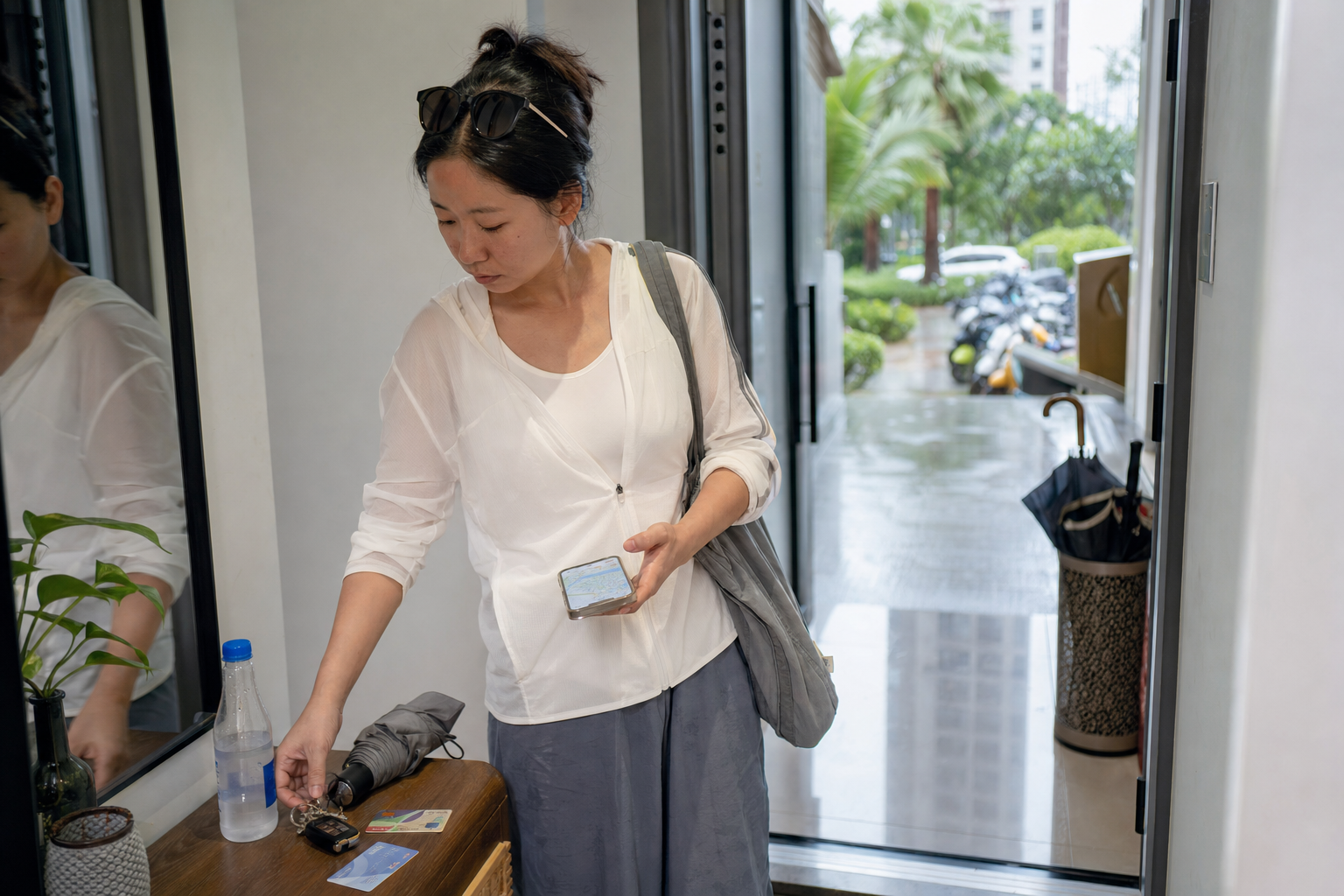
Phone battery has a special meaning in Haikou. Heat makes people rely more on navigation, ride-hailing, and communication, and it makes waiting feel longer. If the phone has only twenty percent remaining, the mood tightens unconsciously, as if even the sea breeze has become unreliable. Charging enough before leaving, bringing a cable and power bank, is a small act of responsibility toward oneself. It is not as formal as carrying an ID, but it matters just as much. Especially when returning from the seaside at night, with streetlights and car lights crossing beneath coconut shadows, the phone can still call a ride, light the road, and send a message of safety, like a small lamp held in the hand.
海口的手机准备还包括和人的连接。出门前给家里发一句“我走了”,到达后回一句“到了”,约朋友时发定位,买东西时扫码,排队时看群消息,临时改地点时发语音。许多关系不再通过长信维系,而是在这些短短的确认里保持温度。手机让人随时可被找到,也让人需要学会给自己留一点安静。准备手机的同时,有人会把不必要的通知关掉,把音量调低,只保留重要联系人的提醒。这样走进城市,才不至于被每一次震动牵着走。
Phone preparation in Haikou also includes connection with people. Before leaving, one sends “I’m heading out” to family, replies “I’ve arrived” after reaching a place, shares a location when meeting friends, scans codes when buying things, reads group messages while waiting in line, and sends voice notes when changing a meeting point. Many relationships are no longer maintained by long letters, but they keep warmth through these brief confirmations. The phone makes a person reachable at any time, while also requiring one to learn how to keep a little quietness. While preparing the phone, some people turn off unnecessary notifications, lower the volume, and keep alerts only for important contacts. Only then can they enter the city without being pulled by every vibration.
如果要去海边,手机准备会多出几分期待。相机镜头要擦干净,防水袋要检查,耳机要带上,播放列表也许提前选好。假日海滩、世纪大桥、云洞图书馆附近的步道,都是人们愿意慢慢走的地方。手机在这些时刻既是工具,也是见证者。它记录浪花、记录笑脸、记录一只狗在沙滩上奔跑,也记录风太大时声音被吹散的短视频。可是准备得再充分,真正到了海边,人还是会把手机放下几分钟,只看海。那几分钟提醒人,工具再好,也只是通向经验的门。
If one is going to the seaside, phone preparation gains a little more anticipation. The camera lens must be cleaned, a waterproof pouch checked, earphones packed, and perhaps a playlist chosen in advance. Holiday Beach, Century Bridge, and the walking paths near the Wormhole Library are places where people are willing to move slowly. At such moments, the phone is both tool and witness. It records waves, smiling faces, a dog running on the sand, and short videos whose sound is scattered by strong wind. Yet however complete the preparation, once truly at the sea, a person will still put the phone down for several minutes and simply look. Those minutes remind us that even the best tool is only a doorway to experience.
手机里的支付功能,让海口的日常变得轻便。买一杯老盐柠檬水,扫一下;坐公交,扫一下;在夜市买烤生蚝,扫一下;给电动车充电,扫一下。零钱的重量被手机收走,许多小交易因此变得快速。可也正因为如此,出门前确认网络、余额和备用支付方式,就成了新的生活习惯。过去人们摸口袋确认钱包,现在人们点亮屏幕确认信号。城市的便利换了一种形态,准备也换了一种形态。
The payment function in the phone makes daily life in Haikou lighter. Buying a cup of salted lemon drink, one scans. Taking a bus, one scans. Buying grilled oysters at a night market, one scans. Charging an electric scooter, one scans. The weight of coins and bills has been absorbed by the phone, and many small transactions have become quick. But precisely because of this, checking network signal, balance, and backup payment before going out has become a new habit. In the past, people felt their pockets to confirm the wallet; now they light the screen to confirm signal. The city’s convenience has changed form, and preparation has changed form with it.
有时候,海口的手机准备也带着一点防晒意识。紫外线指数、温度、步行距离、目的地有没有室内休息处,这些看似琐碎的信息,会影响一个人是否戴帽子、是否带水、是否避开正午。手机让这些判断变得具体,不再只是凭感觉。尤其对刚到海口的人来说,屏幕上的数字会提醒他们,海边城市的温柔并不等于没有强烈的阳光。真正熟悉这里的人,准备手机时也会准备身体:让路线经过树荫,让等待发生在有风的地方,让自己不要被好天气骗得太轻率。
Sometimes phone preparation in Haikou also carries awareness of sun protection. Ultraviolet index, temperature, walking distance, and whether the destination has an indoor resting place—these seemingly trivial details influence whether a person wears a hat, carries water, or avoids noon. The phone makes such judgments concrete rather than purely intuitive. Especially for people newly arrived in Haikou, the numbers on the screen remind them that the gentleness of a seaside city does not mean the sunlight is not strong. Those who truly know the city prepare the body while preparing the phone: letting routes pass through shade, letting waiting happen where there is wind, and not being fooled by good weather into carelessness.
我喜欢观察人们出门前最后看手机的动作。有人只是确认时间,有人再次看一遍地址,有人把屏幕亮度调高,怕到室外看不清,有人把手机放进包里又拿出来,确认车牌号。这个动作很短,却透露出现代生活的复杂:我们带着一部手机,也带着地图、钱包、相机、日历、联系人、证件影印、车票和许多未完成的对话。海口的阳光照在屏幕上,指纹和反光交叠,像把人的计划和城市的天气放在一起。
I like watching the final gesture people make with their phones before leaving. Some only confirm the time. Some check an address once more. Some raise the screen brightness, afraid they will not see clearly outdoors. Some put the phone into a bag and then take it out again to confirm a license plate number. The gesture is brief, yet it reveals the complexity of modern life: with one phone we carry a map, wallet, camera, calendar, contacts, document copies, tickets, and many unfinished conversations. Haikou sunlight falls on the screen, fingerprints and reflections overlapping, as if placing human plans and city weather together.
当然,准备手机并不等于把一天完全交给手机。相反,它是为了让人更放心地离开屏幕。路线查好了,就可以抬头看街边的三角梅;车叫到了,就可以听一会儿风穿过椰叶;雨云的位置知道了,就可以更从容地决定是否继续走。好的准备不是制造依赖,而是减少慌乱。手机在口袋里安静下来,人才能把注意力还给海口:还给骑楼的阴影,还给海边的盐味,还给小店里的冰声,还给傍晚突然变金的云。
Of course, preparing the phone does not mean handing the entire day over to it. On the contrary, it allows a person to leave the screen with more ease. Once the route is checked, one can look up at bougainvillea along the street. Once a ride is called, one can listen to wind passing through coconut leaves. Once the position of rain clouds is known, one can decide more calmly whether to keep walking. Good preparation does not create dependence; it reduces panic. When the phone grows quiet in the pocket, attention can return to Haikou: to arcade shadows, sea salt in the air, ice sounds in small shops, and clouds that suddenly turn golden at dusk.
一天结束时,手机又会把海口带回房间。相册里多了几张海、一张晚饭、一段车窗外的雨;支付记录里留下清补凉、公交和水果的痕迹;步数显示今天走了比想象更多的路;聊天框里有朋友发来的“下次再约”。把手机插上电,屏幕暗下去,窗外还有热风和虫声。明天出门前,人们大概还会重复同样的准备。检查电量,检查天气,检查路线,也检查自己是否已经准备好再次进入这座潮湿、明亮、带着海味的城市。
At the end of the day, the phone brings Haikou back into the room. The album has gained several sea photos, one dinner photo, and a short clip of rain outside a car window. Payment records hold traces of qingbuliang, buses, and fruit. Step counts show that the day involved more walking than expected. A chat window contains a friend’s message: “Let’s meet again next time.” The phone is plugged in, the screen goes dark, and outside the window there are still warm wind and insect sounds. Before going out tomorrow, people will probably repeat the same preparation: checking battery, checking weather, checking routes, and checking whether they are ready to enter this humid, bright city with the taste of the sea once more.
所以,海口的手机准备看似只是现代生活的琐事,实际上是一种和城市相处的方式。它承认天气会变,路况会变,计划会变,也承认人需要连接、记录、支付和安全感。但它最终服务的,仍然是一次真实的出门:从房间走到街上,从屏幕走向风里,从预报走进真正的阳光和雨。手机准备好了,人也就稍稍安定。门一开,海口的热气扑面而来,椰影摇动,城市在掌心之外展开。
Thus, phone preparation in Haikou may seem like a trivial matter of modern life, but it is actually a way of getting along with the city. It acknowledges that weather changes, traffic changes, plans change, and people need connection, records, payment, and a sense of safety. Yet what it ultimately serves is a real departure: walking from the room to the street, from the screen into the wind, from the forecast into actual sunlight and rain. Once the phone is ready, the person becomes a little steadier. The door opens, Haikou’s warm air rushes forward, coconut shadows sway, and the city unfolds beyond the palm.
- 微信与支付宝双钱包搭配策略 | Using WeChat Pay and Alipay Together
- 第一次在中国夜市买烤串,我学会先控制手,而不是先追最热闹的摊子 | The First Lesson I Learned Buying Skewers at a Chinese Night Market Was to Control My Hand Before Chasing the Busiest Stall
- 中国八大菜系全览 | The 8 Great Cuisines of China
- 从贵阳到荔波的慢线 | The Slow Line from Guiyang to Libo
- 苏州一到雨天,最容易失灵的不是路线图,而是那种“这里本来很好走”的自信 | When Rain Comes to Suzhou, What Fails First Is Not the Map but the Confidence That the City Is Easy to Walk
- 漆扇体验之后,我第一次发现“流动的颜色”也能有秩序 | After Trying Lacquer Fans, I Realized for the First Time That Flowing Color Can Also Have Order
- 山西古建筑文化5日游 | 5-Day Shanxi Ancient Architecture Tour
- 石板街尽头那杯毛尖冷泡茶,让我慢下来 | A Cold Brew of Maojian at the End of a Stone Street Slowed Me Down
- 在中国打车这件事,没你想的那么难 | Ride-Hailing in China: Easier Than You Think
- 在景德镇看一只碗怎么出生:窑火、白粉和老师傅的手势 | Watching a Bowl Be Born in Jingdezhen: Kiln Fire, White Clay Dust, and a Master's Hands
Comments (0)