
广州一下雨,真正该重排的不是心情,而是那条原本顺手的晴天路线 | Once Rain Hits Guangzhou, What Needs Rearranging Is Not Your Mood but the Sunny-Day Route You Trusted
广州下雨时最不该做的,不是出门,而是还想照着晴天的顺序硬走 | The Worst Mistake in Rainy Guangzhou Is Not Going Outside, but Forcing a Sunny-Day Order onto a Wet City
我后来才发现,广州下雨的时候,最容易出错的不是路线本身,而是人的惯性。很多第一次来中国的人,一下雨就会把行程拆成两种极端:要么完全缩回室内,要么还按晴天时那套顺序硬走,结果两边都不舒服。广州的雨天其实并不天然等于失败,问题只在于你会不会换逻辑。骑楼、茶楼、市场边缘、短段步行、热食停顿,这些东西只要重新排一次,雨天反而会把这座城写得更近。
I only realized later that the easiest thing to get wrong in rainy Guangzhou was not the route itself, but the traveler’s inertia. Many first-time visitors to China break into two extremes the moment rain appears: either they retreat indoors completely, or they stubbornly try to force the sunny-day order onto a wet city. Both approaches feel unsatisfying. Rain in Guangzhou does not automatically mean failure. The real issue is whether one can change logic. Arcade streets, teahouses, market edges, short walking segments, and pauses with hot food can reshape the entire line. Once reorganized, rain may actually bring the city closer.
广州雨天最适合被写成复盘体,因为它会逼人承认:原来一座城市真正好不好走,不是看它晴天时能不能给你很多漂亮画面,而是看它在变湿、变慢、变滑的时候,还能不能继续给你路。广州在这方面很强。它不是靠把雨挡干净,而是靠把雨变成节奏的一部分。
Rainy Guangzhou is especially well suited to a retrospective format because it forces one admission: what makes a city truly walkable is not how photogenic it becomes in perfect weather, but whether it continues to give you a route once things become damp, slower, and more slippery. Guangzhou is unusually strong here. It does not erase the rain. It absorbs the rain into the rhythm.
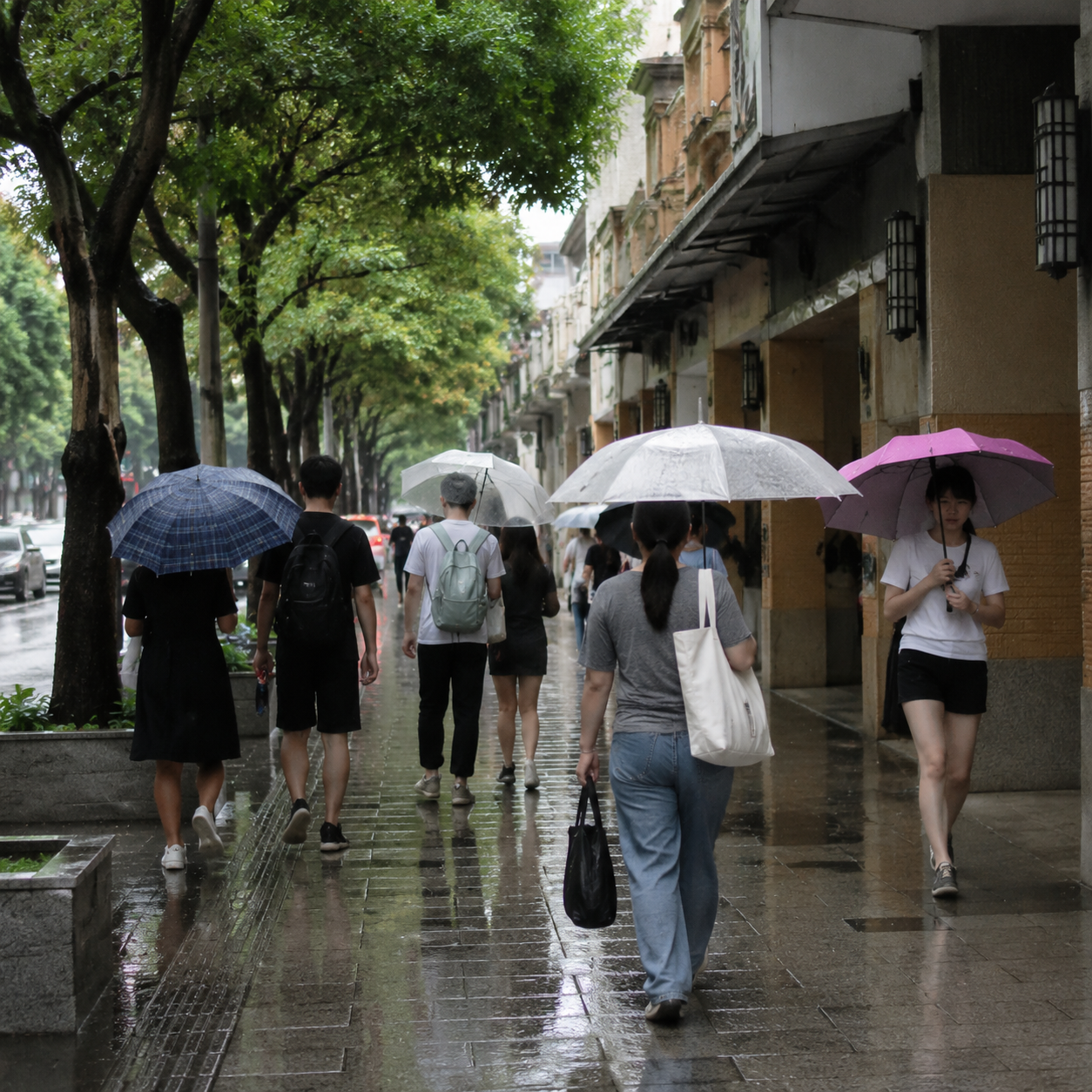
雨天里的广州,先读“遮”和“停” / In Rainy Guangzhou, Read Shelter and Pause First
晴天进广州,很多人先读路;雨天进广州,应该先读遮蔽。骑楼为什么重要,到了下雨天才真正显出来。你并不是单纯在躲雨,而是在这种遮蔽里重新获得判断时间:前面这一段要不要继续走,下一家店值不值得坐,脚下这片砖面是不是已经太滑。雨天最值钱的不是冲出去,而是被允许慢半拍。
On a sunny day in Guangzhou, many people read the road first. On a rainy day, one should read shelter first. The value of the arcade streets becomes fully visible only once rain begins. The traveler is not merely hiding from water. Inside that shelter, one regains time for judgment: should this section still be walked, is the next place worth sitting in, and has the brick underfoot already become too slick? The most valuable thing on a rainy day is not speed. It is the permission to be half a beat slower.
一顿热的东西,在雨天广州里经常比一个新景点更有用 / In Rainy Guangzhou, One Hot Dish Often Matters More Than One New Attraction
雨会把人的情绪压窄。你本来可能还想多走一段、多看一条街,可鞋边被打湿以后,很多判断会突然变得短。广州高明的地方,在于它总有办法用一顿热的东西把这种窄感慢慢撑开。云吞面、粥、糖水、热茶,这些东西在晴天已经有用,在雨天更像节奏重启键。你从店里出来时,外面的雨不一定停,但你会重新觉得这条路还能走。
Rain narrows mood. A traveler may have wanted to keep walking or see one more street, but once the edges of the shoes are wet, many judgments suddenly become shorter and harsher. Guangzhou is clever because it repeatedly finds ways to widen that narrowed feeling through something hot. Noodles, porridge, dessert soup, hot tea—these things matter even on clear days, but in rain they feel more like a reset key for the route. The rain may not stop when one leaves the shop, but the road will feel walkable again.

真正好的雨天线,不是尽量不淋,而是尽量不乱 / A Good Rain Route Is Not About Staying Dry at All Costs, but About Preventing Disorder
很多人一下雨就把目标定成“尽量别淋到”,这当然正常,但如果只剩这个目标,路线很快就会散。更稳的办法是把目标换成“尽量别乱”:别乱改太多地点,别乱加太多室内替代,别因为一场雨把整天都切碎。广州最适合雨天的地方,就在于它允许你只做小改动——缩短步行、延长停顿、把最开阔的一段移到后面——路线就能重新成立。
Many travelers define a rainy-day objective too narrowly: try not to get wet. That instinct is understandable, but once it becomes the only goal, the route falls apart quickly. A steadier method is to shift the goal to avoiding disorder. Do not rewrite the day completely, do not add too many indoor substitutions, and do not let one rain shower shatter the entire schedule into fragments. Guangzhou is especially good on rainy days because small changes are often enough: shorten the walking segment, lengthen the pause, and move the broadest outdoor section later. The route then works again.
雨天最能暴露一座城市有没有“接人能力” / Rain Reveals Best Whether a City Knows How to Receive a Traveler
天气好的时候,很多城市都容易显得顺。真正见功夫的,往往是天色沉下去、地面发滑、衣角沾湿以后,路线还会不会继续成立。广州在这一点上很强,因为它的遮蔽空间、热食场景和街边停顿本来就多。雨只是把这些平时不太显眼的接人能力放大了。对第一次来中国的人来说,这种能力比一个晴天限定的大景更值钱,因为它说明这座城并不是只在完美条件下才好走。
On a good-weather day, many cities can appear smooth. The real test arrives when the sky darkens, the ground turns slick, and the hem of one’s clothes begins to catch moisture. That is when the route either continues to hold or falls apart. Guangzhou performs especially well here because its sheltered space, hot-food culture, and street-side pause points are already abundant. Rain simply magnifies this receiving ability that often stays less visible in dry weather. For a first-time visitor to China, that ability matters more than one perfect-weather viewpoint, because it proves the city does not work only under ideal conditions.

还有一个细节:雨天里先决定“今天不要证明自己” / One More Detail: On a Rainy Day, Decide Early That Today Is Not for Proving Anything
很多路线一到下雨就容易被自尊带偏。人会想,我都已经出来了,不能因为一点雨就改;结果最后不是走得更好,而是把自己走得更烦。广州雨天更聪明的办法,是一开始就承认今天不是用来证明效率的,而是用来保持整天不断线的。只要这个判断先做出来,后面无论是缩短路、加长坐的时间,还是把最远一段改到明天,都会自然很多。
Many routes become distorted by pride the moment rain arrives. The traveler thinks: I have already come this far, so I should not alter the plan because of one shower. But that attitude rarely produces a better day. It usually produces a more irritated one. In rainy Guangzhou, the smarter approach is to decide early that today is not meant to prove efficiency, but to keep the day from breaking apart. Once that judgment is made first, every later adjustment—shortening a walk, lengthening a pause, or moving the furthest segment to the next day—becomes much more natural.
广州雨天最后留下来的,常常不是“天气不好”,而是“原来这座城真会接人” / What Often Remains After a Rainy Day in Guangzhou Is Not That the Weather Was Bad, but That the City Really Knows How to Receive People
我后来回头看,最让我对广州有信心的,不是晴天里的顺,而是雨天里它居然还是顺。雨把地面打暗,风扇把潮气一圈圈吹开,店里的人声比平时更低一点,街边的灯反在地上,整座城像是进入了另一种不慌张的工作状态。也正是这种状态,让我觉得广州不是只适合“天气好时来”的地方,而是一座连坏天气都能帮你重新整理好的城市。
Looking back, what gave me the strongest confidence in Guangzhou was not how smooth it felt in good weather, but the fact that it still worked in rain. The ground darkened, fans pushed dampness in slow circles, voices inside the shops dropped a little lower than usual, and the street lights reflected across the pavement until the city seemed to enter another, calmer working state. That condition convinced me that Guangzhou is not a place one should visit only when the weather behaves. It is a city capable of reorganizing the traveler even in bad weather.
- 中国自驾游完全攻略 | Complete Self-Drive Travel Guide in China
- 云南15天深度路线:大理丽江香格里拉 | 15-Day Yunnan Route: Dali, Lijiang & Shangri-La
- 中秋赏月最美地点推荐 | Best Places to Enjoy the Mid-Autumn Moon
- 来华支付第一课:现金、银行卡、移动支付怎么搭配 | Payment Setup for China: Cash, Cards, and Mobile Wallets
- 从大连到湛江:中国沿海城市的海鲜吃法 | Seafood Along China's Coast: From Dalian to Zhanjiang
- 扎染工作坊:我第一次把一块白布慢慢等成风景 | Tie-Dye Workshop: The First Time I Waited for a White Cloth to Become a Landscape
- 在写字楼大厅等外卖时,我第一次明白站得近不一定拿得更快 | Waiting for Takeout in an Office Lobby Was the First Time I Learned That Standing Closer Does Not Mean Getting Food Faster
- 广西山水5日行程:桂林阳朔龙脊梯田 | 5-Day Guangxi: Guilin, Yangshuo & Longji Terraces
- 五一去哪儿?8个你可能没听过的宝藏目的地 | Where to Go for May Day? 8 Hidden Gems You Probably Haven't Heard Of
- 孔氏南宗家庙门口的豆腐脑,让我重新认识衢州的早晨 | A Bowl of Tofu Pudding Outside the Southern Confucius Temple Changed How I Saw Quzhou Mornings
Comments (0)