
孔氏南宗家庙门口的豆腐脑,让我重新认识衢州的早晨 | A Bowl of Tofu Pudding Outside the Southern Confucius Temple Changed How I Saw Quzhou Mornings
孔氏南宗家庙门口的豆腐脑,让我重新认识衢州的早晨 | A Bowl of Tofu Pudding Outside the Southern Confucius Temple Changed How I Saw Quzhou Mornings
我到衢州的那天,天还没有完全亮透。列车驶入站台时,窗外是一层被夜色压低的灰蓝,远处的楼群像刚刚从水汽里浮出来。我拖着行李走出车站,第一感觉不是古城的庄重,也不是旅行攻略里常见的“慢生活”,而是一阵带着湿意的凉风。那风从城市的街巷里穿出来,混着早点摊升起的油香、湿石板的气味,还有清洁车经过以后留下的淡淡水声。我没有立刻去酒店,也没有急着找景点,先把行李寄放在前台,沿着还不拥挤的街道往孔氏南宗家庙方向走。那一刻我只想找一顿真正属于当地人的早饭,看看一座城市在游客抵达以前,究竟怎样醒来。
I arrived in Quzhou before the day had fully broken. When the train pulled into the platform, the city outside the window was still blue-gray, with distant buildings seeming to rise from a thin veil of moisture. Walking out of the station, I noticed neither the solemnity of an ancient city nor the familiar promise of a “slow life” from travel guides. What I felt first was a cool, damp breeze carrying the smells of cooking oil, wet paving stones, and the faint sound left by a street-cleaning vehicle. I left my luggage at the hotel and walked toward the Southern Confucius Temple through streets that were not yet crowded. I wanted a breakfast that belonged to local people, and I wanted to see how the city woke before visitors arrived.
越往老城里走,店铺的卷帘门越多,街边的人却渐渐多起来。有人骑着电动车,车筐里放着刚买的蔬菜;有人穿着校服,边走边低头看手机;几位上了年纪的居民在路口停下,说着我听得半懂不懂的衢州话。城市的商业界面还在沉睡,生活已经先开了灯。早餐店门口常常只挂着一盏不太亮的白灯,灯下摆着几只塑料凳,蒸汽从不锈钢锅盖边缘一缕一缕地冒出来。我经过一家卖粉干的铺子时,老板正在把米粉从热水里捞起,动作熟练得像一段重复了很多年的晨间仪式。那股香味让我停了几秒,但我仍然继续向前,因为我听说孔氏南宗家庙附近有豆腐脑,想亲自看看它如何和那片古老的空间相遇。
The farther I walked into the old city, the more shop shutters I saw still closed, while the number of people on the sidewalks increased. Someone rode an electric scooter with vegetables in the basket; students in uniforms walked while looking at their phones; elderly residents paused at an intersection and spoke in a Quzhou accent I could only partly understand. The commercial face of the city was still asleep, but daily life had already switched on its lights. Breakfast stalls were often marked by a single dim white bulb, a few plastic stools, and steam escaping in thin threads from the edges of stainless-steel lids. Passing a shop selling rice noodles, I watched the owner lift noodles from hot water with the practiced movement of a ritual repeated for years. The smell almost stopped me, but I kept going, hoping to see how tofu pudding met the old architectural landscape around the temple.
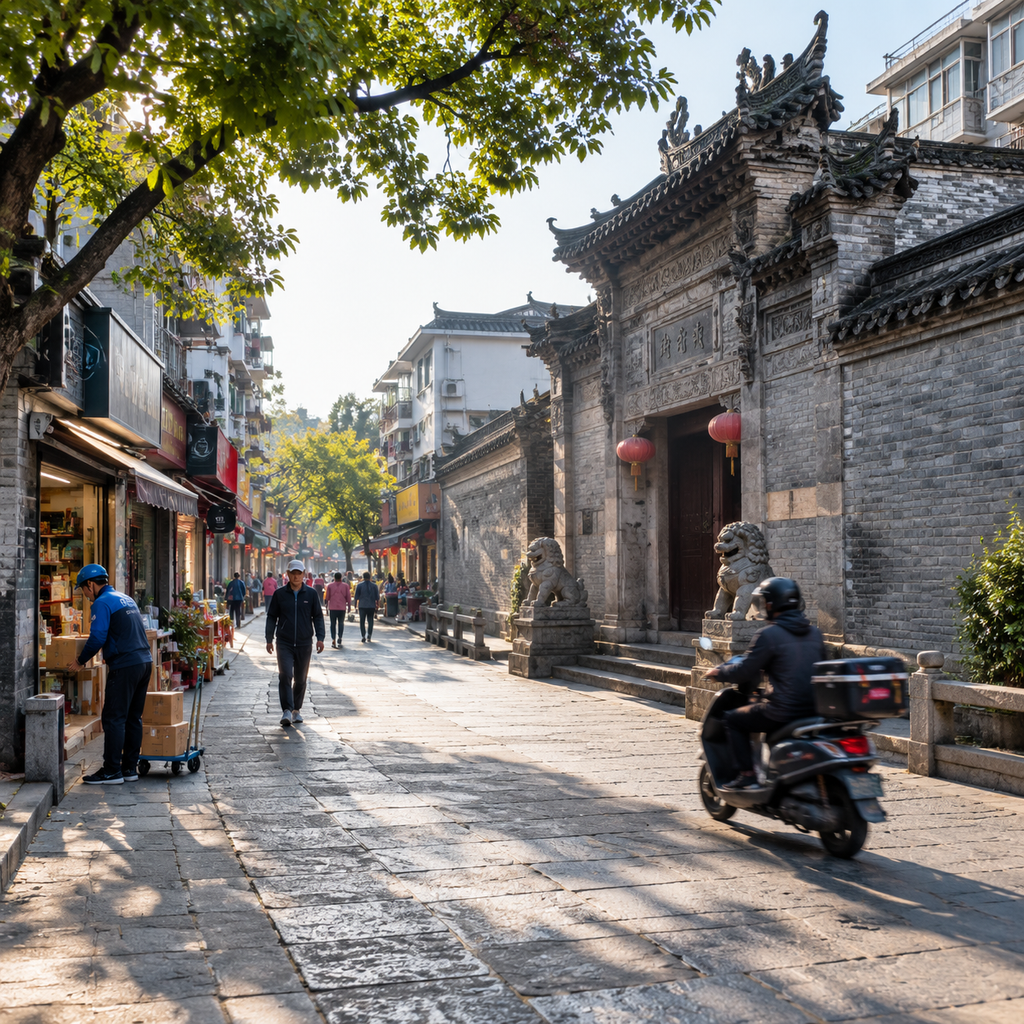
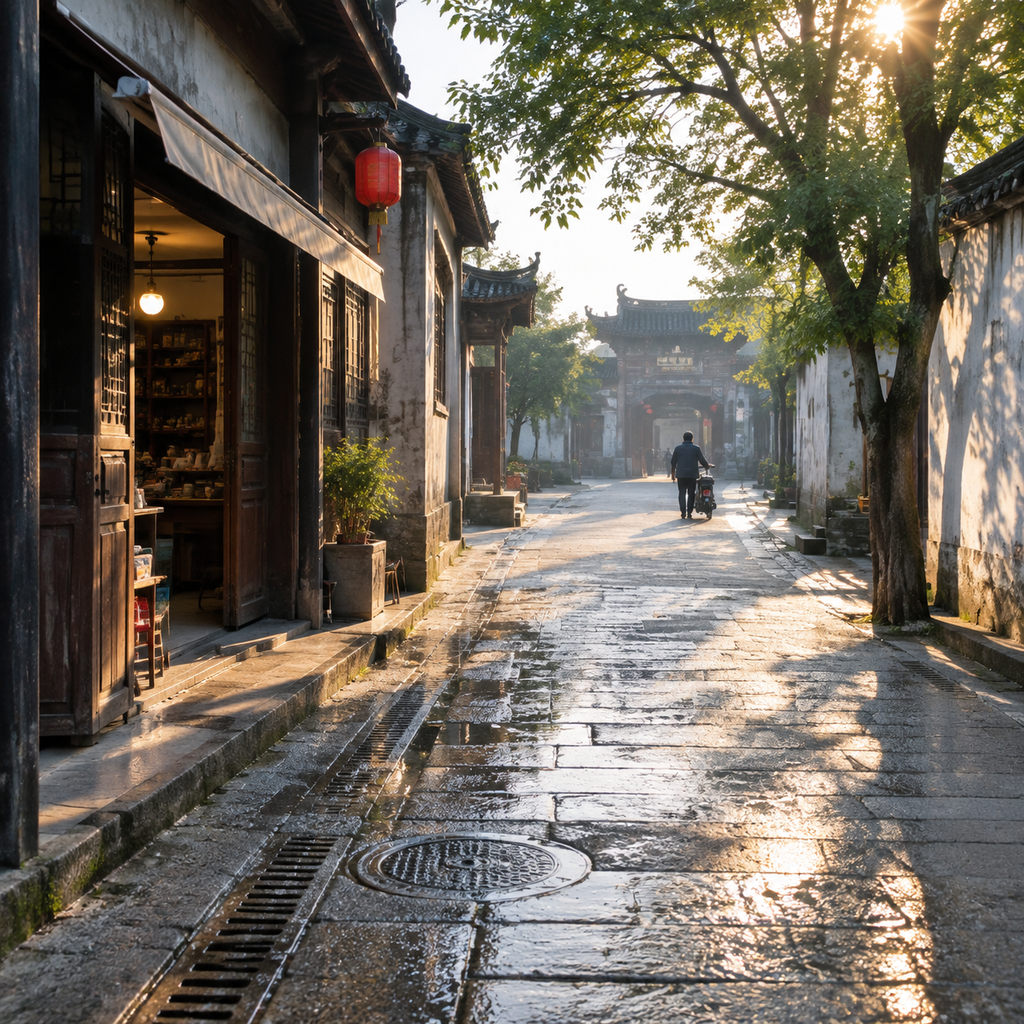
孔氏南宗家庙所在的街区并不是一条被完整封存的古街。它有修整过的路面,有普通居民楼,也有新旧招牌交错的店面;电动车从石墙旁边掠过,快递员把一箱箱货物搬进小店,晨练的人从树影里走出来。正因为如此,那座家庙显得并不孤立。它不是被玻璃罩住的历史标本,而是嵌在日常生活中的一处安静坐标。走近时,我先看到门前较为开阔的空间,墙面和门楼在晨光里显出沉稳的色泽,周围的声音却仍然是现代城市的声音:车轮摩擦地面,摊主招呼熟客,远处有人按了一下喇叭。古老与当下没有被刻意分隔,它们在同一片空气里并肩存在。
The neighborhood around the Southern Confucius Temple is not a perfectly preserved old street. It has renovated pavement, ordinary apartment buildings, and shop signs from different eras standing beside one another. Electric scooters pass the stone walls, delivery workers carry boxes into small stores, and people out for morning exercise emerge from the shade of trees. That is precisely why the temple does not feel isolated. It is not a historical specimen under glass, but a quiet point of reference inside everyday life. As I approached, I first noticed the relatively open space before the gate, its walls and entrance taking on a steady, muted color in the early light. Around them, however, were the sounds of a modern city: wheels against pavement, a vendor greeting a regular, and a distant car horn. The old and the current were not artificially separated; they shared the same air.
豆腐脑摊就在家庙门口一侧的街边,不算显眼。摊车上罩着透明挡板,里面放着一只盛豆浆的锅、一盆已经凝成细嫩白块的豆腐脑,还有葱花、榨菜、虾皮、紫菜和几样调味料。摊主是一位头发花白的阿姨,围裙洗得发白,手腕动作很快。她看到我站在旁边观察,没有马上问我要什么,只是把刚端给客人的碗往外推了推,给我腾出位置。“第一次来?”她问。我说是,想吃衢州的豆腐脑,但不知道应该怎么点。她笑了一下,说:“先来原味,别急着加东西,尝尝这个豆腐嫩不嫩。”这句话很简单,却让我意识到,眼前这碗早餐并不需要被包装成一个“必吃打卡”,它首先是一顿要认真吃的饭。
The tofu-pudding stall stood along one side of the temple entrance and was easy to miss. A transparent shield covered the cart. Inside were a pot of soy milk, a basin of tofu pudding set into delicate white curds, and bowls of scallions, preserved vegetables, dried shrimp, seaweed, and other seasonings. The vendor was a gray-haired woman in a well-worn apron, her wrists moving quickly. When she saw me watching, she did not immediately ask what I wanted. She simply pushed a customer’s bowl forward to make room. “First time here?” she asked. I said yes and explained that I wanted to try Quzhou tofu pudding but did not know how to order it. She smiled and said, “Start with the plain one. Don’t add anything yet. Taste whether the pudding is tender.” Her words were ordinary, but they made me understand that this bowl did not need to be packaged as a must-have check-in. It was first of all a meal to be eaten carefully.
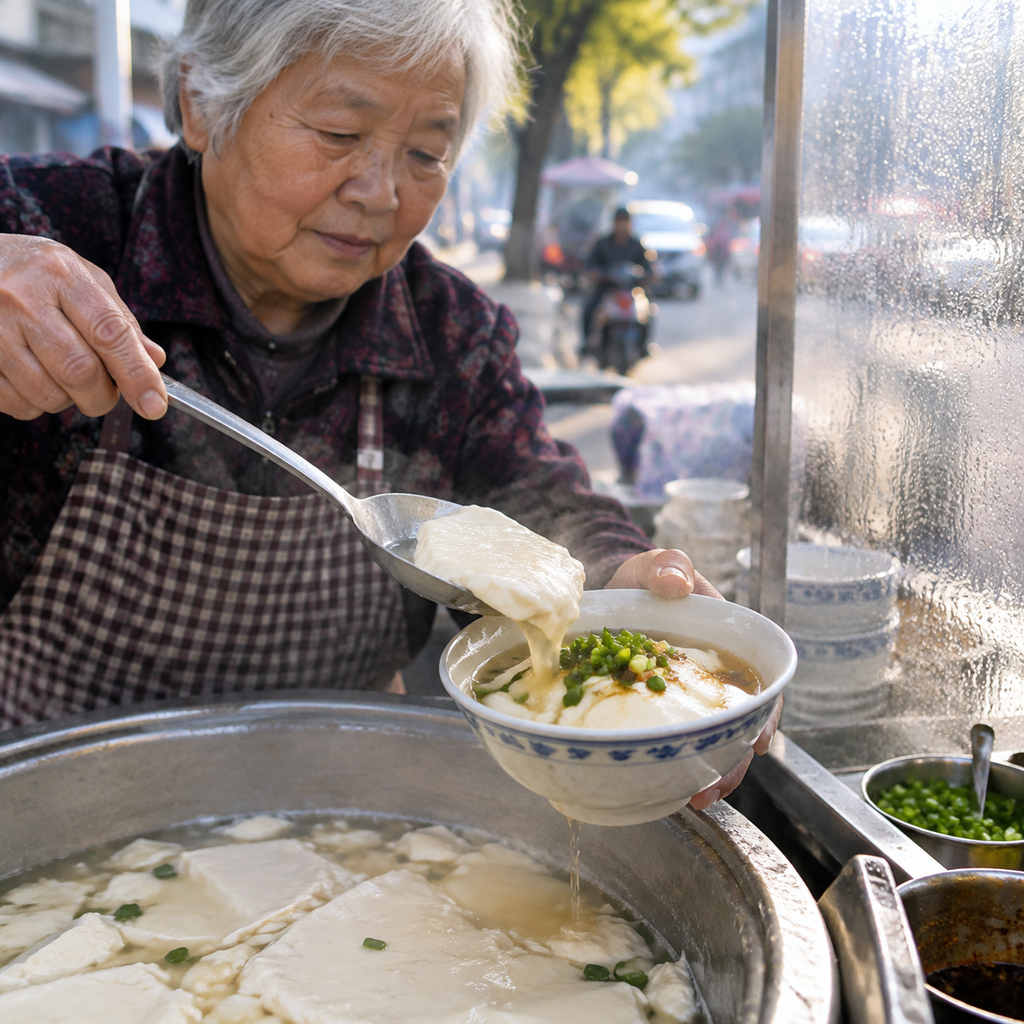
她用平底勺从大盆里轻轻舀起豆腐脑,动作不像盛汤,更像从一整块柔软的云上分出一勺。白色的凝块在勺里微微颤动,边缘并不整齐,表面有一层薄薄的水光。她先把豆腐脑盛进碗里,再沿着碗边浇入温热的汤汁。汤不是浓重的卤汁,颜色清亮,里面有细小的葱花和几粒调味料。她问我要不要辣,我说少一点。她没有把辣椒油直接浇上去,而是用小勺从罐子里取了一点放在碗边,告诉我可以自己拌开。随后,她又指了指桌上的榨菜:“这个可以放一点,咸鲜会出来,但不要一下子放多。”我端着碗坐到靠墙的塑料凳上,家庙的门楼就在视线前方,早餐的热气贴着我的脸升起来。
She used a broad, flat spoon to lift the tofu pudding from the basin. It was not quite the motion of serving soup; it was more like separating a spoonful from a soft white cloud. The curds trembled slightly, their edges uneven and their surface glistening with a thin layer of moisture. She placed the pudding in a bowl, then poured warm broth along the side. The liquid was clear rather than heavily thickened, dotted with scallions and small seasonings. She asked whether I wanted chili, and I requested only a little. Instead of pouring chili oil over the whole bowl, she placed a small amount at the edge and told me to mix it myself. Then she pointed to the preserved vegetables. “Just a little. It brings out the savory taste, but don’t add too much at once.” I carried the bowl to a plastic stool by the wall. The temple gate stood in front of me as steam from breakfast rose against my face.
第一口豆腐脑几乎没有阻力。勺子碰到碗底时,白色的豆腐脑顺着汤汁滑开,入口是柔和的豆香,随后才有一点盐味和葱的清亮。它不像甜豆花那样需要糖的衬托,也不像有些北方咸豆腐脑那样被浓卤完全包住。这里的好吃在于留白,豆腐脑本身的细、嫩、温热被保留下来,调味只是把它的轮廓轻轻勾出来。我按阿姨说的,先吃了几口原味,再把一点榨菜拨进碗里。咸味变得更明显,口感也多了一点脆;接着我拌开辣椒油,鼻腔里出现短促的香,舌头却没有被辣味占满。每一口都可以按照自己的节奏调整,这种吃法让早餐显得很松弛。
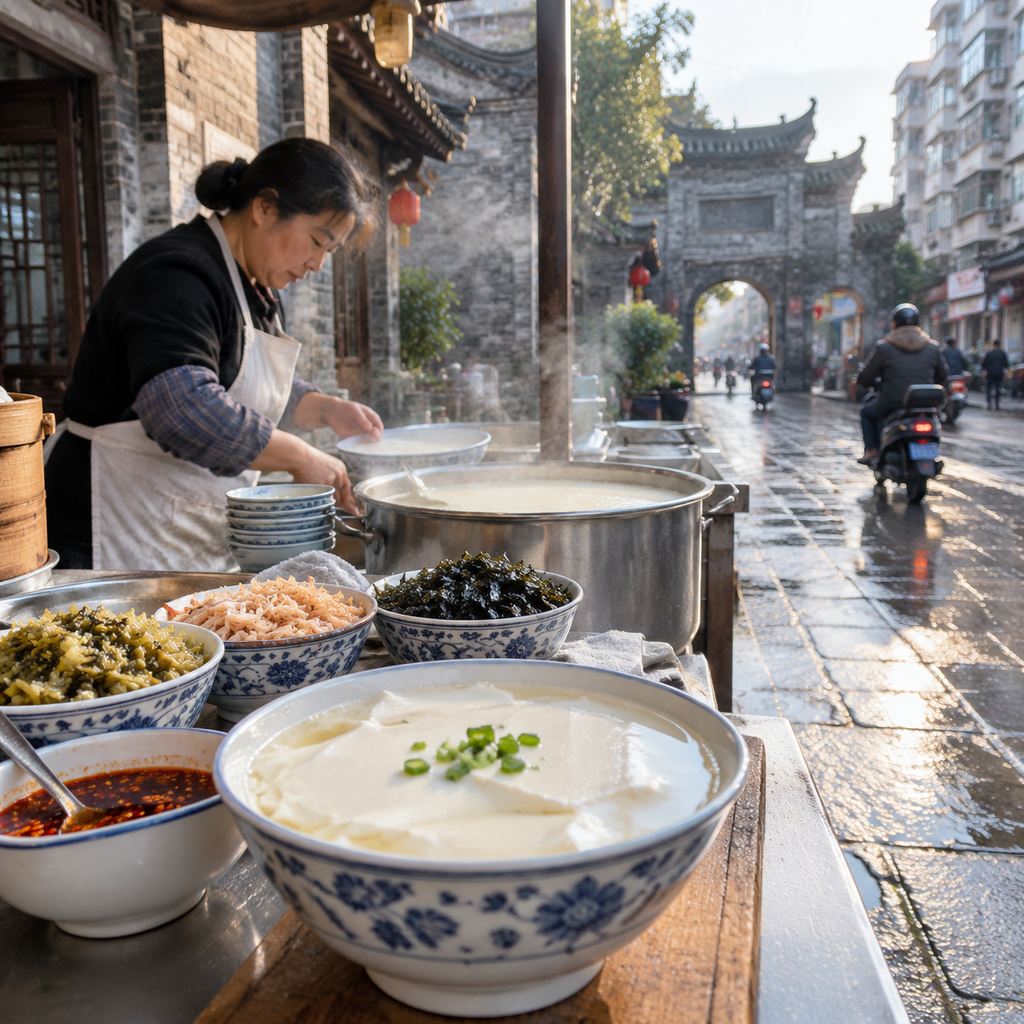
The first spoonful offered almost no resistance. As the spoon touched the bottom of the bowl, the white pudding dissolved into the broth. Its gentle soy fragrance arrived first, followed by a restrained saltiness and the bright note of scallion. It was unlike sweet douhua, which relies on sugar, and unlike some northern savory versions covered in thick gravy. Its appeal lay in restraint: the pudding remained fine, tender, and warm, while the seasonings only outlined its flavor. Following the vendor’s advice, I ate several bites plain before adding a little preserved vegetable. The salt became more pronounced and the texture gained a small crunch. Then I stirred in the chili oil. A brief aroma rose through my nose, but the heat never took over. Each spoonful could be adjusted at my own pace, making the breakfast feel unhurried and easy.
我吃得慢,旁边一位骑车来的叔叔已经吃完了。他把碗递回摊车,顺口问阿姨今天豆腐是不是比昨天嫩。阿姨说,天气不一样,点卤的时间也要跟着看,豆浆状态好,豆腐脑才会细。叔叔听完点点头,又买了一份带走。他看见我在听,便对我说,早上吃这个“胃里舒服”,再去上班也不沉。我问他是不是每天都来,他说不一定,但路过就会停,有时候带给家里老人。说完,他把塑料袋挂在车把上,沿着家庙旁的路骑走了。这样的交流没有景区介绍词,也没有刻意的地方知识,却让我从一个人的早餐习惯里,看到了食物与城市生活之间最自然的联系。
I ate slowly, while a middle-aged man who had arrived by bicycle finished his bowl. He handed it back to the cart and casually asked the vendor whether the tofu was more tender than yesterday. She explained that the weather changed and the setting time had to be adjusted; when the soy milk was in good condition, the pudding would be fine and smooth. He nodded, bought another portion to take away, and told me that it felt comfortable in the stomach and did not weigh him down before work. When I asked whether he came every day, he said not necessarily, but he stopped whenever he passed, sometimes bringing it home for an older family member. He hung the plastic bag from his handlebars and rode away beside the temple. There was no tourist script in this exchange, only a person’s breakfast habit showing me how food and city life connect naturally.
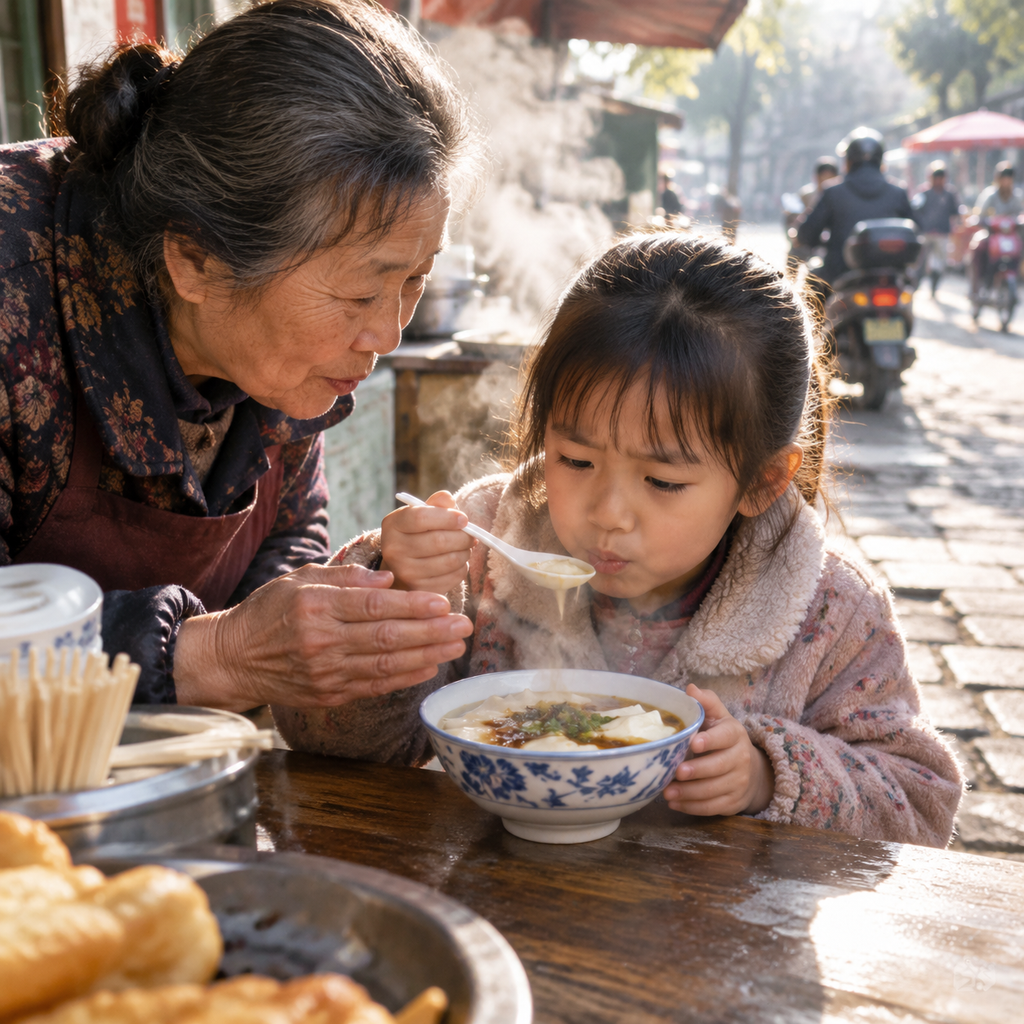
吃到一半时,一位背着书包的小女孩跟着奶奶走来。奶奶把她安置在我旁边,先替她吹了吹碗里的热气,又提醒她不要只吃上面的榨菜。小女孩显然已经很熟悉这套流程,拿起勺子把豆腐脑搅开,先尝了一口,然后皱着眉说今天辣椒香味重。阿姨听见了,笑着说那是因为刚换了一罐辣椒油。小女孩立刻问能不能再加一点,奶奶却说上学前不要吃太辣。她们的对话让我觉得,这个摊位像一个没有围墙的小客厅,来的人彼此不一定认识,却共享着一种早晨的秩序:先坐下来,吹一吹,慢慢吃完,再各自去往学校、工作地点或市场。
Halfway through my bowl, a schoolgirl arrived with her grandmother. Her grandmother settled her beside me, blew on the steam, and reminded her not to eat only the preserved vegetables from the top. The girl knew the routine well. She stirred the pudding, tasted it, and frowned, saying the chili aroma was stronger today. The vendor heard her and explained that she had just opened a new jar of chili oil. The girl immediately asked for more, but her grandmother said she should not eat too much spice before school. Their conversation made the stall feel like a small living room without walls. The customers did not necessarily know one another, yet they shared a morning rhythm: sit down, let the food cool, finish at an easy pace, and then leave for school, work, or the market.
豆腐脑吃完以后,我没有马上进家庙,而是在门前站了一会儿。天色已经亮了,门楼的轮廓比刚才清晰,墙根处还留着夜里的潮气。家庙周边的空间有一种很特别的尺度感:它不宽阔到让人觉得空旷,也不狭窄到只能匆匆通过。行人会自然放慢一点,抬头看门额,或者在树下等同伴;送货的车辆依旧进出,却会在靠近入口处放低速度。早餐摊的热气、家庙建筑的阴影、街坊说话的声音重叠在一起,形成一层既亲切又有分量的背景。我忽然明白,历史建筑真正进入城市生活,并不只靠说明牌和讲解,而是靠人们每天从它旁边经过,顺便买一碗早饭,顺便记住它的位置。
After finishing the tofu pudding, I did not enter the temple immediately. I stood outside for a while. The sky had brightened, the gate was more clearly outlined, and moisture from the night still clung to the base of the wall. The space around the temple had a distinctive scale. It was neither so broad that it felt empty nor so narrow that people had to hurry through. Passersby naturally slowed down to look up at the inscription or wait for a companion beneath the trees. Delivery vehicles still came and went, but reduced their speed near the entrance. Steam from the breakfast stall, shadows from the temple buildings, and neighborhood voices overlapped into a background that felt both intimate and substantial. I realized that a historic building enters urban life not only through plaques and guided explanations, but also through people passing it every day, buying breakfast nearby, and remembering where it stands.
进入家庙后,外面的嘈杂声很快被墙体和院落过滤掉。院子里比街边安静,脚步落在地面上的声音变得清楚,屋檐下的木构件在光线里显出细密的层次。我没有试图把每一个建筑细节都记下来,而是沿着开放区域慢慢走,看游客和本地来访者怎样使用这片空间。有的人在门前拍照,有的人安静地看介绍,有的人只是经过,并没有停留太久。对我来说,刚才那碗豆腐脑改变了观看的顺序:我不再只把家庙当作一处需要“参观”的遗存,而是把它放回一个真实的城市早晨里。南宋时期孔氏后裔南迁,衢州成为南宗家庙所在之地,这段历史让我想到的并非抽象的年代,而是家族、迁徙和地方社会如何在漫长时间里形成新的日常。
Inside the temple, the noise from the street was quickly softened by the walls and courtyards. The grounds were quieter, making each footstep distinct and revealing fine layers in the wooden structures beneath the eaves. I did not try to memorize every architectural detail. Instead, I walked through the open areas slowly and watched how visitors and local guests used the space. Some photographed the gate, some read the displays in silence, and others simply passed through. The bowl of tofu pudding had changed the order in which I looked. I no longer saw the temple only as a site to “visit,” but placed it back inside a real Quzhou morning. The movement of Confucius’ descendants southward during the Southern Song period, and the establishment of the Southern Confucius Temple in Quzhou, made me think not just of dates, but of how family, migration, and local society can shape a new everyday world over a long span of time.
离开家庙时,街道已经热闹了许多。卖菜的人把摊位向外推,早餐铺开始收拾第一轮用过的碗筷,年轻人骑车经过时会在熟悉的店门口短暂停一下。太阳从楼房之间露出一角,照在湿过的路面上,反射出不刺眼的光。我沿着附近街巷步行,没有设定必须抵达的地点,只是顺着声音和气味走。拐进一条较窄的路,我看见有人在门口择青菜,旁边的竹篮里放着几只小碟;再往前,是一家刚开门的面馆,老板把桌椅一张张搬到外面。有人问我是不是来旅游,我说刚在家庙门口吃了豆腐脑。对方立刻接话,说衢州早饭不能只看一种,粉干、烧饼、馄饨各有自己的时间,豆腐脑适合想吃得温和一点的早晨。
By the time I left the temple, the street had become much livelier. Vegetable vendors pushed their displays outward, breakfast shops cleared the bowls from the first round of customers, and young people paused briefly at familiar storefronts as they rode past. A corner of sunlight appeared between the buildings and reflected softly from the damp pavement. I walked through the nearby lanes without setting a destination, following sounds and smells instead. In one narrow lane, someone sorted leafy vegetables outside a doorway, with small dishes resting in a bamboo basket. Farther on, a noodle-shop owner carried tables and chairs outdoors after opening. Someone asked whether I was visiting. When I mentioned the tofu pudding outside the temple, they replied that Quzhou breakfasts could not be reduced to one dish: rice noodles, baked pastries, and wontons each had their own moment, while tofu pudding suited a morning when one wanted something gentle.
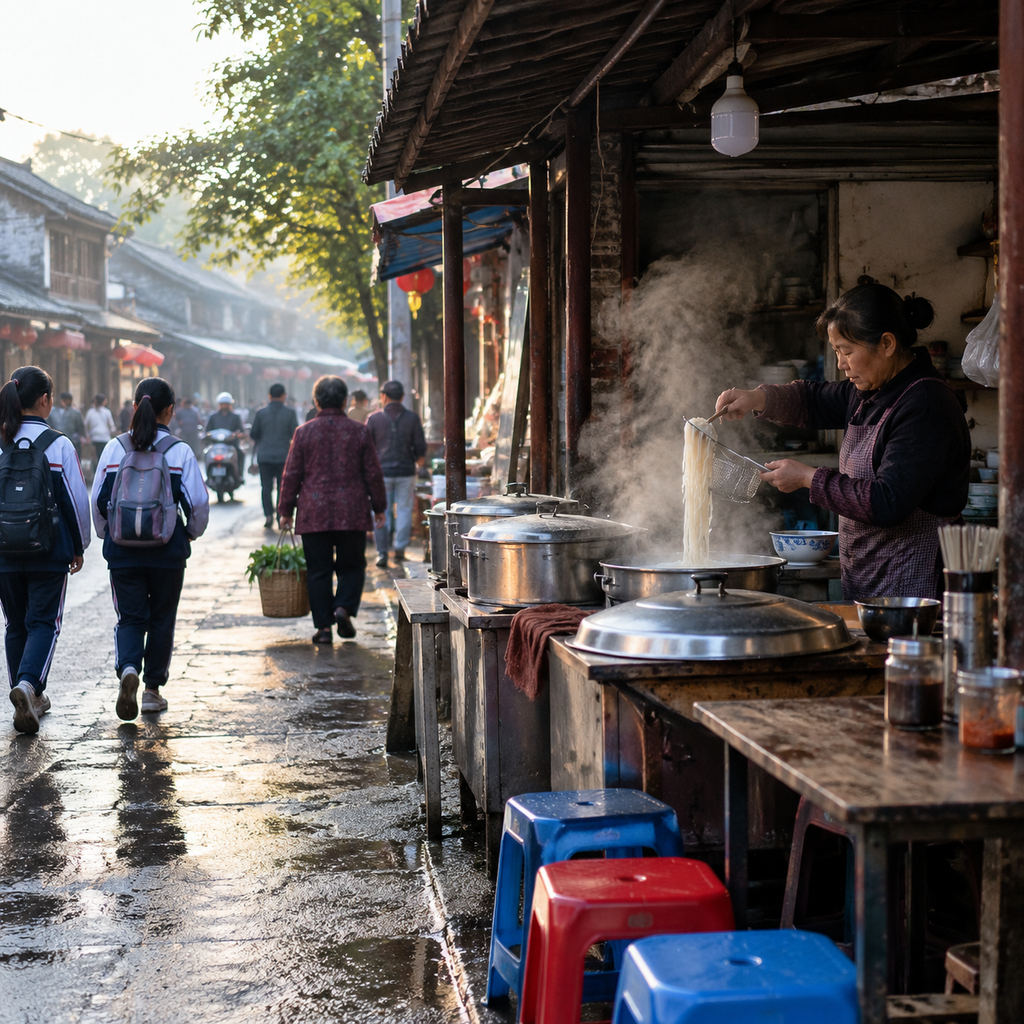
这句话后来一直留在我脑子里。“自己的时间”是我在衢州吃早餐时感受到的一个关键词。城市并不是从某个统一的铃声里同时启动,而是由许多细小的开端拼起来:有人先去市场,有人先送孩子上学,有人把一锅豆浆煮开,有人坐在路边看完一份报纸才起身。衢州的早晨并不懒散,它只是没有把速度当成唯一标准。摊主手脚很快,却不催客人;骑车的人赶着上班,却会为熟悉的一碗食物停下;老人和孩子共享一张小桌子,聊天时也不急着结束。这样的节奏让我联想到衢州作为交通和商贸往来之地的性格:外来的信息、口味和人群不断经过,本地生活却有自己的承接方式,把变化揉进一日三餐里。
That sentence stayed with me: “each has its own time.” It became a key to what I felt while eating breakfast in Quzhou. The city did not start all at once from a single bell. It assembled itself through many small beginnings: someone went to the market, someone took a child to school, someone brought a pot of soy milk to a boil, and someone finished reading a newspaper before standing up. Quzhou’s morning was not lazy; it simply did not treat speed as the only standard. The vendors worked quickly without rushing customers. Commuters hurried, yet still stopped for a familiar bowl. Elderly people and children shared small tables and did not hurry to end their conversations. This rhythm reminded me of Quzhou’s character as a place shaped by travel, trade, and exchange: outside people, information, and flavors pass through, while local life absorbs change in its own way and folds it into everyday meals.
后来我又在另一家小店门口看见豆制品。白豆干整整齐齐地叠在木盘里,旁边放着一盆切好的青菜。店主告诉我,衢州人吃东西讲究鲜,也讲究下饭,很多家常味道不会刻意做得复杂,关键是食材新鲜、火候合适、调味有层次。我没有追问具体菜名,因为我更在意这句话透露出的生活观。豆腐脑同样如此,它的滋味并不靠稀奇的配料取胜,而是靠豆浆的香、凝结的程度、汤汁的温度和桌边那些可以自己调整的佐料共同完成。衢州饮食给我的印象,也在那一刻从“辣”或“地方特色”这些笼统标签,变成了对鲜味、口感、米面豆制品和分享方式的具体观察。
Later I saw more soybean products outside another small shop. Neat stacks of white dried tofu sat on a wooden tray beside a basin of cut greens. The shopkeeper told me that Quzhou cooking valued freshness and also valued food that went well with rice. Many home-style dishes were not made complicated on purpose; what mattered was fresh ingredients, proper heat, and layers of seasoning. I did not press for specific dish names, because I was more interested in the attitude behind the words. Tofu pudding worked the same way. Its flavor did not depend on exotic toppings, but on the fragrance of soybeans, the degree of setting, the temperature of the broth, and the seasonings at the table that diners could adjust themselves. My impression of Quzhou cuisine moved beyond broad labels such as “spicy” or “local specialty.” It became an observation of freshness, texture, rice and wheat foods, soybean products, and the ways people share a meal.
临近中午,我才意识到自己已经走了很远。手机里的地图显示,我从家庙出发,绕过了几条街,经过市场、学校和几处居民区,又回到了较宽的道路上。脚底有一点酸,胃里却很轻。回望早上经过的方向,孔氏南宗家庙已经被街道转角遮住,只能看到屋檐的一小段。那碗豆腐脑的味道也不再像刚入口时那么鲜明,反而留下了一种温暖的底色。我想起摊主说的“先尝尝豆腐嫩不嫩”,这句话其实也适合用来理解一座城市:不要一上来就急着寻找最著名的景点、最标准的答案,先看看它最普通的东西是否有自己的质地。
Near noon, I realized that I had walked much farther than expected. The map on my phone showed that I had left the temple, crossed several lanes, passed a market, a school, and residential neighborhoods, and eventually returned to a wider road. My feet were slightly sore, but my stomach felt light. Looking back, the Southern Confucius Temple was hidden behind a corner, with only a small stretch of eaves visible. The flavor of the tofu pudding was no longer as vivid as it had been in the first bite; instead, it had left a warm undertone. I remembered the vendor’s advice to first taste whether the pudding was tender. The same advice could describe how to understand a city: do not rush immediately toward its most famous sights or official answers. First see whether its ordinary things have their own texture.
如果准备去衢州,我会建议把孔氏南宗家庙安排在一个不赶时间的上午。可以先在附近找早餐,再进入家庙参观,这样更容易感到建筑与街区之间的关系。出发前最好查看当日开放信息和现场提示,不要把摊位的出现当作固定承诺;小吃摊会受到天气、食材和摊主安排影响。步行时穿舒服的鞋,老城街巷适合慢慢看,但路面、车辆和人流都需要留意。豆腐脑第一次可以少加调料,先尝原味,再按自己的口味加入榨菜、葱花或辣椒。若同行者口味不同,可以分别调整,不必追求所谓标准吃法。参观家庙时,注意保持安静,遵守开放区域的规定;拍摄前也应留意是否有禁止拍照的提示。把半天留给周边街巷,往往比匆忙打卡更多一个层次。
If you plan to visit Quzhou, I would suggest setting aside an unhurried morning for the Southern Confucius Temple. Find breakfast nearby before entering the temple, so you can better sense the relationship between the architecture and the neighborhood. Check current opening information and on-site notices beforehand, and do not treat the appearance of a particular stall as guaranteed; small vendors may change their routine according to weather, ingredients, or personal arrangements. Wear comfortable shoes, and stay alert to vehicles and uneven flows of people while walking through the old lanes. For a first bowl of tofu pudding, use only a little seasoning at first, taste it plain, and then add preserved vegetables, scallions, or chili according to your preference. Companions with different tastes can adjust their own bowls; there is no need to search for a single “correct” method. Inside the temple, keep your voice low, follow the rules for open areas, and check for any photography restrictions. Giving the surrounding lanes half a day often reveals more than a hurried checklist of attractions.
我还会建议不要只在游客最容易聚集的正门位置停留。可以从家庙周边向外走一小段,观察店铺何时开门、居民怎样买菜、送孩子上学的人从哪条路经过,以及早餐摊收摊后街道留下什么变化。这样的观察不需要打扰别人,也不需要把普通人的生活拍成素材。站在路边时,给电动车让出空间;询问摊主时,先说明自己是外地游客,得到允许再拍摄;如果摊位忙碌,就不要为了聊天耽误出餐。旅行中的礼貌有时比一条攻略更重要,因为地方感并不是靠游客索取出来的,而是在彼此尊重的距离里慢慢显现。衢州早晨给我的启发,正是这种不喧哗的靠近。
I would also suggest not staying only at the main gate where visitors naturally gather. Walk a little outward through the neighborhood and notice when shops open, how residents buy vegetables, which paths parents use to take children to school, and what changes remain in the street after the breakfast stalls close. This kind of observation does not require disturbing anyone or turning ordinary life into content. Leave space for electric scooters, introduce yourself as a visitor when asking a vendor a question, and ask before taking photographs. If the stall is busy, do not hold up service for the sake of conversation. Courtesy can be more valuable than a travel tip. A sense of place is not something visitors extract; it slowly appears within a distance shaped by mutual respect. That quiet approach was one of the lessons Quzhou’s morning gave me.
那天傍晚,我在别处吃了几样衢州小吃,却总会想起门口那一碗豆腐脑。它没有复杂的仪式,也没有让我立刻发出夸张的惊叹。它只是在我刚抵达、还不知道如何进入这座城市的时候,给了我一个温和的入口:先坐下来,先感受热气,先分辨豆香和汤味,再看身边的人如何生活。家庙的历史让我看见时间的纵深,摊主和路人的几句闲谈让我看见时间如何落到今天,落到一只碗、一张塑料凳和一条还在慢慢变亮的街道上。城市的性格往往不在宏大的介绍里,而在一个人愿不愿意把第一口饭吃慢一点。
That evening, I ate several other Quzhou snacks elsewhere, but I kept returning in my thoughts to the bowl outside the temple. It had no elaborate ritual and did not produce an immediate, exaggerated revelation. It simply offered me a gentle entrance when I had just arrived and did not yet know how to approach the city: sit down, feel the steam, distinguish the soy fragrance from the broth, and watch how people around you live. The temple’s history gave me a sense of time’s depth, while the brief exchanges with the vendor and passersby showed how that history settles into the present—in a bowl, on a plastic stool, beside a street gradually filling with light. A city’s character is often found not in grand introductions, but in whether a person is willing to eat the first mouthful a little more slowly.
第二天清早我又经过那里,豆腐脑摊还没有完全摆好,阿姨正在擦拭挡板。她认出了我,问我昨天吃得习不习惯。我说很好,只是后来才发现自己走了很远。她说:“那就对了,吃饱了就走走。”说完,她低头把葱花分进几个小盒子里,街边的光落在她的手背上。我没有再次坐下来,因为还要赶车去别的地方,却在拐弯之前回头看了一眼。家庙的门楼、摊车的白汽、刚刚打开的店门和匆忙又从容的人们,共同组成了我对衢州的第一幅完整画面。那一碗豆腐脑让我重新认识衢州的早晨:它不是景点开始营业的时间,而是历史、食物和普通人的生活同时醒来的时刻。
Early the next morning, I passed by again. The tofu-pudding cart was not fully set up yet, and the vendor was wiping the transparent shield. She recognized me and asked whether I had enjoyed the bowl. I said I had, though I had only realized later how far I had walked. She replied, “That’s good. After eating, take a walk.” Then she lowered her head and divided scallions into several small containers as the street light fell across her hands. I did not sit down again because I had a train to catch elsewhere, but I looked back once before turning the corner. The temple gate, the white steam from the cart, newly opened shops, and people who were both hurried and composed formed my first complete image of Quzhou. That bowl of tofu pudding changed how I saw Quzhou mornings: they are not the hours when attractions begin operating, but the moment when history, food, and ordinary people wake together.
离开衢州之前,我特意把那条路又走了一遍。第一次经过时,我只记得自己在寻找一个听说过的早餐摊;第二次经过时,我开始注意街道的细部。门口的树坑里有新扫过的落叶,墙角放着等待回收的纸箱,早餐摊旁边的地面比别处更湿,因为洗碗的水刚刚被冲到排水沟里。一个穿深色外套的男人拎着保温桶来取豆腐脑,和阿姨确认了几句,便把桶放进电动车脚踏处。摊位前没有排起很长的队,可每隔一会儿就有人来,熟练地说出自己的要求:少葱、不要辣、带走、分开装。所谓地方生活,常常就是这样由许多无需解释的默契组成。
Before leaving Quzhou, I walked that same street once more. The first time, I had been looking for a breakfast stall I had heard about; the second time, I began to notice the details. Freshly swept leaves lay in the tree pits, cardboard boxes waited near a wall for collection, and the pavement beside the stall was wetter because dishwashing water had just been rinsed toward the drain. A man in a dark jacket arrived with an insulated container to collect tofu pudding. After confirming a few details with the vendor, he placed the container on the footboard of his electric scooter. There was no long queue, yet someone appeared every few minutes, stating familiar preferences: fewer scallions, no chili, takeout, or separate containers. Local life is often made of these small understandings that require no explanation.
我也开始留意豆腐脑与其他早餐之间的区别。粉干需要更强的咀嚼感,烧饼带着烘烤后的干香,馄饨则有汤水和面皮的柔软;豆腐脑最像一种可以把清晨托住的食物。它不要求我立刻清醒,也不催促我作出选择。豆浆制成豆腐脑,本身就是把普通食材变成另一种形态的过程,凝固之后仍然保留着豆子的气息。衢州地处浙西,山地、河流、盆地和交通往来共同影响着当地人的饮食选择,但我不想把一碗小吃简单归结为地理决定论。更准确的说法是,地方环境提供了条件,而一代代人的口味、劳作和生活习惯把这些条件变成了今天的餐桌。
I also began comparing tofu pudding with the other breakfast foods around it. Rice noodles ask for more chewing, baked pastries carry a dry roasted fragrance, and wontons combine broth with the softness of wrappers. Tofu pudding felt most like food that could support the morning itself. It did not demand that I become fully awake at once, nor did it push me toward a decision. Turning soy milk into tofu pudding is a transformation of an ordinary ingredient, yet the bean’s fragrance remains after it sets. Quzhou’s location in western Zhejiang, with its mountains, rivers, basin, and movement of travelers, has influenced local food choices, but I would not reduce a small dish to geographical determinism. A more accurate way to put it is that the environment creates possibilities, while generations of taste, work, and habit turn those possibilities into today’s table.
在家庙附近散步时,我还想到“南宗”这个称谓并不只是一个供游客记忆的标签。对普通旅行者来说,孔氏南宗家庙当然首先是一处可以参观的历史建筑,但它也提醒人们,历史从来不是停留在原地的东西。孔氏后裔南迁之后,身份、礼制和家族记忆在新的地域中继续延伸;而今天的衢州居民,则在同一片空间里买菜、上班、上学和吃早饭。古迹的意义因此不是把城市变成一座博物馆,而是让我们在经过日常街道时,突然意识到脚下的地方曾经承载过漫长的迁徙与延续。那碗豆腐脑恰好把这种遥远的历史拉回到可触摸的温度。
While walking near the temple, I also thought about the name “Southern Branch.” For an ordinary traveler, the Southern Confucius Temple is certainly a historic building to visit, but it also reminds us that history never simply stays where it began. After Confucius’ descendants moved south, identity, ritual, and family memory continued in a new region. Today, Quzhou residents use the same surrounding space to shop, work, attend school, and eat breakfast. The meaning of a historic site is therefore not to turn a city into a museum, but to make us notice, while passing through an everyday street, that the ground once carried a long story of migration and continuity. The bowl of tofu pudding brought that distant history back to a touchable temperature.
那天上午我没有拍太多照片。家庙的门楼当然值得记录,白色豆腐脑被舀起时的颤动也很适合留在镜头里,但有些瞬间一旦为了构图反复打扰,就会失去原来的自然。我更愿意记住一些不完整的画面:阿姨用抹布擦过挡板后留下的水痕,叔叔把袋子挂上车把时短暂弯下的手臂,小女孩嫌辣却又想加辣的表情,屋檐边逐渐变亮的天空。它们并不构成一份严谨的城市档案,却构成了我自己的旅行记忆。旅行并不总要带走一套结论,有时只是把一个地方的早晨认真地看过、吃过、听过。
I did not take many photographs that morning. The temple gate was certainly worth recording, and the tremble of the white pudding as it was lifted would have looked good through a lens. Yet some moments lose their natural quality when repeated interruptions are made for composition. I would rather remember incomplete images: water marks left after the vendor wiped the shield, the brief bend of the man’s arm as he hung his bag from the handlebar, the girl’s expression as she complained about the chili but still wanted more, and the sky brightening along the eaves. These scenes do not form a rigorous urban archive, but they form my own travel memory. A journey does not always need to carry away a complete conclusion. Sometimes it is enough to have carefully seen, tasted, and heard a place’s morning.
如果有人问我在衢州最值得从哪里开始,我不会立刻报出一个景点名单。我会说,先选一个可以步行抵达的清晨,沿着老城方向走,找一处不急着招揽客人的早餐摊,坐下来观察几分钟。也许当天遇到的不是我吃到的那位阿姨,也许豆腐脑的配料会有所不同,也许家庙门前正在进行维护,周边声音比我记忆中更嘈杂。旅行不必复制别人的片段,重要的是给自己留出感受差异的空间。真正有用的建议不是保证某个瞬间一定发生,而是提醒你放慢一点,尊重当地的节奏,并且在不确定时向摊主或工作人员礼貌询问。
If someone asked me where to begin in Quzhou, I would not immediately list attractions. I would suggest choosing a walkable morning, heading toward the old city, finding a breakfast stall that does not aggressively solicit customers, and sitting down to observe for a few minutes. Perhaps the vendor would not be the same woman I met; perhaps the toppings would differ, or maintenance work would make the temple entrance noisier than I remembered. Travel does not need to reproduce someone else’s moments. What matters is leaving room to encounter difference. The most useful advice is not a promise that a particular scene will occur, but a reminder to slow down, respect local rhythms, and ask vendors or staff politely whenever something is uncertain.
我离开衢州时,车窗外的街道已经完全进入白天。有人提着早餐袋赶去单位,有人把卷帘门升到一半,市场里传来讨价还价的声音。城市看起来和平常没有区别,正是这种没有刻意表演的平常,让我觉得那次早饭值得写下来。孔氏南宗家庙给了我一条进入历史的路,门口的豆腐脑则给了我一条进入生活的路。两条路并不冲突:一条让我想到跨越时代的家族记忆,一条让我感到眼前人的温度和饥饿、忙碌与从容。它们在同一个早晨相遇,才让我真正看见衢州。
When I left Quzhou, the streets beyond the train window had fully entered the day. People carried breakfast bags toward their workplaces, shop shutters rose halfway, and bargaining voices came from the market. The city looked entirely ordinary, and that lack of performance was exactly why the breakfast stayed with me. The Southern Confucius Temple gave me a path into history; the tofu pudding outside its gate gave me a path into daily life. The two paths did not conflict. One made me think of family memory crossing centuries, while the other brought me close to the warmth, hunger, busyness, and calm of people before me. Their meeting on one morning was what allowed me to truly see Quzhou.
清晨从住处走向孔氏南宗家庙时,我刻意把注意力从地图上的箭头移开,改为听脚下和身边的声音。刚出门的一段路,最明显的是鞋底与潮湿路面的摩擦声,声音不响,却随着路面材质改变:平整的砖面发出短促的沙沙声,井盖边缘让脚步突然多一记轻响,靠近排水沟时,水流在格栅下面形成细细的回声。远处的电动车声先是模糊的一层,等它转过路口,轮胎压过地面的声音才变得清楚;一辆车经过后,街道又迅速恢复到自己的底噪。这样的声音距离感让我意识到,老城并不是一张静止的平面,墙、门洞、树和转角都在切割声线,也在提示我空间的深浅。走得慢一些,才会听出哪里适合停留,哪里只是通行节点,哪里虽然看似空着,却可能是居民进出的必经位置。
While walking from my lodging toward the Southern Confucius Temple, I deliberately shifted my attention away from the arrow on the map and listened to the sounds around my feet. The first stretch was marked by the friction of shoes on damp pavement. It was quiet, but it changed with each surface: paving bricks made a brief rustle, a manhole edge added a sudden tap, and water beneath a drain grate produced a thin echo. The distant sound of an electric scooter remained blurred until it turned the corner, when the tires against the road became distinct; after it passed, the street quickly returned to its underlying hum. These changing distances showed me that the old city is not a flat, motionless map. Walls, doorways, trees, and corners divide the sound and reveal the depth of the space. Walking slowly made it easier to tell where a pause was appropriate, where the street was simply a passage, and where an apparently empty patch was actually a route residents needed to use.
家庙附近的早晨还有一套不容易被照片记录的节拍。卷帘门向上卷动时,金属摩擦声会在狭窄街面上停留片刻;菜篮放到地上,竹条和水泥地接触的声音比想象中更轻;店铺门口有人拖动塑料箱,箱底经过不平处便短暂颠簸。偶尔传来的喇叭声并不代表整条街都在催促,更多时候只是车辆与行人互相确认位置的一种方式。靠近家庙门口,我会先看清楚人流从哪一侧来,再决定是否站到墙边观察。若有人推车、搬货或带着孩子经过,我就让出连续的通道,不为了取景停在路中央。站在不妨碍别人行动的位置,听见的东西反而更多:有人在门内整理物品,有人在街角与熟人点头,树叶被风碰到时发出很短的摩擦声。空间的秩序不是靠一块牌子单独维持,而是由每个人对距离和方向的判断共同完成。
The morning around the temple also had a rhythm that photographs could not easily preserve. A rolling shutter left a metallic scrape hanging briefly in the narrow street. A vegetable basket placed on the ground made a softer sound than expected, while a plastic crate bumped for a moment whenever it crossed an uneven patch. An occasional horn did not mean that the whole street was impatient; it was often simply a way for a vehicle and a pedestrian to confirm one another’s position. Near the temple gate, I first watched where people were moving before choosing a place beside the wall. When someone pushed a cart, carried goods, or walked with a child, I left a continuous path open instead of stopping in the middle for a photograph. Standing where I did not obstruct movement allowed me to hear more: someone arranging items inside a doorway, a greeting exchanged at a corner, and leaves making a brief rubbing sound in the wind. The order of the space was not maintained by a sign alone. It was jointly produced by people judging distance and direction.
豆腐脑真正值得细看的是调味过程中的先后,而不是一张写着固定搭配的清单。把原味送入口中时,舌面先接触到的是豆腐脑的温度和细腻程度,汤汁只在后面留下淡淡的咸味。如果一开始就把所有佐料拌匀,豆香、汤味和配料的差别很快会被压成一个整体,便很难知道自己究竟喜欢哪一层。少量葱花带来清新的辛香,榨菜提供脆感和较集中的咸味,虾皮的鲜味更贴近汤底,紫菜则让口腔里多一层海藻的气息。辣椒油不只是增加刺激,也会带来油脂包裹后的香气;先放在碗边,再用勺尖一点点带入,能让每几口都有不同强度。调味并没有标准答案,关键是让碗里的变化保持可辨认,而不是用重口味遮住豆腐脑自身的质地。
The most interesting part of tofu pudding is the order of seasoning, rather than a fixed list of toppings. In the plain spoonful, the tongue first notices the temperature and delicate texture of the pudding, while the broth leaves only a mild saltiness afterward. If every topping is mixed in at once, the soy fragrance, broth, and individual ingredients quickly collapse into one flavor, making it difficult to know which layer one actually prefers. Scallions add a fresh sharpness, preserved vegetables contribute crunch and concentrated salt, dried shrimp sits closer to the savory base, and seaweed gives the mouth a marine note. Chili oil does more than add heat: it brings an aroma carried by fat. Keeping it at the edge of the bowl and drawing in a little with each spoonful creates changing levels of intensity. There is no single correct seasoning method. The useful principle is to keep the changes recognizable instead of covering the pudding’s own texture with a heavy taste.
我后来把一碗豆腐脑拆成几个可以观察的动作:先用勺子确认凝块是否完整,再轻轻拨开,看汤汁怎样进入缝隙;接着只加一种配料,比较口感变化;最后才决定是否需要辣味。这个顺序也提醒我,所谓“当地吃法”不必被理解为游客必须服从的规则。摊位上有人喜欢葱多,有人不要虾皮,有人把辣椒搅得很均匀,也有人只让辣油停在表面。对外地人来说,最稳妥的做法是先观察公共调料如何摆放,听清楚摊主对分量的提示,再用简洁明确的方式表达自己的忌口或偏好。若不确定某种配料是否含有自己不能接受的成分,应当先询问;若摊主正在连续出餐,就等到合适的间隙再问。早餐的体验不只在味道,也在点单时是否给别人留下从容工作的空间。
Later I broke the bowl into a sequence of observable actions: use the spoon to see whether the curd holds together, open it gently, and watch the broth enter the gaps. Add one topping at a time to compare the texture, and decide about chili only afterward. This order also reminded me that a “local way of eating” does not have to become a rule that visitors must obey. One customer may want extra scallions, another may avoid dried shrimp, one may stir the chili evenly, and another may leave it mostly on the surface. For a visitor, the most considerate approach is to observe how the shared seasonings are arranged, listen to any guidance about quantity, and state preferences or dietary limits simply. When unsure whether an ingredient is suitable, ask first; when the vendor is serving a continuous line of customers, wait for a natural pause. Breakfast is not only about flavor. It also depends on whether an order gives the person working enough room to serve others calmly.
家庙门前的交通观察让我更清楚地理解了“礼貌”在日常空间里的具体样子。这里的礼貌不是刻意做出的仪式,而是看到别人要通过时向旁边退半步,听见车铃后不突然横穿,在门口拍照时把镜头和身体都收在不挡路的位置。电动车并不总是高速驶过,有些车会在转弯前提前减速,但行人也不能因此放松警惕。送货、买菜、上学和参观使用的是同一段路,各自的目的不同,却需要共享有限的宽度。我观察到有人在狭窄处先让对方通过,也有人用眼神示意后再移动,并没有谁停下来宣布一条规则。对游客来说,最可靠的回应是保持可预判的动作:不戴着耳机横走,不突然后退,不把行李放在出入口,也不把居民的短暂停留误认成等待被采访。理解这些细节,才能在看建筑时不把周围的生活变成背景噪声。
Observing traffic in front of the temple made the everyday meaning of courtesy clearer to me. It was not a staged ritual, but a person stepping half a pace aside when someone needed to pass, avoiding a sudden crossing after hearing a bicycle bell, and keeping both camera and body out of the way while taking a photograph near the gate. Electric scooters did not always move quickly, and some slowed before turning, but pedestrians still needed to stay alert. Deliveries, grocery trips, school journeys, and visits all used the same strip of pavement. Their purposes differed, yet everyone had to share limited width. In narrow places, people often let one another pass first or moved after a brief glance, without announcing a rule. A visitor’s most dependable response is to move predictably: do not walk across the lane with headphones blocking awareness, step backward without checking, leave luggage at an entrance, or mistake a resident’s pause for an invitation to interview. These details make it possible to look at the architecture without turning surrounding life into background noise.
如果想在同一个上午同时完成早餐和文化参观,安排上应当给两个部分留下相互衔接的缓冲。可以先把早餐放在步行路线的前段,让味觉和街道观察成为进入家庙之前的铺垫;吃完不要立刻冲进门内,留几分钟整理随身物品、确认开放区域和现场提示,再开始参观。这样做的好处不是把两个项目压缩得更紧,而是让早餐的热气、街边的声响和建筑的尺度有机会连续起来。参观过程中可以把注意力分成两次:第一次先了解院落、门楼和展陈的大致关系,第二次再回看让自己印象最深的构件或空间。离开后若还有时间,可以沿周边街道走一段,看看刚才坐过的位置怎样变化。若当天人流、天气或现场管理情况不适合停留,就应当调整顺序或缩短内容,不必为了完成预设组合而勉强推进。上午的价值在于连接自然,不在于把早餐和历史建筑做成两个打卡框。
If you want to combine breakfast and a cultural visit in the same morning, the schedule should leave a buffer between them. Place breakfast early in the walking route, allowing taste and street observation to prepare the way into the temple. After eating, do not rush straight through the gate. Take a few minutes to organize belongings and check the current open areas and on-site notices before beginning the visit. The benefit is not tighter compression, but continuity between the steam of breakfast, the sounds of the street, and the scale of the architecture. During the visit, divide attention into two passes: first understand the broad relationship between courtyards, gate buildings, and displays, then return to the structure or space that stayed with you. After leaving, walk a little through the surrounding streets if circumstances permit and notice how the place where you sat has changed. If weather, crowds, or site management make lingering unsuitable, adjust the order or shorten the visit. A morning is valuable when the parts connect naturally, not when breakfast and a historic building are forced into two checkboxes.
我也越来越不愿意照搬别人写好的路线,因为同一条线在不同人身上会产生完全不同的负担。有人住得近,可以在天亮后慢慢走到家庙;有人需要先处理行李或换乘,直接前往就会把早餐变成匆忙的补给。有人对辣味、豆制品或海鲜类配料有自己的限制,别人推荐的碗并不一定适合;有人喜欢听街道的细声,有人更需要避开车流和嘈杂。就连“先早餐后参观”也不是永远成立,遇到摊位尚未准备好、入口临时调整或同行者体力不足时,顺序就应该改变。路线的价值应当是帮助人判断,而不是替人承诺一个必然复制的早晨。与其追求别人照片里的同一角度,不如根据自己的抵达方式、身体状态、饮食需要和现场规则重新组合。这样得到的体验可能少一个热门节点,却多一层真实的参与感,也更不容易把居民正常使用的空间误读成专门为游客布置的场景。
I have also become less willing to copy a route written by someone else, because the same line can create very different burdens for different people. Someone staying nearby may walk to the temple slowly after daylight arrives, while another traveler who must handle luggage or change transport would turn breakfast into a rushed refill by going straight there. Dietary limits also matter: a bowl recommended by one person may not suit someone who avoids chili, soybean products, or seafood-based toppings. One visitor may enjoy faint street sounds, while another needs to avoid traffic and noise. Even the sequence of breakfast before the visit is not universal. A stall may not yet be ready, an entrance may have changed temporarily, or a companion may lack the energy for a long walk. A route should help people make judgments, not promise a morning that can be reproduced exactly. Instead of chasing the same angle as someone else’s photograph, rebuild the plan around your arrival, physical condition, dietary needs, and the rules of the site. The result may contain fewer popular stops, but it allows more genuine participation and reduces the risk of misreading residents’ shared space as a display arranged for visitors.
这种不照搬路线的态度,也改变了我对“推荐”的理解。推荐一个地方时,我更愿意说明观察条件,而不是给出绝对判断:早晨的光线可能让门楼和墙面呈现不同层次,街边声音会随车辆、送货和上学人流变化,豆腐脑的口感和配料也可能因当天制作状态而不同。读者拿到这样的信息,可以提前准备舒服的鞋、留出机动时间、确认自己的饮食边界,并在现场作出选择。若实际看到的景象与文章不同,并不意味着旅行失败,反而说明地方生活没有按照文字排演。真正需要带走的,是一套更敏锐的观察方法:听一听空间怎样回应脚步,看一看人们怎样互相让路,先尝食物本身,再决定调味,最后把文化记忆放回仍在使用的街道。衢州这个上午之所以值得延伸,正因为它让历史参观、早餐判断和公共礼貌彼此牵连,形成一条只能由当下经验慢慢走出来的路径。
This approach also changed how I understand a recommendation. When describing a place, I prefer to explain the conditions of observation rather than make absolute claims. Morning light may give the gate and walls different layers; street sounds may shift with vehicles, deliveries, and school traffic; the texture and toppings of tofu pudding may vary with that day’s preparation. With this information, readers can prepare comfortable shoes, leave flexible time, identify dietary boundaries, and make decisions on site. If the actual scene differs from the article, the journey has not failed; it shows that local life was never staged according to written instructions. What is worth carrying away is a sharper way of observing: listen to how a space answers footsteps, notice how people make room for one another, taste the food before deciding on seasoning, and place cultural memory back into streets that are still in use. This Quzhou morning deserves further attention because historic visiting, breakfast judgment, and public courtesy became connected in a route that could only be formed through present experience.
走出家庙所在的街区后,我才发现衢州的早晨并不是一条直线,而是由许多交叉的声音组成。早餐摊前的勺子碰到瓷碗,发出清脆又短促的响声;街口的电动车起步时先轻轻一顿,随后才加速;学校方向传来孩子们互相提醒的声音,菜市场里则是塑料袋摩擦、秤盘落下和摊主报出数字的声响。它们彼此没有配合,却共同构成了城市开始工作的方式。站在家庙门口时,我原本只想寻找一张适合拍照的正面照片,后来却更愿意把手机放低,听周围的人怎样经过。一个地方的早晨很难靠一座建筑单独说明,真正让它活起来的,是建筑旁边那些没有被安排的日常动作。
After leaving the block around the temple, I realized that Quzhou’s morning was not a straight line but a crossing of many sounds. Spoons touched porcelain at the breakfast stall with a brief, bright clink. An electric scooter paused before gaining speed at the corner. Children reminded one another of something on the way to school, while the market added the friction of plastic bags, the drop of weighing pans, and vendors calling out numbers. None of these sounds followed a script, yet together they described how the city began its working day. At the temple gate, I had originally wanted a clean frontal photograph. Later I preferred to lower my phone and listen to how people passed. A morning is rarely explained by a building alone; it becomes alive through the unplanned actions taking place beside it.
我还重新看了一遍那张调味台。对第一次吃豆腐脑的人来说,葱花、榨菜、虾皮、紫菜和辣椒油很容易被看成一排可以随意叠加的配料,但摊主的动作告诉我,每一样东西都有自己的位置。葱花先给出清爽的气味,榨菜提供脆和咸,虾皮带来更深一点的鲜,紫菜则让汤的味道多了一层海风似的轻薄感。辣椒油最适合最后少量加入,因为它会很快改变鼻腔和舌面的感受。我后来没有把所有配料都放进碗里,而是分几次尝试,发现豆腐脑的好吃并不在于味道越多越好,而在于仍然能分辨出豆子的温和香气。这个过程也让我想到,地方小吃最值得写的往往不是“好吃”两个字,而是人们如何在一碗普通食物里保留选择的余地。
I looked again at the seasoning tray. For a first-time visitor, scallions, preserved vegetables, dried shrimp, seaweed, and chili oil may appear to be a row of toppings meant to be piled on freely. The vendor’s movements suggested otherwise: each ingredient had a role. Scallions brought a clean aroma, preserved vegetables added crunch and salt, dried shrimp deepened the savory note, and seaweed gave the broth a light, almost coastal lift. Chili oil was best added last and sparingly because it quickly changed the sensation in the nose and across the tongue. I did not mix everything into the bowl. By tasting in stages, I discovered that the pleasure lay not in adding more flavor, but in still being able to recognize the gentle fragrance of soybeans. The most interesting part of a local snack is often not the claim that it is delicious, but the room it leaves people to make their own choices.
家庙周边的交通也提醒我,老城步行并不等于可以忽略现实。那天我几次为了看门楣和屋檐,差点站到了电动车要通过的位置。后来我学会先靠墙停下,把视线看完,再在不挡路的地方拍照。送货车辆经过窄口时,骑车人通常会提前减速,但游客不能把这种礼让当成理所当然。街边的居民有自己的目的地,他们赶着买菜、上班或接孩子,并不需要为游客的观察让出整段道路。我觉得这也是参观历史街区的一部分:不是把普通生活当作背景,而是承认它本身有优先顺序。只要稍微注意脚下、给车辆留下空间、拍摄前先征得同意,游客就能更自然地靠近这里,而不必把“在地感”变成对别人生活的打扰。
The traffic around the temple also reminded me that walking through an old district does not mean ignoring practical realities. Several times I nearly stood in the path of an electric scooter because I was looking up at a doorway or roofline. I learned to step close to a wall, finish looking, and take photographs only from a place that did not obstruct movement. Delivery vehicles usually slowed before entering a narrow passage, but visitors should not treat that courtesy as an entitlement. Residents had their own destinations—shopping, work, or school pickups—and did not need to surrender the street to someone else’s curiosity. This is part of visiting a historic neighborhood: ordinary life is not scenery arranged for tourists; it has its own priorities. Watching one’s footing, leaving room for vehicles, and asking before photographing make it possible to approach the area without turning “local character” into an intrusion.
如果把家庙和早餐安排在同一个上午,我会把顺序放得很简单:先在街区外围走一小圈,确认人流和店铺状态,再决定在哪里吃;吃完以后不要立刻冲进景点,留几分钟观察建筑与街道的关系;进入家庙后,把主要时间留给开放展陈和空间本身,出来时再沿着附近街巷走一段。这样的安排不是为了制造某种“完美路线”,而是因为早餐摊和历史建筑的节奏不同。摊主需要快速出餐,家庙则需要让人慢慢看;街上有车辆和买菜的人,院落里又有相对安静的观看空间。把它们硬塞进连续的打卡清单,反而会错过两者之间最有意思的过渡。对带老人或孩子同行的人来说,还要把休息、如厕、天气变化和临时排队考虑进去,不能只按地图上的距离判断是否来得及。
If I were arranging the temple and breakfast in one morning, I would keep the order uncomplicated: walk around the outer streets first to understand the flow of people and which shops are open, then decide where to eat. After breakfast, I would not rush straight into the site. I would spend a few minutes watching how the building relates to the street. Inside, I would give the open displays and the space itself enough time, and only afterward continue through the nearby lanes. This is not a recipe for a perfect route. It recognizes that a breakfast stall and a historic temple operate at different speeds. The vendor needs to serve food efficiently; the temple asks visitors to look slowly. The street contains vehicles and shoppers, while the courtyard offers a quieter way of seeing. Forcing both into a checklist can erase the transition between them. Travelers with children or older companions should also allow for rest, toilets, changing weather, and unexpected queues instead of judging the morning only by map distance.
我没有把这条路线推荐给所有人,因为每个人到衢州的时间和目的都不一样。有人是为了研究建筑,可能更愿意一早直接进家庙;有人只想吃一顿早餐,未必需要花时间理解家族迁徙的历史;有人乘坐公共交通到达,必须优先考虑下一班车;也有人带着相机,希望在光线最合适时先拍摄。我的经历只能说明一种可能:当早餐和历史建筑放在一起时,食物可以帮助人进入地方生活,建筑则把这份生活放进更长的时间里。它不是固定答案,更不是必须复制的路线。真正有用的做法,是抵达后先观察,再根据体力、天气、开放情况和同行者的需要调整。旅行计划应该帮助人理解现场,而不是要求现场服从计划。
I would not recommend this exact sequence to everyone, because visitors arrive in Quzhou with different amounts of time and different purposes. Someone studying architecture may prefer to enter the temple as soon as it opens. Someone interested only in breakfast may not need to spend time on the history of migration and family memory. A traveler relying on public transport may have to prioritize the next departure, while a photographer may want to work with the best light first. My experience suggests only one possibility: breakfast can provide an entry into local life, while the historic building places that life within a longer span of time. It is not a fixed answer and not a route that must be copied. The useful habit is to observe first, then adjust for energy, weather, opening conditions, and companions. An itinerary should help a traveler understand the site, not force the site to obey the itinerary.
临走前,我又把碗里的最后一点汤喝完。汤已经没有刚端上来时那么热,榨菜的咸味经过搅拌变得均匀,碗底还剩下一小块没有被勺子碰碎的豆腐脑。我把它轻轻压开,发现温度和口感都已经改变,却仍然保留着豆香。这个细节让我想起家庙里的木构件:建筑也不会永远停在最初的状态,它会被雨水、阳光、脚步和维护留下痕迹。食物与建筑看似相距很远,却都需要时间才能显出真正的质地。那天我没有得到一个可以概括衢州的漂亮句子,只是在一碗早餐和一处古迹之间,学会把“看见”拆成更慢、更具体的动作。等我再次抬头时,街上的光已经完全亮了。
Before leaving, I finished the last of the broth. It was no longer as hot as when it arrived. The salt from the preserved vegetables had spread evenly through the bowl, and a small piece of tofu pudding remained untouched at the bottom. I gently broke it with my spoon and noticed how its temperature and texture had changed while its soybean fragrance remained. The detail reminded me of the timber structures inside the temple. A building never remains in its first condition; rain, sunlight, footsteps, and maintenance leave traces. Food and architecture may seem far apart, yet both need time before their real texture becomes visible. I did not leave with a polished sentence that could summarize Quzhou. I simply learned, between a bowl of breakfast and an old building, to divide “seeing” into slower and more specific actions. By the time I looked up again, the street was fully lit.
Public Source Notes
- 来源类型:衢州市及相关文旅部门公开的孔氏南宗家庙、衢州历史文化与旅游信息。
- 来源类型:孔氏南宗家庙现场公开展陈、建筑说明与参观提示。
- 来源类型:衢州地方志、博物馆及公共文化机构公开资料。
- 我在中国学会外卖自取礼貌,不是学会说哪句话,而是先别挡住别人的流程 | Learning Takeout Pickup Etiquette in China Was Not About Memorizing a Phrase, but About Not Blocking Other People’s Flow First
- 长沙一碗米粉的早晨,教我别只看招牌菜 | One Morning Bowl of Rice Noodles in Changsha Taught Me Not to Only Chase Signature Dishes
- 西藏:世界屋脊 | Tibet: The Roof of the World
- 昆明下雨的晚上,我在菌子火锅店学会了什么叫“鲜到发亮” | On a Rainy Night in Kunming, Mushroom Hot Pot Taught Me What Bright Freshness Means
- 沈阳的雨刚收住,街边烧烤味就把傍晚重新点亮了 | As Shenyang’s Rain Let Up, the Smell of Street Barbecue Lit the Evening Again
- 比“中国哪里最好玩”更重要的,是有人先把来华准备讲明白了 | More Important Than “Where to Go in China” Is Having Someone Explain the Preparation First
- 南京这座城最难拍准的地方,是城墙底下那些还在发生的今天 | The Hardest Thing to Capture Accurately in Nanjing Is the Living Present Beneath Its Walls
- 一块豆腐的两千年旅程 | A Block of Tofu's Two-Thousand-Year Journey
- 我在扬州瘦西湖边躲五月小雨,才知道一个人旅行也可以很热闹 | Hiding from a May Shower by Slender West Lake, I Learned Solo Travel Can Still Feel Full of Company
- 在成都用手机付款的一天 | A Day of Mobile Payments in Chengdu
Comments (0)