
在景德镇看一只碗怎么出生:窑火、白粉和老师傅的手势 | Watching a Bowl Be Born in Jingdezhen: Kiln Fire, White Clay Dust, and a Master's Hands
在景德镇看一只碗怎么出生:窑火、白粉和老师傅的手势 | Watching a Bowl Be Born in Jingdezhen: Kiln Fire, White Clay Dust, and a Master's Hands
笔者刚把帆布包放到景德镇陶溪川旁一家工作室门口,屋里的人已经抬手招呼:“别踩那边,地上那圈是刚修好的胎。”那天上午九点出头,门半开着,电扇把白色粉尘吹得轻轻浮起来,一位穿灰围裙的老师傅正用湿手压住转盘上的泥团,旁边学徒屏着呼吸递工具,整间屋子像在一秒一秒地把一只碗从空气里拽出来。
I had barely set down my canvas bag at the entrance of a studio near Taoxichuan in Jingdezhen when someone inside raised a hand and called out, “Don’t step there—that ring on the floor is a freshly trimmed body.” It was just after nine in the morning. The door was half open, an electric fan was lifting white dust into the air, a master in a gray apron pressed a wet hand against a lump of clay on the wheel, and an apprentice beside him held out tools without daring to breathe too loudly. The whole room seemed to be pulling a bowl out of thin air one second at a time.
景德镇这种地方,最容易被游客误会成“可以买很多瓷器的城市”,但笔者一进作坊就知道,真正值得看的不是货架,而是动作。手往下压多少,指腹往里收几分,水什么时候添,线什么时候切,这些看似微小的节奏,决定一只碗最终会不会站得稳、口沿会不会圆、上釉以后会不会显出呼吸一样的光。
A place like Jingdezhen is easily misunderstood by visitors as simply “a city where you can buy lots of porcelain,” but the moment I entered the workshop I knew the real subject was not the shelf but the motion. How much pressure goes downward, how far the fingertips pull inward, when water is added, when the cutting wire slides through—these tiny rhythms decide whether a bowl will stand well in the end, whether the rim will turn true, and whether the glaze will later shine with something like breath.
老师傅姓周,五十多岁,说话不快,却几乎每一句都带着判断。他先不让我拍照,而是让我站到轮盘斜后方,说“先看手,再看泥,再看速度”。他把泥团拍到轮心,脚下一蹬,盘面旋起来,泥立刻显得听话。周师傅的拇指往中间一送,另一只手的虎口稳稳托住外壁,泥坯像被看不见的力向上提起。我还没反应过来,一只碗的轮廓已经有了。
The master’s surname was Zhou. He looked to be in his fifties and spoke without hurry, but almost every sentence carried judgment. He did not let me take photos right away. Instead he moved me to a diagonal position behind the wheel and said, “First watch the hands, then the clay, then the speed.” He slapped the clay onto the center of the wheel, kicked the pedal, and the disc began to spin. The clay instantly seemed obedient. Master Zhou’s thumb pressed inward while the web between the thumb and forefinger of his other hand steadied the outside wall. The form rose as if lifted by an invisible force. Before I had fully processed the movement, the outline of a bowl already existed.
“你看着像很快,其实每一下都不能抢。”他说,“碗最怕急。”旁边的年轻学徒小廖笑了一下,接话说自己刚学的时候,总想一下拉高,最后不是塌就是偏。周师傅没回头,只说:“手快不是本事,手稳才是。”这句听起来像教手艺,也像教人。
“It looks fast to you,” he said, “but not a single motion can hurry ahead. A bowl fears impatience most.” Beside him, a young apprentice named Xiao Liao gave a small laugh and admitted that when he first learned, he always tried to pull the wall up in one dramatic move, and the piece either collapsed or leaned off-center. Without turning his head, Master Zhou replied, “Quick hands are not skill. Steady hands are.” It sounded like a lesson in craft, but also a lesson in living.
第一间房是拉坯间,地上有潮湿的泥印,空气里带着土腥和清水味,像刚下过小雨的院子。第二间房堆着半干的素坯,层架上整整齐齐排着碗、杯、盏、壶盖,有些边缘还泛着湿亮。第三间房是修坯间,桌面上全是细白粉,木刀、铁刀、海绵、卡尺各归各位。笔者跟着周师傅一间间走,像跟着他穿过一只碗尚未完成的一生。
The first room was the throwing room. Damp clay marks spread across the floor, and the air smelled of earth and clean water, like a courtyard just after a light rain. The second room stored half-dried bisque bodies, with shelves lined neatly in rows of bowls, cups, saucers, and teapot lids, some edges still carrying a wet gleam. The third room was for trimming, where the tabletop lay under fine white dust and wooden knives, metal blades, sponges, and calipers all rested in their own proper places. I followed Master Zhou room by room as though I were walking through the unfinished life of a single bowl.
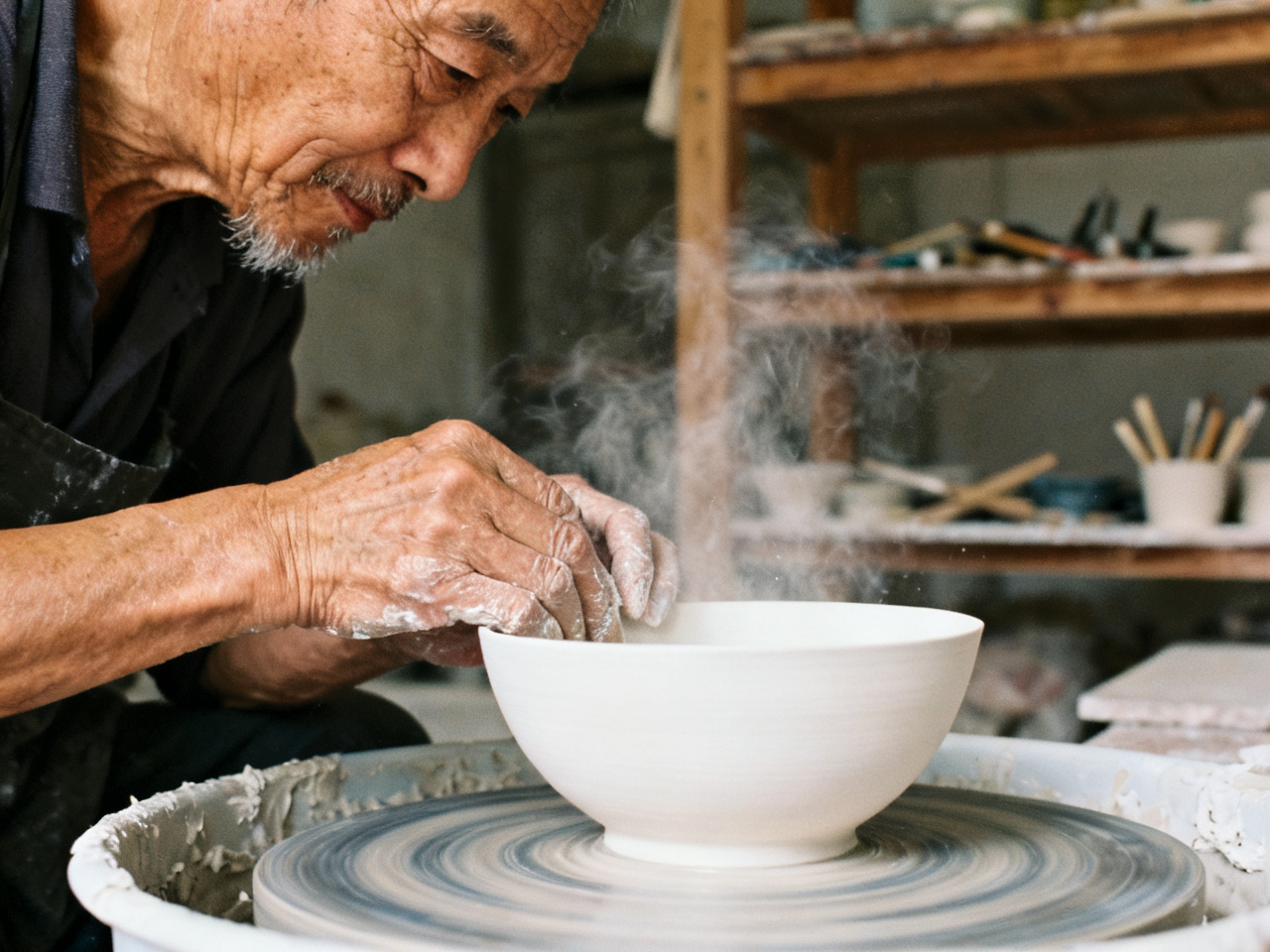
在修坯台前,周师傅随手拿起一只刚阴干到合适硬度的碗,倒扣在转台上,用一点泥固定,然后刀锋轻轻贴上去。碎屑不是飞出来,而是一圈一圈地卷下来,像削苹果皮一样整。小廖在边上给我看失败品:有一只底足削薄了,轻轻一按就裂;还有一只碗口微微起伏,上釉后会把这个缺点放大得更明显。看着这些“差一点”,我反而更懂好作品为什么难得。
At the trimming table, Master Zhou casually picked up a bowl that had dried to the proper firmness, turned it upside down on the wheel head, fixed it with a little clay, and touched the blade lightly against it. The shavings did not spray outward; they curled down in neat rings, like a perfectly peeled apple skin. Xiao Liao showed me the failed pieces on the side: one had a foot trimmed too thin and cracked at the slightest pressure; another had a rim with a faint waviness that would be exaggerated after glazing. Looking at these examples of “almost right,” I understood more clearly why a good piece is rare.
笔者问他,游客常常最想知道什么。小廖没想太久就说:“都问为什么手工碗贵。”周师傅听见,笑得很淡:“因为你买的不是一个容器,是前面这些看不见的废掉、重来、等它干、再等它烧。”他把那只修好的碗翻过来,指给我看底足内侧一道细得几乎看不见的旋纹,说这是手留下的签名,不必刻名字,懂的人会看。
I asked what visitors most often wanted to know. Xiao Liao did not think long before answering, “They all ask why a handmade bowl costs more.” Master Zhou heard him and smiled faintly. “Because what you buy is not a container,” he said. “You are buying all the invisible parts before it—the waste pieces, the redos, the waiting for it to dry, then the waiting for it to fire.” He turned the finished bowl over and showed me a nearly invisible spiral line inside the foot ring, a mark left by the hand. “That is the signature,” he said. “No need to carve a name. The people who understand will see it.”
再往里走,釉房的光线一下变了。窗户小,墙面白,地上摆着几个大塑料桶,釉浆沉得很安静。这里的味道和前面不同,不再是湿土,而是粉、矿物和一点冷意混在一起。一个阿姨戴着袖套,把素坯捏住底足,手腕一翻,整只碗没入釉浆,再稳稳提起,动作干净得像句子里的顿号。她看笔者站得太近,提醒:“别呼气太大,灰会落进去。”
Farther inside, the glaze room changed the light at once. The windows were small, the walls white, and large plastic buckets sat on the floor with glaze slurry settled in stillness. The smell here differed from the earlier rooms. It was no longer wet earth but a mixture of powder, minerals, and a faint coolness. A woman wearing sleeve guards gripped a bisque bowl by the foot ring, flicked her wrist, dipped the whole body into the glaze, and lifted it out cleanly, the motion as crisp as punctuation. Seeing me stand too close, she warned, “Don’t exhale too hard. Dust can fall in.”
这句提醒非常景德镇:在这里,很多事都要靠细微处成全。周师傅把一只刚上好釉的碗举到窗边,让笔者看釉层是否均匀。表面还是湿白的,没有烧成后那种温润亮泽,却已经能看出厚薄差别。光从小窗斜着照进来,碗身上像蒙了一层冬天早晨的雾。周师傅说,许多人以为最激动人心的是开窑,其实真正累人的,是开窑之前这些看上去没什么戏剧性的步骤。
That warning felt perfectly Jingdezhen: here, many things are accomplished only by the finest details. Master Zhou held a freshly glazed bowl up to the window and let me inspect whether the coating was even. Its surface was still matte white, lacking the warm sheen of a fired piece, yet the variations in thickness were already visible. Light entered diagonally through the small window, and the body of the bowl looked veiled in winter-morning mist. Master Zhou said many people assumed the most thrilling moment was opening the kiln, when in truth the tiring part was all these seemingly undramatic steps beforehand.
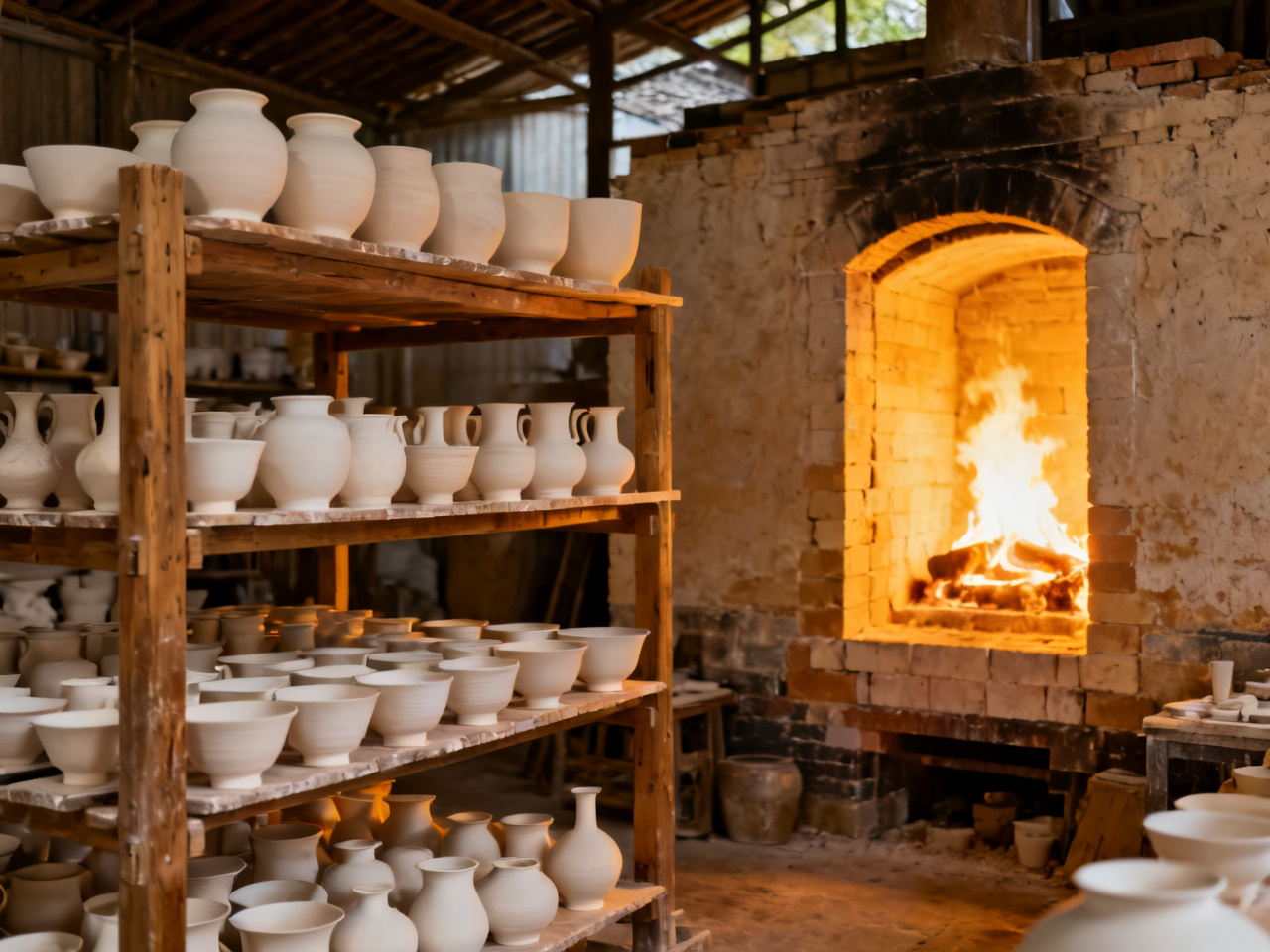
说到窑,笔者下午跟着他们去了后院的电窑房。路过一条狭窄走廊时,两边墙上贴着旧烧成记录,温度、时间、釉料配比写得密密麻麻,像一个家庭长期保存的病历本。窑房里热气不大,因为当天还没开烧,但靠近窑门时已经能闻到一种干燥、略带金属的气味。周师傅拍了拍窑体,说“火不说话,但它最有脾气。”
When the subject turned to kilns, I followed them in the afternoon to the electric kiln room behind the courtyard. We passed through a narrow corridor where old firing records covered both walls, dense with temperatures, timings, and glaze ratios, like a family’s archive of medical charts kept over many years. The kiln room itself was not yet hot because that day’s firing had not begun, but even near the door I could smell a dry, slightly metallic scent. Master Zhou patted the kiln body and said, “Fire doesn’t talk, but it has the worst temper.”
笔者原以为会看到夸张的红焰和火星四溅,结果景象非常克制:匣钵、层架、间隔钉、码放顺序,几乎一切都在安静地决定结果。小廖蹲在地上装窑,动作比上午慢得多,一件件核对位置。问他紧不紧张,他说第一次独立装窑时,前一晚根本睡不着,梦里全是碗口碰碗口的脆响。周师傅在旁边补了一句:“做瓷器的人,要能接受明天才知道今天对不对。”
I had expected dramatic red flames and scattering sparks, but the scene was remarkably restrained: saggers, kiln shelves, stilts, and the order of stacking silently determined the result. Xiao Liao crouched on the floor loading the kiln, moving much more slowly than he had in the morning, checking each position piece by piece. When I asked whether he still got nervous, he said that the first night before he loaded a kiln independently, he had hardly slept; in his dream all he heard was the brittle sound of rims striking rims. Master Zhou added from the side, “Anyone who works in porcelain has to accept that tomorrow is when you learn whether today was right.”
这里的对话,总让我想到别的旅行经验。参观文化城市如果只看最终陈列,常常会错过背后的方法。像看博物馆时如何把“看见”变成“读懂”,不妨对照 Museum visiting method in China;而若你对器物和日常饮用之间的关系有兴趣,成都那篇 Gaiwan Tea in Kuanzhai Alley 也能和景德镇形成很有意思的互文。
These conversations kept making me think of other travel experiences. If you only look at the final display in cultural cities, you often miss the method behind it. For how to turn “seeing” into “understanding” in a museum, it helps to compare notes with Museum visiting method in China. And if you are interested in the relationship between objects and daily drinking habits, the Chengdu piece Gaiwan Tea in Kuanzhai Alley creates an interesting dialogue with Jingdezhen.
傍晚时,工作室前面的路开始热闹,来试杯、挑盘子的游客多了起来,柜台上的灯一盏盏亮。可笔者印象最深的,仍是后场那些不太“好拍”的瞬间:鞋底带起的白粉,洗手池边一摞用旧的海绵,老师傅指尖被水泡得发白的纹路,学徒把失败坯体轻轻放进回收桶时那种不声张的可惜。真正的瓷器不是“突然成功”的,它是在无数次不完美里慢慢靠近标准。
By evening the road outside the studio grew lively. More visitors came to test cups and choose plates, and one lamp after another lit up over the counter. Yet what stayed most strongly with me were still the backstage moments that were not especially photogenic: white dust rising from the soles of shoes, a stack of worn sponges by the sink, the way the master’s fingertips had whitened from soaking in water, and the quiet regret with which an apprentice laid a failed body into the recycle bucket. Real porcelain does not “suddenly succeed.” It approaches its standard gradually through countless imperfections.
临走前,周师傅终于允许笔者拍一张他做坯的照片,但只拍手,不拍脸。他把双手重新放上泥团,让转盘转起来,像给这一整天做一个简短的结尾。门外晚风吹进来,带着街边烤饼的香味和一点窑房余热,屋里的白灯照在湿泥上,反出柔和的亮。小廖在后面喊:“老师,那个杯子是不是要再修一下?”周师傅头也没抬,只做了个极小的手势,示意先等半小时。那只还没成形完全的碗就停在转盘中央,微微发亮,像夜里一小轮安静的月。
Before I left, Master Zhou finally allowed me to take a photo of him throwing clay—but only of his hands, not his face. He placed both palms back onto the lump and let the wheel spin, as though giving the entire day a brief closing scene. Evening wind entered through the door carrying the smell of griddled bread from the street and a trace of warmth from the kiln room. The white studio light shone on the wet clay and returned a soft glow. From the back Xiao Liao called, “Master, should that cup be trimmed again?” Without lifting his head, Master Zhou made the smallest gesture, telling him to wait another half hour. The not-yet-complete bowl remained at the center of the wheel, faintly luminous, like a small calm moon at night.

- 在洛阳看牡丹之外:一座古都的日常层次 | Beyond Peonies in Luoyang: The Everyday Layers of an Ancient Capital
- 昆明蓝花楹城市漫步:把春天走成一条紫色街巷 | A Jacaranda Walk in Kunming: Turning Spring into a Purple Street
- 陪父母去乌镇的那个雨天,我第一次不再把“安排周全”当成孝顺 | A Rainy Day in Wuzhen with My Parents Taught Me That Love Is Not the Same as Overplanning
- 本人在台州临海古城墙的五月雨雾里,第一次把“看景”变成了“听城” | In Linhai's May Mist, I Stopped Just Seeing the Scenery and Started Listening to the City
- 在喀什,先让我停下来的不是景点,而是路口边那只刚出炉的馕 | In Kashgar, It Was Not a Landmark but a Fresh Naan Beside the Crossing That Made Me Stop
- 宁波老街傍晚亮灯的时候,桥边的人情味比河面更深 | At Dusk on Ningbo’s Old Street, the Human Warmth Ran Deeper Than the Canal
- 一个普通工作日的公交站,让我学会了中国排队不是只看队形 | On an Ordinary Weekday Bus Stop, I Learned That Queueing in China Is Not Just About the Shape of the Line
- 中山装与唐装:男士传统服饰怎么穿 | Zhongshan Suit & Tang Suit: Men's Traditional Wear
- 上海外滩与弄堂文化探索 | Shanghai: The Bund & Longtang Culture
- 天黑了才是正片开始 | When the Sun Sets, the Real Show Begins — China's Night Economy
Comments (0)