
在成都点微辣,我才知道辣度不是翻译能完全解决的 | Ordering Mild Spice in Chengdu Taught Me Translation Cannot Fully Explain Heat
在成都点微辣,我才知道辣度不是翻译能完全解决的 | Ordering Mild Spice in Chengdu Taught Me Translation Cannot Fully Explain Heat
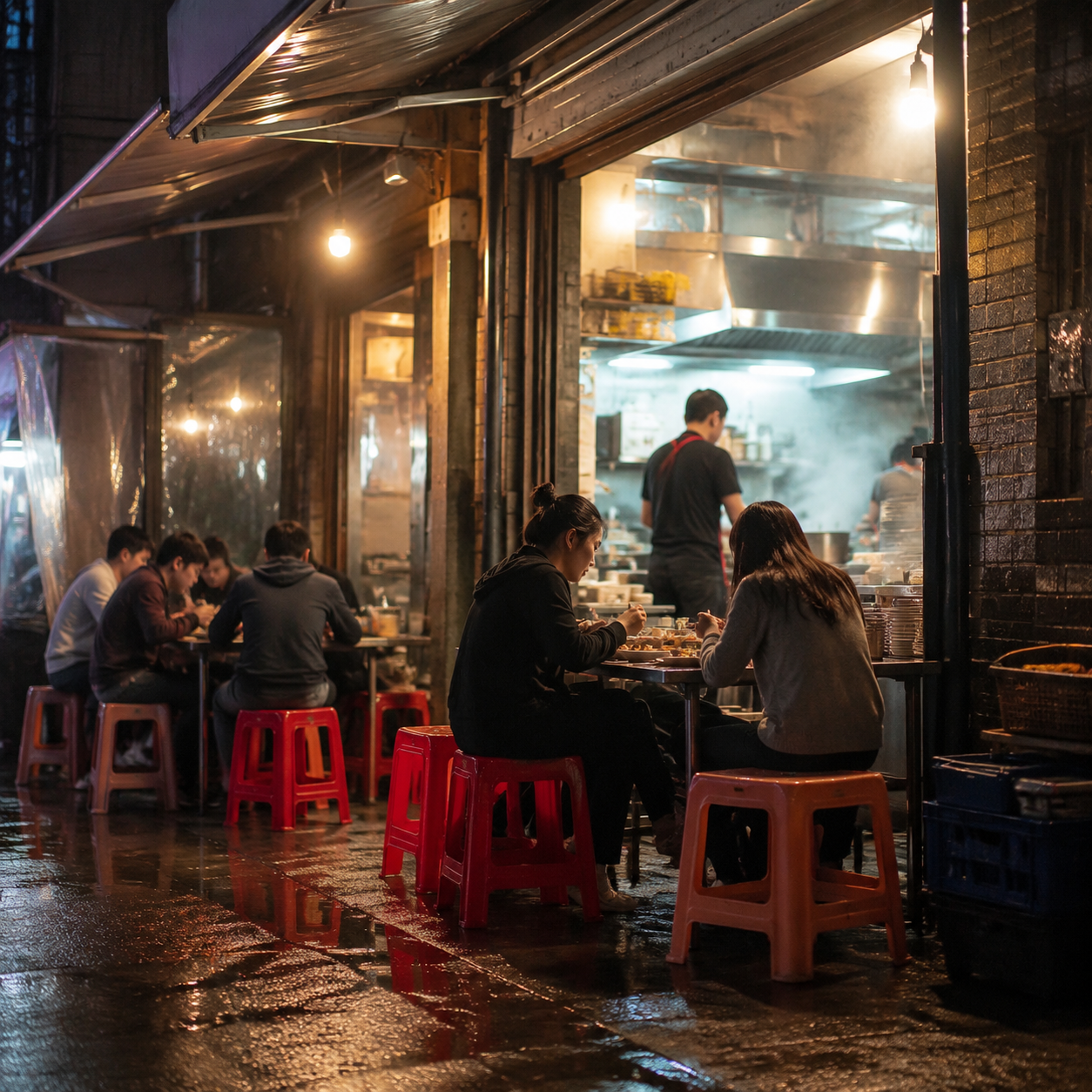
我到成都的第二个晚上,雨刚停,街边的小馆子把塑料凳摆到门口,像在邀请路过的人坐进一阵热气里。作为一个外国人,我来之前已经听过很多关于川菜的提醒:很香、很辣、要小心。我也做了准备,在手机里存了几个词,微辣、不辣、少辣,还把它们反复读给自己听。那天我走进一家不大的馆子,墙上贴着菜单,红色字旁边有些菜名我认识,有些完全猜不出。厨房门口飘出红油和花椒的香气,不是单纯的辣,而是一种让人马上变饿的深味道。服务员拿着点菜单走过来,我鼓起勇气说:“微辣。”我以为这个词像一把钥匙,可以准确打开一个安全的辣度。很快我才知道,钥匙是真的,但门后面的房间比我想象的大。
On my second evening in Chengdu, the rain had just stopped, and a small restaurant on the street had set plastic stools near the entrance as if inviting passersby into a cloud of warmth. As a foreign visitor, I had heard many warnings about Sichuan food before arriving: very fragrant, very spicy, be careful. I had prepared by saving a few words in my phone: mild spice, no spice, less spice, repeating them to myself until they sounded usable. That night I entered a modest eatery with a menu pasted on the wall. I recognized some dish names in red characters and could not guess others at all. From the kitchen came the aroma of chili oil and Sichuan peppercorn, not simply heat but a deep smell that made me hungry immediately. The server came over with an order pad, and I said with courage, “Mild spice.” I thought the phrase was a key that would open one exact, safe level of heat. I soon learned the key was real, but the room behind the door was larger than I imagined.
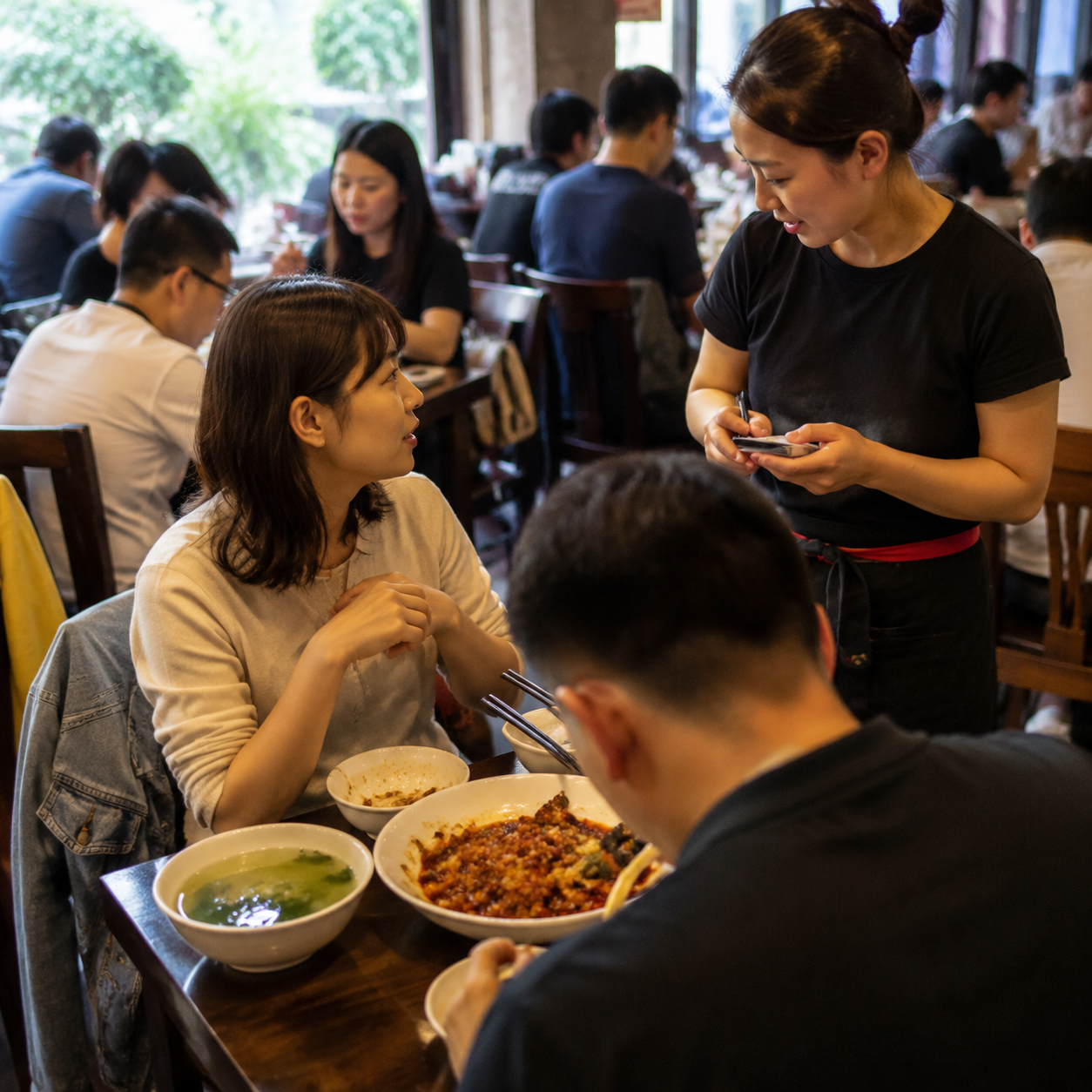
小馆里坐满了下班的人。有人把外套搭在椅背上,有人一边看手机一边夹菜,桌面上每个碗都闪着红油的光。我点了一份回锅肉和一碗素菜汤,服务员听见我说微辣后,抬头看了我一眼,问:“你能吃辣吗?”这句话我听懂了,因为我来成都之前特意练过。我想表现得不太脆弱,于是说:“一点点可以。”她笑了一下,却没有马上写下去,而是解释说:“我们这边微辣也有点辣,你要不要少放一点?”她说得很慢,还用手指在空气里比了一个小小的距离,好像辣度是一条可以用拇指和食指夹住的线。我突然发现,点菜不是把词交出去就结束了,服务员在帮我把词翻译成厨房真正能执行的动作。
The restaurant was full of people after work. Jackets hung over chair backs, customers looked at phones while picking up food with chopsticks, and every bowl on every table shone with red oil. I ordered twice-cooked pork and a bowl of vegetable soup. When the server heard me say mild spice, she looked up and asked, “Can you eat spicy food?” I understood because I had practiced that question before coming to Chengdu. Wanting not to seem too fragile, I said, “A little is okay.” She smiled but did not write immediately. Instead, she explained, “Our mild spice here is still a bit spicy. Do you want us to put in less?” She spoke slowly and pinched a tiny distance in the air with her fingers, as if heat were a line she could hold between thumb and index finger. I suddenly realized ordering was not finished when I handed over a word. The server was helping translate that word into an action the kitchen could actually perform.
我点头说少放一点,她又问:“花椒能不能吃?”这个问题让我停住。我知道辣椒会辣,但花椒的麻对我来说更难判断。我在别的城市吃过一点麻辣味,嘴唇发麻时总觉得像有小电流在跑。于是我说:“少一点花椒。”服务员把点菜单拿近,用笔在菜名旁边写了几个字。我看不懂全部,但能认出“少”和“微”。她指着回锅肉说:“这个会有红油香,但不做太重。”又指着旁边桌上一盆颜色很深的菜,说:“那种你今天先不要点。”她的语气不是阻止,更像一个本地朋友在帮我调整路线。厨房里锅铲碰到铁锅,红油香气一阵一阵出来,我的胃很期待,我的舌头却已经提前紧张。
I nodded and said less would be better. Then she asked, “Can you handle Sichuan peppercorn?” That question made me pause. I knew chili could burn, but the numbing effect of peppercorn was harder for me to judge. In other cities I had tasted a little mala flavor, and when my lips tingled it felt like tiny electric currents moving across them. So I said, “A little less peppercorn.” The server pulled the order pad closer and wrote several characters beside the dish name. I could not read all of them, but I recognized “less” and “mild.” She pointed at the twice-cooked pork and said, “This will still have the aroma of red oil, but we will not make it too heavy.” Then she pointed to a dark red dish at the next table and said, “Do not order that one today.” Her tone was not forbidding; it felt like a local friend helping me adjust my route. In the kitchen, a spatula struck a wok, waves of chili oil fragrance came out, my stomach was excited, and my tongue was already nervous.
菜端上来时,盘子边缘有一圈明亮的红油。回锅肉切得薄,边上微微卷起,蒜苗是绿色的,豆瓣酱的香气贴着热气往上走。我先闻到一种咸香和发酵后的厚味,然后才意识到辣在后面等着。我夹了一小片肉,配了一点米饭,告诉自己不要逞强。第一口并没有立刻烧起来,反而是香味先铺开,像一扇门打开。几秒后,辣从舌尖慢慢升到舌面,花椒的麻又从嘴角绕回来。我喝了一口水,服务员远远看见,走过来问:“还可以吗?”我说:“可以,很香,有一点辣。”她听完笑了,说:“这就是我们这边的微辣。”我也笑了,因为那句话里没有标准答案,只有地方经验。
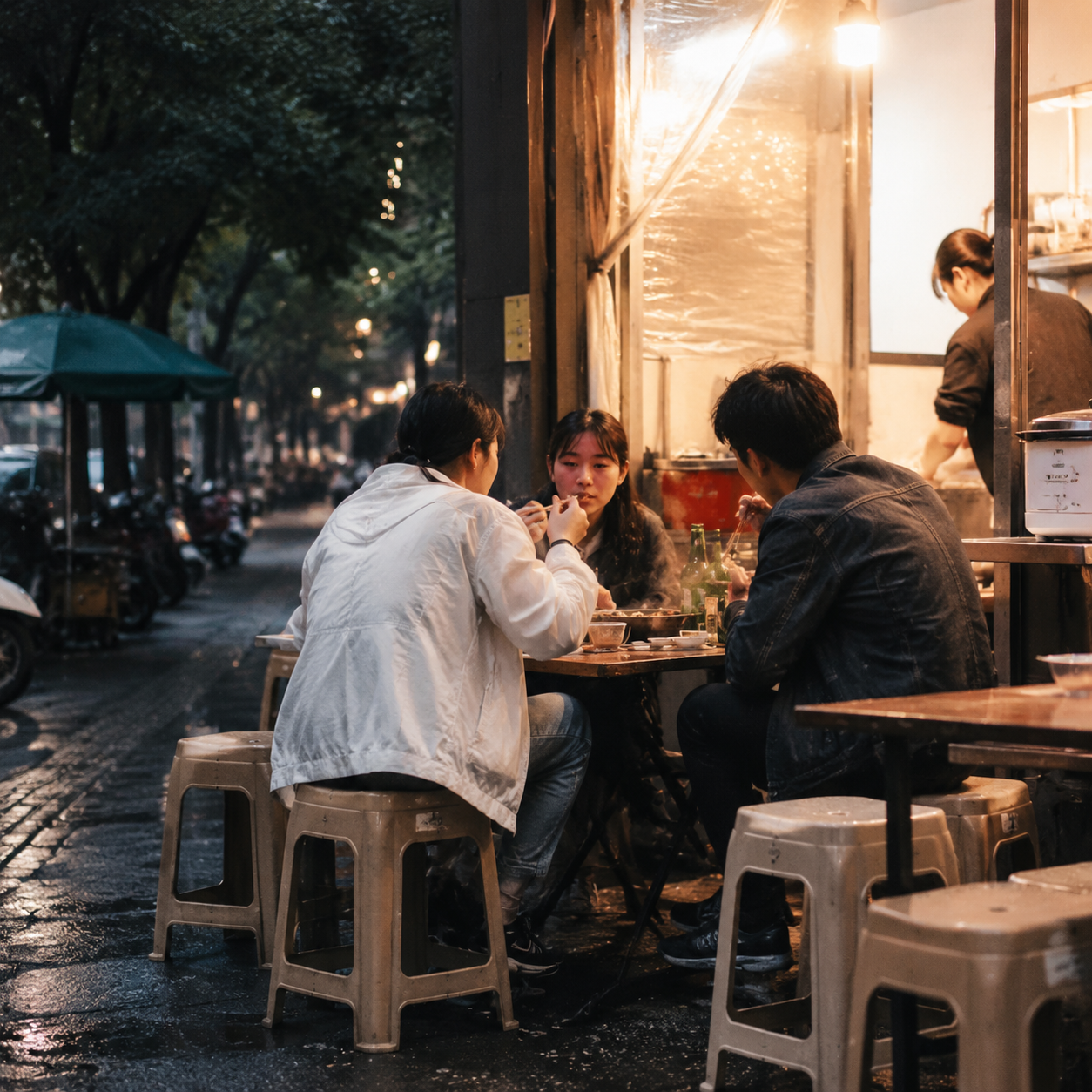
When the food arrived, a bright ring of red oil sat along the edge of the plate. The pork slices were thin and slightly curled, the garlic shoots were green, and the aroma of chili bean paste rose with the steam. First I smelled savory depth and fermentation, and only then did I realize the heat was waiting behind it. I picked up a small slice of pork with some rice and told myself not to be brave for no reason. The first bite did not burn immediately. Fragrance opened first, like a door. A few seconds later, the chili heat rose from the tip of my tongue across its surface, and the peppercorn numbness circled back from the corners of my mouth. I drank water. The server noticed from a distance and came over to ask, “Is it okay?” I said, “It is okay, very fragrant, a little spicy.” She smiled and said, “That is our mild spice here.” I smiled too, because there was no universal answer inside that sentence, only local experience.
我以前以为“微辣”就是一个可以被准确翻译的等级,像小号、中号、大号一样清楚。但在成都的小馆里,它更像一个谈判的起点。对我来说微辣可能是嘴唇发热,对旁边桌的大哥来说微辣可能只是给菜添一点颜色。对厨房来说,微辣还要看菜本身:有些菜靠红油出香,有些菜靠干辣椒提味,有些菜没有花椒就像少了骨头。服务员解释这些时,没有讲复杂理论,只是用几个简单问题把我带到更合适的位置:能不能吃辣,要不要少放,花椒能不能吃,米饭够不够。每一个问题都让我明白,翻译可以帮我开始,但不能替我完成判断。真正的判断要在气味、颜色、第一口、第二口之间慢慢形成。
I used to think “mild spice” was a level that could be translated precisely, as clear as small, medium, or large. In that Chengdu eatery, it was more like the beginning of a negotiation. For me, mild might mean warm lips. For the man at the next table, mild might only add color to the dish. For the kitchen, mild also depended on the dish itself: some dishes need chili oil for aroma, some use dried chilies for lift, and some feel boneless without Sichuan peppercorn. The server did not explain this with theory. She used simple questions to move me into a better position: Can you eat spicy food? Should we use less? Can you handle peppercorn? Is the rice enough? Each question taught me that translation can help me begin, but it cannot finish the judgment for me. Real judgment forms slowly between smell, color, the first bite, and the second bite.
吃到一半时,我开始出汗,但不是痛苦的那种。我把纸巾按在额头上,继续夹菜。红油香气变得越来越明显,辣味也像背景音乐一样稳定下来,不再每一秒都让我惊讶。服务员又路过,看见我的盘子少了一半,问我要不要加一碗饭。我本来想说不用,但嘴巴比自尊更诚实,马上点头。米饭端来后,整个菜的节奏被调慢了。每一口肉都能被米饭接住,花椒的麻也不再那么突出。我发现点单调整并不只发生在下单前,也发生在吃的过程中。加饭、喝汤、停一停、再夹一口,这些都是身体在和成都的辣度继续谈话。
Halfway through the meal, I started sweating, but not in a miserable way. I pressed a tissue to my forehead and kept eating. The aroma of red oil became clearer, and the heat settled like background music, no longer surprising me every second. The server passed by again, saw that half my plate was gone, and asked whether I wanted another bowl of rice. I almost said no, but my mouth was more honest than my pride, so I nodded at once. When the rice arrived, the pace of the whole dish slowed down. Each bite of pork was caught by the rice, and the peppercorn numbness became less sharp. I realized order adjustment did not happen only before the dish was cooked. It continued during the meal. More rice, a sip of soup, a pause, another bite: all of these were ways my body kept negotiating with Chengdu heat.
旁边一桌的人点了一盆看起来非常红的菜,辣椒铺在上面像一层节日装饰。他们吃得很轻松,一边聊天一边把筷子伸进红油里。我看着他们,知道自己今天还到不了那里。但这种差距没有让我沮丧,反而让我觉得有趣。城市的味道不是一张一次性通行证,而是一条可以慢慢走近的街。第一天我只站在街口,闻到红油香,学会把微辣说得更具体一点。也许以后我能试试中辣,也许我永远停在少花椒的微辣上。重要的不是证明自己能吃多辣,而是学会在自己的舌头和当地的习惯之间找到一个诚实的位置。
At the next table, a group ordered a dish so red that the chilies looked like festival decorations spread across the top. They ate it easily, chatting while reaching their chopsticks into the chili oil. I watched them and knew I was not there yet. But the distance did not discourage me; it made the city more interesting. A city’s flavor is not a one-time pass. It is a street you can approach slowly. On the first day, I only stood at the entrance, smelled the red oil, and learned to make “mild spice” more specific. Perhaps someday I can try medium heat, or perhaps I will always remain at mild with less peppercorn. The point is not to prove how much heat I can survive. The point is to find an honest position between my own tongue and the habits of the place.
结账时,服务员问我还辣不辣。我想了一下,说:“辣,但是好吃。”这句话让她笑得很开心,好像这才是她希望听到的评价。她告诉我,下次可以说“微微辣”,还可以加一句“少花椒”。我跟着重复了一遍,她纠正了我的声调。我把这两个词存在手机里,却知道手机里的字只是影子。真正有用的是我记住了她提问的方式,记住了厨房红油香气出来时自己的反应,也记住了米饭怎样把一盘菜变得更可接近。走出小馆时,雨后的路面反着招牌的光,我的嘴唇还有一点麻,胃里却很舒服。成都没有因为我说了微辣就把自己变成无辣城市,它只是给了我一个可以慢慢靠近的台阶。
When I paid, the server asked whether it was still too spicy. I thought for a moment and said, “Spicy, but delicious.” That made her laugh happily, as if this was the review she had hoped to hear. She told me that next time I could say “very very mild” and add “less Sichuan peppercorn.” I repeated the phrases, and she corrected my tones. I saved the words in my phone, but I knew the characters there were only shadows. What was truly useful was remembering the way she asked questions, remembering my own reaction when the red oil aroma came from the kitchen, and remembering how rice made a plate of food more approachable. When I left the restaurant, the wet road reflected the shop signs, my lips were still a little numb, and my stomach felt content. Chengdu did not become a non-spicy city just because I said mild spice. It simply offered me a step from which I could approach slowly.
现在回想那顿饭,我觉得它教我的不是某个单词,而是单词的边界。微辣可以写在菜单上,可以输入翻译软件,也可以被服务员听懂,但它不能自动知道我的舌头经历过什么。它也不能自动知道这家店的豆瓣酱有多香,红油有多厚,花椒今天放得有多新鲜。语言在这里很重要,却不是全部。它像把门敲开,门里还需要人和人继续确认。服务员的解释、我的点头、她在点菜单上的标记、我后来加的一碗饭,共同把那顿饭调到了我能够享受的位置。也正因为如此,那份微辣没有被削弱成安全版本,它仍然保留了成都的性格,只是没有把我推到门外。
When I think back to that meal now, I feel it taught me not one word, but the boundary of a word. “Mild spice” can be printed on a menu, entered into translation software, and understood by a server, but it cannot automatically know what my tongue has lived through. It also cannot automatically know how fragrant this restaurant’s chili bean paste is, how thick the red oil is, or how fresh the peppercorn tastes that day. Language matters here, but it is not everything. It knocks on the door; inside, people still need to confirm with one another. The server’s explanation, my nods, her notes on the order pad, and the extra bowl of rice together adjusted the meal to a place where I could enjoy it. Because of that, the mild spice was not weakened into a safe version. It still kept Chengdu’s character, but it did not push me outside the door.
我离开成都以后,在别的地方看到菜单上的“mild”时,都会想起那家小馆。英文单词看起来很安静,中文的微辣也看起来很温和,可真正的味道从来不只住在字面里。它住在锅里的油温、服务员的经验、食客的耐受、城市长期形成的口味里。那天我在成都点微辣,以为自己是在选择辣度,后来才发现我是在学习怎样让一个词落地。它需要解释,需要调整,需要承认自己不知道,也需要愿意尝试。红油香气还留在我的记忆里,和服务员那句“我们这边微辣也有点辣”一起,提醒我旅行中的理解常常不是翻译完成的,而是在一口一口之间被慢慢校准的。
After leaving Chengdu, whenever I see “mild” on a menu somewhere else, I think of that small restaurant. The English word looks calm, and the Chinese phrase for mild spice looks gentle, but real flavor never lives only on the surface of words. It lives in the temperature of oil in the wok, the server’s experience, the diner’s tolerance, and the taste a city has built over time. That evening in Chengdu, I thought I was choosing a heat level. Only later did I realize I was learning how to make a word land. It required explanation, adjustment, admitting what I did not know, and being willing to try. The aroma of red oil still remains in my memory, together with the server’s sentence, “Our mild spice here is still a bit spicy,” reminding me that understanding in travel is often not completed by translation, but slowly calibrated bite by bite.
- 在西安回民街吃一天,胃和钱包都很满足 | A Full Day of Eating on Xi'an Muslim Quarter
- 七月在杭州安安静静避雨,我终于不再把下雨当行程损失 | My First Rainy July Plan in Hangzhou Taught Me to Stop Treating Rain as Lost Travel Time
- 在中国生活:完整指南 | Living in China: A Complete Guide
- 泥塑体验:我第一次觉得泥土不是材料,而是一种很慢的语言 | Clay Figurine Experience: The First Time I Felt Earth Was Not a Material, but a Slow Language
- 南昌第一碗拌粉还没吃完,我就先看懂了这座城路口的脾气 | Before Finishing My First Bowl of Rice Noodles in Nanchang, I Had Already Read the Temper of Its Crossings
- 我们在西塘的雨夜里分着一把伞走散又重逢,那一晚比酒吧更像青春 | Sharing One Umbrella in Xitang Rain, We Got Lost and Found Again in a Night That Felt More Like Youth Than Any Bar
- 银川清晨的羊肉汤,让我重新理解“清淡”和“厚重” | A Morning Bowl of Mutton Soup in Yinchuan Changed How I Understand Light and Rich
- 北京故宫与胡同深度游 | Beijing: Forbidden City & Hutong Deep Dive
- 一碗面能走多远:从兰州到潼关,西北人用面食丈量土地 | How Far Can a Bowl of Noodles Take You: Measuring the Northwest by Wheat
- 广州夜里最好走的那条线,往往不是最热闹的,而是最知道什么时候该坐下的 | Guangzhou’s Best Night Route Is Rarely the Loudest One but the One That Knows When to Sit Down
Comments (0)