
开元路那盏旧灯亮起来时,我才走进厦门的夜里 | I Entered Xiamen’s Night When That Old Lamp Lit Up on Kaiyuan Road
厦门老街的一盏灯,让我看见生活比景点更耐看 | One Lamp on an Old Street in Xiamen Showed Me Daily Life Outlasts Attractions
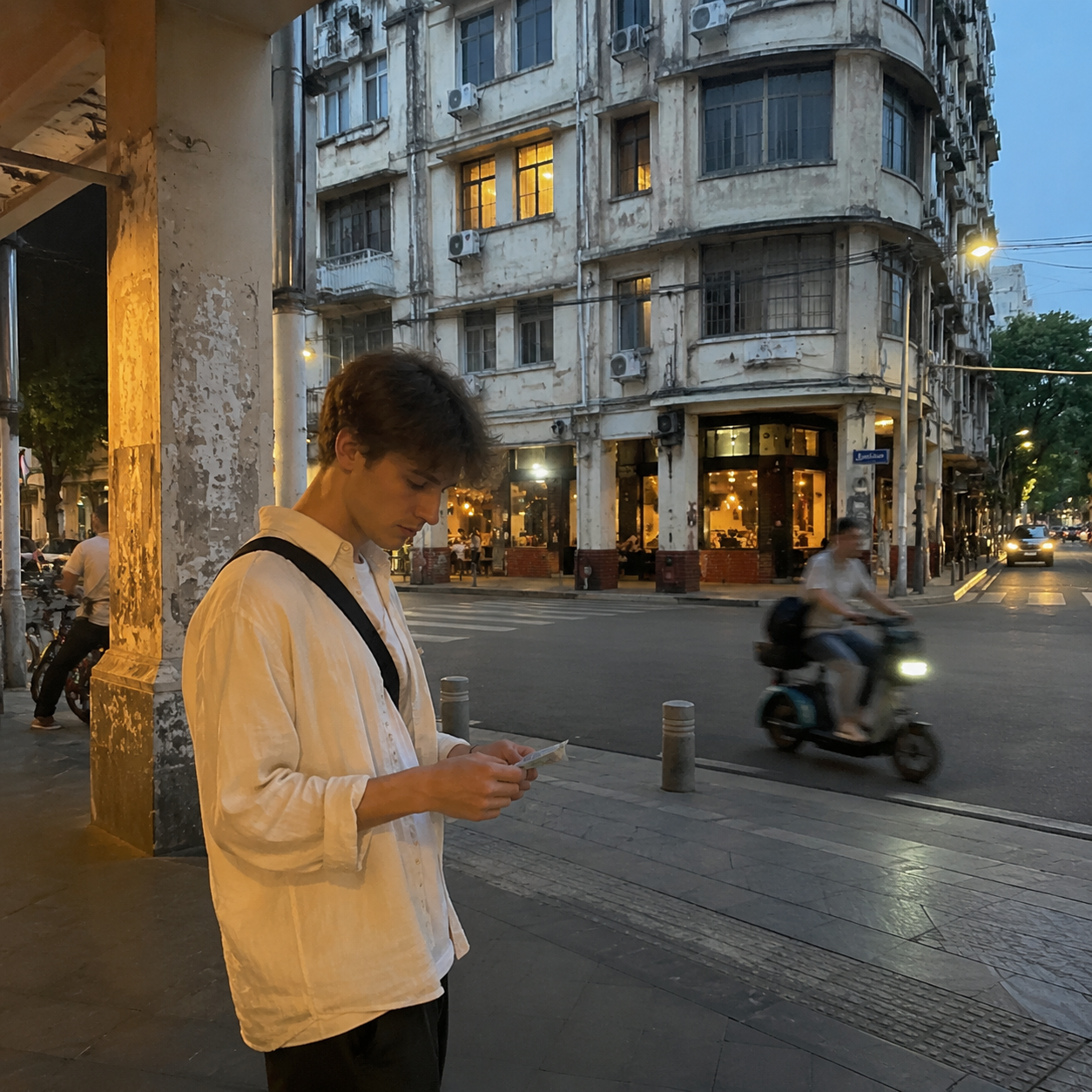
晚上七点二十,我在厦门开元路和一条窄巷交叉的骑楼下停住脚步,手里还捏着一张被海风吹软的公交票。我的名字叫马丁,来自葡萄牙波尔图,本来只是想从中山路走到八市附近吃一碗沙茶面,再顺路拍几张夜色里的老街照片。可就在一间五金店门口,我看见店主把一盏旧黄色灯泡拧紧,灯光忽然从布满灰尘的灯罩里亮起来,照到地面的水渍、门边的塑料凳、墙上剥落的绿色油漆,也照到一个抱着小狗等饭熟的老人脸上。那一刻,我没有继续往前找所谓必拍机位,而是站在灯下,听见锅铲碰到铁锅、拖鞋擦过石板、楼上有人收衣架的声音,觉得这条老街正在把厦门真正的夜晚慢慢摊开给我看。
At 7:20 in the evening, I stopped under an arcade where Kaiyuan Road met a narrow lane in Xiamen, still holding a bus ticket softened by the sea wind. My name is Martin, and I come from Porto, Portugal. I had only planned to walk from Zhongshan Road toward the market area for a bowl of satay noodles, then take a few photographs of old streets at night. But in front of a hardware shop, I saw the owner tighten an old yellow bulb. The light suddenly came alive through a dusty shade, touching the damp marks on the ground, a plastic stool by the door, peeling green paint on the wall, and the face of an elderly man holding a small dog while waiting for dinner. At that moment, I stopped looking for a famous photo spot. I stood under the lamp and heard a spatula striking a wok, slippers brushing stone pavement, and someone upstairs collecting hangers. The old street was slowly opening Xiamen’s real night before me.
我到厦门的第一天,脑子里装着太多别人整理好的名字:鼓浪屿、沙坡尾、环岛路、植物园、黄厝海滩。我承认这些地方都很迷人,海边的光线、红砖屋顶、咖啡馆窗边的猫,都容易让一个外来者相信自己已经接近了这座城市。可是那天晚上,我从热闹的主路拐进老街后,才第一次感觉自己不是在观看厦门,而是在被厦门轻轻接纳。骑楼的柱子有些倾斜,招牌新旧不一,电线像黑色藤蔓横在头顶,空气里有海盐、鱼丸汤、洗衣粉和潮湿木门混在一起的味道。没有人刻意表演生活给我看,正因为如此,每一个细节都显得更可靠。
On my first day in Xiamen, my mind was crowded with names arranged by other people: Gulangyu, Shapowei, Huandao Road, the botanical garden, Huangcuo Beach. I admit that all these places were charming. The seaside light, red-tiled roofs, cats by café windows, all made it easy for a visitor to believe he had come close to the city. Yet that evening, after I turned from a busy main road into the old street, I felt for the first time that I was not merely looking at Xiamen; I was being gently accepted by it. The arcade columns leaned slightly, signs were old and new at once, wires stretched overhead like black vines, and the air held sea salt, fish ball soup, laundry powder, and damp wooden doors together. Nobody was performing life for me, and for that reason every detail felt more trustworthy.
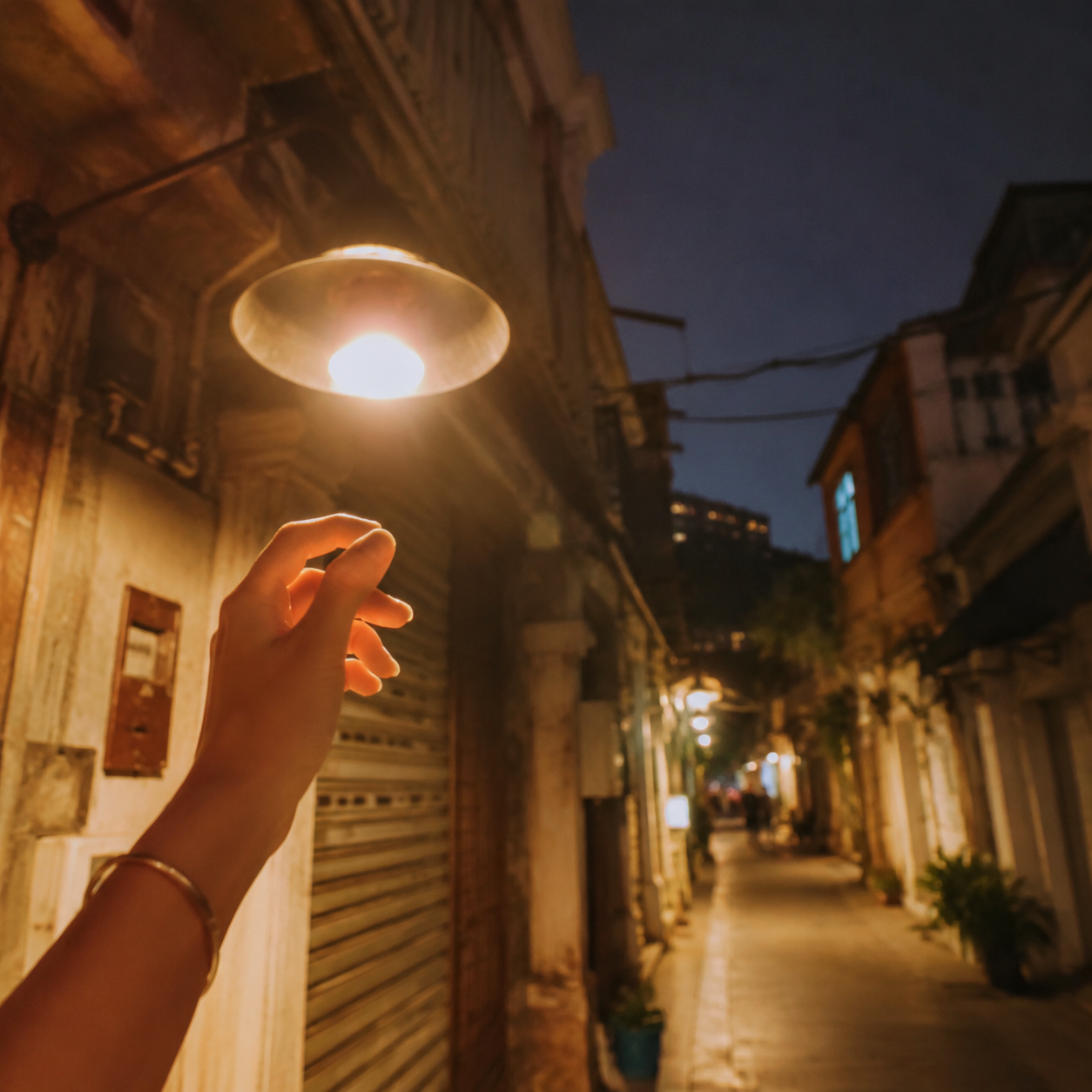
那盏灯并不漂亮。它不是设计师挑选的复古吊灯,也没有适合社交媒体的精致角度,只是一只普通灯泡,外面罩着泛黄的塑料壳,边缘有几只细小飞虫绕着转。灯下的五金店卖螺丝、门锁、雨衣、电池、胶带和水龙头垫圈,柜台后面坐着一个五十多岁的男人,白背心外面套着灰色短袖衬衫。他用闽南话和隔壁阿姨说话,我听不懂,只能从语气里听出熟络。他看见我停在门口,先是点了点头,然后把一把小风扇往外挪了挪,好像怕挡住我的路。我用中文说了声“晚上好”,他笑着回了一句很轻的“好啊”,那声招呼比任何明信片都让我安心。
The lamp was not beautiful. It was not a vintage pendant chosen by a designer, nor did it offer an elegant angle for social media. It was just an ordinary bulb covered by a yellowing plastic shade, with a few tiny insects circling its edge. Under it, the hardware shop sold screws, locks, raincoats, batteries, tape, and faucet washers. Behind the counter sat a man in his fifties, wearing a gray short-sleeved shirt over a white undershirt. He spoke Minnan dialect with the auntie next door, and I could not understand the words, but I could hear the familiarity in the tone. When he saw me stop at the entrance, he nodded first, then moved a small electric fan outward, as if making sure it would not block my way. I said “good evening” in Chinese. He smiled and answered softly, “Good.” That greeting made me feel safer than any postcard.
我继续慢慢走,发现夜晚的骑楼像一条半公开的客厅。有人把餐桌搬到柱子边,碗里冒着热气;有人坐在门槛上给孩子剪指甲;一个年轻女孩穿着校服,背包还没放下,就站在小卖部门口买冰水;两位老人下象棋,棋盘旁边放着一盘切好的芭乐,白色果肉上撒着梅粉。楼上窗户一扇接一扇亮起,灯光有冷有暖,像不同家庭的呼吸。我突然明白,老街最动人的地方不是“古老”两个字,而是它仍然被使用着。这里不是被玻璃罩保护起来的展品,而是有人洗碗、争论、等外卖、修门锁、问邻居借酱油的地方。
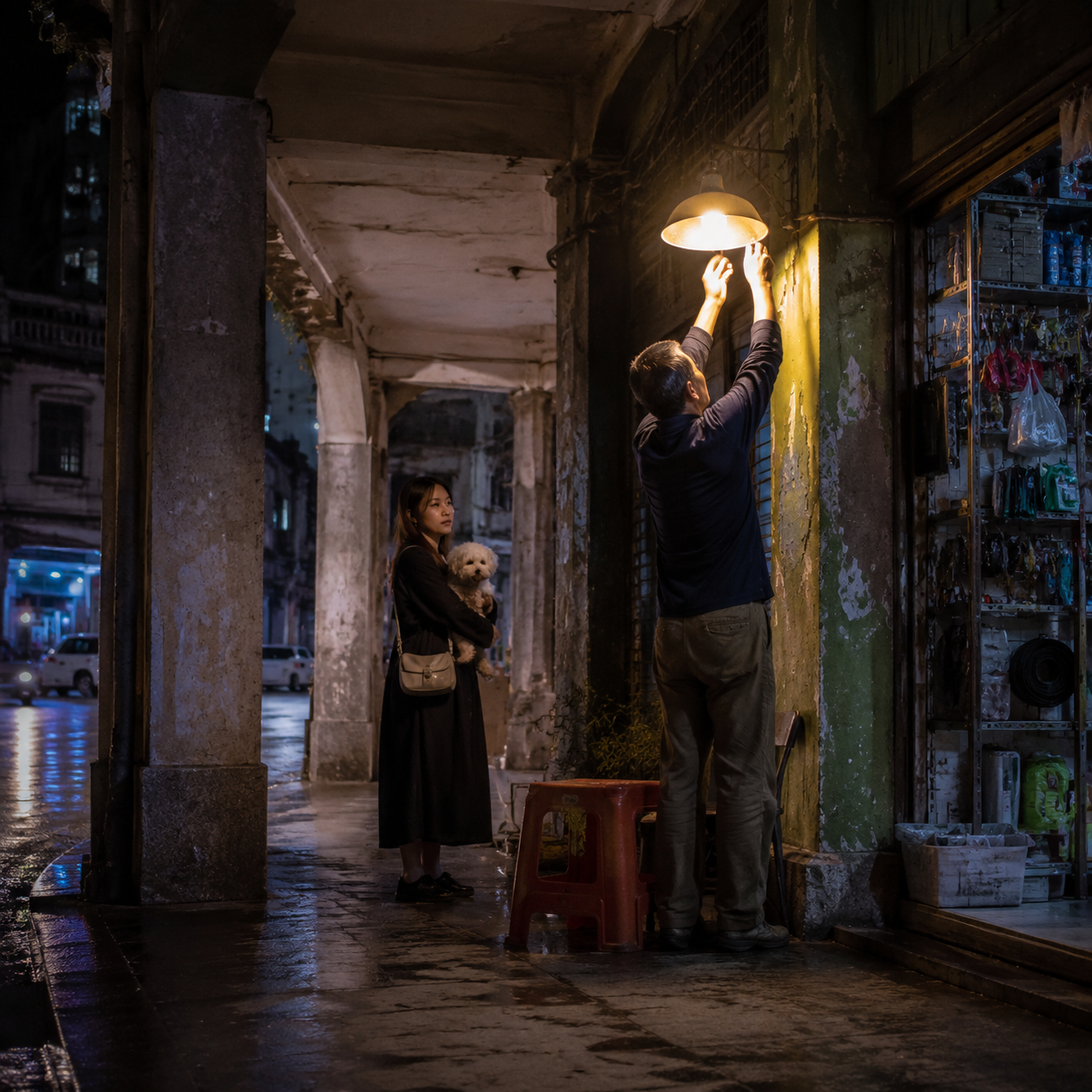
I kept walking slowly and realized that the night arcade was like a half-public living room. Someone had moved a dining table beside a column, steam rising from bowls. Someone sat on a threshold trimming a child’s nails. A young girl in a school uniform had not even put down her backpack before stopping at a small store to buy ice water. Two elderly men played chess beside a plate of sliced guava sprinkled with plum powder. Upstairs, windows lit up one after another, some cool, some warm, like the breathing of different households. I suddenly understood that the most moving part of the old street was not its age, but the fact that it was still being used. It was not an exhibit preserved under glass. It was a place where people washed dishes, argued, waited for deliveries, fixed locks, and borrowed soy sauce from neighbors.
在欧洲旅行时,我也常常寻找老街。里斯本的阿尔法玛、波尔图的河边坡道、那不勒斯拥挤的阳台,都有类似的斑驳和声响。可是厦门的老街让我感到一种更潮湿、更贴近皮肤的亲密。海风不是从远处吹来装饰夜景的,它真的穿过巷子,把塑料门帘吹得啪啪响,把店主桌上的收据吹到地上,也把我额头上的汗慢慢吹凉。骑楼的存在像是这座城市和天气长期协商出的结果:下雨时给人躲一躲,太阳毒时让人喘一口气,晚上则把室内与室外的界线变得柔软。人在这里不必完全进入店里,也不必完全停在街上,可以站在阴影与灯光之间,听别人生活。
When I travel in Europe, I often look for old streets too. Alfama in Lisbon, the riverside slopes of Porto, the crowded balconies of Naples all carry similar peeling surfaces and sounds. Yet Xiamen’s old street gave me a wetter intimacy, something closer to the skin. The sea wind was not blowing from afar merely to decorate the night view. It truly moved through the lanes, slapping plastic door curtains, pushing receipts from the shopkeeper’s table to the ground, and cooling the sweat on my forehead. The arcade felt like the result of a long negotiation between the city and its weather: shelter in rain, breath in harsh sun, and at night a softened boundary between indoors and outdoors. Here a person did not have to enter a shop completely or remain fully on the street. He could stand between shadow and light and listen to other people living.
我在一间小吃店门口停下,老板娘正在把花生汤盛进白瓷碗。她的动作很稳,勺子从锅里抬起时,甜汤的表面晃了一下,灯光在上面碎成细小的金色。店里只有三张桌子,一台老电视挂在墙角,声音很小,画面里有人唱歌。一个穿蓝色工装的男人坐在靠门的位置,吃完面后没有马上离开,而是把手机放在桌上,仰着头看电视。老板娘问我要不要坐,我点头,说想要一碗花生汤。她问我冷的还是热的,我说热的。她又问我从哪里来,我说葡萄牙。她想了想,笑着说:“很远哦。”我也笑,说:“是,很远,可是今晚这里很近。”她听懂了,又好像没完全听懂,只是把碗推到我面前。
I stopped in front of a small snack shop where the owner was ladling peanut soup into a white porcelain bowl. Her movements were steady. When the spoon rose from the pot, the surface of the sweet soup trembled, and the light broke into tiny gold pieces upon it. There were only three tables inside, and an old television hung in the corner with the volume low, showing someone singing. A man in blue work clothes sat near the door. After finishing his noodles, he did not leave immediately, but placed his phone on the table and looked up at the television. The owner asked if I wanted to sit. I nodded and said I wanted a bowl of peanut soup. She asked whether I wanted it cold or hot. I said hot. Then she asked where I came from. I said Portugal. She thought for a moment and smiled: “Very far.” I smiled too and said, “Yes, very far, but tonight this place feels close.” She understood, or perhaps not completely, and simply pushed the bowl toward me.
那碗花生汤让我记住了厦门夜晚的速度。花生煮得软,入口像轻轻塌下去的云,甜味不急,热气从碗沿往上冒,和店外的海风碰在一起。桌上有一小瓶辣椒酱、几双筷子、一个装零钱的铁盒。旁边那位蓝色工装男人看了我一眼,问我会不会用中文点菜。我说会一点,他便说厦门话很难,连外地中国人也不一定听得懂。我们用普通话夹着手势聊天,他告诉我自己住在附近,白天在码头做维修,晚上常来这家店,因为老板娘不会把汤煮得太甜。他说这话时没有夸张,也不是推荐,只是在描述一个稳定的小事实。对旅行者来说,这种事实有时比宏大的历史更能留下痕迹。
That bowl of peanut soup taught me the speed of a Xiamen night. The peanuts were cooked soft, collapsing in the mouth like a small cloud. The sweetness did not hurry, and steam rose from the rim to meet the sea wind outside. On the table stood a small bottle of chili sauce, several pairs of chopsticks, and a tin box for change. The man in blue work clothes glanced at me and asked whether I could order food in Chinese. I said a little. He told me that the Xiamen dialect was difficult, and even Chinese people from other places might not understand it. We chatted in Mandarin mixed with gestures. He said he lived nearby, repaired equipment at the docks during the day, and often came to this shop at night because the owner did not make the soup too sweet. He said this without exaggeration and not as a recommendation, but as a small stable fact. For a traveler, such facts sometimes leave a deeper mark than grand history.
吃完后,我把碗送回柜台。老板娘没有让我放下就走,而是指了指门外那盏灯,说前些天灯坏了,整条门口都暗,隔壁五金店的老板拿了旧零件修好。她说他们这条街的人,平时各做各的生意,也会为一点小事吵几句,可是谁家灯坏了、门锁坏了、水管漏了,总有人过来搭把手。她说这番话时,眼睛没有看我,而是在看锅里的汤,像是怕说得太郑重会显得不好意思。我顺着她的手看向那盏灯,忽然觉得它不只是照明。它像一个小小的约定:天黑以后,门口还亮着,人就知道这里还可以停下,还可以问路,还可以买一碗热的东西。
After eating, I carried the bowl back to the counter. The owner did not let me simply put it down and leave. She pointed toward the lamp outside and said it had broken a few days earlier, leaving the whole entrance dark. The hardware shop owner had repaired it with old parts. She said people on this street usually ran their own businesses and sometimes argued over small matters, but when someone’s lamp broke, or a lock failed, or a pipe leaked, someone would always come to help. As she said this, she did not look at me but at the soup in the pot, as if making the words too solemn would embarrass her. I followed her hand and looked at the lamp. Suddenly it felt like more than illumination. It was a small agreement: after dark, the doorway remained bright, and people knew they could still stop, ask directions, or buy something warm.
我走出小吃店时,雨突然落了下来。不是大雨,而是厦门夜里常见的那种细密的雨,像有人把空气拧湿。骑楼下的人没有慌张,几个孩子把球踢进屋檐内,卖水果的阿姨慢慢拉出塑料布,五金店老板把门口的纸箱往里推。雨点打在路边停着的电动车座垫上,发出轻轻的噼啪声。一个年轻母亲抱着孩子站在柱子旁,孩子手里拿着半根玉米,眼睛盯着雨里反光的街面。她对孩子说了几句闽南话,孩子点点头,又把玉米递到她嘴边。这个小动作没有任何旅行意义,却让我在异乡突然想起自己的母亲,想起她在波尔图雨夜里等公交时也会把围巾往我脖子上拉紧。
When I stepped out of the snack shop, rain suddenly began to fall. It was not heavy rain, but the fine Xiamen night rain that seemed to wring moisture out of the air. People under the arcade did not panic. Several children kicked their ball back under the roof. The fruit seller slowly pulled out a plastic sheet. The hardware shop owner pushed cardboard boxes inward. Raindrops tapped lightly on the seats of electric scooters parked by the road. A young mother held her child beside a column. The child had half an ear of corn in his hand and stared at the shining street surface. She spoke a few words in Minnan dialect, and the child nodded, then offered the corn to her mouth. That tiny gesture had no travel value in the usual sense, but in a foreign place it suddenly made me think of my own mother, who would tighten my scarf while waiting for a bus on rainy nights in Porto.
雨停得也快,地面留下了一层薄薄的光。街灯、店灯、车灯和楼上窗户的灯全都落在水里,老街像被重新擦亮,但又没有变得崭新。它的裂缝还在,墙面的潮斑还在,柱脚被岁月磨出的缺口也还在。正因为这些痕迹没有被抹掉,灯光才有地方停留。我蹲下来拍了一张照片,却发现相机里的画面没有眼前动人。照片只拍到灯和骑楼,拍不到雨后空气里那种咸湿的凉意,拍不到老板娘把塑料布折回去时的熟练,拍不到五金店老板用手背擦灯罩的动作。我第一次如此清楚地意识到,有些旅行记忆不是为了被证明的,而是为了在身体里慢慢变热。
The rain stopped quickly, leaving a thin layer of light on the ground. Streetlamps, shop lamps, vehicle lights, and upstairs window lights all fell into the water. The old street seemed polished again, yet it did not become new. Its cracks remained, the damp stains on the walls remained, and the worn gaps at the base of the columns remained. Precisely because these marks were not erased, the light had places to rest. I crouched to take a photograph, but the image on my camera was not as moving as what I saw. The photograph caught the lamp and the arcade, but not the salty coolness in the air after rain, not the owner’s practiced motion as she folded the plastic sheet back, not the hardware shop owner wiping the lampshade with the back of his hand. For the first time I understood clearly that some travel memories are not meant to be proven; they are meant to warm slowly inside the body.
我在老街上待了很久,久到手机地图已经失去作用。我没有迷路,只是不想立刻知道自己在哪里。巷口有一家理发店,门口的旋转灯柱已经不转了,玻璃上贴着褪色的发型照片。里面一位师傅正在给一个老人刮胡子,动作轻得像在修一件旧乐器。老人闭着眼,脸上盖着热毛巾,旁边收音机播放南音,声音从门缝里流出来,和街上的摩托车声混在一起。另一边有家裁缝铺,女店主踩着缝纫机,脚下节奏稳定,布料从针脚下慢慢过去。我站在门外看,她抬头问我是不是要改裤脚。我摇头说只是看看。她笑了笑,没有表现出被打扰的不耐烦,继续低头工作。
I stayed on the old street for a long time, long enough for the map on my phone to lose its authority. I was not lost; I simply did not want to know exactly where I was yet. At the mouth of a lane stood a barbershop. The rotating pole by the entrance no longer rotated, and faded hairstyle photos were pasted on the glass. Inside, a barber was shaving an elderly man with movements as gentle as repairing an old instrument. The man’s eyes were closed, his face covered with a hot towel, while a radio played Nanyin music. The sound flowed through the doorway and mixed with scooters passing outside. On the other side was a tailor’s shop. The woman owner worked the sewing machine with a steady rhythm, fabric moving slowly beneath the needle. I watched from outside. She looked up and asked if I wanted my trouser legs altered. I shook my head and said I was only looking. She smiled without impatience and lowered her head to continue working.
这种被允许观看、却不被要求消费的感觉,在旅行中其实很少见。许多热门街区会把游客推到明确的位置:在这里买,在那里拍,在这个角度排队,在那个窗口付款。可这条厦门老街没有急着安排我。它给我的不是一套动作,而是一段时间。时间里有灯泡慢慢发热,有邻居闲聊到一半突然想起锅里还煮着东西,有外卖员把头盔挂在车把上喝水,有孩子在作业本上写错字后皱眉。它让我意识到,所谓城市气质并不只存在于建筑风格或海岸线里,更存在于人们如何把夜晚过完。一个地方真正的性格,往往藏在它不急于展示的部分。
This feeling of being allowed to observe without being required to consume is actually rare in travel. Many popular neighborhoods push visitors into defined positions: buy here, photograph there, queue at this angle, pay at that window. But this old street in Xiamen did not rush to arrange me. What it gave me was not a set of actions, but a stretch of time. Within that time, bulbs warmed slowly, neighbors interrupted their chatting because something was still cooking, delivery riders hung helmets on handlebars and drank water, and children frowned after writing a wrong character in their exercise books. It made me realize that a city’s temperament does not live only in architectural style or coastline. It lives in how people finish an evening. The true character of a place is often hidden in the parts it is not eager to display.
快到九点时,五金店老板搬出一张小木桌,桌上放着茶壶和两个玻璃杯。隔壁卖花生汤的老板娘也出来坐了一会儿,她手里拿着账本,嘴上说还要算账,身体却已经靠在椅背上休息。一个住在楼上的阿伯下楼买电池,他穿着白色背心和短裤,脚上是塑料拖鞋,肩膀上搭着毛巾。买完电池后,他没有马上回去,而是站在灯下说起最近电梯维修的事。三个人说着我听不懂的话,偶尔笑一下,偶尔同时沉默。我坐在不远处的矮凳上,喝着老板给我的一杯淡茶,感觉自己像被临时放进一幅没有中心人物的画里。画里每个人都重要,又没有谁需要成为主角。
Near nine o’clock, the hardware shop owner brought out a small wooden table with a teapot and two glass cups. The peanut soup owner came out and sat for a while too. She held an account book and said she still had calculations to do, yet her body had already leaned back into the chair to rest. An elderly man from upstairs came down to buy batteries. He wore a white undershirt, shorts, plastic slippers, and a towel over his shoulder. After buying the batteries, he did not go back immediately. He stood under the lamp and spoke about recent elevator repairs. The three of them talked in words I could not understand, sometimes laughing, sometimes falling silent together. I sat on a low stool not far away, drinking a cup of weak tea the owner had given me, and felt as if I had been temporarily placed inside a painting without a central figure. Everyone in the painting mattered, yet nobody needed to become the protagonist.
我问五金店老板这条街晚上一直这么热闹吗。他想了想,用普通话慢慢说:“以前更热闹,现在人少一点,不过晚上还是有人。”他指了指楼上,说很多老人住了几十年,不想搬;又指了指路口,说年轻人白天出去上班,晚上回来吃饭,周末才有时间修家里的东西。他说现在有些店换成了新的咖啡店和民宿,也不是不好,只是街上的声音会变。他说“声音会变”时,我记在心里。城市改变最先被游客看见的,常常是招牌和墙面;可对住在这里的人来说,也许最先改变的是声音:谁家的铁门不再响,哪家锅铲不再敲,哪个孩子长大后不再在骑楼下跑。
I asked the hardware shop owner whether the street was always this lively at night. He thought for a moment and said slowly in Mandarin, “It used to be livelier. Now there are fewer people, but at night there are still people.” He pointed upstairs and said many elderly residents had lived here for decades and did not want to move. Then he pointed toward the intersection and said young people went out to work during the day, returned for dinner at night, and only had time to fix things at home on weekends. He said some shops had become new cafés and guesthouses, which was not necessarily bad, but the sounds of the street would change. I remembered that phrase: the sounds would change. What tourists first notice in a changing city is often signs and walls. But for those who live here, perhaps the first change is sound: whose iron gate no longer clangs, which wok no longer strikes, which child no longer runs beneath the arcade after growing up.
我想起白天在景点排队时,身边很多人都在寻找“像不像照片”的答案。角度对不对,云够不够白,海够不够蓝,背景里有没有陌生人。那种寻找没有错,我自己也常常这样做。可是夜晚的老街给了我另一种答案:一个地方值得记住,不一定因为它像照片,而是因为它让你在短暂的停留里相信,有许多人正在认真、普通、重复地活着。灯不是为了我亮的,骑楼不是为了我站立的,花生汤也不是为了我的故事而煮的。正是这种与我无关的持续,使我感到安定。我只是路过,却刚好遇见它们继续存在。
I remembered standing in lines at attractions during the day, surrounded by people searching for the answer to whether a place looked like its photographs. Was the angle correct, were the clouds white enough, was the sea blue enough, were there strangers in the background? That search is not wrong; I often do it myself. But the old street at night gave me another answer: a place is worth remembering not necessarily because it resembles a photograph, but because during a brief stay it makes you believe many people are living carefully, ordinarily, and repeatedly. The lamp was not shining for me. The arcade was not standing for me. The peanut soup was not cooked for my story. It was precisely this continuation unrelated to me that made me feel calm. I was only passing through, yet I happened to witness these things continuing to exist.
十点左右,店铺开始一间一间收拾。水果摊把剩下的莲雾装进筐里,理发店扫出一撮白头发,裁缝铺的灯最后才暗下来。五金店老板把门口的小桌搬回去,却没有立刻关灯。他拿着一块布擦柜台,又把几个螺丝盒摆正。我站起来准备告别,他问我住在哪里,我说住在思明区的一家小旅馆,走回去不远。他提醒我下过雨,地滑,慢点走。这个提醒简单得不能再简单,却像把我从游客重新叫回一个普通行人的身份。我不再是追逐景点的人,只是一个夜里要小心走路的人。身份变小之后,城市反而变大了。
Around ten o’clock, shops began closing one by one. The fruit stall packed the remaining wax apples into baskets. The barbershop swept out a small pile of white hair. The tailor’s lamp was among the last to dim. The hardware shop owner carried the small table back inside but did not turn off the lamp immediately. He wiped the counter with a cloth and straightened several boxes of screws. I stood up to say goodbye. He asked where I was staying. I said at a small hotel in Siming District, not far on foot. He reminded me that it had rained, the ground was slippery, and I should walk slowly. The reminder was as simple as could be, yet it called me back from being a tourist into being an ordinary pedestrian. I was no longer someone chasing attractions, only someone who needed to walk carefully at night. Once my identity became smaller, the city became larger.
回旅馆的路上,我没有再打开地图导航,只沿着还有灯的地方走。海风从街角吹过来,带着一点鱼市散后的腥味,也带着洗过地面的清凉。几辆电动车从身边经过,车后座的孩子困得靠在大人背上。路边一只猫蹲在卷帘门前,尾巴慢慢扫着地。我走过一面贴满旧通知的墙,看见其中一张纸被雨水泡皱,字迹有些模糊。白天我也许不会注意这些,夜里却觉得每一件小东西都在发光。不是因为它们被灯照亮,而是因为我终于愿意放慢到足够看见它们的速度。
On the way back to the hotel, I did not open the map again. I simply followed the places where lights remained. The sea wind came around the corner, carrying a faint fish-market smell after closing and the coolness of washed pavement. Several electric scooters passed, children on the back seats leaning sleepily against adults. A cat crouched in front of a roll-up door, slowly sweeping its tail across the ground. I passed a wall covered with old notices and saw one sheet wrinkled by rain, its writing blurred. In daytime I might not have noticed these things. At night, every small object seemed to shine. Not because lamps illuminated them, but because I had finally slowed down enough to see them.
那晚以前,我常常把旅行理解成抵达某个明确的地方,然后从那里带走一些清楚的证据。票根、照片、纪念章、菜单、定位记录,它们让我觉得行程没有白费。可是厦门老街的一盏灯让我意识到,旅行也可以是承认自己只是短暂坐在别人日常生活的边缘。你不必把一切都变成成果,也不必把每个夜晚都整理成漂亮的段落。你可以只是喝一碗热汤,听几句听不懂的话,看一个人修好一盏灯,然后带着被照过的心情离开。这种收获不响亮,却耐放。它不会在手机相册里立刻跳出来提醒你,却会在很久之后,在另一个城市的雨夜,忽然把你带回那条骑楼下。
Before that night, I often understood travel as arriving at a clear place and taking away clear evidence from it: ticket stubs, photographs, stamps, menus, location records. They made me feel the journey had not been wasted. But one lamp on an old street in Xiamen taught me that travel can also mean admitting that you are only sitting briefly at the edge of someone else’s daily life. You do not have to turn everything into an achievement, and you do not have to arrange every night into polished paragraphs. You can simply drink a bowl of hot soup, listen to words you do not understand, watch someone repair a lamp, and leave with a heart that has been lit a little. This kind of gain is not loud, but it keeps well. It may not jump out from your phone album to remind you immediately, but much later, on a rainy night in another city, it may suddenly carry you back beneath that arcade.
第二天早上,我又去了几个有名的地方。阳光很好,海水很亮,游客很多,我也拍了照片,买了明信片,吃了土笋冻和海蛎煎。那些经历当然也属于厦门,我不想贬低它们。只是我的心里一直留着昨晚那盏灯的位置。白天看见漂亮的海,我会想起夜里被雨水打湿的石板;听见导游介绍老建筑,我会想起骑楼下那张小木桌;走进装潢精致的店,我会想起花生汤店里挂得有些歪的电视。旅行常常让我们追逐更大的场景,但真正改变我们感受的,有时是一处很小的光源。它让所有宏大的风景都有了生活的背面。
The next morning, I went to several famous places. The sunlight was good, the sea bright, and there were many visitors. I took photographs, bought postcards, and ate local snacks. Those experiences were also part of Xiamen, and I do not want to diminish them. Yet in my heart, the position of the lamp from the night before remained. When I saw the beautiful sea in daylight, I thought of rain-wet stone pavement at night. When I heard a guide introduce old buildings, I thought of the small wooden table under the arcade. When I entered a carefully decorated shop, I thought of the slightly crooked television in the peanut soup shop. Travel often makes us chase larger scenes, but what truly changes our feeling may be a very small source of light. It gives every grand landscape a lived reverse side.
离开厦门那天,我把行李寄存在旅馆,傍晚又绕回那条老街。天空还没完全暗,骑楼下已经有人开始摆桌。五金店门口的灯还没亮,灯罩在暮色里显得普通,甚至有点旧。我没有进去打扰,只在对面站了一会儿。过了几分钟,老板从店里出来,抬手拉了一下开关。灯亮了,和前一晚一样,不夸张,不明亮到刺眼,只是稳稳地把门口照清楚。老板看见我,似乎认出来了,朝我点头。我也点头,没有拿相机。那一刻我知道,如果我拍照,可能会把它变成我的纪念;如果我不拍,它就仍然属于这条街。于是我只是看着灯光落下,看着晚饭的气味升起,看着厦门在自己的节奏里进入夜晚。
On the day I left Xiamen, I stored my luggage at the hotel and returned to that old street at dusk. The sky was not fully dark yet, and people under the arcade had already begun setting out tables. The lamp in front of the hardware shop was not on, and its shade looked ordinary in the twilight, even a little worn. I did not go in to disturb anyone. I stood across the street for a while. After a few minutes, the owner came out and pulled the switch. The lamp lit up, just as it had the previous night: not dramatic, not dazzling, simply steady enough to make the doorway clear. The owner saw me and seemed to recognize me. He nodded. I nodded back and did not lift my camera. At that moment I knew that if I photographed it, I might turn it into my souvenir; if I did not, it would still belong to the street. So I only watched the light fall, watched the smell of dinner rise, and watched Xiamen enter the night at its own pace.
我带走的不是一个秘密地点,也不是可以推荐给所有人的路线。也许你到了那里,会遇见不同的灯,不同的店主,不同的雨,甚至那家五金店已经关门,花生汤也换了味道。城市不是为了配合旅人的回忆而停在原地的。可我相信,只要你愿意在厦门的夜里离开一会儿喧闹的打卡队伍,走到一条仍有人洗碗、修东西、聊天、等孩子回家的街上,你就会明白我说的那种耐看。它不是风景的漂亮,而是生活的韧性。灯亮着,人坐着,风从海边过来,旧骑楼把雨和夜色挡在半步之外。你站在那里,会发现自己不需要占有这座城市,也能被它照见一小会儿。
What I carried away was not a secret location or a route I could recommend to everyone. Perhaps if you go there, you will meet a different lamp, a different shopkeeper, different rain; perhaps the hardware shop will already be closed, and the peanut soup will taste different. A city does not stay still to cooperate with a traveler’s memory. Yet I believe that if you are willing, on a Xiamen night, to step away for a while from the noisy line of check-ins and walk to a street where people are still washing bowls, repairing things, chatting, and waiting for children to come home, you will understand the kind of lasting beauty I mean. It is not the prettiness of scenery, but the resilience of life. The lamp is on, people are seated, wind comes from the sea, and the old arcade keeps rain and night half a step away. Standing there, you may find that you do not need to possess the city in order to be briefly illuminated by it.

- 中国景区门票预约与排队技巧 | Booking Tickets and Beating Queues at Chinese Attractions
- 在喀什,先让我停下来的不是景点,而是路口边那只刚出炉的馕 | In Kashgar, It Was Not a Landmark but a Fresh Naan Beside the Crossing That Made Me Stop
- 华东五城10日经典环线 | 10-Day East China Five-City Loop
- 无锡下班路口最动人的,不是风景,而是每个人都知道怎么让一让 | What Moves Me Most at a Wuxi Rush-Hour Crossing Is Not the View but the Way People Yield
- 我在杭州菜市场学会了不装懂:真正的文化融入,常常从承认自己不会开始 | In a Hangzhou Wet Market I Learned Not to Pretend: Real Cultural Integration Often Starts by Admitting You Don't Know
- 我在中国学会外卖自取礼貌,不是学会说哪句话,而是先别挡住别人的流程 | Learning Takeout Pickup Etiquette in China Was Not About Memorizing a Phrase, but About Not Blocking Other People’s Flow First
- 我在中国小区菜市场过了一个早晨,才明白“新鲜”原来是被声音和水气一起托出来的 | One Morning in a Neighborhood Wet Market in China Taught Me That “Fresh” Is Carried as Much by Sound and Moisture as by the Food Itself
- 我在镇江西津渡的五月雨声里,忽然不再害怕一个人吃饭 | In Zhenjiang's May Rain at Xijin Ferry, I Suddenly Stopped Fearing Eating Alone
- 在洛阳看牡丹之外:一座古都的日常层次 | Beyond Peonies in Luoyang: The Everyday Layers of an Ancient Capital
- 六月在中国,我会把古镇、山路和夜市拆开来走 | In June in China, I Split Old Towns, Mountain Paths, and Night Markets into Different Rhythms
Comments (0)