
沙漠变电站:中国西部的太阳能版图 | From Sand to Power: China's Solar Empire in the Western Desert
沙漠变电站:中国西部的太阳能版图 | From Sand to Power: China's Solar Empire in the Western Desert
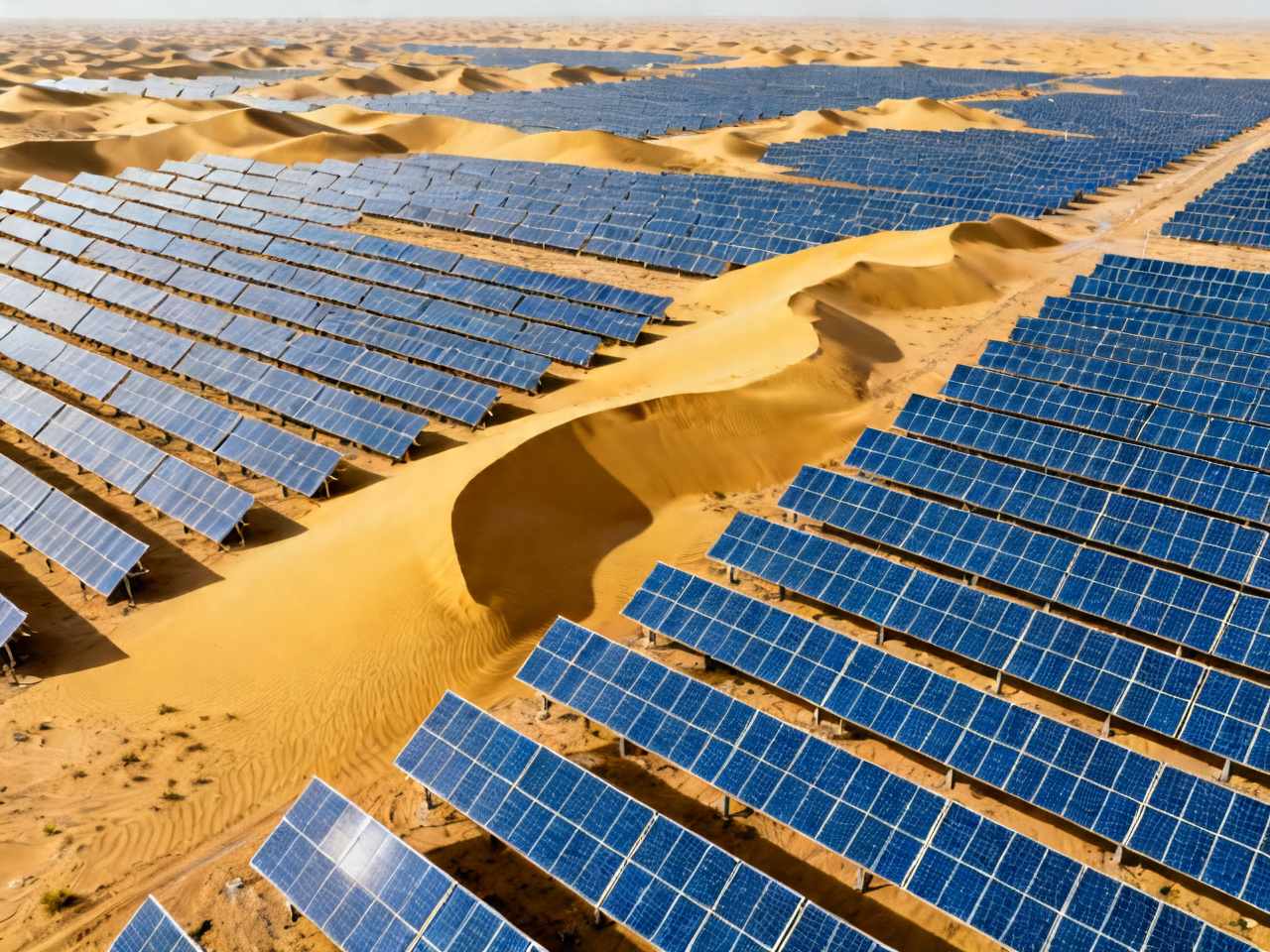
在内蒙古库布其沙漠,有一片太阳能板阵列,面积相当于50万个篮球场。
这不是比喻。库布其沙漠光伏基地占地80万亩,装机容量8吉瓦(GW),是目前全球最大的单体光伏电站。站在旁边的高台上往下看,蓝色的光伏板延伸到地平线,和黄色的沙丘交错在一起,像另一个星球上的景象。
In Inner Mongolia's Kubuqi Desert, there's a solar panel array the size of 500,000 basketball courts.
That's not a metaphor. The Kubuqi Desert solar base covers 800,000 mu of land with an installed capacity of 8 GW — the world's largest single solar installation. Standing on an elevated platform nearby, blue photovoltaic panels stretch to the horizon, alternating with yellow sand dunes in a landscape that looks extraterrestrial.
四个省,一场能源革命
中国西部的太阳能布局集中在四个省级行政区:内蒙古、新疆、甘肃、青海。截至2024年底,这四个地方合计光伏装机约213吉瓦——差不多占全国太阳能总装机的四分之一。
The solar energy layout in western China centers on four provinces: Inner Mongolia, Xinjiang, Gansu, and Qinghai. By the end of 2024, their combined photovoltaic capacity hit roughly 213 GW — about a quarter of China's total.
| 省份 Province | 光伏装机 Solar Capacity | 关键特征 Key Feature |
|---|---|---|
| 内蒙古 Inner Mongolia | ~83 GW | 全国第一,库布其沙漠基地 / China's #1, Kubuqi mega-base |
| 新疆 Xinjiang | ~62 GW | 塔克拉玛干沙漠边缘大规模部署 / Massive Taklamakan Desert deployment |
| 甘肃 Gansu | ~38 GW | 酒泉风光基地(10 GW,扩至20 GW)/ Jiuquan base (10→20 GW) |
| 青海 Qinghai | ~30 GW | 连续35天100%清洁能源供电(世界纪录)/ 35-day 100% clean energy record |
这些数字背后有一个关键前提:西部地广人稀,日照时间长。新疆和青海年均日照超过3000小时,是长三角的两倍。土地便宜、光照充足,天然适合铺光伏板。
Behind these numbers is a key prerequisite: the west is vast, sparsely populated, and sun-drenched. Xinjiang and Qinghai receive over 3,000 hours of sunshine annually — double what the Yangtze River Delta gets. Cheap land and abundant sunlight make these regions ideal for solar deployment.
2024年:全球太阳能的中国年
2024年是个分水岭。中国这一年新增光伏装机277吉瓦,全国累计装机达到886吉瓦——超过了其他所有国家的总和。
这个数字太抽象,换个说法:886吉瓦大约相当于400座三峡电站的光伏等效装机。
西部省份的投资也在这一年爆发。仅西部四省的可再生能源投资就超过500亿美元,其中太阳能占65%。
2024 was a watershed year. China added 277 GW of solar capacity, bringing its total to 886 GW — surpassing all other countries combined.
That number is abstract. To put it differently: 886 GW is roughly equivalent to the photovoltaic capacity of 400 Three Gorges Dams.
Investment in western provinces also surged. Renewable energy investment across the four western provinces exceeded $50 billion in 2024, with solar accounting for 65%.
电怎么运出去
西部发的电,用电的人在东部。这中间隔着两三千公里。
解决方案是特高压输电线路(UHV)。国家电网已经建成16条特高压线路,总输送能力超过300吉瓦,专门把西部的清洁电力送往东部的用电中心——上海、浙江、广东、江苏。
早些年,新疆和甘肃的弃光率(发了电但没人用,白白浪费)超过30%,是整个行业的痛点。到2024年,靠特高压线路和储能设施,弃光率已经降到5%以下。
The power is generated in the west, but the users are in the east — two to three thousand kilometers away.
The solution: Ultra-High Voltage (UHV) transmission lines. State Grid has built 16 UHV lines with a combined capacity exceeding 300 GW, specifically designed to carry clean power from western provinces to eastern demand centers — Shanghai, Zhejiang, Guangdong, Jiangsu.
In the early days, solar curtailment rates in Xinjiang and Gansu exceeded 30% — power generated but wasted because there was no way to move it. By 2024, thanks to UHV lines and energy storage, curtailment dropped below 5%.
青海的35天实验
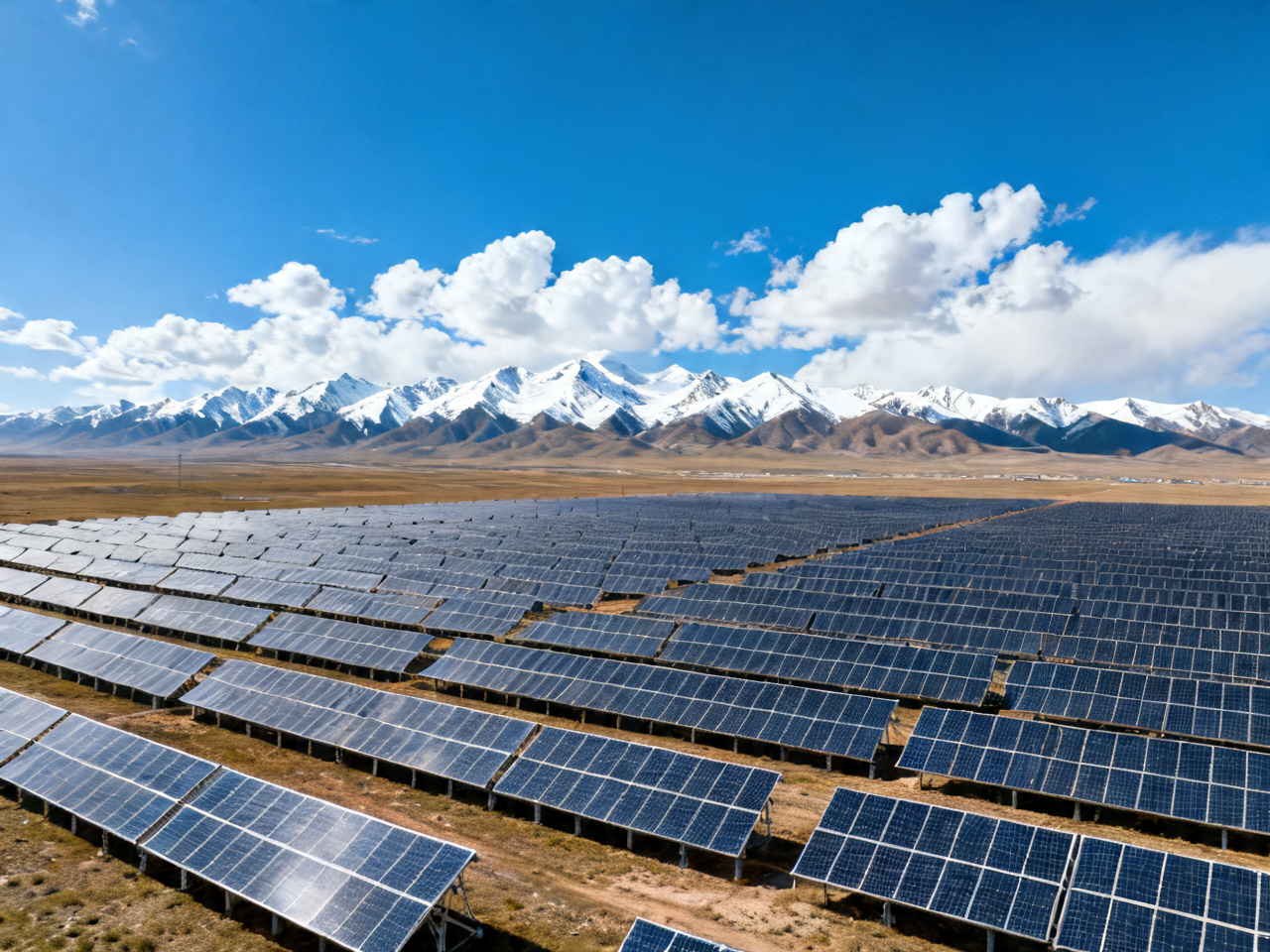
2024年,青海电网连续35天完全依靠清洁能源运行——没有一度电来自煤炭或天然气。这是全球范围内省级电网100%清洁能源运行的最长纪录。
青海能做到这件事,不只是因为太阳能装机够大。青海有龙羊峡水电站作为"调节器"——白天光伏发电过剩时,水电站减少出力;晚上没有阳光时,水电站补上。水光互补,让整个电网保持稳定。
这种"光伏+水电"的组合模式,后来被甘肃和四川借鉴。
In 2024, Qinghai's grid ran on 100% clean energy for 35 consecutive days — not a single watt from coal or natural gas. This set the world record for a provincial-level grid operating entirely on clean power.
Qinghai didn't achieve this on solar alone. The Longyangxia hydropower station acts as a "balancer" — when daytime solar generation exceeds demand, hydropower output drops; when the sun sets, hydro ramps up. This solar-hydro complementary model keeps the grid stable.
The model was later adopted by Gansu and Sichuan provinces.
455吉瓦的沙漠计划
国家能源局分三批批准了沙漠、戈壁、荒漠地区的可再生能源基地项目,合计规划装机455吉瓦。这些项目主要分布在内蒙古、新疆、甘肃和青海。
455吉瓦是什么概念?大约相当于当前全球排名第二的美国全部光伏装机的两倍。而这只是中国的增量计划之一。
"十四五"规划设定的目标是到2030年风电和光伏合计装机达到1200吉瓦。按目前的速度,这个目标大概率会提前实现。
The National Energy Administration approved three batches of desert, gobi, and wasteland renewable energy base projects totaling 455 GW. These are concentrated in Inner Mongolia, Xinjiang, Gansu, and Qinghai.
For context: 455 GW is roughly double the entire installed solar capacity of the United States, currently the world's second-largest solar market. And this is just one of China's incremental plans.
The 14th Five-Year Plan targets 1,200 GW of combined wind and solar by 2030. At the current pace, that target will likely be met ahead of schedule.
你能看到什么
作为游客,如果你走青藏铁路或者兰新高铁,车窗外最显眼的新地标不是建筑——是一片又一片蓝色的光伏板在荒漠中铺展开来。
青海湖周边、敦煌附近的戈壁滩、从兰州到嘉峪关的河西走廊沿线,都能看到大规模光伏电站。有些电站旁边还设了观景台,专门给路过的人拍照。
中国西部的太阳能不是未来规划,是眼前已经在发生的事。
As a traveler, if you ride the Qinghai-Tibet Railway or the Lanzhou-Xinjiang High-Speed Rail, the most striking new landmarks outside your window aren't buildings — they're vast blue solar arrays unfolding across the desert.
Around Qinghai Lake, in the Gobi near Dunhuang, along the Hexi Corridor from Lanzhou to Jiayuguan — large-scale solar farms are visible everywhere. Some even have observation platforms set up for passersby to take photos.
Solar energy in western China isn't a future plan. It's already happening right in front of you.
- 元旦跨年旅游目的地盘点 | New Year's Eve Travel Destinations Roundup
- 中国高铁网络全解:线路图与购票技巧 | China High-Speed Rail: Network Map & Booking Tips
- 我在中国景区、酒店和餐厅踩过的支付坑 | Payment Lessons I Learned the Hard Way at China's Tourist Spots, Hotels & Restaurants
- 中国城市通勤怎么选:地铁、打车、骑行的真实差别 | Metro, Taxi, or Bike: How Commuting Really Works in Chinese Cities
- 雨后的绍兴黄酒馆里,老板一句话让我重新理解“慢” | In a Shaoxing Yellow Wine Tavern After Rain, One Sentence Changed How I Understood Slowness
- 南京五月的雨把我们一家三口困在城墙边,却顺手送来了一顿最好吃的鸭血粉丝汤 | A May Rain by Nanjing's City Wall Stranded Our Family of Three and Delivered the Best Bowl of Duck Blood Soup Instead
- 中国城市地铁出行技巧 | Tips for Using Metro in Chinese Cities
- 九月金秋草原:中国最美的秋天从这里开始 | September on the Grasslands: Where China's Most Beautiful Autumn Begins
- 长江游轮:独特旅行体验 | Yangtze River Cruise: A Unique Experience
- 中国旅游交通换乘攻略 | China Transit & Transfer Guide
Comments (0)