
无锡下班路口最动人的,不是风景,而是每个人都知道怎么让一让 | What Moves Me Most at a Wuxi Rush-Hour Crossing Is Not the View but the Way People Yield
第一次到无锡,我先学会观察路口和人流 | On My First Day in Wuxi, I Learned to Read Crossroads and Crowds
无锡的一个普通路口,在傍晚下班时分忽然显出城市最真实的密度。红灯亮起,电动车、自行车、公交车和步行的人都在各自的位置上停住,像一条流动的河被临时拦出几道堤。路口四角的树被车灯照得一会儿明一会儿暗,路边店铺的招牌开始发光,卖糕团的小窗口冒着热气,远处高架上传来持续的低鸣。人群没有统一的表情,却有共同的节奏:有人盯着信号灯倒计时,有人低头回消息,有人把雨衣从车筐里拉出来,还有人提着打包盒,怕汤洒出来,手腕一直保持着小心的平衡。
At an ordinary intersection in Wuxi, the real density of the city suddenly appears during the evening commute. When the red light turns on, electric scooters, bicycles, buses, and pedestrians stop in their assigned places, like a moving river temporarily divided by several embankments. Trees at the four corners brighten and darken under passing headlights, shop signs along the road begin to glow, steam rises from a small window selling rice cakes, and a steady low hum comes from the elevated road in the distance. The crowd has no single expression, yet it shares a rhythm: someone watches the countdown signal, someone lowers their head to reply to a message, someone pulls a raincoat from a scooter basket, and someone carries takeout, keeping the wrist carefully balanced so the soup will not spill.
这个路口并不著名,也没有值得拍照打卡的宏大景观。它只是把许多日常交会在一起。由东向西的人可能刚从工厂园区出来,裤脚上还沾着一点灰;由南向北的人或许要赶去接孩子,头盔扣子还没完全系好;背着电脑包的年轻人站在斑马线前,耳机里可能是会议录音,也可能是一首循环很多遍的歌;一位老人推着小车,车上放着青菜、豆腐和一把新买的伞。灯还没变绿,大家暂时被同一条白线留住,彼此陌生,却在这一分钟里共享着城市的呼吸。
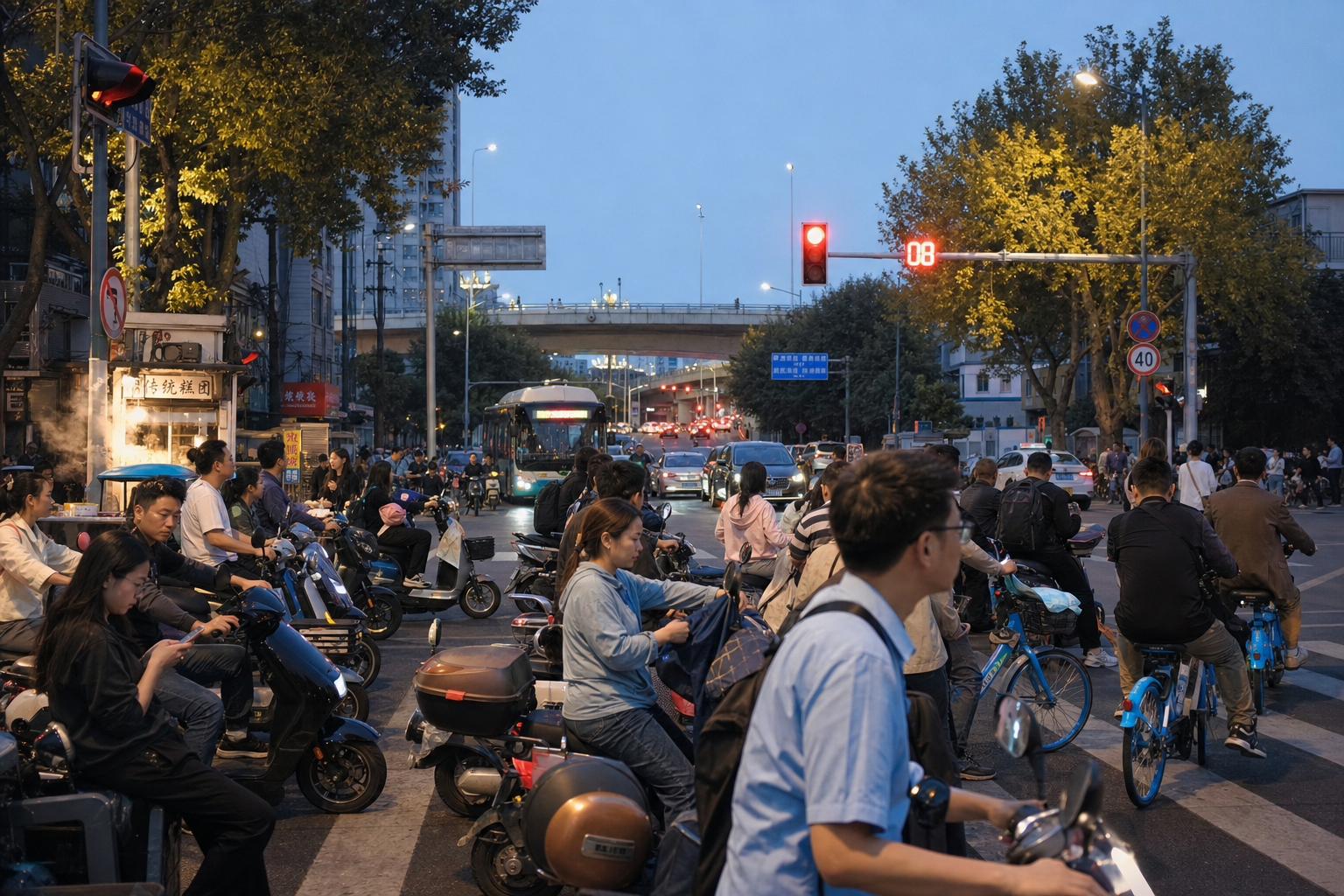
This intersection is not famous, nor does it offer a grand view for photographs. It simply brings many daily routes together. People moving east to west may have just left an industrial park, a little dust still on their trouser cuffs. Those moving south to north may be hurrying to pick up children, helmet straps not fully fastened. A young person with a laptop bag waits before the crosswalk, perhaps listening to a meeting recording, perhaps to a song repeated many times. An elderly person pushes a small cart carrying greens, tofu, and a newly bought umbrella. The light has not yet turned green, and everyone is held by the same white line. They are strangers, yet for this minute they share the breathing of the city.
无锡的路口有水乡城市特有的柔和。即使车辆很多,喇叭声也不会完全压住周围的细节。你仍能听见轮胎压过井盖时的轻响,听见奶茶店门口取餐号码被叫出,听见公交车门打开时气压释放的声音,听见一对中学生讨论晚自习前要不要买烤肠。风从河道方向吹来,带一点潮意,穿过人群和车流,把路边梧桐叶翻出背面。灯光映在湿润的路面上,红、绿、白、黄交错,像城市把自己复杂的心情铺在地上。
Wuxi intersections have the softness of a water-town city. Even with heavy traffic, horn sounds do not completely cover the surrounding details. You can still hear tires tapping over a manhole cover, a pickup number called outside a milk tea shop, the release of air pressure when a bus door opens, and two middle school students debating whether to buy grilled sausages before evening study. Wind comes from the direction of the waterways with a hint of moisture, passing through people and vehicles, turning the plane-tree leaves along the road to reveal their pale undersides. Lights reflect on the damp pavement: red, green, white, and yellow crossing one another like the city spreading its complicated mood across the ground.
绿灯亮起的瞬间,人流像被轻轻推了一下。最前排的电动车先动,车把微微转向,寻找自己的缝隙;行人随后踏上斑马线,脚步快慢不同却都朝着对岸;公交车慢半拍启动,车身庞大而克制;外卖骑手从边缘滑过去,箱子上的反光条一闪。没有人真正指挥这场移动,可它几乎总能顺利完成。大家凭着经验判断距离,凭着眼神确认让行,凭着身体对城市节拍的熟悉,在几秒钟里把拥挤变成秩序。
When the light turns green, the flow of people seems gently pushed forward. Electric scooters in the front row move first, handlebars turning slightly as riders search for gaps. Pedestrians then step onto the crosswalk, their paces different but all aimed at the opposite side. A bus starts half a beat later, large and restrained. A delivery rider slips along the edge, reflective strips on the box flashing once. No one truly conducts this movement, yet it almost always completes itself smoothly. People judge distance by experience, confirm yielding through glances, and rely on their bodies’ familiarity with the city’s tempo, turning congestion into order within seconds.
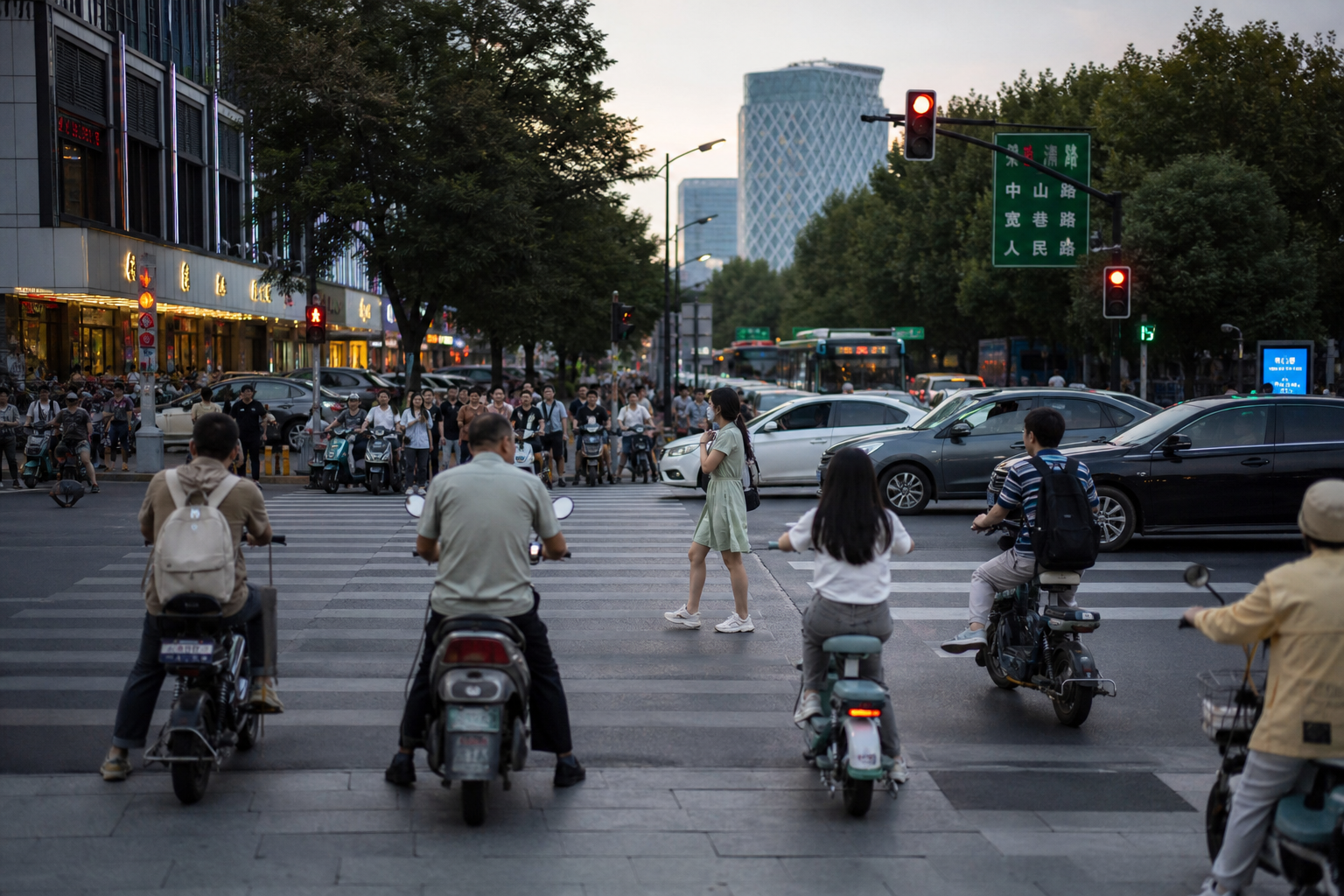
站在路口旁边观察久了,会发现每个人都带着一段看不见的故事经过。那个提着花的男人,可能要去见一个久违的朋友,也可能只是给家里餐桌换一点颜色;那个把孩子抱在怀里的母亲,一边看灯一边轻轻拍背,像把路口的嘈杂隔在自己的手掌之外;那个穿工作服的年轻女孩站在路边吃包子,咬一口就抬头看一次信号,怕错过可以过街的时间;那个骑车的老人把速度压得很慢,却始终靠右,给身后急的人留出空间。路口把他们短暂收拢,又迅速放开。
If you stand beside the intersection long enough, you notice that everyone carries an invisible story through it. The man holding flowers may be going to meet an old friend, or may simply want to add color to the dining table at home. The mother holding a child watches the light while patting the child’s back gently, as if keeping the noise of the intersection outside her palm. A young woman in work clothes eats a steamed bun by the curb, looking up at the signal after every bite, afraid to miss the chance to cross. An elderly cyclist keeps his speed slow but stays to the right, leaving room for those in a hurry behind him. The intersection gathers them briefly and releases them quickly.
这就是路口的奇妙之处:它看起来只是交通设施,实际上却是城市生活的转换器。人们在这里从工作状态切换到家庭状态,从个人速度切换到公共速度,从焦虑的等待切换到行动。红灯让大家停下来,绿灯让大家重新分散,黄灯提醒每个人犹豫也有边界。一个路口每天重复无数次这样的仪式,几乎不被注意,却维持着城市最基本的信任:你停一下,我走过去;我让一让,你安全通过;所有人都想快一点,但都知道必须留出一点空间给别人。
That is the wonder of an intersection: it appears to be merely traffic infrastructure, yet it is actually a converter of urban life. Here people switch from work mode to home mode, from personal speed to public speed, from anxious waiting to action. Red lights make everyone stop, green lights let everyone disperse again, and yellow lights remind each person that hesitation also has limits. An intersection repeats this ritual countless times every day and is barely noticed, yet it maintains the city’s most basic trust: you stop for a moment and I cross; I yield and you pass safely; everyone wants to be faster, but everyone knows some space must be left for others.
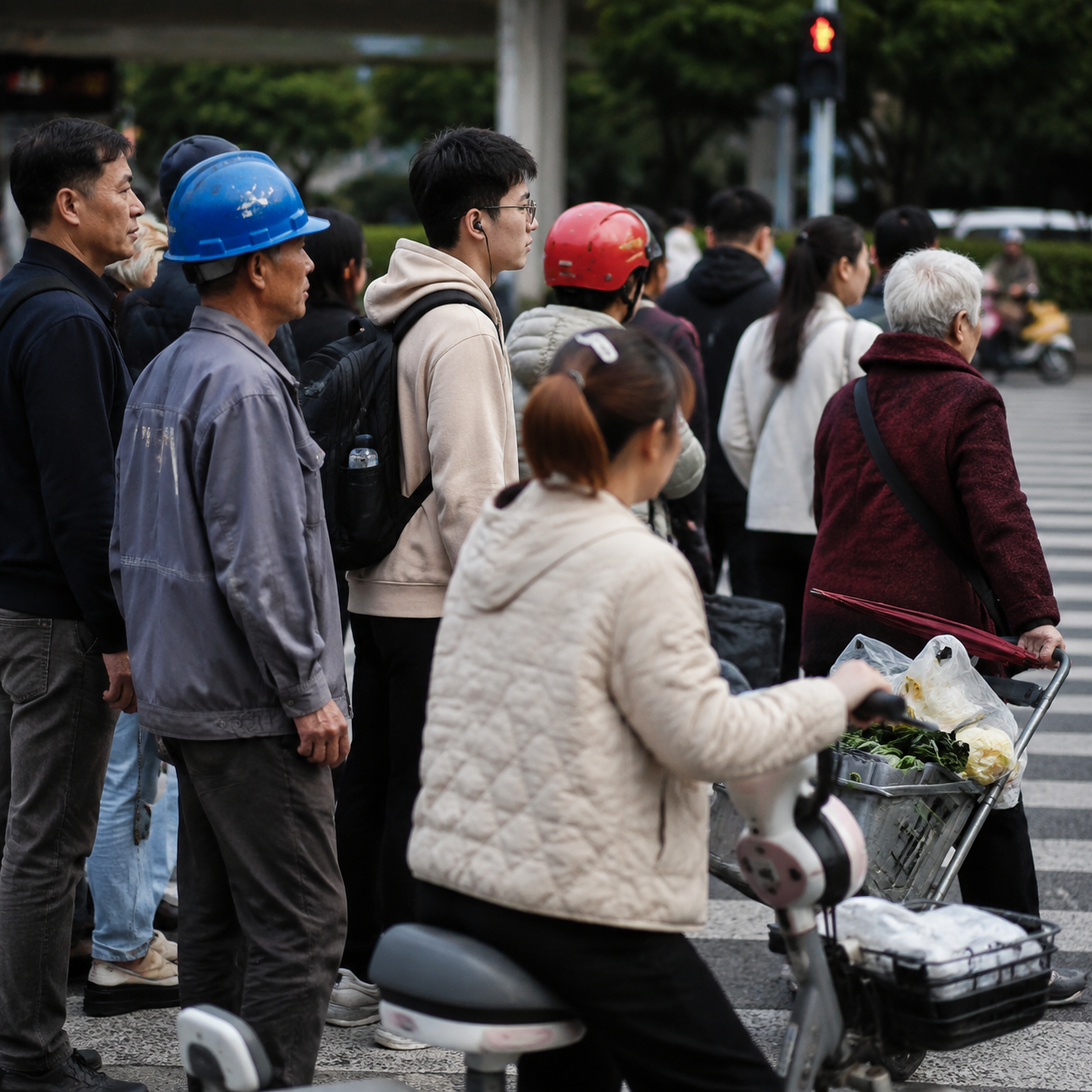
无锡的傍晚在这种人流中渐渐变深。写字楼一层的便利店开始忙起来,收银台前排起短队;药店门口的电子屏滚动着温度和湿度;水果摊把橘子码成小山,灯泡照得果皮发亮;路边有人把共享单车扶正,顺手拍掉座位上的水。人流经过这些地方,把城市的需求一件件带出来:一份热饭,一盒感冒药,一袋水果,一次回家的通勤,一通还没拨出的电话。路口不是终点,却连接着许多终点。
Wuxi’s evening deepens within this human flow. The convenience store on the first floor of an office building grows busy, a short line forming at the register. An electronic screen outside a pharmacy scrolls temperature and humidity. A fruit stall stacks mandarins into a small hill, bulbs making their peels shine. Someone straightens a shared bicycle by the roadside and casually brushes water from the seat. As people pass these places, they draw out the city’s needs one by one: a hot meal, a box of cold medicine, a bag of fruit, a commute home, a phone call not yet made. The intersection is not a destination, but it connects many destinations.
有时候,等待反而让人看清城市。红灯还有三十秒,一个穿西装的人突然放松肩膀,像终于从办公室的姿势里退出;两个骑车人并排停着,聊起明天会不会下雨;公交站旁的女孩把围巾往上拉,眼睛看向车来的方向;一只小狗被牵着,认真闻斑马线边的地面,对人的匆忙毫不关心。时间被信号灯切成短短的块,人们在这些块里恢复自己的样子。不是所有重要的事都发生在目的地,许多细微的生活恰恰发生在等待通过的间隙。
Sometimes waiting allows one to see the city more clearly. With thirty seconds left on the red light, a person in a suit suddenly relaxes the shoulders, as if finally leaving the posture of the office. Two riders stop side by side and discuss whether it will rain tomorrow. A girl beside the bus stop pulls her scarf higher and looks toward the direction from which the bus will come. A small dog on a leash carefully sniffs the ground beside the crosswalk, indifferent to human haste. Time is cut by signals into small blocks, and people recover themselves within those blocks. Not everything important happens at the destination; much delicate life occurs precisely in the gaps while waiting to cross.
夜色更浓后,路口的人流并没有消失,只是换了成分。加班的人、散步的人、买夜宵的人、从补习班出来的孩子、准备去超市的夫妻,都继续在这里相遇。车流的声音变得空一点,店铺的灯更显眼,斑马线上的白漆在路灯下像被擦亮。一个城市白天靠效率运转,夜晚则靠这些仍然愿意出门的人保持温度。他们经过路口,把自己的疲惫、胃口、牵挂和小小期待都带进同一片光里。
After night grows thicker, the flow at the intersection does not disappear; it simply changes its composition. People working overtime, people taking walks, people buying late-night snacks, children leaving tutoring classes, couples heading to the supermarket—all continue to meet here. The sound of traffic becomes a little more hollow, shop lights stand out more clearly, and the white paint of the crosswalk seems polished under streetlights. A city runs on efficiency by day, but at night it keeps its warmth through those who are still willing to go out. They pass through the intersection, bringing fatigue, appetite, concern, and small expectations into the same patch of light.
我离开时,回头看了一眼那个路口。红灯再次亮起,人群再次停住,新的队伍替代了刚刚离开的队伍。没有谁会记住这一轮等待,也没有谁会把这次过街当成故事讲给别人听,可正是这些被忽略的重复支撑着日常。无锡的路口人流像一部没有主角的电影,每个人只出现几秒,却共同完成了城市的叙事。灯变绿,大家向前走,水汽、车声、饭香和晚风一起流动。城市没有说话,却在这个路口清楚地活着。
When I leave, I look back at the intersection. The red light turns on again, the crowd stops again, and a new line replaces the one that just departed. No one will remember this round of waiting, and no one will tell the story of this crossing to others, yet these ignored repetitions support daily life. The flow of people at a Wuxi intersection is like a film without a single protagonist. Each person appears for only a few seconds, yet together they complete the city’s narrative. The light turns green, everyone moves forward, and moisture, traffic sounds, food aromas, and evening wind flow together. The city does not speak, but at this intersection it is clearly alive.
也许真正理解一座城市,不一定要登上最高的楼,也不一定要走进最有名的街区。有时只要站在一个普通路口,看几轮信号灯,看人群怎样停下、等待、判断、通过,就能明白它如何组织自己的生活。无锡在这里显得亲近而具体:它有水气,有烟火,有产业园下班的人,有学校放学的孩子,有不愿浪费一分钟的骑手,也有愿意多等一秒的陌生人。路口人流继续向四方散去,而城市就在这散去之中,一次次重新汇合。
Perhaps truly understanding a city does not require climbing its tallest building or entering its most famous district. Sometimes it is enough to stand at an ordinary intersection, watch several cycles of signals, and see how people stop, wait, judge, and cross. Then you understand how the city organizes its life. Wuxi appears here as close and concrete: it has moisture, daily warmth, workers leaving industrial parks, children leaving schools, riders unwilling to waste a minute, and strangers willing to wait one second longer. The flow of people continues dispersing in four directions, and within that dispersal the city gathers itself again and again.
- 数字人民币来了,外国游客到底怎么用?| E-CNY Is Here — How Does It Actually Work for Foreign Visitors?
- 广州早茶怎么点:两个人也能吃得体面不浪费 | Cantonese Dim Sum for Two: How to Order Smart
- 小区门口那段广场舞音乐,让我第一次不再把它只当成噪音 | The Square Dance Music at My Compound Gate Was the First Time I Stopped Hearing It as Just Noise
- 风沙把莫高窟的时间吹慢了 | The Sandstorm Slowed Time at the Mogao Caves
- 五月在婺源的雨后清晨,我跟着民宿老板去看一片刚亮起来的白墙黑瓦 | One Rain-Washed Morning in Wuyuan, I Followed a Guesthouse Owner Toward White Walls Just Beginning to Glow
- 孩子在北京地铁里第一次自己问路 | When My Child Asked for Directions Alone on the Beijing Subway
- 我在中国老小区晾衣绳下学会的,是先看天气,也先看邻里的节奏 | Under the Laundry Lines of an Old Chinese Residential Compound, I Learned to Watch the Weather and the Neighborhood Rhythm First
- 中国高铁网络全解:线路图与购票技巧 | China High-Speed Rail: Network Map & Booking Tips
- 站在深圳北站外第一个红灯前,我开始读懂这座城的速度 | At My First Red Light Outside Shenzhen North, I Began to Read the City’s Speed
- 阿坝雨后的路面只给我半个答案 | Aba’s Wet Road Gave Me Only Half an Answer
Comments (0)