
我在上海小学门口等放学时,第一次真正听懂“你吃了吗”为什么不是在问饭 | Waiting Outside a Shanghai Primary School, I Finally Understood Why “Have You Eaten?” Is Not Really About Food
我在上海小学门口等放学时,第一次真正听懂“你吃了吗”为什么不是在问饭 | Waiting Outside a Shanghai Primary School, I Finally Understood Why “Have You Eaten?” Is Not Really About Food
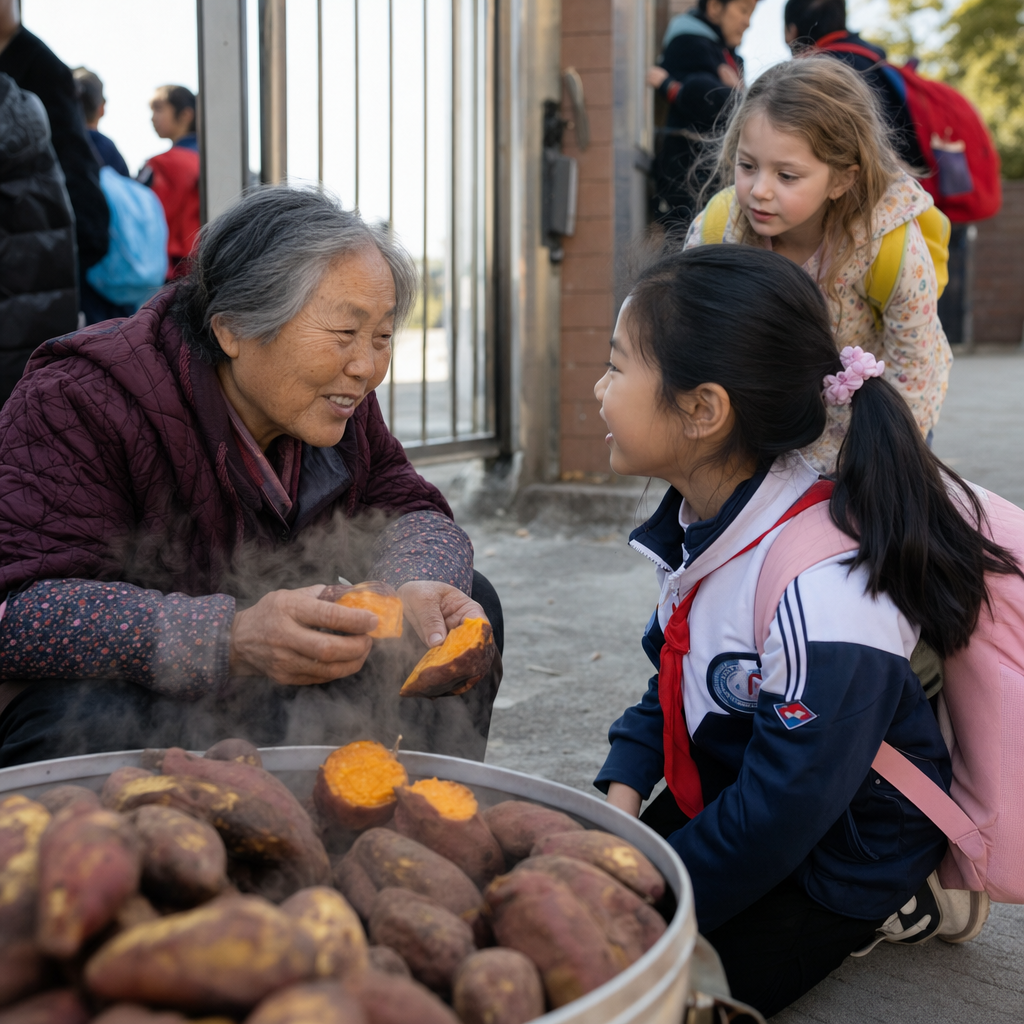
下午四点十分,我站在上海一所小学门口的梧桐树影下面,手里捏着一瓶还带凉气的矿泉水,看一群背着方方书包的小朋友像小潮水一样往外涌。校门边有个穿浅灰外套的奶奶,一边接孙女,一边把刚买的烤红薯从纸袋里掰开,热气一下冒出来。就在这时,我听见她笑着问身边另一个孩子:“你吃了吗?”我一下愣住了,因为那孩子手里明明还举着半根香肠。
At 4:10 in the afternoon, I was standing under the plane-tree shadows outside a primary school in Shanghai, holding a bottle of mineral water that still felt cold in my hand. Children with square schoolbags poured out of the gate like a small tide. Near the entrance, a grandmother in a light gray jacket picked up her granddaughter and split open a roasted sweet potato she had just bought. Steam rushed out at once. Then I heard her smiling at another child and asking, “Have you eaten?” I froze for a second, because the child was literally holding half a sausage.
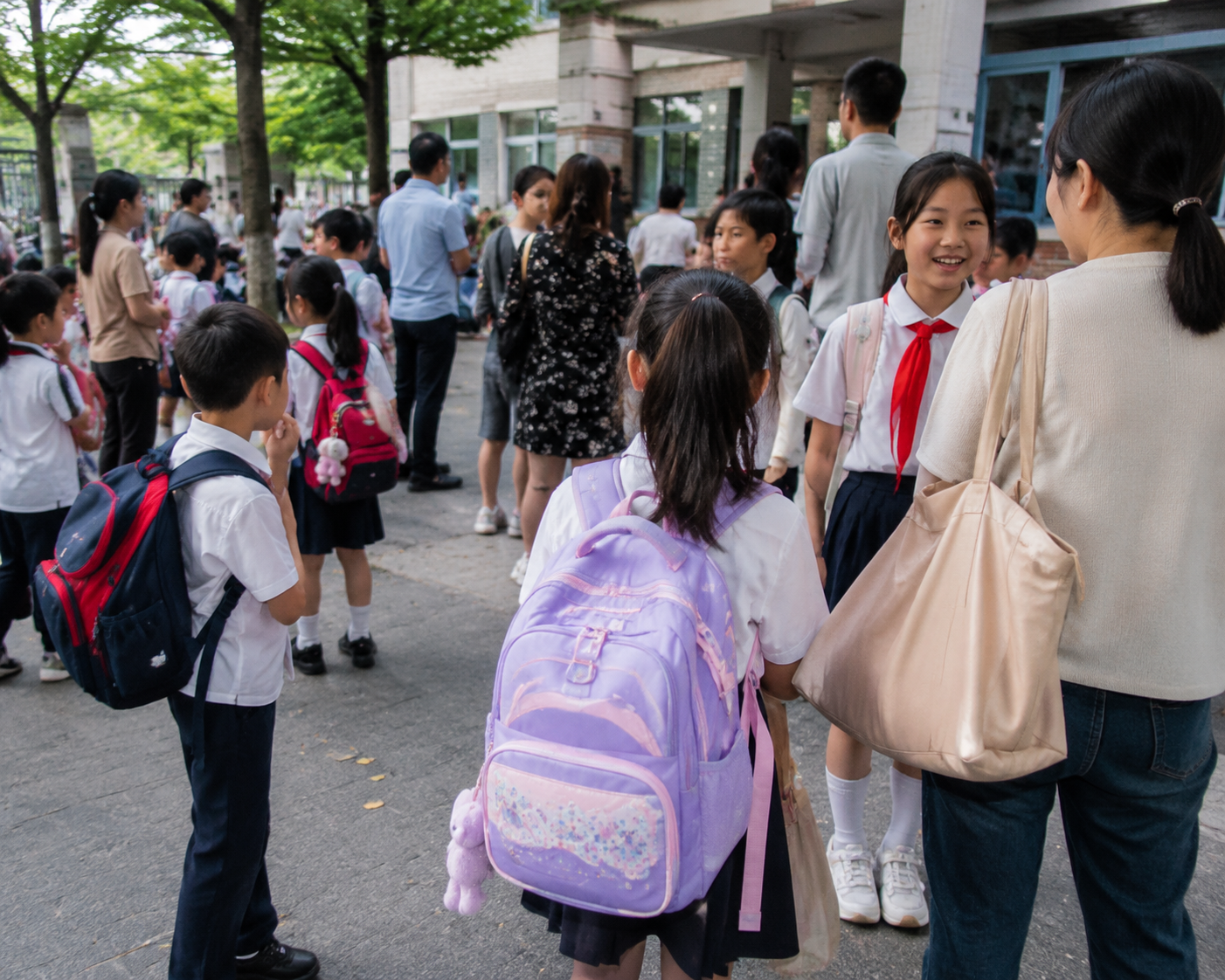
我那时学中文还带着一点“逐字翻译”的固执,总觉得一句话里每个字都必须老老实实对应一个意思。所以我第一反应不是觉得亲切,而是开始认真判断:这是不是在问晚饭?是不是一种提醒?是不是孩子回家前还得再吃一顿?我正想得很复杂,旁边一个三年级模样的小女孩已经看出了我的困惑。她抬头看看我,又看看那位奶奶,笑得肩膀都缩了一下,然后用很慢的中文对我说:“这个有时候不是问饭,是问你好不好。”
At that time, I was still stubbornly attached to word-for-word translation when learning Chinese. I believed every word had to match a precise meaning. So my first reaction was not warmth. It was analysis. Was this a question about dinner? A reminder? Did the child still need to eat again before going home? While I was making it more complicated than it was, a little girl who looked like she was in third grade noticed my confusion. She looked up at me, then at the grandmother, and smiled so hard her shoulders pulled in. In very slow Chinese, she said, “Sometimes this is not asking about food. It means asking if you’re doing okay.”
这句话一下把我拉回到真实生活里。原来中文里有不少话,表面在问一件事,真正先抵达的是关系。它不像英语里那种直接的“How are you?”那么规整,也不像课堂对话里那么标准。它更像门口这阵热气、奶奶手里那块掰开的红薯、还有孩子们从校门口一边挤一边喊“慢一点慢一点”的声音。你一旦站在这样的场景里,就会明白中文有时不是先传信息,而是先把人与人之间的距离放软一点。
That sentence pulled me back into real life. Chinese has many expressions that seem to ask one thing on the surface while actually reaching for connection first. It is not as neat as a direct English “How are you?” and not as standard as classroom dialogues. It feels more like the steam from the sweet potato, the roasted skin breaking in the grandmother’s hands, and the children shouting, “Slow down, slow down,” while squeezing through the gate. Once you stand in a scene like that, you realize Chinese sometimes does not begin with information. It begins by softening the distance between people.
那天我后来故意多听了一会儿。一个爸爸问儿子“冷不冷”,没等回答就把外套往他肩上披;一个奶奶问“作业多不多”,语气里其实先有的是心疼;还有一个小男孩见到同学妈妈,先说“阿姨好”,接着才说自己今天数学考了多少分。对外国小朋友来说,这些细节特别重要,因为它们会告诉你:学中文不能只背词义,还要学句子落在什么气氛里,谁对谁说,说的时候脸上是什么表情。
I stayed there on purpose and listened longer. A father asked his son, “Are you cold?” and draped a jacket over his shoulders before the boy even answered. A grandmother asked, “Do you have a lot of homework?” but what came first in her voice was concern. A little boy greeted his classmate’s mother with “Hello, Auntie,” before saying how he had done in math that day. For foreign children learning Chinese, these details matter a lot. They teach you that learning Chinese is not only about memorizing meanings. It is also about learning what kind of atmosphere a sentence belongs to, who says it to whom, and what their face looks like when they say it.
那我后来怎么练 / How I Practiced After That
我后来给自己定了一个很简单的办法,不是先背十个新句子,而是先记三种“门口最常听见的话”。第一种是问候类,比如“来啦”“放学啦”“慢点走”;第二种是关心类,比如“冷不冷”“累不累”“饿不饿”;第三种是礼貌类,比如“谢谢阿姨”“麻烦你了”“再见”。这三类句子看起来都短,可一旦会用了,你在中国校园、社区、公园门口就不会总像一个只会回答考题的人。若还想多读一篇更基础的入门文,也可以接着看 beginner Chinese reading。
Later I gave myself a very simple method. I did not start by memorizing ten new sentences. I started by remembering three kinds of expressions I heard most often near school gates. The first was greeting language, like “You’re here,” “School’s over,” and “Walk slowly.” The second was caring language, like “Are you cold?” “Are you tired?” and “Are you hungry?” The third was polite language, like “Thank you, Auntie,” “Sorry to trouble you,” and “Goodbye.” These expressions look short, but once you can use them, you stop sounding like someone who can only answer textbook questions.
再后来,我发现外国小朋友学中文时,最容易卡住的不是“不会说”,而是“太想说对”。可中文里有很多入口,本来就不是考试入口,而是生活入口。比如你不一定要马上说出一整段漂亮句子,你可以先学会在别人帮你拿了掉在地上的文具时说“谢谢”;学会在同学借你橡皮时说“我用一下”;学会看到老师走进教室时小声说“老师好”。这些句子短得像石子,可就是这些石子,先帮你踩过河。
Later still, I realized that the hardest part for many foreign children is not “I can’t speak.” It is “I want to get everything exactly right.” But many Chinese expressions are not exam entrances. They are life entrances. You do not need to produce a perfect paragraph right away. You can first learn to say “thank you” when someone picks up your pencil case from the floor, “I’ll borrow this for a second” when a classmate lends you an eraser, and “Hello, teacher” when the teacher enters the classroom. These sentences are small, like pebbles, but pebbles are exactly what help you cross a river first.
外国小朋友能马上用上的 5 个小提醒 / Five Small Tips Foreign Kids Can Use Right Away
- 先学会听语气,不要只盯着字面。 如果别人问你“吃了吗”“累不累”,很多时候是在表示关心,不一定要像做阅读理解那样精确拆解。
One: Learn to hear tone before chasing literal meaning. If someone asks, “Have you eaten?” or “Are you tired?” they are often showing care. You do not need to dissect it like a reading-comprehension exercise.
- 短句先赢。 “你好”“谢谢”“我知道了”“我来试试”这类句子,先说顺,比先背长段落更有用。
Two: Let short sentences win first. Expressions like “Hello,” “Thank you,” “I got it,” and “Let me try” are more useful at the beginning than memorizing long passages.
- 多看谁和谁在说话。 同一句“吃了吗”,长辈说出来、同学说出来、店员说出来,气氛会不一样。
Three: Watch who is speaking to whom. The same sentence can feel different when it comes from an elder, a classmate, or a shopkeeper.
- 用场景记中文,不要只用单词表。 把“慢点走”记在楼梯口,把“排队”记在食堂口,把“阿姨好”记在校门口,记得更快。
Four: Remember Chinese through scenes, not only through vocabulary lists. Put “walk slowly” at the stairwell, “line up” at the cafeteria door, and “hello, auntie” at the school gate in your mind. You will remember faster.
- 出错时别缩回去。 语言里最有生命的部分,常常就长在你开口后那一点点尴尬里。
Five: Don’t shrink back when you make a mistake. The most alive part of a language often grows in that tiny moment of awkwardness after you speak.
我现在再回想那天下午,最记得的不是我学会了一条语言知识,而是校门口那种很具体的温柔:书包带子拍在校服上,红薯皮被风吹得轻轻翻起,小朋友跑远了还回头喊一句“奶奶你快一点”。中文真正有用的时候,常常不是你把它解释对了,而是你终于在这样的场景里听懂了它。
When I think back on that afternoon now, what I remember most is not that I learned a language fact. I remember the specific softness of the school gate: backpack straps tapping against uniforms, sweet-potato skin lifting lightly in the wind, and a child running ahead before turning back to shout, “Grandma, hurry up.” Chinese often becomes truly useful not when you explain it perfectly, but when you finally understand it inside a scene like this.

- 我在上海城隍庙买南翔小笼:怎么支付最快、最稳 | Buying Nanxiang Soup Dumplings at Shanghai City God Temple
- 广州雨后那条骑楼街,让我重新理解城市散步 | A Rain-Washed Arcade Street in Guangzhou Changed How I Understand City Walks
- 青岛的啤酒不只在海边喝:一顿旧城晚饭把我留下来 | Qingdao Beer Took Me Beyond the Coast for an Old-City Dinner
- 中国签证申请全流程 | Complete China Visa Application Guide
- 泉州古城不适合一口气走完:我把海丝路线拆成几次停留 | Quanzhou Old City Is Not a One-Sitting Walk
- 中国时区与营业时间指南 | China Time Zones and Business Hours
- 广州一下雨,真正该重排的不是心情,而是那条原本顺手的晴天路线 | Once Rain Hits Guangzhou, What Needs Rearranging Is Not Your Mood but the Sunny-Day Route You Trusted
- 中国货币与支付指南 | China Currency and Payment Guide
- 在西安城墙下走慢一点,历史才不是一张照片 | Walking Slowly Under Xi’an City Wall Made History More Than a Photo
- 中国游客签证指南 | China Visa Guide for Tourists
Comments (0)