
我为什么开始放心把手机拿在手里:在中国街头学到的日常安全判断 | Why I Began Carrying My Phone in My Hand Without Fear: Everyday Safety Judgments I Learned on Chinese Streets
我为什么开始放心把手机拿在手里:在中国街头学到的日常安全判断 | Why I Began Carrying My Phone in My Hand Without Fear: Everyday Safety Judgments I Learned on Chinese Streets
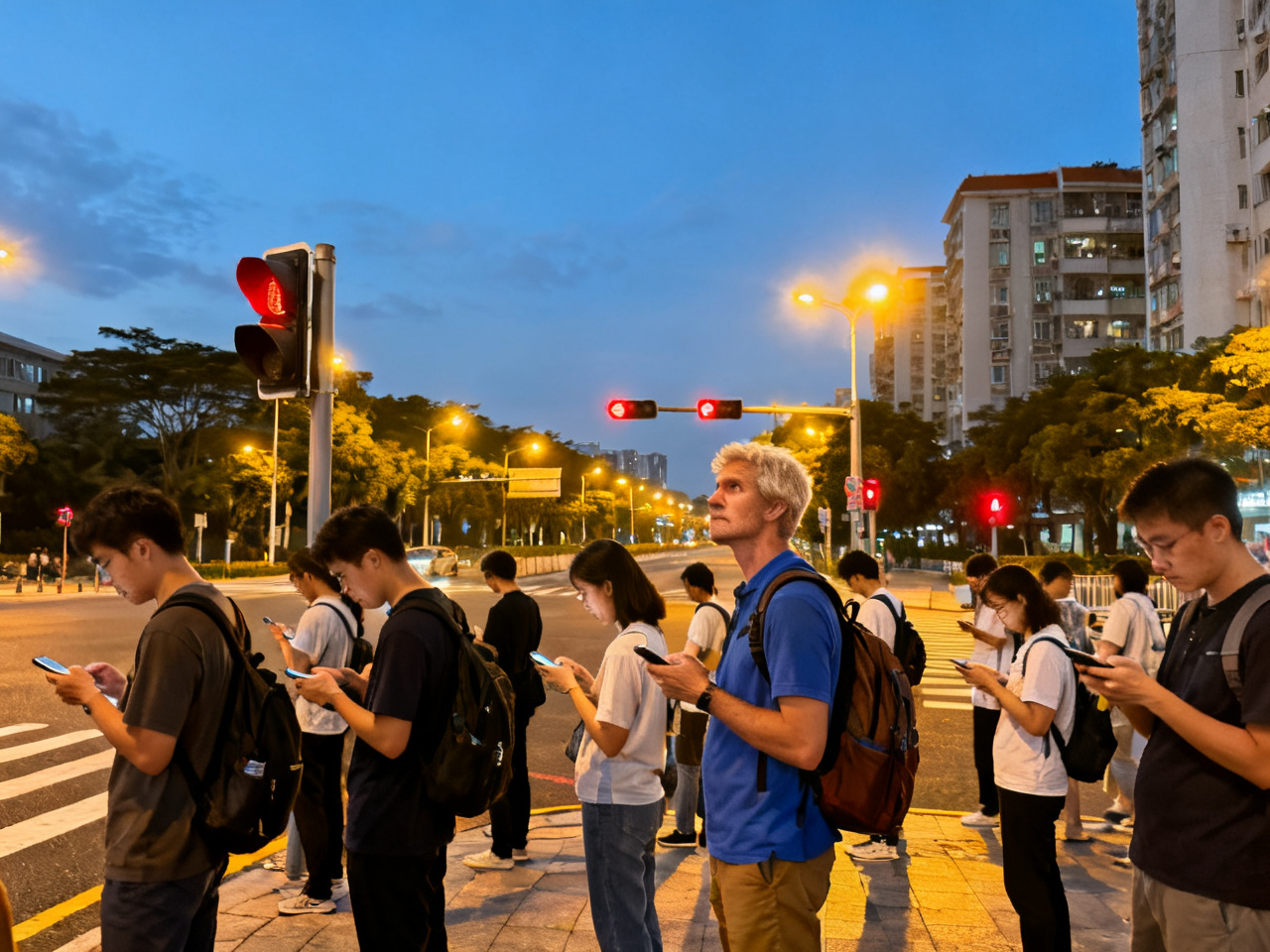
凌晨到过很多国家的街头以后,我曾经把一个动作练成了条件反射:手机一看完就立刻塞回口袋,拉链拉上,手再压一下,确认它还在。可我第一次在深圳把这个动作慢下来,是在一个很普通的傍晚。那天傍晚六点四十,我站在福田一处十字路口等红灯,柏油路面还留着白天太阳烤过的热气,穿衬衫的上班族一边刷短视频一边往斑马线边缘挪,两个穿校服的学生低头看消息,路口转角的咖啡店外卖架上整整齐齐摆着十几杯饮料。我手里捏着手机,却比周围任何人都更紧张。
After spending late nights on streets in many countries, I had trained one gesture into a reflex: glance at my phone, put it away immediately, zip the pocket, and press my hand against it once more to make sure it was still there. The first time I slowed that gesture down in China happened on a very ordinary evening in Shenzhen. It was 6:40 p.m., and I was waiting at a traffic light in Futian. Heat from the daytime sun still floated above the asphalt. Office workers in shirts shuffled toward the edge of the crosswalk while scrolling short videos, two students in uniforms looked down at their messages, and a takeaway shelf outside a corner coffee shop held more than a dozen drinks lined up neatly. I was holding my phone, yet I felt more tense than anyone around me.
我原来相信一种简单粗暴的安全逻辑:越把东西藏起来,越安全;越显得警惕,越不容易出事。可在中国一些城市里,我慢慢发现,真正让我放松的,不是“大家都大意”,而是公共空间里有一种很清楚的秩序感。这个秩序感不是抽象口号,而是你站在路口、商场门口、地铁安检口、便利店收银台前,都能反复看到的小细节:灯亮着,人来人往,路线清楚,摄像头可见,店员和安保并不遥远,别人使用手机的姿态也显得自然、不惊慌。我不是突然变大胆了,我只是开始学会判断环境。
I used to believe in a blunt logic of safety: the more you hide your things, the safer you are; the more visibly alert you are, the less likely trouble becomes. But in some Chinese cities, I gradually realized that what relaxed me was not that “everyone was careless.” It was that public space carried a very clear sense of order. That order was not an abstract slogan. It showed up in repeatable small details at intersections, mall entrances, metro security lanes, and convenience store counters: lights stayed bright, people kept moving, routes were clear, cameras were visible, staff and security were never far away, and the way other people used their phones looked natural rather than panicked. I did not suddenly become bold. I simply began learning how to read the environment.
一、我最先学会看的,不是手机,而是人流的节奏 | First I Learned to Read the Flow of People, Not the Phone
那天和我一起过马路的是一个穿灰色西装的年轻人,他左手提着电脑包,右手拿着手机回语音,语气平静得像在办公室里继续开会。绿灯亮起时,没有人猛冲,也没有人忽然从人群里挤出奇怪的动作。电动车有自己的流向,行人有自己的停顿,外卖骑手会从缝隙里穿过去,但大多数人都知道彼此的边界。对我来说,这种边界感很重要,因为很多“街头风险”并不是凭空冒出来的,它往往伴随着混乱、失控、突然的推搡和让你来不及反应的断裂感。可在那一刻,路口给我的感觉是可预测的。
The young man crossing with me wore a gray suit. He carried a laptop bag in his left hand and held his phone in his right, sending voice messages with the calm tone of someone continuing a meeting outside the office. When the light turned green, nobody lunged forward wildly, and nobody suddenly burst out of the crowd in a strange movement. E-bikes had their own direction, pedestrians had their own pauses, delivery riders slipped through openings, yet most people still seemed to understand one another’s boundaries. To me, that boundary awareness mattered, because many forms of street risk do not appear from nowhere. They usually come with chaos, loss of control, sudden pushing, and a break in rhythm that leaves you no time to react. At that intersection, the dominant feeling was predictability.
我后来给自己总结了第一个判断标准:如果一个空间里,大多数人的动作都很“接续”,我就会更放心。所谓接续,就是大家的移动不是互相打断,而是像地铁门口排队、商场扶梯上下、红绿灯切换时那样,有一种默认的顺序。这听起来很小,但对一个初来乍到的外国人来说,它比任何旅游宣传都更有说服力。因为你身体会先知道:这里不是每个人都在各自防御,而是有一层共同遵守的日常规则托着场面。
I later gave myself a first standard of judgment: when most movements in a space feel continuous rather than disruptive, I relax more. By continuous, I mean people are not constantly interrupting one another but moving with a default sequence, like the queues at metro doors, the flow on escalators, or the switching rhythm at traffic lights. It sounds small, but for a newcomer from abroad, it convinced me more than any promotional slogan. Your body knows first. It senses whether everyone is separately defending themselves, or whether a layer of everyday rules is quietly holding the scene together.
二、让我放松的第二件事,是“有人在场”而不是“有人盯我” | The Second Thing That Relaxed Me Was Presence, Not Surveillance Focused on Me
我曾在龙华一座商场外面等朋友。晚上八点二十,广场上有孩子踩滑板,几位阿姨在音响旁边跟着节拍跳舞,奶茶店门口堆着刚做好的订单,保安站在自动门旁边,看上去并不紧张,也不冷漠。他不是一直盯着谁,而是像一个稳定坐标,提醒你这片空间是被照看的。后来我走进商场洗手间前的走廊,清洁阿姨正慢慢推着工具车,电梯口有人排队,服务台亮着灯。我把手机拿在手里回消息,第一次没有下意识地边走边左右张望。
I once waited for a friend outside a mall in Longhua. It was 8:20 p.m. Children rolled around on skateboards in the plaza, several middle-aged women danced near a speaker, a milk-tea shop had a pile of fresh pickup orders by the door, and a security guard stood beside the automatic entrance looking neither tense nor indifferent. He was not staring at anyone in particular. He functioned more like a stable coordinate, reminding you that the space was being looked after. Later, I walked into the corridor near the restroom. A cleaner slowly pushed her cart, people queued by the elevators, and the service desk stayed lit. I typed replies on my phone in my hand and, for the first time, did not instinctively scan over my shoulder every few seconds.
这种“有人在场”的感觉,在中国城市里对我很关键。它和被压迫式地监视完全不是一回事。对旅行者来说,更重要的是你能不能随时看到正常工作的店员、保安、前台、保洁、骑手、家长、等人者。这些看似互不相关的人,构成了一种密度合适的公共生活。人太少的时候,我反而会把手机收起来;但人足够多、而且每个人都像在认真过自己的生活时,我会明显更放松。安全感并不一定来自空无一人,而常常来自“正常的人一直都在”。
That feeling of people being present became crucial to me in Chinese cities. It was completely different from oppressive surveillance. For a traveler, what matters more is whether you can easily see normal working people nearby: shop staff, security guards, receptionists, cleaners, delivery riders, parents, and people simply waiting for someone. These seemingly unrelated figures create a public life with healthy density. When there are too few people, I actually put my phone away faster. But when there are enough people, and everyone appears busy living an ordinary life, I relax noticeably. Safety does not always come from emptiness. Very often it comes from the steady presence of normal people.
三、地铁和商场让我学会了“可退路”这件事 | Metro Stations and Malls Taught Me the Value of an Easy Exit
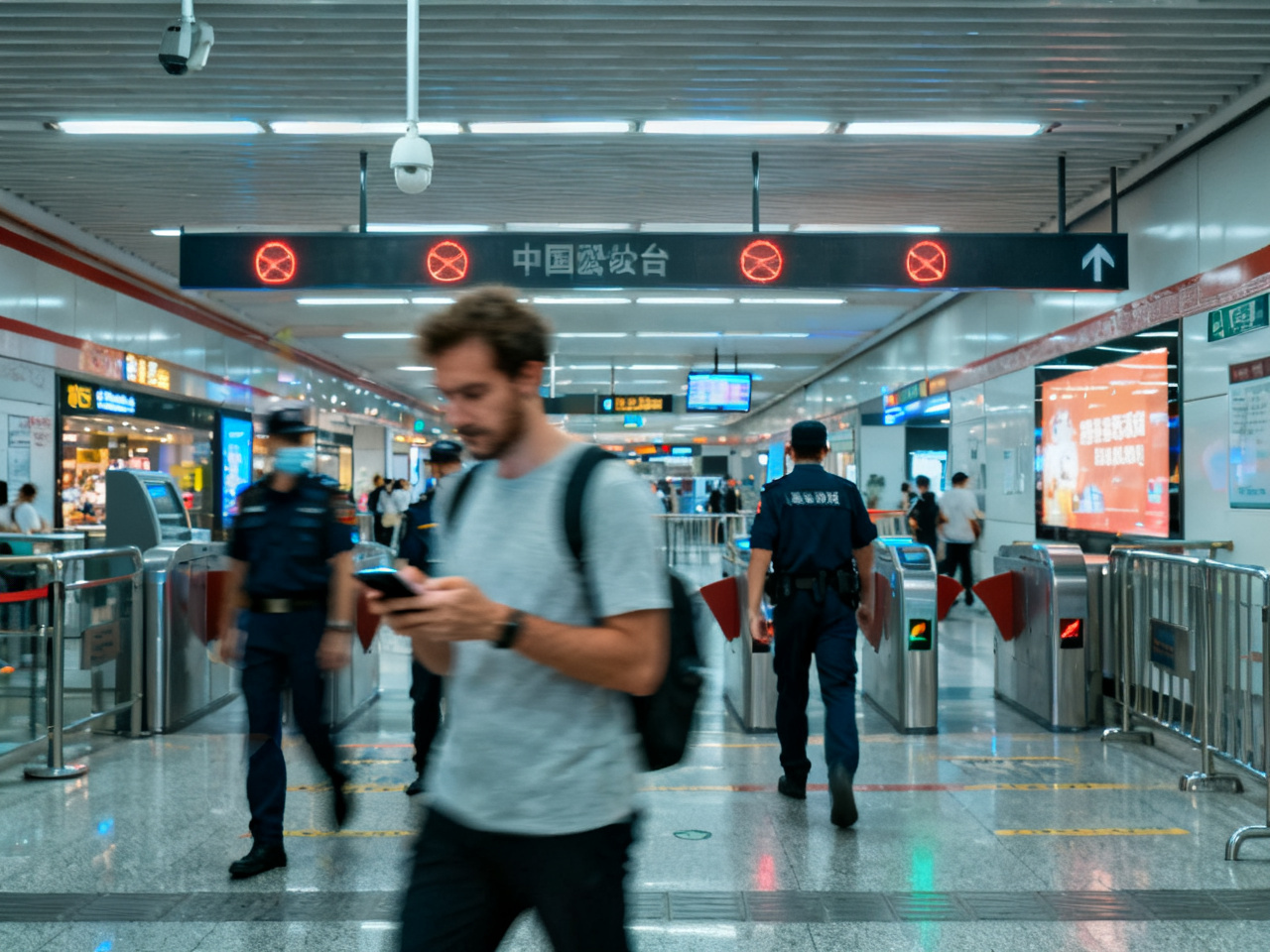
真正改变我的不是某一次“勇敢”,而是很多次小小的验证。比如在深圳地铁站里,我逐渐发现自己可以边走边看路线图,不必慌忙把手机按灭。原因不是我失去警觉,而是那里有安检、有站务台、有清楚的导向牌,有不停进出的乘客,还有在闸机附近随时能问路的工作人员。就算我走错了,也不是灾难。我只是掉头、再看一眼指示、或者开口问一句。这种“即使出问题也容易修正”的环境,就是我说的可退路。
What changed me was not one dramatic act of bravery but many small confirmations. In Shenzhen metro stations, for example, I gradually found I could keep my phone in my hand while checking route maps instead of switching the screen off in panic. The reason was not that I had lost caution. It was that there was security screening, station staff, clear directional signs, constant passenger flow, and people near the gates whom I could ask if needed. Even if I made a wrong turn, it would not become a disaster. I could simply turn around, check the sign again, or ask one quick question. That kind of environment—where mistakes are easy to correct—is what I mean by an easy exit.
我觉得很多安全判断都应该这样做:不要只问“会不会出事”,而要问“如果我一时分心,事情会不会马上恶化到不可收拾”。在一些我更放松的中国公共空间里,答案往往是否定的。你手机拿在手里,并不意味着你和风险单独对抗;你身边还有路线、规则、工作人员和不断流动的人群一起分担不确定性。这也是为什么我常常建议第一次来中国的朋友,先熟悉那些秩序最清楚的地方,比如大型地铁站、连锁商场、明亮的便利店和有人值守的街角。你可以先在这些地方训练判断,再把这种判断带到更复杂的环境里。
I think this is how many safety judgments should be made. Instead of asking only, “Could something happen?” ask, “If I lose focus for a second, would the situation immediately spiral into something unmanageable?” In many Chinese public spaces where I feel more at ease, the answer is often no. Holding your phone in your hand does not mean facing risk alone. Around you are routes, rules, staff, and a moving crowd that all reduce uncertainty. That is why I often tell first-time visitors to China to begin with the clearest environments: major metro stations, chain malls, bright convenience stores, and street corners with visible staff. Learn your judgment there first, then carry that judgment into more complicated settings.
四、我仍然保留的警觉,不是恐惧,而是习惯 | The Caution I Still Keep Is Habit, Not Fear
说到这里,我并不想把故事写成“在中国就完全不用防”。这不真实,也没必要。直到现在,我依然会在几种情况下自动提高警觉:深夜特别空的背街、刚下暴雨后人少车快的路段、手机电量只剩百分之五的时候、需要一边拖行李一边找出口的时候、或者有人异常贴近我却又没有明确目的的时候。我还是会把背包拉到前面,站到更亮的地方,走进店里停一下,或者干脆先不看手机。这些动作没有消失,只是它们不再是全天候紧绷,而是变成了对具体场景的反应。
That said, I do not want to turn this into a simplistic story claiming that China means you never need caution. That would be unrealistic and unnecessary. Even now, there are situations in which I automatically raise my alert level: very empty side streets late at night, roads thinned out by heavy rain where cars move too fast, moments when my phone battery has dropped to five percent, times when I am dragging luggage while searching for an exit, or when someone stays unusually close to me without any clear reason. I still pull my bag to the front, move toward brighter areas, step inside a shop for a moment, or decide not to use my phone yet. Those habits have not vanished. They have simply changed from all-day tension into targeted responses to specific scenes.
我把这种变化理解为:从抽象害怕,变成具体判断。以前我在陌生城市里,脑子里只有一个模糊命令——小心一切。这样做的结果,往往是你连安全的信息也一起屏蔽了。可现在在中国的一些街头,我会看得更细:路口有没有持续人流?附近有没有营业中的店?出现问题时我是否能马上走进一个明亮空间?有没有明确工作人员?别人使用手机的方式是紧张还是自然?这套问题比“这里危险吗”更有用,因为它逼你观察现实,而不是被旧经验统治。
I understand that change this way: I moved from abstract fear to concrete judgment. In unfamiliar cities, I used to carry one blurred command in my head—be careful of everything. The problem with that command is that it can also block safe information from reaching you. Now, on some Chinese streets, I look more specifically. Is there steady foot traffic? Are nearby shops still open? If something feels off, can I immediately step into a bright place? Are staff visible? Do other people use their phones in a tense way or a natural one? These questions help more than simply asking, “Is this place dangerous?” because they force you to observe reality instead of submitting to old habits.
五、几个让我真正放松下来的场景 | The Specific Scenes That Truly Relaxed Me
第一个场景,是晚高峰后还热闹的十字路口。灯光足,店面开着,人群有连续性,大家会停会走,却不乱撞。第二个场景,是商场和写字楼之间的连接通道,哪怕我看手机找餐厅,也总能看到保安、导视牌和别的上班族。第三个场景,是地铁安检后到站台前那段区域,空间功能明确,所有人都在朝某个方向移动,陌生人之间的距离感反而很清楚。第四个场景,是便利店门口或者咖啡店外摆区,我如果需要站定回消息,通常会挑这种地方,因为它既开放又不孤立。
The first scene is a still-busy intersection just after rush hour: strong lighting, open storefronts, continuous foot traffic, and people stopping and moving without colliding into one another. The second is a passage connecting malls and office towers, where I can check my phone for a restaurant and still see security guards, directional signs, and other office workers nearby. The third is the zone between metro security and the platform, where the function of the space is clear and almost everyone is moving toward an obvious destination, which makes personal boundaries surprisingly legible. The fourth is outside convenience stores or at café seating areas, where I often choose to stop and answer messages because the space is open without being isolated.
如果你第一次来中国,可能会问:那是不是只要人多就行?我的答案是不够。人多只是其中一部分,更重要的是人多却不乱,明亮却不刺眼,忙碌却可理解。比如有的地方虽然很热闹,但路线混杂、临时摊位太密、车辆和行人互相抢空间,我就不会在那里长时间低头看手机。真正让我放心的,从来不是单一指标,而是秩序、照明、可求助性和可退路性同时成立。你如果愿意,也可以把它当成自己在中国观察城市的一套小练习。
If you are visiting China for the first time, you might ask whether the answer is simply crowds. My answer is no. Crowds are only part of it. What matters more is that the place is busy without being chaotic, bright without being harsh, active without becoming unreadable. Some areas are lively but have tangled routes, dense temporary stalls, and vehicles competing with pedestrians for the same space. In those places, I would not keep my head down over my phone for long. What truly reassures me is never a single indicator but a combination: order, lighting, the ability to ask for help, and the ability to exit easily. You can treat that as a small exercise in reading Chinese cities for yourself.
在慢慢适应这些节奏的过程中,我也常常会去看别人的经验,尤其是那些关于日常移动和城市秩序的观察。像这篇相关城市日常观察,和这篇关于在中国街头建立节奏感的经验,都很适合在真正出门之前读一读。它们给我的帮助不是替我判断,而是让我更快学会自己判断。
While adapting to these rhythms, I often read other people’s accounts too, especially observations about everyday movement and public order. Pieces like this related look at everyday urban life and this experience of finding rhythm on Chinese streets are worth reading before you head out. They did not judge the city for me. They helped me learn how to judge it for myself.
六、真正让我改变的,是连续很多天都得到同样的结论 | What Truly Changed Me Was Reaching the Same Conclusion Across Many Days
如果只有一个晚上顺利,我大概还会把它当成运气。可后来在深圳、广州、杭州这些城市里,我一连好多天都得到类似判断:早上七点半去买咖啡时,店门口已经有人安静排队;中午在商场连廊里看导航时,身边经过的人各走各的,不会故意逼近;晚上从地铁出来,手机拿在手里回消息,也总能在几十米内看到便利店灯光、物业岗亭或者还在营业的小店。正是这种“不是一次、而是反复如此”的经验,慢慢把我的紧张磨掉了。安全感很多时候不是某个壮观瞬间给你的,而是你在一连串普通时刻里,一次次发现自己不需要过度防御。
If it had happened smoothly only once, I might have dismissed it as luck. But later, in cities like Shenzhen, Guangzhou, and Hangzhou, I kept reaching similar conclusions over many days in a row. At 7:30 in the morning, people were already queuing calmly outside coffee shops. At noon, when I checked navigation in a mall corridor, the people around me continued on their own paths without intentionally pressing too close. At night, after exiting the metro, I could reply to messages with my phone still in hand and still spot convenience-store lights, property-security booths, or small open shops within a short distance. It was exactly this repetition—not one special evening, but the same pattern again and again—that slowly wore down my tension. Safety often does not arrive through one dramatic moment. It arrives when a series of ordinary moments repeatedly shows you that excessive defensiveness is no longer necessary.
再后来,我甚至开始把这种判断讲给第一次来中国的朋友听。我会提醒他们,不要一上来就只问“这座城市安不安全”,而是先学会问:我现在站的这个位置,是否明亮、是否有流动的人群、是否看得见工作人员、是否有地方可以马上停下来?当你把问题问得更具体,很多答案会自己浮出来。中国街头真正让我安心的,也正是这种具体性——不是神秘的感觉,不是口号式的保证,而是一层一层可以被眼睛和身体验证的日常秩序。
Later, I even began explaining this method of judgment to friends visiting China for the first time. I tell them not to begin with the oversized question, “Is this city safe?” Instead, ask something more precise: Is the place where I am standing well lit? Is there moving foot traffic? Can I see staff nearby? Is there somewhere I could immediately pause if needed? Once your question becomes specific, many answers surface by themselves. That is also what reassures me most on Chinese streets: not a mystical feeling, not a slogan-like guarantee, but a layer of everyday order that can be checked by your own eyes and body.
那天过完红灯以后,我和一个在深圳工作的朋友去喝咖啡。她把冰美式推到我面前,看到我手机还拿在手里,笑着问:“你终于不一直往口袋里塞了?”我也笑了,因为我知道自己不是突然放松,而是终于明白了安全感不只是“藏好东西”,还包括看懂环境、看懂人群、看懂规则。走出咖啡店时,夜里九点多,地面已经没那么烫了,旁边写字楼还有几层灯亮着,路边有人在等网约车,也有人牵着孩子回家。我把手机自然地拿在手里导航,心里没有那种发紧的感觉。不是因为我相信世界上没有风险,而是因为我第一次在一个陌生国家里,真正学会了把警觉放在该放的位置。
After the light changed and I crossed, I met a friend who works in Shenzhen for coffee. She slid an iced Americano toward me, noticed that my phone was still in my hand, and laughed: “So you finally stopped shoving it back into your pocket every ten seconds?” I laughed too, because I knew I had not simply become relaxed. I had finally understood that safety is not only about hiding your valuables. It also means reading the environment, reading the crowd, and reading the rules. When I left the café after nine, the pavement had cooled a little, several floors in the office tower next door were still lit, some people were waiting for ride-hailing cars, and others were walking home with children. I held my phone naturally to follow the map, without that tight feeling in my chest. Not because I believed the world had no risks, but because, for the first time in a foreign country, I had learned where caution actually belongs.
- 那本被果汁弄湿的拼音本,让本人第一次学会声调不是唱歌,而是方向 | A Pinyin Notebook Spilled with Juice Taught Me That Tones Are Not Singing but Direction
- 一只陶马,让孩子在西安开始认真追问历史 | A Clay Horse Opened the Door to History for My Child in Xi’an
- 洛阳牡丹花期里,我学会把热闹拆成几个小时 | During Luoyang Peony Season, I Learned to Divide Crowds by the Hour
- 在喀什,先让我停下来的不是景点,而是路口边那只刚出炉的馕 | In Kashgar, It Was Not a Landmark but a Fresh Naan Beside the Crossing That Made Me Stop
- 五月第一次去北京,我是怎么把暴走行程改成舒适慢线的 | My First Beijing Trip in May: How I Turned an Exhausting Route into a Gentle Slow-Paced Plan
- 从广州吃到潮汕:一条被低估的美食公路 | Guangzhou to Chaoshan: An Underrated Foodie Road Trip
- 青岛的啤酒不只在海边喝:一顿旧城晚饭把我留下来 | Qingdao Beer Took Me Beyond the Coast for an Old-City Dinner
- 外国人在中国买东西被拒收现金怎么办? | What To Do When a Chinese Shop Refuses Your Cash
- 人民币使用常识:面额、兑换与防伪 | RMB Basics: Denominations, Exchange & Counterfeit Tips
- 我在中国早餐摊第一次学会豆浆要先问甜不甜 | The First Time I Learned at a Chinese Breakfast Stall to Ask Whether the Soy Milk Was Sweet
Comments (0)