
我在杭州菜市场学会了不装懂:真正的文化融入,常常从承认自己不会开始 | In a Hangzhou Wet Market I Learned Not to Pretend: Real Cultural Integration Often Starts by Admitting You Don't Know
我在杭州菜市场学会了不装懂:真正的文化融入,常常从承认自己不会开始 | In a Hangzhou Wet Market I Learned Not to Pretend: Real Cultural Integration Often Starts by Admitting You Don't Know
开场 | Opening
早上九点的杭州,空气已经不冷了,但菜市场里还带着一种潮湿的晨意。鱼摊边是清亮的水声,豆腐摊上冒着一缕一缕白汽,刚切开的橙子香甜得几乎压过了青菜叶子的土味。我站在入口右侧第三排摊位前,盯着一堆长得非常相似的绿色蔬菜,心里冒出一个很不体面的念头:要不就装懂吧。
At nine in the morning in Hangzhou, the air was no longer cold, but the wet market still held the dampness of early day. Water glimmered and splashed at the fish stalls. White steam rose in soft threads above the tofu counter. Freshly cut oranges smelled sweet enough to almost overpower the earthiness of leafy greens. I stood in front of a stall in the third row to the right of the entrance, staring at several piles of vegetables that looked almost identical to me, and one ungraceful thought crossed my mind: maybe I should just pretend I understand.
很多外国人在中国生活一段时间后,都会遇到一种微妙压力:你已经会点咖啡、会叫车、会扫码、会说“谢谢”“麻烦了”“请问”,于是你开始希望自己看起来像一个“已经差不多懂了”的人。可真正接近本地生活的地方,往往不是商场,不是地铁,不是酒店前台,而是菜市场、社区店、小区门口的修鞋摊、早餐铺、熟食柜台。这些地方没有为外来者准备解释牌,也不会专门放慢节奏等你理解。你一站进去,就立刻知道自己到底有没有真的看懂一个城市。
Many foreigners who live in China for a while eventually feel a subtle pressure. You already know how to order coffee, call a car, scan a code, say “thank you,” say “sorry to bother you,” and ask simple questions. So you begin to hope you can pass as someone who “basically gets it.” But the places closest to local life are usually not malls, metros, or hotel front desks. They are wet markets, neighborhood stores, shoe-repair corners by residential gates, breakfast stalls, and prepared-food counters. These places are not designed to explain themselves to outsiders. They do not slow down for your understanding. The moment you step inside, you find out whether you actually understand a city or not.
那天在杭州,我就是在这样一个地方,被自己的“假装懂”当场拆穿的。
That morning in Hangzhou, in exactly such a place, my urge to pretend was exposed almost immediately.
第一段:我盯着青菜,卖菜阿姨一眼看穿我 | Part One: I Stared at the Greens, and the Vegetable Auntie Saw Through Me Instantly
我借住在一位朋友家里,前一晚大家说好,第二天中午在家做饭。朋友九点半才有空下楼,我却因为时差醒得太早,决定先自己去买点菜,至少显得有参与感一些。朋友给我发了一条简短微信:“市场里买点青菜、豆腐,再看看有没有新鲜蘑菇。”如果是在超市,这件事很简单;可是在杭州一个居民区旁的菜市场里,这句话几乎像一道开放题。
I was staying temporarily at a friend’s apartment. The night before, we had agreed to cook lunch at home the next day. My friend would not be free until around 9:30, but jet lag woke me too early, so I decided to go buy some ingredients first, partly to feel useful. My friend sent me a short message: “Get some green vegetables, tofu, and maybe fresh mushrooms if they look good.” In a supermarket, this would have been easy. In a neighborhood market in Hangzhou, it was practically an essay question.
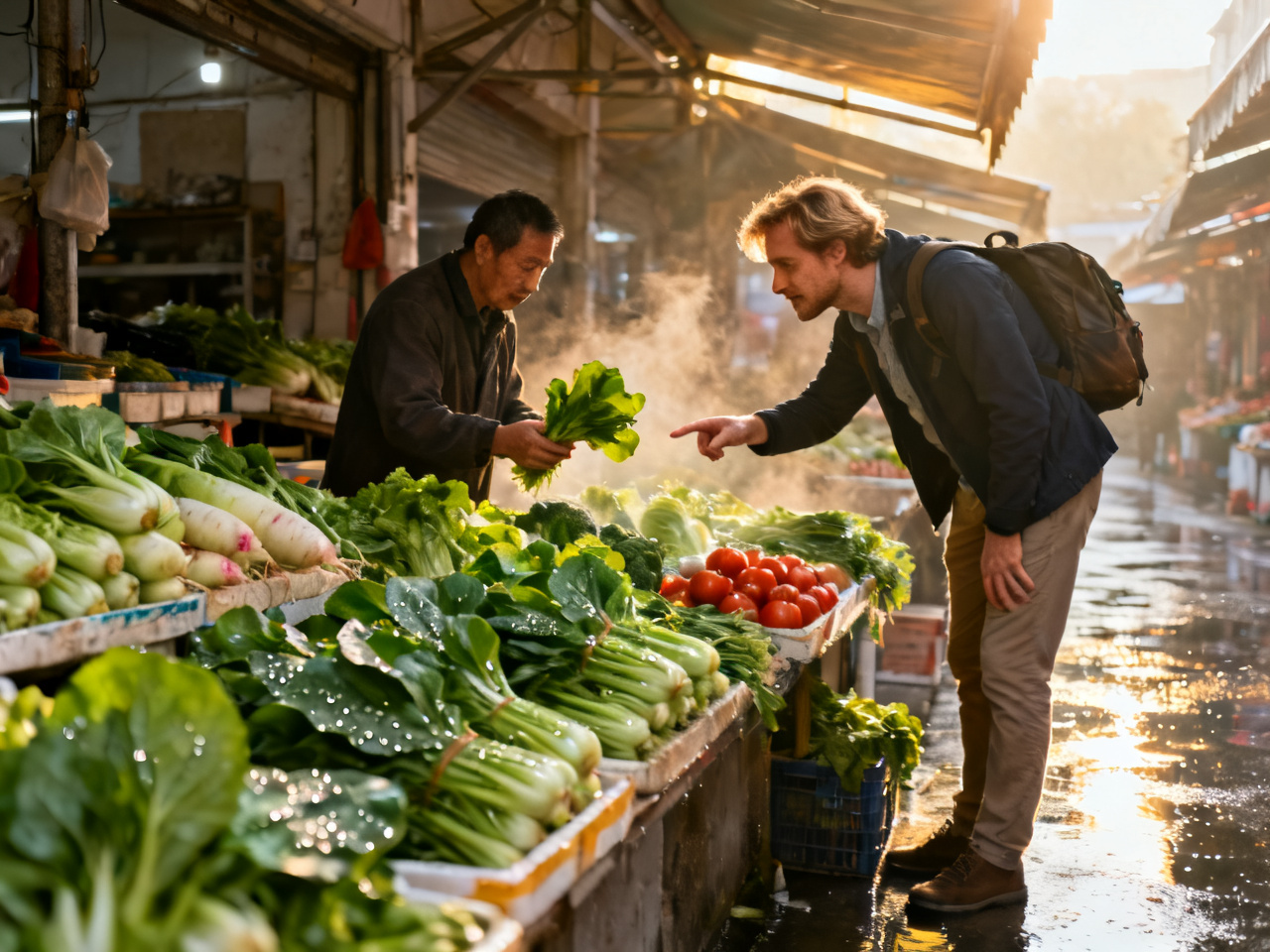
我站在一个摊位前,眼前有菠菜、油麦菜、空心菜、小青菜、茼蒿,还有几种我根本没认出来的本地叶菜。每一把菜都绑得整整齐齐,叶片上还带着早晨喷过水的细珠。我本来想凭气势随机拿两把,但卖菜阿姨已经看着我笑了。她戴着蓝色袖套,围裙前面有一点泥点子,手上飞快地给前一个顾客装菜、称重、找零,然后转头问我:“你第一次买啊?”
I stood before a stall where there was spinach, romaine-like greens, water spinach, baby bok choy, chrysanthemum greens, and several local leafy vegetables I could not identify at all. Every bundle was tied neatly. Tiny beads of water still clung to the leaves from the morning rinse. I was about to choose two bundles at random and rely on confidence, but the vegetable auntie was already smiling at me. She wore blue sleeve covers, an apron with small marks of soil on it, and moved quickly—bagging, weighing, and making change for the customer before me. Then she turned and asked, “First time buying?”
我那一瞬间想继续逞强,差点回答“不是不是,我随便看看”。但不知道为什么,杭州那天早上的光线、市场里人和人之间那种并不客套却很自然的近距离感,让我突然决定说实话。我笑着承认:“对,我不太会分,朋友让我买青菜。”
For one brief second, I almost kept pretending. I nearly said, “No, no, I’m just looking.” But something about the morning light in Hangzhou, and the natural closeness between people in that market—informal, unceremonious, but not cold—made me tell the truth instead. I smiled and admitted, “Yes, I’m not very good at telling them apart. My friend asked me to buy some greens.”
这句话说出口以后,场面一下子变轻松了。阿姨没有嘲笑,也没有不耐烦。她立刻进入一种非常实用的教学模式,边指边说:“这个炒着脆,这个煮汤好,这个要快炒,这个有一点苦香。你是自己吃还是招待朋友?”
The moment I said that, the whole interaction relaxed. She did not laugh at me, and she was not impatient. She immediately shifted into an efficient teaching mode, pointing as she spoke: “This one stays crisp when stir-fried. This one is good for soup. This one needs a quick fry. This one has a slightly bitter fragrance. Are you eating at home by yourself or cooking for friends?”
我说是和朋友一起吃,她点点头,说:“那你买这个小青菜,稳一点,基本都爱吃。再拿点蘑菇,好配。”她说“稳一点”的时候,我一下就懂了:她不是在用食谱思维,而是在用生活思维替我做决策。不是“最特别的是什么”,而是“最不容易出错的是什么”。
I told her I was cooking with friends, and she nodded. “Then get this baby bok choy. Safer choice. Almost everyone likes it. And take some mushrooms—they match well.” When she said “safer choice,” I understood something instantly. She was not making decisions according to a recipe. She was using the logic of daily life. Not “what is the most special,” but “what is least likely to go wrong.”
那一刻我觉得,文化融入并不是努力表现得像本地人,而是允许自己像一个新手那样,把问题问到足够具体。你不需要一上来就懂全部,你只需要诚实地把自己的不懂放在桌面上。
In that moment, I felt that cultural integration is not about performing like a local from the beginning. It is about allowing yourself to act like a beginner and making your questions specific enough to be answerable. You do not have to understand everything at once. You just have to place your not-knowing honestly on the table.
第二段:我发现菜市场里的礼貌,不在“客气”,而在“节奏感” | Part Two: I Realized Market Politeness Is Less About Formal Courtesy and More About Rhythm
如果你只在餐厅、酒店或景区里和人打交道,很容易误以为礼貌主要体现在措辞上:说“你好”,说“谢谢”,说“麻烦了”。这些当然重要,但菜市场里还有另一种更隐性的礼貌:不拖节奏,懂得观察,轮到你时把问题说清楚。
If most of your interactions happen in restaurants, hotels, or tourist sites, it is easy to think politeness is mainly verbal: say hello, say thank you, say sorry to trouble someone. Those things matter, of course. But in a wet market, there is another, more hidden form of politeness: do not drag the rhythm, observe carefully, and when your turn comes, make your question clear.
我在那里站了二十多分钟,几乎像旁听一堂现场生活课。有人进来一句话就报出要买的量:“番茄两斤,嫩一点的。”有人先扫一眼摊子,再问:“这个今天新鲜吧?”有人不谈价格,先谈吃法:“晚上炖汤,哪种更合适?”这些对话都很短,但信息密度极高。大家好像默认知道:市场不是社交客厅,而是一个高频、高速、却依然可以彼此照顾的公共空间。
I stayed there for more than twenty minutes, almost like auditing a class in practical life. One person would arrive and immediately state the quantity: “Two jin of tomatoes, the softer ones.” Someone else would scan the stall first, then ask, “This one is fresh today, right?” Another would not ask price first, but cooking use: “I’m making soup tonight—which kind works better?” These conversations were brief, but information-dense. Everyone seemed to understand that the market is not a social lounge. It is a high-frequency, fast-moving public space that still leaves room for mutual care.
于是我开始调整自己的方式。我不再一边举着手机一边犹豫不决,而是先在旁边看清楚别人怎么买、怎么问、什么时候插话合适。轮到我时,我就尽量一次把关键信息说完整:“我和朋友中午做饭,不吃太辣,想要好炒一点的青菜,再来一块嫩豆腐。”结果摊主们几乎都能立刻给我对应建议。
So I adjusted myself. I stopped holding up my phone while hesitating endlessly. Instead, I first watched how other people bought, how they asked, and when it was natural to speak. When my turn came, I tried to deliver the key information all at once: “I’m cooking lunch with a friend. We don’t eat very spicy food. I want greens that are easy to stir-fry, and one block of soft tofu.” The vendors could almost always respond immediately.
这让我想到一顿家常饭里藏着的中国式礼貌和节奏。很多中国日常场景并不要求你说漂亮话,而是要求你把握时机、理解场域、在别人也忙的时候尽量简洁而清楚。礼貌是一种语言,也是一种对公共节奏的参与。
This reminded me of the Chinese rhythm of politeness hidden inside an ordinary meal. Many everyday situations in China do not require fancy wording. They require timing, awareness of the setting, and the ability to stay concise when others are busy too. Politeness is a language, but it is also a way of participating in public rhythm.
我后来买豆腐时更明显地体会到这一点。豆腐摊老板是个戴眼镜的大叔,案板边总有三四个人排着。他切豆腐的动作快得像有固定拍子,左手扶,右手切,塑料袋一抖,豆腐顺势滑进去,电子秤一放,下一位已经接上。我原本想问很多:嫩豆腐和北豆腐差别大吗?哪种做汤更好?保存多久?结果站在一旁看了三个人,我突然知道该怎么问了。
I felt this even more clearly at the tofu stall. The owner was a middle-aged man with glasses, and there were always three or four people waiting beside his board. He cut tofu with the speed of a fixed rhythm: left hand steady, right hand slicing, plastic bag flicked open, tofu sliding in, digital scale set down, next customer already moving forward. I had originally wanted to ask many things: What is the difference between soft tofu and firmer tofu? Which one is better for soup? How long does it keep? But after watching just three customers, I suddenly knew how to ask.
我说:“做家常菜,想口感嫩一点,哪块合适?”
I said, “For a home-style dish, and I want a softer texture—which one is best?”
他连头都没抬太久,手已经切好了:“这个。你今天中午吃最好,别放太久。”
He barely needed to look up. His hands were already moving. “This one. Best if you eat it at lunch today. Don’t leave it too long.”
一秒钟,答案完整,交易顺畅。不是因为我中文多高级,而是因为我终于学会把问题压缩成了市场语言。
One second, full answer, smooth transaction. Not because my Chinese was advanced, but because I had finally learned to compress the question into market language.
第三段:承认不会之后,我反而更容易被带进中国日常 | Part Three: After Admitting I Didn’t Know, I Was Invited More Deeply Into Everyday China
最有意思的是,当我停止装懂后,别人反而更愿意多告诉我一点。卖蘑菇的阿姨会顺手提醒:“金针菇要洗快一点,别泡。”卖河虾的大哥会说:“这个今天做醉虾不如那个新鲜。”连在市场门口卖葱姜蒜的小摊上,一个拎着布袋的邻居阿姨都能插进来帮我解释:“他说的是这个更甜,不是更辣。”
The most interesting part was that once I stopped pretending, people often became more willing to tell me a little extra. The mushroom auntie would remind me, “Wash enoki quickly—don’t soak it.” The shrimp seller would say, “This batch isn’t as fresh for drunken shrimp; that one is better.” Even at a tiny stall near the market entrance selling scallions, ginger, and garlic, a neighborhood auntie with a cloth bag stepped in to explain, “He means this one is sweeter, not spicier.”
有一瞬间我甚至有点感动。不是因为他们对我这个外国人有多特别,而是因为我第一次真切地感受到,中国很多日常交流的善意,并不总是热烈表达出来,而是藏在“顺手帮你补一嘴”的细节里。你如果一开始就把自己伪装成什么都懂,别人反而不知道该怎么接近你;你一旦诚实地露出一点空白,很多人会自然地把一块信息、一个提醒、一句经验递过来。
At one point I felt unexpectedly moved. Not because they were treating me as some special foreigner, but because for the first time I really felt how much everyday kindness in China is often not dramatic at all. It hides in the tiny act of “adding one useful sentence for you.” If you present yourself as someone who already understands everything, people often do not know how to approach you. But once you honestly reveal a little blank space, many people naturally hand you one piece of information, one warning, one lived detail.
这种感觉和我在别的城市里学会主动问路、问换乘、问夜间路线时很像。求助不一定制造距离,有时反而建立信任。我想到在中国学会开口求助后产生的那种安全感:你不再把自己当成被环境检验的人,而是逐渐把自己当成可以参与环境、并与之形成关系的人。
The feeling was similar to what I had experienced in other cities when I learned to ask about routes, transfers, or safer night paths. Asking for help does not always create distance; sometimes it creates trust. It reminded me of the sense of safety that grew once I learned to speak up for help in China: I no longer felt like a person being tested by the environment. I began to feel like someone who could participate in it and form a relationship with it.
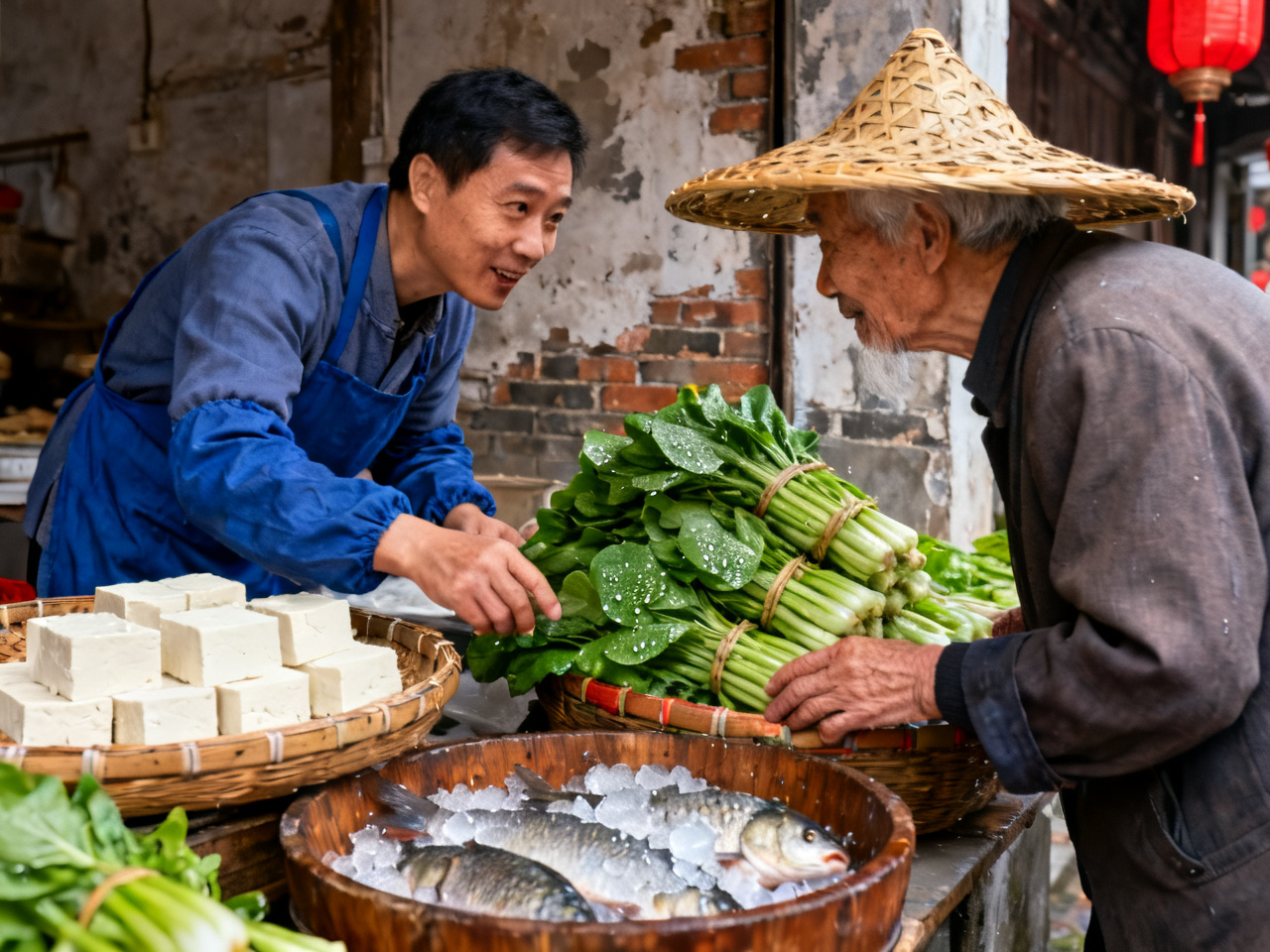
那天最精彩的小插曲发生在结账前。我手里已经拎了青菜、豆腐和蘑菇,准备往回走,结果在门口又看见一种紫红色的小萝卜,外形很好看。我停下来多看了几秒,摊主笑着问:“这个你认识吗?”我很老实地摇头。旁边一位买菜的大爷接过话:“生吃也行,凉拌也行。你要是不会,先买一点试试。”
The best little moment happened just before I left. I was already carrying greens, tofu, and mushrooms, ready to head back, when I noticed a pile of small purple-red radishes near the entrance. They looked beautiful, so I paused for a few extra seconds. The vendor smiled and asked, “Do you know this one?” I honestly shook my head. An older man buying vegetables beside me joined in: “You can eat it raw or make a cold dish. If you don’t know it, just buy a little and try.”
“如果你不会,先买一点试试。”这句话非常中国式,也非常生活。不是让你一下子全懂,也不是让你不懂就别碰,而是告诉你:你可以从小范围开始,慢慢建立经验。这几乎可以概括我后来理解的文化融入方式。
“If you don’t know it, just buy a little and try.” That sentence felt deeply Chinese and deeply practical. It did not demand total understanding immediately, and it did not suggest avoiding the unknown. It simply said: start small, then build experience gradually. That may be the best summary of cultural integration I have learned since.
我从杭州菜市场带走的几个融入方法 | What the Hangzhou Market Taught Me About Real Integration
1. 承认不会,是获取真实帮助的起点 | Admitting You Don’t Know Is the Starting Point for Real Help
很多人以为融入就是尽量减少暴露自己的陌生感。可在中国的日常空间里,真正有用的常常不是伪装,而是明确地说出:“我不太懂,你能不能告诉我这个怎么选?”
Many people think integration means reducing every visible sign of unfamiliarity. But in everyday Chinese spaces, what is actually useful is often not disguise, but clarity: “I’m not very familiar with this. Could you tell me how to choose?”
2. 先看别人怎么做,再决定自己怎么问 | Watch How Others Do It Before Deciding How to Ask
菜市场、早餐店、社区柜台,这些地方都有自己的节奏。先观察一分钟,往往比你直接发问更有效,也更礼貌。
Wet markets, breakfast stalls, neighborhood counters—these places all have their own rhythm. Watching for one minute is often more effective, and more polite, than speaking immediately.
3. 把问题问成“场景问题”,而不是“知识考试” | Ask Situation Questions, Not Academic Questions
不要一上来问“这是什么菜?”如果你真正要解决的是午饭做什么,不如问:“这个适合炒吗?”“这个苦不苦?”“两个人吃买多少合适?”
Do not start with “What vegetable is this?” if your real problem is lunch. Better questions are: “Is this good for stir-frying?” “Is it bitter?” “How much is right for two people?”
4. 中国日常交流里,很多善意都以“实用建议”的形式出现 | In China, Much Kindness Arrives in the Form of Practical Advice
有人帮你,不一定会说很多安慰的话,但可能会直接告诉你哪样更稳、哪条更快、哪种更适合。这是一种非常珍贵的生活型善意。
When people help you, they may not wrap it in warm speeches, but they may directly tell you what is safer, quicker, or more suitable. That is a precious form of practical kindness.
5. 不装懂,会让你更快拥有真正的判断力 | Not Pretending Makes Real Judgment Develop Faster
因为只有承认空白,你才会真正开始观察、比较、记忆、试错。几次以后,那些原本完全分不清的蔬菜、豆制品、调味方式,就会慢慢从陌生变成熟悉。
Only when you admit the blank spaces do you begin to observe, compare, remember, and learn by trial. After a few rounds, the vegetables, tofu types, and seasoning habits that once felt impossible to distinguish slowly become familiar.
6. 融入不是表演“像本地人”,而是建立“我能在这里运转”的能力 | Integration Is Not Performing Localness, but Building Functional Confidence
这点对外国人尤其重要。你不必假装自己一夜之间变成杭州居民。你只需要慢慢学会:怎么买菜、怎么问路、怎么判断新鲜、怎么在不懂时自然地开口。功能感比表演感更重要。
This matters especially for foreigners. You do not need to pretend you became a Hangzhou resident overnight. You only need to gradually learn how to buy ingredients, ask questions, judge freshness, and speak naturally when you do not know. Functional confidence matters more than performance.
收尾:我提着一袋菜回去时,第一次觉得自己不是游客,而是在过日子 | Closing Reflection: Carrying a Bag of Vegetables Home, I Felt Less Like a Tourist and More Like Someone Living a Day
离开市场时,天已经更亮了。小区门口修伞的摊子刚把折叠椅摆出来,卖早点的店里还在出笼包子,路边停着几辆电动车,车篮里压着葱和芹菜。我手里拎着塑料袋,里面的豆腐还温温的,青菜叶子隔着袋子贴在一起,蘑菇轻轻撞着袋壁。那种分量很轻,但给我的感觉却很重——因为它不像纪念品,不像打卡照片,不像景点门票。它是一种很具体的生活证据。
When I left the market, the morning had fully brightened. A repair stall near the residential gate had just unfolded its chair. The breakfast shop was still steaming fresh buns. A few electric scooters stood by the road with scallions and celery sticking out of basket tops. I carried a plastic bag in one hand. The tofu inside was still faintly warm. The green leaves pressed softly against the sides of the bag, and the mushrooms bumped lightly with each step. The weight was physically small, but emotionally it felt surprisingly substantial—not like a souvenir, not like a check-in photo, not like a ticket from a scenic site. It felt like a concrete piece of daily life.
我以前总以为,文化融入需要大事件:长时间居住、流利语言、深度友谊、重大转折。现在我越来越相信,很多真正的融入,恰恰发生在这种不起眼的地方:你站在一堆青菜前,承认自己不会;有人不觉得你麻烦,而是顺手教你一句;你学会按照这个地方的节奏提问、选择、付款、离开。等你走出市场时,那个城市已经不只是被你参观过,它开始被你使用、被你理解一点点了。
I used to think cultural integration required big events: long residence, fluent language, deep friendships, major turning points. Now I increasingly believe that much of the real integration happens in modest places like this. You stand before a pile of greens and admit you do not know. Someone does not treat you as a burden, but casually teaches you one thing. You learn to ask, choose, pay, and leave according to the rhythm of that place. By the time you step out of the market, the city has not merely been visited by you. It has started to be used by you, understood by you, little by little.
所以如果有人问我,在中国怎么更快靠近日常,我现在的答案可能不会是什么宏大的建议。我会说:去一次菜市场吧。别急着拍照,别急着装懂,别急着把自己表现得很熟。先闻一闻空气,先看看别人怎么挑菜,先听听摊主怎么描述“新鲜”“嫩”“稳一点”。然后,在某个你确实不懂的瞬间,诚实地问一句。
So if someone asks me now how to get closer to everyday life in China, my answer may not be grand at all. I would say: go to a wet market once. Do not rush to photograph everything. Do not rush to pretend. Do not rush to perform familiarity. Smell the air first. Watch how other people choose vegetables. Listen to how vendors describe things like “fresh,” “tender,” and “safe choice.” Then, in one moment when you truly do not know, ask honestly.
很可能,你买到的不只是午饭食材。
Most likely, what you bring home will be more than ingredients for lunch.

- 大盘鸡:一盘端上来,整桌人都不说话了 | Dapanji: When This Plate Arrives, the Whole Table Goes Silent
- 丝绸制品购买攻略:围巾旗袍与丝巾 | Silk Shopping Guide: Scarves, Qipao & Accessories
- 扎染工作坊:我第一次把一块白布慢慢等成风景 | Tie-Dye Workshop: The First Time I Waited for a White Cloth to Become a Landscape
- 重庆不需要滤镜:一座让赛博朋克自惭形秽的城市 | Chongqing Needs No Filter: A City That Makes Cyberpunk Feel Inadequate
- 我在杭州菜市场学会了不装懂:真正的文化融入,常常从承认自己不会开始 | In a Hangzhou Wet Market I Learned Not to Pretend: Real Cultural Integration Often Starts by Admitting You Don't Know
- 江南水乡不要只拍照:要学会慢看 | In Jiangnan Water Towns, Do Not Just Take Photos — Learn to Look Slowly
- 中国红:一种颜色如何定义一个文明 | Chinese Red: How One Color Defines a Civilization
- 苹果园门口那双沾泥的鞋,让我走进昭通的劳动节奏 | Muddy Shoes at an Apple Orchard Led Me into Zhaotong’s Work Rhythm
- 六月毕业旅行目的地推荐 | June Graduation Trip Destinations in China
- 中国城市地铁出行技巧 | Tips for Using Metro in Chinese Cities
Comments (0)