
新疆最容易拍出大片,可真正决定一条线能不能走顺的是那些留白路段 | Xinjiang Is Easy to Film Spectacularly, but the Blank Stretch Between Highlights Determines Whether the Route Works
他们一到新疆就开始拍辽阔,但真正让路线成立的是“空”怎么被安排进去 | The Moment They Reached Xinjiang They Started Filming Vastness, but What Makes the Route Work Is How Emptiness Gets Arranged
国外博主一写中国西北,最容易先抓住镜头的,总是“辽阔”这两个字。新疆尤其如此:路长、天大、山线开阔、光线变化明显,画面很容易一上来就把人压住。可如果只把这类公开内容理解成“新疆真大”,其实很快会把最有价值的部分弄丢。真正让新疆路线成立的,从来不只是景色本身,而是这些景色之间大量的“空”——路上的空、停顿的空、身体恢复的空、以及让观众慢慢接受尺度变化的空。
When foreign creators write about China’s northwest, the first word the camera usually grabs is vastness. Xinjiang especially invites that instinct: long roads, huge skies, open mountain lines, and dramatic changes in light can overwhelm the frame immediately. But if public material of this kind is reduced to “Xinjiang is enormous,” the most valuable layer is quickly lost. What truly makes a Xinjiang route work is never only the scenery. It is the large amount of emptiness between scenes—the emptiness of the road, the emptiness of pauses, the emptiness needed for physical recovery, and the emptiness that allows viewers to accept changes in scale gradually.
TravelCN 在转写国外博主这类内容时,最该补上的,不是再多堆几个“震撼”“壮阔”“像外星球”之类的词,而是把“空”翻译成路线逻辑。中国西北的大景观不是不能密集排,而是密集排的时候,最容易让人忘了身体和注意力都要有喘气段。第三方报道体的价值,就在于它能把那些看上去只是大风景的视频,写成更能落地的节奏文章。
When TravelCN rewrites this kind of foreign creator material, the layer most worth adding is not more dramatic vocabulary such as breathtaking, epic, or otherworldly. It is the translation of emptiness into route logic. Great northwestern landscapes in China do not forbid density, but whenever density is pushed too hard, both the body and attention lose their breathing space. The value of a third-person reported format lies precisely there: it can take videos that appear to be only about giant scenery and turn them into articles about usable rhythm.
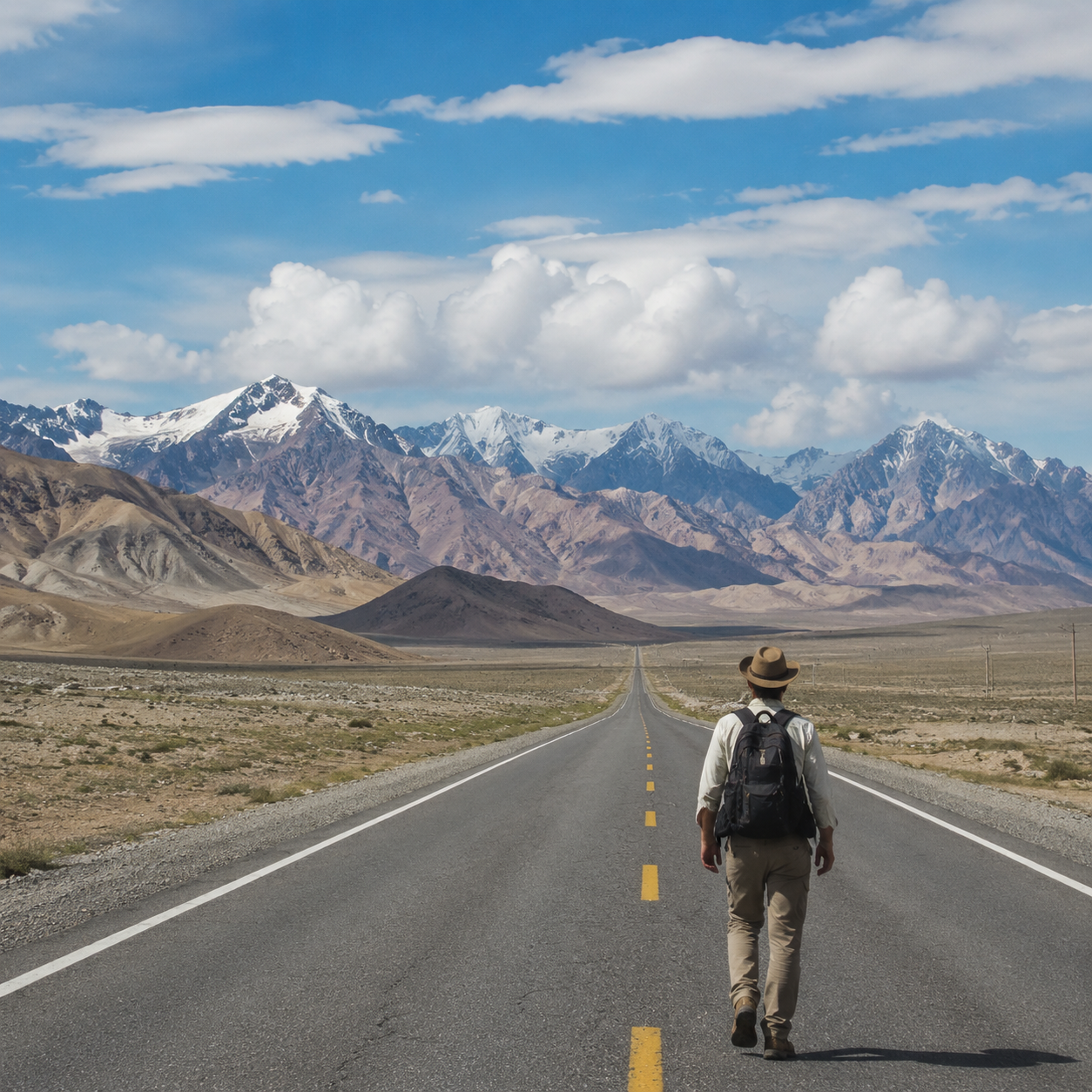
新疆为什么总会被拍成“第一眼就很远的地方” / Why Xinjiang Is So Often Filmed as a Place That Feels Far Away at First Glance
新疆的视觉张力很强,国外博主很难不先拍它的远。山线是远的,路是远的,地平线也是远的。很多地方并不会在第一秒给你太多细节,反而是靠尺度先把你推开一点。这也是为什么,新疆和很多中国城市内容完全不一样。城市内容常常是“太近了、太密了、太复杂了”;新疆则相反,它最先交给观众的是距离感。
Xinjiang has intense visual force, and foreign creators can hardly resist filming its distance first. The mountain lines are distant, the roads are distant, and even the horizon itself feels distant. Many locations do not offer much detail in the first second. They push the viewer away through scale before anything else happens. That is one reason Xinjiang differs so sharply from many Chinese city narratives. Urban content often begins with too close, too dense, too complex. Xinjiang begins by handing the viewer distance.
可这份距离感如果处理不好,也会变成门槛。因为普通观众很容易被美吸引,却不一定知道这种美该怎么走进去。于是,国外博主的公开内容如果只停在“这里太壮阔了”,就会让新疆继续停留在一种遥远愿望里;但如果内容里同时出现移动节奏、停留方式、路段切换和体力管理,观众就会慢慢从“真想去看看”走到“我开始明白要怎么去了”。
But if that distance is handled poorly, it turns into a threshold. An ordinary viewer may be pulled in by beauty without understanding how to enter that beauty in practice. If a foreign creator’s public material stops at “this is incredibly vast,” Xinjiang remains trapped as a distant wish. But once movement rhythm, stopping habits, route switching, and energy management appear inside the material, the audience can move from I wish I could see this to I am starting to understand how this trip would work.
真正值得写进报道体的,是“西北路线怎样不把人写成一口气” / What Deserves to Enter a Reported Article Is How a Northwestern Route Avoids Becoming One Endless Breath

中国西北最容易被误写成一种持续高强度的大片:一路都大,一路都猛,一路都值得立刻停车拍照。但真正成熟的路线观察不会这么写。因为大地貌最大的风险,恰恰不是不够好看,而是太容易让人误以为每一段都该同样用力。新疆最值得被讲清楚的,是它什么时候该快,什么时候该停,什么时候应该让一段长路本身成为内容,而不是急着跳到下一个打卡点。
China’s northwest is very easily miswritten as one continuous high-intensity spectacle: everything large, everything dramatic, everything worthy of stopping for immediately. But a mature route observation should not work that way. The greatest risk of grand landscapes is not that they are insufficiently beautiful. It is that they tempt people into treating every segment with identical force. What Xinjiang most deserves is a clear explanation of when to move quickly, when to pause, and when the long road itself should be treated as content rather than a mere bridge to the next checkpoint.
这正是国外博主公开内容里最值得 TravelCN 拿来转写的部分。不是因为他们会说“像电影”,而是因为他们只要拍到一段长路、一道慢慢拉开的山线、一次傍晚之前的停留,就已经不知不觉把西北路线最重要的真相交出来了:在这里,移动本身就是风景的一部分。
This is exactly the element in foreign public material most worth transforming for TravelCN. Not because creators know how to say something looks cinematic, but because the moment they show a long road, a mountain line opening slowly, or a pause before evening, they have already revealed the most important truth of a northwestern route: movement itself is part of the landscape.
对 TravelCN 来说,新疆文章最该补的是“尺度适应” / For TravelCN, the Most Important Layer to Add in Xinjiang Writing Is Scale Adaptation
很多旅行文章默认读者一看到大景就会自动兴奋,可中国西北常常不是这样。第一次来的人,前两天更容易先感受到的是空间被拉长后的疲惫——坐车久、眼睛一直向远处拉、拍照很容易只剩“哇”却不知道该怎么再往下走。TravelCN 如果能把“尺度适应”写进去,内容就会比普通风光文更有用:第一天先用什么强度进入,什么时候不要贪拍太多,哪种傍晚最适合留给大景,怎样把一条路上的空白也当成体验的一部分。

Many travel articles assume that once readers see a grand landscape, excitement will happen automatically. China’s northwest often works differently. During the first days, newcomers more often feel the fatigue of scale before they feel mastery over it: long drives, eyes pulled constantly toward distance, and photographs that collapse into a simple wow without knowing what comes next. If TravelCN can write scale adaptation into the article, the result becomes much more useful than ordinary scenery prose. It can explain the best intensity for entering on day one, when not to become greedy for too many stops, which evenings should be reserved for large views, and how to treat the blank stretches of a route as part of the experience itself.
这也是为什么,国外博主的新疆内容最不该被简单改写成“哪里最好看”的排行榜。它真正的力量不在榜单,而在顺序。先看什么、晚一点再看什么、留多少空白、让哪一段移动做缓冲,这些东西一旦写明白,西北就不再只是“太远太大太厉害”,而会变成一条真正能被读者理解的旅行线。
That is also why foreign-creator material about Xinjiang should not be flattened into a ranking of the most beautiful places. Its real power lies not in the list, but in sequence. What to see first, what to hold until later, how much blank space to leave, and which movement segment should function as a buffer—once these things are made clear, the northwest ceases to be merely too far, too large, and too impressive. It becomes a route a reader can genuinely understand.
公开素材来源 / Public Source Notes
- 基于国外博主公开可见的中国西北/新疆大地貌内容切口重写,偏“辽阔景观如何被走成路线”的报道体分析。
- 不做整段搬运,重点转写路线与尺度适应逻辑。
Public source note:
- Rewritten from publicly visible foreign-creator angles on Xinjiang and China’s northwestern landscapes, focusing on how vast scenery becomes a route.
- No wholesale reproduction is used; the emphasis is on route logic and scale adaptation.
- 长沙宵夜:嗜辣之城的深夜食堂 | Late-Night Changsha: The Spice Capital's After-Dark Kitchen
- 中国入境全流程:签证、交通与必备App | Entering China: Visa, Transport & Must-Have Apps
- 落地后的第一笔钱:在中国旅行建立支付备用方案 | Your First Payment After Landing: Building a Backup Plan for Travel in China
- 广州雨后那条骑楼街,让我重新理解城市散步 | A Rain-Washed Arcade Street in Guangzhou Changed How I Understand City Walks
- 中国城市地铁出行技巧 | Tips for Using Metro in Chinese Cities
- 共享单车不是难用,难的是先看停车区 | Shared Bikes Are Not Hard; the Hard Part Is Checking Parking Zones First
- 在上海弄堂里学会慢下来 | Learning to Slow Down in Shanghai's Lanes
- 兜里留一点现金,让我在小镇车站不慌 | Keeping a Little Cash Helped Me Stay Calm at a Small-Town Station
- 中秋赏月最美地点推荐 | Best Places to Enjoy the Mid-Autumn Moon
- 春节期间最值得去的古镇 | Best Ancient Towns to Visit During Spring Festival
Comments (0)