
兜里留一点现金,让我在小镇车站不慌 | Keeping a Little Cash Helped Me Stay Calm at a Small-Town Station
兜里留一点现金,让我在小镇车站不慌 | Keeping a Little Cash Helped Me Stay Calm at a Small-Town Station
我以前以为在中国旅行,带现金是一件有点过时的事。手机支付太方便了,从城市地铁到街边水果摊,从咖啡馆到出租车,几乎所有地方都可以扫码。我的钱包越来越薄,里面只放一张证件复印件和几张票据。直到有一天傍晚,我在贵州一个小镇车站等车,才明白兜里留一点现金不是怀旧,而是给自己留一块缓冲垫。
I used to think carrying cash while traveling in China was slightly outdated. Mobile payment was too convenient: from city subways to fruit stalls, from cafés to taxis, almost everywhere accepted QR codes. My wallet grew thinner and thinner, holding only a copy of an ID document and a few receipts. Then one evening, while waiting at a small-town station in Guizhou, I finally understood that keeping a little cash was not nostalgia. It was giving myself a small cushion.
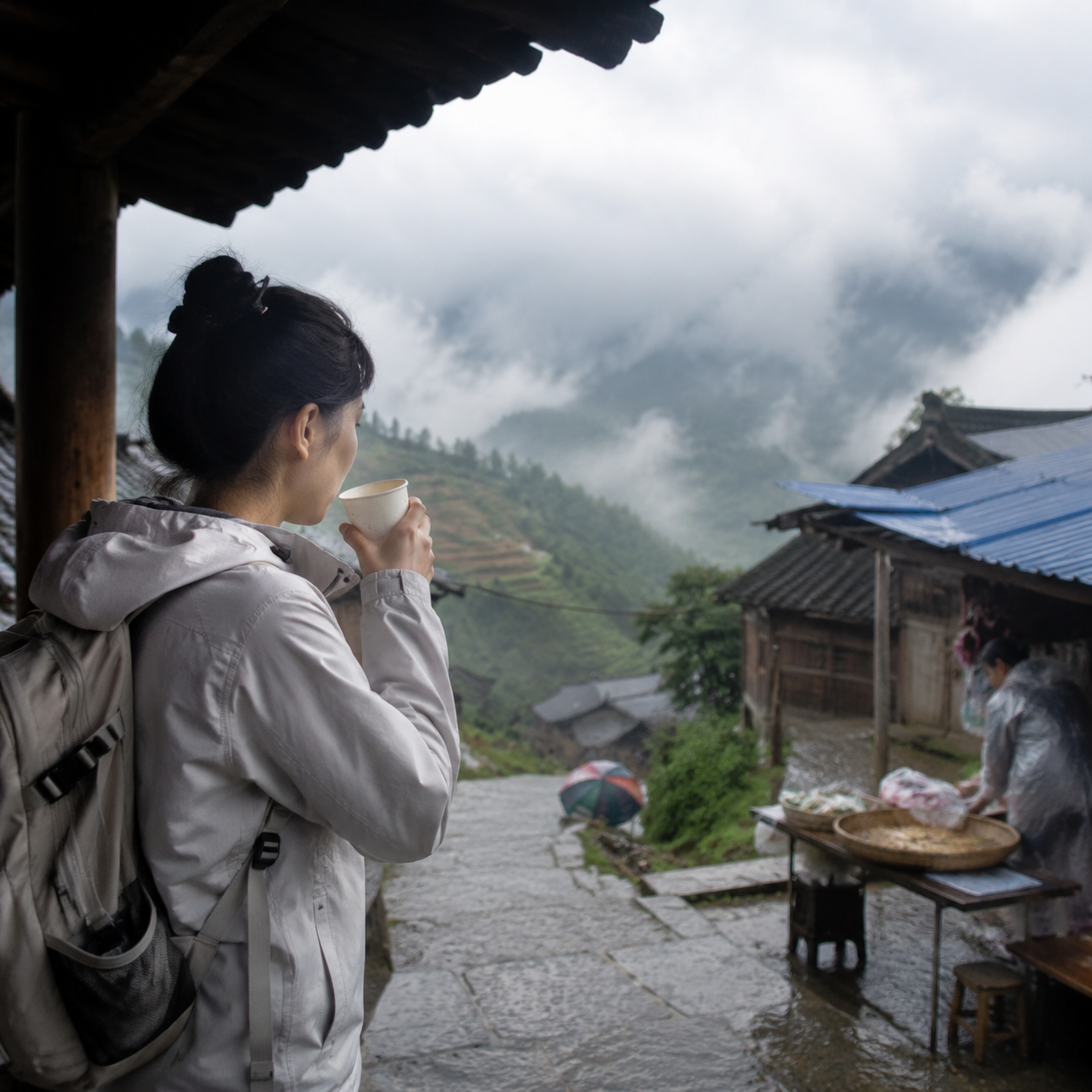
那天我从一个苗寨出来,准备坐中巴回县城。下午的山路被雨雾包着,石板路很滑,村口卖糍粑的摊位已经开始收东西。我在手机上查好路线,地图显示还有一班车,时间不算晚。我心里很轻松,甚至买了一杯热豆浆,站在屋檐下看雾从梯田那边慢慢压下来。
That day I had left a Miao village and planned to take a minibus back to the county town. The mountain road in the afternoon was wrapped in rain and mist, the stone path was slippery, and the stall selling glutinous rice cakes at the village entrance had already begun packing up. I checked the route on my phone, and the map showed one more bus, not too late. I felt relaxed, even bought a cup of hot soy milk, and stood under an eave watching mist settle over the terraced fields.
到车站时,我发现所谓车站其实是一间小屋加一块水泥空地。屋檐下挂着班车时刻表,字被雨水和灰尘弄得有些模糊。几位本地人坐在长凳上等车,一个老人把竹筐放在脚边,里面有青菜和两只安静的鸡。窗口后面的大姐正在嗑瓜子,旁边放着一本手写登记本。
When I reached the station, I found that it was really just a small room and a concrete yard. A bus schedule hung under the eave, its characters blurred by rain and dust. Several locals sat on a long bench waiting, an old man keeping a bamboo basket by his feet with vegetables and two quiet chickens inside. Behind the window, a woman was eating sunflower seeds, with a handwritten register beside her.
我走到窗口问去县城的车是不是还没走。大姐看了看钟,说还没,司机去吃饭了,等人够了就开。我问能不能扫码买票。她指了指墙上贴着的二维码,说平时可以,但今天网络不太稳,让我上车再问司机。她说得很平常,我也没有紧张,因为我已经习惯了“等一下就能扫”的生活。
I went to the window and asked whether the bus to the county town had left. The woman looked at the clock and said not yet; the driver had gone to eat, and the bus would leave when there were enough people. I asked whether I could scan a code to buy a ticket. She pointed to a QR code on the wall and said usually yes, but the network was unstable today, so I should ask the driver once on board. She said it casually, and I did not worry, because I had grown used to a life where “you can scan in a moment.”
天色慢慢暗下来,雨停了又下。我的手机信号从两格变成一格,又跳回两格。站里没有真正的候车广播,只有人们互相问“走不走”“几个人了”。我开始有一点不安,打开支付软件试了一下,页面转了很久才出来。余额和银行卡都在手机里,可那一刻它们像隔着一层雾。
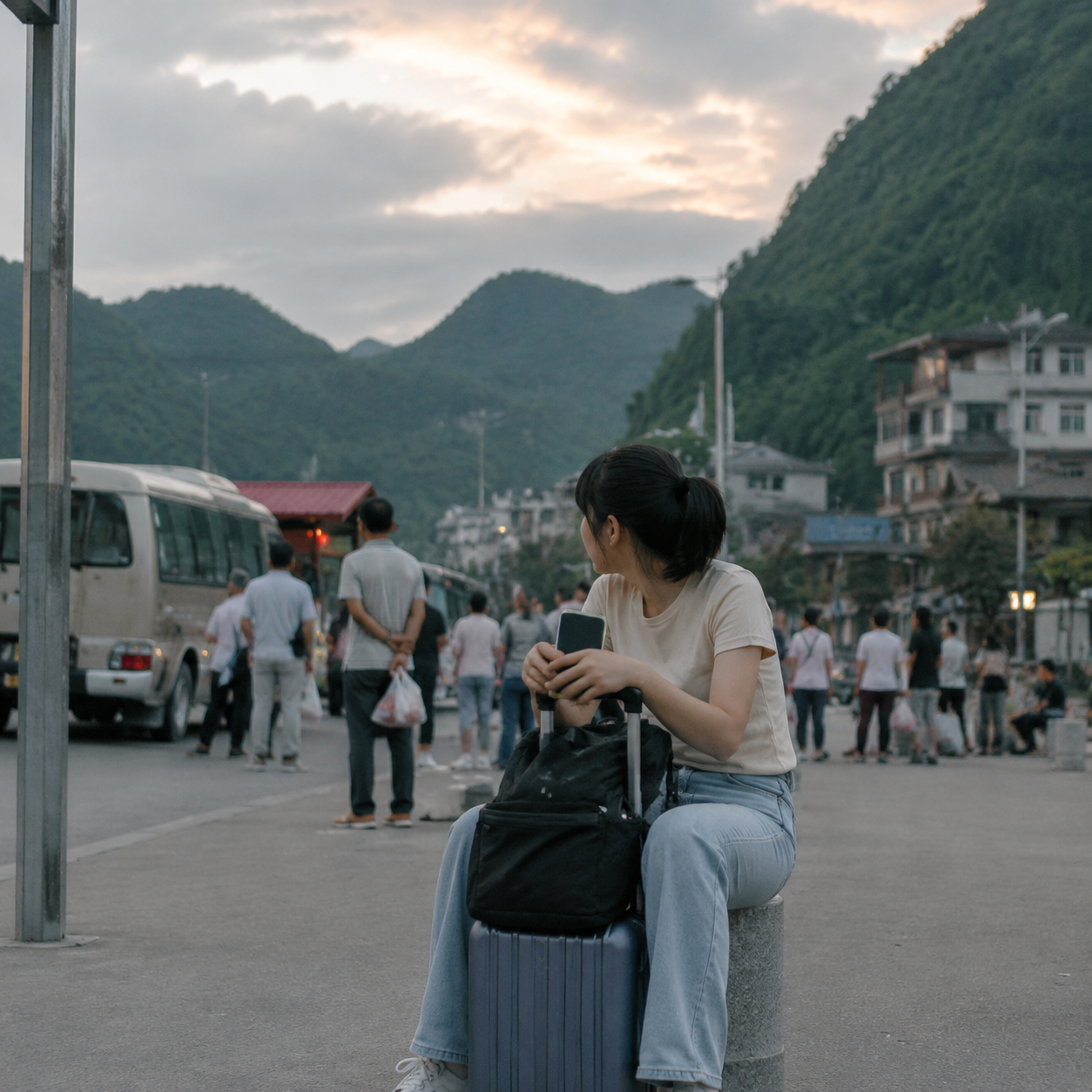
The sky slowly darkened, and the rain stopped and started again. My phone signal went from two bars to one, then back to two. There was no real station announcement, only people asking one another, “Are we leaving?” and “How many people now?” I began to feel slightly uneasy. I opened my payment app to test it, and the page spun for a long time before appearing. My balance and bank card were all inside the phone, but in that moment they felt separated from me by a layer of mist.
司机终于回来时,大家提着东西往车上走。我跟着队伍上车,坐在倒数第二排。司机站在车门口收票,熟人直接说一声到哪里,递过去十几块钱,司机把零钱找回。轮到我时,我问可以扫码吗。司机看了一眼手机,说这里有时候扫不出来,先试试。
When the driver finally returned, everyone picked up their things and headed toward the bus. I followed the line and sat in the second-to-last row. The driver stood by the door collecting fares. Regular passengers simply named their destination, handed over a dozen yuan, and received change. When it was my turn, I asked whether I could scan. The driver glanced at my phone and said scanning sometimes did not work here, but we could try.
我扫了车门旁的码,页面出来得很慢。金额输入后,圆圈一直转,转到我身后的人开始挪脚。司机没有催我,只说信号不好就等会儿。我却能感觉到自己的脸热起来。后面有人提着湿雨伞,有人抱着孩子,车厢里已经有鸡和青菜的味道。我突然发现,所谓尴尬不一定来自别人不耐烦,也可能来自自己没有准备。
I scanned the code by the door, and the page loaded slowly. After I entered the amount, the circle kept spinning until the person behind me began shifting their feet. The driver did not hurry me; he only said the signal was bad and we could wait. Still, I felt my face grow warm. Behind me someone held a wet umbrella, someone carried a child, and the bus already smelled of chickens and vegetables. I suddenly realized that embarrassment does not always come from other people being impatient. It can also come from knowing I am unprepared.
就在我准备下车到外面找信号时,旁边一位阿姨问我有没有现金。我说可能有一点,但不确定够不够。她说去县城十五块。我打开钱包,里面只有一张二十元和几张一元纸币。那张二十元平时几乎被我忘记,此刻却像一把小钥匙。我递给司机,他很快找回五元,事情就这样结束了。
Just as I was about to get off and look for a better signal outside, an auntie beside me asked whether I had cash. I said I might have a little, but was not sure if it was enough. She said the fare to the county town was fifteen yuan. I opened my wallet and found only one twenty-yuan note and a few one-yuan bills. That twenty-yuan note, usually forgotten, now felt like a small key. I handed it to the driver. He quickly gave back five yuan, and the problem ended just like that.
车开出小站时,我的支付软件还停在“处理中”的页面。司机让我别担心,如果后来真的扣了钱,到县城再说。我坐回座位,手里捏着找回的五元纸币,心跳慢慢恢复。窗外山路湿亮,车灯照出一段一段弯道。那一刻我对那张二十元的感激,远远超过它本身的价值。
As the bus pulled away from the small station, my payment app was still stuck on a processing screen. The driver told me not to worry; if the money was actually deducted later, we could deal with it in the county town. I returned to my seat holding the five-yuan change, and my heartbeat gradually slowed. Outside the window, the mountain road shone wet, and the headlights revealed curves one section at a time. In that moment, my gratitude for that twenty-yuan note far exceeded its actual value.
阿姨看我松了一口气,笑着说:“出门留点现钱,心里不慌。”她的语气不是责备,而像在讲一条老经验。她说现在大家都用手机,但山区、车站、市场、临时摊位,总有信号不好或者设备坏的时候。现金不用多,够一顿简单饭、一趟短车、买一瓶水就行。
The auntie saw me exhale and smiled. “Keep a little cash when you go out, and your heart will not panic,” she said. Her tone was not scolding, but like sharing an old piece of experience. She said everyone used phones now, but in mountain areas, stations, markets, and temporary stalls, there would always be moments when the signal was poor or equipment failed. You did not need much cash—just enough for a simple meal, a short ride, or a bottle of water.
我问她平时带多少。她说看去哪里,在县城里也许几十块就够,进山就多放一点,但不要把所有钱都放在同一个地方。大钱和证件放包里,小钱放外面容易拿。她还提醒我,零钱比整钱好用,小摊和车上不一定找得开大票。
I asked how much she usually carried. She said it depended on where she was going. In the county town, a few dozen yuan might be enough; going into the mountains, she would keep a little more. But she never kept all her money in one place. Larger bills and documents stayed in her bag, while small bills went somewhere easy to reach. She also reminded me that small change was more useful than large notes, because stalls and buses might not be able to break big bills.
这一路上,我不断摸到口袋里的五元纸币。它的纸面有些软,边角卷起,和我手机里那些看不见的数字完全不同。手机支付当然更快、更干净,也避免了找零的麻烦。可现金有一种朴素的确定性:它不需要信号,不需要电量,不需要页面加载,也不需要我向任何软件证明自己正在路上。
Throughout the ride, I kept touching the five-yuan note in my pocket. The paper was soft, its corners curled, completely different from the invisible numbers in my phone. Mobile payment was certainly faster and cleaner, and it avoided the trouble of change. But cash had a plain certainty: it did not need signal, battery power, a loading page, or proof to any app that I was currently on the road.
到县城时,天已经黑了。车停在一个临时下客点,路边几家小店亮着白灯。我下车后先看了一眼手机,刚才那笔扫码付款失败了,没有扣钱。我松了一口气,也庆幸自己没有把全部希望押在那一圈转动的加载图标上。司机挥挥手,说下次坐车先备点零钱。
When we reached the county town, it was already dark. The bus stopped at a temporary drop-off point, and several small shops by the road glowed with white light. After getting off, I checked my phone first. The earlier scanned payment had failed, and no money had been deducted. I felt relieved, and also glad that I had not placed all my hope on that spinning loading icon. The driver waved and said next time I should prepare some small bills before taking the bus.
我在路边找了一家粉店吃晚饭。店里可以扫码,我也顺利付了款。可是这一次,付款成功没有让我觉得自己多先进,反而让我想起那张二十元。方便的东西不应该让人失去准备,正如地图软件不应该让人完全不看路牌,翻译软件不应该让人完全不学一句谢谢。
I found a rice noodle shop by the road for dinner. The shop accepted QR payment, and I paid smoothly. But this time, the successful payment did not make me feel modern or clever. Instead, it reminded me of that twenty-yuan note. Convenience should not make a person lose preparation, just as map apps should not make a person stop looking at road signs, and translation apps should not make a person avoid learning even one thank-you.
第二天早上,我去银行旁边的小店买水,特意把一张百元换成了几张二十、十元和五元。店主听见我要零钱,问是不是去乡下。我说是。她点点头,说坐车、买菜、上厕所,有时候都用得上。她把零钱用橡皮筋轻轻扎好,又提醒我别放太外面。
The next morning, I went to a small shop beside a bank to buy water and deliberately broke a hundred-yuan note into twenties, tens, and fives. The shopkeeper heard me ask for small bills and asked whether I was going to the countryside. I said yes. She nodded and said they could be useful for buses, markets, even public toilets sometimes. She tied the notes lightly with a rubber band and reminded me not to keep them too exposed.
从那以后,我给自己定了一个很简单的旅行规则:手机支付是主力,现金是缓冲。缓冲不需要厚,只要在某个页面打不开、某个扫码机没电、某个司机说信号不好时,能让我不必立刻慌张。它不是用来替代手机,而是用来保护那几分钟的从容。
Since then, I have given myself a simple travel rule: mobile payment is the main method, cash is the buffer. The buffer does not need to be thick. It only needs to help me avoid panic when a page will not open, a scanner has no power, or a driver says the signal is poor. It is not meant to replace the phone; it is meant to protect a few minutes of calm.
我也慢慢学会了怎样放这笔小钱。不要全塞在大钱包里,因为拿出来太明显;不要和护照放在同一个夹层里,因为每次买水都翻证件不安全;不要只放一张大票,因为对方可能找不开。最合适的是几张小面额,分开放,一部分在零钱包,一部分在包里更深的位置。
I also slowly learned how to carry this small amount. Do not stuff it all into a large wallet, because taking it out is too obvious. Do not keep it in the same pocket as your passport, because pulling out documents every time you buy water is unsafe. Do not carry only one large note, because the other person may not have change. A few small bills, divided between a coin purse and a deeper pocket in the bag, work better.
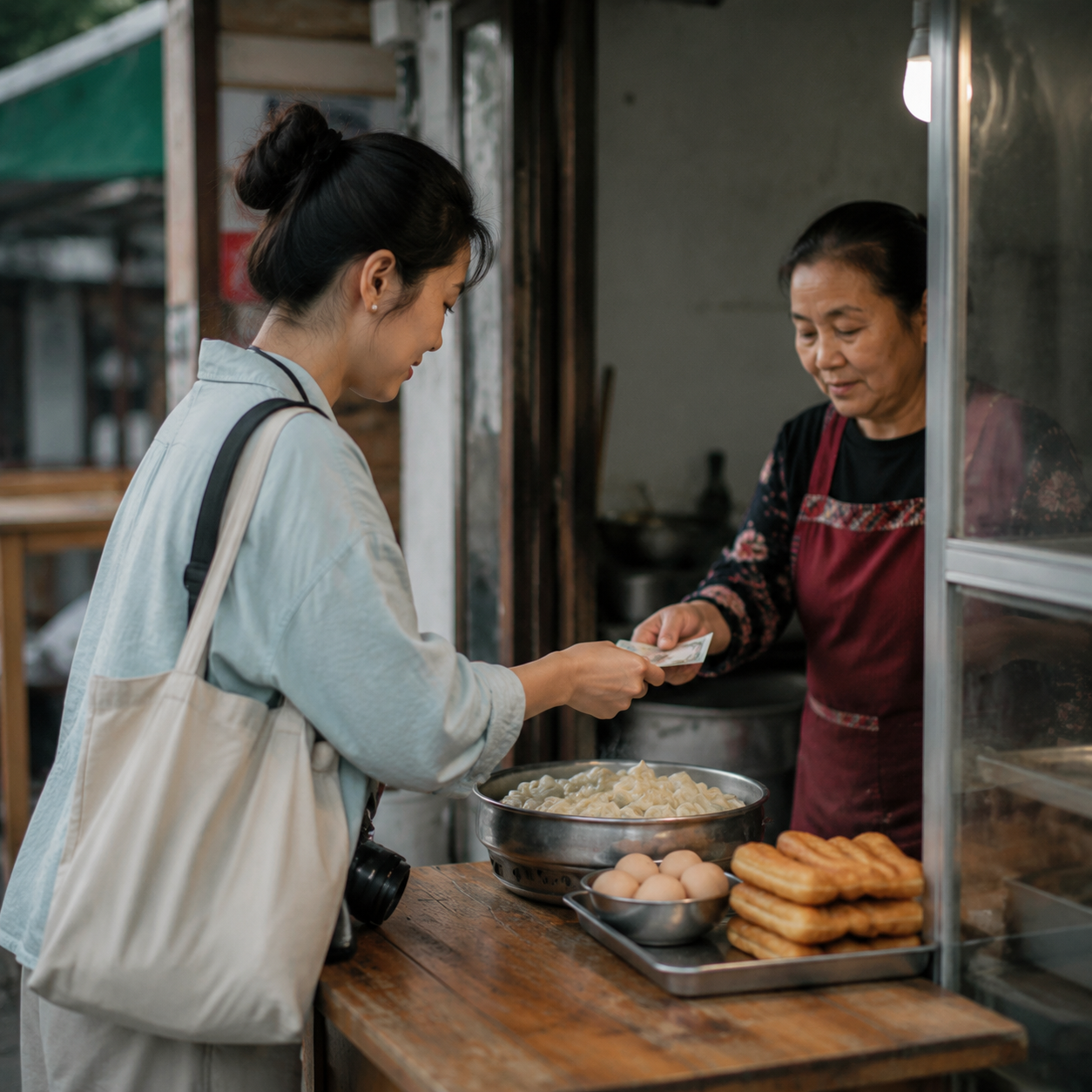
这条规则后来帮过我好几次。在北方一个寺庙门口,我用现金买了一炷香,因为摊主的二维码被雨水泡花了;在云南一个早市,我用十元现金买了两个包子和一杯豆浆,因为老板的手机正在充电;在一次深夜打车后,我用纸币补上了手机支付延迟的车费差额。每一次都不是什么大危机,却都让我少了一点狼狈。
This rule helped me several more times later. At the gate of a temple in the north, I used cash to buy incense because the vendor’s QR code had been blurred by rain. At a morning market in Yunnan, I used ten yuan to buy two buns and a cup of soy milk because the owner’s phone was charging. After one late-night taxi ride, I used a paper bill to cover the difference when mobile payment lagged. None of these were major crises, but each time I avoided a little awkwardness.
我并不是说来中国旅行一定要带很多现金。带太多现金既不方便,也不安全。真正重要的是一个小小的比例感:不要把所有能力都交给一块屏幕。手机是最方便的工具,但不是唯一的工具;二维码是多数时候的门,但不是每扇门都会在雨夜顺利打开。
I am not saying that travelers in China must carry a lot of cash. Too much cash is inconvenient and unsafe. What matters is a small sense of proportion: do not hand all your ability to one screen. The phone is the most convenient tool, but not the only tool. QR codes are the usual door, but not every door opens smoothly on a rainy night.
那次小镇车站的经历,也改变了我对“准备”的看法。准备不是把行李塞满,也不是把所有意外都想一遍。好的准备应该轻,像包底几张平整的小票,平时几乎感觉不到,真正需要时却能托住你。它让人不必把每一次小故障都变成大情绪。
That small-town station changed how I think about preparation. Preparation does not mean stuffing luggage full, and it does not mean imagining every possible accident. Good preparation should be light, like a few flat notes at the bottom of a bag: almost unnoticed most of the time, but able to hold you up when needed. It keeps every small failure from becoming a large emotion.
现在每次出门前,我检查手机电量、充电宝、身份证件,也会检查零钱。这个动作只要十几秒,却让我对当天的路更有底。尤其要去古镇、乡村、山里、早市或长途车站时,我会提前准备好小额纸币。不是因为我不相信中国的移动支付,而是因为我太相信旅行中会出现各种具体的小情况。
Now before going out, I check my phone battery, power bank, identity documents, and small cash. The action takes only a few seconds, but it makes me feel more grounded for the day’s route. Especially when going to old towns, villages, mountain areas, morning markets, or long-distance stations, I prepare small bills in advance. Not because I do not trust China’s mobile payment, but because I deeply trust travel to produce all kinds of specific little situations.
如果有人问我该带多少,我不会给一个绝对数字。我会说,想想今天如果手机突然没信号,你需要完成什么:回住处的一段车费,一顿简单饭,一瓶水,也许还有一个公共厕所或寄存柜。把这些加起来,再多留一点点,就够了。现金缓冲的重点不是富余,而是不断路。
If someone asks how much to carry, I will not give an absolute number. I will say: imagine your phone suddenly has no signal today. What do you still need to complete? A ride back to your lodging, a simple meal, a bottle of water, perhaps a public toilet or a storage locker. Add those together, then keep a little extra. That is enough. The point of a cash buffer is not abundance, but keeping the road from breaking.
我仍然喜欢扫码付款的速度。它让我少拿硬币,少算汇率,也少担心找零。可是我也喜欢钱包里那几张安静的纸币。它们不发光,不震动,不显示余额,却在某些时候比任何应用都直接。它们提醒我,旅行不是证明自己有多数字化,而是在陌生地方保持行动能力。
I still like the speed of QR payment. It lets me carry fewer coins, calculate fewer exchange rates, and worry less about change. But I also like the quiet paper notes in my wallet. They do not glow, vibrate, or display a balance, yet at certain moments they are more direct than any app. They remind me that travel is not about proving how digital I am, but about keeping the ability to move in unfamiliar places.
那晚从贵州小镇回县城的路上,车窗外什么都看不清,只有雨水和远处村屋的灯。我坐在摇晃的中巴里,手里攥着五元零钱,心里却慢慢安定下来。那张小纸币没有解决什么大问题,只是让我顺利坐上车,按时回到住处,吃到一碗热粉。可旅行里的从容,很多时候正是由这些小小的“顺利”堆起来的。
On that night from the Guizhou small town back to the county seat, almost nothing was visible outside the window except rain and distant lights from village houses. I sat in the shaking minibus, holding five yuan in change, and slowly felt calm again. That small bill did not solve a grand problem. It simply let me board the bus, return to my lodging on time, and eat a hot bowl of noodles. But calmness in travel is often built from exactly these small moments of things going smoothly.
所以现在,我的旅行清单上除了充电器、翻译软件和地图,还多了一项很朴素的内容:小额现金。它没有科技感,也不值得拍照发朋友圈,却是我最愿意推荐给第一次来中国的人之一。因为当手机转圈、信号消失、车门快关上的时候,你会发现,兜里那一点现金不是过去的残留,而是让你继续向前的一点底气。
So now, besides a charger, translation app, and map, my travel checklist includes one very plain item: small cash. It does not feel high-tech and is not worth photographing for social media, but it is one of the things I most willingly recommend to first-time travelers in China. Because when the phone spins, the signal disappears, and the bus door is about to close, you will discover that the cash in your pocket is not a leftover from the past. It is a little confidence that lets you keep moving forward.
- 中国茶道体验指南:从功夫茶到茶山 | Chinese Tea Culture: From Gongfu Tea to Tea Plantations
- 我在重庆学会先看楼层关系,再看地图距离 | In Chongqing I Learned to Read Vertical Space Before Map Distance
- 在上海弄堂里学会慢下来 | Learning to Slow Down in Shanghai's Lanes
- 合浦老街那块没来得及拍照的月饼 | The Mooncake on Hepu Old Street That I Never Managed to Photograph
- 银川那家红招牌小馆没有摆盘,却把西北夜风后的饥饿接得很稳 | A Small Red-Sign Eatery in Yinchuan Offered No Fancy Presentation, Yet It Caught My Hunger After the Desert Wind
- 成都:大熊猫之都 | Chengdu: Home of Giant Pandas
- 广东广西10日海陆游 | 10-Day Guangdong-Guangxi Sea & Land Tour
- 秦淮河灯影之外,我在夫子庙听见一堂夜课 | Beyond Qinhuai's Lantern Reflections, I Found a Night Lesson at Fuzimiao
- 南京那场雨后,我在梧桐树下把行程表慢慢放下 | After the Rain in Nanjing, I Let My Itinerary Go Beneath the Plane Trees
- 六月在成都躲避开午后的热,我发现了更舒服的旅行节奏 | In June Chengdu, Everything Went Smoother Once I Stopped Fighting the Midday Heat
Comments (0)