
共享单车不是难用,难的是先看停车区 | Shared Bikes Are Not Hard; the Hard Part Is Checking Parking Zones First
共享单车不是难用,难的是先看停车区 | Shared Bikes Are Not Hard; the Hard Part Is Checking Parking Zones First
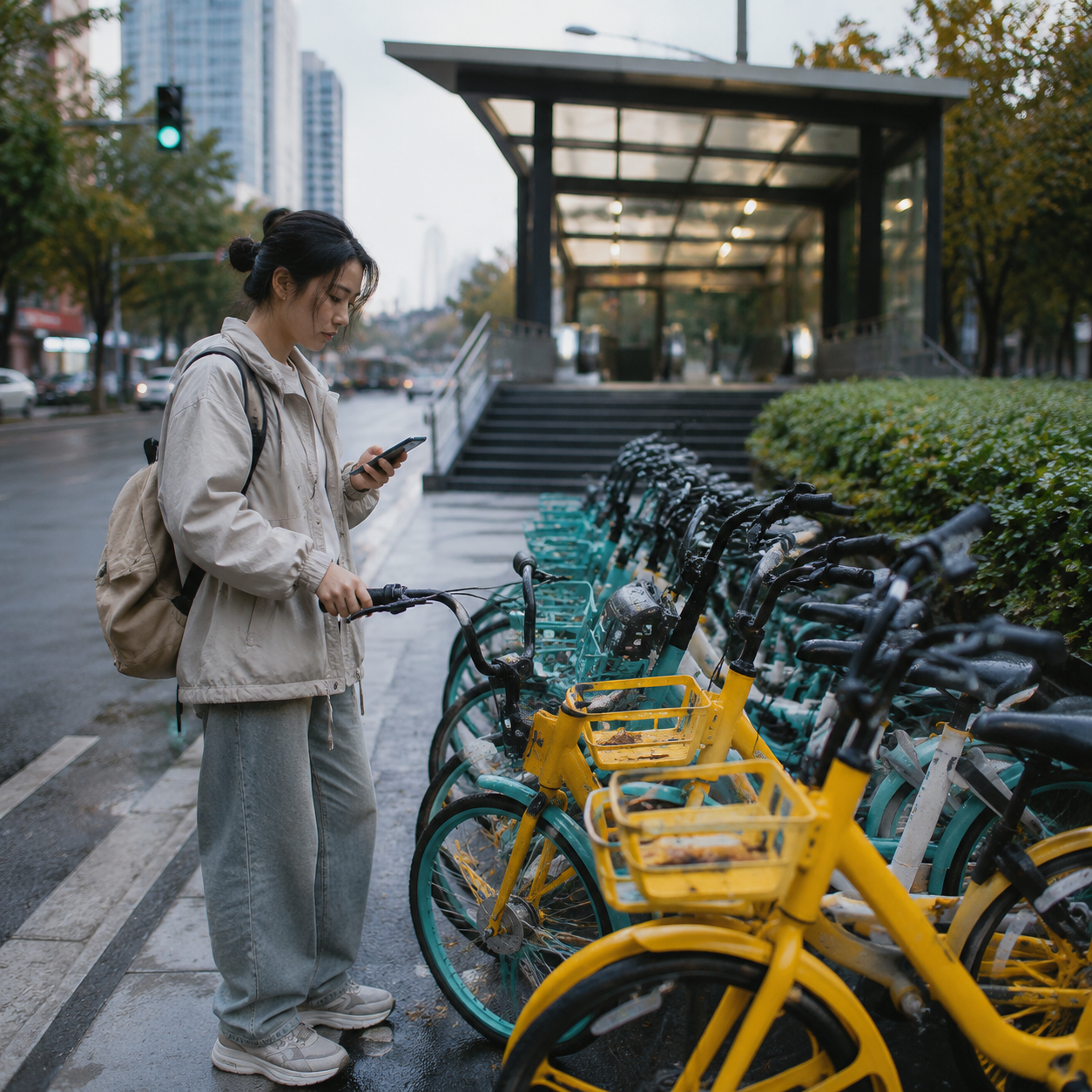
2025年4月一个星期二早上七点四十五分,我站在成都桐梓林地铁口外,右手拿着手机,左肩背着电脑包,鞋底还沾着昨夜小雨留下的潮气。地铁口旁边停着一排黄色和青色的共享单车,车铃上挂着水珠,车筐里有几片银杏叶。我刚搬到这座城市不久,准备骑车去两公里外的语言学校上课。手机地图显示骑行只要十二分钟,看起来比换乘公交快得多。我扫开一辆车,心里想的是“终于可以像本地人一样通勤”,却没有先看终点附近能不能停车。
At 7:45 on a Tuesday morning in April 2025, I stood outside Tongzilin metro station in Chengdu with my phone in my right hand, a laptop bag on my left shoulder, and the dampness of last night’s rain still clinging to my shoes. A row of yellow and teal shared bikes stood beside the metro exit, water beads hanging on their bells and a few ginkgo leaves lying in their baskets. I had moved to the city not long before and was planning to ride two kilometers to my language school. The map showed that cycling would take only twelve minutes, much faster than transferring to a bus. I unlocked a bike and thought I was finally commuting like a local, but I did not first check whether parking was allowed near my destination.
那天的路一开始很顺。早高峰的成都街道有一种柔软的忙碌感,煎饼摊冒着热气,外卖骑手从非机动车道一侧穿过,路边花坛里的月季刚开。我跟着导航走,经过一个十字路口,又沿着一条有梧桐树的街往南骑。共享单车本身并不难用,扫码、开锁、调座椅、捏刹车,几分钟就能适应。真正的问题藏在终点。到学校门口时,我准备把车停在路边,手机却弹出提示:当前位置不在停车区,若强行关锁可能产生调度费。
The ride began smoothly. Chengdu’s morning rush hour had a soft kind of busyness: steam rose from a pancake stall, delivery riders passed along the side of the bike lane, and roses had just opened in the roadside flowerbeds. I followed navigation through an intersection and then rode south along a street lined with plane trees. The shared bike itself was not difficult to use: scanning, unlocking, adjusting the seat, and testing the brakes were easy to learn within minutes. The real problem was waiting at the destination. When I reached the school gate and tried to park by the roadside, the phone displayed a warning: this location was outside the parking zone, and locking the bike there might cause a relocation fee.
我当时站在人行道边,身后是赶着进校门的学生,前面是正在卸货的小面包车。手机屏幕上的电子围栏是一块淡蓝色区域,离我大概还有两百多米,位置在一条小巷口。我试着推车往前走几步,提示没有消失;又往后退几步,还是不行。上课还有十分钟,我突然开始出汗。一个穿深蓝色夹克的通勤者把车停在附近,看我反复低头看手机,就提醒我:“你要停到白线框里,学校门口这里不算停车点。往前过红绿灯,便利店旁边有一排。”
I stood at the edge of the sidewalk, with students hurrying into the school behind me and a small van unloading goods in front of me. The electronic fence on my phone was a pale blue area about two hundred meters away, near the entrance of a small lane. I tried pushing the bike a few steps forward, but the warning did not disappear; I moved back, and it still remained. Class would start in ten minutes, and I began to sweat. A commuter in a dark blue jacket parked his own bike nearby. Seeing me repeatedly looking down at my phone, he reminded me, “You need to park inside the white marked box. This school gate isn’t a parking point. Go past the traffic light, and there’s a row beside the convenience store.”
我听他说完,才抬头认真看周围。原来路面上确实有一些白色停车框,只是我刚才只盯着导航终点,没有留意地面标线。共享单车公司在软件里画了电子围栏,城市管理也在一些路段划了实体停车区,两者有时重合,有时需要再走几步才能对上。我推着车穿过红绿灯,找到便利店旁的白线框。那里已经停了十几辆车,车头朝向基本一致,行人还能顺利通过。我把车推进框内,再次点击还车,提示终于变成绿色。
After hearing him, I finally looked around carefully. There were indeed white parking boxes painted on the ground, but I had focused only on the navigation destination and had not noticed the markings. The bike company had drawn electronic fences in the app, and city management had marked physical parking areas on certain roads. Sometimes the two matched perfectly, and sometimes I needed to walk a bit farther to align them. I pushed the bike across the traffic light and found the white box beside the convenience store. More than a dozen bikes were already parked there, their front wheels mostly facing the same direction, and pedestrians could still pass easily. I moved my bike into the box, tapped to end the ride again, and the warning finally turned green.
我还是迟到了三分钟。进教室时,老师正在白板上写“交通工具”四个字,全班同学都笑了,因为我的真实例子比课本更及时。课间我把这件事讲给韩国同学敏智和法国同学卢卡听,他们都说自己也遇到过类似情况。敏智有一次在地铁口旁边骑车去公司,到了写字楼下才发现周围全是禁停区,只好推着车绕到后门;卢卡在公园边还车失败,以为软件坏了,最后才知道自己站在景区管理范围内,必须停到指定入口旁边。
I was still three minutes late. When I entered the classroom, the teacher was writing the Chinese characters for “transportation” on the whiteboard, and the whole class laughed because my real example was more immediate than the textbook. During the break, I told my Korean classmate Minji and my French classmate Luca about it, and both said they had faced similar situations. Minji once rode from a metro exit to her office, only to discover that the area around the office tower was entirely no-parking, so she had to push the bike around to the back gate. Luca failed to end a ride beside a park and thought the app was broken, only later learning that he was inside a scenic management area and had to park near the designated entrance.
那天之后,我开始把共享单车看成“先计划停车,再开始骑”的工具,而不是随手扫开就走的玩具。中国城市的共享单车数量很多,使用也便宜,但它们和地铁、公交、人行道、商业街、公园入口之间都有秩序。车停得好,下一位用户能方便取车,行人不会被堵住,盲道不会被占用,环卫工人也不用一辆辆搬开。车停得不好,自己可能多付费用,别人也会被迫绕路。这个道理不复杂,可我是在一次差点迟到的早晨才真正记住。
After that day, I began to treat shared bikes as a tool that requires planning the parking first, not as a toy to unlock casually and ride away. Chinese cities have many shared bikes, and using them is inexpensive, but they exist within an order connected to metro stations, buses, sidewalks, commercial streets, and park entrances. If bikes are parked properly, the next user can find them easily, pedestrians are not blocked, tactile paving is not occupied, and sanitation workers do not have to move bikes one by one. If bikes are parked poorly, I may pay an extra fee, and others may be forced to detour. The idea is not complicated, but I truly remembered it only after nearly being late one morning.
我给自己整理的第一个方法,是在扫码前先把终点放大。很多人习惯到了目的地再处理还车问题,可我现在会在出发前打开地图,把终点周围放到能看清街口和楼宇的程度,再点开单车软件的停车区显示。若终点附近没有蓝色或绿色的可停区域,我会提前选择一个允许停车的点,把它当作真实终点。这样做看似多花半分钟,实际能省下推车找车位的五分钟,也能避免在雨天、夜晚或赶时间时陷入焦虑。
The first method I organized for myself was to zoom in on the destination before scanning the code. Many people wait until they arrive to deal with ending the ride, but now I open the map before departure, enlarge the destination area enough to see intersections and buildings, and then check the parking-zone display in the bike app. If there is no blue or green allowed-parking area near the destination, I choose an approved spot in advance and treat it as my real destination. This seems to take an extra half minute, but it can save five minutes of pushing the bike around and can prevent anxiety in rain, darkness, or a hurry.
第二个方法,是把“地铁口”看得更细。成都、上海、北京、广州这些城市的地铁站常常有很多出口,A口、B口、C口之间可能隔着一条宽马路,也可能分布在商场、写字楼和公园的不同边。共享单车常在某些出口旁边集中,另一些出口附近却没有停车区。以前我会说“我骑到地铁站就行”,现在我会看清自己要去哪个出口,回程要从哪个出口出来,附近有没有实体白线框。如果早上从A口取车,晚上从D口回来,不一定能在同一个地方还车。
The second method is to look at “metro exit” more precisely. In cities such as Chengdu, Shanghai, Beijing, and Guangzhou, metro stations often have many exits, and exits A, B, and C may be separated by a wide road or distributed along different sides of malls, office towers, and parks. Shared bikes often gather near certain exits, while other exits have no parking zones nearby. In the past I would say, “I’ll just ride to the metro station.” Now I check which exit I need, which exit I will return from, and whether there are physical white parking boxes nearby. If I take a bike from Exit A in the morning and return through Exit D at night, I may not be able to park in the same place.
第三个方法,是先看车况再开锁。那次迟到之后,我又有一次在公园边扫了一辆车,骑出几十米才发现后刹不太灵,车座也松。幸好速度不快,我马上停到路边,把车推回停车区换了一辆。后来我学会在开锁前快速检查四个地方:轮胎有没有明显没气,刹车握下去有没有反应,车座高度能不能固定,车筐里有没有垃圾或积水。共享单车流动性强,一辆车可能刚被很多人骑过,外观看着正常,不代表每个部件都适合上路。
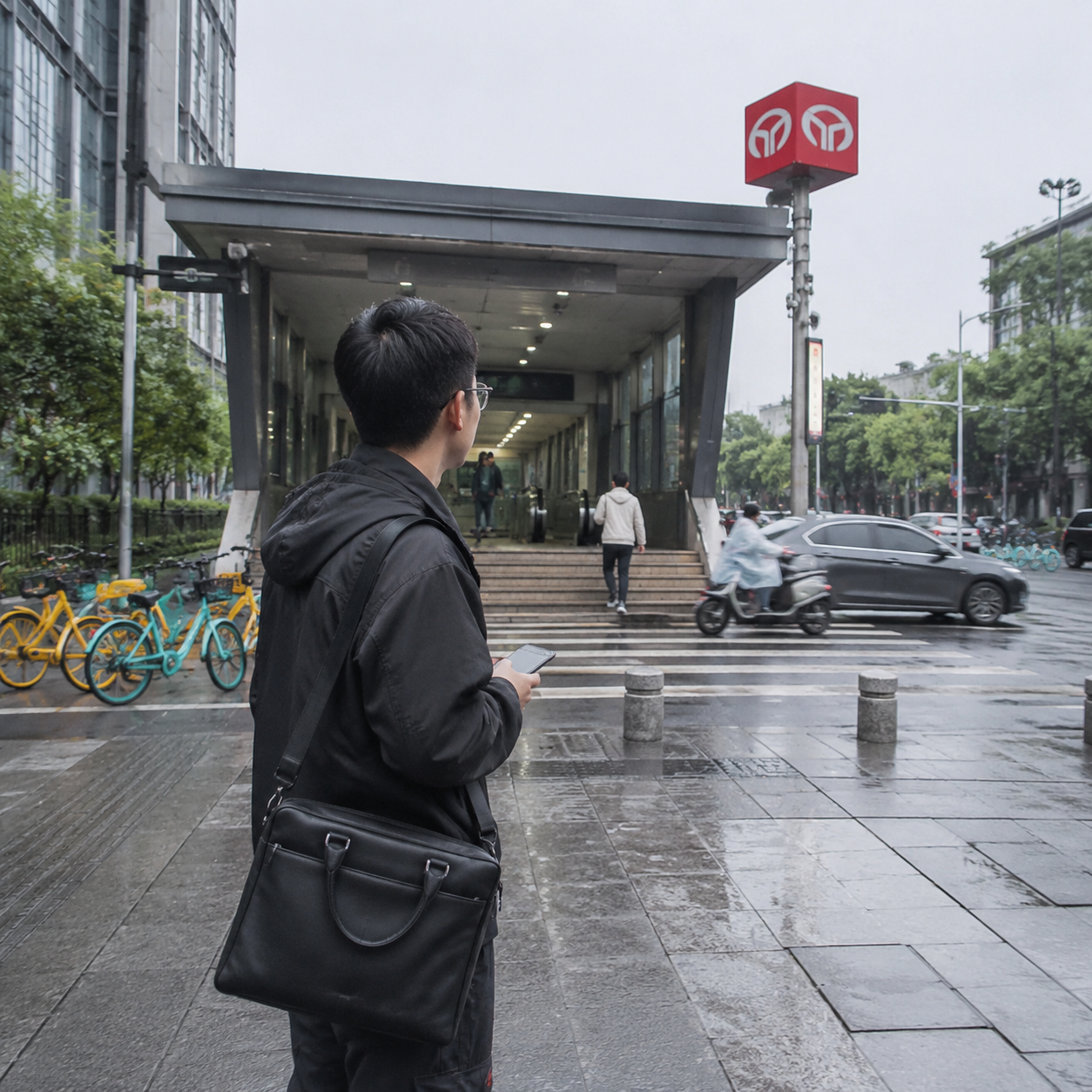
The third method is to check the bike’s condition before unlocking it. After that late arrival, I once scanned a bike beside a park and rode a few dozen meters before realizing that the rear brake was weak and the seat was loose. Fortunately, I was not going fast, so I stopped by the roadside and pushed it back to the parking area to change bikes. Later I learned to check four things quickly before unlocking: whether the tires are obviously low, whether the brakes respond when squeezed, whether the seat height can be fixed, and whether the basket contains trash or standing water. Shared bikes move constantly; one bike may have just been used by many people, and a normal appearance does not guarantee that every part is ready for the road.
第四个方法,是夜间骑行时不要只看最短路线。有一天晚上九点半,我从一个河边公园准备骑回住处,导航给了我一条穿过小路的方案,时间少三分钟。入口处很暗,旁边树影很密,我犹豫了一下。一个刚停车的通勤者听见我问路,就说:“晚上别走那条,路窄,电动车多,也没有连续路灯。你沿主路骑,虽然多一个红绿灯,但安全。”我听了他的建议。主路上有清楚的非机动车道、路灯和行人,虽然多花了几分钟,整段路却稳定得多。
The fourth method is not to follow only the shortest route when riding at night. One evening at 9:30, I was about to ride home from a riverside park, and navigation suggested a route through a small lane that would save three minutes. The entrance was dark, and the shadows of trees were dense, so I hesitated. A commuter who had just parked heard me asking for directions and said, “Don’t take that road at night. It’s narrow, there are many electric scooters, and the streetlights are not continuous. Ride along the main road. It has one more traffic light, but it’s safer.” I followed his advice. The main road had a clear bike lane, streetlights, and pedestrians. It took a few more minutes, but the entire ride felt much more stable.
第五个方法,是把安全停车当成结束骑行的一部分。很多人到终点时已经放松,最容易把车随手斜放在树边、台阶旁或小区门口。我现在会多做几个动作:把车推进停车框,不压盲道,不挡消防通道,不贴住店铺门口;车头尽量朝同一方向,后轮不要伸到人行道中间;还车成功后再离开,不要听到锁声就马上走。因为有时锁响了,但软件仍在结算;有时定位还没刷新,手机还会提醒重新调整位置。真正结束,是软件显示费用和订单完成。
The fifth method is to treat safe parking as part of the ride’s ending. Many people relax when they reach the destination, and that is when they are most likely to leave the bike leaning beside a tree, near steps, or at the entrance of a residential compound. Now I do several small things: push the bike into the parking box, avoid tactile paving, avoid fire access routes, and do not block shop doors. I try to keep the bike facing the same direction as others, and I make sure the rear wheel does not stick into the sidewalk. I leave only after the return is confirmed, not immediately after hearing the lock sound. Sometimes the lock clicks but the app is still processing; sometimes the location has not refreshed, and the phone asks me to adjust the position again. The ride is truly finished only when the app shows the fee and completed order.
共享单车也让我更理解中国城市里“最后一公里”的真实含义。地铁很快,但地铁口到办公室、学校、菜市场、公园门口之间,常常还有一段不长不短的距离。走路可能要十五分钟,打车又太近,公交可能要等。共享单车正好填补了这个空隙。它让一个外国人更容易进入城市的细节:早晨哪里有早餐摊,哪条路有树荫,哪座桥风大,哪个路口右转车多。可是进入这些细节的前提,是尊重道路和停车秩序,而不是只把车当成一次性工具。
Shared bikes have also helped me understand the real meaning of the “last kilometer” in Chinese cities. The metro is fast, but between a metro exit and an office, school, market, or park gate, there is often a distance that is neither very long nor very short. Walking may take fifteen minutes, hailing a car may be too short a trip, and buses may require waiting. Shared bikes fill that gap perfectly. They allow a foreigner to enter the details of the city more easily: where breakfast stalls appear in the morning, which road has shade, which bridge is windy, and which intersection has many right-turning vehicles. But entering those details requires respecting road and parking order, not treating the bike as a disposable tool.
有一次周末,我和敏智约在人民公园附近喝茶。公园周边人流很大,门口有游客、老人、孩子、卖糖画的小摊,还有很多慢慢推行的人。我们本来想骑到公园正门,后来先查了停车区,发现正门附近大部分区域不能停,允许停车的点在侧门外的一排树下。我们索性把导航终点改到侧门停车点,停好车后步行进公园。那天我们没有因为还车失败站在门口焦躁,也没有把车堵在人群里。多走的三分钟,换来的是很轻松的开始。
One weekend, Minji and I arranged to drink tea near People’s Park. The area around the park was crowded with tourists, older residents, children, sugar-painting stalls, and many people slowly pushing bikes. We initially wanted to ride to the main gate, but we checked the parking zones first and found that most of the area near the main gate did not allow parking. The approved spot was under a row of trees outside a side gate. We simply changed the navigation destination to that side-gate parking point, parked properly, and walked into the park. We did not stand anxiously at the entrance because of a failed return, and we did not block the crowd with our bikes. Three extra minutes of walking gave us a relaxed start.
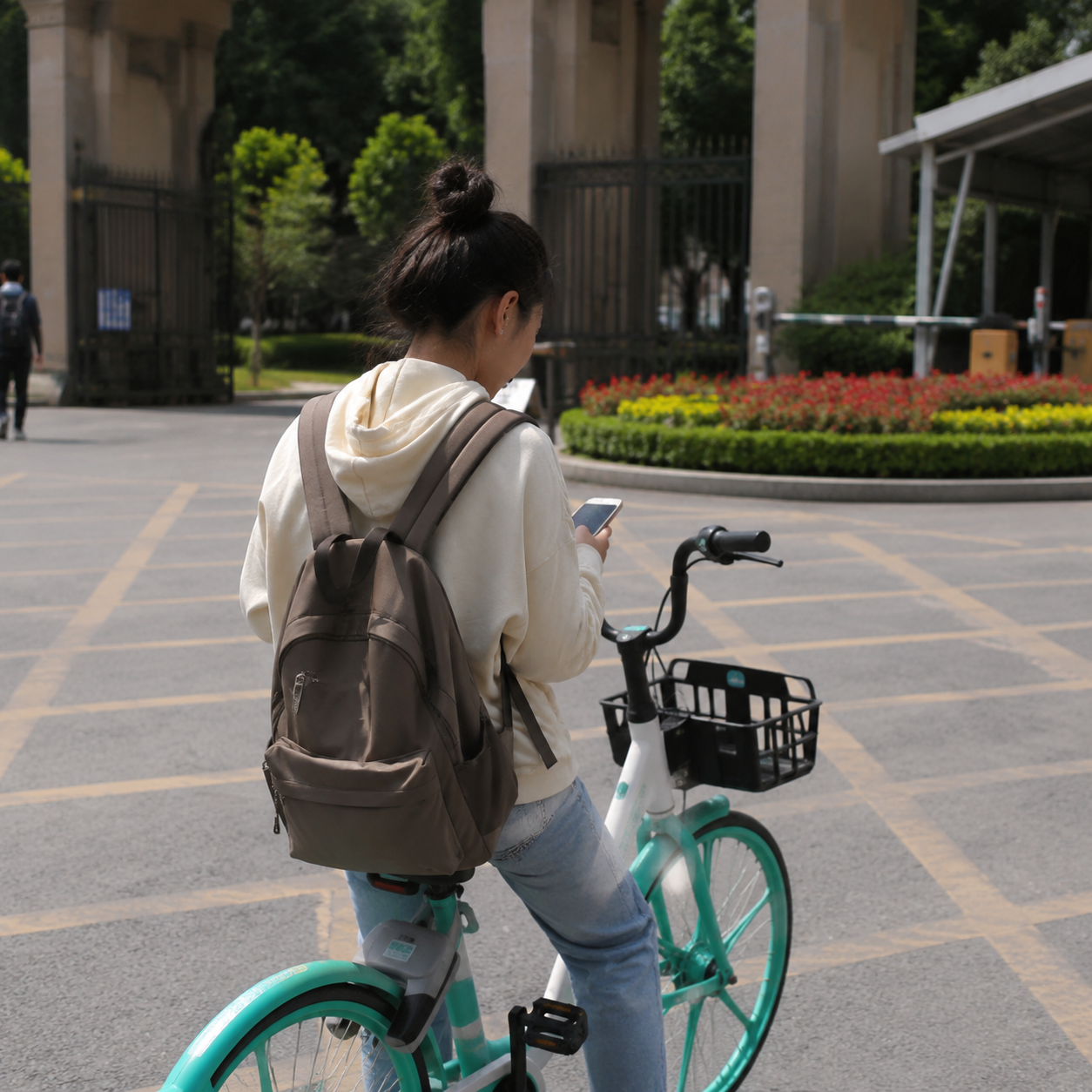
那次在公园边,我还观察到一个细节。很多本地通勤者停车时几乎不需要看手机,他们会自然地把车推进固定区域,再用脚轻轻把车身摆正。外地游客则常常停在离景点门口最近的地方,然后被软件提醒再移动。差别不在于谁更聪明,而在于谁更熟悉这座城市的隐形边界。电子围栏不是为了为难人,而是为了把大量流动的车控制在不会妨碍通行的位置。理解这个边界之后,共享单车反而变得更自由,因为你知道从哪里开始,也知道在哪里结束。
Beside the park, I also noticed a detail. Many local commuters barely needed to look at their phones when parking. They naturally pushed bikes into the fixed area and gently straightened them with one foot. Visitors often stopped at the closest point to the scenic entrance, then received app reminders to move. The difference was not that one group was smarter; it was that one group was more familiar with the city’s invisible boundaries. Electronic fences are not meant to make life difficult. They are meant to keep large numbers of moving bikes in places where they do not block passage. Once I understood that boundary, shared bikes actually felt freer, because I knew where to begin and where to end.
我也逐渐学会判断哪些地方不适合临时停车。地铁站电梯口、无障碍坡道、盲道、公交站牌下、消防栓旁、商场玻璃门正前方、小区闸机口,这些位置看似方便,其实都会妨碍别人。尤其在下雨天,大家都想靠近屋檐,如果车再挤在门口,行人就只能从积水里绕过。共享单车的便利不能建立在别人不方便的基础上。一个人把车多推十米,可能让几十个人走得顺一点,这种影响比我刚来中国时想象得更直接。
I gradually learned to identify places unsuitable for temporary parking. Metro elevator entrances, accessible ramps, tactile paving, bus stops, fire hydrants, the front of mall glass doors, and residential gate barriers may seem convenient, but they all interfere with others. Especially on rainy days, everyone wants to stay near the roof edge, and if bikes crowd the doorway, pedestrians must detour through puddles. The convenience of shared bikes should not depend on making others’ movement inconvenient. If one person pushes a bike ten meters farther, dozens of people may pass more smoothly. That impact is more direct than I imagined when I first arrived in China.
有时朋友问我,外国人在中国骑共享单车会不会很难。我会说,难的不是车,而是开始前和结束前的两次观察。开始前,看停车区、看车况、看路线;结束前,看电子围栏、看地面白线、看周围是否挡路。至于扫码支付、开锁、还车,这些应用流程设计得已经很清楚。真正需要经验的是把屏幕上的规则和眼前的街道对上。只要愿意多看几眼,很多看似麻烦的提示其实都能提前避开。
Sometimes friends ask whether it is difficult for foreigners to ride shared bikes in China. I say the difficult part is not the bike itself, but the two moments of observation before starting and before ending. Before starting, check the parking zone, bike condition, and route. Before ending, check the electronic fence, ground markings, and whether the bike would block anyone. As for scanning, paying, unlocking, and returning, the app processes are already quite clear. What truly requires experience is matching the rules on the screen with the street in front of you. If you are willing to look a few more times, many seemingly troublesome reminders can be avoided in advance.
我还会提醒刚来的朋友,不要在车流里一边骑一边研究地图。中国城市的非机动车道里不仅有自行车,还有电动车、外卖车、三轮车和偶尔走错的人。速度差异很大,突然停下或左右摇摆都会危险。我的做法是出发前记住两三个关键路口,骑行中如果不确定,就找宽一点的人行道边或停车区停下来看手机。耳机音量也不要太大,因为身后电动车的铃声、路口汽车的提示声、旁边行人的提醒声,都可能是安全信息。
I also remind newly arrived friends not to study the map while riding in traffic. In Chinese cities, bike lanes contain not only bicycles but also electric scooters, delivery bikes, tricycles, and occasionally pedestrians who have entered by mistake. Their speeds differ greatly, and sudden stopping or wobbling can be dangerous. My method is to memorize two or three key intersections before departure. If I become unsure while riding, I stop at a wider sidewalk edge or a parking area to check the phone. I also keep headphone volume low because the bell of an electric scooter behind me, a car warning at an intersection, or a pedestrian’s reminder may all be safety information.
有一晚我从语言学校出来,天已经黑了,路面有一点反光。我原本想直接骑回家,后来发现学校附近的停车区里有几辆车的车灯坏了,轮胎也软。我没有为了省事随便选一辆,而是走到另一侧地铁口,挑了一辆刹车清楚、座椅稳定的车。那天我虽然多走了五分钟,但一路骑得很安心。共享单车的低价格容易让人降低警惕,可车再便宜,也是在真实道路上行驶的交通工具,不是商场里的手推车。
One evening I left language school after dark, and the road surface reflected a little light. I first planned to ride straight home, but I noticed that several bikes in the nearby parking zone had broken lights or soft tires. Instead of choosing one casually to save effort, I walked to the metro exit on the other side and picked a bike with clear brakes and a stable seat. I walked five extra minutes, but the ride felt secure the whole way. The low cost of shared bikes can make people less alert, but however cheap the ride is, the bike is still a vehicle on real roads, not a shopping cart inside a mall.
我喜欢在成都骑共享单车的一个原因,是它让我感到城市的温度。春天早晨,路边有人把刚蒸好的包子装进纸袋;夏天傍晚,树荫下的风比地铁站里更舒服;秋天经过河边,能闻到桂花和火锅底料混在一起的味道;冬天夜里,便利店的灯光会把停车区照得很暖。骑车让我看到地铁车厢里看不到的生活。只是这种温度不能靠乱停乱放来换,越是喜欢这份便利,越要让下一位使用者也能顺利接上。
One reason I like riding shared bikes in Chengdu is that it lets me feel the city’s warmth. On spring mornings, people put freshly steamed buns into paper bags by the roadside. On summer evenings, the breeze under trees feels more comfortable than the air inside a metro station. In autumn, passing along the river, I can smell osmanthus mixed with hotpot base. On winter nights, convenience-store lights make parking areas look warm. Cycling shows me daily life that I cannot see inside a metro carriage. But this warmth should not be gained through disorderly parking. The more I enjoy the convenience, the more I should help the next user continue smoothly.
现在我到一个陌生地铁口,第一眼不再只找哪辆车最近,而是先看哪里能还车。地面有没有白框,软件有没有显示可停区域,附近有没有保安或提示牌,车流从哪个方向来,晚上这条路有没有灯,这些问题会在我扫码前快速过一遍。如果答案不清楚,我宁愿多走到下一排车,也不在模糊位置开锁。因为一旦开始骑行,终点的停车问题迟早要面对;越晚面对,越容易在时间压力下做错决定。
Now when I arrive at an unfamiliar metro exit, my first glance is no longer only for the nearest bike. I first look for where I will be able to return one. Is there a white box on the ground? Does the app show an approved parking area? Are there guards or signs nearby? Which direction does traffic come from? Does the road have lighting at night? I run through these questions quickly before scanning. If the answers are unclear, I would rather walk to the next row of bikes than unlock one in an uncertain place. Once the ride begins, the parking problem at the destination will have to be faced sooner or later. The later I face it, the more likely I am to make a poor decision under time pressure.
回想第一次在桐梓林地铁口骑车的早晨,我并不觉得那是一次失败。它让我在迟到三分钟的尴尬里学到了一条非常实用的城市规则:共享单车的自由,不是想停哪里就停哪里,而是知道哪些地方可以停,然后在这些边界里轻松移动。通勤者的一句提醒、地上的一条白线、手机里的一块电子围栏,把我从“会扫码的人”变成了“会使用的人”。这两个状态之间,只差一次认真观察。
Looking back at that first morning riding from Tongzilin metro station, I do not consider it a failure. In the embarrassment of being three minutes late, I learned a very practical urban rule: the freedom of shared bikes does not mean stopping wherever I want. It means knowing where stopping is allowed and then moving easily within those boundaries. A commuter’s reminder, a white line on the ground, and an electronic fence in the app changed me from someone who could scan a code into someone who could actually use the service well. The distance between those two states was just one careful observation.
所以,如果有人问我在中国使用共享单车最重要的技巧是什么,我不会先说怎么扫码,也不会先说哪家公司更便宜。我会说,出发前先看停车区,停车前再看一次周围。把终点附近能不能还车弄清楚,把路线是不是适合夜间骑行想清楚,把车况和地面标线看清楚,剩下的步骤自然就简单。共享单车从来不是难用的东西,难的是我们愿不愿意在速度之外多留一点注意力。那一点注意力,能让自己少走冤枉路,也能让城市多一点顺畅。
So if someone asks me for the most important skill in using shared bikes in China, I will not first explain how to scan the code, and I will not first compare which company is cheaper. I will say: check the parking zone before departure, and check the surroundings again before ending the ride. Clarify whether the bike can be returned near the destination, think through whether the route is suitable for night riding, and check the bike condition and ground markings. After that, the remaining steps become simple. Shared bikes have never been truly difficult to use; the difficult part is whether we are willing to pay a little attention beyond speed. That bit of attention can save unnecessary walking and help the city move more smoothly.
- 中国街头小吃十选:从北到南,一路吃过去 | Ten Chinese Street Snacks: Eating Your Way from North to South
- 长沙一碗米粉的早晨,教我别只看招牌菜 | One Morning Bowl of Rice Noodles in Changsha Taught Me Not to Only Chase Signature Dishes
- 跨境支付的隐藏成本:汇率、限额与手续费,外国游客怎么少花冤枉钱 | The Hidden Costs of Cross-Border Payment in China: Exchange Rates, Limits & Fees That Catch Tourists Off Guard
- 一碗面,走遍中国 | One Bowl of Noodles, One Country
- 我在公寓快递架前学会的第一课,是别把自己的方便放在别人通道中间 | The First Lesson I Learned at My Apartment Delivery Shelf Was Not to Put My Convenience in Other People’s Way
- 合肥路口那些半秒钟的互让,比任何介绍都更像城市说明书 | The Half-Second Acts of Yielding at Hefei Crossings Explain the City Better Than Any Guide
- 西安兵马俑:完整参观指南 | Xi an Terracotta Warriors: A Complete Guide
- 西藏拉萨朝圣之旅:布达拉宫与大昭寺 | Lhasa Pilgrimage: Potala Palace & Jokhang Temple
- 南京那场雨后,我在梧桐树下把行程表慢慢放下 | After the Rain in Nanjing, I Let My Itinerary Go Beneath the Plane Trees
- 站在深圳北站外第一个红灯前,我开始读懂这座城的速度 | At My First Red Light Outside Shenzhen North, I Began to Read the City’s Speed
Comments (0)