
在上海弄堂里学会慢下来 | Learning to Slow Down in Shanghai's Lanes
在上海弄堂里学会慢下来 | Learning to Slow Down in Shanghai's Lanes
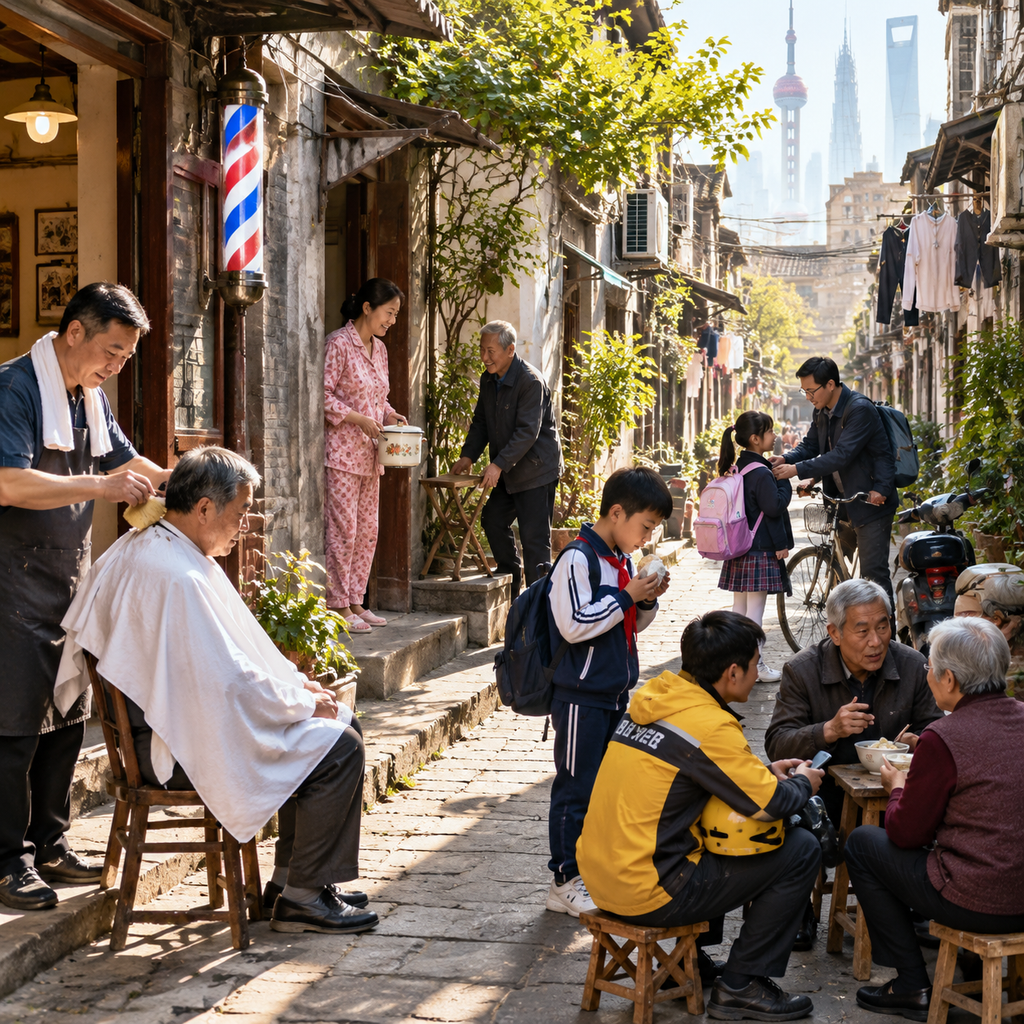
清晨六点半,我从上海一条弄堂口拐进去,天光还被晾衣竿切成细条,墙脚昨夜的潮气没有散。早餐摊已经支起蒸笼,白雾裹着葱油和米香往屋檐下钻。穿睡衣的阿姨提着搪瓷锅,老人把折叠凳挪到门边,送孩子上学的父亲一手扶车,一手替女儿扣外套。我起初把这些缓慢动作看成拖沓,以为大家只是还没真正醒来。
At half past six in the morning, I turned into a Shanghai lane while the early light was still being sliced into thin strips by bamboo laundry poles. The dampness left from the night lingered at the foot of the walls. A breakfast stall had already stacked its steamers, and white vapor carrying the scents of scallion oil and rice curled beneath the eaves. An auntie in pajamas carried an enamel pot; an old man shifted a folding stool toward his doorway; a father steadied a bicycle with one hand while buttoning his daughter's coat with the other. At first, I mistook their unhurried movements for sluggishness, assuming that the neighborhood had not fully awakened.
我也带着赶路的习惯:手机地图开着,耳机塞好,脑子里排着上午要去的几个地方。可弄堂不肯配合那种直线速度。前面有人把被单从二楼放下来,后面一辆自行车轻轻响铃,卖菜的人推着小车停在正中,与窗口探出头的邻居谈今天的青菜。我侧身、停步、又退回门洞让车,短短几十米走得断断续续,心里甚至有点不耐烦。
I had brought my habit of rushing with me: the map was open on my phone, my earphones were in place, and several morning destinations were lined up in my head. But the lane refused to cooperate with that straight-line pace. Someone lowered a bedsheet from a second-floor window ahead of me. A bicycle chimed softly behind. A vegetable seller stopped his cart in the middle to discuss the day's greens with a neighbor leaning out of a window. I turned sideways, paused, and stepped back into a doorway to let the bicycle pass. Covering only a few dozen meters took several interruptions, and I even felt a little impatient.
早餐摊前没有我想象中的混乱。常客似乎不用完整点单:有人举起两根手指,摊主就夹出两只生煎;有人把保温杯往台面一放,热豆浆便稳稳倒进去。轮到我时,我盯着墙上的菜单犹豫太久,后面的大叔也没催,只提醒一句:“先站旁边想,别让蒸汽烫着。”摊主笑着把锅盖斜开,让我看底部焦黄的一圈。我这才点了一碗咸豆浆和四只生煎。
The breakfast stall was not chaotic in the way I had expected. Regulars barely needed to finish an order: one person raised two fingers and the vendor picked out two shengjian buns; another set a thermos on the counter and hot soy milk was poured neatly inside. When my turn came, I studied the menu on the wall for too long. The uncle behind me did not hurry me. He simply said, “Stand to the side while you decide, so the steam doesn't burn you.” Smiling, the vendor tilted the lid and showed me the crisp golden ring beneath the buns. I finally ordered a bowl of savory soy milk and four shengjian.
我端着碗站到窄桌边,才发现这里的“慢”并不是占着位置发呆。阿姨吹开豆浆表面的紫菜,顺手把空醋瓶递给摊主;大叔咬开生煎的小口,等汤汁凉一点,再把共享的辣椒碟推到我面前;摊主收钱、揭盖、添汤,动作不快,却从未撞翻一只碗。每个人都在等,也都在照看别人的下一步。那种节奏不是松散,而是彼此留出半个身位。
Standing at the narrow table with my bowl, I realized that “slow” here did not mean occupying space and doing nothing. An auntie blew the seaweed aside on her soy milk and passed an empty vinegar bottle back to the vendor. The uncle bit a small opening in his bun, waited for the soup inside to cool, and then nudged the shared dish of chili toward me. The vendor took payments, lifted lids, and ladled soup without moving quickly, yet never knocked over a single bowl. Everyone was waiting, but everyone was also watching what another person might need next. The rhythm was not loose; it was the practice of leaving half a body's width for someone else.
吃到第三只生煎时,一滴汤落在桌面。摊主抽了张纸,却没立刻伸手擦,只等我先把手肘移开。这个极小的停顿忽然让我明白,弄堂里的时间常常不是由钟表分配,而是由人和人之间的距离决定。门窄,就等提水的人出来;路小,就让载货的车先过;一句闲话没说完,也不必用眼神把它剪断。效率仍在,只是不以催促的声音出现。
As I ate my third bun, a drop of soup fell on the table. The vendor pulled out a piece of paper but did not wipe immediately; she waited for me to move my elbow first. That tiny pause made me understand that time in the lane was often measured not by clocks, but by the distance between people. If a doorway was narrow, you waited for the person carrying water to emerge. If the path was tight, you let the loaded cart pass first. If a brief conversation was unfinished, there was no need to cut it short with an impatient glance. Efficiency was still present; it simply did not announce itself through urgency.
吃完后,我没有马上打开导航,而是沿着弄堂继续往里走。一位老人正在给门口的盆栽剪枯叶,剪一下,转动花盆,再退后看看。隔壁女人把洗好的衬衫抖开,水珠在晨光里闪了一瞬。两个学生贴墙跑过,到了晾衣杆下面却同时低头,像早已记住这里的高度。居民的动作看似琐碎,却都带着对空间的熟悉:哪里会滴水,哪块砖会滑,谁家的猫爱趴在自行车座上,他们无需讨论便自然避让。
After breakfast, I did not reopen the map at once. I walked deeper into the lane instead. An elderly man was trimming dead leaves from a potted plant by his door: one snip, a turn of the pot, then a step back to look. Next door, a woman snapped a washed shirt open, and droplets flashed briefly in the morning light. Two students ran close to the wall, but both ducked beneath a laundry pole as if they had long memorized its height. The residents' movements seemed ordinary, yet each carried an intimate knowledge of the space: where water would drip, which brick became slippery, and whose cat liked to sleep on a bicycle seat. They adjusted without needing to discuss it.
我原先以为慢下来意味着少做几件事,后来却发现它更像把注意力还给正在发生的事。买早餐时先看蒸汽往哪边飘,进窄门前先听里面有没有脚步,拍照前先确认镜头会不会对着居民的窗。问路也不用一边听一边急着转身;等对方把“到第二个路口再拐”说完,重复一遍,往往比多走十分钟再纠错更省时间。弄堂教我的不是散步技巧,而是一种不抢在现场前面作决定的办法。
I had assumed that slowing down meant doing fewer things. Instead, it felt more like returning my attention to whatever was actually happening. Before buying breakfast, I could notice which way the steam drifted. Before entering a narrow doorway, I could listen for footsteps inside. Before taking a photograph, I could check whether the lens pointed into someone's window. When asking directions, there was no need to turn away before the answer was finished. Listening to “turn after the second crossing” and repeating it back often saved more time than correcting a ten-minute mistake. The lane taught me not a technique for strolling, but a way of refusing to decide before the scene had spoken.
走回弄堂口时,早高峰已经铺到大街上,车流声一下变得明亮而密集。那位父亲骑车送女儿离开,老人仍坐在门边,早餐摊主正用湿布一圈圈擦净桌面。我把耳机收进口袋,没有急着追上绿灯。身后的蒸笼又掀开一次,瓷碗轻轻相碰。我站在斑马线前等下一轮,第一次觉得这几十秒并没有被浪费。
By the time I returned to the entrance, the morning rush had spread across the main road, and the traffic sounded suddenly bright and dense. The father rode away with his daughter, the old man remained by his doorway, and the breakfast vendor wiped the table in slow circles with a damp cloth. I put my earphones in my pocket and did not rush to catch the green light. Behind me, a steamer lid rose once more and porcelain bowls touched with a soft clink. I waited for the next signal and, for the first time, did not feel that those few seconds had been wasted.
第二天五点五十分,天还只是屋脊上方一层灰蓝,我已经从旅馆走回弄堂。卷帘门大多关着,地面比前一天更湿,墙角的水珠把路灯拉成细碎倒影。最先出现的不是游客,而是提着长柄竹扫帚的清洁工。她把落叶从门槛前轻轻带出来,扫到排水沟旁,又停下夹走一只堵住铁栅的塑料袋。扫帚擦过石板的沙沙声传到深处,一扇木窗跟着推开,穿绒背心的老人先探手试温度,再把一盆隔夜的雨水端去浇石榴树。
At 5:50 on the second morning, the sky was still only a gray-blue layer above the roofs when I walked back from my hotel. Most shutters remained closed. The ground was wetter than the day before, and beads of water near the walls stretched the streetlamps into broken reflections. The first person I saw was not a visitor but a cleaner carrying a long bamboo broom. She drew fallen leaves gently away from the thresholds, swept them beside the drain, then stopped to remove a plastic bag blocking the iron grate. The broom whispered across the stone slabs. Deeper in the lane, a wooden window opened in response, and an old man in a padded vest reached out to test the temperature before carrying a basin of rainwater left overnight to his pomegranate tree.
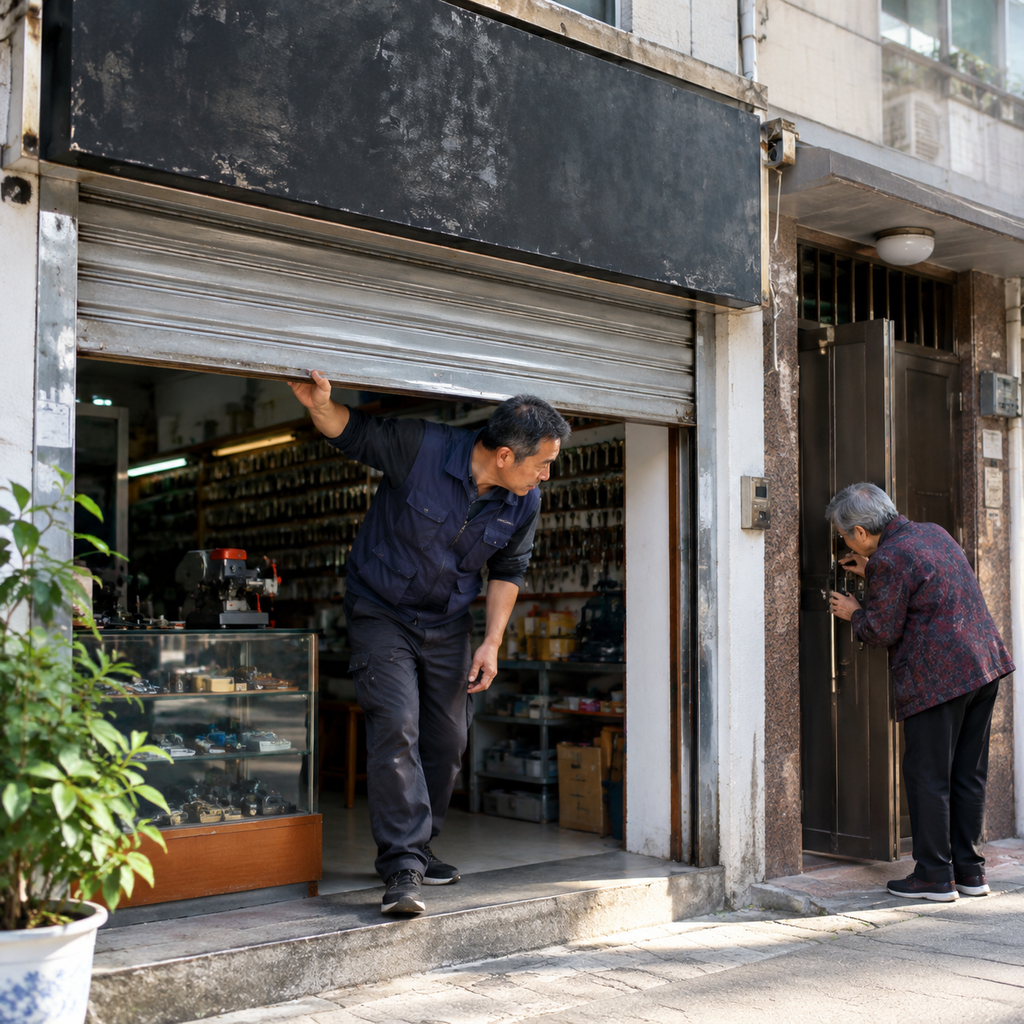
六点刚过,门后的生活一点点伸到路上。一个年轻母亲把婴儿车推出半扇门,先用纸巾擦干车轮将要经过的青砖;对面的爷爷蹲着给孙子的球鞋穿新鞋带,打完结又把两边拉到同样长。送牛奶的人把玻璃瓶逐只放进门边的塑料筐,瓶底碰筐发出短促轻响,二楼阿姨听见后没有下楼,只把空瓶装进布袋,用绳子慢慢放到他肩旁。修锁铺老板卷起一半铁门,侧身钻出来,先替隔壁独居老人查看昨晚卡住的门舌,自己的招牌反倒还黑着。
Shortly after six, life behind the doors began extending into the lane. A young mother eased a stroller through a half-open doorway, first wiping dry the green bricks its wheels would cross. Across from her, a grandfather crouched to thread new laces into his grandson's sneakers; after tying them, he pulled both ends until they were the same length. The milkman placed glass bottles one by one into plastic baskets by the doors, each base making a brief note against the crate. Hearing it upstairs, an auntie did not come down. She packed the empty bottles into a cloth bag and lowered it slowly on a rope until it reached his shoulder. The locksmith raised his shutter halfway and slipped underneath, then checked a jammed latch for an elderly neighbor living alone while the light above his own sign remained off.
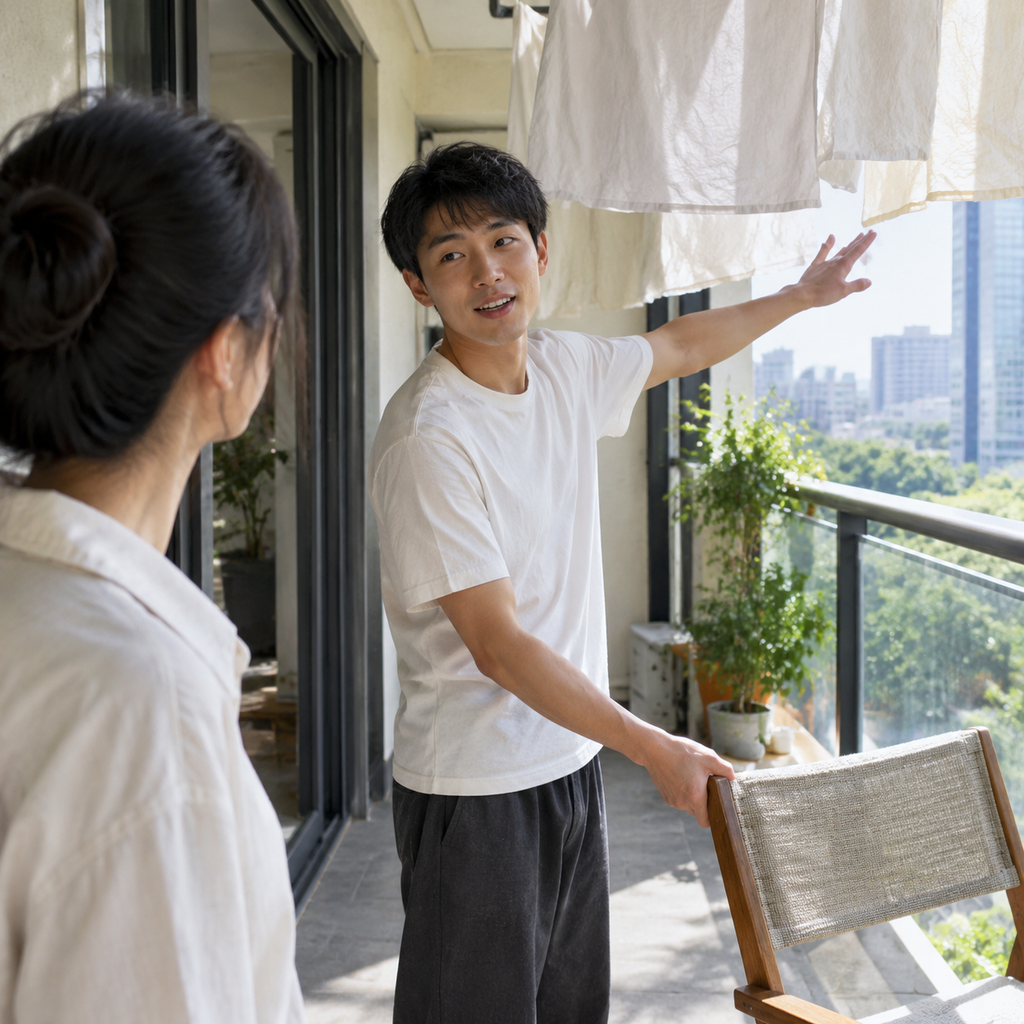
我靠在不挡门的墙边,看一位穿格子睡裤的男人端出两把竹椅。他没有立刻坐,而是先抹去椅面上的潮气,把其中一把摆到有晨光的位置,留给稍后下楼的母亲。一个扎红头绳的女孩背着书包出来,顺手从电表箱上取走昨夜充满电的手电筒,交给要去菜场的奶奶;奶奶把温热的鸡蛋塞进她掌心,又替她压平翘起的衣领。女孩跑到巷口忽然折返,不是忘了作业,而是回来把邻居门前被风吹倒的空花盆扶正。她做完便再次跑开,鞋底拍过湿砖,响声很快被第一班公交的低鸣接走。
Keeping clear of the doorway, I leaned against a wall and watched a man in checked pajama trousers carry out two bamboo chairs. He did not sit immediately. He wiped the dampness from both seats and placed one where the first morning light would fall, saving it for his mother when she came downstairs. A girl with a red ribbon in her hair emerged with a schoolbag, picked up a flashlight that had charged overnight on the meter box, and handed it to her grandmother on her way to the market. The grandmother pressed a warm egg into the girl's palm and smoothed her turned-up collar. The girl ran toward the entrance, then suddenly came back—not for forgotten homework, but to right an empty flowerpot the wind had knocked over at a neighbor's door. She set off again, her soles slapping the wet bricks until the sound was taken up by the low rumble of the first bus.
第二天我又在差不多的时辰回来,想试试另一家早餐店。地图把一个写着店名的定位点钉在弄堂深处,我便照着蓝线往里钻。经过公用水池时,两个阿姨正轮流洗拖把,一只竹篮从楼上垂下来,里面放着零钱和写好品名的纸条。卖早点的人把油条装袋,再把袋子放回篮中,楼上的手轻轻一提,早餐就越过狭窄楼梯到了家门口。没人停下来看这件事,对我来说却像一场配合精准的小演出。
I returned at roughly the same hour the next day, intending to try another breakfast shop. The map pinned a business name deep inside the lane, so I followed its blue line inward. Beside a communal sink, two aunties took turns rinsing their mops. A bamboo basket descended from an upper floor, holding some cash and a slip of paper with an order written on it. The breakfast vendor bagged the youtiao, placed it in the basket, and a hand above pulled gently. Breakfast reached a home without anyone squeezing down the narrow stairs. No resident paused to watch, but to me it looked like a perfectly timed little performance.
地图提示“已到达”时,眼前却只有一扇贴着旧春联的住宅门。我来回走了两遍,还把门牌号放大核对,以为店藏在屋里。正在水池边刷牙的大叔含着泡沫摇头,指了指我身后:“这个点标歪了,店在隔壁马路,出去以后向左,不是现在向左。”我起初只听见“向左”,转身便往弄堂另一条岔路走。他赶紧用牙刷柄敲了敲搪瓷杯,把我叫回来,又在湿漉漉的水泥地上用拖鞋尖画出一个拐弯。
When the map announced that I had arrived, all I saw was a residential door with faded Spring Festival couplets. I walked back and forth twice and enlarged the house number, convinced that the shop must be hidden inside. An uncle brushing his teeth beside the sink shook his head through a mouthful of foam and pointed behind me. “That pin is misplaced. The shop is across the main road. Go out first, then turn left—not left here.” I caught only the words “turn left” and immediately headed toward another fork in the lane. He tapped his enamel mug with the handle of his toothbrush to call me back, then drew the correct bend on the damp concrete with the toe of his slipper.
这次误判让我看清一个常见陷阱:弄堂里的定位点看似只差几十米,实际可能隔着围墙、封闭后门或互不相通的支弄。屏幕上的直线很短,脚下却没有直达通道。后来我不再盯着剩余距离,而先找能真正通向大街的出口;听到“出去再转”时,也把动作拆开复述:“先出弄堂,到了马路再向左,对吗?”大叔点头以后,我才收起手机。那句确认比继续拖动地图更可靠。
That mistake revealed a common trap: a location pin in a lane may appear to be only a few dozen meters away while actually sitting beyond a wall, a locked rear gate, or an unconnected side lane. The line on the screen is short, but there may be no walkable route beneath it. After that, I stopped watching the remaining distance and first looked for an exit that genuinely reached the main road. When someone said, “Go out and then turn,” I repeated the movements separately: “Leave the lane first, then turn left at the road, correct?” Only after the uncle nodded did I put away my phone. That confirmation was more dependable than dragging the map around again.
到了隔壁街,真正的早餐店就在公交站牌后面,招牌被梧桐枝挡住一半。店里没有游客照片上那种从容空桌,只有几张靠墙的小方台。穿校服的男孩立着吃粢饭团,快递员把头盔夹在膝间,三位老人围着一碗小馄饨讨论楼道灯何时修。老板娘问我要甜豆浆还是咸豆浆,我把“甜”说得太轻,她已经伸手去拿榨菜。我赶紧补一句“加糖的”,她笑着换了勺子:“早饭要讲清楚,弄错了一早上都惦记。”
On the next street, the real breakfast shop stood behind a bus-stop sign, its signboard half hidden by plane-tree branches. It had none of the calm, empty tables seen in tourist photographs, only a few small square counters against the wall. A schoolboy ate a sticky-rice roll standing up; a courier held his helmet between his knees; three elderly neighbors shared a bowl of tiny wontons while discussing when the stairwell light would be repaired. The owner asked whether I wanted sweet or savory soy milk. I said “sweet” too softly, and she was already reaching for preserved vegetables. I quickly added, “The one with sugar.” She changed spoons with a laugh. “You must be clear about breakfast, or you'll think about the mistake all morning.”
我靠墙吃饭时,居民的日常从桌边一件件经过。有人把备用钥匙交给邻居,请他下午替自己等修表师傅;有人端来家里的空碗,只买一份豆腐花带回去;一位奶奶替楼上行动不便的老人捎两只茶叶蛋,付款后把鸡蛋分别塞进外套口袋,免得互相碰碎。这里的熟悉不是每个人都长谈,而是知道谁今天要早班、谁不能吃辣、谁家的煤气检修还没结束。早餐摊像一张临时的社区桌,消息随着碗筷声被轻轻交换。
As I ate against the wall, pieces of residents' daily lives passed one by one beside the table. Someone handed a spare key to a neighbor and asked him to wait for the watch repairman that afternoon. Someone else brought an empty bowl from home and bought only one serving of tofu pudding to carry back. A grandmother picked up two tea eggs for an upstairs resident who had difficulty walking; after paying, she tucked them into separate coat pockets so they would not knock together and crack. Familiarity here did not mean that everyone held a long conversation. It meant knowing who had an early shift, who could not eat chili, and whose gas inspection was still unfinished. The breakfast stall functioned like a temporary community table, where news changed hands beneath the soft clatter of bowls and chopsticks.
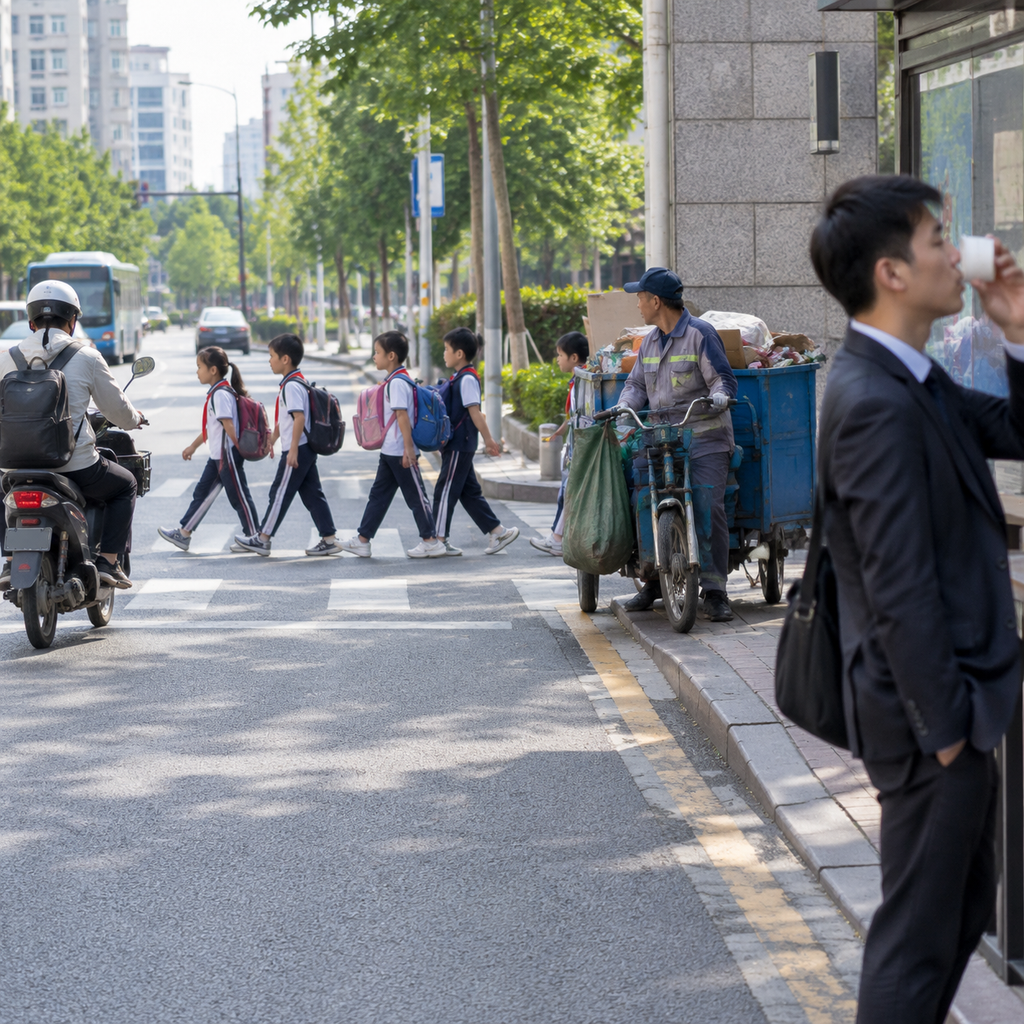
七点四十分左右,弄堂的节奏忽然紧了一小截。送学的电动车接连出去,上班的人把最后半杯豆浆喝完,收废品的师傅贴墙停住三轮车,让一队孩子先过。可这种加速依然有边界:没人堵住居民门口拍照,也没人把行李箱横在水池旁。若我想停下来辨路,就会先退到墙边没有晾衣滴水的位置;若需要问店名,则把手机画面转向对方,不拿镜头扫过敞开的窗户。这些动作很小,却让我从“闯入者”慢慢变成一个会借路的人。
At around 7:40, the lane's tempo tightened for a while. Electric scooters carrying children to school left one after another, commuters finished the last half cups of soy milk, and a recycling collector pulled his tricycle close to the wall so a line of children could pass. Yet even this acceleration had boundaries: no one blocked a resident's doorway to take photographs, and no one left a suitcase across the communal sink. If I needed to stop and work out the route, I stepped against a wall where no laundry was dripping. If I wanted to ask about a shop name, I turned the phone screen toward the person rather than sweeping the camera past an open window. These gestures were minor, but they gradually changed me from an intruder into someone who knew how to borrow a path.
饭后我原本计划从另一端穿出去,地图上那条灰色细线看起来能接回主路。走到尽头,却发现所谓出口是一道只供住户刷卡的铁门,旁边还堆着刚送到的米袋。提菜回来的阿姨看我又比地图又摸门把,直接说:“别翻,也别等人开,这里不通游客。原路回,到红色雨棚那里右转。”她没有把所有岔口一口气说完,而是让我先找到雨棚。我走到那里回头,她还站在远处抬手指方向。复杂的路线被拆成一个个能看见的标记,错误也就没机会越滚越大。
After breakfast, I planned to walk out through the far end because a thin gray line on the map seemed to reconnect with the main road. At the end, however, the supposed exit was a metal gate that only residents could unlock, with newly delivered rice sacks piled beside it. An auntie returning with vegetables saw me comparing the map with the gate handle and said plainly, “Don't climb it, and don't wait for someone to open it. Visitors cannot pass here. Go back and turn right at the red awning.” She did not pour every junction into one long explanation; she first asked me to find the awning. When I reached it and looked back, she was still in the distance, raising a hand to point. By breaking a complicated route into visible markers, she stopped one mistake from growing into another.
我后来给自己定下的弄堂辨路办法很具体:把商户定位当作大致范围,不把虚线当成门;先确认出口是否对公众开放,再判断左右;遇见“贴墙走”“过雨棚”“见到水果店再拐”这类说法,就优先记住实物,而不是只背方向。最重要的是,问路后走出二三十米便回望一次,确认自己没有穿进私人门洞。上海老街的空间不是地图画错那么简单,它由院门、楼梯、生活习惯和多年形成的边界共同组成。
I eventually developed a practical method for navigating Shanghai's lanes: treat a business pin as an approximate area rather than an exact doorway; never assume that a dotted line means a usable gate; confirm that an exit is public before deciding left or right. When residents say “stay close to the wall,” “pass the awning,” or “turn after the fruit shop,” I remember the physical landmark instead of memorizing direction alone. Most importantly, after walking twenty or thirty meters, I look back once to make sure I have not entered a private passage. The spatial logic of an old Shanghai neighborhood is more complex than a faulty map. It is shaped by courtyard gates, staircases, household routines, and boundaries formed over many years.
临近八点,早餐店的蒸汽淡下来,老板娘把空笼屉一层层搬到墙边。刚才替我画路线的大叔换好衬衫,从弄堂里推车出来,看见我终于站在正确路口,隔着车流朝我扬了扬下巴。我也抬手回应。身后有人喊一份粢饭不要糖,铁勺碰着锅沿,清脆响了两下。这回我没有急着把新路线存进手机,只在心里记住了红雨棚、公交牌,以及一个用拖鞋尖画出来的转弯。
Near eight o'clock, the steam at the breakfast shop began to thin, and the owner stacked the empty bamboo baskets against the wall. The uncle who had drawn the route for me emerged from the lane in a clean shirt, pushing his bicycle. When he saw me finally standing at the correct junction, he lifted his chin in acknowledgment across the traffic, and I raised a hand in reply. Behind me, someone called for a sticky-rice roll without sugar, and a metal ladle struck the rim of a pot twice with a clear ring. This time I did not rush to save the new route on my phone. I simply remembered the red awning, the bus-stop sign, and the turn that had been drawn with the toe of a slipper.
到了午后,我又折回那片弄堂。上午的湿气被日头烘成墙面淡淡的暖味,石库门门楣下挂着的衣服已经干了大半。午饭时间不像早餐那样聚在一个摊位前,居民各自带着小菜、饭盒和购物袋回家。一个穿蓝围裙的女人把煤气灶上的汤锅端到门槛里,先用手背试了试锅耳;楼上的男孩从窗里垂下一根绳子,篮子里装着两只洗净的玻璃杯,楼下奶奶接住后,抬头喊他别把绳子收得太快。生活在这里不是静止的旧景,而是每个门口都在处理当天的事情。
By the afternoon I had returned to the same stretch of lane. The morning dampness had been warmed by the sun into a faint heat along the walls, and most of the clothes hanging beneath the shikumen lintels were already dry. Lunchtime did not gather around one stall as breakfast had; residents carried small dishes, lunch boxes, and shopping bags back to their homes. A woman in a blue apron moved a soup pot from the gas burner to the threshold and tested the handle with the back of her hand. Upstairs, a boy lowered a rope with two clean glass cups in a basket. His grandmother caught it below and called up for him not to pull the rope too quickly. Life here was not a frozen old scene; every doorway was handling the day's ordinary tasks.
我沿着上午记住的红雨棚往西走,本想从一条较宽的支弄切到下一站。刚进拐角,一位修自行车的师傅却把打气筒横在地上,提醒我前面正在换水管,下午只能原路折回。地图仍把那条巷子标成畅通,我探头看去,几名工人正把湿泥装进小推车,水顺着砖缝流到居民脚边。一个拎菜的阿姨没有抱怨,只把布鞋踩在两块干砖上,侧身递过一袋毛豆,请邻居先替她放进冰箱。师傅见我还在犹豫,擦了擦手,在手机地图上点出另一处出口:“别追这条蓝线,绕到药房后面,路远一点,鞋不会全湿。”
Following the red awning I remembered from the morning, I headed west, intending to use a wider side lane as a shortcut to my next stop. At the corner, however, a bicycle repairman laid his pump across the ground and warned me that workers were replacing a water pipe ahead, so the passage was blocked for the afternoon. The map still showed it as open. When I looked in, several workers were loading wet earth into handcarts while water ran through the seams of the bricks toward residents' feet. An auntie carrying vegetables did not complain. She stepped onto two dry bricks, turned sideways, and passed a bag of edamame to a neighbor to put in the refrigerator for her. Seeing me hesitate, the repairman wiped his hands and marked another exit on my phone. “Don't chase that blue line. Go around behind the pharmacy. It is farther, but your shoes won't be soaked.”
我接受了这个绕行,却在药房后面被一阵麻将声拖慢。声音来自一扇半开的门,门外坐着三位老人,并不打牌,只在替屋里的人报午后的天气。一位戴草帽的爷爷看我举着手机,问我要去哪里。我说出路名,他先指右边,随即又改口,让我等送煤气瓶的三轮车过去再走左边的小口。车身几乎贴着两面墙缓缓挪过,司机每到门前便轻按一下喇叭;屋里的人听见,收回凳脚、花盆和晾着的鞋。不到一分钟,通道便重新打开。若我抢先挤进去,既挡车,也会把自己夹在没有退路的墙角。
I accepted the detour, but behind the pharmacy the clack of mahjong tiles slowed me down. The sound came through a half-open door. Three elderly residents sat outside—not playing, but calling out updates about the afternoon weather to those inside. A grandfather in a straw hat saw my raised phone and asked where I was going. After hearing the road name, he pointed right, then corrected himself and told me to wait for a tricycle carrying gas cylinders before taking the narrow opening on the left. The vehicle edged forward with barely any space between its sides and the walls. At each doorway, the driver tapped the horn; residents heard it and pulled in stool legs, flowerpots, and shoes left to dry. In less than a minute the passage opened again. Had I squeezed in first, I would have blocked the vehicle and trapped myself in a corner with no room to retreat.
绕路多花了十几分钟,我索性取消原计划中的咖啡馆,把下午留给这一小片街区。这个调整反而让我看到早晨看不到的人:夜班归来的保安夹着凉席上楼,午休的店员坐在台阶上缝松开的裤脚,放学较早的女孩蹲在水池旁替乌龟换水。她怕水盆挡路,每听见车铃就双手端起盆,等人过去再放下。卖西瓜的小贩停在巷口,没有高声叫卖,只敲了三下木板;几扇窗随即打开,有人从楼上问甜不甜,有人叫他留半只。这里的消息并非依靠公告传播,熟悉的声音本身就是通知。
The detour cost me more than ten minutes, so I canceled the café on my original itinerary and gave the afternoon to this small neighborhood instead. That change allowed me to notice people who had been absent in the morning: a security guard returning from a night shift climbed upstairs with a rolled sleeping mat under his arm; a shop assistant on lunch break sat on a step sewing a loose trouser hem; a girl home early from school crouched beside the sink to change the water for her turtle. Afraid that the basin might block the way, she lifted it with both hands whenever she heard a bicycle bell, then set it down again after the rider passed. A watermelon seller stopped at the entrance without shouting and knocked three times on a wooden board. Several windows opened at once. Someone upstairs asked whether the melons were sweet; another person told him to save half of one. News here did not need a noticeboard. A familiar sound was itself an announcement.
在一处树影稍深的门洞边,我坐了不到五分钟,便注意到居民看人的方式很有分寸。他们会迅速判断我是找路、等人还是拍照,却不会一直盯着。一个小男孩抱着足球从我面前经过,先看我的相机,再看我镜头朝向;确认我拍的是屋檐而不是他,他才继续走。后来一位叔叔搬出竹椅,我以为自己占了他的位置,马上站起来。他摆摆手,把椅子放到另一侧,说那里下午有穿堂风,还顺手提醒我头顶晾着刚洗的床单。几分钟后,床单果然滴下一串水,正落在我原先站的地方。
After sitting for less than five minutes beside a doorway shaded by a tree, I noticed how measured the residents were in the way they looked at strangers. They quickly worked out whether I was lost, waiting for someone, or taking photographs, but they did not stare. A boy carrying a football walked past, looked first at my camera and then at the direction of the lens. Once he saw that I was photographing the eaves rather than him, he continued on. Later, an uncle brought out a bamboo chair. Thinking I had taken his usual place, I stood up at once. He waved me down, placed the chair on the other side, and said there was a cross-breeze there in the afternoon. He also warned me about the freshly washed sheet overhead. A few minutes later, a string of droplets fell exactly where I had been standing.
我开始把人物观察从“他们在做什么”改成“他们在照顾什么”。修车师傅看守的不只是工具,还留意施工后的干路;女孩照顾乌龟,也照顾通行的人;叔叔搬椅子时,同时顾及风和滴水。这样的日常不适合被急匆匆地猎奇。若有人正在吃饭,我不会把镜头靠近碗边;若窗内的人与我对视,我便先放下相机;想拍一块旧门牌,也会退后看看是否把唯一的入口堵住。弄堂可以看,却不能把居民的家误当成没有边界的布景。
I began to shift my attention from “What are these people doing?” to “What are they taking care of?” The bicycle repairman watched not only his tools but also the dry route around the roadworks. The girl cared for her turtle while also protecting the passage. When the uncle moved his chair, he considered both the breeze and the dripping laundry. Such routines did not deserve hurried curiosity. If someone was eating, I kept my lens away from the bowl. If a person inside a window met my eyes, I lowered the camera first. Even when photographing an old doorplate, I stepped back to make sure I was not blocking the only entrance. A lane may be observed, but its residents' homes are not an unbounded stage set.
三点过后,太阳斜进弄堂,原先贴墙的阴影移到路中央。我原计划去两条街外看一栋老建筑,可走到出口时,膝盖已有些发酸。修车师傅还在,他给轮胎补好胶片,正把一盆水慢慢泼向尘土。他听见我说还要赶一个地点,抬头看了看光,说那边下午逆光,又正逢学校放学,最好改到次日早上。我没有把这句话当成阻止,而是删掉最后一个定位点,改从较安静的南口离开。路线少了一站,观察却完整了:光线、居民作息和身体状态都应参与决定,不能只让收藏夹安排一天。
After three, the sun entered the lane at an angle, and the shadow that had hugged the wall moved toward the middle of the path. I had planned to see an old building two streets away, but my knees were already aching when I reached the exit. The bicycle repairman was still there. Having patched a tire, he was slowly pouring a basin of water over the dust. When he heard that I was rushing to one more location, he looked up at the light and said the building would be backlit now and the nearby school was about to let out; morning would be better. I took this not as discouragement but as permission to remove the final pin and leave through the quieter southern exit. The route lost one stop, yet the day became more coherent. Light, neighborhood routines, and the condition of my own body deserved a vote; a list of saved places should not arrange the entire day.
南口附近,一位理发店老板把白毛巾搭在肩上,站在门外替老顾客扫掉后颈的碎发。顾客没有立刻离开,而是拎起门边的喷壶,帮他给两盆栀子浇水。再往前,上午提搪瓷锅的阿姨正把空锅送回来,锅盖里压着几根洗净的小葱。她和邻居只说了两三句,内容无非是汤咸不咸、孩子几点回来,却把一来一往的照料交代得清楚。我不认识他们的姓名,也不需要替每个人编故事;看见动作本身,已经比把他们统称为“老上海居民”更接近真实。
Near the southern exit, a barbershop owner stood outside with a white towel over his shoulder, brushing loose hair from the back of an elderly customer's neck. Instead of leaving immediately, the customer picked up a watering can by the door and watered two gardenias for him. Farther on, the auntie who had carried an enamel pot that morning was returning it empty, with several cleaned scallions tucked beneath the lid. She exchanged only a few sentences with her neighbor—whether the soup had been too salty and what time the child would return—but their back-and-forth care was perfectly clear. I did not know their names, nor did I need to invent a story for each person. Watching their actions was already closer to reality than reducing them all to “old Shanghai residents.”
我走到大街边时,放学的人流刚好涌来。孩子的书包擦过梧桐树干,家长把电动车推成一列,弄堂里的居民则把先前收进去的凳子和花盆重新摆回门外。城市的大路开始忙,窄巷反而又松下来。红雨棚在斜阳里显得比早晨暗,我没有再打开导航,只回头看见修车师傅把打气筒靠回墙边。那天少去了一处收藏的建筑,却记住了一个更有用的下午:路线可以删,脚步可以停,而别人的日常不必为我的行程让路。
When I reached the main street, the after-school crowd was just arriving. Children's backpacks brushed the plane-tree trunks, parents guided electric scooters into a line, and residents returned the stools and flowerpots they had pulled inside earlier. The broad road grew busy while the narrow lane loosened again. The red awning looked darker in the slanting sun than it had that morning. I did not reopen the map. I only looked back and saw the repairman lean his pump against the wall. I missed one saved building that day, but kept a more useful memory of the afternoon: a route can be shortened, a walker can pause, and other people's daily lives do not have to step aside for my itinerary.
傍晚六点左右,我在附近吃过一碗面,还是从南口折了回来。白天铺在墙上的阳光已经退尽,窗内的灯一盏盏亮起,隔着磨花的玻璃显出暖黄的小方块。弄堂口有酱油炒饭的焦香,深处又飘来洗衣粉和煎带鱼的味道。下班的人把车铃按得很轻,前轮慢慢绕过放学后跳橡皮筋的孩子。早晨那条像通道的窄路,此刻更像一间没有屋顶的公共客厅。
At around six in the evening, after eating a bowl of noodles nearby, I returned through the southern entrance. The sunlight that had covered the walls during the day was gone. Lamps came on one by one behind frosted panes, forming small warm-yellow squares. The toasted scent of soy-sauce fried rice drifted from the entrance, while laundry powder and pan-fried hairtail came from deeper inside. Commuters barely touched their bicycle bells and steered slowly around children playing elastic-band games after school. The narrow passage that had looked like a route in the morning now felt more like a shared living room without a roof.
白天替邻居送锅的阿姨正在门口择毛豆。她姓周,大家叫她周阿姨;名字不是我问来的,是一个抱着作业本的女孩跑过来喊她帮忙签字。周阿姨先擦干手,戴上老花镜,把女孩写错的日期圈出来,叫她回去改好再签。接着她把一小碗剥好的豆子递给对门,说老人牙口不好,烧久一点。说话间,她还用脚把女孩忘在路中的书包勾到墙边,给推婴儿车的人让出位置。
The auntie who had returned a pot to her neighbor earlier was shelling edamame by her doorway. Her surname was Zhou, and everyone called her Auntie Zhou. I learned this not by asking, but when a girl ran over with an exercise book and called to her for a signature. Auntie Zhou dried her hands, put on reading glasses, circled a wrongly written date, and told the girl to correct it before she would sign. She then handed a small bowl of shelled beans to the neighbor opposite, explaining that they should be cooked longer for the elderly resident's teeth. While talking, she hooked the girl's abandoned schoolbag toward the wall with her foot, clearing room for a stroller.
修车师傅也有了名字。一个快递员推着漏气的电动车进来,喊他陈师傅,请他先看后轮。陈师傅蹲下去摸了一圈,只拔出一枚细小的订书钉,没有立刻拆胎。他让快递员小陆先把最后两单送完,自己守着车,免得对方在窄路里来回推。小陆把头盔搁在工具箱上,拎起两个纸袋跑进支弄;回来时带了一瓶冰水,瓶身全是水珠。陈师傅没说谢谢,只拧开喝了一口,把补胎钱少收了两元。
The bicycle repairman acquired a name as well. A courier wheeled in an electric bike with a leaking tire and called him Master Chen, asking him to check the rear wheel first. Master Chen crouched, felt around the rubber, and pulled out a tiny staple without immediately removing the tire. He told the courier, Xiao Lu, to finish his last two deliveries while he watched the bike, saving him from pushing it back and forth through the narrow lane. Xiao Lu left his helmet on the toolbox and ran into a side passage with two paper bags. He returned carrying a bottle of cold water beaded with condensation. Master Chen did not say thank you; he took a sip and quietly charged two yuan less for the repair.
天色再暗一点,居民开始把白天的东西往回收。有人站在竹竿下接衣架,楼上的人每放下一件,都会先喊一声;有人把小桌擦净,却不急着搬进屋,因为邻居家的男孩还趴在那里做数学题。窗台上的收音机播着沪语天气,几位老人一边听,一边把明早买菜的零钱分开放好。周阿姨收起毛豆壳,端出一盘切开的梨,先给看题的老人留两块,再招呼小陆拿一块路上吃。没有谁郑重宣布分享,也没有人客气很久。盘子绕过桌角,最后停在陈师傅沾着黑油的手边。
As the light faded further, residents began bringing in the things they had put outside during the day. One person stood beneath a bamboo pole to receive hangers, while the person upstairs called out before lowering each garment. Someone wiped a small table but did not carry it indoors because a neighbor's son was still bent over his mathematics homework there. A radio on the windowsill gave the weather in Shanghainese as several elderly residents listened and set aside change for the next morning's vegetable shopping. Auntie Zhou swept up the edamame shells and brought out a plate of sliced pears. She saved two pieces for the elderly man helping with the homework, then told Xiao Lu to take one for the road. No one formally announced that food was being shared, and no one performed a long refusal. The plate traveled around the corner of the table and finally stopped beside Master Chen's oil-darkened hand.
七点钟,垃圾分类收集车的提示声从大街传来,几扇门几乎同时打开。纸盒被压平捆好,厨余装在扎紧的小袋里,老人把一只空瓶递给孙子,让他自己分辨该投哪一箱。孙子选错后,周阿姨没有代劳,只敲敲蓝色桶盖让他再看图案。与此同时,二楼有人喊楼下帮忙收一件忘掉的衬衫,陈师傅举起晾衣叉,稳稳托住衣架。弄堂的傍晚不是忽然安静,而是家务从门内门外接力般流动。
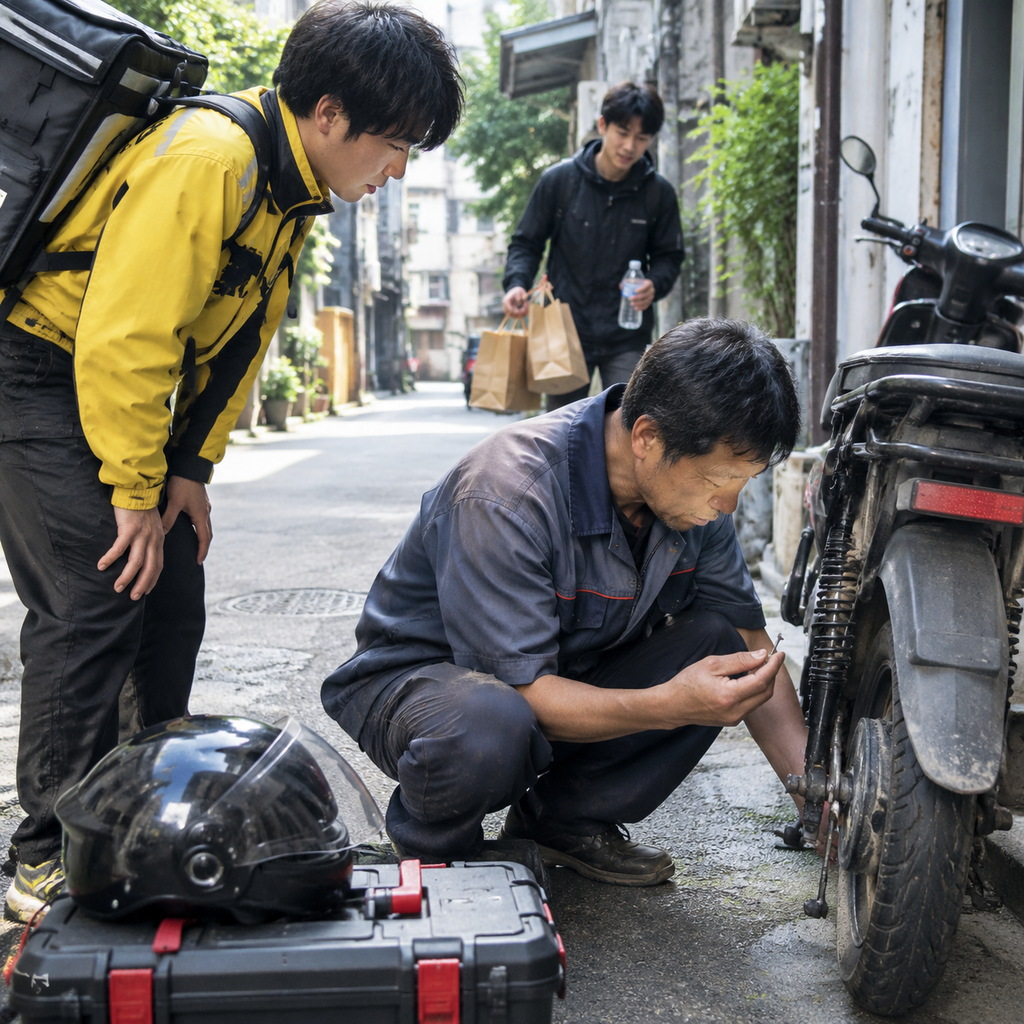
At seven, the collection vehicle's sorting reminder sounded from the main road, and several doors opened almost at once. Cardboard boxes had been flattened and tied; kitchen waste sat in tightly knotted bags. An old man handed an empty bottle to his grandson and asked him to decide which bin it belonged in. When the boy chose incorrectly, Auntie Zhou did not do it for him. She tapped the lid of the blue bin and told him to look at the symbol again. At the same moment, someone upstairs called for help retrieving a forgotten shirt. Master Chen raised a laundry pole and caught the hanger securely. Evening in the lane did not arrive as sudden quiet; housework moved in relays across doors, windows, and shared ground.
我站在墙边看得太久,周阿姨把最后一块梨递给我,问我是不是又找不到出口。我说这次没有迷路,只想看看弄堂到了晚上是什么样。她听完笑了一下,说晚上没什么“样子”,无非是烧饭、收衣、等孩子回家。话音刚落,一个背小提琴盒的少年从街口跑进来,她立刻把梨盘往窗台一放,接过他的书包,又追问外套怎么没拉好。那句平常得不能再平常的话,反而替我拆掉了最后一点把弄堂当作景点的念头。
I had been watching from the wall for so long that Auntie Zhou handed me the final slice of pear and asked whether I had lost the exit again. I said I was not lost this time; I only wanted to see what the lane looked like at night. She laughed and said there was no special “look” to it—people cooked dinner, took in laundry, and waited for their children to come home. Just then, a boy carrying a violin case ran in from the street. She set the pear plate on the windowsill, took his schoolbag, and immediately asked why his jacket was not zipped. Her utterly ordinary answer dissolved the last of my impulse to treat the lane as a tourist sight.
附近楼房的钟敲过七点半,炒菜的锅铲声渐渐稀了,电视新闻从不同窗户传出来,快慢相差几秒。小陆补好车,把头盔扣紧,对陈师傅说第二天再来付那两元;陈师傅正低头收扳手,只朝他挥挥手。做数学题的男孩终于合上本子,把桌子一头抬起,老人托住另一头,两个人侧着身把它送回屋里。白天我需要不断学习如何让路,到了这里才看懂,让路并非一次礼貌,而是居民把共同空间过成日子的基本手艺。
A nearby clock struck half past seven. The clatter of cooking spatulas gradually thinned, and television news traveled through different windows with delays of a few seconds. With his tire repaired, Xiao Lu fastened his helmet and told Master Chen he would return the next day with the missing two yuan. Master Chen was gathering his wrenches and merely waved. The boy doing mathematics finally closed his notebook and lifted one end of the table. The old man supported the other, and together they turned sideways to carry it indoors. During the day I had repeatedly learned how to yield passage. Only now did I understand that yielding was not a single act of politeness, but the basic craft by which residents turned shared space into daily life.
离开前,我在红雨棚下停了一会儿。周阿姨已经关上半扇门,仍从缝里叮嘱拉小提琴的少年先洗手;陈师傅熄了工作灯,车轮却还在架子上缓缓转。一个小女孩把粉笔画到边线,蹲下吹走碎屑,给晚归的自行车留出窄窄一条路。我没有再拍照,只把相机收进包里,确认镜头盖扣紧。陈师傅看见我整理背带,问我是不是要赶夜里的火车。我说第二天中午从虹桥离开,他便提醒我早高峰别拖着箱子穿弄堂,最好从大街叫车,也别把上车点定在会堵住早餐摊的位置。
Before leaving, I paused beneath the red awning. Auntie Zhou had closed one half of her door, but through the gap she was still reminding the violin student to wash his hands. Master Chen switched off his work lamp, though a wheel on the stand continued to turn slowly. A little girl extended her chalk drawing to its border, crouched to blow away the crumbs, and left a narrow strip for bicycles returning late. I took no more photographs. I put the camera into my bag and checked that the lens cap was secure. Seeing me adjust the strap, Master Chen asked whether I had a night train to catch. I told him I would leave from Hongqiao at noon the next day. He advised me not to drag a suitcase through the lane during the morning rush, but to call a car from the main road and choose a pickup point that would not block the breakfast stall.
第二天十点四十,我退了房,拖着箱子按他说的从北侧大街绕行,没有再把轮子压进弄堂湿滑的砖缝。经过红雨棚对面的路口时,我把箱子停在梧桐树内侧,独自走回去道别。周阿姨正把洗净的蓝布衫夹上竹竿,看见我便问有没有带水;陈师傅在给一辆童车上油,抬头说虹桥这时路上至少要留足余量。早餐摊已经收锅,老板娘蹲在地上刷笼屉,听说我要走,甩掉手上的水,指着大街说:“车来了再出去,别站路边晒。”他们没有停下手里的事,我也没有把告别说得很重。
At 10:40 the next morning, I checked out and followed his advice, wheeling my suitcase along the northern main road instead of forcing it over the lane's damp brick seams. At the junction opposite the red awning, I parked the suitcase inside the line of plane trees and walked back alone to say goodbye. Auntie Zhou was clipping a freshly washed blue blouse onto a bamboo pole. When she saw me, she asked whether I had water for the journey. Master Chen was oiling the wheel of a child's stroller; he looked up and told me to leave a generous margin for the drive to Hongqiao. The breakfast stall had put away its pots, and the owner was crouched on the ground scrubbing bamboo steamers. Hearing that I was leaving, she shook the water from her hands and pointed toward the main road. “Wait here until the car arrives. Don't stand out there in the sun.” They did not stop their work, and I did not make the farewell heavier than it needed to be.
手机震动提示司机还有两分钟到达,我把喝空的水瓶投进巷口的可回收物箱,又替一个推菜车的老人按住弹回来的铁门。车停在路对面后,我没有横穿车流,而是沿斑马线绕过去,把上车点重新发给司机。行李放进后备箱时,周阿姨正好从红雨棚下探出身,远远朝我摆了两下手;陈师傅没有走出来,只从铺里敲了敲扳手,清脆的一声越过街口。我坐进后排,报出“虹桥火车站二号航站楼”并和司机确认进站口,随后把手机地图关掉。
My phone vibrated to say that the driver was two minutes away. I dropped my empty water bottle into the recycling bin at the entrance, then held open a spring-loaded gate for an elderly man pushing a vegetable cart. When the car stopped across the street, I did not cut through the traffic. I walked around by the zebra crossing and sent the corrected pickup point to the driver. As I placed my suitcase in the trunk, Auntie Zhou appeared beneath the red awning and waved twice from a distance. Master Chen did not come outside; he tapped a wrench against something in the shop, and one bright note crossed the junction. I sat in the back, said, “Hongqiao Railway Station, Terminal 2,” confirmed the entrance with the driver, and then closed the map on my phone.
汽车驶上高架前,我从后窗最后看见弄堂口那盏白灯和晾衣竿交叠在一起,红雨棚很快被公交车挡住。周阿姨已经转身去收晾衣夹,卖菜老人推车进了门,街边没有人为一个旅客的离开停下来。十一点二十七分,我在虹桥站下车,取出行李,向司机道谢,沿二号进站口排队安检。箱轮滚过平整地面,不再颠响;口袋里还留着周阿姨前夜递梨时沾上的一小片纸巾。我没有把它当纪念品,只在丢进垃圾桶前多握了片刻,然后拉起箱杆,走向显示杭州方向的检票口。
Before the car climbed onto the elevated road, I looked through the rear window one last time and saw the white entrance lamp intersecting with the laundry poles. A bus soon hid the red awning. Auntie Zhou had already turned back to gather her clothes pegs, the elderly vegetable seller pushed his cart through the gate, and no one along the street paused for a traveler's departure. At 11:27, I got out at Hongqiao Station, retrieved my suitcase, thanked the driver, and joined the security line at Entrance 2. The wheels rolled over the smooth floor without rattling. In my pocket was a small piece of tissue left from the pear Auntie Zhou had handed me the night before. I did not treat it as a souvenir, but held it for an extra moment before dropping it into a bin. Then I raised the suitcase handle and walked toward the gate displaying trains bound for Hangzhou.
- 扬州早茶不是一张菜单:我在园林之间学会给一顿饭留时间 | Yangzhou Morning Tea Is Not Just a Menu
- 清晨六点半的重庆小面店,我靠一碗豌杂面听懂了这座城 | At 6:30 a.m. in a Chongqing Noodle Shop, a Bowl of Wanza Mian Explained the City
- 中国高铁网络全解:线路图与购票技巧 | China High-Speed Rail: Network Map & Booking Tips
- 我在武汉学会先看早餐店的节奏,再决定要不要排队 | In Wuhan I Learned to Read the Breakfast Rhythm Before Joining the Line
- 中式婚礼服饰 | Chinese Wedding Attire
- 黄山山脚那家白灯小馆,让我在上山前先把胃和心都放平了 | A White-Lit Eatery at the Foot of Huangshan Settled Both My Stomach and My Mind Before the Climb
- 在八大关和海边之间,我才明白青岛好走的从来不是直线 | Between Badaguan and the Waterfront, I Learned That Qingdao Is Never Best Read in a Straight Line
- 在山东小馆子学敬酒时,我第一次读懂了中国式留分寸 | Learning Toasting in a Shandong Restaurant Was My First Lesson in Chinese Restraint
- 臭豆腐:闻着臭吃着香的街头传奇 | Stinky Tofu: The Street Snack That Smells Awful and Tastes Amazing
- 杭州西湖:人间天堂 | Hangzhou West Lake: Paradise on Earth
Comments (0)