
凌晨一点我还敢一个人走回酒店:在中国把安全感走成了日常经验 | At 1 a.m. I Still Walked Back to My Hotel Alone: How Safety in China Became Ordinary to Me
凌晨一点我还敢一个人走回酒店:在中国把安全感走成了日常经验 | At 1 a.m. I Still Walked Back to My Hotel Alone: How Safety in China Became Ordinary to Me
导语 | Lead
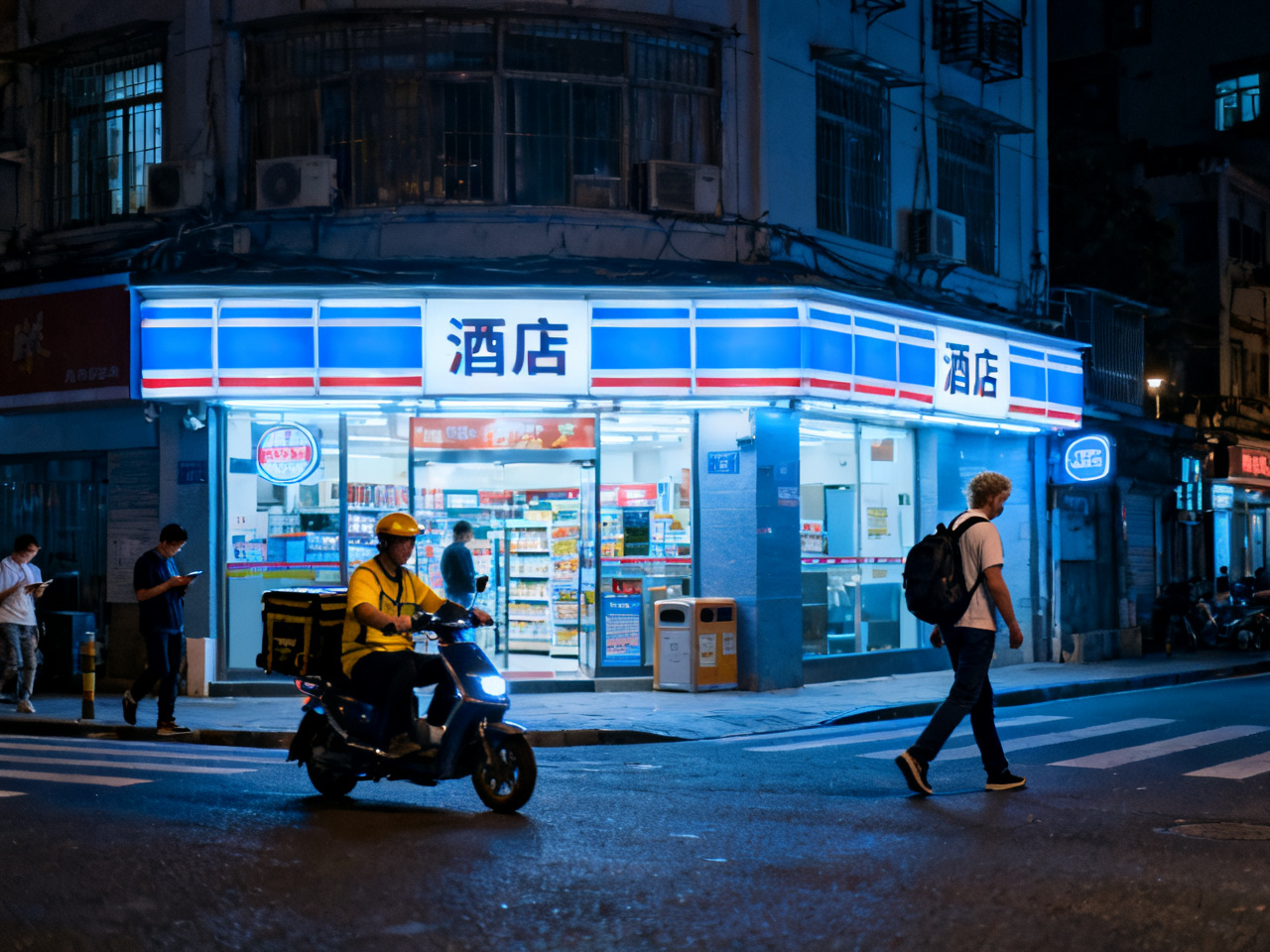
凌晨一点零七分,长沙一条不算大的街口,便利店的白色灯牌还亮着,电动车从路边滑过去,两个外卖骑手停在树下看手机,我一个人从地铁站方向往酒店走。刚来中国的时候,如果你告诉我,我会在这个时间段独自拖着脚步走回酒店,而且心里并不惊慌,我大概不会相信。因为我曾经对“安全”这个词抱着一种很抽象、很防备的理解:夜晚等于风险,一个人等于紧张,陌生城市等于必须把所有警觉拉满。
It was 1:07 a.m. at a modest street corner in Changsha. The white sign of a convenience store was still glowing. Electric scooters glided past the curb. Two delivery riders stood under a tree checking their phones. I was walking alone from the direction of the metro station back to my hotel. If you had told me when I first arrived in China that I would one day do this—walk alone at that hour in a city that was not my own, and feel more calm than afraid—I probably would not have believed you. My understanding of “safety” used to be abstract and defensive: night meant risk, being alone meant tension, and a foreign city meant keeping every alarm in the body turned on.
但我后来在中国学到的一件重要事情是:安全感并不是盲目乐观,也不是一句“这里很安全”就能让人放松。它是一种观察结果。它来自街道是否持续有人活动,店铺是否还在正常营业,路灯是否稳定,保安和前台是否在位,路人的节奏是否平稳,自己是否知道酒店、地铁和主路之间的关系。换句话说,我不是突然变大胆了;我是慢慢学会了判断。
But one important thing I learned in China is that safety is not blind optimism, and it does not come from hearing the phrase “it’s very safe here.” Safety is a conclusion you reach through observation. It comes from whether the street still has ordinary activity, whether shops are operating normally, whether streetlights are steady, whether security and hotel staff are present, whether pedestrians move in a calm rhythm, and whether I myself understand the relationship between the hotel, the metro, and the main road. In other words, I did not suddenly become brave. I gradually learned how to judge.
这篇文章想写的,不是神化任何地方,而是诚实记录:我这个外国人,是如何在中国几次具体的夜路经历里,把“安全感”从概念走成日常的。
What I want to do here is not romanticize any place, but record honestly how I, as a foreigner, turned “safety” from an idea into an ordinary lived feeling through several very concrete nighttime experiences in China.
第一段夜路:长沙,灯光不是装饰,是一种持续的日常 | Night Walk One: Changsha, Where Light Was Not Decoration but Continuity
那次我从一位朋友组织的小聚会离开时已经接近凌晨一点。地点在长沙一个商圈边缘,不是那种通宵喧闹的酒吧街,而是白天正常、晚上还留着余温的城市街区。朋友问我要不要叫车,我看了一眼地图,酒店只剩十几分钟步行。我犹豫了两秒,决定自己走回去。
The first time that feeling really crystallized was after a small gathering organized by a friend in Changsha. It was close to 1 a.m. The area was on the edge of a commercial zone—not a wild all-night bar street, but the kind of urban neighborhood that had lived a full day and still held residual warmth at night. My friend asked if I wanted to call a car. I checked the map. The hotel was only about a ten- to fifteen-minute walk away. I hesitated for two seconds and decided to walk.
我故意没有戴耳机。我把手机亮着握在手里,但不是因为害怕,而是因为我想一边走一边确认几个判断点:路口是否清楚,主路是否连续,沿路有没有正常营业的店,街边是否有清洁、配送、值班这类城市“夜间维护人员”。这些看起来很细,但对我而言,比“感觉如何”更重要。
I deliberately did not wear earphones. I kept my phone lit in my hand, not out of fear, but because I wanted to confirm several judgment points as I walked: whether the intersections were legible, whether the main road remained continuous, whether there were still normal businesses open along the way, and whether the city’s nighttime maintenance roles—cleaners, delivery workers, hotel staff, late-shift clerks—were still visible. These details may sound small, but to me they mattered more than vague feelings.
我看到的不是空荡荡的黑街,而是持续运转的城市切面:一个便利店店员正在把一箱矿泉水拖进门里;一位清洁工弯着腰把树下的落叶扫进簸箕;外卖骑手在等下一单,有人靠在车边喝水;马路对面的药店卷帘门拉下了一半,但里面还有灯;两个年轻女生一边聊天一边等红灯,语气和平常下午没有区别。
What I saw was not an empty, threatening strip of darkness, but an operating slice of the city: a convenience store clerk dragging a box of bottled water inside; a sanitation worker bending over to sweep leaves into a dustpan; delivery riders waiting for the next order, one leaning against his scooter to drink water; a pharmacy with its rolling shutter half down but its lights still on; two young women chatting while waiting at a red light in exactly the tone people use on an ordinary afternoon.
这些画面给我的感觉不是“热闹”,而是“正常”。而安全感,很多时候就是来自正常。
What these scenes gave me was not “excitement” but normalcy. And often, safety begins with normalcy.
第二段夜路:酒店前台那句“需要帮忙吗”为什么重要 | Night Walk Two: Why a Hotel Front Desk Matters More Than People Think
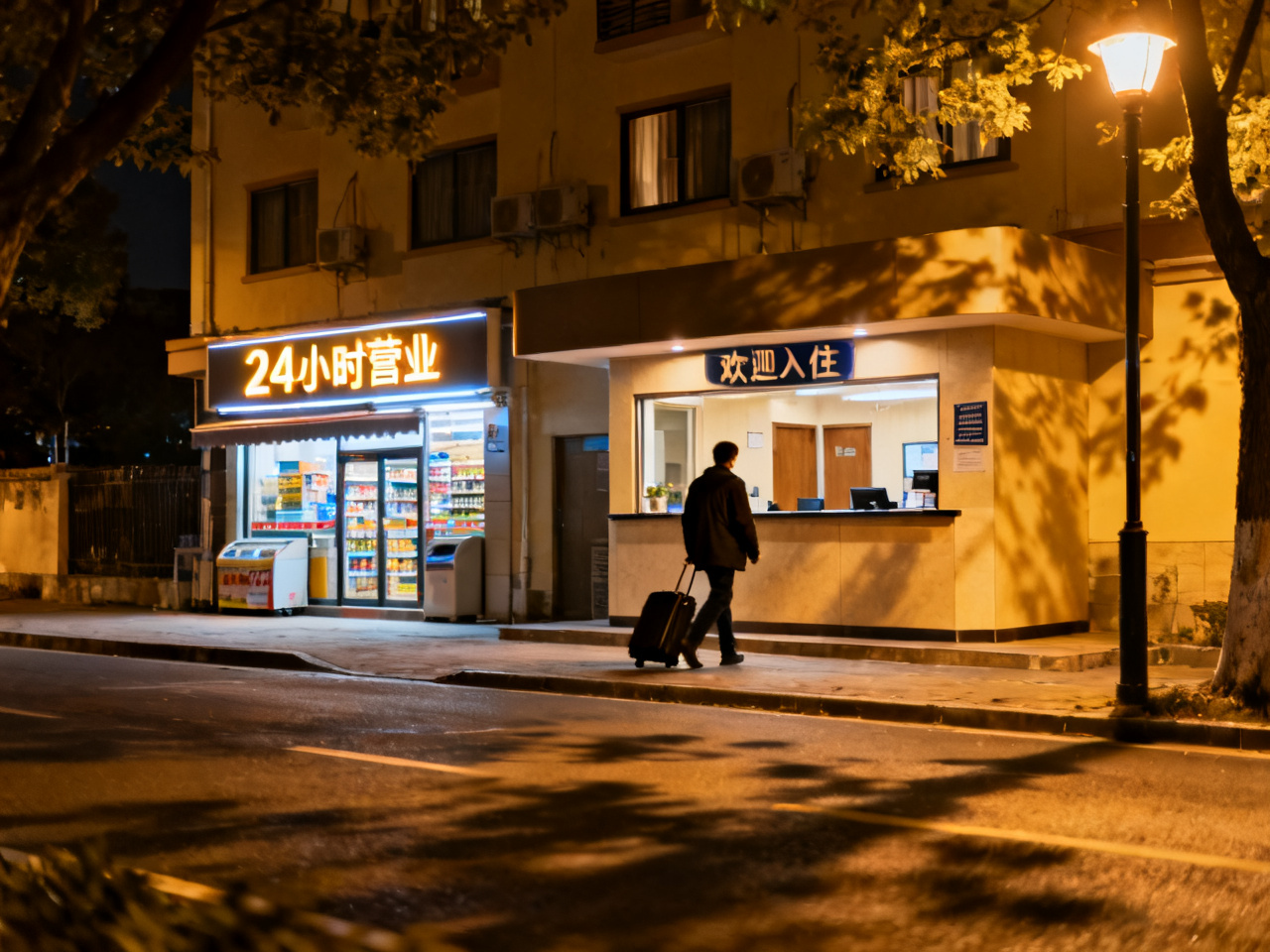
我后来在武汉也有过一次类似经历。那天晚上我从江边回来得晚,已经过了地铁最密集的时段。走进酒店大厅时,大堂灯光明亮,前台小姐姐正低头核对第二天的预订单,旁边还有保安坐着看监控。我只是刷卡进门,她抬头看我一眼,微笑着问:“您回来了,需要帮忙吗?”
I had a similar moment later in Wuhan. I came back late from the riverside, after the busiest metro period was over. When I entered the hotel lobby, the lights were bright, a young front-desk clerk was checking reservations for the next day, and a security guard sat nearby watching the monitors. I simply swiped my card and walked in. She looked up and smiled: “You’re back. Do you need any help?”
这句话很普通,但对一个夜里独自回酒店的外国人来说,它有很强的锚定作用。它说明什么?说明这个空间有人值守,有人注意到出入,有人能够在你需要时立刻参与。很多人谈论夜间安全时,只盯着“路上有没有危险”,却忽略了“抵达点是否可靠”。而我在中国越来越放心的一个原因,就是很多中等规模以上的酒店、连锁住宿、商场、交通枢纽,都有很稳定的在岗人员和流程感。
It was an ordinary sentence, but for a foreigner returning alone at night, it acted like an anchor. What did it tell me? It told me this space was staffed, observed, and ready to respond if needed. When people talk about safety at night, they often focus only on whether the street itself is risky, and overlook whether the destination is reliable. One reason I grew more at ease in China is that many mid-size hotels, chain properties, malls, and transport hubs have steady personnel and a strong sense of operational routine.
这也是为什么我现在订酒店时,不只看价格和照片,我会很在意前台是不是二十四小时、入口是不是清楚、周边有没有便利店、夜里回去是不是要穿过太偏的巷子。关于住酒店的细节,我以前还专门参考过在中国住酒店前先懂这五件事。它提醒我,安全感并不只发生在街上,也发生在你选择的落脚点里。
That is also why, when I book hotels now, I do not look only at price and photos. I care whether the front desk is truly 24-hour, whether the entrance is easy to identify, whether there is a convenience store nearby, and whether returning at night would require passing through overly isolated lanes. For hotel details, I once relied a lot on 在中国住酒店前先懂这五件事. It reminded me that safety is not only something that happens on the road. It is also built into where you choose to land.
第三段夜路:不是每条街都一样,我如何判断自己该不该继续走 | Night Walk Three: Not Every Street Is the Same, So How Do I Decide Whether to Keep Walking?
说中国夜里让我越来越安心,并不意味着我会在任何地方、任何时间都随便走。恰恰相反,正因为我后来变得更放松,我更重视判断,而不是神经紧绷式的恐惧。安全不是关闭警觉,而是升级警觉的质量。
Saying that nights in China began to make me feel more at ease does not mean I walk casually anywhere at any time. In fact, the more relaxed I became, the more I valued judgment over raw tension. Safety is not the absence of alertness. It is higher-quality alertness.
我通常会看五件事。
I usually look at five things.
第一,路线是不是“主路优先”。 我尽量选灯光稳定、店铺连续、转弯少的路,而不是图近钻进陌生小巷。
First: Is the route “main-road first”? I prefer roads with steady lighting, continuous storefronts, and fewer blind turns, rather than taking an unknown shortcut into a narrow lane.
第二,人是不是“各做各的正常事”。 如果路上有人,但都是在打车、买东西、聊天、扫地、取外卖,这种正常事务感会让我放松很多。
Second: Are people doing ordinary things? If the people I see are hailing cars, buying snacks, chatting, cleaning, or collecting deliveries, that ordinary-task atmosphere is deeply reassuring.
第三,我是不是知道下一个确定点在哪里。 比如一百米外还有便利店、拐角就是酒店、前面是有保安的写字楼门口。这种“下一站明确”会显著降低不确定性。
Third: Do I know where the next point of certainty is? A convenience store a hundred meters ahead, the hotel around the corner, a staffed office entrance nearby. Knowing the next stable point reduces uncertainty enormously.
第四,手机电量、网络、地图是不是正常。 这听起来简单,但这是判断里最实用的一层。不是因为非要依赖科技,而是因为在陌生城市,设备可用会让你少做很多冒险决定。
Fourth: Are my phone battery, signal, and maps functioning normally? This sounds obvious, but it is one of the most practical layers of judgment. Not because technology should replace awareness, but because a working device prevents unnecessary risky decisions.
第五,我有没有因为“想证明自己不怕”而勉强继续。 这是我给自己的提醒。任何时候,只要我觉得路线开始不舒服、周围过于安静、或者注意力下降,我就会打车,不会拿夜路练胆量。
Fifth: Am I continuing only because I want to prove I’m not scared? This is my personal warning sign. If a route starts to feel wrong, becomes too empty, or if my own concentration drops, I call a car. I do not use nighttime walking as a courage test.
我如何判断安全,而不是盲目乐观 | How I Judge Safety Instead of Being Naively Positive
有些朋友听我说这些经历,会误以为我是在表达“哪里都没问题”。完全不是。我的意思是,在中国很多城市里,我观察到一套能被普通人使用的判断框架。它让我既不夸大危险,也不假装什么都不会发生。
Some friends hear these stories and assume I mean “there are no problems anywhere.” That is not my point at all. What I mean is that in many Chinese cities, I found a judgment framework that ordinary people can actually use. It lets me avoid both exaggerating danger and pretending that nothing can happen.
比如在西安有一次,我本来打算从一个夜市步行回酒店。地图显示十五分钟,我站在街口看了两分钟后放弃了。为什么?因为离开主商业区以后,后面一段路灯明显变稀,沿街营业状态断断续续,转角多,而且我那天已经很累。那一晚我直接叫车,只花了十几块钱,但换来的是更稳的判断。我后来越来越认可一个原则:真正成熟的安全感,不是“我什么都敢”,而是“我知道什么时候不必硬撑”。
For example, in Xi’an once, I planned to walk back from a night market to my hotel. The map said fifteen minutes. I stood at the corner for two minutes, looked ahead, and gave up. Why? Because once the route left the main commercial area, the lights became noticeably sparse, the active storefronts turned intermittent, there were too many corners, and I was already tired that day. I called a car instead. It cost very little, but it gave me a more stable decision. I have increasingly come to believe a principle: real mature safety is not “I dare to do anything,” but “I know when I do not need to push.”
在中国打车这件事,实际也比很多初来者想象得容易。我之前第一次认真适应这件事时,也受过在中国打车这件事没你想的那么难的帮助。它的价值不只是省时间,更是让你在“不值得步行硬走”的时刻,有一个明确替代方案。
Getting a ride in China is also easier than many first-time visitors expect. When I first seriously learned to rely on it, I benefited from 在中国打车这件事没你想的那么难. Its value is not only saving time. It gives you a clear alternative when a walk simply is not worth forcing.
给独行外国人的具体夜路建议 | Concrete Night-Walking Advice for Solo Foreign Travelers
在真正开始执行这些建议之前,我还会做一个很简单的“出门前检查”:酒店名片或中文地址有没有截图,手机是不是至少还有三十以上电量,充电宝在不在包里,回酒店的大致方向我白天有没有走过一次。如果这几个条件都满足,我的夜路判断会稳定很多;如果其中有两三项都缺,我就会直接把步行改成打车。
Before actually following any of these suggestions, I also do a very simple pre-walk check: have I saved a screenshot of the hotel name or Chinese address, is my phone above roughly thirty percent battery, is my power bank in the bag, and have I already walked the general route back in daylight once? If these conditions are in place, my judgment at night becomes much more stable. If two or three of them are missing, I usually switch from walking to taking a car immediately.
1. 先把落脚点选对,再谈夜里敢不敢走 | Choose the Right Base Before Asking Whether You Can Walk at Night
住处周边有便利店、连锁餐饮、地铁口、酒店前台和值守人员,比“房间便宜一点”重要得多。
A neighborhood with convenience stores, chain eateries, metro access, a real hotel front desk, and visible staff matters far more than saving a little money on the room.
2. 第一天别拿自己做实验 | Don’t Use the First Night as an Experiment
第一次到一个城市,先白天把酒店到地铁、酒店到主路的关系走明白。晚上再回来时,身体已经记住路线,会安心很多。
When you first arrive in a city, walk the relationship between your hotel, the metro, and the main road during the day. At night, your body will already remember the route, and that makes a huge difference.
3. 不戴耳机,手里拿着手机但别沉迷 | No Earphones, and Hold Your Phone Without Disappearing Into It
手机是工具,不是让你把注意力完全吸走的屏幕。偶尔看导航可以,但持续低头会降低判断力。
Your phone is a tool, not a portal that should absorb all your attention. Checking navigation is fine; disappearing into the screen is not.
4. 主路优先,灯光优先,连续营业优先 | Prioritize Main Roads, Lighting, and Continuous Activity
别为了省三分钟穿奇怪的小路。尤其是你还不熟悉街区的时候,连续可见的人和店面就是非常实际的安全资源。
Do not cut through odd side routes to save three minutes. When you do not know the neighborhood well, visible people and active storefronts are real safety resources.
5. 累的时候不要逞强 | Don’t Perform Bravery When You’re Tired
疲惫会让你判断变差,连地图都更容易看错。累,就打车;晚,就保守一点;不确定,就回到有人值守的地方再判断。
Fatigue weakens judgment and makes even maps look confusing. If you are tired, call a car. If it is late, be conservative. If uncertain, move toward a staffed, well-lit place and decide there.
结尾:我不是把夜晚想得太美,而是把判断练得更具体 | Ending: I Didn’t Romanticize the Night, I Made My Judgment More Concrete
还有一点我现在越来越重视:安全感不只是来自外部环境,也来自你自己的体面准备。穿合适的鞋、别让双手都被购物袋占满、别在太累的时候强行继续逛、别把酒店订到自己都搞不清入口的位置——这些决定看起来和“夜路”没那么直接,却会在真正走回去的那十几分钟里全部显现出来。
There is another point I value more and more now: safety does not come only from the external environment, but also from the dignity of your own preparation. Wear reasonable shoes. Don’t let both hands be occupied by shopping bags. Don’t force yourself to continue when you are too tired. Don’t book a hotel whose entrance you yourself can barely identify. These decisions may not look directly connected to a nighttime walk, but all of them show up during the fifteen minutes when you actually make your way back.
现在回头看,我在中国夜里第一次真正放松,不是在某个“绝对安全”的时刻,而是在一个非常普通的瞬间:街口有人,店里有灯,前台在岗,我知道自己离酒店还有几分钟。我意识到,安全感不是一口气从零跳到一百的,它是很多次小判断都得到验证后的累积。
Looking back now, the first time I truly relaxed at night in China was not during some magically “perfectly safe” moment. It was in a very ordinary one: people at a corner, lights inside a shop, a staffed hotel desk ahead, and only a few minutes left to walk. I realized then that safety does not leap from zero to one hundred. It accumulates after many small judgments prove reliable.
我也不想把这种感受说得过满。每座城市不同,每条街不同,每一天的状态也不同。但我可以诚实地说,中国许多城市给我的夜间体验,确实让我重新定义了“一个人走回酒店”这件事。它不再自动等于冒险,而变成了一种可以被评估、被安排、被稳稳完成的日常行动。
I also do not want to overstate this feeling. Every city is different. Every street is different. My own condition changes from day to day as well. But I can say honestly that the nighttime experience in many Chinese cities has genuinely redefined what “walking back to my hotel alone” means to me. It no longer automatically equals danger. It has become an ordinary action that can be evaluated, planned, and completed calmly.
如果你也是独行来到中国的外国人,我最想给你的不是一句“别怕”,而是一套更实在的话:先看灯,先看人,先看落脚点,先给自己留退路。真正的安心,不是盲目自信,而是你知道自己为什么此刻可以安心。
If you are also a foreign traveler in China on your own, what I most want to offer you is not the phrase “don’t be afraid,” but something more concrete: first look at the lights, then the people, then your landing point, and always leave yourself an exit option. Real calm is not blind confidence. It is knowing exactly why this moment is one in which you can afford to be calm.
如果一定要把这种经验压缩成一句最简单的话,我会说:夜里的中国城市让我放心的,不是“完全没有陌生”,而是“陌生里仍然有秩序”。路灯是连续的,店铺是可理解的,工作人员是看得见的,路人的行为是可预期的,而我自己的路线也是提前想过的。正是这些一层一层叠起来的确定感,让我在很多凌晨时分,能够很平静地把最后那段路走完。
If I had to compress this experience into one final sentence, I would say this: what reassured me in Chinese cities at night was not the absence of unfamiliarity, but the presence of order inside unfamiliarity. The streetlights were continuous, the shops were legible, the staff were visible, the behavior of passersby was predictable, and my own route had been thought through in advance. Layer by layer, that accumulation of certainty allowed me to complete the final stretch of the night with real calm.
而且这种安全感一旦建立,会反过来改变你看城市的方式。你不再把每个夜晚都当成必须逃离的空白时段,而会开始注意到夜班店员的耐心、清洁工的稳定、保安和前台的存在、路灯和路牌的连续性。城市的夜晚不再只有“危险”或“热闹”两种标签,它会出现第三种更重要的质地:可靠。
And once that sense of safety is established, it changes the way you see the city in return. You no longer treat every night as a blank stretch that must simply be escaped. You begin to notice the patience of late-shift clerks, the steadiness of cleaners, the presence of guards and hotel staff, and the continuity of lights and signs. The city at night stops being only “dangerous” or “lively.” A third quality appears, and it matters more than both: reliability.
- 云南雨季反向玩法:人少、景美、预算可控 | Yunnan in Rainy Season: Fewer Crowds, Better Value
- 六月在中国,我会把古镇、山路和夜市拆开来走 | In June in China, I Split Old Towns, Mountain Paths, and Night Markets into Different Rhythms
- 黄山云海与迎客松:四季皆美 | Huangshan Sea of Clouds & Welcome Pine: Beautiful in All Seasons
- 我在上海地铁早高峰里学会先站稳再看地图 | In Shanghai Morning Rush Hour, I Learned to Stand Still Before Reading the Map
- 坡子街地面刚发亮的时候,我决定不再拿长沙和时间赛跑 | When Pozi Street Began to Shine After Rain, I Stopped Racing Changsha
- 春节民俗全攻略:年夜饭到庙会 | Spring Festival Guide: New Year Dinner to Temple Fairs
- 雾江边的一晚重庆火锅 | A Foggy-River Evening of Chongqing Hotpot
- 扇面书画体验:我第一次觉得“留白”也可以是一种邀请 | Fan Painting and Calligraphy: The First Time I Felt Blank Space Could Be an Invitation
- 中国城市通勤怎么选:地铁、打车、骑行的真实差别 | Metro, Taxi, or Bike: How Commuting Really Works in Chinese Cities
- 烤鸭不只是一道菜,它是北京给世界的一封信 | More Than a Dish: Peking Duck as Beijing's Letter to the World
Comments (0)