
一块豆腐的两千年旅程 | A Block of Tofu's Two-Thousand-Year Journey
一块豆腐的两千年旅程 | A Block of Tofu's Two-Thousand-Year Journey
我奶奶做豆腐不用石膏,用的是酸浆。 她说这是她妈妈教的,她妈妈又是从她妈妈那里学的。那口磨豆腐的石磨现在还搁在安徽老家的院子里,长满了青苔。我每次回去看见它,都觉得自己摸到了某种很古老的东西的尾巴——豆腐这玩意儿,在中国已经转了两千多年了。
My grandmother never used gypsum to make tofu — she used sour whey. She said her mother taught her, who learned it from her mother before that. The stone mill they used still sits in the courtyard of our old home in Anhui, covered in moss. Every time I visit and touch it, I feel like I'm grasping the tail of something impossibly ancient. Tofu has been spinning through China for over two thousand years.
起源:淮南王的意外发明
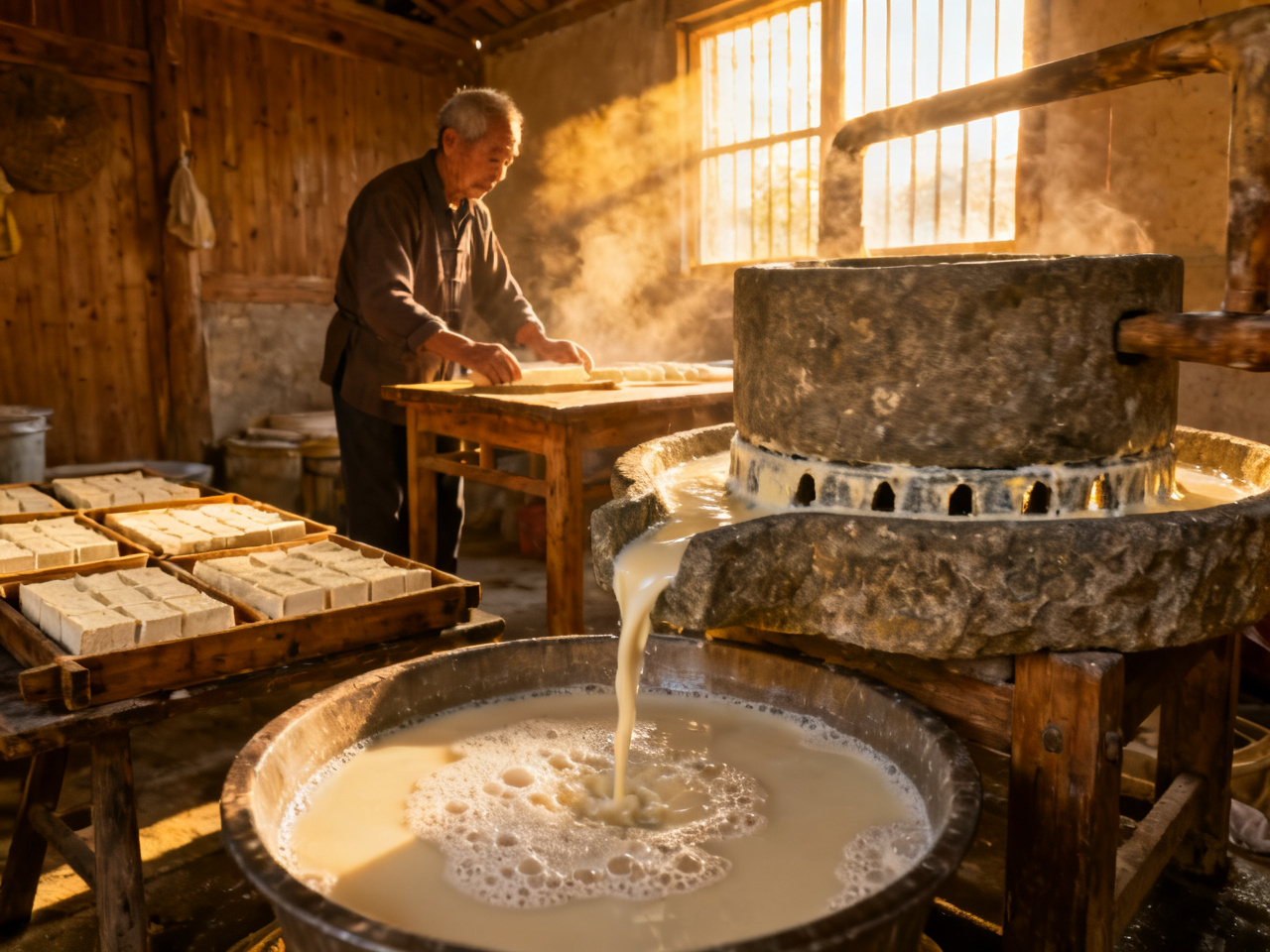
公元前164年左右,淮南王刘安在炼丹时把豆浆和石膏混在了一起——传说就是这么开始的。安徽淮南至今把自己定位为"豆腐之乡",每年九月十五举办豆腐文化节,全城飘着豆香。八公山脚下的豆腐作坊保留着最古老的手工工艺:泡豆、磨浆、煮浆、点卤、压制,五个步骤缺一不可。淮南的泉水豆腐口感极嫩,筷子夹起来会微微颤抖,当地人管这叫"活豆腐"。
Origin: Prince of Huainan's Accidental Invention
Around 164 BCE, Liu An, the Prince of Huainan, allegedly mixed soy milk with gypsum during an alchemy experiment — and legend says that's how it all started. Huainan in Anhui still brands itself the "Hometown of Tofu," hosting an annual Tofu Culture Festival on September 15th, the entire city fragrant with soy. Workshops at the foot of Bagong Mountain preserve the oldest handcraft methods: soaking beans, grinding, boiling, coagulating, pressing — five steps, not one skippable. Huainan's spring-water tofu is so tender it trembles between chopsticks. Locals call it "living tofu."
从淮南出发,豆腐沿着长江和运河向全国扩散。到了宋代,《东京梦华录》里已经记载了开封街头卖煎豆腐的小贩。明清时期,豆腐彻底融入了中国人的日常——穷人靠它补充蛋白质,富人用它做出花样百出的宴席菜。
From Huainan, tofu spread nationwide along the Yangtze and the Grand Canal. By the Song Dynasty, Dreams of Splendor of the Eastern Capital already documented street vendors selling pan-fried tofu in Kaifeng. During the Ming and Qing dynasties, tofu became fully woven into daily Chinese life — the poor relied on it for protein, while the wealthy turned it into elaborate banquet dishes.
臭名远扬:臭豆腐的南北之争
豆腐家族里最有争议的成员,非臭豆腐莫属。长沙火宫殿的黑色臭豆腐是湖南人的骄傲——外皮炸到漆黑酥脆,内里雪白嫩滑,浇上蒜汁辣椒,一口咬下去先闻到臭再尝到香。据火宫殿官方数据,旺季单日售出臭豆腐超过一万五千份。而在绍兴和南京,臭豆腐是另一个物种:蒸的、煮的、配毛豆米的,味道更幽微,臭得更含蓄。
Notoriously Famous: The North-South Stinky Tofu Debate
The most controversial member of the tofu family is undoubtedly stinky tofu. Changsha's Fire Palace Temple serves jet-black stinky tofu that Hunanese wear as a badge of honor — fried until the crust is pitch-dark and crackling, the inside snow-white and silky, drenched in garlic and chili. You smell the funk first, then taste the fragrance. According to Fire Palace's own figures, peak-season daily sales exceed 15,000 servings. In Shaoxing and Nanjing, stinky tofu is a different species entirely: steamed, simmered, paired with edamame, the flavor more subtle, the stink more restrained.
北方的臭豆腐则走了发酵路线。北京王致和的腐乳从清康熙年间做到现在,三百多年没断过。青灰色的豆腐块泡在红色的卤汁里,咸鲜中带着一股发酵的醇厚,抹在馒头上就是老北京最朴素的早餐。有人说王致和腐乳是"中国的奶酪",这个比喻倒也精确——两者都是微生物对蛋白质的魔术。
Northern stinky tofu takes the fermentation route. Beijing's Wangzhihe brand has been making fermented tofu since the Kangxi reign of the Qing Dynasty — over three hundred years without interruption. Gray-blue blocks sit in reddish brine, salty and savory with a deep fermented richness. Spread on steamed bread, it's old Beijing's most humble breakfast. Some call Wangzhihe fermented tofu "China's cheese" — an apt metaphor, since both are microbes performing magic on protein.
麻婆豆腐:一个寡妇的传奇
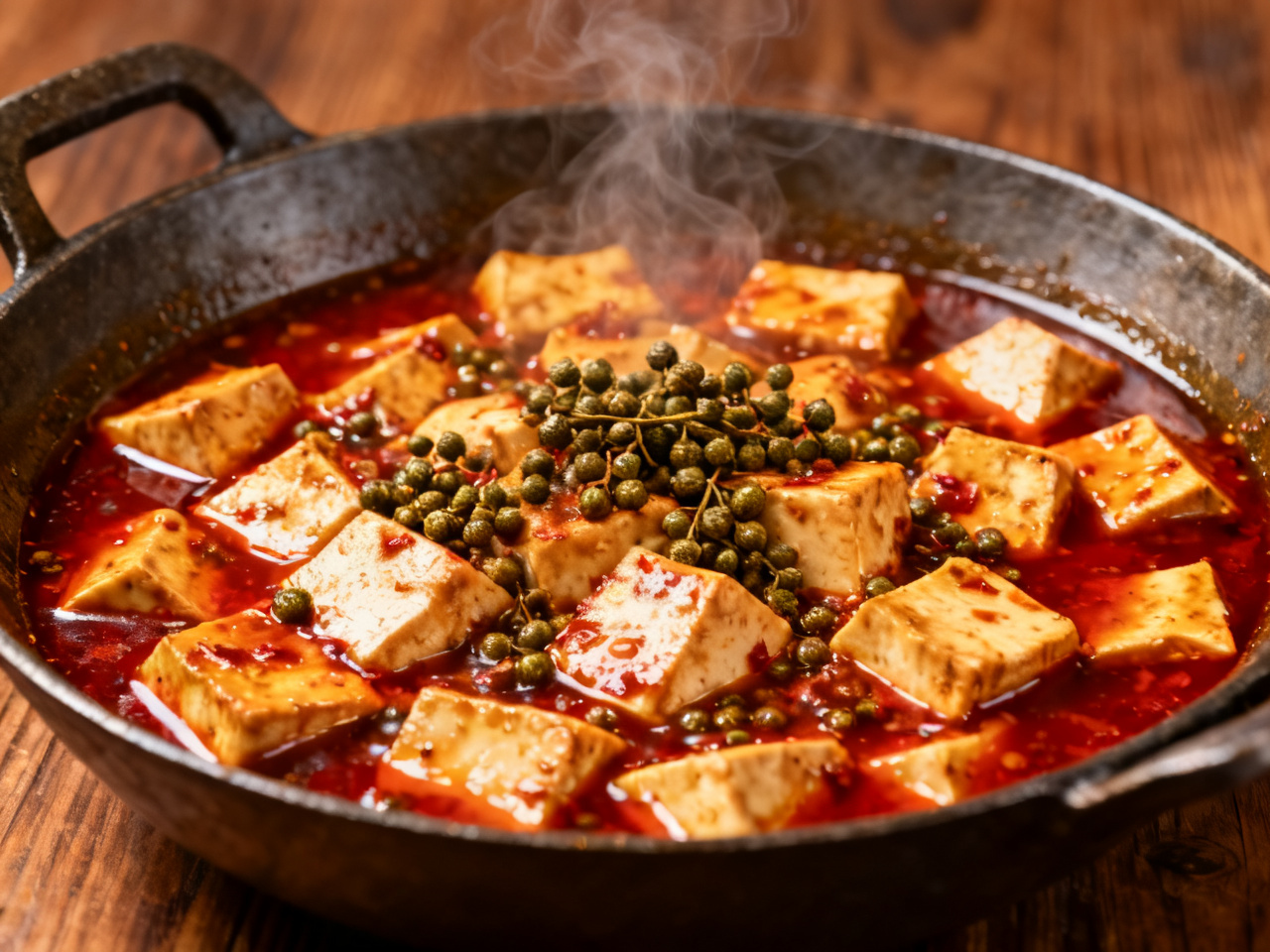
说到豆腐的巅峰之作,绕不开成都的麻婆豆腐。同治年间,成都北门万福桥边有家小饭铺,老板娘姓陈,脸上有麻子,人称"陈麻婆"。她做的豆腐用牛肉末、豆瓣酱、花椒和红油烹制,麻辣烫鲜嫩酥香——八个字,字字有出处。如今成都的陈麻婆豆腐老店每天要消耗超过五百斤豆腐,食客从早排到晚。这道菜也随着川菜的全球扩张,成了外国人认知度最高的中国豆腐菜。如果你对川菜的火辣世界感兴趣,不妨也看看重庆火锅的故事。
Mapo Tofu: A Widow's Legend
Any discussion of tofu's peak must include Chengdu's mapo tofu. During the Tongzhi reign, a small eatery stood beside Wanfu Bridge at Chengdu's north gate. The proprietress, surnamed Chen, had a pockmarked face — hence "Chen Mapo." Her tofu was cooked with minced beef, doubanjiang, Sichuan peppercorn, and red oil, achieving eight defining qualities: numbing, spicy, hot, fresh, tender, crispy, fragrant, and flaky. Today, the original Chen Mapo Tofu restaurant in Chengdu goes through over 250 kilograms of tofu daily, with lines from morning to night. The dish has ridden Sichuan cuisine's global expansion to become the most internationally recognized Chinese tofu dish. If the fiery world of Sichuan food intrigues you, check out the story of Chongqing hotpot as well.
豆腐的当代生活
今天的中国每年消耗大约八百万吨大豆用于豆制品生产。豆腐已经远远超越了食物本身的意义。在西安回民街上,你能吃到回民风味的炒豆腐脑;在广东的早茶餐桌上,豆腐花浇上糖水是甜品;在东北的杀猪菜里,冻豆腐吸满了骨汤的精华。同一块豆腐,到了不同的人手里,就活成了不同的样子。
Tofu's Contemporary Life
China today consumes approximately eight million tons of soybeans annually for bean-product manufacturing. Tofu has far transcended its identity as mere food. On Xi'an's Muslim Quarter streets, you can eat stir-fried tofu pudding with Hui-style seasoning; at Cantonese morning tea, tofu flower drizzled with sugar syrup becomes dessert; in northeastern China's pig-slaughter feasts, frozen tofu soaks up every drop of bone-broth essence. The same block of tofu, in different hands, lives a different life.
我有时候想,豆腐大概是中国人性格的某种投射。它本身没什么强烈的味道,却能吸纳一切调味;它看起来柔软脆弱,却经得起煎炒烹炸、风吹日晒、冰冻发酵。两千年了,它还是那块豆腐,又早已不是那块豆腐。
Sometimes I think tofu is a kind of projection of the Chinese character. On its own it has no strong flavor, yet it absorbs every seasoning thrown at it. It looks soft and fragile, yet withstands frying, stir-frying, braising, deep-frying, sun-drying, freezing, and fermenting. Two thousand years on, it's still that same block of tofu — and it's long since become something else entirely.
- 火锅点单避坑指南:第一次吃别踩这些雷 | Hot Pot Ordering Survival Guide: Avoid These Mistakes on Your First Visit
- 桂林喀斯特山水:自然之美 | Guilin Karst Mountains: Nature at Its Best
- 扬州雨后最动人的,不是园子名气,而是鞋底碰到湿石板的那一下 | In Rainy Yangzhou, the Most Moving Thing Is Not a Famous Garden but the Sound of Shoes on Wet Stone
- 无锡下班路口最动人的,不是风景,而是每个人都知道怎么让一让 | What Moves Me Most at a Wuxi Rush-Hour Crossing Is Not the View but the Way People Yield
- 一笼一世界:在茶楼里读懂广东人 | One Basket, One World: Reading Cantonese Culture Through Dim Sum
- 中国民间艺术:剪纸、皮影与年画 | Chinese Folk Art: Paper-Cutting, Shadow Puppets & New Year Prints
- 古镇民俗体验:赶集、社戏与手工艺 | Ancient Town Folk Culture: Markets, Opera & Crafts
- 成都茶馆里的一下午,比三个景点更让我记住这座城 | An Afternoon in a Chengdu Teahouse Stayed With Me More Than Three Attractions
- 西安夜市排队课:别盲追最长队伍 | A Xi’an Night Market Lesson: Don’t Chase the Longest Queue Blindly
- 在八大关和海边之间,我才明白青岛好走的从来不是直线 | Between Badaguan and the Waterfront, I Learned That Qingdao Is Never Best Read in a Straight Line
Comments (0)