
学会说“麻烦了”之后,我在中国的人际距离一下子变顺了 | After I Learned to Say Máfan Le, My Social Distance in China Suddenly Became Smoother
16# 学会说“麻烦了”之后,我在中国的人际距离 suddenly 变顺了 | After I Learned to Say “Máfan Le,” My Social Distance in China Suddenly Became Smoother
如果你问我,在中国学会的最有用一句话是什么,我不会先说“谢谢”,也不会先说“你好”。我会先说“麻烦了”。这三个字我第一次说出口,是在成都一个下着细雨的下午。那天四点五十,我在锦江边一条打车不太方便的小路口等车,雨点不大,却把地砖打得一层发亮。网约车司机绕了半圈才找到我,我上车时一只手拎着被雨打湿的购物袋,另一只手忙着关门,脑子里还在担心自己是不是让对方多等了。门合上的那一刻,我几乎是凭本能说了一句:“麻烦了。”司机从后视镜里看了我一眼,笑了,语气也一下柔和下来:“没事,雨天都这样。”就是这么小的一次交换,让我后来在中国很多天里反复想起这句话。
If you ask me what the most useful phrase I learned in China was, I would not answer “thank you” first, and I would not answer “hello” first either. I would say “máfan le.” The first time I used it was on a drizzly afternoon in Chengdu. It was 4:50 p.m., and I was waiting for a ride on a side street near the Jinjiang River where cars did not stop easily. The rain was light, but it had polished the pavement into a reflective shine. My driver had to circle around before finding me. I climbed in with one hand carrying a shopping bag damp from the rain and the other pulling the door shut, worried that I had already made him wait too long. The moment the door closed, I said almost by instinct, “Máfan le.” The driver looked at me in the rearview mirror, smiled, and answered in a softer tone, “It’s okay. Rainy days are like this.” That tiny exchange stayed with me for days.
在别的语言里,我也会说礼貌话,可是“麻烦了”给我的感觉和单纯的“谢谢”不太一样。谢谢更多是在事情完成之后,表达感激;而“麻烦了”常常发生在事情进行之中,像你先承认:我知道你为了我多做了一点、绕了一下、停了一会儿、解释了一遍,所以我先把这份体谅说出来。对一个外国人来说,这种语气特别有用,因为它能把我和陌生人的距离,调到一个既不生硬也不过分热络的位置。
In other languages, I use polite words too, but “máfan le” feels different from a simple “thank you.” “Thank you” often comes after something is completed. “Máfan le,” by contrast, often appears while something is still happening. It is like saying: I know you had to do a little extra for me, detour a bit, wait a moment, explain one more time, so I want to acknowledge that effort now. For a foreigner, that tone is incredibly useful because it sets the distance between me and a stranger at a point that is neither stiff nor overly intimate.
一、我以前太依赖“谢谢”,后来才发现它有时太晚了 | I Used to Rely Too Much on “Thank You,” and Later Realized It Sometimes Comes Too Late
刚到中国时,我把礼貌理解得很简单:见面说你好,办完事说谢谢,不懂时说不好意思。它当然不算错,但总像把每段互动切得很整齐,像先开门、再做事、再关门。可中国城市里的很多互动并不是这么规整。你进电梯时请人帮你按住门,买咖啡时请店员少冰,问地铁保安这个出口是不是更近,拿快递时让驿站阿姨帮你再找一下,甚至在餐馆里请服务员加一双筷子,这些事都不是“大忙”,却都是别人临时替你腾出一点精力来处理。这个时候,只在最后说谢谢,好像少了一点过程里的体谅。
When I first arrived in China, my understanding of politeness was simple: say hello when meeting someone, say thank you when the task is done, say sorry when confused. That was not exactly wrong, but it cut each interaction into neat blocks—as if you open the door, do the thing, then close the door. Yet many interactions in Chinese cities are not so tidy. You ask someone to hold the elevator, ask a café worker for less ice, ask a metro guard whether one exit is shorter, ask the package-station auntie to search one more time for your parcel, or ask a restaurant server for an extra pair of chopsticks. None of these are huge favors, but they all require someone to shift a little energy toward you in the moment. In those situations, saying thank you only at the end can feel like it misses the courtesy that belongs inside the process.
我是在一次咖啡店里真正意识到这个差别的。那家店在成都太古里附近,午后人很多,收银台前面排了七八个人。我点单时临时想改成燕麦奶,又问能不能少冰,再补一句我没有会员码,手机网有点慢。换作在别的地方,我可能会连续提要求,然后最后统一说谢谢。但那天我下意识地在每个小请求前都加了一句“麻烦了”。“麻烦了,燕麦奶可以吗?”“麻烦了,少冰。”“麻烦了,我网有点慢。”店员没有表现出不耐烦,反而一直很自然地接住我。轮到取咖啡时,她把杯子递给我,还笑着提醒:“地上有点滑,小心。”那一刻我突然懂了,礼貌不只是结尾那句感谢,它也可以是让过程变顺的一种润滑。
I fully noticed the difference in a coffee shop near Taikoo Li in Chengdu. It was crowded in the afternoon, with seven or eight people lined up before the register. While ordering, I decided at the last second to switch to oat milk, then asked for less ice, then added that I had no membership code and my phone signal was slow. Somewhere else, I might have stacked all those requests and then offered one thank you at the end. But that day, almost unconsciously, I placed “máfan le” before each little request. “Máfan le, is oat milk okay?” “Máfan le, less ice.” “Máfan le, my internet is a bit slow.” The barista showed no impatience. She simply received each request naturally. When my drink was ready, she handed it over and added with a smile, “The floor is a little slippery—be careful.” That was when I understood that politeness is not only the thank-you at the end. It can also be the lubricant that makes the whole process run more smoothly.
二、“麻烦了”到底在帮什么忙 | What Exactly “Máfan Le” Helps With
后来我把这句话拆开想了很久。它真正帮到我的,至少有三件事。第一,它让我不必假装自己理所当然地占用别人时间。第二,它把我的请求从“命令”轻轻推回到“商量”。第三,它让我作为外国人,少了一点那种怕自己说错、做错、显得太直接的紧绷。因为当我先说出体谅,后面的句子哪怕很简单,气氛也会柔和很多。
Later I spent a long time thinking about why this phrase worked so well. At least three things changed for me. First, it let me avoid acting as if other people’s time naturally belonged to me. Second, it shifted my requests from sounding like instructions back into something closer to consultation. Third, as a foreigner, it reduced that tight fear of saying the wrong thing, doing the wrong thing, or sounding too direct. Once I expressed consideration first, even a very simple sentence that followed felt softer.
我在中国的很多好体验,其实都发生在这些微小互动里。比如小区门口保安帮我确认访客登记该怎么做;比如便利店店员替我把热柜里最里面那只饭团拿出来;比如出租车司机在一个不好停车的路口多往前蹭了十几米,就为了让我不用踩进积水里。严格说来,他们都只是完成工作的一部分,但人和人之间的感受,往往就在这种“多做一点点”的地方拉开。说“麻烦了”,不是夸张地把小事说成大恩,而是承认这点多出来的照顾。
Many of my best experiences in China happened in exactly these tiny interactions: a residential compound guard helping me confirm how visitor registration worked; a convenience-store clerk reaching to the very back of the hot shelf to get the last rice ball; a taxi driver nudging forward another few meters at an awkward curb so I would not have to step into standing rainwater. Strictly speaking, all of them were still doing part of their jobs. But the human feeling between people often changes in that extra little bit. Saying “máfan le” is not exaggerating a small favor into a grand debt. It is recognizing the care contained in that slight extra effort.

三、几个我最常用的高频表达 | The High-Frequency Expressions I Ended Up Using Most
学会“麻烦了”以后,我开始把一整套更柔和的中文礼貌表达串起来用。最常见的是这几个。第一,“麻烦了”,适合请别人做一个具体动作时使用。第二,“不好意思”,适合你需要打断、借过、占一点空间时说。第三,“辛苦了”,我会在外卖员、快递员、保洁阿姨、值班前台这种明显还在工作状态的人面前用,它不是必须,但常常能让对方听见你看见了他的辛苦。第四,“谢谢”,当然仍然重要,而且最好不要被前面那些词替代掉。对我来说,它们不是互斥的,而像一组工具。
After learning “máfan le,” I started connecting it with a whole set of softer Chinese courtesy phrases. These were the ones I used most. First, “máfan le,” for asking someone to do a specific thing. Second, “bù hǎo yì si,” which works when you need to interrupt, squeeze past, or take up a little space. Third, “xīn kǔ le,” which I use with delivery workers, package couriers, cleaners, and front-desk staff—people who are clearly still in the middle of labor. It is not mandatory, but it often lets them hear that you noticed their effort. Fourth, “thank you,” which of course still matters and should not be replaced by the others. To me, these phrases are not mutually exclusive. They are more like a toolkit.
比如打车时,我现在常常会说:“师傅,麻烦了,前面那个门口放我下就行。”如果对方雨天绕路或者帮我找更安全的位置,我下车时会再补一句:“辛苦了,谢谢。”在咖啡店里,我可能会说:“不好意思,麻烦了,我想少冰。”在小区门口,我问路会说:“你好,麻烦了,我找这栋楼,应该从哪边进?”在电梯口,如果别人帮我按着门,我会先说“谢谢”,如果我还要拖着箱子慢慢进去,就会再加一句“不好意思,麻烦了”。这些词一层一层叠上去,听起来一点都不复杂,反而很自然。
In taxis, I now often say something like, “Driver, máfan le, dropping me at that doorway ahead is perfect.” If the driver detours in rain or stops in a safer place for me, I add, “Xīn kǔ le, thank you,” when getting out. In a coffee shop, I might say, “Sorry, máfan le, I’d like less ice.” At a residential gate, when asking directions, I say, “Hello, máfan le, I’m looking for this building—where should I enter?” At an elevator, if someone holds the door, I say “thank you,” and if I am dragging luggage and entering slowly, I add “sorry, máfan le.” Layered together, these phrases do not sound complicated. They sound natural.
四、语言改变的不只是耳朵里的礼貌,还有身体里的安全感 | Language Changed Not Only Politeness, but Also My Physical Sense of Safety
这点可能听起来有点意外,但我在中国建立安全感,部分竟然是靠这些礼貌表达完成的。原因很简单:当你能用当地人熟悉的方式发出一个小请求,很多事情就不再需要硬扛。你问路会更自然,进错门会更敢回头确认,找不到订单会更愿意请店员帮看一眼,夜里回酒店如果想请前台帮你叫车,也不会觉得自己是在制造麻烦。礼貌语言把“求助”这件事,从尴尬里拎了出来,放回到正常生活里。
This may sound surprising, but part of how I built a sense of safety in China came through these courtesy phrases. The reason is simple: once you can make a small request in a way that feels familiar to local people, many situations no longer require you to struggle silently. You ask directions more naturally. If you enter the wrong door, you feel more comfortable turning back to confirm. If you cannot find your order, you are more willing to ask staff to check once more. If you return to your hotel late and need the front desk to help call a car, it no longer feels like you are creating a burden. Polite language lifts asking for help out of embarrassment and returns it to ordinary life.
我以前旅行时有一种坏习惯:怕麻烦别人,所以宁可自己多绕二十分钟,也不愿意开口。可在中国,很多时候真正高效、也真正安全的方式,反而是及时说一句“麻烦了”。这和我后来读到的关于在中国主动求助的相关经验特别一致:不是因为你无助才开口,而是因为这里很多日常系统本来就支持你开口。会说礼貌话,只是让这个开口更顺。
When I traveled before, I had a bad habit: I was so afraid of troubling others that I would rather wander twenty extra minutes than ask a question. In China, though, the most efficient and often the safest move is often to say “máfan le” at the right moment. That matches what I later read in this related experience about asking for help in China: speaking up is not a sign of helplessness. Many everyday systems here already support the idea that you may ask. Knowing the polite language just makes the asking smoother.
五、我也学会了分场合,不把礼貌说成表演 | I Also Learned to Match the Setting Instead of Performing Politeness
当然,语言再好用,也不是越多越好。刚开始我一度说得太频繁,几乎每句都想塞一个“麻烦了”,结果听起来反而像背课文。后来一位中国朋友提醒我,真正自然的礼貌不是堆砌词汇,而是看场景。比如在快节奏的早餐店里,你简单说一句“麻烦了”已经很够;在安静的酒店前台,你可以把句子说完整一点;在路边借过时,一个“借过,不好意思”比一长串解释更有用。那之后我才明白,礼貌表达和衣服一样,合身比华丽更重要。
Of course, no phrase becomes better simply by being used more. At first I overused “máfan le” so much that I almost wanted to insert it into every sentence, and the result started sounding like a memorized textbook. Later, a Chinese friend reminded me that natural politeness is not about stacking vocabulary but about reading the scene. In a fast-moving breakfast shop, one quick “máfan le” is plenty. At a quiet hotel front desk, you can speak in a fuller sentence. When squeezing past people on the street, “Excuse me, sorry” works better than a long explanation. Only then did I understand that courtesy phrases are like clothes: fit matters more than decoration.
另一个让我受益很大的变化,是我开始认真听别人怎么说。成都有很多生活场景都很适合练耳朵:司机和乘客之间、店员和顾客之间、保安和住户之间,礼貌不一定是正式腔调,而是一种松弛但清楚的拿捏。有人会说“麻烦你了”,有人只说“麻烦了哈”,有人搭配笑一下,语气就已经足够。对外国人来说,这种观察很重要,因为它能帮你避免把中文礼貌学成僵硬模板。你不是在背标准答案,而是在加入一个真实的生活节奏。
Another change that helped me a great deal was learning to listen carefully to how other people said these things. Chengdu is full of scenes where your ears can practice: drivers and passengers, shop staff and customers, guards and residents. Politeness there is not always formal speech. It is often a relaxed but clear calibration. Some people say “máfan nǐ le,” some say “máfan le ha,” and sometimes a slight smile does half the work. For foreigners, this kind of observation matters because it prevents Chinese politeness from turning into a rigid script. You are not memorizing one correct answer. You are joining a living rhythm.
六、如果你第一次来中国,我会建议你先练这几句 | If You’re Visiting China for the First Time, These Are the Phrases I’d Practice First
如果只能先学四句,我会建议你先练:“你好”“不好意思”“麻烦了”“谢谢”。先把它们练到顺口,比急着背更复杂的句子更有用。因为中国旅行里的很多互动,其实都只需要你把开头和态度放对。至于更细的路线、支付、买票、问出口,系统和旁边的人常常会帮你把剩下的信息补齐。如果你对这种“先把日常过顺”的思路感兴趣,也可以看看这篇相关的中国旅行节奏经验,它和我自己的体会非常接近。
If I could recommend only four expressions to start with, they would be: “hello,” “sorry/excuse me,” “máfan le,” and “thank you.” Getting these to feel natural in your mouth helps more than rushing to memorize much more complicated sentences. In China, many travel interactions only require you to get the opening and the attitude right. The route, payment, ticket, or exit details are often then filled in by the system or by the person in front of you. If you like the idea of making everyday travel feel smooth before anything else, this related piece on travel rhythm in China echoes my experience closely.
还有一个我后来很常做的小练习:不急着追求发音完美,先追求时机正确。比如进门先说你好,打断别人前先说不好意思,提出请求时先放一个麻烦了,结束时别忘了谢谢。你会发现,就算你的中文还有口音,只要时机对了,对方大多都能立刻明白你的态度。对旅行者来说,这比背十句复杂表达更有实际价值。因为真正让一段互动顺下来的,通常不是语法多高级,而是你有没有在对的时候,把体谅放进句子里。
I also developed a small exercise that I still use all the time: do not chase perfect pronunciation first; chase correct timing first. Say hello before entering, say excuse me before interrupting, place máfan le before a request, and do not forget thank you at the end. You quickly discover that even if your Chinese still carries an accent, most people understand your attitude immediately when the timing is right. For travelers, that is often more useful than memorizing ten complicated phrases. What makes an interaction flow is usually not advanced grammar. It is whether you placed consideration into the sentence at the right moment.
有时候我甚至觉得,“麻烦了”是我在中国学会的一种心态,而不只是一个表达。它提醒我,和陌生人相处不需要逞强,不需要把所有事情都一个人扛过去,也不需要因为怕尴尬就沉默到底。你可以礼貌地占用别人一分钟,也可以礼貌地接受别人为你多做的一点点。很多原本会卡住的小场景——问洗手间、请人按电梯、确认取餐号、请前台再说慢一点——就是这样被轻轻化开了。
Sometimes I even feel that máfan le is not just a phrase I learned in China but a whole attitude. It reminds me that dealing with strangers does not require stubborn self-sufficiency, nor does it require carrying every problem alone, nor staying silent all the way because you fear awkwardness. You can politely take one minute of someone’s time, and you can politely accept that they did a little extra for you. Many scenes that might otherwise jam up—asking for the restroom, asking someone to hold the elevator, confirming a pickup number, asking the front desk to repeat something more slowly—become much easier this way.
所以如果今天还有朋友问我,在中国学中文最先该学什么,我的答案已经不会只是“先背常用词”。我会说,先学会怎样把一句话说得让别人愿意接住。哪怕你只会很少的表达,只要顺序和语气对了,你得到的回应通常就会友善很多。而一旦这种友善开始循环起来,你在异国生活时那种总怕自己闯错门、说错话、占错位置的紧张,也会一点一点地松开。
So if a friend asks me now what they should learn first in Chinese before coming to China, my answer is no longer simply “memorize common words.” I would say: learn how to shape a sentence so that people want to receive it. Even if you know only a small amount of language, the right order and tone often produce a much warmer response. And once that warmth begins to loop back toward you, the tension of living in a foreign country—the fear of entering the wrong place, saying the wrong thing, or occupying the wrong space—starts loosening bit by bit.
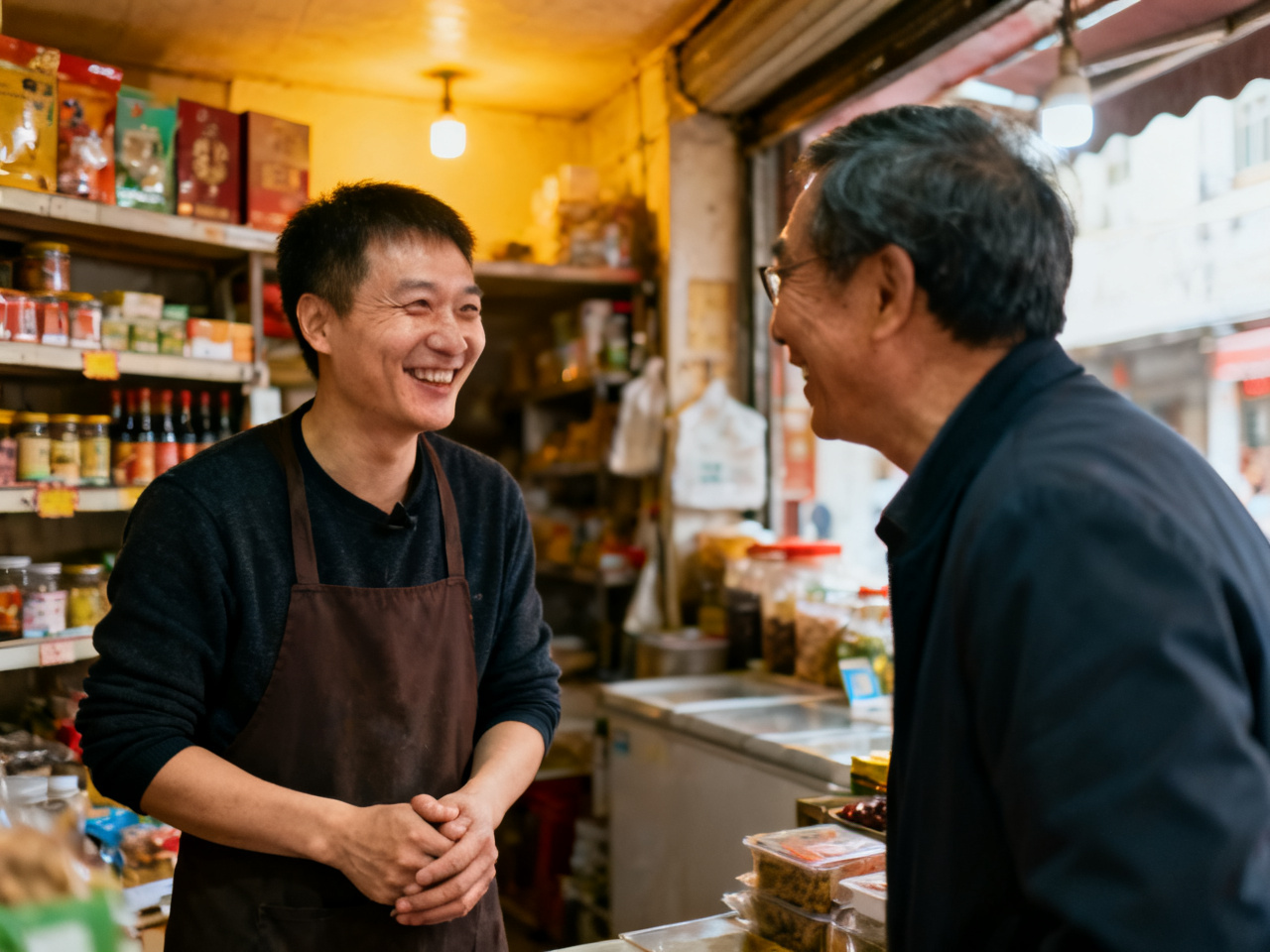
后来每次在中国顺利完成一件小事,我都会想起成都那场雨。不是因为那次打车多么戏剧化,而是因为我从那一刻开始明白,人际距离有时候不是靠时间拉近的,而是靠一句恰到好处的话变顺的。你未必立刻和谁变熟,但你会更容易被接住,也更容易接住别人给你的善意。现在我走进咖啡店、上出租车、问前台、进小区、借过人群时,常常都先把那句小小的“麻烦了”放在前面。它没有让我的中文突然完美,却让我的中国日常突然变得柔软、顺手,也更有人情味。
Now, whenever a small thing goes smoothly for me in China, I think back to that rainy day in Chengdu. Not because the taxi ride was dramatic, but because from that moment on I understood that social distance is not always shortened by time. Sometimes it is simply eased into place by one well-timed phrase. You may not become instantly familiar with someone, but you become easier to receive, and it becomes easier to receive the kindness they offer in return. Now when I step into a café, get into a taxi, ask a front desk question, enter a residential compound, or squeeze through a crowd, I often place that little “máfan le” at the front of the sentence. It has not made my Chinese suddenly perfect, but it has made my daily life in China feel softer, smoother, and much more human.

- 成都最会让国外镜头停久一点的,往往不是熊猫,而是人坐下来以后那股松弛 | What Most Often Makes Foreign Cameras Linger in Chengdu Is Not the Pandas but the Ease That Begins Once People Sit Down
- 牛肉下锅前,潮州人先把时间切薄 | Before the Beef Enters the Pot, Chaozhou Cuts Time Thin
- 张家界玻璃桥与天门山攻略 | Zhangjiajie Glass Bridge & Tianmen Mountain Guide
- 桂林米粉先拌还是先喝汤,我在一张小桌前改了吃法 | Mix First or Taste the Broth First? My Guilin Noodle Lesson
- 中国旅游最佳季节与气候指南 | Best Seasons & Climate Guide for China Travel
- 英歌舞:潮汕街头的战鼓与脸谱 | Yingge Dance: War Drums and Painted Faces on Chaoshan Streets
- 在景德镇看一只碗怎么出生:窑火、白粉和老师傅的手势 | Watching a Bowl Be Born in Jingdezhen: Kiln Fire, White Clay Dust, and a Master's Hands
- 雾江边的一晚重庆火锅 | A Foggy-River Evening of Chongqing Hotpot
- 十个值得你慢下来的中国古镇 | Ten Chinese Ancient Towns Worth Slowing Down For
- 扬州早茶不是一张菜单:我在园林之间学会给一顿饭留时间 | Yangzhou Morning Tea Is Not Just a Menu
Comments (0)