
山西古建筑文化5日游 | 5-Day Shanxi Ancient Architecture Tour
山西古建筑文化5日游 | 5-Day Shanxi Ancient Architecture Tour
中国地面古建筑70%在山西。如果你对木头和砖石能搭出什么样的奇迹感兴趣,山西是唯一答案。
70% of China's surviving above-ground ancient architecture is in Shanxi. If you're curious what miracles wood and stone can create, Shanxi is the only answer.
为什么走这条线 / Why This Route
山西是中国古建筑密度最高的省份——从唐代木构到辽金寺庙到明清大院,时间跨度超过1000年。大同-应县-五台山-太原-平遥这条线串起了山西古建筑的精华,5天能看到中国建筑史的活教材。
Shanxi has China's highest density of ancient architecture — from Tang Dynasty timber structures to Liao-Jin temples to Ming-Qing courtyard mansions, spanning over 1,000 years. The Datong–Yingxian–Wutaishan–Taiyuan–Pingyao route strings together Shanxi's architectural highlights. Five days gives you a living textbook of Chinese architectural history.
行程安排 / Day-by-Day Itinerary
第1天:大同 / Day 1: Datong
下午去云冈石窟(门票120元)——中国三大石窟之一,北魏时期开凿(公元460年起),51个主要洞窟中有5万多尊佛像。第20窟的露天大佛(高13.7米)是云冈的标志——面容饱满、微笑安详,带有明显的犍陀罗(印度-希腊)艺术风格,说明佛教艺术从西域传入中国时的样子。
Afternoon: Yungang Grottoes (¥120) — one of China's three great grottoes, carved during the Northern Wei (from 460 AD), with 50,000+ Buddha statues across 51 main caves. Cave 20's open-air Great Buddha (13.7m tall) is Yungang's icon — full-faced, serenely smiling, with clear Gandhara (Indo-Greek) artistic influence, showing what Buddhist art looked like when it first entered China from the Western Regions.
晚上去大同古城墙(免费登城)——明代城墙修复得非常完整,可以骑自行车绕城一圈(约7公里)。城内的华严寺(门票50元)有辽代的薄伽教藏殿,殿内的辽代彩塑是国宝级文物。
Evening: Datong Ancient City Wall (free to climb) — Ming Dynasty walls restored to full integrity, bikeable around the perimeter (~7km). Inside the city, Huayan Temple (¥50) has the Liao Dynasty Bhagavat Sutra Hall with Liao-era painted sculptures — national treasure-level artifacts.
第2天:应县木塔+悬空寺 / Day 2: Yingxian Wooden Pagoda & Hanging Temple
上午从大同去应县(约1.5小时车程)看应县木塔(门票50元)——全世界现存最高最古老的纯木结构建筑,建于辽代(1056年),高67.31米,相当于20层楼高,全部用木头榫卯结构搭建,没有一根铁钉。站在塔下仰望,你会对古人的工程能力产生敬畏。目前木塔不能登塔(结构保护),只能在外面看。
Morning: Datong to Yingxian (~1.5 hours) for the Wooden Pagoda (¥50) — the world's tallest and oldest surviving pure-timber structure, built in the Liao Dynasty (1056 AD), 67.31m tall (~20 stories), entirely mortise-and-tenon jointed without a single iron nail. Looking up from below, you'll feel awe at ancient engineering. Currently no climbing allowed (structural preservation) — exterior viewing only.
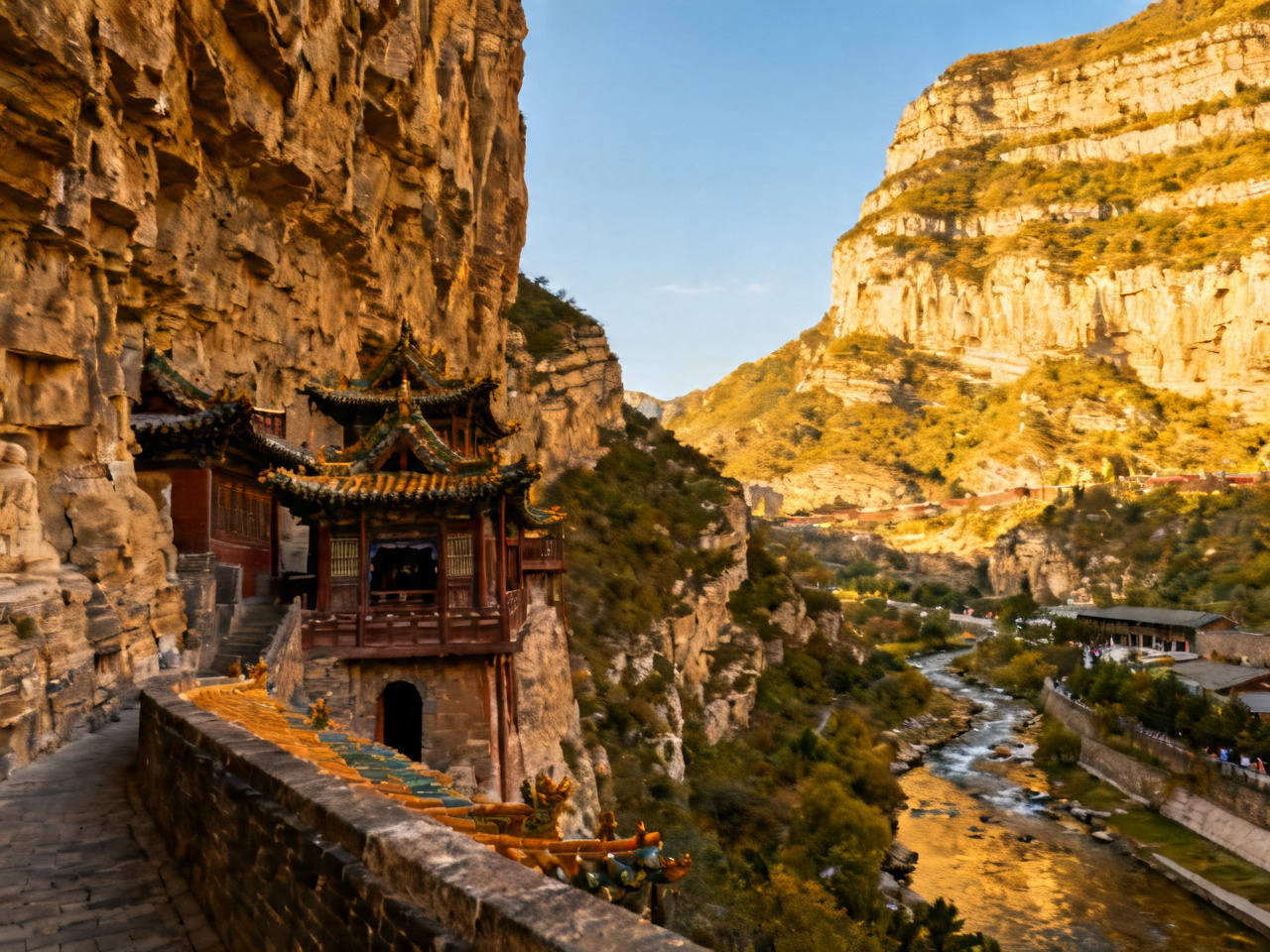
下午去悬空寺(门票125元含登临费)——建在恒山悬崖上的寺庙,距地面约50米,靠插入岩壁的木梁支撑。佛、道、儒三教合一,在悬崖上共处了1500年。走在悬空的木栈道上往下看,腿会发软。
Afternoon: Hanging Temple (¥125 including climbing fee) — a temple built on Hengshan's cliff face, ~50m above ground, supported by wooden beams inserted into rock. Buddhism, Taoism, and Confucianism coexist here, sharing a cliff for 1,500 years. Walking the suspended wooden walkway and looking down will make your legs wobble.
第3天:五台山 / Day 3: Mount Wutai
从大同到五台山(约3.5小时车程,门票135元)。五台山是中国四大佛教名山之首,文殊菩萨的道场。山上寺庙密集,重点看:
From Datong to Mount Wutai (~3.5 hours, ticket ¥135). Wutai is the foremost of China's four sacred Buddhist mountains, bodhimanda of Manjusri. Temples are densely packed; key visits:
- 佛光寺(需单独前往,距台怀镇约30公里)——中国现存最古老的唐代木构建筑之一(建于857年),梁思成和林徽因1937年发现它时激动得差点哭出来。建筑学朝圣地。
-
Foguang Temple (separate trip, ~30km from Taihuai Town) — one of China's oldest surviving Tang Dynasty timber buildings (857 AD). When Liang Sicheng and Lin Huiyin discovered it in 1937, they were moved nearly to tears. An architecture pilgrimage site.
-
显通寺——五台山最大最古老的寺庙,始建于东汉,铜殿是明代铸造的全铜建筑。
- Xiantong Temple — Wutai's largest and oldest temple, founded in the Eastern Han. The Bronze Hall is a Ming Dynasty all-copper structure.
第4天:五台山→太原→平遥 / Day 4: Wutai → Taiyuan → Pingyao
上午从五台山到太原(约3小时),去晋祠(门票80元)——太原西南的古建筑群,始建于北魏。圣母殿的宋代彩塑侍女像是中国雕塑史上的杰作——每个侍女表情、姿态都不同,生动得像真人。周柏(3000年的古柏树)和难老泉也是必看。
Morning: Wutai to Taiyuan (~3 hours), visit Jinci Temple (¥80) — an ancient architectural complex southwest of Taiyuan, founded in the Northern Wei. The Song Dynasty painted clay maidservant statues in the Holy Mother Hall are masterpieces of Chinese sculpture — each maidservant has a different expression and posture, lifelike as real people. Zhou Cypress (3,000-year-old tree) and Nanlao Spring are also must-sees.
下午高铁到平遥(约40分钟)。傍晚逛平遥古城(免费进城,通票125元含各景点)——中国保存最完整的明清古城,城墙、街道、商铺、民居的格局和几百年前几乎一样。
Afternoon HSR to Pingyao (~40 min). Evening: explore Pingyao Ancient City (free entry, all-in-one ticket ¥125 for attractions) — China's best-preserved Ming-Qing ancient city, walls, streets, shops, and residences virtually unchanged from centuries ago.
第5天:平遥+返程 / Day 5: Pingyao & Departure
上午去日升昌票号(通票内)——中国第一家票号(银行的前身),创办于1823年,鼎盛时期分号遍布全国,是中国金融史的起点。然后登平遥城墙——周长6公里,保存完好,从城墙上俯瞰古城全貌。下午返程。
Morning: Rishengchang Draft Bank (on the pass) — China's first draft bank (precursor to modern banks), founded in 1823, with branches nationwide at its peak — the starting point of Chinese financial history. Then climb Pingyao City Wall — 6km perimeter, well-preserved, overlooking the entire ancient city from above. Afternoon: depart.
实用信息 / Practical Notes
最佳季节:4-10月。冬天山西很冷(零下10-20度),五台山冬天大雪封山。
Best season: April–October. Shanxi winters are very cold (-10 to -20°C); Wutai is snowed in during winter.
费用参考:5天人均约3000-5000元(不含大交通)。山西物价不高,住宿150-400元/晚。平遥古城内民宿很有特色。
Budget: ~¥3,000–5,000 per person for 5 days (excluding intercity transport). Shanxi prices are moderate; accommodation ¥150–400/night. Pingyao's in-city guesthouses are characterful.
一句话结论 / Bottom Line
山西是中国古建筑的露天博物馆——别的省份用照片记录历史,山西用建筑本身。
Shanxi is China's open-air museum of ancient architecture — other provinces record history in photographs; Shanxi records it in buildings themselves.
延伸阅读 / Related Reads
- 华东五城10日经典环线 | 10-Day East China Five-City Loop
- 丽江古城深度游:纳西文化与雪山美景 | Lijiang Old Town: Naxi Culture & Snow Mountain Views
- 张家界玻璃桥与天门山攻略 | Zhangjiajie Glass Bridge & Tianmen Mountain Guide
- 桂林漓江山水游全攻略 | Guilin Li River Scenic Tour Complete Guide
- 春季赏花地图:全国最美花海 | Spring Bloom Map: China's Most Beautiful Flower Fields
- 在平遥城墙内看一座县城醒来 | Watching Pingyao Wake Inside Its City Walls
- 来华旅行必备配件 | Best Travel Accessories for China
- 上海外滩与弄堂文化探索 | Shanghai: The Bund & Longtang Culture
- 中国红:一种颜色如何定义一个文明 | Chinese Red: How One Color Defines a Civilization
- 雨季旅游攻略:雨中别有风味 | Rainy Season Travel: Beauty in the Rain
- 五月的苏州雨丝落进园林时,我一个人学会把行程放轻一点 | In Suzhou's May Drizzle, I Learned to Travel Alone with a Lighter Grip
- 天还没热起来,长安早市已经把一天的味道摆出来了 | Before the Heat Rose, Chang'an's Morning Market Had Already Laid Out the Flavor of the Day
- 本人在台州临海古城墙的五月雨雾里,第一次把“看景”变成了“听城” | In Linhai's May Mist, I Stopped Just Seeing the Scenery and Started Listening to the City
- 中国旅游安全须知 | Safety Tips for Traveling in China
- 糖画摊前的几分钟,让我第一次觉得“甜”也可以被画出来 | At a Sugar Painting Stall, I Realized for the First Time That Sweetness Can Be Drawn
Comments (0)