
广东早茶:不只是吃,是一种生活方式 | Cantonese Morning Tea: More Than a Meal, It's a Way of Life
广东早茶:不只是吃,是一种生活方式 | Cantonese Morning Tea: More Than a Meal, It's a Way of Life
广州人说"饮茶",不是说喝茶。
是说去茶楼,点一壶茶,叫几笼点心,坐上两三个小时,和家人或朋友说说话。这件事在广州叫"叹早茶"——"叹"这个字,粤语里有享受、慢慢品味的意思。早茶不是快餐,不是工作餐,是一种仪式。
I've heard people say "yám chàh" in Cantonese and assume it just means drinking tea. It doesn't.
It means going to a teahouse, ordering a pot of tea, calling for a few bamboo steamers of dim sum, and sitting for two or three hours with family or friends. In Guangzhou this is called "tàan jóu chàh" — the character 嘆 carries a sense of savoring, of taking your time. Morning tea isn't fast food or a working lunch. It's a ritual.
一盅两件:早茶的基本结构
广东早茶的核心是"一盅两件"——一壶茶,两件点心。
茶是基础。常见的有普洱、铁观音、菊花、香片(茉莉花茶)。广州人喝早茶,第一件事是点茶,茶壶到了,先给长辈倒,这是礼数。茶壶空了,把壶盖侧放,服务员看到就会来续水,不用开口。
点心是主角。经典款有:虾饺(透明皮包鲜虾)、烧卖(猪肉虾仁顶上一粒蟹黄)、叉烧包(松软面皮包蜜汁叉烧)、肠粉(米浆蒸成薄皮卷虾或叉烧)、萝卜糕(白萝卜米粉煎至金黄)、蛋挞(酥皮或水油皮包蛋奶液)。
The core of Cantonese morning tea is "yī zhōng liǎng jiàn" — one pot of tea, two items of dim sum.
Tea comes first. Common choices: pu-erh, tieguanyin, chrysanthemum, jasmine. The first thing you do when the teapot arrives is pour for the elders at the table — that's the etiquette. When the pot runs dry, tilt the lid to one side; the server will see it and come refill without being asked.
The dim sum is the main event. Classics: har gow (translucent shrimp dumplings), siu mai (pork and shrimp topped with crab roe), char siu bao (fluffy buns filled with honey-glazed pork), cheung fun (rice noodle rolls with shrimp or pork), turnip cake (pan-fried until golden), egg tarts (flaky or shortcrust pastry with egg custard).
推车还是点单:两种茶楼文化
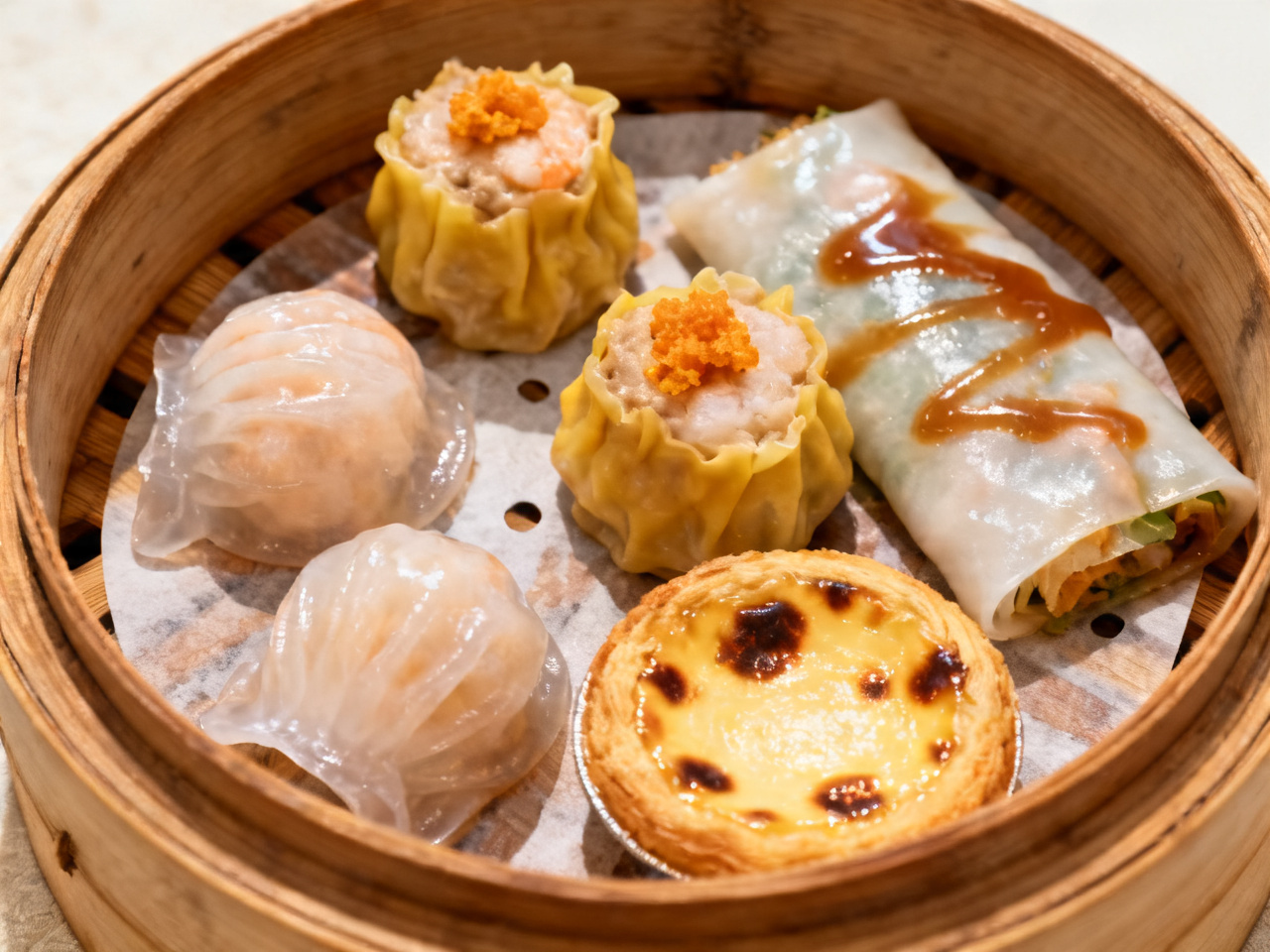
老式茶楼用推车,新式茶楼用菜单,这是两种截然不同的体验。
推车式:服务员推着小车在桌间穿行,车上摆着各种点心,你看到想吃的就叫停,服务员在你的单子上盖章计数。这种方式热闹,随机,有时候你等了半小时也等不到想吃的那道,有时候一转眼就来了。广州的老字号茶楼,比如陶陶居、莲香楼,还保留着推车传统。
菜单式:现代茶楼改用纸质或平板菜单,点好后厨房统一出品。效率高,但少了那种"守株待兔"的乐趣。
我偏爱推车式。不只是因为热闹,是因为那种不确定性——你不知道下一辆车推来的是什么,这本身就是早茶的一部分。
Old-style teahouses use carts; newer ones use menus. These are two very different experiences.
Cart service: servers wheel trolleys between tables loaded with dim sum. You flag down what you want; they stamp your order slip to keep count. It's lively and unpredictable — sometimes you wait half an hour for the dish you want, sometimes it appears the moment you sit down. Old Guangzhou institutions like Taotao Ju and Lianxiang Lou still use carts.
Menu ordering: modern teahouses switched to paper or tablet menus, with the kitchen producing everything to order. More efficient, but you lose the pleasure of the hunt.
I prefer the cart system. Not just for the atmosphere — for the uncertainty. Not knowing what the next trolley will bring is part of the experience.
早茶的时间与礼仪
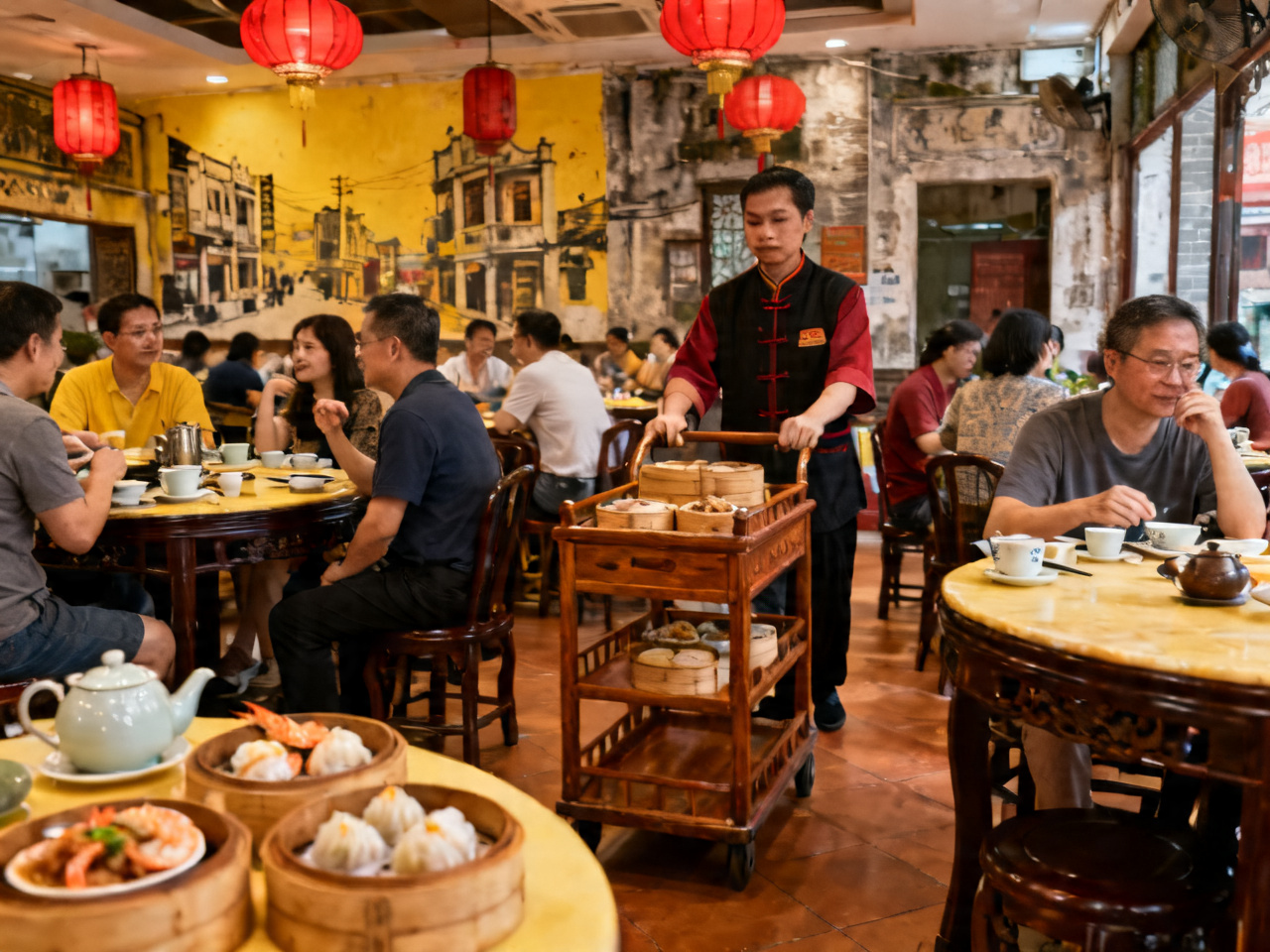
广州早茶,时间是有讲究的。
正宗的早茶从早上六七点开始,到下午两三点结束。越早去,越能感受到那种老广州的气氛——退休的老人,带着孙子的老夫妻,拿着报纸的中年男人。上午十点以后,年轻人和游客多了,人声鼎沸,但那种安静的晨间感就淡了。
礼仪方面,有几个细节值得知道:别人给你倒茶,用食指和中指轻叩桌面两下,表示感谢,这个手势据说源自清朝皇帝微服出巡时的暗语;点心吃完了,把蒸笼盖子翻过来放,表示这笼已空;结账时说"埋单",不说"买单"。
Timing matters for Cantonese morning tea.
Authentic morning tea starts at six or seven in the morning and runs until two or three in the afternoon. The earlier you go, the more you feel old Guangzhou — retired elders, grandparents with grandchildren, middle-aged men with newspapers. After ten, younger people and tourists fill the room; it gets louder, but that quiet morning feeling fades.
A few etiquette details worth knowing: when someone pours your tea, tap two fingers lightly on the table as thanks — this gesture reportedly originated as a secret signal used by a Qing dynasty emperor traveling incognito. When a steamer basket is empty, flip the lid upside down to signal it's done. When asking for the bill, say "màaih dāan" — not the Mandarin "mǎi dān."
去哪里喝一顿好早茶
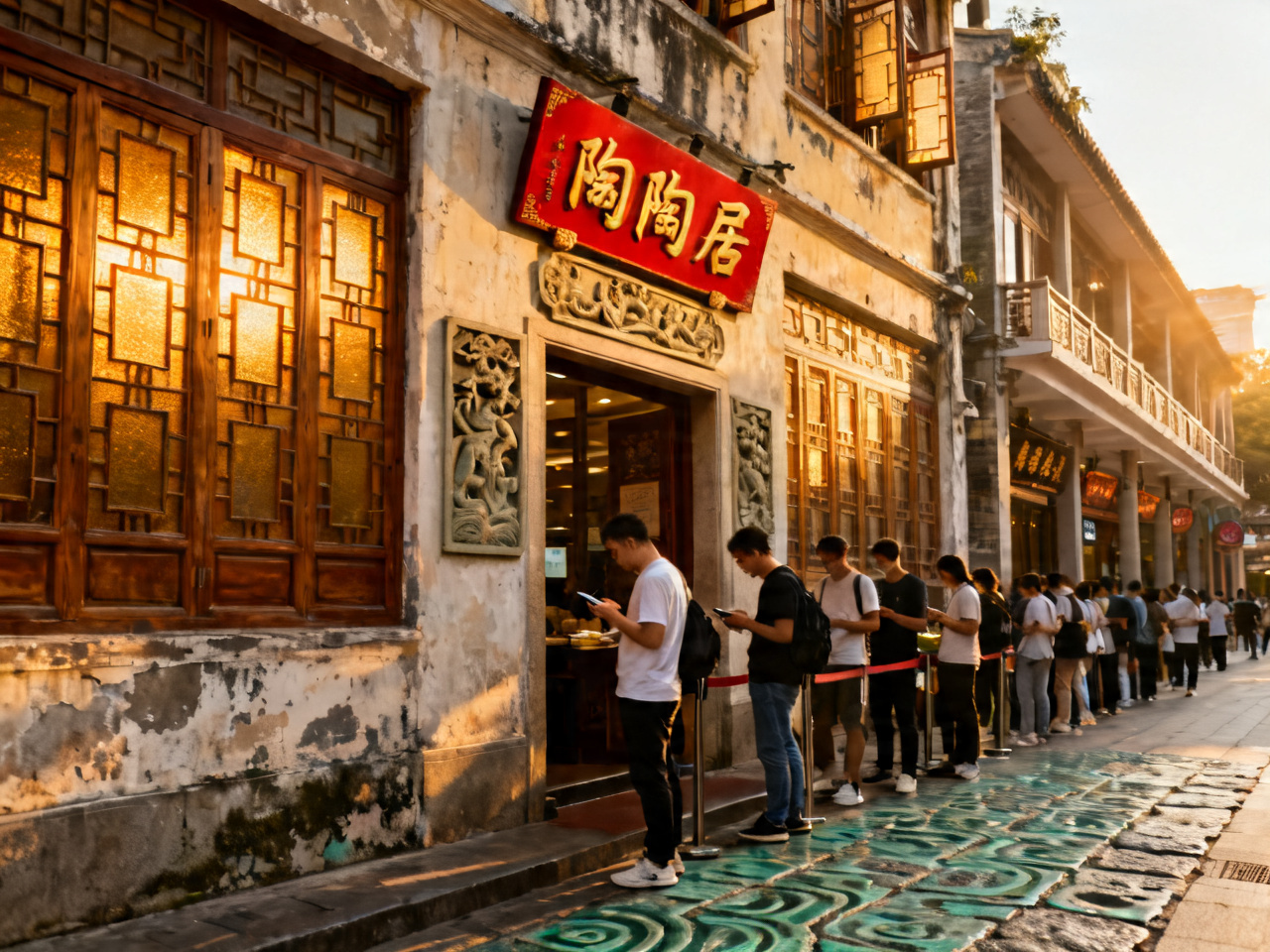
广州是早茶的原点,但香港、深圳、佛山都有各自的风格。
广州推荐: - 陶陶居(第十甫路):百年老字号,推车服务,虾饺和叉烧包是招牌,周末需要提前订位 - 莲香楼(第十甫路):老广州氛围最浓,价格亲民,推车式,早上七点就开始营业 - 点都德:连锁但品质稳定,肠粉和蛋挞出色,适合第一次体验的游客
香港推荐: - 镛记酒家(中环):叉烧是香港标杆 - 添好运(旺角/铜锣湾):米其林一星,排队但值得,酥皮蛋挞和虾饺是必点
人均消费:广州老字号50-80元,香港茶楼150-250港币。
Guangzhou is the origin point, but Hong Kong, Shenzhen, and Foshan all have their own styles.
Guangzhou picks: - Taotao Ju (Dishifu Road): century-old institution, cart service, har gow and char siu bao are the signatures; book ahead on weekends - Lianxiang Lou (Dishifu Road): strongest old-Guangzhou atmosphere, affordable, cart service, opens at 7am - Dim Dou Dak: reliable chain, excellent cheung fun and egg tarts, good for first-timers
Hong Kong picks: - Yung Kee (Central): the benchmark for char siu in Hong Kong - Tim Ho Wan (Mong Kok/Causeway Bay): Michelin one-star, worth the queue; flaky egg tarts and har gow are essential
Budget: ¥50-80 per person at Guangzhou institutions; HK$150-250 at Hong Kong teahouses.
实用信息 / Practical Notes
- 最佳时间:周末早上7-9点,体验最正宗的老广州早茶氛围
- 订位:广州老字号周末必须提前一天电话订位
- 必点:虾饺、烧卖、肠粉、蛋挞,这四样是基本盘
- 茶水费:广州茶楼一般收5-10元/位茶位费,包含茶水
-
着装:随意,早茶是非常日常的场合,不需要正装
-
Best time: weekday mornings 7-9am for the most authentic atmosphere; weekends are busier
- Reservations: essential at Guangzhou institutions on weekends — call a day ahead
- Must-order: har gow, siu mai, cheung fun, egg tart — the essential four
- Tea cover charge: most Guangzhou teahouses charge ¥5-10 per person, includes tea
- Dress code: none — morning tea is an everyday occasion
延伸阅读 / Related Reads
- 中国八大菜系全览 | The 8 Great Cuisines of China
- 第一口就着了魔:一个外乡人在成都的麻辣沉沦 | Spellbound at First Bite: A Stranger's Descent into Chengdu's Heat
- 街头那碗热气,才是中国城市的真实体温 | Street Steam: The Real Pulse of Chinese Cities
- 花椒档案:一个植物学者眼中的四川味觉地图 | The Peppercorn Dossier: Sichuan's Flavor Map Through a Botanist's Eyes
- 华东五城10日经典环线 | 10-Day East China Five-City Loop

- 如果八月只能挑几站,笔者会把海风、馆藏和夜路留给这三座城 | If August Only Leaves Room for a Few Stops, the Writer Would Save Sea Breeze, Museums, and Night Walks for These Three Chinese Cities
- 风沙把莫高窟的时间吹慢了 | The Sandstorm Slowed Time at the Mogao Caves
- 汉服入门指南:形制、场合与穿搭 | Hanfu Beginner's Guide: Styles, Occasions & Outfits
- 我第一次在中国寄快递,把纸箱、胶带和身份证明全学会了 | My First Time Shipping a Parcel in China: Boxes, Tape, and ID Checks
- 面子、关系与人情:读懂中国社会的三把钥匙 | Face, Guanxi & Renqing: Three Keys to Understanding Chinese Society
- 昆明菜市场里的花和菜,让我重新认识日常审美 | Flowers and Vegetables in a Kunming Market Changed How I See Everyday Beauty
- 我在中国景区接驳车排队时,第一次学会先看阴凉处而不是先冲最前面 | At a Chinese Scenic Shuttle Queue, I First Learned to Look for Shade Instead of Charging to the Front
- 南甜北咸是个谎言,但也不全是 | "Sweet South, Salty North" Is a Lie — But Not Entirely
- 五月在宁波老外滩遇到雨,我一个人看着江面发亮,忽然觉得赶路也值得被原谅 | Rain at Ningbo's Old Bund in May Made Me Feel Even a Hurried Life Deserved Forgiveness
- 在中国穷游要花多少钱?每日预算全拆解 | How Much Does It Cost to Travel China on a Budget?
Comments (0)