
昆明下雨的晚上,我在菌子火锅店学会了什么叫“鲜到发亮” | On a Rainy Night in Kunming, Mushroom Hot Pot Taught Me What Bright Freshness Means
昆明下雨的晚上,我在菌子火锅店学会了什么叫“鲜到发亮” | On a Rainy Night in Kunming, Mushroom Hot Pot Taught Me What Bright Freshness Means
晚上七点零五分,昆明的雨刚从小变密,我拖着还带着高铁站灰尘的行李箱拐进一条发亮的街。路边霓虹映在湿漉漉的地上,一家菌子火锅店门口的红灯笼被风吹得轻轻晃,店员正在把塑料门帘放下来。我停在门口抖了抖伞上的水,正犹豫一个人吃火锅会不会太夸张,店里的老板娘已经隔着雾气朝我招手:“进来,昆明下雨就该吃菌子。”
At 7:05 in the evening, just as Kunming’s rain thickened from a drizzle, I turned into a shining street dragging a suitcase still dusty from the high-speed rail station. Neon reflected off the wet ground, and the red lantern outside a mushroom hot pot shop swayed gently in the wind while a staff member lowered the plastic door curtain. I stopped at the entrance to shake the water from my umbrella, wondering whether hot pot was too extravagant for one person, when the owner was already waving me in through the steam: “Come in. In Kunming, when it rains, you eat mushrooms.”
这句话说得太像一句地方性的定律,我几乎没有反驳的余地。店里不大,木桌被擦得发亮,墙上贴着各种菌子的照片和手写提醒,最醒目的一张写着:野生菌请耐心煮熟,不着急才吃得到真正的鲜。我坐下时,旁边一桌是一家三口,小孩用筷子敲碗,父亲忙着烫青菜,母亲则认真地盯着锅上的计时器。那种专注让我意识到,菌子火锅在这里不只是“吃一顿”,而像一场有规矩、有等待、也有一点点敬畏的夜间仪式。
The line sounded so much like a local law that I had almost no room to argue. The restaurant was small, with wooden tables polished bright, photos of different mushrooms on the walls, and handwritten warnings everywhere. The most prominent one read: Wild mushrooms must be cooked patiently; only those who do not rush get to taste true freshness. When I sat down, a family of three occupied the next table. Their child tapped a bowl with chopsticks, the father was busy blanching greens, and the mother watched the timer over the pot with serious concentration. That focus made me realize that mushroom hot pot here was not merely “having dinner.” It felt more like a nighttime ritual with rules, waiting, and a trace of reverence.
老板娘姓段,讲话有一种很稳的节奏。她看了我一眼,先问我是不是第一次在昆明吃菌子火锅。我点头,她马上把菜单翻到最容易理解的那一页,没有急着推贵的,而是先解释汤底、菌种、下锅顺序和等待时间。她说,很多外地人听见“鲜”这个字,就以为是大味道、重调料、立刻上头;但云南菌子的鲜,常常是亮的、薄的、慢慢张开的,像雨夜里远处一排商店招牌被水洗过之后突然更清楚的那种亮。
The owner’s surname was Duan, and she spoke with a steady rhythm. She took one look at me and asked whether it was my first time eating mushroom hot pot in Kunming. I nodded. She immediately opened the menu to the most approachable page and, instead of pushing the expensive items, first explained the broth, the mushroom varieties, the order of ingredients, and the waiting time. She said many outsiders hear the word “fresh” and imagine strong flavor, heavy seasoning, something striking at once. But Yunnan mushroom freshness, she said, is often bright, thin, and slow to unfold, like a row of shop signs in the distance on a rainy night after the water has washed the air and made everything suddenly clearer.
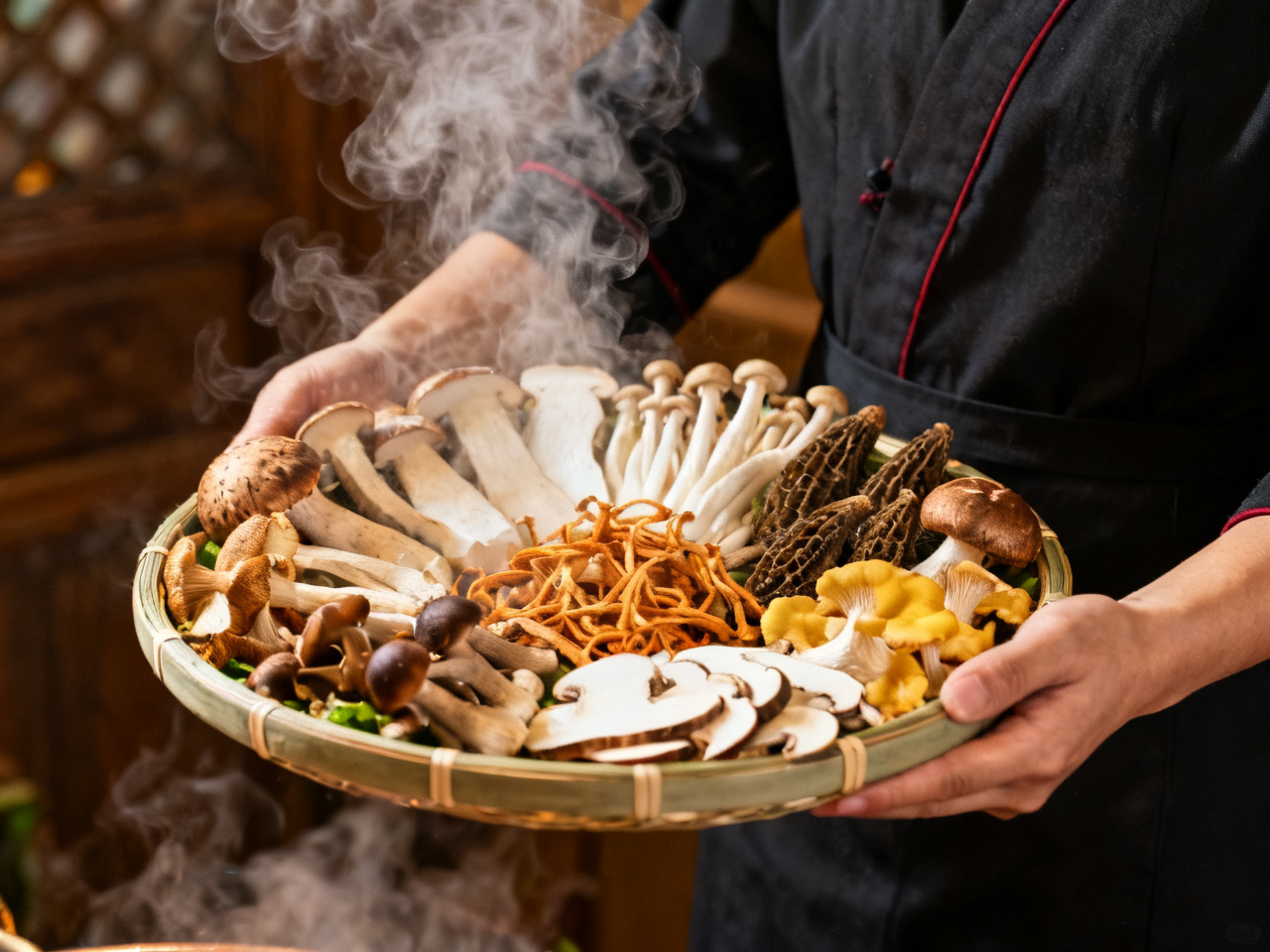
我点了一个偏清汤的锅底,配牛肝菌、鸡枞、见手青和几样老板娘替我做主搭配的时令菌。她还加了豆腐、青菜和一小盘薄切火腿,说是让汤更圆。锅端上来时,白汽腾地一声升起,里面还没下菌子,只是清亮的底汤和几片姜,但已经有一种木头、泥土、雨后山路混在一起的气味。那不是城市里常见的香,而更像一扇门刚刚被推开,门外是潮湿的林子,鞋底踩下去能听见枯枝折断的细响。
I ordered a relatively clear broth with porcini, termitomyces, jianshouqing, and several seasonal mushrooms chosen by the owner. She added tofu, greens, and a small plate of thinly sliced ham, saying they would round out the soup. When the pot arrived, white steam surged upward. There were no mushrooms in it yet, only a clear broth and a few slices of ginger, but it already carried a scent of wood, earth, and mountain paths after rain. It was not the kind of fragrance city restaurants usually chase. It felt more like a door had just been opened, and outside that door was a damp forest where your shoes might crunch softly on fallen twigs.
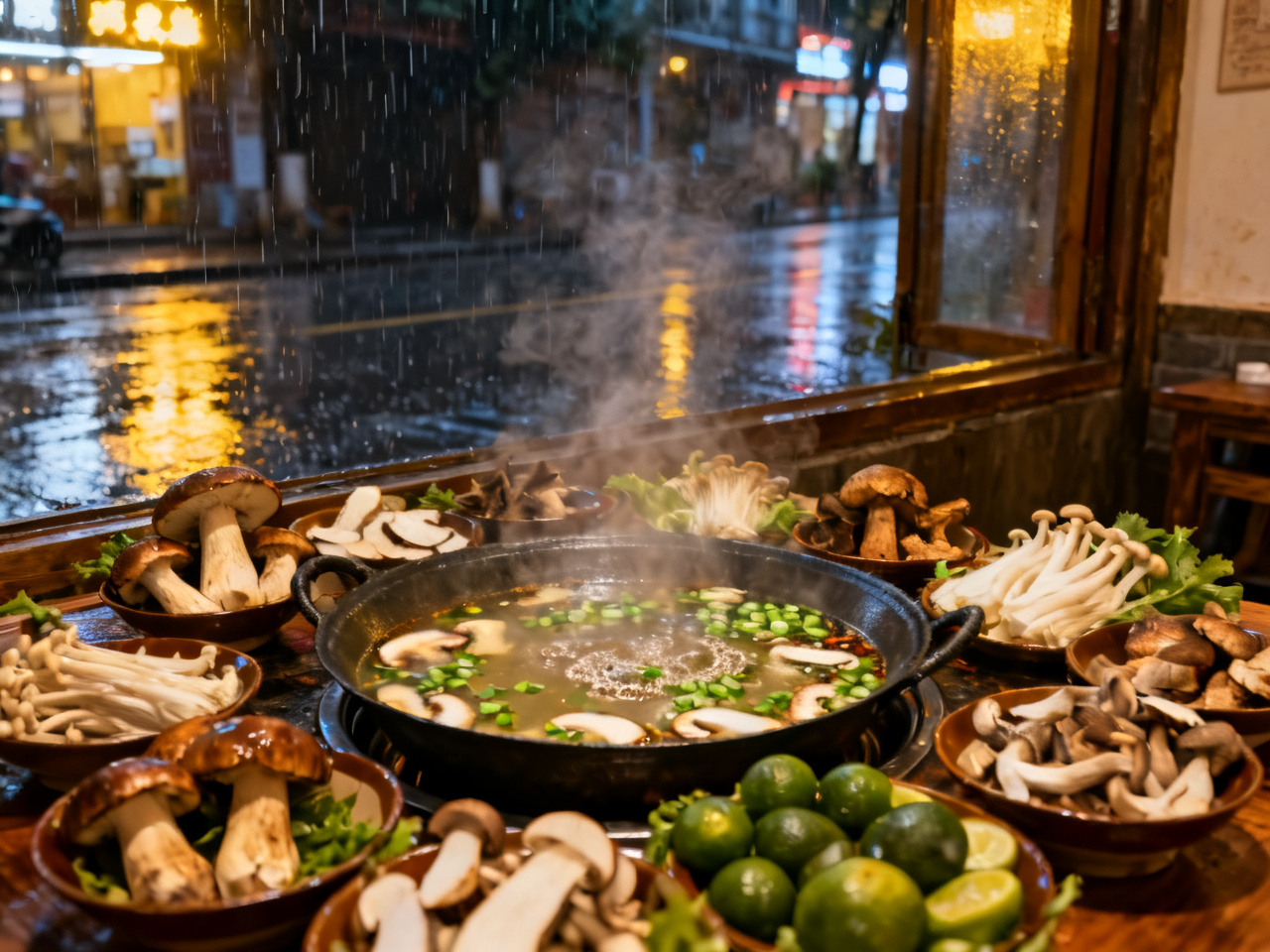
下锅之前,段老板娘专门把见手青单独放到一边,认真叮嘱我:“这个一定要按时间,别逞能。”她说这话的时候,旁边桌那位母亲也抬头附和,像完成了一次陌生人之间的小型联合执法。我被逗笑了,却也立刻认真起来。等菌子一盘盘滑进锅里,汤面先是安静了一会儿,接着开始翻出细密的泡,香味也不是猛地扑出来,而是一层一层地往外漫。雨点打在门帘上,声音有点闷,锅里则是另一种更轻的咕嘟声,像两种节奏在一间小店里慢慢叠起来。
Before anything went in, Owner Duan pulled the jianshouqing to one side and warned me seriously, “This one must follow the timing. Don’t be brave.” As she said it, the mother at the neighboring table also looked up and agreed, as if the two of them had just formed a tiny joint task force among strangers. It made me laugh, but it also made me pay attention. Once the mushrooms slid into the pot one plate after another, the surface stayed calm for a moment, then began releasing fine bubbles. The aroma did not rush outward; it spread layer by layer. Rain tapped the plastic curtain with a muted rhythm, while the pot answered with a lighter bubbling sound, the two tempos gradually folding together inside the small shop.
等待是这顿饭最重要的一部分,也是最容易让外地人不习惯的一部分。我们太习惯在城市里追求效率,仿佛所有好吃的都应该在三分钟内给出结果。但那天晚上,我看着计时器慢慢跳,突然觉得昆明把“吃”这件事放回了一个更有耐心的位置。段老板娘趁这个空档给我倒了一小杯热苦荞茶,说最近雨多,菌子正好。她又问我从哪里来、今天去了哪里、是不是刚到昆明。我说刚下高铁,还没来得及逛。她就笑,说那你第一顿吃这个,算没走偏。
Waiting was the most important part of the meal and the part outsiders often struggle with most. We are too used to pursuing efficiency in cities, as if everything delicious should produce a result within three minutes. But that night, watching the timer change bit by bit, I suddenly felt that Kunming had put eating back into a more patient place. During the wait, Owner Duan poured me a small cup of hot tartary buckwheat tea and said the recent rain had been good for mushroom season. Then she asked where I was from, where I had been that day, and whether I had just arrived in Kunming. I told her I had stepped off the train not long ago and had barely seen the city yet. She smiled and said, “Then starting with this means you haven’t gone wrong.”
第一口汤入口的时候,我终于明白她说的“亮”是什么意思。那不是油脂厚重带来的满足感,也不是辣和咸直接往舌头上压的冲击,而是一种像玻璃被擦干净之后突然透出来的清晰。牛肝菌把底味撑得很稳,鸡枞则带出一点细细的甜,火腿在后面轻轻托住咸香,而各种菌子各自留下一点边界,不互相抢戏。汤从舌尖到喉咙一路都很干净,干净到你会下意识地放慢动作,想确认自己是不是错过了什么细节。
When I took the first sip, I finally understood what she meant by “bright.” It was not the satisfaction of heavy fat, nor the impact of salt and spice pressing straight onto the tongue. It was a kind of clarity, like glass suddenly turning transparent after being wiped clean. The porcini gave the broth structure, the termitomyces brought out a fine thread of sweetness, the ham quietly supported the savory base, and each mushroom variety left a little edge of its own instead of fighting for attention. The soup stayed clean all the way from the tip of the tongue to the throat—so clean that I instinctively slowed down, wanting to check whether I had missed some detail.
接下来是口感。见手青炒不好会有点滑腻,煮得不对更不行,但那晚按时间煮透后,入口竟然带着一种非常细密的弹性;鸡枞则像把雨后的空气压缩进了纤维里,一咬就散出香气。豆腐吸足了汤,边角微微发烫,咬开时会把鲜味整个送出来。窗外有辆公交车溅起水花,店里有人起身拿纸巾,椅脚在地上轻轻擦过,而我只顾低头喝第二碗汤,觉得身体里一路从站台带来的疲惫正在被热气慢慢拆开。
Then came the textures. Jianshouqing can turn slippery if handled badly and worse if cooked incorrectly, but that night, after the proper time, it had a surprisingly fine resilience. The termitomyces felt as if rainy air had been compressed into its fibers, releasing fragrance the moment I bit down. The tofu had absorbed the broth completely; its edges were slightly hot, and when it opened it delivered the freshness all at once. Outside, a bus sent water splashing across the road. Inside, someone stood to grab tissues and chair legs brushed softly over the floor. Meanwhile I kept lowering my head over a second bowl of soup, feeling the fatigue I had carried from the station slowly taken apart by the heat.
很多人来云南吃东西,第一反应是要找一个“最有名”的名单,像打卡一样完成几家店。但那晚我更深的感受是,食物真正动人的地方,不一定在名气,而在它和天气、地方、说话方式一起组成的现场。下雨的昆明、门帘上的水珠、老板娘稳稳的声音、隔壁桌母亲盯着计时器的样子,都参与了这锅菌子火锅的味道。如果你想先从更广的街头食物角度进入中国饮食,也可以看看这篇中国十种街头小吃;但到了昆明的雨夜,你会明白有些鲜味只属于慢一点的桌边时刻。
Many people come to Yunnan wanting a checklist of “the most famous” places, as if completing a food itinerary were the point. But what I felt more strongly that night was that the truly moving part of food does not always lie in reputation; it lies in the scene created by weather, place, and the way people speak. Rainy Kunming, droplets on the door curtain, the owner’s steady voice, and the mother at the next table watching the timer all participated in the taste of that mushroom hot pot. If you want to approach Chinese food first from a broader street-food angle, a good primer on ten Chinese street snacks is useful. But on a rainy night in Kunming, you understand that some forms of freshness belong only to slower table-side moments.
段老板娘后来给我加了一小份米线,说可以把最后的汤收一收。我本来以为只是填饱,没想到又是另一层意思:米线把前面所有菌香都接住了,滑过去的时候几乎不需要咀嚼,嘴里却还是留着山林似的回味。她站在柜台边算账,顺便和熟客聊第二天市场上的菌子行情,语气平得像在讨论天气。我听着她说“今年这个时候的鸡枞还算不错”,突然觉得一座城市的饮食可靠,往往就可靠在这种不过度表演的日常判断里。
Later, Owner Duan brought me a small portion of rice noodles and said they were good for gathering up the final broth. I had assumed they were simply there to fill me up, but they introduced yet another layer: the noodles caught all the mushroom fragrance from before, sliding down almost without chewing while still leaving that forest-like aftertaste in the mouth. She stood by the counter doing the bills and casually chatting with a regular about the market prices of mushrooms for the next day, in the same tone one might discuss the weather. Listening to her say, “At this time of year, the termitomyces are still pretty good,” I suddenly felt that the reliability of a city’s food often rests in this kind of unperformed daily judgment.
如果你第二天还打算在昆明继续找早餐、米线或者更地方性的味道,先建立一点对中国日常饮食节奏的感受会更轻松。比如这篇中国早餐地图,就很适合在旅行前后慢慢补上背景,因为你会发现,真正记得住的食物,常常都不是独立存在的,而是和清晨的街口、夜晚的雨声、某个提醒你“别着急”的人连在一起。
If you plan to keep exploring Kunming the next day for breakfast, rice noodles, or more local flavors, it helps to build a sense of the rhythm of everyday Chinese eating first. A map of Chinese breakfasts makes excellent background reading before or after a trip, because you begin to notice that the foods you truly remember rarely stand alone. They stay attached to a street corner at dawn, rain at night, or someone who told you not to rush.
我离开的时候已经快九点。雨没有停,只是变成更细的一层,像把整条街都轻轻包起来。段老板娘把我送到门口,提醒我拉好行李箱拉链,别让雨水打进去。我站在檐下回头看,店里的白汽还在玻璃上蒙着一层朦胧,旁边那家三口已经吃完,孩子趴在父亲肩头快睡着了,桌上只剩一个汤面微微晃动的空锅。路灯照着积水,反出淡金色的边,我拖着箱子慢慢往酒店走,嘴里还留着菌汤干净而发亮的回味,像把整座昆明雨夜都一起含住了。
By the time I left, it was nearly nine. The rain had not stopped; it had only turned finer, as though wrapping the whole street in a thin layer. Owner Duan walked me to the door and reminded me to zip my suitcase properly so rain would not get inside. From under the eaves I turned back once more. Steam still fogged the glass, the family next door had finished, their child drooping asleep over the father’s shoulder, and on the table only an emptied pot remained with the surface still faintly trembling. Streetlights lit the puddles with pale gold edges. I rolled my suitcase slowly toward the hotel, the clean, bright aftertaste of mushroom broth still in my mouth, as if I were carrying the whole rainy night of Kunming there with me.
- 青岛的啤酒不只在海边喝:一顿旧城晚饭把我留下来 | Qingdao Beer Took Me Beyond the Coast for an Old-City Dinner
- 和大学朋友去嘉兴的五月周末,我们在南湖边把成年人的心事聊开了 | A Rainy May Weekend in Jiaxing Let My Old Friends and Me Finally Talk Through What Adulthood Had Done to Us
- 中国丝绸制品 | Silk Products from China
- 夏季避暑胜地:高原与海岛 | Summer Escapes: Plateaus & Islands
- 古镇民俗体验:赶集、社戏与手工艺 | Ancient Town Folk Culture: Markets, Opera & Crafts
- 太原老街的灯不抢眼,却把回家、吃面和晚风都照得刚刚好 | Taiyuan’s Old-Street Lights Are Modest, Yet They Hold Homecoming, Noodles, and Night Wind Just Right
- 中国旅游摄影技巧与最佳拍摄地 | Photography Tips & Best Spots in China
- 南京五月的雨把我们一家三口困在城墙边,却顺手送来了一顿最好吃的鸭血粉丝汤 | A May Rain by Nanjing's City Wall Stranded Our Family of Three and Delivered the Best Bowl of Duck Blood Soup Instead
- 英歌舞:潮汕街头的战鼓与脸谱 | Yingge Dance: War Drums and Painted Faces on Chaoshan Streets
- 我在中国县城汽车站学会先看人群走向,再找检票口 | I Learned at a Chinese County Bus Station to Watch Where People Flow Before Looking for the Gate
Comments (0)