
打车前多看一眼上车点,能少走很多冤枉路 | Checking the Pickup Point Before Hailing a Ride Saves Many Steps
打车前多看一眼上车点,能少走很多冤枉路 | Checking the Pickup Point Before Hailing a Ride Saves Many Steps
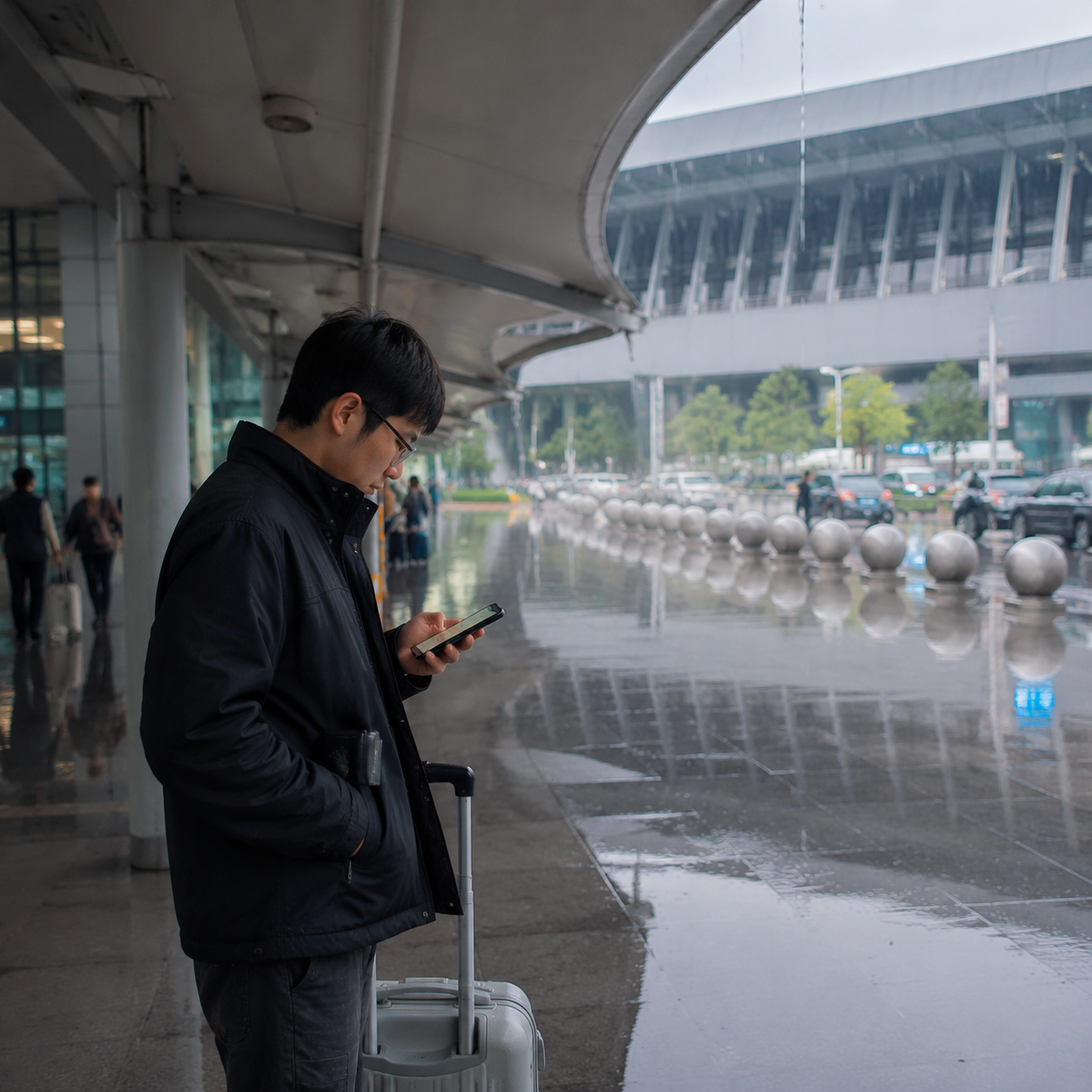
2024年11月的一个周五傍晚,我拖着一个浅灰色行李箱站在杭州东站西广场的雨棚下面,右手握着手机,左手把护照夹压在外套口袋里。雨水从屋檐边连成细线,地面亮得像一面被踩碎的镜子。我刚从上海来的高铁下来,准备去湖滨附近见在中国工作的朋友阿杰。手机上的打车软件已经显示“司机距离你1.2公里”,可我盯着屏幕上的蓝点,心里却没有一点踏实,因为我站在“西进站口附近”,软件却把上车点自动放在了“东广场网约车临停区”。
On a rainy Friday evening in November 2024, I stood under the canopy of the west square at Hangzhou East Railway Station with a light gray suitcase in one hand and my phone in the other, keeping my passport pouch pressed inside my coat pocket. Rainwater fell from the roof edge in thin lines, and the ground shone like a cracked mirror under people’s shoes. I had just arrived by high-speed rail from Shanghai and was heading to meet my friend Ajie near Hubin. The ride-hailing app already showed that the driver was 1.2 kilometers away, yet I felt uneasy because I was near the west entrance while the app had automatically placed the pickup point at the east square ride-hailing temporary stopping area.
我以前在欧洲习惯了“站在路边招车”这种简单逻辑,到了中国才发现,高铁站和大型商场周围的道路并不总是能随便停车。出租车、网约车、公交车、私家车、外卖电动车、行人通道各有自己的线,雨天又会把所有人的耐心压得很薄。我第一反应是把定位往自己脚下拖,可屏幕上密密麻麻的入口名让我眼花:西广场、东广场、北到达、南进站、P3停车场、网约车A区、临停B口。我以为只要司机到了附近,我们总能互相看见,结果这个想法很快让我多走了将近二十分钟。
In Europe I had been used to the simple idea of standing by a curb and calling a car, but in China I learned that roads around high-speed railway stations and large malls cannot always be used for casual stopping. Taxis, app-based cars, buses, private cars, delivery scooters, and pedestrian routes each have their own lanes, and rain makes everyone’s patience thinner. My first instinct was to drag the location pin to where I stood, but the dense labels on the screen confused me: west square, east square, north arrivals, south entrance, P3 parking lot, ride-hailing area A, temporary stopping gate B. I thought that if the driver came nearby, we would eventually see each other, but that assumption soon cost me almost twenty extra minutes of walking.
司机姓陈,电话接通时他的声音被雨刷声和喇叭声切成一段一段。他问我:“你是在东广场网约车上车点吗?我只能进那边,西广场这边不能停。”我低头看了看脚边的行李箱,雨水已经顺着箱子的拉杆滴到手背上。我回答说:“我在西广场,能不能绕一下?”他停了两秒,说:“绕过去要排队,还可能被保安催走。你看一下软件里有没有‘上车点详情’,跟着站内指示牌走到东广场会更快。”当时我听懂了大部分中文,但“上车点详情”这几个字还是让我反应慢了一拍。
The driver, Mr. Chen, sounded as if his words were being chopped apart by windshield wipers and horns. He asked, “Are you at the east square ride-hailing pickup point? I can only enter that side; cars can’t stop at the west square.” I looked down at my suitcase, and rain had already run down the handle onto the back of my hand. I asked whether he could circle around. He paused for two seconds and said, “If I circle over there, I have to queue again, and security may ask me to move. Check whether the app has pickup details; following the station signs to the east square may be faster.” I understood most of his Chinese, but the phrase “pickup details” took me a moment to process.
我打开页面,才看到上车点下面藏着一行小字:“请从到达层按指示前往东广场网约车专区。”我刚才只看了地图上的车和蓝点,没有点开那行说明。杭州东站的空间像一张叠起来的纸,地面、地下、到达层、出发层都重合在手机屏幕上,蓝点看起来近,真实路线却可能隔着扶梯、闸口、护栏和车道。我跟着人流往里走,经过一个卖热饮的小店,玻璃门上全是雾气。一个穿荧光雨衣的保安站在通道口,看到我犹豫,就指了指头顶的标识牌:“网约车,往前下电梯,东广场,不要从车道走。”
I opened the page and finally saw a small line under the pickup point: “Please follow the signs from the arrivals level to the east square ride-hailing area.” I had only watched the moving car icon and my blue dot without opening that instruction. Hangzhou East Railway Station felt like a folded sheet of paper, with ground level, underground passages, arrivals, and departures overlapping on the phone screen. Two points could look close on the map while the real route was separated by escalators, gates, railings, and driveways. I followed the crowd inside, passed a small hot-drink shop whose glass door was covered with mist, and reached a passage where a security guard in a fluorescent raincoat saw my hesitation. He pointed at the overhead sign and said, “Ride-hailing cars go forward and down the elevator to the east square. Don’t walk along the vehicle lane.”
那句话救了我一次。如果我按地图直线方向走,可能会走到车道边,被护栏挡住,再拖着箱子折回来。保安又补了一句:“雨天车多,司机不能停太久,你先确认出口号。”我这才意识到,打车不是只确认目的地,更要确认上车点的层级、出口和车辆能不能合法停靠。我给陈师傅发了软件里的“东广场网约车A区”,又拍了一张头顶指示牌发过去。他很快回我:“对,你到A区第3排,我车牌尾号是62,到了别急着冲出来,车停稳再上。”
That sentence saved me from a mistake. If I had walked in the straight-line direction shown on the map, I might have ended up beside a vehicle lane, blocked by railings, and then had to drag my suitcase back. The guard added, “There are many cars on rainy days. Drivers can’t stop for long, so confirm the exit number first.” Only then did I understand that hailing a ride is not just about confirming the destination; it is also about confirming the pickup level, exit, and whether a car can legally stop there. I sent Mr. Chen the app’s “East Square Ride-Hailing Area A” label and also sent a photo of the sign above me. He replied quickly, “Yes, go to row 3 in Area A. My plate ends in 62. Don’t rush into the lane when you see me; wait until the car stops.”
往东广场走的路并不复杂,但在雨天、行李、陌生语言和赶时间的叠加下,每个小选择都会变重。电梯口排着从高铁下来的旅客,有人抱着花束,有人推着婴儿车,有人拿着手机外放语音。电梯门打开时,湿雨伞的味道和便利店关东煮的热气混在一起。我把行李箱靠到脚边,反复确认手机还有电,屏幕上司机的车在一圈圈绕行。那时我突然明白,中国城市里“离我很近”并不总等于“我能马上上车”,尤其是在高铁站、机场、医院和商场这些人车密集的地方。
The walk toward the east square was not complicated, but rain, luggage, an unfamiliar language, and time pressure made every small choice feel heavier. The elevator entrance was crowded with passengers from high-speed trains: someone held flowers, someone pushed a stroller, and someone played voice messages through a phone speaker. When the elevator doors opened, the smell of wet umbrellas mixed with the steam from convenience-store snacks. I kept my suitcase close to my feet and checked my phone battery again while the driver’s car icon circled around. At that moment I realized that in Chinese cities, “very close to me” does not always mean “I can get into the car immediately,” especially near railway stations, airports, hospitals, and shopping malls where people and vehicles gather densely.
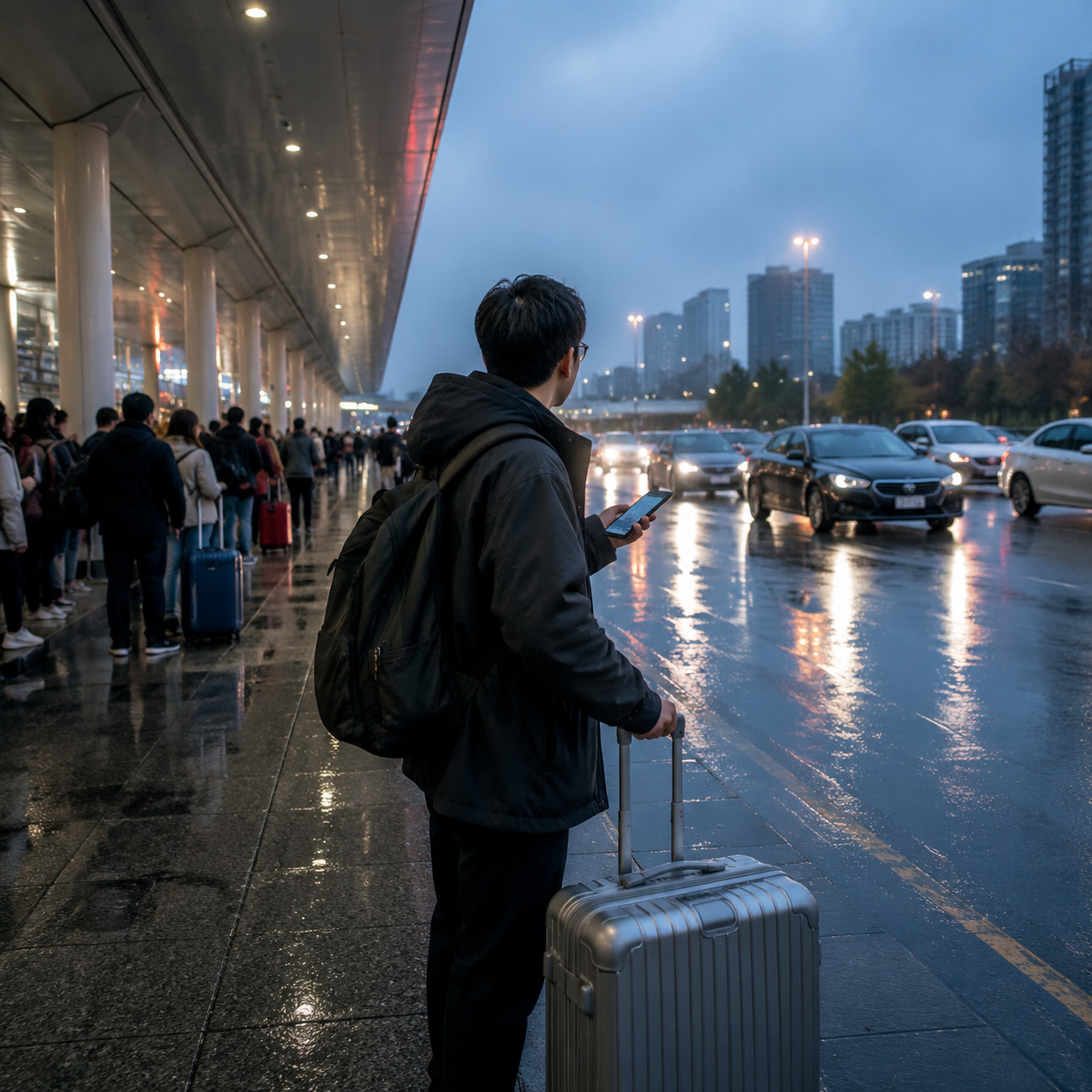
到了网约车专区,我先看见的是一排排黄色地贴和栏杆,地上写着“即停即走”。几名保安站在雨棚下提醒乘客不要越线,司机们缓慢向前挪,车灯在雨里拉成长长的光带。我站在A区第3排,给陈师傅发了定位截图。旁边一个阿姨看我反复望车牌,就提醒我:“你别只看车颜色,白车太多了,看车牌后四位和司机名字。”她说得很自然,却让我马上紧张起来,因为我的确只记住了“白色轿车”。我重新点开订单,把车牌、车型、司机姓氏都读了一遍,才敢把手机放回口袋。
When I reached the ride-hailing area, the first things I saw were rows of yellow floor markings and railings, with “stop briefly and go” written on the ground. Several guards under the canopy reminded passengers not to cross the line while drivers moved forward slowly, their headlights stretching into long streaks in the rain. I stood at row 3 in Area A and sent Mr. Chen another location screenshot. An older woman beside me noticed me searching for license plates and said, “Don’t look only at the car color. There are too many white cars. Check the last four digits of the plate and the driver’s name.” She spoke casually, but it made me nervous because I had indeed remembered only “white sedan.” I opened the order again and read the plate, model, and driver’s surname before putting my phone back in my pocket.
陈师傅的车终于排到雨棚边时,我没有立刻冲出去。我等他靠近黄色线内,确认车牌尾号,再从后门上车。车里有淡淡的柠檬香,仪表台上放着一包纸巾和一个小小的平安挂件。我坐稳后先道歉,说自己刚才站错了广场。他笑了一下:“外地人第一次来很正常,本地人有时候也会看错。你们看地图要看三件事:定位是不是准,楼层是不是对,出口是不是能停车。”这句话比任何旅行提示都实用,因为它来自一个每天在雨里和车流里工作的司机。
When Mr. Chen’s car finally reached the canopy edge, I did not rush out immediately. I waited until he pulled within the yellow line, confirmed the final digits of the plate, and got in through the rear door. The car smelled faintly of lemon, with a packet of tissues and a small safety charm on the dashboard. After sitting down, I apologized for standing at the wrong square. He smiled and said, “It’s normal for visitors the first time. Even locals sometimes get it wrong. When you look at the map, check three things: whether the location is accurate, whether the level is correct, and whether the exit allows cars to stop.” That sentence was more practical than any travel tip because it came from a driver who worked daily in rain and traffic.
路上堵得很慢,雨刷一下一下把挡风玻璃擦亮。陈师傅指着前方的高架说,车站附近很多路口不能临停,司机如果随便靠边,不仅会影响后车,还可能被摄像头记录。他并不是抱怨乘客,而是在解释规则背后的现实:一个看似方便的上车位置,可能正好是公交专用道、消防通道、出租车排队区,或者地下车库出口。乘客若只顾自己少走几步,司机就要承担被催离、绕行甚至违规的风险。那一刻我对“多看一眼上车点”有了更具体的理解,它不是麻烦别人,而是让双方都更顺。
Traffic moved slowly, and the wipers kept clearing the windshield in steady strokes. Mr. Chen pointed toward the elevated road ahead and explained that many intersections near the station did not allow temporary stopping. If drivers pulled over casually, they could block traffic or be recorded by cameras. He was not complaining about passengers; he was explaining the reality behind the rules. A pickup spot that seems convenient may actually be a bus lane, a fire access road, a taxi queue, or the exit of an underground garage. If passengers focus only on saving themselves a few steps, drivers may face being moved on, having to circle, or even violating traffic rules. At that moment, “checking the pickup point once more” became concrete to me: it was not about troubling others, but about making the ride smoother for both sides.
两周后,我又在杭州遇到一次类似的场景,这次地点换成了一个临湖商场。那天晚上,我和阿杰、他的同事小唐在商场六楼吃完火锅,外面雨比之前更大,商场广播提醒顾客小心地滑。我们从餐厅出来时,走廊里全是撑伞的人和等车的人。阿杰说:“你先别急着下单,这个商场有三个门,司机一般只能在北门临停区接人。”我已经把手机拿出来准备点目的地,听他这么一说,停住了手。小唐补充:“而且六楼下去有两组电梯,一组到地库,一组到商场外广场,走错了要绕很远。”
Two weeks later, I encountered a similar situation in Hangzhou, this time at a lakeside shopping mall. That evening, I finished hotpot on the sixth floor with Ajie and his colleague Xiaotang. The rain outside was heavier than before, and the mall announcement reminded customers to watch for slippery floors. When we left the restaurant, the corridor was full of people holding umbrellas or waiting for cars. Ajie said, “Don’t place the order too quickly. This mall has three entrances, and drivers usually pick people up only at the north gate temporary stopping area.” I had already taken out my phone to enter the destination, but I paused when I heard him. Xiaotang added, “Also, there are two elevator groups from the sixth floor. One goes to the basement garage, and one goes to the outside plaza. If you choose the wrong one, you’ll make a long detour.”
这次我没有让软件自动决定。我先在商场楼层导览牌前站定,看清楚北门、地库、地铁连廊和网约车临停点的位置。导览牌旁有一个保安,他正在用拖把把门口积水推开。我用中文问他:“请问打网约车去哪个门比较方便?”他没有直接说“楼下”,而是非常具体地回答:“坐扶梯到一楼,从优衣库旁边出去,右转就是北门雨棚,司机不能进地库接网约车,北门最安全。”我把这几个关键点记在备忘录里:一楼、优衣库旁、右转、北门雨棚。
This time I did not let the app decide automatically. I first stopped in front of the mall floor directory and checked the positions of the north gate, basement garage, metro corridor, and ride-hailing temporary stopping point. A security guard beside the directory was pushing pooled water away from the entrance with a mop. I asked in Chinese which gate was best for app-based rides. He did not simply say “downstairs”; he answered very specifically: “Take the escalator to the first floor, exit beside Uniqlo, turn right, and you’ll reach the north gate canopy. Drivers cannot enter the basement for app pickup. The north gate is safest.” I wrote those key points into my notes: first floor, beside Uniqlo, turn right, north gate canopy.
下单时,我把上车点手动选到“北门网约车临停区”,还在备注里写了“我在北门雨棚下,靠近优衣库出口”。阿杰看见后点点头,说这比只发一个地图定位更清楚,因为商场里GPS经常会漂移,蓝点可能跳到隔壁街、楼上餐厅甚至地下停车场。小唐说她每天通勤都经过这里,雨天最常见的麻烦不是叫不到车,而是乘客和司机都以为对方在“门口”,但一个在商场内门,一个在外广场,一个在地库出口,三个人都没错,却就是碰不到。
When I placed the order, I manually selected “North Gate Ride-Hailing Temporary Stopping Area” and added a note: “I am under the north gate canopy, near the Uniqlo exit.” Ajie nodded when he saw it and said this was clearer than sending only a map pin, because GPS inside malls often drifts and the blue dot may jump to the next street, an upstairs restaurant, or the underground parking lot. Xiaotang said she passed this mall every day on her commute, and the most common rainy-day problem was not failing to get a car. It was that both passenger and driver thought the other person was at “the gate,” while one was at the indoor entrance, one on the outer plaza, and one at the garage exit. Nobody was exactly wrong, yet they still could not meet.
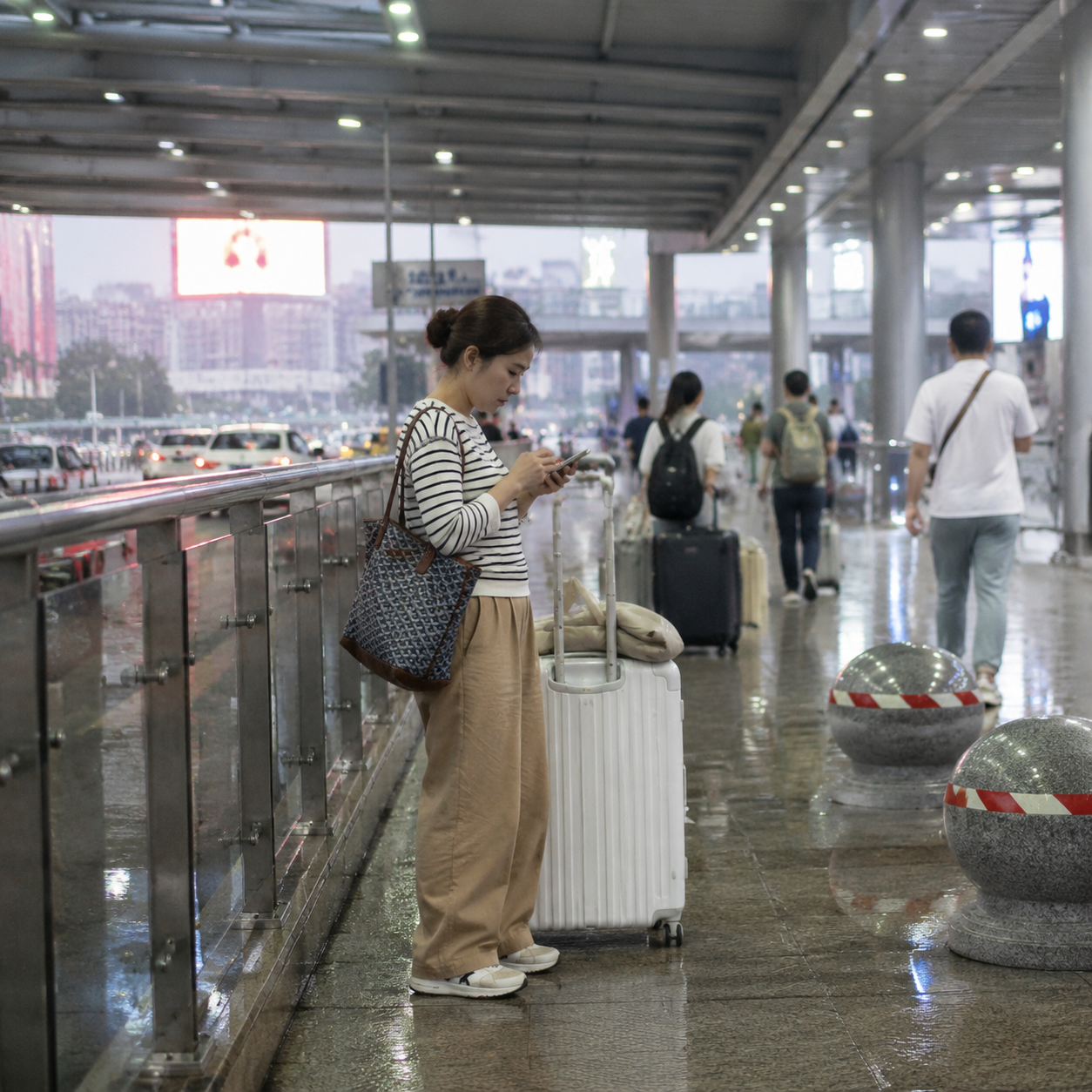
我们走到北门时,雨棚下已经站了十几个人。有人把购物袋垫在脚边,有人抱着刚买的玩具熊,有人一边看车牌一边护着孩子。商场保安用手势让大家站到柱子后面,不要贴着路沿。地面上有一条黄色线,线外就是车辆临停区,车一停,后面的车马上会按喇叭催促。我突然想起陈师傅说过的“车停稳再上”,于是站得离路沿远了一点。我的车到达时,司机先降下车窗确认我的名字,我也确认了车牌和司机头像,才把行李放进后备箱。
When we reached the north gate, more than a dozen people were already standing under the canopy. Some used shopping bags to keep items off the wet ground, some held newly bought teddy bears, and some watched license plates while protecting children. A mall guard gestured for everyone to stand behind the pillars and not crowd the curb. A yellow line marked the ground, and beyond it was the vehicle stopping zone. As soon as a car stopped, the car behind it would often honk. I suddenly remembered Mr. Chen’s advice to wait until the car had stopped, so I stepped farther back from the curb. When my car arrived, the driver lowered the window to confirm my name, and I checked the plate and driver profile before putting my luggage into the trunk.
那晚回住处的路上,我把当天的经历整理成一套自己的判断顺序。先看目的地没有错,但下单前更要看上车点是不是现实可达;其次看楼层,尤其在车站、商场、医院和写字楼,地上地下可能完全不同;再看出口名,不要只说“我在门口”;然后看临停规则,车辆能不能靠近,比地图直线距离更重要;最后看安全,雨天不要站在车道边,不要为了抢几秒穿越护栏,也不要在司机没停稳时靠近车门。这些步骤听起来多,但做熟以后只要几十秒。
On the way back that night, I organized the experience into my own sequence of checks. It is fine to look at the destination first, but before placing the order, it is more important to check whether the pickup point is realistically reachable. Then check the level, especially at stations, malls, hospitals, and office towers, because aboveground and underground routes may be completely different. Next check the exit name, and do not merely say “I’m at the gate.” Then check temporary stopping rules, because whether a car can approach matters more than straight-line distance on the map. Finally, check safety: on rainy days do not stand beside a traffic lane, do not cross railings to save seconds, and do not approach the door before the driver has fully stopped. These steps sound numerous, but after practice they take only a few dozen seconds.
我也慢慢学会了跟司机沟通时少用模糊词。以前我会说“我在这里”“我在门口”“我马上到”,这些话对自己有意义,对司机却可能没有任何定位价值。现在我会说“我在东广场A区第3排”“我在北门雨棚下,靠近某品牌出口”“我从到达层下来,还需要三分钟”。如果路线不熟,我会拍一张带有出口号或指示牌的照片,而不是拍自己的鞋和地面。照片里有文字、柱号、店名、颜色明显的门头,司机就能更快判断我是不是在对的地方。
I also gradually learned to use fewer vague words when communicating with drivers. In the past I would say “I’m here,” “I’m at the gate,” or “I’ll be there soon.” Those words made sense to me, but they gave the driver little location value. Now I say, “I’m at row 3 in East Square Area A,” “I’m under the north gate canopy near a certain brand’s exit,” or “I’m coming down from arrivals and need three more minutes.” If I do not know the route well, I take a photo that includes an exit number or sign, rather than a picture of my shoes and the ground. If the photo contains text, pillar numbers, store names, or a clearly colored entrance, the driver can judge much faster whether I am in the right place.
有一次阿杰开玩笑说,我现在比他还像本地人,因为我每次打车前都会先问“车能不能停”。我告诉他,这不是谨慎过头,而是外国人在中国城市里学到的一种空间感。中国很多公共建筑体量很大,一个“站”或一个“商场”可能包含多个广场、多条车道、多层通道和不同的管理区域。软件已经很方便,但软件不是我的腿,也不能替我判断哪扇门正在施工、哪条路被雨水淹了、哪个出口被临时围起来。真正顺利的出行,是软件、现场标识、保安提醒、司机经验和自己的观察放在一起。
Ajie once joked that I had become more local than he was because before every ride I asked whether the car could stop there. I told him it was not excessive caution; it was a sense of urban space that I had learned as a foreigner in China. Many public buildings in Chinese cities are large in scale. A single station or mall may include several squares, multiple traffic lanes, layered passages, and separate management zones. The app is convenient, but it is not my legs, and it cannot judge for me which door is under construction, which road is flooded, or which exit has been temporarily blocked. Smooth travel comes from combining the app, on-site signs, security reminders, driver experience, and my own observation.
我还注意到,雨天会放大所有小错误。手机屏幕沾水后不灵敏,耳机里听不清司机说话,雨伞挡住视线,行李箱轮子在积水里变沉,心情也容易急。越是在这种时候,越不能只凭直觉往前冲。我会先找一个不挡路的地方站定,把伞夹稳,再看订单页面里的上车点详情。若有朋友同行,我会让一个人看导览牌,一个人联系司机,一个人照看行李。几个人分工之后,原本混乱的场面会马上变得可控。
I also noticed that rainy weather magnifies every small mistake. A wet phone screen becomes less responsive, the driver’s voice is hard to hear through earphones, umbrellas block vision, suitcase wheels feel heavy in puddles, and emotions become impatient. The more this happens, the less I should rush forward by instinct. I first stand somewhere that does not block others, steady my umbrella, and then read the pickup details on the order page. If friends are with me, one person checks the directory, one contacts the driver, and one watches the luggage. Once the group divides tasks, a messy situation quickly becomes manageable.
对于刚到中国的外国朋友,我会用自己的经历提醒他们:不要害怕问保安,也不要不好意思给司机发具体信息。多数保安每天都在处理同样的问题,他们知道哪里能上车、哪里不能停、哪条通道雨天最少积水。多数司机也希望乘客说清楚位置,因为他们在临停区的时间很短,绕一圈可能又要十几分钟。礼貌而具体的沟通能减少误会,比如“您好,我在南门2号柱旁边,穿蓝色外套,车到后我会等您停稳再上车”。这比不停发送问号有效得多。
For foreign friends who have just arrived in China, I use my own experience to remind them not to be afraid of asking security guards and not to feel embarrassed about sending detailed information to drivers. Most guards handle the same problem every day, so they know where cars can pick up passengers, where stopping is not allowed, and which passage has the least standing water on rainy days. Most drivers also want passengers to state their positions clearly because their time in a stopping zone is short, and circling around may take another ten minutes or more. Polite and specific communication reduces misunderstanding, such as: “Hello, I’m beside pillar 2 at the south gate, wearing a blue coat. I’ll wait until your car stops before getting in.” This is much more useful than repeatedly sending question marks.
现在我回想那次杭州东站的雨夜,印象最深的不是自己多走了多少路,而是几个陌生人的提醒如何把麻烦一点点拆开。陈师傅提醒我看楼层和出口,保安提醒我不要走车道,排队的阿姨提醒我看车牌,朋友提醒我先确认商场门。这些提醒没有大道理,却让我在中国的出行变得更安全、更省心。我也从那以后少了很多“明明很近却见不到车”的尴尬,因为我开始把上车点当作行程的一部分,而不是下单之后才临时处理的小事。
When I think back to that rainy night at Hangzhou East Railway Station, what stays with me most is not how far I walked, but how several strangers’ reminders gradually broke the problem into smaller pieces. Mr. Chen reminded me to check the level and exit, the guard reminded me not to walk along the vehicle lane, the woman in the queue reminded me to check the plate, and my friends reminded me to confirm the mall entrance first. These reminders were not grand lessons, but they made my travel in China safer and less stressful. Since then, I have had far fewer awkward moments of being very close to a car but unable to find it, because I now treat the pickup point as part of the trip rather than a minor detail to handle after ordering.
如果把这件事说得再具体一点,我会把“打车前多看一眼”理解成五个动作。看定位,是确认蓝点是不是在自己身边,而不是被高楼或地下空间带偏;看楼层,是确认自己在到达层、出发层、一楼、地库还是天桥;看出口,是把“门口”换成清楚的名称或号码;看临停区,是判断司机能不能合法、安全、短暂停靠;看人和车,是上车前核对车牌、司机信息和周围环境。这五个动作不需要专业知识,只需要愿意停下来半分钟。
To make the matter more specific, I understand “checking once more before hailing a ride” as five actions. Check the location to confirm that the blue dot is actually near you and not distorted by tall buildings or underground space. Check the level to know whether you are at arrivals, departures, the first floor, the basement, or a pedestrian bridge. Check the exit to replace “the gate” with a clear name or number. Check the stopping zone to judge whether the driver can stop legally, safely, and briefly. Check the people and the car by confirming the plate, driver information, and surrounding environment before getting in. These five actions require no special knowledge, only the willingness to pause for half a minute.
我喜欢中国城市的速度,也喜欢手机应用把很多事情变得简单,但速度越快,越需要一点点确认。雨天在商场或高铁站打车,看似只是从室内走到车里的一小段路,实际却连接着建筑动线、交通规则、现场管理和个人安全。那晚我拖着湿漉漉的行李箱终于坐进车里时,鞋尖全是水,心里却很踏实。因为我知道,下次再遇到雨、车流和复杂出口,我不会只追着地图上的小车跑,而会先抬头看一眼真实的上车点。
I enjoy the speed of Chinese cities, and I appreciate how mobile apps make many things easier, but the faster things move, the more valuable a little confirmation becomes. On rainy days, hailing a ride at a mall or high-speed railway station may seem like only a short walk from indoors to a car, but it actually connects building routes, traffic rules, site management, and personal safety. That night, when I finally sat inside the car with my wet suitcase and soaked shoe tips, I felt calm. I knew that the next time I faced rain, traffic, and complicated exits, I would not simply chase the little car icon on the map. I would first look up and check the real pickup point.
- 在重庆住满一个月以后,镜头终于开始拍到景点以外的日常骨架 | After a Full Month in Chongqing, the Camera Finally Catches the Everyday Framework Beyond the Sights
- 在广州早茶桌上学会点心 | Learning Dim Sum at a Guangzhou Morning Tea Table
- 云南15天深度路线:大理丽江香格里拉 | 15-Day Yunnan Route: Dali, Lijiang & Shangri-La
- 版画拓印体验:我第一次明白一张纸为什么也能“接住时间” | Print Rubbing Experience: The First Time I Understood How Paper Can Catch Time
- 木版年画体验:我第一次在一张纸上看见“过年”被印出来 | Woodblock New Year Print Experience: The First Time I Saw New Year Spirit Printed onto Paper
- 一场雨把南京重新排了次顺序:先坐下吃口热的,再决定往哪走 | One Rain Shower Reordered Nanjing for Me: Sit Down for Something Hot Before Deciding Where to Go
- 中国寺庙参观礼仪完全指南 | The Complete Guide to Temple Etiquette in China
- 我在成都学会把夜间抵达拆成一连串小判断 | In Chengdu I Learned to Break a Night Arrival into Small Judgments
- 数字人民币来了,外国游客到底怎么用?| E-CNY Is Here — How Does It Actually Work for Foreign Visitors?
- 陪妈妈在无锡看五月太湖烟雨,我终于学会听她慢慢讲年轻时的事 | Walking with My Mother Through Taihu Mist in Wuxi, I Finally Learned to Listen to Her Younger Stories Slowly
Comments (0)