
在重庆住满一个月以后,镜头终于开始拍到景点以外的日常骨架 | After a Full Month in Chongqing, the Camera Finally Catches the Everyday Framework Beyond the Sights
他们在重庆住了一个月,真正让人羡慕的不是机位,而是住进城市的方法 | They Spent a Month in Chongqing, and What Feels Most Valuable Is Not the Camera Angle, but the Way They Lived Inside the City
很多国外旅行视频把中国城市拍成一种短促的震撼:到、看、惊叹、离开。可像 Pasta and Panda 这种愿意在重庆停留更久的频道,带来的东西恰恰不一样。公开标题里最重要的词不是“夜景”也不是“火锅”,而是“一个月”。这个时间长度一下就把内容从“景点剪辑”往“生活观察”推了一大步。它让观众开始相信,重庆这种看上去极其复杂的城市,不只是拿来路过的,它甚至是可以住进去、慢慢拆开的。
Many foreign travel videos present Chinese cities as a brief shock: arrive, look, react, leave. But channels like Pasta and Panda, willing to stay longer in Chongqing, bring something quite different. The most important word in the public title is neither “skyline” nor “hotpot.” It is “one month.” That time span immediately pushes the content away from attraction montage and toward lived observation. It encourages viewers to believe that a city as visually complex as Chongqing is not merely something to pass through. It is something that can be inhabited and gradually unpacked.
TravelCN 写这类素材时,最值得接住的,也正是这个变化。一个短停游客会告诉读者什么最震撼;一个住上一段时间的外部创作者,反而更容易告诉读者什么最容易被误解、什么最值得慢下来、什么不是第一眼最响亮,却会在第三天、第五天、一周以后变得越来越顺。
That shift is exactly what TravelCN should catch when working with this kind of source material. A short-stay tourist can tell readers what is most shocking. An outside creator who remains for a while can more easily show what is most easily misunderstood, what deserves a slower pace, and what may not seem loud on day one but becomes steadily more rewarding by day three, day five, or the end of a week.

“住一个月”这件事,本身就是一种内容声明 / Saying “One Month” Is Already a Content Statement
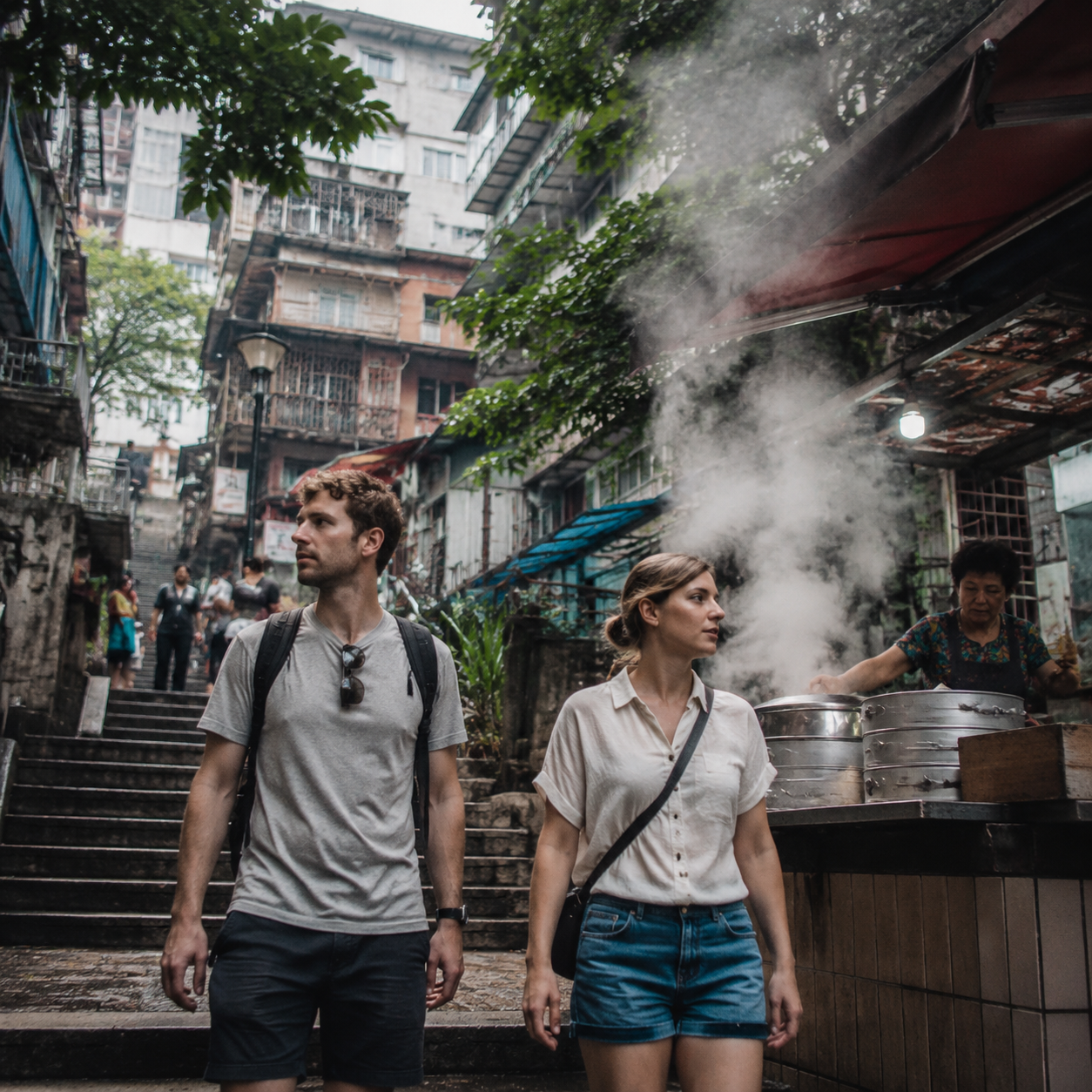
在中国城市内容里,“我住了一阵”天然会改变叙事重点。因为一旦不是两天打卡,路线就不能只围着标志性画面转。你必须开始面对更细的层面:交通到底会不会天天都新鲜;坡地是第一天觉得酷,还是第五天仍旧成立;街边小吃是一次性的新奇,还是能变成城市节奏的一部分;哪些观景点适合第一次去,哪些地方更适合在情绪安静下来以后再看。
Within writing about Chinese cities, the phrase “I stayed for a while” naturally changes the narrative center. The moment the stay is no longer a two-day checklist, the route cannot continue rotating only around signature images. Finer layers must enter: whether transport remains interesting after repeated use, whether the hills are still meaningful on day five and not only on day one, whether street food is a one-time novelty or part of the city’s true rhythm, and which viewpoints belong to the first visit versus which should be saved for a quieter mood later.
这也是为什么 Pasta and Panda 这类公开内容,对外部观众有一种很特殊的说服力。它不是在说“来这里,你会被震到”,而是在说“来这里,震撼之后你还有东西可以继续住下去”。对于很多没来过中国的人来说,这一步非常关键。惊讶会吸引人点开,但“能住进去”才会让人认真考虑要不要来。
That is why public material from creators like Pasta and Panda carries a distinctive form of persuasion for outside audiences. It is not saying merely, “come here and you will be stunned.” It is saying, “come here, and after the shock, there is still enough left to live inside.” For many people who have never visited China, that step is crucial. Surprise may win the click, but the possibility of inhabiting the place is what turns attention into genuine consideration.
这类内容最值得看的,不是景点名单,而是“重复之后还成立的东西” / What Matters Most Here Is Not the Attraction List, but What Still Holds After Repetition
第一次看重庆的人,几乎都会先被城市垂直感拿住;可一个在当地停留一段时间的人,最后记住的往往不是“它真高”,而是“它为什么高了以后还没变空”。也就是说,真正值得报道的,不是第一眼成立的奇观,而是重复接触之后依旧成立的生活逻辑。比如地铁和步行怎么交替,老街和商业区怎么切换,什么样的食物能在连续爬坡之后真正接住体力,什么样的观景路线更适合留给傍晚而不是正午。
Almost everyone seeing Chongqing for the first time is captured by its verticality. But someone staying there for a while often remembers something else in the end—not that it is high, but why height does not turn empty after the first impression fades. In other words, what truly deserves reporting is not the spectacle that works on first contact, but the living logic that still works after repetition. That includes how metro and walking alternate, how older streets and commercial districts switch roles, which kinds of food genuinely restore strength after repeated climbing, and which viewpoint lines belong to dusk rather than noon.

对于 TravelCN 来说,这种“重复之后还成立的东西”极有价值。因为普通游客真正需要的,恰恰不是最响的推荐,而是最耐用的推荐。外部创作者如果住得够久,就会天然帮站内筛掉一批只适合拍一次的东西,留下那些更接近实际旅行强度的部分。第三方报道体文章最该做的,就是把这种筛选读出来。
For TravelCN, this category—things that still hold after repetition—is tremendously valuable. Ordinary travelers do not ultimately need the loudest recommendation. They need the most durable one. Once an outside creator stays long enough, they naturally filter out some places that work only for one photograph and leave behind elements closer to real travel intensity. A reported-format article should be reading that filtration back to the audience.
重庆最难的地方,不是“太复杂”,而是“复杂得太容易被浪漫化” / Chongqing’s Hardest Feature Is Not Complexity Itself, but How Easily That Complexity Gets Romanticized
很多公开视频会把重庆的层层叠叠拍得很迷人,这当然没有问题,但问题在于观众很容易只看到浪漫的一面:桥、坡、楼、夜、雾、火锅、霓虹。真正住过一段时间的人,反而更有机会把另一层也带出来:这些好看的结构,意味着什么样的体力安排;什么样的路线连着走会累;哪些“看起来很近”的位置,实际上并不适合同一段时段硬拼在一起。
Many public videos make Chongqing’s stacked structure look enchanting, and there is nothing wrong with that. The difficulty is that audiences then see only the romantic layer: bridges, slopes, towers, night, mist, hotpot, neon. Someone who has actually stayed longer has a better chance of showing the second layer as well: what those beautiful structures mean for bodily planning, which connected routes become exhausting, and which locations that appear visually close should not be forced into the same time block.
笔者认为,这正是长期停留型外部创作者最值得被站内转写的理由。不是因为他们比短停游客更会夸,而是因为他们更容易把“好看”翻译成“怎么走”。这一步一旦完成,重庆就不再只是一个供人投射想象的奇观城市,而会变成一个普通旅行者也能一步步进入的具体城市。
The writer believes this is the strongest reason longer-stay outside creators deserve to be translated into site articles. It is not that they praise more effectively than short-term visitors. It is that they are better positioned to translate beauty into movement. Once that translation happens, Chongqing stops being a spectacular city onto which outsiders project fantasy and becomes a concrete city that an ordinary traveler can enter step by step.

对 TravelCN 来说,这类素材最适合被写成“慢版本攻略” / For TravelCN, This Material Is Best Turned into a Slower Version of the Guide
如果说短停型国外博主更适合拿来写“第一印象路线”,那么停留型内容显然更适合被写成“慢版本攻略”。它不一定追求覆盖最多景点,而是更适合写哪些路线第二次走会更顺、哪些区块更适合午后停留、哪些夜景应该在体力还在线的时候看、哪些老街值得留给情绪降下来以后再走。这样一来,TravelCN 写出来的就不是普通推荐文,而是更像一种“如何住进这座城市一小段时间”的方法文。
If short-stay foreign creators are best used for writing first-impression routes, then longer-stay material is clearly better transformed into a slower version of the guide. It does not need to maximize attraction coverage. It is better suited to explaining which routes improve on a second walk, which districts deserve an afternoon stay, which night views should be kept for a moment when the body still has energy, and which older streets are best saved for when the mood has quieted. Written that way, the result is no longer a standard recommendation piece. It becomes something closer to a method article on how to live inside the city for a short while.
这种内容的下一步也很好想象:如果外部创作者越来越愿意在中国城市里住得久一点,TravelCN 完全可以继续往下接,做更多“第一周怎么适应”“哪些片区适合先住下来”“怎样从游客路线慢慢过渡到城市路线”的文章。对于海外读者来说,这会是一种非常强的新信号——中国不只是值得看,也值得住上一阵。
The next step of this material is easy to imagine. If outside creators become more willing to stay longer in Chinese cities, TravelCN can continue the work by developing more articles on how to adapt during the first week, which districts are better for settling in first, and how a traveler route can slowly transition into a city route. For overseas readers, that would send a powerful new signal: China is not only worth seeing. It is worth inhabiting for a while.
公开素材来源 / Public Source Notes
- Pasta and Panda (Dav and J), “1 Month In Chongqing: China's Real-Life Cyberpunk Megacity”
- 仅少量使用公开视频封面作报道说明,不做整段搬运。
Public source used:
- Pasta and Panda (Dav and J), “1 Month In Chongqing: China's Real-Life Cyberpunk Megacity”
- Only a very limited amount of public cover imagery is used for explanatory reporting, not for wholesale reproduction.
- 十月赏银杏:满城尽带黄金甲 | October Ginkgo Season: When China Turns to Gold
- 一块豆腐的两千年旅程 | A Block of Tofu's Two-Thousand-Year Journey
- 我们带着孩子在杭州遇上五月细雨,才知道西湖不用一路赶 | Traveling Hangzhou with a Child in May Rain Taught Us West Lake Never Needed Rushing
- 重庆让国外大博主上头的,从来不只是洪崖洞那一层灯火 | What Hooks Major Foreign Creators in Chongqing Is Never Only the Glow of Hongyadong
- 南京五月的雨把我们一家三口困在城墙边,却顺手送来了一顿最好吃的鸭血粉丝汤 | A May Rain by Nanjing's City Wall Stranded Our Family of Three and Delivered the Best Bowl of Duck Blood Soup Instead
- 海南环岛自驾7天:三亚万宁博鳌 | 7-Day Hainan Island Drive: Sanya, Wanning & Boao
- 在潮州把一日三餐走成一条街巷路线 | Eating Through Chaozhou, One Lane at a Time
- 我在清晨的老街,跟着一碗热汤慢下来 | In the old street at dawn, I slowed down by following a bowl of hot soup
- 和大学朋友去嘉兴的五月周末,我们在南湖边把成年人的心事聊开了 | A Rainy May Weekend in Jiaxing Let My Old Friends and Me Finally Talk Through What Adulthood Had Done to Us
- 西安一日极限暴走:城墙骑行、回民街、大雁塔一天全收 | Xi'an in One Day: City Wall Cycling, Muslim Quarter, and Big Wild Goose Pagoda
Comments (0)