
清晨六点半的重庆小面店,我靠一碗豌杂面听懂了这座城 | At 6:30 a.m. in a Chongqing Noodle Shop, a Bowl of Wanza Mian Explained the City
清晨六点半的重庆小面店,我靠一碗豌杂面听懂了这座城 | At 6:30 a.m. in a Chongqing Noodle Shop, a Bowl of Wanza Mian Explained the City
早上六点半,重庆巷子里的辣油香先醒过来,本人还没走到店门口,鼻子已经被花椒、猪油和刚出锅的面汤拽住。坡上的空气带一点江边的湿,卷闸门刚拉到一半,门内有人高声报面:二两豌杂、加青;小碗素面、微辣;红油抄手先走一份。我顺着香味站进队伍里,鞋底还沾着旅馆楼下潮湿的青石灰。
At 6:30 in the morning, the chili oil in a Chongqing alley woke up before the city did. I had not even reached the shopfront when the smell of Sichuan pepper, pork fat, and fresh noodle broth had already grabbed me by the nose. The air on the slope carried a bit of river dampness. The rolling shutter was only half open, and inside someone was already shouting orders: “Er liang wanza, extra greens! Small vegetarian bowl, mild! One red-oil wonton out first!” I slipped into the queue by scent alone, the soles of my shoes still carrying the moisture of the bluestone pavement below my guesthouse.
这家店没有什么精致门头,只有一块被油烟熏得边缘发暗的招牌,几张矮桌子,一锅不停翻滚的面汤,和一种“你要吃就快点决定”的早晨效率。本人本来还想装作从容地研究菜单,结果前面阿姨回头看了我一眼,直接问:“第一次来?”我点头。她像已经见过太多犹豫的外地人,替我下了半个决定:“豌杂面,先吃这个,最稳。”
The shop had no polished facade—just a sign darkened at the edges by years of oil smoke, a few low tables, a pot of broth that never stopped rolling, and the kind of morning efficiency that says, if you want to eat, decide quickly. I had intended to study the menu with fake composure, but the auntie in front of me turned around, sized me up once, and asked, “First time here?” I nodded. She looked like someone who had seen too many hesitant out-of-towners and made half the decision for me: “Wanza noodles. Start there. Safest choice.”
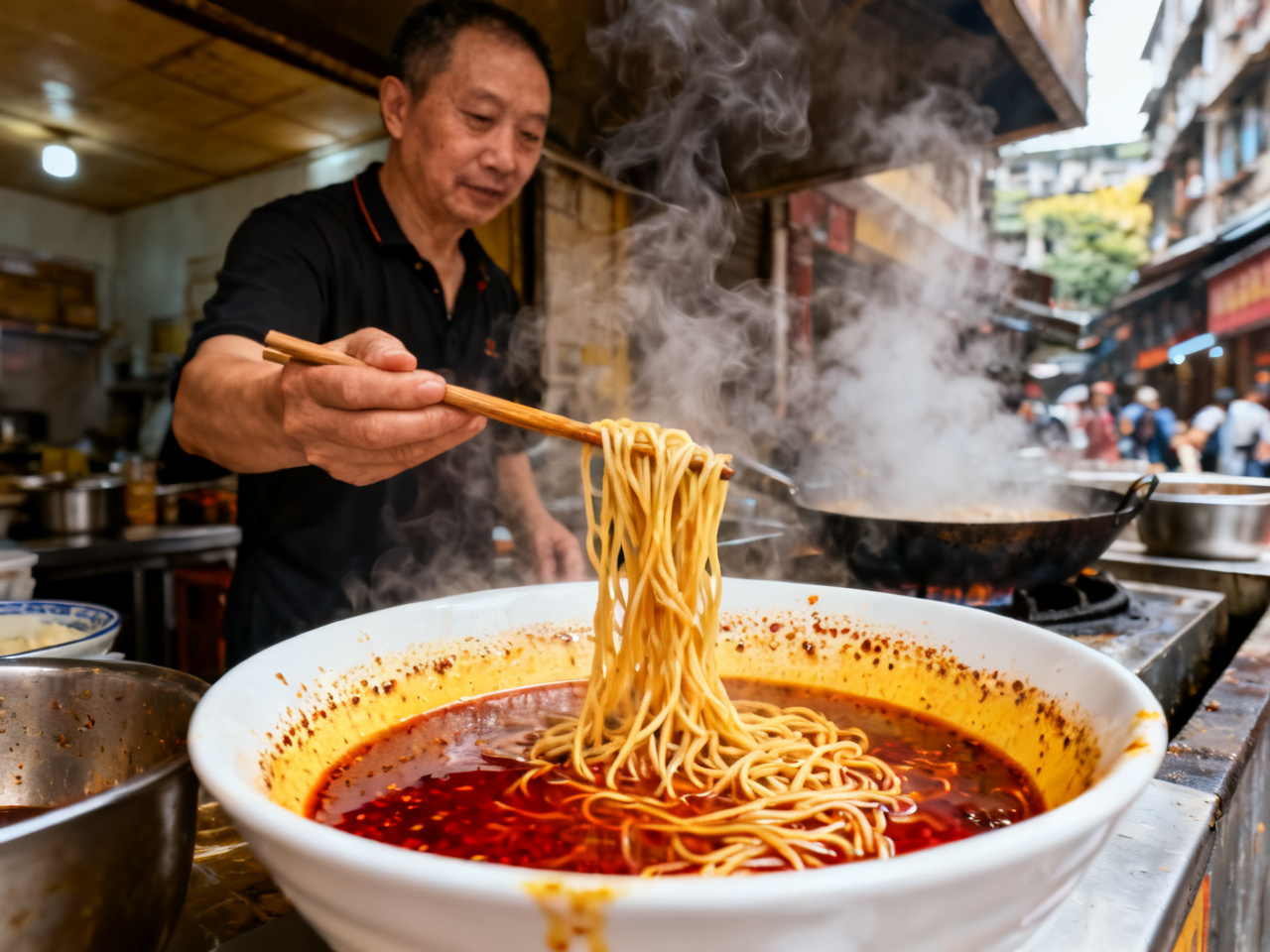
队伍移动得很快。收银台边上放着塑料筐,里面是生蒜、香菜、葱花、小袋榨菜;墙上红纸菜单被蒸汽熏得有些卷边;后厨师傅一把一把下面,手腕一抖,面条像白色的线雨落进沸水。点单时,老板只给我两秒钟:“几两?辣不辣?”本人脑子还没完全醒,只好学着前面人说:“二两,正常辣。”话一出口,后面排队的小哥笑了:“可以,早上就该这么吃。”
The line moved fast. Beside the cashier stood plastic baskets filled with raw garlic, cilantro, scallions, and small packets of pickled mustard greens. The red-paper menu on the wall had curled at the edges from steam. In the back, the cook dropped handful after handful of noodles into the boiling water, each flick of his wrist sending down a white rain of strands. At ordering time, the owner gave me exactly two seconds: “How many liang? How spicy?” My brain was not fully awake yet, so I copied the people ahead of me and answered, “Two liang, regular spice.” The young guy behind me laughed. “Good. That’s how breakfast should start.”
重庆的早餐队伍很能说明这座城。有人穿拖鞋下来吃第一碗面,有人背着电脑包边看手机边等,有工地师傅手上还沾着前一天洗不净的灰,也有刚晨练完的大爷,毛巾搭在脖子上,已经和老板熟到不用说完整句子。每个人都赶时间,但又不是那种冰冷的赶。这里的快,带着热气、吆喝、熟人之间的调侃,还有筷子敲碗时很实在的节奏。
A Chongqing breakfast queue explains a lot about the city. Some people come down in slippers for their first bowl of the day. Some wait with laptop bags on their shoulders and one eye on their phones. Construction workers stand there with traces of dust that yesterday never fully washed off their hands. Retired uncles arrive after morning exercise with towels over their necks and such familiarity with the owner that they do not need complete sentences. Everyone is in a hurry, but not a cold kind of hurry. The speed here comes with steam, shouted orders, teasing between regulars, and the solid rhythm of chopsticks tapping bowls.
没等太久,轮到本人端面。碗很厚实,边缘有一圈被常年热汤熏出的细旧痕。面一上桌,第一眼先看见红:不是浮夸的整碗通红,而是辣油沉在底部,表面由豌豆的黄、肉臊子的棕、青菜的绿把颜色压住。豌豆炖得很糯,几乎要化开;杂酱油亮,颗粒细碎;面条埋在下面,热气把花椒香和酱香一起顶到脸上。本人还没下筷,眼镜已经被蒸出一层薄雾。
I did not wait long before my bowl arrived. The bowl itself was sturdy, its rim carrying the fine old marks of years of hot broth. At first glance the surface looked less violently red than I expected. The chili oil sat lower down, restrained on top by the yellow of the stewed peas, the brown of the minced meat topping, and the green of the vegetables. The peas had cooked down into near softness, almost dissolving; the minced topping shone with oil in tiny granules; the noodles hid beneath. The rising steam pushed the fragrance of Sichuan pepper and sauce straight into my face. Before I even lifted my chopsticks, my glasses had already fogged.
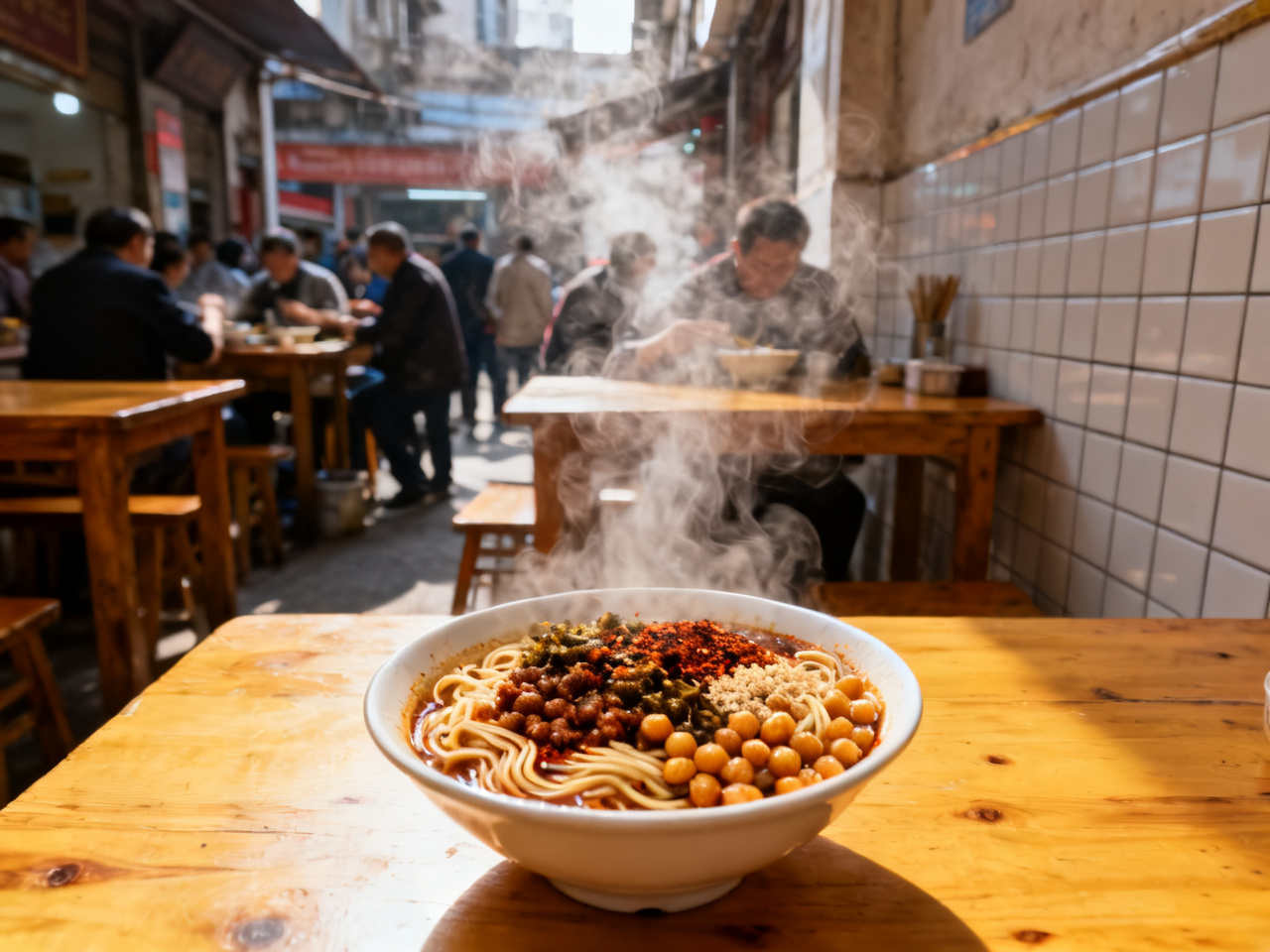
第一口不能急。老板娘路过时看见我正准备把面全部拌匀,马上提醒:“先吃上面,再从下面翻。”本人赶紧收手,照她说的做。先尝一口豌豆,绵得像清晨刚煮开的粥,却带着豆类特有的厚味;再碰一点杂酱,咸香里有一点回甜;等筷子真正探到底,把辣油和面一起带上来,味道才突然立体——麻先碰到舌尖,辣跟着上来,最后是面粉和肉香把整个口腔托住。
The first bite should not be rushed. As the owner’s wife walked past and saw me preparing to stir everything together, she immediately warned, “Eat the top first, then lift from the bottom.” I pulled back my hand and followed instructions. First came a spoonful of peas, soft as porridge fresh off the morning boil but carrying the deep thickness of beans. Then a bit of minced topping, salty and fragrant with a faint sweetness underneath. Only when my chopsticks finally reached the bottom and brought up noodles coated in chili oil did the flavor turn fully dimensional: the numbing note touched the tip of the tongue first, the heat rose right after it, and finally the taste of flour and meat held the whole mouth together.
本人以前在别的城市也吃过面,但重庆小面的厉害之处,不是单一的辣,而是层次在很短时间里一层层推过来。你刚觉得花椒占上风,豌豆的温厚又把它压住;你以为杂酱会太油,青菜一入口又把口腔拉回清爽。桌上不锈钢勺碰到碗底会发出脆响,周围人吸面速度很快,店门外摩托车爬坡时发动机闷闷地吼,鼻尖还隐约能闻到门口煤气灶上的红薯甜味。整间店像一场同时进行的多声部合奏。
I had eaten noodles in other cities before, but the brilliance of Chongqing noodles lies not in a single note of heat. It lies in how the layers push through in quick succession. Just when the Sichuan pepper seems to dominate, the warmth of the peas presses it back down. Just when the minced topping feels as if it may become too oily, a bite of greens restores freshness. Stainless steel spoons crack lightly against the bottoms of bowls, people around me slurp with astonishing speed, engines from motorbikes climbing the slope outside give off a muffled growl, and somewhere near the doorway I can still smell sweet potatoes heating over a gas flame. The whole shop feels like a many-voiced ensemble playing at once.
吃到一半,前面替本人推荐豌杂面的阿姨也端着她那碗坐到了旁边。她问我“吃得惯不”,我说比想象中还顺。她得意地笑了一下,说自己每天都来,哪天不来就像少做了一件正经事。她教我,如果觉得辣慢慢往上顶,不要急着灌冰豆浆,先喝一口面汤,再夹一点豌豆,嘴里会重新平衡。她一边说,一边把自己碗里多的香菜拨到一边,动作熟练得像整理桌上的日常秩序。
Halfway through the bowl, the auntie who had recommended wanza noodles to me earlier came and sat nearby with her own breakfast. She asked whether I could handle it. I told her it went down even better than I had imagined. She gave a satisfied smile and said she came every single day; if she missed one morning, it felt as though she had failed to complete a proper task. She taught me that if the heat begins creeping upward too strongly, I should not rush for iced soy milk. Instead I should sip a little broth first, then eat a bite of peas, and the mouth would balance itself again. As she spoke, she casually pushed the extra cilantro in her bowl to one side with the practiced motion of someone arranging a daily order.
重庆很多食物都带着这种“先猛后稳”的性格。你初见时被香和辣吓一跳,坐下来以后却发现它们不是在攻击你,而是在迅速告诉你这座城的说话方式:坡多,雾重,人急,但心并不窄。本人后来想,这和我在别处吃早餐很不一样。广州早茶讲慢慢坐定,西安的肉夹馍更像边走边咬,而这碗豌杂面属于上坡城市的早晨,属于那种必须立刻把身体点亮的生活。
Much food in Chongqing carries this same character of “fierce first, steady afterward.” At first encounter, the aroma and heat startle you. But once you sit down, you realize they are not attacking; they are telling you quickly how this city speaks: many hills, heavy fog, hurried people, yet not narrow-hearted. Later I thought about how different that felt from breakfasts elsewhere. Cantonese morning tea asks you to settle in slowly, while Xi’an roujiamo belongs to a life of biting as you walk. This bowl of wanza noodles belongs to the morning of a city built on slopes, a life that needs the body lit up immediately.
如果你想把吃这件事放进更大的旅行理解里,夜里那套重庆和别城常见的宵夜逻辑,可以参考 Late-night food map;而若你想对照另外一种完全不同的晨间或正午饮食秩序,广州那篇 Cantonese dim sum for two 很适合放在脑子里一起比较。至于要理解中国城市里食物和通勤如何交织,Chinese city commuting choices 也能帮助你把“去哪吃”和“怎么到”看成同一件旅行决策。
If you want to place this meal into a wider travel understanding, the nighttime logic of food in Chongqing and other cities can be compared with Late-night food map. And if you want a completely different breakfast or midday food rhythm to compare against, the Guangzhou piece Cantonese dim sum for two is useful to hold in mind alongside it. To understand how food and commuting intertwine in Chinese cities more broadly, Chinese city commuting choices also helps you see “where to eat” and “how to get there” as one travel decision.
店里的人换了一拨又一拨,节奏却渐渐从快转慢。最早那批赶上班的人五六分钟就吃完走了,后来进来的几桌开始会坐着聊天。有人加了一份煎蛋,有人再来一碗抄手,老板在蒸汽后面继续报单,嗓子一点不哑。本人也终于不再狼吞虎咽,而是把面挑起来,看辣油从面身滑回碗底,看豌豆在勺背上轻轻散开。刚进门时那种被香气推着跑的感觉,慢慢变成了坐在城市内部听它说话的安静。
The people in the shop changed wave after wave, yet the rhythm slowly shifted from fast to slow. The earliest office-bound crowd finished in five or six minutes and left; later arrivals began to linger and talk. Some added a fried egg. Some ordered another bowl of wontons. Behind the steam the owner kept calling tickets without losing his voice. I, too, stopped eating like someone in a race. I lifted the noodles and watched the chili oil slide back toward the bottom of the bowl, watched the peas loosen gently across the back of the spoon. The feeling that had first pushed me inward by sheer aroma gradually turned into a quieter one: sitting inside the city and listening to it speak.
最后一口面吃完时,门外的天已经完全亮了,坡下传来公交车进站的气声,几个小学生背着书包跑过去,鞋底在潮湿地面上发出啪嗒啪嗒的响。本人把空碗往前推,碗底只剩一点红油和碎葱花。老板娘经过时看了一眼,笑着问:“还可以吧?”我说:“可以,明天还想来。”她用抹布利落地擦过桌面,把下一双筷子摆好。门口那股花椒和面汤的热气还在往街上飘,而我站起身走出店时,舌尖微麻,额头有一点薄汗,整座重庆像刚刚通过这一碗面,把自己介绍完毕。
By the time I finished the last bite, the sky outside had fully brightened. Down the slope came the hiss of a bus pulling into a stop, and several schoolchildren ran past with backpacks bouncing, their shoes making quick slapping sounds on the damp ground. I pushed the empty bowl forward. At the bottom remained only a little red oil and chopped scallion. As the owner’s wife passed by, she glanced at it and smiled. “All right?” she asked. “More than all right,” I said. “I want to come back tomorrow.” She wiped the table briskly and set down the next pair of chopsticks. The warm smell of pepper and noodle broth was still drifting into the street, and when I stood up and walked out, my tongue still tingled, a light sweat sat on my forehead, and the whole city of Chongqing felt as if it had just introduced itself through a single bowl.
- 第一次在中国小区门口等人,我学会站在门侧别贴着门禁 | The First Time I Waited Outside a Chinese Compound Gate, I Learned to Stand to the Side Instead of Pressing Up Against the Access Door
- 西藏:世界屋脊 | Tibet: The Roof of the World
- 保温杯没有拧紧的那一刻,我才懂宜春的温泉不是赶场项目 | When My Thermos Came Loose, I Understood That Yichun’s Hot Springs Are Not a Race
- 在洛阳看牡丹之外:一座古都的日常层次 | Beyond Peonies in Luoyang: The Everyday Layers of an Ancient Capital
- 五月在婺源的雨后清晨,我跟着民宿老板去看一片刚亮起来的白墙黑瓦 | One Rain-Washed Morning in Wuyuan, I Followed a Guesthouse Owner Toward White Walls Just Beginning to Glow
- 火锅点单避坑指南:第一次吃别踩这些雷 | Hot Pot Ordering Survival Guide: Avoid These Mistakes on Your First Visit
- 我第一次看懂明代衣服,不是在博物馆,而是在裁缝铺里看人怎么站 | I First Understood Ming Clothing Not in a Museum, but in a Tailor's Shop Watching How People Stood
- 成都最会让国外镜头停久一点的,往往不是熊猫,而是人坐下来以后那股松弛 | What Most Often Makes Foreign Cameras Linger in Chengdu Is Not the Pandas but the Ease That Begins Once People Sit Down
- 脸谱绘制体验:我第一次明白一张脸为什么可以先于台词说话 | Opera Face-Painting Workshop: My First Time Understanding How a Face Can Speak Before the Lines
- 太原老街的灯不抢眼,却把回家、吃面和晚风都照得刚刚好 | Taiyuan’s Old-Street Lights Are Modest, Yet They Hold Homecoming, Noodles, and Night Wind Just Right
Comments (0)