
潮州早茶的一张小桌 | A Small Table at Chaozhou Morning Tea
潮州早茶的一张小桌 | A Small Table at Chaozhou Morning Tea
清晨六点四十分,潮州老城的骑楼还留着一点灰蓝色的天光。我推开茶楼玻璃门,先听见瓷杯相碰的清脆声,随后才闻到蒸笼掀开时涌出的米香。大厅已经坐得七七八八,吊扇慢慢转,服务员端着不锈钢托盘在窄道里侧身穿行。我站在门口找空桌,老板娘抬手一指:“一个人?那边拼桌。”
At 6:40 in the morning, the arcades of Chaozhou’s old town still held a trace of blue-gray dawn. When I pushed open the teahouse door, I heard the bright clink of porcelain before the scent of steamed rice reached me. Most seats were already taken. Ceiling fans turned lazily while servers slipped sideways through narrow aisles with stainless-steel trays. I paused, looking for an empty table, until the owner pointed across the room. “Just one? Share that table.”
那是一张只够四个人围坐的小方桌,桌面被多年茶水磨出温润的暗光。靠墙坐着一位穿白背心的伯伯,旁边是提着菜篮的阿姨,两人把碟子往中间收了收,给我腾出一角。我用不太熟练的潮州话说了声“多谢”,伯伯笑着纠正我的尾音。尴尬只停了几秒,因为阿姨已经把纸巾盒推到我手边,像接待一个迟到的邻居。
It was a small square table, barely large enough for four, its surface dark and smooth from years of spilled tea. An elderly man in a white undershirt sat against the wall beside a woman with a market basket. They drew their plates inward to make room for me. I attempted a thank-you in Teochew, and the man cheerfully corrected my final tone. The awkwardness lasted only a few seconds; the woman had already pushed the tissue box toward me, as if welcoming a neighbor who had arrived late.
我以为坐下以后会先收到菜单,服务员却放来一只小泥炉、一把薄胎茶壶和三只杯子。伯伯抓一撮凤凰单丛入壶,沸水绕着壶口冲下,第一道茶转手便倒掉。我正想问是不是泡坏了,他已经用热水烫杯、刮沫、再冲第二遍。茶汤只有浅浅一口,香气却像从杯底长出来,先是熟果,后来有一点兰花和炭火的暖意。
I expected a menu after sitting down, but the server brought a small clay stove, a thin-walled teapot, and three tiny cups. The elderly man dropped in a pinch of Phoenix Dancong tea, poured boiling water around the rim, and immediately discarded the first infusion. I nearly asked whether something had gone wrong. Instead, he rinsed the cups, skimmed the foam, and brewed again. There was only a sip in each cup, yet the fragrance seemed to rise from the porcelain itself—ripe fruit at first, then orchid and the warmth of charcoal.
“工夫不在慢,在准。”伯伯一边斟茶一边说。他的手腕没有夸张动作,壶嘴从三只杯上飞快掠过,茶色却一样深。我原先把工夫茶想成郑重的表演,要穿长衫、坐在安静茶室里才算完整;眼前却是收音机播着早间新闻,隔壁桌有人高声谈鱼价,服务员催着让路。精细并没有排斥喧闹,它就在日常声浪里稳稳占着一小块地方。
“Gongfu isn’t about being slow. It’s about being precise,” the man said as he poured. His wrist made no theatrical gestures. The spout swept quickly over all three cups, yet the color of the tea was even in each one. I had imagined gongfu tea as a solemn performance, complete only in a silent room with formal clothes. Here, a radio carried the morning news, diners at the next table debated fish prices, and servers called for people to clear the aisle. Precision did not require silence; it calmly occupied its own small space inside the noise of ordinary life.
菜单终于送来时,我因饿得厉害,几乎把每样带“粿”字的都勾了一份:笋粿、韭菜粿、无米粿,再加牛肉丸、蒸排骨和一笼水晶包。我把“小份”理解成西餐里的单人份,还很自信地告诉服务员“这些就够了”。阿姨扫了一眼单子,眉毛抬得很高:“你还有朋友没来?”我摇头,她立刻笑出声,连隔壁桌也转过来看。
When the menu finally arrived, hunger made me reckless. I checked nearly every item containing the word “guo”: bamboo-shoot dumplings, chive dumplings, mung-bean dumplings, plus beef balls, steamed ribs, and a basket of crystal buns. I assumed “small” meant a Western-style individual portion and confidently told the server that this would be enough. The woman glanced at my order and raised her eyebrows. “Are your friends still coming?” When I shook my head, she laughed so loudly that even the next table turned to look.
老板娘拿起铅笔,替我划掉一半:“先吃,不够再叫。”这句劝告救了我的胃,也让我看懂潮州早茶的点单逻辑。碟子看着不大,但粿皮里塞得实在;而一桌人通常不是各吃各的,是把每份切开、轮流夹取。第一只笋粿上桌,阿姨用筷子从中间分开,薄而微黏的皮冒着热气,里面是脆笋、虾米和胡椒。她把较完整的一半夹给我,说第一次吃要趁热。
The owner picked up her pencil and crossed out half my order. “Eat first. Add more if you need it.” That advice saved my stomach and revealed the logic of Chaozhou morning-tea ordering. The plates looked small, but each dumpling was densely filled; more importantly, a table did not order one portion per person. Everyone divided each dish and shared it. When the first bamboo-shoot dumpling arrived, the woman split it with her chopsticks. Steam escaped from the thin, slightly sticky wrapper, revealing crisp bamboo shoots, dried shrimp, and pepper. She gave me the neater half and said a first taste should always be hot.
无米粿的名字又让我误判。我以为“无米”就是没有米,咬开才发现透明软壳由薯粉做成,里面裹着绵密绿豆。伯伯说,它只是不以普通米浆做皮。牛肉丸弹得几乎滚出汤匙,蒸排骨下的芋头吸足肉汁,反而成了我最喜欢的一口。
The name of the mung-bean dumpling led me astray again. I took “no rice” literally, only to find a translucent starch wrapper around a smooth mung-bean filling. The elderly man explained that the name simply meant the wrapper was not made from ordinary rice batter. The beef balls nearly bounced off my spoon, while the taro beneath the steamed ribs absorbed the meat juices and became my favorite bite.
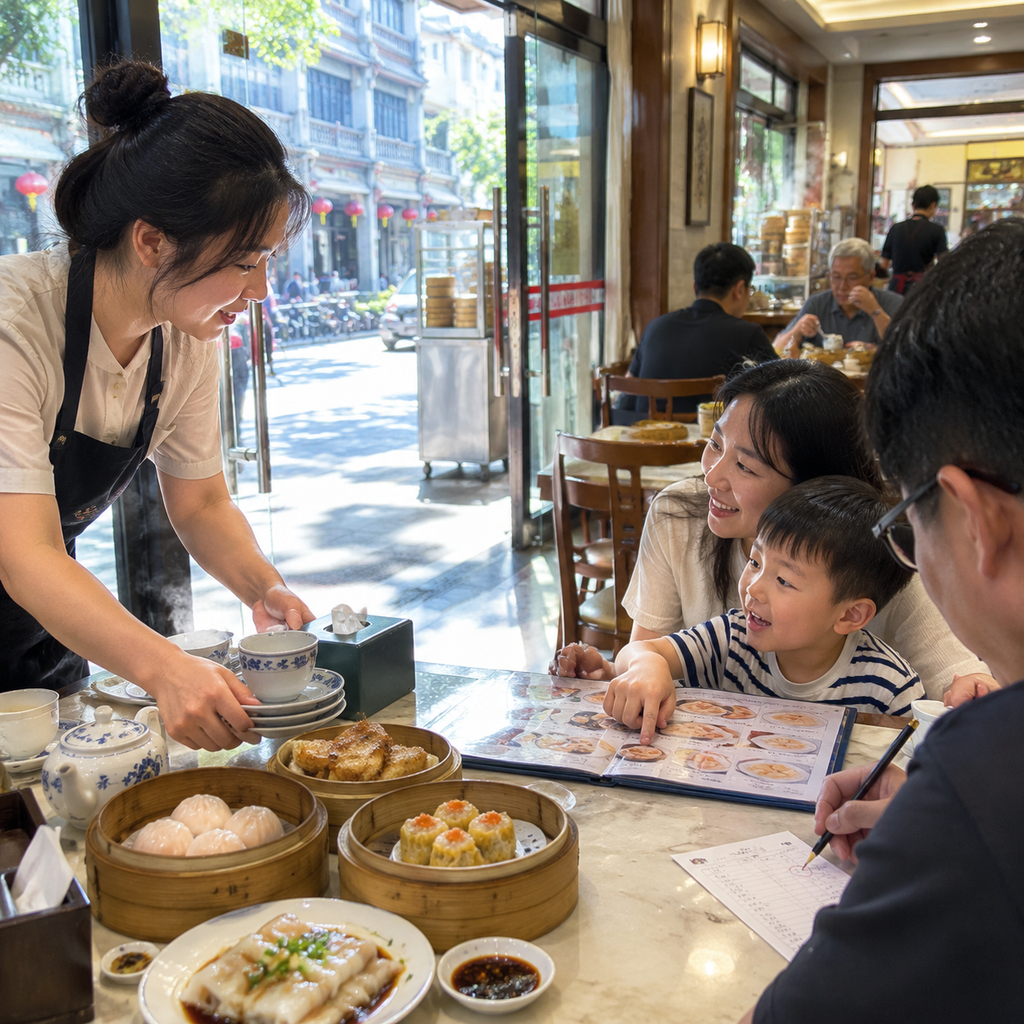
拼桌也渐渐有了节奏。谁的杯空了,离茶壶最近的人便续上;新碟送来,大家自然挪动旧盘,不需要商量。阿姨吃完先走,提起菜篮前轻敲两下桌面,算是向我们告别。随后一个送货的年轻人坐到她的位置,点了一笼粉粿,只喝两杯茶,十分钟后又匆匆离开。这张桌子不像被谁占有,更像老城清晨的一处小码头,人来,停靠,交换几句话,再各自出发。
Sharing the table gradually developed its own rhythm. Whenever a cup was empty, whoever sat nearest the pot refilled it. When a new plate arrived, everyone shifted the older ones without discussion. The woman finished first and tapped the table twice before lifting her market basket, a quiet farewell. A young delivery worker then took her seat, ordered one basket of dumplings, drank two cups of tea, and hurried away ten minutes later. The table belonged to no one. It resembled a tiny harbor in the waking old town, where people arrived, paused, exchanged a few words, and set off again.
结账时,老板娘把被她划掉的几道菜指给我看,笑问:“现在信了吧?”我确实信了。早茶不是用一顿饭把桌面堆满,而是给时间留余地:茶可以续,菜可以加,陌生人也可以坐近一点。我走出门时,骑楼下的铺子刚刚升起卷帘,街面被阳光照成浅金色。回头看,那只小茶壶又被伯伯提起,细细的水线落进了新来的那只杯子。
At the counter, the owner pointed to the dishes she had crossed out and smiled. “Believe me now?” I did. Morning tea was not about covering the table with food in a single order. It left room for time: tea could be refilled, dishes could be added, and strangers could sit a little closer. When I stepped outside, shops beneath the arcades were just lifting their shutters, and the street had turned pale gold in the sun. I looked back once. The elderly man was raising the little teapot again, pouring a fine stream into the cup of the newest arrival.
不过那天我并没有立刻走远。老板娘追到门边,把一张算漏的茶位小票塞回围裙口袋,说伯伯刚换了新茶,问我要不要再坐一轮。伯伯已经把旧叶拨进竹篓,拇指和食指捏起一撮颜色更深的单丛。我重新挤回方桌,年轻送货员也把摩托车钥匙按在杯碟旁。第二轮茶的水温更高,壶盖被蒸汽顶得轻轻跳动;伯伯先把水注在壶身上,等泥壶泛起湿亮,才沿杯口巡斟。茶入口少了先前的花香,多了一点蜜和木头的涩。我误以为这是泡得太久,顺手想把杯子放下,他却用指节敲敲桌面:“不是坏,是换了山头,慢慢咽。”我照做,涩意退后,喉咙里果然回出清甜。
But I did not get far that morning. The owner followed me to the doorway, tucked a miscounted tea slip back into her apron, and said the old man had opened fresh leaves if I wanted another round. He had already brushed the spent leaves into a bamboo basket and pinched out a darker Dancong. I squeezed back into my corner, while the delivery rider set his motorcycle key beside the saucer. The water was hotter this time, making the teapot lid tremble in the steam. The old man poured over the clay body until it shone, then circled the rims of the cups. The tea had less floral fragrance and more honeyed, woody astringency. Thinking it had steeped too long, I began to put my cup down. He tapped the tabletop with a knuckle. “Not spoiled—a different mountain. Swallow slowly.” I did, and after the dryness faded, a clean sweetness returned in my throat.
第二轮茶把胃口重新叫醒,我便拿起被老板娘改过的点单纸,想补一份“咸水粿”。送货员瞥见后,把铅笔倒过来点了点“菜头粿”三个字,问我到底想吃哪一种。我指着邻桌那盘煎得焦黄的小方块,说就是那个。桌边三个人同时摇头:我认错了,那是萝卜糕似的菜头粿;咸水粿则是小小的白色米窝,凹处盛菜脯。服务员没有笑我,只把两只样品碟端到桌沿,让我先看再勾。白瓷碟在茶渍间挪出两块空位,伯伯用筷尖分别点了一下:“这个软,这个香脆,你刚才说的名字,是另一口。”
The second round of tea woke my appetite again, so I picked up the corrected order slip and tried to add “ham sui guo.” The delivery rider noticed, turned his pencil around, and tapped the words for radish cake. “Which one do you actually mean?” I pointed to the golden-brown cubes on the neighboring table. All three people beside me shook their heads. I had mistaken fried radish cake for ham sui guo, which was instead a small white rice cup filled at its hollow center with preserved radish. The server did not laugh. She brought both sample plates to the table’s edge and let me look before marking anything. Two spaces opened among the tea stains and porcelain dishes. The old man touched each sample with his chopstick tip. “This one is soft; that one fries crisp. The name you said belongs to a different bite.”
我改点一小碟咸水粿,又请服务员把菜头粿记在后面,吃得下再下锅。她在单上画了个小圈,把纸夹回托盘。咸水粿端来时,十二只米窝挤得整齐,菜脯碎泛着油光。我起初把整只送入口中,伯伯赶紧伸手虚拦,示意先用竹签划开,让咸香落进米浆的淡味里。送货员则把自己那只从中间挑起,菜脯掉下一点,他用杯盖接住,又拨回粿面。桌子很小,手肘难免相碰,可每个人都在替别人留出落筷和放杯的位置。
I changed the order to one small plate of ham sui guo and asked the server to leave the radish cake for later, to be fried only if I still had room. She circled the line and clipped the slip back onto her tray. Twelve neat rice cups arrived, their preserved-radish filling glistening with oil. I tried to put one into my mouth whole, but the old man raised a hand to stop me and showed me how to split it with a bamboo pick, letting the salty topping sink into the mild rice base. The delivery rider lifted his from the center; when a little filling fell, he caught it on his cup lid and nudged it back. The table was so small that elbows inevitably touched, yet everyone kept making room for another person’s chopsticks and cup.
菜头粿到底还是下了锅。后厨传来铁铲刮过平底锅的响声,几分钟后,一圈焦边小方块落在盘里,葱花粘在热油上。服务员正要把蘸碟放中央,另一位刚来拼桌的女学生把书包抱到膝上,腾手将茶壶和蒸排骨同时往墙边推。伯伯护住杯子,我托住差点滑下桌沿的醋碟,四双手像临时排练过一样,把一张满桌重新拼出秩序。女学生夹起一块吹凉,告诉我菜头粿并不是“菜做的甜糕”,菜头在这里说的是萝卜。我这才发现,自己先被字面骗了一次,又被外形骗了一次;真正可靠的方法不是猜译名,而是指着实物问清皮、馅和做法。
The radish cake went into the pan after all. A metal spatula scraped sharply across the flat griddle in the kitchen, and minutes later a ring of crisp-edged cubes landed on our plate, chopped scallions clinging to the hot oil. As the server tried to place the dipping saucer in the center, a schoolgirl newly seated at our table pulled her backpack onto her knees and shifted both the teapot and the ribs toward the wall. The old man protected the cups; I caught the vinegar dish before it slid off the edge. Four pairs of hands, moving as though briefly rehearsed, restored order to the crowded table. The student cooled a cube with her breath and explained that cai tou meant radish here, not “a sweet cake made of vegetables.” I realized I had been fooled first by a literal translation and then by appearance. The dependable method was not guessing from a name but pointing to the food and asking about its wrapper, filling, and cooking method.
这一次我没有急着再勾菜,而是把铅笔横放在菜单上,先数桌上的余量:三只咸水粿、四块菜头粿、半碟排骨,还有壶里够分两巡的茶。伯伯看见这个动作,点点头,把最靠近我的空盘叠进大盘底下。送货员接到电话要走,喝尽杯底后用两根手指在桌面轻叩,女学生便自然接过壶柄,给空杯补茶。我问她还想不想尝韭菜粿,她没替整桌作主,只说“一份四只,刚好一人一只”。服务员听见便在远处应了一声,没等我们重新递单。那笼翠绿的粿送来时,桌面已从拥挤变得刚刚好。
This time I did not rush to check another box. I laid the pencil across the menu and counted what remained: three rice cups, four pieces of radish cake, half a plate of ribs, and enough tea for two more rounds. The old man noticed and nodded, sliding the empty dish nearest me beneath a larger plate. When the delivery rider received a call and had to leave, he drained his cup and tapped the table with two fingers. The schoolgirl naturally took the handle and refilled the empty cups. I asked whether she wanted chive dumplings. Rather than decide for everyone, she said, “Four in one portion—exactly one each.” The server heard her from across the aisle and called back without making us pass the slip again. By the time the basket of green dumplings arrived, the tabletop had changed from crowded to precisely full.
茶喝到后来,伯伯不再替我解释每一种香。他把公道杯推过来,让我自己斟。我学着让壶嘴快速掠过四只杯子,却在最后一杯手慢,颜色明显深了一层。女学生把深色那杯转到自己面前,又将浅的递给我,笑说下次从最远的一杯开始。老板娘来收空笼时,用抹布擦掉一弯茶水,给我的手腕腾出路。我再试一次,先排齐杯口,压低壶身,四道茶色终于接近。伯伯没有夸,只夹起最后一块菜头粿,蘸了少许辣椒醋,这种沉默比一句“学会了”更像认可。
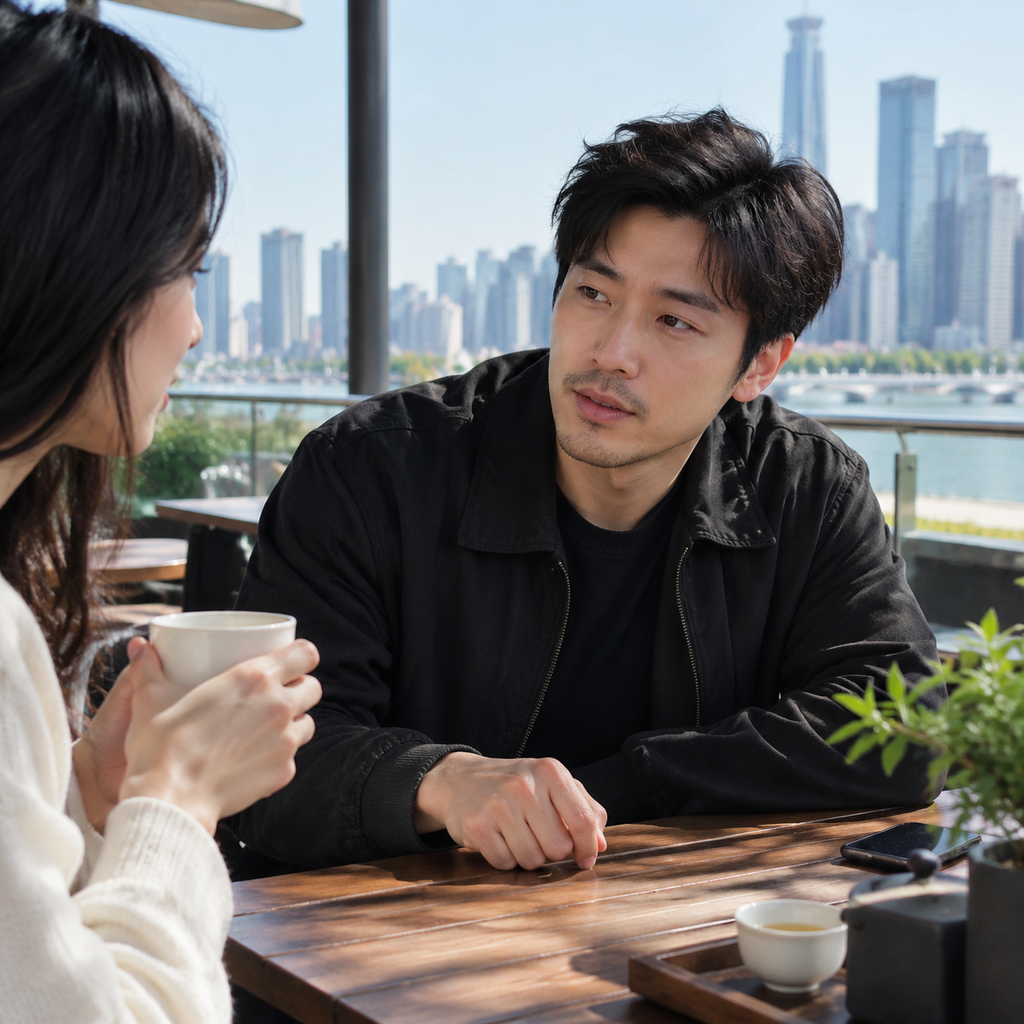
As the tea continued, the old man stopped explaining every fragrance. He pushed the sharing pitcher toward me and let me pour. I tried to sweep the spout quickly across four cups, but slowed at the last one, leaving it visibly darker. The schoolgirl turned that cup toward herself, passed me a lighter one, and suggested starting with the farthest cup next time. When the owner collected the empty baskets, she wiped away a crescent of spilled tea to clear space for my wrist. I tried again: aligned the rims, lowered the pot, and produced four nearly even shades. The old man offered no praise. He simply picked up the last piece of radish cake and dipped it lightly in chili vinegar. That silence felt more like approval than the words “you’ve learned it” would have.
我离桌前把杯碟摞好,又将纸巾盒推给新来的母子。门外阳光越过骑楼檐线,身后小男孩指着菜单清楚地说:“要脆的。”接着,铅笔在点单纸上沙沙画了一个圈。
Before leaving, I stacked my cup and saucer and pushed the tissue box toward a mother and son who had just arrived. Sunlight had climbed beyond the arcade roofline. Behind me, the boy pointed at the menu and said clearly, “The crispy one.” A pencil scratched a circle onto the order slip.
那对母子坐在原处,小男孩面前摆着一块菜头粿,母亲却把他刚勾满的单子压在掌下。孩子想要虾饺、甜粿、牛肉丸,还坚持每样都来一份;老板娘蹲下来,没有直接删菜,而是把空碟摆成四格,让他用竹签指出“最想吃”和“可以等”的东西。男孩最后留下牛肉丸,又把甜粿移到“等一等”那格。我忽然明白,刚才老板娘替我改单不是嫌我外行,她是在教每个坐下的人先看桌子,再看胃口。
The mother and son were still there. A piece of radish cake sat before the boy, while his mother held down an order sheet he had covered with marks. He wanted shrimp dumplings, sweet guo, and beef balls, insisting on a full portion of each. Instead of simply crossing things out, the owner crouched beside him and arranged empty saucers into four spaces, asking him to point with a bamboo pick to what he wanted most and what could wait. He kept the beef balls and moved the sweet guo into the “later” space. I suddenly understood that the owner had not corrected my order because I looked inexperienced. She was teaching everyone at the table to look at the shared dishes before judging their appetite.
我的伞被新来的陈姨递过来,她在附近卖布,袖口还粘着几根彩线。她见桌上剩一只韭菜粿,先问了一圈,确认没人留着,才用筷子切成三瓣。最小的一瓣给孩子,中间那瓣推给我,自己夹走边皮略干的一块。男孩问为什么不一人一只,她说早茶桌上先分味道,不先分归属:一碟端来,大家尝过,喜欢的人再添;若人人都守着自己那份,很快便会有的吃不完,有的还没尝到。她又叫来一碟红桃粿。切开后,糯米、香菇和花生挤在一起,热气带出胡椒香。陈姨让我们先看切面,还把自己那瓣再掰半,和邻桌迟到的丈夫分享。那一刻,粿品不是菜单上的一串陌生名字,而成了桌上人物彼此认认口味的办法。
My umbrella was handed back by Auntie Chen, a fabric seller from nearby, with several colored threads still clinging to her cuff. Seeing one chive dumpling left, she asked around before cutting it into three wedges. The smallest went to the boy, the middle one to me, and she took the slightly dry edge. When the boy asked why everyone did not get a whole one, she explained that a morning-tea table shares tastes before it assigns ownership. A plate arrives, everyone samples it, and those who enjoy it can order more; if each person guards a private portion, someone will soon have too much while someone else has tasted nothing. She then ordered a plate of pink peach-shaped guo. Inside, sticky rice, mushrooms, and peanuts crowded together, releasing peppery steam. Auntie Chen asked us to look at the cross-section, then broke her own wedge in half for her husband, who had arrived late at the next table. At that moment, the guo were no longer a string of unfamiliar menu names. They had become a way for the people at the table to learn one another’s tastes.
快到九点,茶楼的声音换了一层。赶市场的人陆续起身,塑料菜篮擦过椅脚;穿校服的孩子背起书包,门口则进来几位刚下夜班的年轻人。老板娘收走我们桌上的大菜单,只留一张窄窄的加单纸。我原想替母子再要一笼虾饺,话到嘴边先问:“现在桌上还差什么?”男孩数了数,说有咸的、有脆的,却没有软甜的。陈姨建议不要整笼,改点两只鸭母捻分着吃。服务员重复了一遍数量,又特意问有没有人不吃花生。这个确认让点单从“我想吃什么”变成“这一桌怎样刚好”,连孩子也学会先抬头问别人。
By nine o’clock, the teahouse had changed its register. Shoppers rose one after another, plastic market baskets brushing chair legs; schoolchildren shouldered their bags, while several young people finishing a night shift came through the door. The owner removed the large menu from our table and left only a narrow add-on slip. I nearly ordered another basket of shrimp dumplings for the mother and son, but stopped and asked, “What is this table still missing?” The boy counted: there was something savory and something crisp, but nothing soft and sweet. Auntie Chen suggested skipping a full basket and sharing two glutinous rice dumplings in sweet soup instead. The server repeated the quantity and specifically asked whether anyone avoided peanuts. That small confirmation shifted ordering from “What do I want?” to “What would make this table just right?” Even the boy learned to look up and ask the others first.
鸭母捻盛在白釉小碗里,圆团随着甜汤轻轻晃,芝麻馅咬开后烫得男孩直吸气。母亲只舀一匙汤在浅碟里摊凉;陈姨顺手添了一小撮炸花生,却在听见男孩咳嗽时马上停住,再次确认他并不过敏。我把自己的圆团切开,才发现花生、芝麻、芋泥各有不同,分享不只为了少吃,也是为了在有限胃口里多认识几种味道。隔壁夜班年轻人听见我们讨论,举起碗说他最喜欢绿豆馅。老板娘隔着两桌回话:“那要讲清楚,不然我给你盛错。”整间茶楼的点单像一场持续的校对:名字、数量、口味、忌口,谁说得含糊,旁人便温和地补上一句。
The glutinous dumplings arrived in a small white-glazed bowl, round shapes rocking gently in the sweet soup. The boy bit into a sesame-filled one while it was still too hot and drew in sharp breaths. His mother spread a spoonful of soup across a shallow dish to cool it. Auntie Chen added a pinch of fried peanuts, then stopped the moment he coughed and checked again that he had no allergy. I cut open my own dumpling and discovered different fillings—peanut, sesame, and taro. Sharing was not merely a way to eat less; it allowed a limited appetite to meet more flavors. At the next table, one of the night-shift workers raised his bowl and said mung bean was his favorite. The owner answered from two tables away, “Then say it clearly, or I’ll serve you the wrong one.” Ordering throughout the room felt like an ongoing act of correction: names, quantities, preferences, and restrictions. Whenever someone spoke vaguely, another person gently supplied the missing detail.
十点以后,晨光已经照到大厅里侧,最早那批客人几乎全换了。伯伯把茶壶交给陈姨,自己拎着空保温瓶回家;母子要赶兴趣班,只吃完先前保留的牛肉丸,没有因为单上曾写过甜粿就硬撑。老板娘把没下单的项目用一道斜线划掉,结账时逐项念给母亲听。桌边空出两个位置,很快坐来一对修电器的师徒,徒弟把工具包塞在脚下,师傅先摸壶身温度,再叫一碟薄皮粉粿。陈姨把红桃粿的最后一瓣推过去,师傅尝过才决定也加一份。午前的桌子就这样靠试一口、问一句、改一笔向前走,没有谁用第一张单子预先决定整顿饭。
After ten, sunlight reached the inner half of the dining room, and nearly all the earliest customers had been replaced. The old man handed the teapot to Auntie Chen and left with an empty thermos. The mother and son had a class to catch, so they finished only the beef balls they had kept; they did not force themselves to order the sweet guo merely because it had once appeared on the slip. The owner struck through the items that had never been sent to the kitchen and read each charge aloud at the counter. Two seats opened and were soon taken by an appliance-repair master and his apprentice. The apprentice tucked a tool bag underfoot, while the master tested the warmth of the pot before ordering translucent-skinned dumplings. Auntie Chen offered him the last wedge of the pink guo. Only after tasting it did he add another plate. This was how the table moved toward noon: one taste, one question, one pencil correction at a time. No first draft of an order was allowed to dictate the entire meal.
我这次真的准备离开时,老板娘把伞柄稳稳挂到我手腕上。大厅不再像清晨那样急,后厨的蒸汽却仍漫到门边。陈姨和修电器的师傅谈着附近坏掉的招牌,徒弟把一只粉粿切开,将冒热气的半边放到师傅碟里。小桌上的人物已经换过一轮,茶渍、碎花生和几张改过的点单纸却把早晨接到了午前。我跨出门槛,听见老板娘问新客:“先来一份,还是先看看别人桌上?”没人催着回答,壶里的水正好沸起来。
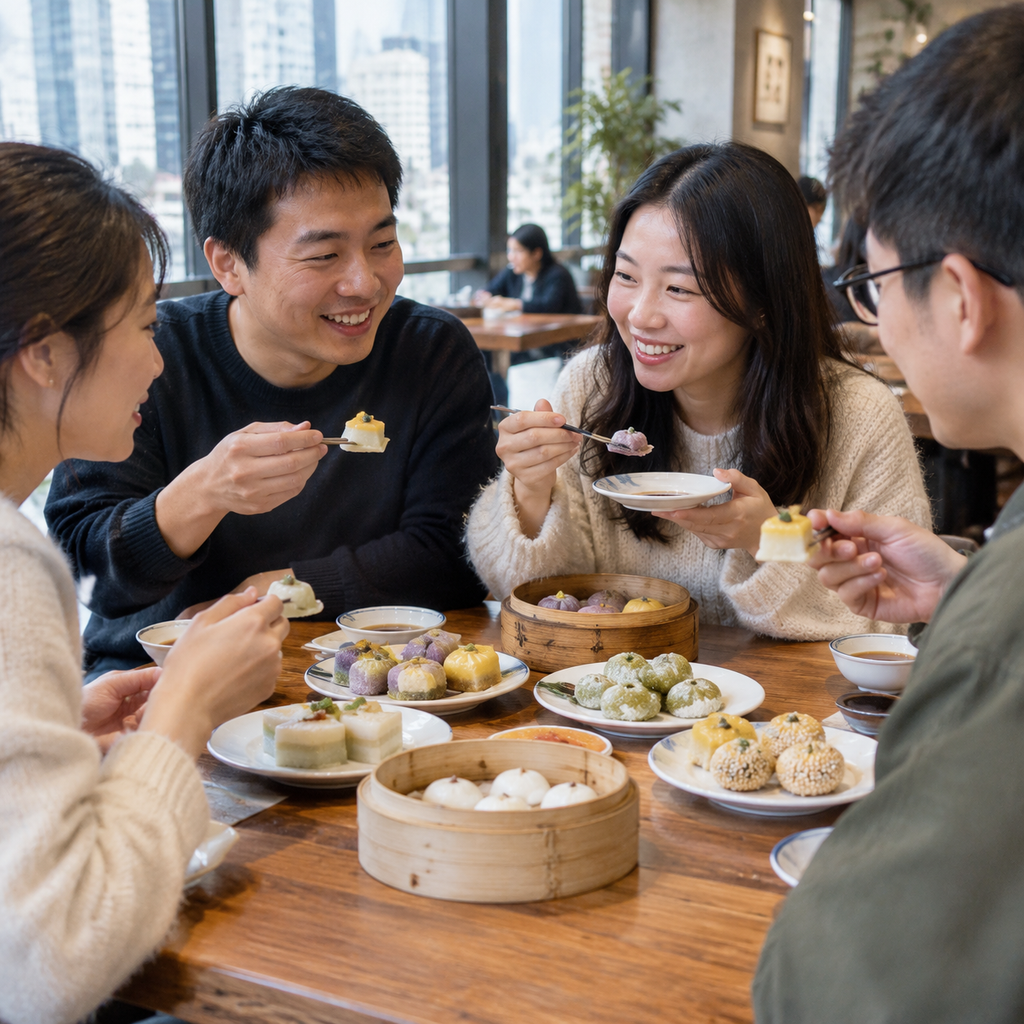
When I was finally ready to leave for good, the owner hooked the umbrella securely around my wrist. The dining room was less hurried than at dawn, though kitchen steam still reached the doorway. Auntie Chen was telling the repairman about a broken shop sign nearby. The apprentice split a dumpling and placed the steaming half on his master’s saucer. The people at the little table had changed, yet tea stains, peanut crumbs, and several corrected order slips had carried the morning toward noon. As I crossed the threshold, I heard the owner ask a new customer, “One portion first, or would you like to look at the other tables?” No one hurried the answer. The kettle had just begun to boil.
我在门外系鞋带时,又从玻璃倒影里看见那张小桌完成最后一次换人。陈姨接了丈夫的电话,把剩下半杯茶沿桌边推给修电器的师傅,起身抖掉袖口的花生屑;师徒也很快结账,徒弟一手提工具包,一手扶住门帘,让陈姨先过。三个人在骑楼下停了片刻,一个向布店方向走,两个跨上旧摩托。伯伯、母子、女学生、送货员,连后来坐下的师徒都已经离开,原先挤满杯碟的位置只剩四圈浅湿的杯印。服务员抽走点单纸,抹布绕桌一周,新客的手机和钥匙随即放了上去。我这才舍得走:拼桌的完整一程,不是认识了谁,而是亲眼看见陌生人怎样把位置交给下一批陌生人。
While I tied my shoelace outside, the reflection in the glass showed the little table completing one final change of occupants. Auntie Chen took a call from her husband, slid her remaining half cup of tea toward the repairman, and rose, brushing peanut crumbs from her cuff. The master and apprentice soon paid as well. Carrying the tool bag in one hand, the apprentice held the door curtain aside for her. The three paused beneath the arcade before Auntie Chen turned toward her fabric shop and the two men climbed onto an old motorcycle. The elderly man, the mother and son, the student, the delivery rider, and now the repairmen had all gone. Only four pale rings from damp cups remained where dishes had crowded together. A server removed the order slips and wiped once around the tabletop; at once, a new customer’s phone and keys took their place. Only then could I leave. The full journey of sharing a table was not about getting to know anyone deeply, but about watching strangers hand a place on to the next strangers.
临近十一点,老城已经不是我进茶楼时那副半醒的样子。西马路的卷帘门全升起来了,五金铺门口挂着成排铜锁,药材店把陈皮摊在竹筛里晒,甜而微苦的气味顺着骑楼阴影飘。自行车铃、摩托车发动声和店主招呼熟客的潮州话叠在一起,石板路被斜阳分成一格亮、一格暗。我吃得太饱,便不追着地图上的牌坊走,只沿阴影慢慢绕。经过一处窄巷,楼上有人晾床单,水珠落在路边青苔上;巷口裁缝踩动旧缝纫机,针脚的嗒嗒声竟和茶楼里杯盖碰杯沿的声音很像。早茶没有在门口结束,它把我的脚步也调成了添一杯、停一下的速度。
By nearly eleven, the old town no longer looked half awake as it had when I entered the teahouse. Every metal shutter along Xima Road was raised. Rows of brass locks hung outside a hardware shop, while a herbal-medicine store spread dried tangerine peel across bamboo trays, sending a sweet, faintly bitter scent through the arcade shade. Bicycle bells, motorcycle engines, and shopkeepers greeting regulars in Teochew overlapped above the stone road, which angled sunlight divided into alternating squares of brightness and shadow. Too full to chase the paifang arches marked on my map, I simply followed the shade. In a narrow lane, someone upstairs had hung out a bedsheet, and droplets fell onto moss by the curb. At the entrance, a tailor worked an old sewing machine; its steady tapping sounded unexpectedly like teacup lids touching porcelain rims. Morning tea had not ended at the doorway. It had tuned my walking pace to the rhythm of adding one cup, then pausing again.
在牌坊街拐角,我停在一个只摆三只竹蒸笼的小摊前。摊主问我要“甜的还是咸的”,我条件反射地答“一个”,他没动手,仍等着我说明。我指向最白净的那只,以为颜色浅就是甜馅;他掀开两层给我看,白皮下面一笼包着萝卜干,另一笼才是豆沙。我改口说:“甜的,一只,带走,现在不吃。”这句话比早上任何一次点单都长,却也最准确。摊主复述“豆沙粿一只,打包”,才夹进纸袋,还提醒凉后皮会变硬,午前最好吃掉。我没有再把复述当作怀疑或推销,而把它听成双方共同确认:品类、数量、吃法和时间都对上,食物才真正属于这次选择。
At a corner of Paifang Street, I stopped at a stall with only three bamboo steamers. The vendor asked, “Sweet or savory?” Out of habit, I answered, “One.” He did not move; he waited for the missing information. I pointed at the palest dumpling, assuming its light color meant a sweet filling. He lifted two steamer tiers to show me that one pale wrapper held preserved radish, while the other contained red-bean paste. I tried again: “Sweet, one piece, to take away—not eating it now.” It was longer than anything I had said while ordering at breakfast, but also far more precise. The vendor repeated, “One red-bean guo, packed to go,” before placing it in a paper bag. He added that the wrapper would harden as it cooled, so I should eat it before noon. I no longer heard repetition as doubt or an attempt to sell more. It was a joint confirmation: kind, quantity, serving method, and timing all had to align before the food truly matched the choice.
再往前,修电器的师徒正蹲在一块旧招牌下拆灯管,原来他们接的就是陈姨提到的活。陈姨站在布店门口扶着梯子,见我经过,扬起下巴问纸袋里买对没有。我说这回先看馅,再报数量,还等摊主复述。她笑着说“会食了”,不是夸我会吃,而是说我终于懂得怎样点。十一点的阳光落在招牌新换的玻璃管上,尚未通电,也亮出一条白线。我的纸袋透出温热,豆沙粿在里面轻轻压着掌心;这一次,我知道袋里是什么,也知道为何只买一个。
Farther along, the repairman and his apprentice were crouched beneath an old shop sign, removing a fluorescent tube—the job Auntie Chen had mentioned at the table. She stood outside her fabric shop steadying their ladder. When she saw me, she tipped her chin toward my paper bag and asked whether I had bought the right thing. I told her that this time I looked at the filling first, stated the quantity, and waited for the vendor to repeat it. She laughed and said, “Now you know how to eat.” She did not mean that I had acquired sophisticated taste. She meant I had finally learned how to order. Eleven o’clock sunlight fell on the sign’s newly fitted glass tube; though not yet switched on, it already held a bright white line. Warmth seeped through my paper bag, the red-bean dumpling resting softly against my palm. This time, I knew exactly what was inside and why I had bought only one.
我走到开元路口才拆开纸袋。粿皮果然比出笼时紧了一点,豆沙却仍温热,甜味不重,后面跟着淡淡的豆香。旁边卖青草水的阿婆看我慢慢咬,问是不是买少了。我说不是少,是刚好,还把早茶桌上剩过几只、后来怎样改单讲给她听。她点点头,把我原本想买的大瓶换成小杯:“吃甜的,配这个就够。”我先问杯里是哪几种草、苦不苦,又确认只有一杯,不加糖。她逐句答完才舀。清凉的草木味压住豆沙余甜,我忽然发现自己问得比清晨从容,却没有把点单变复杂;所谓听懂,并非记住更多菜名,而是知道哪一句必须问,哪一份应该停。
I opened the paper bag only when I reached the Kaiyuan Road junction. As promised, the wrapper had tightened slightly since leaving the steamer, but the bean paste was still warm, mildly sweet, with a soft bean fragrance afterward. An elderly woman selling herbal drinks watched me eat slowly and asked whether I had bought too little. I said it was not too little but exactly enough, then told her how many pieces had remained on the breakfast table and how we had revised the order. She nodded and replaced the large bottle I had been eyeing with a small cup. “After something sweet, this is enough.” I asked which herbs were in it, whether it was bitter, and confirmed that I wanted one cup without sugar. She answered each point before ladling it out. The cool, grassy taste cleared the lingering sweetness of the bean paste. I realized I was asking more calmly than I had at dawn without making the order more complicated. Understanding did not mean memorizing more dish names. It meant knowing which question mattered and when one portion was enough.
青草水喝完,我没有把空杯随手丢进巷口的桶里,而是送回阿婆摊前。她正给一位蹬三轮车的师傅舀水,接过杯子时问我接下来去哪。我指了指地图上韩江的方向,她看了看正午前渐硬的日光,叫我别走大路,沿义安路旁的小巷穿过去,石阶少,也有檐影。她还用湿手指在柜台上画了两个弯,提醒我闻到卤鹅香时左转。我照着走,没过多久,青草的凉意从胸口散开,早茶留下的饱胀也被缓慢的脚步一点点揉松。巷子里没有需要打卡的门牌,只有修锁人脚边的金属屑、竹椅上打盹的黄猫,以及从半掩木门后飘出的洗衣皂味。这样的绕路比直奔江边多花了二十分钟,却恰好让身体追上了早晨。
After finishing the herbal drink, I did not drop the empty cup into the bin at the lane entrance. I returned it to the old woman’s stall. She was ladling a drink for a tricycle rider and, as she took my cup, asked where I was headed next. I pointed toward the Han River on my map. Seeing the strengthening light before noon, she told me to avoid the main road and cut through the lanes beside Yi’an Road, where there were fewer steps and more shade beneath the eaves. With a wet fingertip, she drew two turns on the counter and said to turn left when I smelled braised goose. I followed her directions. Before long, the coolness of the herbs spread through my chest, and the fullness left by breakfast loosened under my slow steps. There were no famous door plaques to photograph, only metal filings beside a locksmith’s feet, a yellow cat asleep on a bamboo chair, and laundry-soap scent drifting through a half-closed wooden door. The detour cost twenty extra minutes, but it allowed my body to catch up with the morning.
卤味铺前果然热气很重。我停下不是为了再吃,而是被切肉的节奏吸引:老板落刀,伙计包纸,等候的人主动把窄凳往墙边挪,给挑担经过的老人让出半步。刚才茶楼里的那种配合换了一个场景继续发生。没人宣布规则,也没人把让路说成客气;大家只是看见别人下一步要做什么,便把自己的手、腿或篮子收一点。我以前把共享理解成平均分配,以为每个人都应得到同样大小的一块、同样长的停留时间。可这一上午遇到的共享更像随时校准:胃口小的人少拿,赶时间的人先走,靠近茶壶的人多做一次,后来者则接住腾出的空位。它不保证一模一样,只保证没有人的需要被桌面上的热闹盖过去。

The steam was heavy outside the braised-meat shop, just as promised. I stopped not to eat again but to watch the rhythm of the work: the owner brought down his cleaver, an assistant folded paper around each order, and people waiting shifted a narrow bench against the wall to give an elderly porter half a step of space. The coordination I had seen in the teahouse continued in another setting. No one announced a rule or treated making room as a grand courtesy. They simply noticed what another person needed to do next and drew in a hand, a leg, or a basket. I had once understood sharing as equal division, with everyone receiving a piece of identical size and an identical amount of time. What I met that morning was closer to constant adjustment: small appetites took less, people in a hurry left first, whoever sat near the pot poured more often, and newcomers accepted the seats released to them. It did not make everything identical. It made sure no one’s need disappeared beneath the liveliness of the table.
到韩江边时,风把衬衫后背的汗吹干了。我靠在堤边看两艘小船逆流缓行,忽然听见有人在身后叫我。女学生骑着单车经过,车篮里多了一袋练习册;她捏刹车停住,问我这次有没有又点多。我举起已经空掉的纸袋和小杯,回答“一只、一杯,刚好”。她笑着竖起拇指,又赶着上课去了,车铃在树影里响了两声。几分钟后,修电器的师徒也从桥下经过,新换的灯管横绑在摩托车后座。徒弟认出我,抬手拍了拍工具包,师傅只短短按了一下喇叭。我们甚至不知道彼此的全名,告别也没有合影或郑重约定,却因同桌递过半块粿、扶过一只醋碟,重逢时已有了可以接上的一句话。
By the Han River, the breeze dried the sweat across the back of my shirt. I leaned against the embankment and watched two small boats work slowly against the current, until someone called from behind me. It was the schoolgirl riding past, now with a bag of exercise books in her bicycle basket. She squeezed the brake and asked whether I had ordered too much again. Holding up the empty paper bag and cup, I answered, “One piece, one cup—just right.” She gave me a thumbs-up and hurried on to class, her bell ringing twice beneath the trees. A few minutes later, the repairman and his apprentice passed under the bridge, a new fluorescent tube tied across the motorcycle’s rear seat. The apprentice recognized me and patted his tool bag; the master offered only a brief tap of the horn. We did not even know one another’s full names. There was no group photograph or solemn promise in our farewells. Yet because we had passed half a dumpling and steadied a vinegar dish at the same table, a chance meeting already came with a sentence we could continue.
我沿江又走了一段,才在树荫下坐下整理口袋。里面没有谁留下的联系方式,只有找零硬币、一张被折软的地图,以及伞柄上老板娘系紧的细绳。起初我以为共享桌面只是客满时的权宜办法:四个人挤在一起,各自吃完,各自离开。现在回想,它真正共享的并不只是面积。伯伯把斟茶的次序交给我,陈姨把最后一瓣粿送给后来者,女学生替深浅不匀的茶换了位置,老板娘允许点单纸一再修改。每个人都短暂接管桌面的一部分,又在离开前把它恢复成别人可以继续使用的样子。共同使用因此不是抹掉边界;相反,是看清自己的杯子在哪里,也留意别人的筷子将落在哪里。
I walked farther along the river before sitting beneath a tree to sort through my pockets. There were no phone numbers from anyone I had met—only loose change, a map softened by folding, and the cord the owner had tightened around my umbrella handle. At first, I had assumed that sharing a table was merely a solution for a crowded room: four people squeezed together, each finishing a private meal before leaving. Looking back, I understood that the shared thing was not just surface area. The old man handed me the order of pouring; Auntie Chen offered the final wedge to someone who arrived later; the student rearranged cups when my tea came out uneven; and the owner allowed the order slip to be corrected again and again. Each person briefly took charge of one part of the table, then left it usable for whoever followed. Sharing did not erase boundaries. It meant knowing where your own cup stood while noticing where another person’s chopsticks needed to land.
正午的钟声从街区深处传来,我把地图塞回口袋,最后朝茶楼方向望了一眼。屋檐遮住了门,当然看不见那张方桌,但我能想象壶嘴仍在杯口间巡过,某个人正把纸巾盒推向新客。告别原来不必把关系说得很重;在潮州这个早晨,一次让座、一句复述、一块分开的粿,已经足够让陌生人的名字缺席而善意留下。我起身往江桥走,经过一张临街空桌时,顺手把被风吹到边缘的塑料凳推进阴影里。没有人看见,也没人道谢。凳脚擦过石板,发出短短一声,像清晨离席的人在桌面上轻叩的两下。
A midday bell sounded somewhere deep in the neighborhood. I folded away the map and looked once more toward the teahouse. The eaves hid its doorway, so of course I could no longer see the square table, but I could imagine the spout still circling above the cups and someone pushing the tissue box toward a newcomer. Farewell did not need to make a relationship sound larger than it was. During this Chaozhou morning, a seat yielded, an order repeated, and a dumpling divided were enough for names to disappear while kindness remained. I rose and headed toward the river bridge. Passing an empty street-side table, I noticed a plastic stool blown to its edge and pushed it back into the shade. No one saw me, and no one thanked me. Its legs scraped briefly over the stone, echoing the two light taps that departing diners had left on the tabletop at dawn.
第二天早上七点二十,我又走进那间茶楼。这次没有站在门边找空位,也没有一口气勾满点单纸,只向老板娘说:“一壶昨天那种单丛,一份笋粿,先这些。”她认出我,故意朝后厨喊:“会点了,别替他改!”大厅里有人笑,我也笑。昨天的小方桌恰好空出一角,伯伯仍坐在靠墙的位置,白背心外多披了一件薄衫。他没有问我为何回来,只把最外侧的杯子烫过,推到我面前。陈姨稍后来送一卷布,站着喝完半杯茶;女学生从门口探头说要赶早课,接过老板娘包好的两只粉粿。人物没有按昨天的顺序重聚,见面也只有“来了”“慢走”这样短短几字,可正因为各自都有要赶的生活,这次重逢才显得实在。
At 7:20 the next morning, I walked into the same teahouse again. This time I did not hover at the doorway or cover an order sheet with marks. I simply told the owner, “A pot of yesterday’s Dancong and one portion of bamboo-shoot guo. That’s enough for now.” Recognizing me, she called toward the kitchen, “He knows how to order now—don’t correct him!” Laughter rose from the room, and I joined in. A corner of yesterday’s square table happened to be free. The old man still sat against the wall, now with a light shirt over his white undershirt. He did not ask why I had returned; he rinsed the outermost cup and pushed it toward me. Auntie Chen came later to deliver a roll of cloth and drank half a cup standing up. The schoolgirl leaned through the doorway on her way to class and collected two dumplings the owner had wrapped. No one reassembled in yesterday’s order, and our greetings were only “You’re here” and “Take care.” Because everyone had an ordinary day to hurry toward, the reunion felt all the more real.
我吃完时没有立刻起身,而是帮着把桌面收清。先把竹签拢进空碟,碎花生用纸巾捻起,装甜汤的小碗叠在蒸笼旁;茶杯不能塞进油碟,老板娘便把它们单独放上托盘。她提起茶壶,把最后一点茶根倒进盛废水的钵里,再用夹子夹出叶底。湿润的单丛舒展开来,叶缘泛红,贴在竹篓上仍有淡淡蜜香。伯伯把椅子推进桌下,拎起保温瓶,对我说的仍不是郑重告别,只是“明日若来,别太迟”。我回答自己第二天要离开潮州。他顿了一下,把桌上未拆的纸巾压在我那张结清的小票上:“那就路上慢慢食。”老板娘随后递来一只纸包,里面是两枚小小的咸水粿,没有额外算钱,也没有让我带着一桌剩菜走。
When I finished, I did not rise at once but helped clear the tabletop. I gathered the bamboo picks onto an empty saucer, pinched up peanut crumbs with a tissue, and stacked the sweet-soup bowls beside the steamers. Teacups could not be dropped into greasy dishes, so the owner placed them separately on her tray. She lifted the pot, emptied the last dark drops into the waste-water bowl, and pulled out the leaves with tongs. The damp Dancong leaves had opened fully, their edges tinged red, and they still gave off a faint honey scent from the bamboo basket. The old man pushed in his chair and picked up his thermos. His farewell was no more ceremonious than before: “If you come tomorrow, don’t be too late.” I told him I would be leaving Chaozhou the next day. He paused, then laid an unopened tissue packet over my paid bill. “Then eat slowly on the road.” The owner handed me a paper parcel containing two small ham sui guo. She charged nothing extra and did not burden me with a whole table’s worth of leftovers.
离店后,我特意从昨天走过的西马路绕回牌坊街。晨光比前一日更亮,铜锁、竹筛和裁缝铺还在原处,街巷却并非重复播放的布景:晒陈皮的人换了竹匾,黄猫从椅子挪到门槛,修好的招牌已经通电,白色灯管在日光里安静地亮着。陈姨的布店刚开门,她隔街抬手,我也举起纸包回应,没有再停下长谈。走到巷口,我回望骑楼深处,只能看见茶楼门前一小片蒸汽,被经过的自行车短暂切开。昨天我把那扇门当作一顿早茶的入口;此刻才明白,茶楼更像街巷的接缝,卖布的、修灯的、上学的、送货的在这里碰面,再带着各自的事情散回老城。
After leaving, I deliberately looped along Xima Road toward Paifang Street, retracing part of yesterday’s walk. The morning light was brighter. The brass locks, bamboo trays, and tailor’s shop remained, but the lanes were not a stage repeating the same scene: the tangerine-peel seller had changed trays, the yellow cat had moved from its chair to a doorstep, and the repaired sign was now switched on, its white tube glowing quietly in daylight. Auntie Chen had just opened her fabric shop. She raised a hand across the street, and I lifted the paper parcel in reply without stopping for another long conversation. At the lane entrance, I looked back into the arcade and saw only a small patch of steam outside the teahouse, briefly divided by a passing bicycle. Yesterday I had treated that door as the entrance to a breakfast. Now it looked more like a seam in the neighborhood, where fabric sellers, repairmen, students, and delivery riders met before carrying their separate errands back into the old town.
九点十五分,我回到旅店取行李,退房后从开元路乘车去潮汕站。车开出老城时,我在最后一个路口拆开纸包。两枚咸水粿已经不烫,米皮微微收紧,菜脯仍旧咸香。我没有急着一口吃完,而是把其中一枚留到候车厅。十点四十八分,检票广播响起,我吃掉最后一口,把垫粿的纸折成小方块,连同车票一起握在手里。窗外的潮州街巷很快退成屋檐和树影,我记住的却是那张刚被收净的桌面:杯印擦去,椅子推进去,下一只茶杯已有地方落下。列车启动前,我给老板娘留下的小票背面写了四个字,托旅店前台有空送去——“一份刚好”。这不是约定再见,只是把我在潮州学会的那句话,稳稳放回那张小桌。
At 9:15, I returned to the hotel for my luggage, checked out, and took a car from Kaiyuan Road to Chaoshan Station. As we left the old town, I opened the parcel at the final junction. The two ham sui guo were no longer hot; their rice skins had tightened slightly, but the preserved radish remained savory. I did not finish them in one bite. I saved one for the waiting hall. At 10:48, the boarding announcement sounded. I ate the last mouthful and folded the paper wrapper into a small square, holding it with my ticket. Outside, Chaozhou’s lanes soon receded into rooflines and tree shadows, yet what stayed with me was the freshly cleared tabletop: cup rings wiped away, chairs pushed in, space ready for the next cup. Before the train moved, I wrote four Chinese characters on the back of the owner’s receipt and asked the hotel desk to deliver it when convenient: “One portion—just right.” It was not a promise to return. It was simply the sentence Chaozhou had taught me, placed carefully back on that small table.
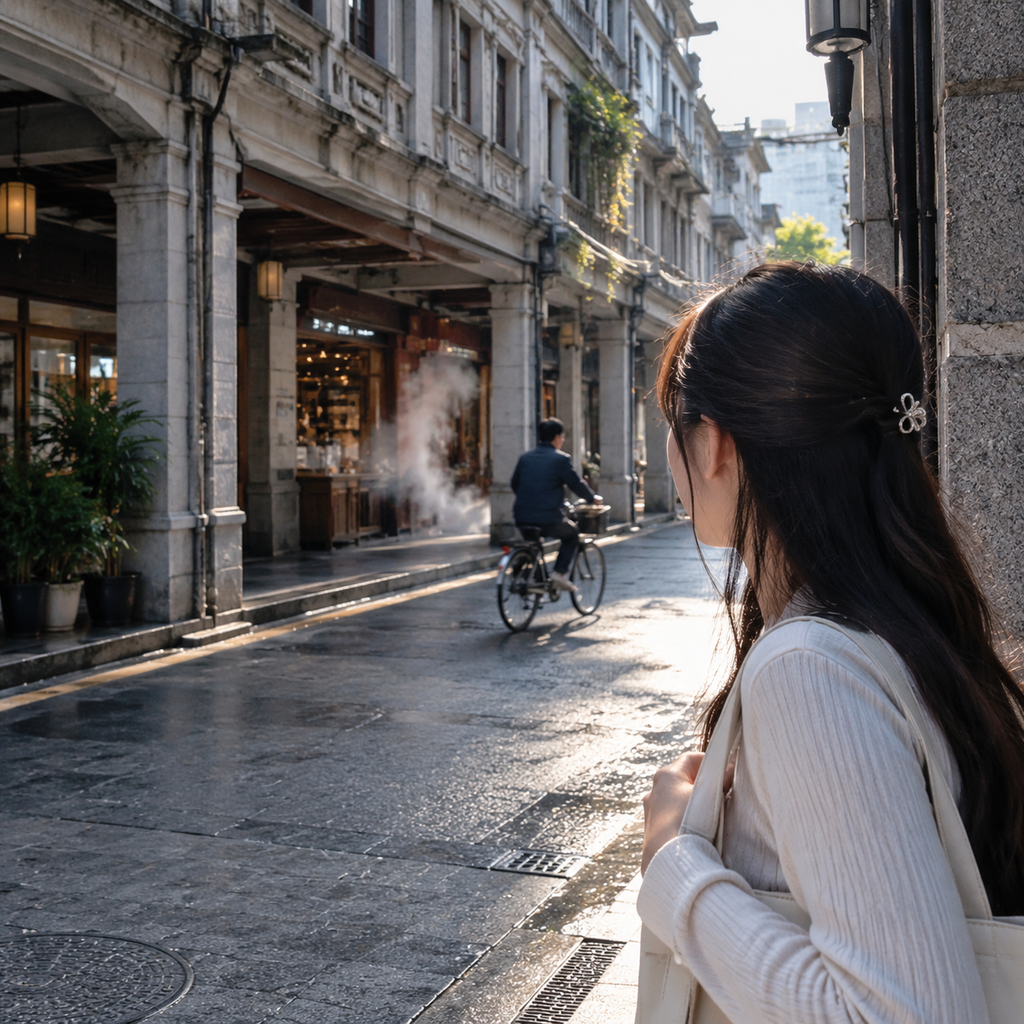
回到车厢后,我把车窗调成半开,潮湿的风带着一点稻田和海水交错的气味。邻座是一位抱着保温杯的女士,她看见我手里的纸包,问是不是潮州小吃。我说是咸水粿,只剩最后一只。她没有立刻追问店在哪里,只说自己上次来潮州时,记住的是一碗粿条汤。我忽然意识到,旅行记忆很少按照景点清单保存,往往只留下一个可以被再次说起的味道,或一句在陌生地方被人耐心听完的话。
After returning to the carriage, I left the window slightly open. The damp breeze carried a mingled scent of rice fields and seawater. The woman beside me held a thermos and noticed the paper parcel in my hand. She asked whether it contained a Chaozhou snack. I told her it was ham sui guo, and that only one remained. She did not immediately ask where I had bought it. Instead, she said that on her last visit to Chaozhou, what she remembered was a bowl of rice-noodle soup. I suddenly understood that travel memories are rarely stored as a list of sights. More often, they preserve a flavor that can be mentioned again, or a sentence someone patiently allowed a stranger to finish.
列车驶过一片低矮村屋时,我把今天学到的点单方法写在地图背面:先看现有的,再说真正想要的;不懂名称时问馅料和做法;数量要清楚,忌口要提前讲;别人已经替你留出位置,就记得离开时也为后来的人留一点空间。这些话看起来不像旅行攻略,却比一张“必吃清单”更能帮助我进入一座城市。它们提醒我,吃东西并不是向地方索取体验,而是用眼睛、耳朵和动作参与其中。
As the train passed low village houses, I wrote the ordering lessons I had learned on the back of the map: look at what is already on the table before naming what you want; when a name is unclear, ask about the filling and the cooking method; state quantities clearly and mention restrictions early; when others make room for you, remember to leave room for those who come later. These lines looked nothing like a travel guide, yet they seemed more useful than a checklist of must-eat dishes. They reminded me that eating is not a way to extract an experience from a place. It is a way to participate with one’s eyes, ears, and hands.
手机里还留着几张没有拍正的照片:蒸笼边缘被水汽遮住,茶壶只剩半个壶嘴,桌面上的铅笔圈压住了一个看不清的字。我没有打算把它们修成整齐的美食图。那张被蒸汽挡住的照片,反而保留了我当时站在桌边等待的时间;那道歪掉的茶壶,让人想起斟茶必须在拥挤中完成;模糊的字则证明我曾经听错,又愿意停下来重新确认。旅行不一定要把每个瞬间拍得漂亮,留下不完美的证据,有时更接近真实。
My phone still held several badly framed photographs: steam obscured the edge of a steamer, only half the teapot spout was visible, and a pencil circle covered a word on the order slip. I had no desire to turn them into polished food images. The steam-blurred photograph preserved the time I had spent waiting beside the table. The crooked teapot recalled how tea had to be poured in a crowded space. The unclear word proved that I had misheard something and was willing to stop and confirm it. A journey does not need every moment to be photographed beautifully. Imperfect evidence can sometimes be closer to the truth.
车到站前,邻座女士打开保温杯,分给我一小块自制的米糕,说路上别只吃甜粿。我先问里面有没有花生,她笑着说没有,又把纸巾递过来。这个动作让我想起茶楼里的桌面:照顾别人并不总是隆重的帮助,常常只是多问一句、多递一张纸巾,或把热的那一半放到对方容易拿到的位置。我接过米糕,也把最后一只咸水粿掰开一半给她。两种米食的味道并不相同,却在车厢里完成了一次小小的交换。
Before the train reached the station, the woman beside me opened her thermos and offered a piece of homemade rice cake, saying I should not eat only sweet guo on the journey. I first asked whether it contained peanuts. She laughed and said no, then passed me a tissue. The gesture brought me back to the teahouse table. Caring for another person is not always a grand act; it is often one extra question, one offered tissue, or placing the hotter half where it is easier to reach. I accepted her rice cake and broke my last ham sui guo in half for her. The two rice foods tasted different, yet they completed a small exchange inside the carriage.
潮州渐渐退到车窗后面,我仍能想起老板娘那句“先来一份”。它不是劝人节省,也不是限制客人的选择,而是给下一步留下余地。先来一份,吃过再决定;先坐下来,听清楚再开口;先把眼前的人照顾好,再谈更远的路线。对旅行者而言,最难得的风景有时不是一座被反复介绍的牌坊,而是一张允许修改、允许分享、也允许重新开始的小桌。我希望下一次走进陌生茶楼时,仍能记住这份分寸:好奇可以很多,手里的那一份却要刚刚好。
As Chaozhou receded beyond the window, I could still hear the owner saying, “Start with one portion.” It was not a demand for thrift or a restriction on choice. It left room for the next decision. Start with one portion, taste it, and then decide; sit down first, listen carefully, and then speak; care for the people before you before planning the farther route. For a traveler, the most valuable view is not always a paifang repeatedly praised in guidebooks. Sometimes it is a small table that permits revision, sharing, and another beginning. I hope that the next time I enter an unfamiliar teahouse, I will remember this sense of proportion: curiosity may be abundant, but the portion in my hands should be just right.
候车时我又翻看那张地图,发现早晨写下的路线已经被茶渍染出浅褐色的边。地图原本把街道画成清楚的线,把茶楼、牌坊和江边标成可以抵达的点;可真正让我记住潮州的,却是线与点之间那些无法标注的停顿:等一锅水沸,等陌生人收回手肘,等摊主把两种相似的粿掀给我看,也等自己承认并不是每一次误会都需要立刻掩饰。这样的等待没有拖慢行程,反而让我看见城市如何在细节里安排彼此。
While waiting, I looked again at the map and noticed that the route I had written that morning had acquired a pale brown rim from tea stains. The map drew streets as clear lines and marked the teahouse, paifangs, and river as reachable points. Yet what truly fixed Chaozhou in my memory were the unmarked pauses between those lines and points: waiting for water to boil, waiting for strangers to draw in their elbows, waiting for the vendor to reveal two similar kinds of guo, and waiting for myself to admit that not every misunderstanding had to be hidden immediately. These pauses did not slow the journey. They showed me how a city arranges room for people through small details.
我把纸包的折痕压平,忽然觉得“刚好”并不是一个固定的分量。对赶早课的孩子来说,刚好是两只带走的粉粿;对准备回家的伯伯来说,刚好是一壶可以分给几个人的茶;对初次来到茶楼的我来说,刚好则是一次不再逞强的点单。分寸会随着人、时间和同行者改变,所以真正重要的不是永远少要,而是愿意观察、愿意调整,并在调整之后不把别人的方便当成理所当然。潮州给我的最后一课,仍然像桌上的茶一样,入口很轻,回味却很久。
I flattened the folds in the paper parcel and realized that “just right” was not a fixed quantity. For the child hurrying to an early class, it meant two dumplings to take away. For the old man preparing to go home, it meant a pot of tea that could be shared by several people. For me, visiting the teahouse for the first time, it meant placing an order without pretending to know everything. Proportion changes with people, time, and companions. What matters is not always asking for less, but being willing to observe, adjust, and avoid treating another person’s convenience as something owed. Chaozhou’s final lesson, like the tea on the table, entered lightly and lingered for a long time.
- 菜市场早餐和街边小吃的点单经验 | What I Learned Ordering Breakfast and Street Snacks Beside a Chinese Wet Market
- 皮影戏:光与影之间的千年叙事 | Shadow Puppetry: A Thousand Years of Storytelling Between Light and Shadow
- 一碗面,走遍中国 | One Bowl of Noodles, One Country
- 我第一次坐中国夜间高铁,发现安静也是一种旅行服务 | On My First Evening High-Speed Train in China, Quiet Became Part of the Service
- 汉服:传统中国服饰 | Hanfu: Traditional Chinese Clothing
- Long Time No See——那些偷偷混进英语的中式表达 | Chinese Expressions That Snuck Into English When Nobody Was Looking
- 青岛这座城,白天该先进馆,晚上才适合把海慢慢走出来 | In Qingdao, the Day Belongs to Museums First, and the Sea Should Be Walked Out Slowly at Night
- 来华游客必备清单:证件/通讯/支付一站搞定 | Essential Checklist for Visitors to China
- 西藏:世界屋脊 | Tibet: The Roof of the World
- 北京到西安:穿越历史之旅 | Beijing to Xi'an: A Journey Through History
Comments (0)