
在八大关和海边之间,我才明白青岛好走的从来不是直线 | Between Badaguan and the Waterfront, I Learned That Qingdao Is Never Best Read in a Straight Line
在八大关和海边之间,我才明白青岛好走的从来不是直线 | Between Badaguan and the Waterfront, I Learned That Qingdao Is Never Best Read in a Straight Line
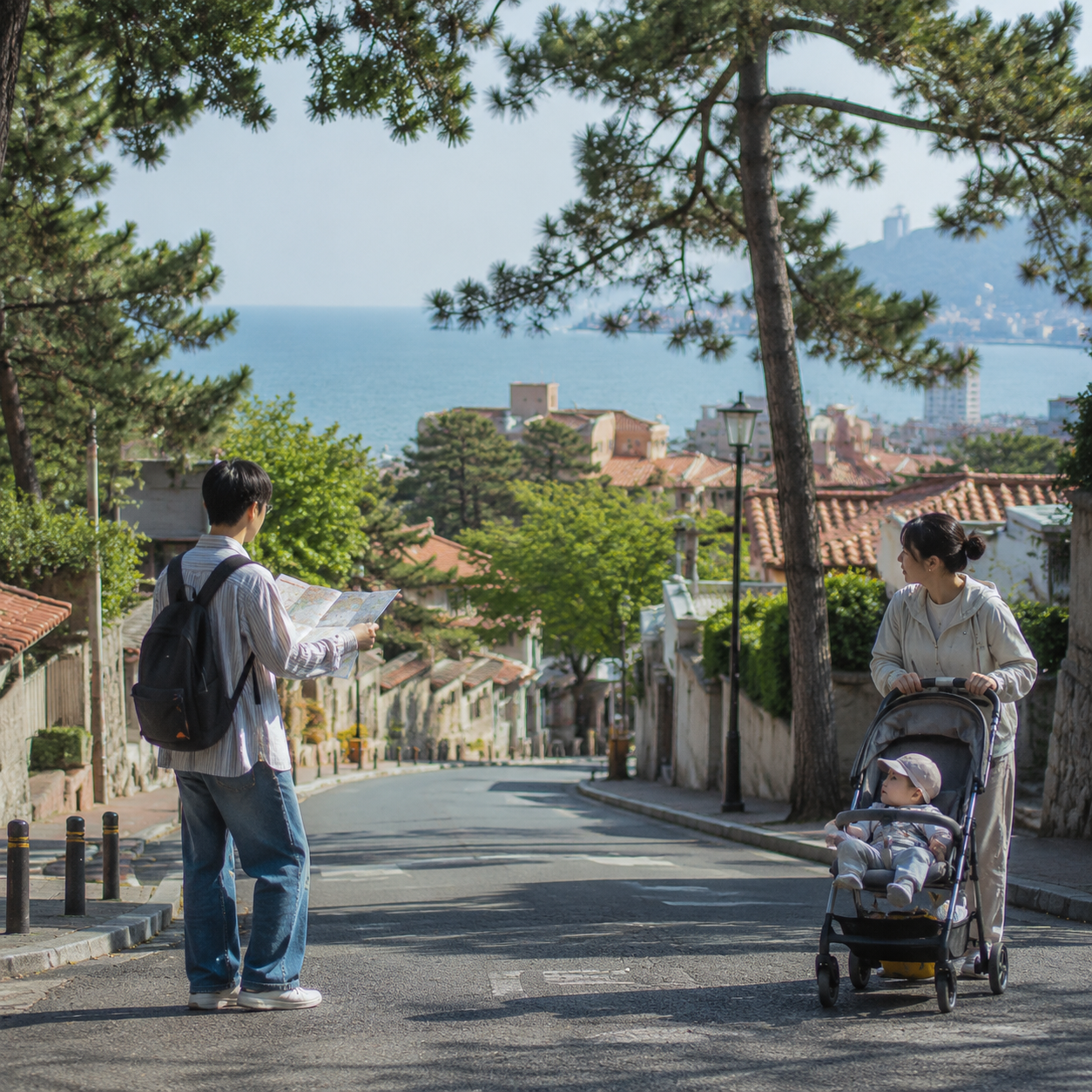
下午四点多,八大关一带的树影已经开始往人行道中间挪,海风没到最硬的时候,却已经足够把衬衫后背轻轻拎起来。一个背着小包的外地游客站在路口看地图,抬头看了一眼前面的坡,又回头看了一眼海边,像是搞不清楚该先往上还是先往下。旁边推着童车散步的本地母亲没有停下,只是在经过时说了一句:青岛不用急着选最对的路,先选一条让你走得下去的路。
It was a little after four in the afternoon, and the tree shadows around Badaguan had already begun to slide toward the middle of the pavement. The sea wind was not yet at its hardest, but it was strong enough to lift the back of a shirt slightly away from the body. A visitor from out of town stood at the junction with a small bag and a map, looking first at the slope ahead and then back toward the water, as though unsure whether to move upward first or downward toward the sea. A local mother pushing a stroller did not stop, but as she passed she said one thing softly: in Qingdao, you do not need to choose the perfect route first; choose the one your body is willing to keep walking.
这句话很像安慰,实际上更像攻略核心。很多人第一次来青岛,做路线时最容易犯的错,就是把海边城市理解成“视野越开阔越好、步子越大越值”。于是白天一开始就直扑最有名的海边线,恨不得把海、红瓦、老建筑、坡路和夜景统统串进同一口气里。可青岛真正适合慢线走法的地方,恰恰在于它不是一座给你用猛劲冲完的城,而是一座会不断提醒你减速的城。
That sentence sounds like comfort, but in practice it is closer to the heart of a guide. The most common mistake first-time visitors make in Qingdao is assuming that a coastal city should be handled by pursuing the broadest views with the biggest strides. So they hurl themselves toward the most famous waterfront route at the very beginning, hoping to connect sea, red roofs, older houses, slopes, and night scenery all in one breath. Yet what makes Qingdao truly suited to a slower method is exactly that it is not a city to be finished by force. It is a city that keeps asking you to reduce speed.
“山水慢段”这四个字,如果只是当成一种文艺说法,就会很空。真正可走的意思是:你要把一天拆成几个不同的段,而不是只追一个连续高潮。青岛的山不是为了征服,海也不是为了迅速抵达。更合理的节奏,往往是先走一段能让眼睛适应城市尺度的坡路,再给自己一段接近海风但不必立刻贴到海边去的平路,最后才把那条最想看的海岸线留给傍晚或接近晚上的时段。这样一来,海不会被过早用掉,坡也不会把体力提前掏空。
The phrase “mountain-water slow sections” becomes empty if it is treated as mere lyricism. What it means in actual walking terms is that the day should be broken into distinct segments rather than driven toward one uninterrupted climax. Qingdao’s hills are not there to be conquered, and the sea is not there to be rushed toward. The better rhythm is usually to begin with a slope that teaches the eye the scale of the city, then give yourself a flatter section close enough to feel the sea wind without needing to reach the water immediately, and only after that reserve the most desired coastal stretch for late afternoon or the early night. In that rhythm, the sea is not spent too early, and the hills do not empty the body before the route has matured.
慢线报道体最适合写青岛,是因为这座城的好看并不总在最亮的地方。它常常藏在过渡段里:一段斜路把你从街区推向视野更开的地方,一排旧树把风收住几秒,一面墙后的转角突然放出一点海面,或者某条并不起眼的小路让你意识到“原来这座城的海和生活不是分开的”。这些地方如果走快了,你只会觉得顺;走慢了,才会觉得有层次。
A slower reported style fits Qingdao because its beauty does not always sit in the brightest place. Very often it lives in the transitional sections: a sloped road pushing you from district scale into wider sightlines, a row of old trees holding the wind for a few seconds, a turn behind a wall suddenly releasing a narrow view of the water, or an unremarkable lane making you realize that sea and everyday life are not separated here at all. If you rush through these places, they merely feel smooth. If you move slowly, they begin to feel layered.

很多攻略会把青岛写成“适合散步”,这当然没错,但“适合散步”本身太模糊。更有用的说法应该是:青岛适合那种愿意一边调整身体、一边调整判断的走法。你需要随时根据风、坡、光线和脚底感觉重新决定下一小段怎么走。某一段海边路如果开始太晒、太空或者太硬,就不一定非要顶着走完;某一段山边路如果阴影正好、行人不挤、风又能透进来,反而值得多留十分钟。这样的攻略不是教你完成任务,而是在教你如何持续校正节奏。
Many guides describe Qingdao simply as “good for walking,” and that is not wrong. But the phrase is too vague to be useful. A better description is that Qingdao rewards the kind of walking in which bodily adjustment and judgment adjustment happen together. You need to keep recalibrating according to wind, slope, light, and what the soles of your feet are telling you. If one section by the sea turns too exposed, too empty, or too hard, there is no reason to force yourself through all of it. If another section along the hill carries good shade, manageable foot traffic, and enough breeze, then that may be the section worth giving ten more minutes. A guide like this does not teach task completion. It teaches rhythmic correction.
国庆前或人稍多的时候,这种思路尤其重要。青岛不是那种越多人越有气氛的海边城市,至少不是全天都如此。有些海边点位一旦人群太满,就会迅速失去你原本想象中的松弛感。慢段走法反而会更稳:先借山边、馆旁或老街边的小段落把人流错开,再把最想看的海线压到合适的光线和体力状态里。这样做看起来像让步,实际是在保护一天的质地。
This matters even more before National Day or at any time when the city is busier. Qingdao is not a seaside city in which more people automatically create more atmosphere, at least not all day long. Some waterfront viewpoints lose their looseness very quickly once the crowd thickens. The slower segmented method is more stable: first use short pieces near the hills, near museums, or along older streets to offset the crowds, then hold the most desired sea stretch until both light and body are in a better condition. It may look like concession, but in practice it protects the texture of the entire day.
对第一次来中国的外国游客来说,青岛还有一个特别友好的地方:它允许你用比较温和的方式学会“城市不是一张平面图”这件事。很多人刚到中国的大城市时,会被线路、出口、路名和节奏压得有点急。青岛虽然也有坡、有转折、有老城区的复杂感,但它常常会在你快要烦躁之前,给你一点风、一点树影、一点远处可见的海,把身体重新安抚下来。于是攻略的重点就不该只是“从 A 到 B”,而应该是“中间哪一段最值得故意放慢”。

For first-time foreign visitors to China, Qingdao has another particularly generous quality: it allows one to learn, gently, that a city is not a flat map. Many people arriving in large Chinese cities feel pressed by routes, exits, street names, and pace. Qingdao has its own slopes, turns, and older urban complexity, but before frustration hardens, it often offers a little wind, a little shade, and a strip of visible sea in the distance to calm the body back down. That is why the focus of a guide should not be only “how to get from A to B,” but “which middle section deserves to be deliberately slowed.”
傍晚快到的时候,我最喜欢青岛的,不是终于站到了海边,而是你会发现自己已经不再着急站到最前面。前面当然还是海,风也还是风,可真正让节奏成立的,是你之前已经走过的那些小慢段。没有它们,海边只会变成目的地;有了它们,海边才会变成答案。
What I love most about Qingdao near evening is not the fact that one finally reaches the water, but the realization that there is no longer any urgency to stand at the very front. The sea is still there, and the wind is still there, but what makes the rhythm cohere are all the smaller slow sections already passed through beforehand. Without them, the waterfront becomes merely a destination. With them, it becomes an answer.
天色开始往下落的时候,一个男生站在石栏边,把原本举起的手机又放了下来,先伸手抓住了被风吹乱的帽檐。远一点的浪没有很大,却一下一下把边上的光敲碎。我从坡上慢慢走到海边时,忽然觉得青岛最值得写的,不是“这片海有多舒服”,而是它如何用山和海之间那些并不起眼的慢段,把一个外地人的步子一点点调成了这座城自己的节奏。
As the light began to sink, a young man by the stone railing lowered the phone he had just raised and reached first for the brim of his cap in the wind. Farther out, the waves were not large, yet they kept breaking the reflected lights into fragments. By the time I came slowly down the slope toward the sea, it felt clear that what Qingdao most deserves in writing is not a sentence about how pleasant the coast is. It is the way the city uses those unglamorous slow sections between hill and sea to tune an outsider’s stride, little by little, into a rhythm that belongs to Qingdao itself.
- 我在杭州把西湖走成一天慢电影:从晨雾到夜船都不赶 | I Turned West Lake into a Slow Day Film from Morning Mist to Night Boat
- 一块豆腐的两千年旅程 | A Block of Tofu's Two-Thousand-Year Journey
- 孩子在北京地铁里第一次自己问路 | When My Child Asked for Directions Alone on the Beijing Subway
- 签证与入境要求 | Visa and Entry Requirements
- 中国凉菜:一桌好饭从凉菜开始 | Chinese Cold Dishes: Every Great Meal Starts Here
- 我带父母第一次来中国,不是先去最红景点,而是先把一天过顺 | When I Brought My Parents to China for the First Time, I Focused on a Smooth Day Before Famous Sights
- 初秋的阿勒泰不只在草原上:我沿河谷重新排了自驾线 | Altay in Early Autumn: Rebuilding a Drive Along the Valleys
- 中国货币与支付指南 | China Currency and Payment Guide
- 我们班来了一个新同学,他把“可以”说成“可乐”之后,大家反而更快熟起来了 | When the New Kid in Class Said “Cola” Instead of “Okay,” Everyone Somehow Became Friends Faster
- 盐业历史博物馆的楼梯声,把自贡的地下记忆带到了地面 | The Sound of Wooden Stairs Brought Zigong’s Underground Memory to the Surface
Comments (0)