
在景德镇看一只碗如何被做出来 | Watching a Bowl Take Shape in Jingdezhen
在景德镇看一只碗如何被做出来 | Watching a Bowl Take Shape in Jingdezhen
早上八点多,景德镇一间临街陶瓷工作室刚把卷帘门推上去。门内没有想象中的古朴陈设,最先撞进鼻子的是湿泥的土腥味,地上摆着几只灰白色塑料桶。师傅老周掀开桶盖,用木铲搅了几下泥料,又抓起一团放在掌心里慢慢揉。我第一次看时以为这些泥已经可以直接上转盘,后来才知道,泥料的状态比颜色更重要,太湿会塌,太硬则经不起拉伸。
A little after eight in the morning, a street-side ceramic studio in Jingdezhen had just raised its metal shutter. Instead of the antique atmosphere I had imagined, I first noticed the earthy smell of wet clay. Gray plastic tubs stood on the floor, their rims crusted with dried clay. Master Zhou lifted a lid, stirred the clay with a wooden paddle, then kneaded a lump slowly in his palm. At first I assumed it was ready for the wheel. I soon learned that its condition mattered more than its color: clay that is too wet collapses, while clay that is too hard resists every stretch.
老周把泥团往案板上摔,一下、两下,声音闷闷的。每次落下,他都顺势把泥折回去,再换一个方向继续摔。这个动作看似粗暴,实际是在排出泥里的空气,让水分分布得均匀。我站得太近,鞋尖被溅上一小点泥,旁边的学徒递来一块抹布,说景德镇的第一件纪念品往往不是瓷器,而是鞋上的泥印。
Zhou did not begin with a demonstration. He slammed the lump onto the worktable—once, twice—the dull sound muffled like clapping beneath a thick blanket. After each impact, he folded the clay back and turned it before slamming it down again. The gesture looked rough, but it was really removing trapped air and evening out the moisture. I stood too close and caught a spot of clay on my shoe. An apprentice laughed and handed me a rag, saying that a visitor’s first Jingdezhen souvenir is often a muddy shoe, not a ceramic piece.
轮盘转起来以后,老周把泥团重重按在中心。泥一开始像有自己的脾气,偏偏往一侧歪,他却没有立刻用力纠正,只用湿手掌稳住外圈,让转盘的速度把它慢慢带回中间。我的眼睛追着泥旋转,误以为他是在“捏”一个碗;其实最关键的动作发生在手腕和指尖之间,是不断感受阻力,再决定下一秒该加压还是放松。
When the wheel began to turn, Zhou pressed the clay firmly onto its center. At first it leaned stubbornly to one side, but he did not force it back. He simply steadied the outer edge with a damp palm and let the spinning wheel gradually bring it into balance. My eyes followed the clay and I mistakenly thought he was merely “shaping” a bowl. In fact, the essential work happened between his wrist and fingertips: he kept reading the resistance and deciding whether to press harder or ease off.
他先用拇指在泥团中央按出一个小坑,另一只手从外侧托住底部。坑越按越深,泥壁却没有马上变薄,因为他的手指一直留在底面附近,像在碗里垫着一块看不见的木板。等内腔达到合适深度,他才把手指向上移动,边转边拉。湿泥在灯光下泛着柔和的灰色,细小的水珠沿着指节滑下,落在转盘边缘。
He pushed a small hollow into the center with his thumb while his other hand supported the base from outside. The hollow deepened, but the walls did not become thin right away because his fingers stayed close to the bottom, as if an invisible wooden board were supporting the bowl from within. Only after the cavity reached the right depth did he move upward, pulling the clay as it spun. Under the studio lights, the wet surface held a soft gray sheen. Tiny drops ran along his knuckles and fell onto the rim of the wheel.
我原先以为拉坯是一项靠手劲取胜的活儿,甚至猜老周的手指一定硬得像钳子。真正看清以后,判断完全反过来了。他的动作很轻,却没有一处松散:左手控制形状,右手寻找厚薄,肩膀几乎不动,手肘贴近身体,呼吸也跟着转盘保持着稳定节奏。碗壁每升高一点,他就停半秒,看一眼边缘,再继续向上拉。
I had assumed that throwing clay was mainly a contest of strength, and imagined Zhou’s fingers must be hard as pliers. Watching closely reversed that judgment. His touch was light, yet nothing about it was loose: one hand controlled the form, the other searched for an even wall, his shoulders barely moved, and his elbows stayed close to his body. Even his breathing followed the wheel’s steady rhythm. Each time the wall rose a little, he paused for half a second, checked the rim, and then pulled again.
工作室里还有一位年轻女孩在练习。她的第一个泥坯刚立起来,边缘就忽然向外翻,像一朵被雨打歪的花。她赶紧收手,碗口立刻塌了一边。老周没有替她重做,只让她把转盘停住,用竹片轻轻削掉变形的部分,再把剩下的泥重新揉成团。他说,初学者最容易犯的错不是手不稳,而是看见形状不对就慌着补救,结果越补越重。
A young woman was practicing nearby. Her first clay wall rose briefly, then the rim suddenly flared outward like a flower bent by rain. She pulled her hands away, and one side of the bowl collapsed at once. Zhou did not remake it for her. He asked her to stop the wheel, shave away the misshapen section with a bamboo tool, and knead the remaining clay back into a lump. He explained that beginners often fail not because their hands are unsteady, but because they panic when the form changes and try to rescue it too quickly.
轮到我坐上矮凳时,转盘的脚踏板比想象中敏感。我轻轻一踩,泥就转得飞快,水花甩到围裙上;我赶紧松脚,泥又慢得像停住。老周站在身后,没有握住我的手,只把自己的脚尖放在踏板旁边,提醒我先学会让速度听话。他让我把两手沾湿,掌心包住泥团,先不追求碗形,只练习让中心不再晃动。
When my turn came, the foot pedal was far more sensitive than I expected. A light press sent the clay spinning, splashing water onto my apron; when I released it, the wheel slowed almost to a stop. Zhou stood behind me without taking hold of my hands. He placed his toe beside the pedal and told me to make the speed obey before attempting a bowl. He wet my hands and asked me to cup the clay with both palms, forgetting the shape for now and practicing only until the center stopped wobbling.
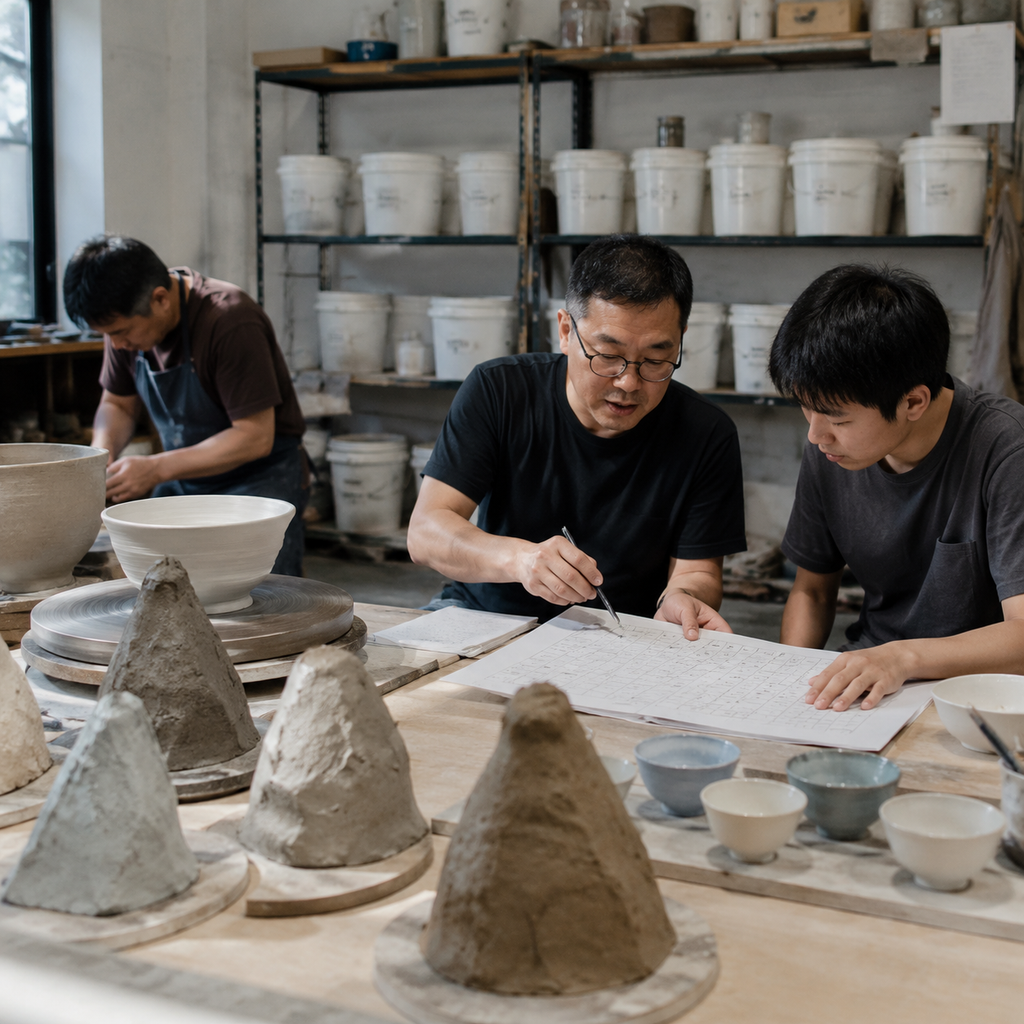
泥团终于稳定时,我才发现自己一直屏住呼吸。老周示意我用拇指往下按,我按得太快,底部立刻出现一道浅沟。他伸出食指点了点那条沟,没有责备,只说:“这里记得你的力。”这句话让我突然明白,陶瓷不是把材料驯服成某个漂亮样子,而是每一次动作都必须留下可追溯的分寸。手太急,泥会记住;手太重,泥也会记住。
When the clay finally steadied, I realized I had been holding my breath. Zhou motioned for me to press downward with my thumb. I moved too quickly, and a shallow groove appeared at the base. He touched it with his index finger and simply said, “The clay remembers your pressure here.” Suddenly I understood that ceramics is not about forcing material into a pretty shape. Every movement leaves a trace of proportion. If the hand is hurried, the clay remembers. If the hand is heavy, it remembers that too.
我没有成功拉出一只完整的碗,只得到一个歪歪的杯状泥坯,口沿一边高、一边低。它并不好看,却让我第一次看见“成形”并不是某个瞬间突然发生的结果,而是由许多小判断叠在一起:泥料该不该再揉,转盘该快还是该慢,手指要不要再往上,哪一道凹痕值得保留,哪一道必须及时削掉。
I did not manage to throw a complete bowl. I ended with a crooked cup-like form, its rim higher on one side than the other. It was not beautiful, but it showed me that forming does not happen in one sudden moment. It is built from many small decisions: whether the clay needs more kneading, whether the wheel should speed up or slow down, whether a finger should rise another centimeter, which mark can remain, and which must be removed in time.
下午离开时,老周把那只歪泥坯放在窗边,没有像我想的那样立刻丢进回收桶。他说,等它稍微变硬,还能切开看里面的厚薄。阳光穿过沾泥的玻璃,照出一圈不均匀的阴影。我站在门口回头看了很久,终于不再把工作室里的泥料、手势和失败分开理解:一只碗首先是泥,其次是人的耐心,最后才可能成为被端到桌上的器物。
When I left in the afternoon, Zhou placed my crooked clay form by the window instead of throwing it into the recycling tub. Once it stiffened a little, he said, they could cut it open and inspect its uneven thickness. Sunlight passed through the clay-speckled glass and cast an irregular ring of shadow. I stood at the doorway for a while, no longer separating the clay, the gestures, and the failure in my mind. A bowl begins as earth, becomes an exercise in patience, and only then might turn into something carried to a table.
第二天上午,我又回到工作室,泥坯已经从柔软的灰色变成了略带凉意的浅灰。老周用指关节敲了敲我的杯坯,声音从沉闷变得清脆,便说可以修坯了。修坯并不是把昨天的失败重新捏一遍,而是让半干的器物在转盘上接受第二次判断。它已经不能任意改变形状,却仍然可以通过削薄底部、整理外壁和校正口沿,找回一点秩序。
The next morning I returned to the studio. The clay had changed from soft gray to a paler gray with a cool feel. Zhou tapped my cup with his knuckle; its sound had become clearer, less muffled, so he said it was ready for trimming. Trimming was not a chance to remake yesterday’s failure. It was a second judgment made while the leather-hard form turned on the wheel. The shape could no longer be changed freely, but its base, outer wall, and rim could still be brought back toward order.
老周先把泥坯倒扣在转盘上,用几小块湿泥固定住边缘。他没有急着开机,而是从侧面观察杯口与底部的关系,随后用铅笔在底圈附近画出一道细线。我问为什么不直接把底削平,他回答,器物的重量和重心都藏在看不见的地方,削多一毫米,烧成后就可能站不稳。说完,他才踩下踏板,让转盘以很慢的速度转动。
He first turned the form upside down and secured its rim to the wheel with a few small pieces of damp clay. Rather than starting immediately, he studied the relationship between the rim and the base, then drew a thin pencil line near the foot ring. When I asked why he did not simply flatten the bottom, he explained that weight and balance hide beneath the surface. Removing one extra millimeter could make the fired piece unstable. Only then did he press the pedal and let the wheel rotate slowly.
修坯刀碰到泥底时,发出细细的刮擦声。卷起的泥屑像木屑一样落在桌面上,老周偶尔停下来,用手掌摸一圈底足,再继续削。他让我也试一次,我握刀太紧,刀尖立刻扎进底部,留下一个明显的台阶。那一刻我以为只能把这件作品判为失败,老周却让我先别动,转盘停稳后再看凹痕的位置。他说,误判往往发生在心里先宣布“完了”,而不是发生在泥坯本身。
When the trimming tool met the base, it made a fine scraping sound. Coils of clay fell onto the table like wood shavings. Zhou paused from time to time to feel the foot ring with his palm before continuing. He let me try, but I gripped the tool too tightly and drove its tip into the base, leaving a sharp step. I immediately decided the piece was ruined. Zhou told me to wait, let the wheel stop, and examine where the groove lay. Misjudgment, he said, often happens when the mind declares “finished” before the clay has actually failed.
他用一块略湿的海绵把台阶边缘润开,又用修坯刀从两侧缓慢过渡,原本突兀的凹痕逐渐变成一圈细微的阴影。虽然底足不能恢复到完全没有痕迹,但它反而多了一条手工留下的线。我第一次明白,修正不等于抹去错误;有些错误只能被重新安排,让它从破坏结构的伤口,变成结构中的一部分。这个判断比把表面修得光滑更重要。
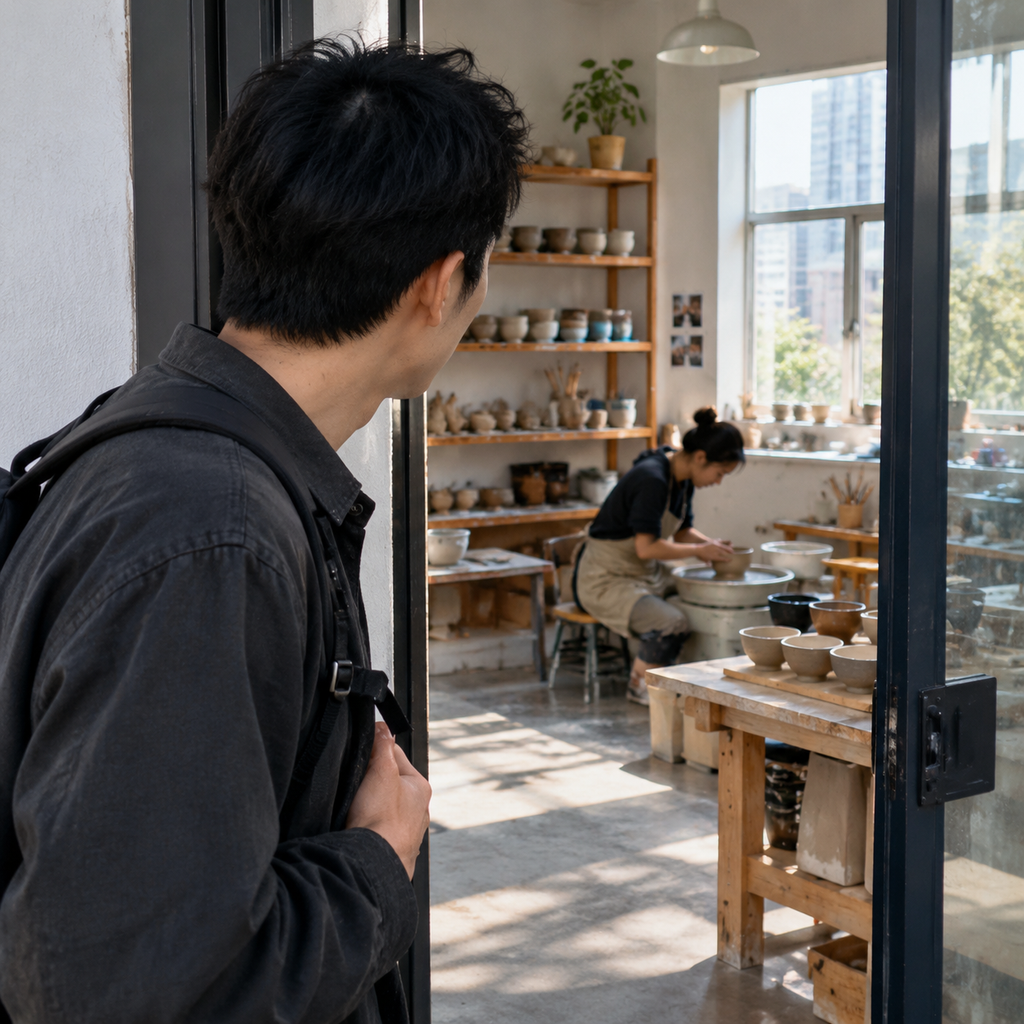
He softened the edge of the step with a slightly damp sponge, then used the trimming tool from both sides to create a gradual transition. The harsh groove slowly became a narrow band of shadow. The foot could not return to a completely unmarked state, but it now carried a line made by hand. For the first time I understood that correction does not mean erasing an error. Some mistakes must be rearranged until they become part of the structure rather than a wound that weakens it. That judgment mattered more than a perfectly smooth surface.
修好的泥坯放到架子上继续阴干,下午便轮到上釉。工作室的釉料装在一排白色塑料桶里,蓝、青、米白和带细砂感的灰各有编号,但老周从不只看桶上的标签。他用玻璃棒搅动釉浆,举起来看流下来的速度,还会在小瓷片上试刷一道。釉太稠,烧后容易堆积;太稀,颜色会显得单薄,甚至露出胎体的斑驳。
The trimmed form went onto a shelf to dry slowly, and that afternoon it was time for glazing. The studio’s glazes sat in a row of white plastic buckets: blue, celadon, ivory, and a sandy gray. Yet Zhou never relied only on the labels. He stirred each glaze with a glass rod, watched how quickly it ran, and brushed a test line onto a small tile. If the glaze was too thick, it could pool after firing; if it was too thin, the color might look weak and reveal uneven patches in the clay body.
我原先把上釉想成给器物涂上一层颜色,似乎只要刷得均匀,结果就不会差。老周先用气枪吹去坯体上的灰,再用夹子夹住杯底,将杯身缓慢浸入釉桶。他只让釉浆覆盖到距离底足约半厘米的位置,取出后立即转动手腕,让多余的釉液回流。杯壁上的蓝绿色并不均匀,有些地方明亮,有些地方发暗,我忍不住担心它会不会像一件没涂好的半成品。
I had imagined glazing as simply painting a layer of color onto an object, assuming that an even coat would guarantee a good result. Zhou first blew dust from the clay body, then held the foot with tongs and lowered the cup slowly into the glaze. He stopped the coating about half a centimeter above the foot, lifted it out, and turned his wrist so the excess could flow back. The blue-green surface was not uniform: some areas looked bright, others dark. I worried that it resembled an unfinished object rather than a finished one.
老周看出我的疑惑,拿出一只已经烧好的碗放在旁边。那只碗的釉面也有深浅变化,边缘处颜色更亮,靠近底部则沉静得多。他说,火焰、厚薄、器形和釉浆流动都会参与最后的颜色,窑门关上之后,人的控制就必须让位给变化。我这才发现,自己又一次把陶瓷误认为可以完全预先设计的产品。拉坯时我误以为靠力气,上釉时又误以为靠覆盖;两次判断都把过程里最重要的“等待”漏掉了。
Zhou noticed my doubt and placed a fired bowl beside it. Its glaze also shifted in tone, brighter along the rim and calmer near the base. He explained that flame, thickness, shape, and the movement of the glaze all contribute to the final color. Once the kiln door closes, human control has to yield to change. I realized I had again mistaken ceramics for a product that could be designed completely in advance. With throwing, I had overestimated strength; with glazing, I had overestimated coverage. Both judgments had left out the most important part of the process: waiting.
上釉后的杯子不能直接拿在手里把玩,必须用海绵擦净底足,检查有没有细小的釉滴。老周把杯子举到窗边,先看口沿,再看内壁,最后才看我那道被修正过的底足。他说,真正的检查不是寻找一个“完美”的角度,而是确认每一处都经得起转动和使用。杯口若有锋利的釉线,会划伤嘴唇;底足若残留釉滴,烧进窑板后就会粘住,取下时连器物一起崩裂。
A glazed cup could not be handled casually. Its foot had to be wiped clean with a sponge, and every tiny drop of glaze had to be checked. Zhou held it by the window, inspecting the rim first, then the inner wall, and finally the foot ring I had repaired. He said a real inspection was not about finding one perfect angle; it was about making sure every part could withstand turning and use. A sharp line of glaze could cut a lip, while a drop left on the foot might fuse to the kiln shelf and crack the vessel when removed.
我们把几只杯子送进窑前,老周在每件器物旁都放了一块写着温度和釉色的小牌子。那只歪过、削错过、又被重新修正的杯子也在其中。它的外形仍不够端正,底足有一圈无法完全隐藏的浅痕,但我不再急着给它下结论。第一次误判让我只看见歪斜,第二次误判让我只看见颜色,直到修坯和上釉之后,我才学会把一件器物放回时间里观察:它先承受手的动作,再承受空气的干燥,最后承受窑火的决定。
Before loading the kiln, we placed a small card beside each cup noting its temperature and glaze color. The crooked cup, the one I had cut too deeply and then repaired, went in with the others. Its shape was still imperfect, and a faint ring remained on the foot, but I no longer rushed to judge it. My first misjudgment had seen only the crookedness; my second had seen only the color. After trimming and glazing, I learned to observe an object within time: first it receives the hand’s movements, then the drying air, and finally the kiln’s decision.
窑火升温的那几个小时,工作室比平时安静。大家没有围着窑门猜颜色,也没有频繁打开查看,只有排风扇和远处电动车驶过的声音交替响着。老周说,做陶最难的时刻并不总在手上,有时是在已经做完能做的事之后,仍然愿意相信过程。我把那句话记在心里,也第一次觉得,景德镇真正教人的不是怎样复制一只漂亮的碗,而是怎样在看错之后,重新学会观看。
During the hours when the kiln climbed toward its firing temperature, the studio grew unusually quiet. No one gathered around the door to guess at the colors, and no one opened it to look too soon. Only the exhaust fan and the occasional electric scooter outside broke the silence. Zhou said that the hardest moment in ceramics is not always in the hands. Sometimes it comes after everything possible has been done, when one must still trust the process. I kept that thought with me. Jingdezhen was teaching me not how to copy a beautiful bowl, but how to learn to look again after looking wrongly.
装窑并不是把器物一件件摆进去那么简单。老周先用刮片清理窑板,再薄薄刷上一层防粘材料,等表面干透后才开始排放。高杯放在后侧,矮碗留在前侧,器物之间保持手指宽的距离,谁也不能碰到谁。我的杯子被安置在中层靠里处,老周蹲下来,从窑门方向反复确认它与棚板支柱之间的空隙。他提醒我,窑内看似还有许多空位,却不能为了多烧一件就把器物塞紧;升温后热量要流动,釉也可能软化流淌,留出的每一道缝都是给火走的路。
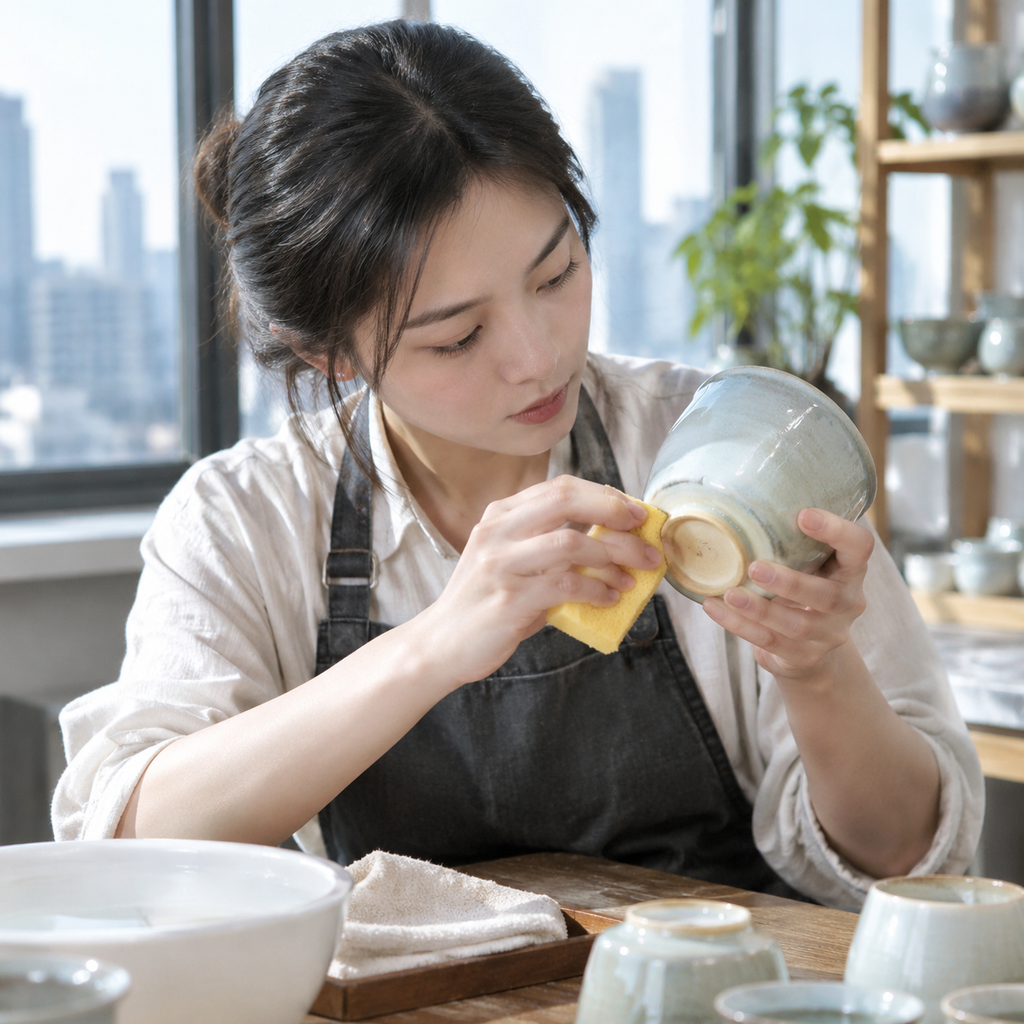
Loading a kiln was not as simple as placing pieces inside one by one. Zhou first scraped the kiln shelves clean and brushed on a thin separator, waiting until it dried before arranging anything. Tall cups went toward the back, shallow bowls stayed near the front, and every object stood about a finger’s width from the next without touching. My cup was placed toward the inner side of the middle shelf. Zhou crouched and checked its clearance from the door and the shelf posts several times. A kiln may appear to have spare room, he explained, but pieces cannot be packed tightly just to fit in one more. Heat needs room to circulate, and softened glaze may run; every narrow gap is a path left open for the fire.
窑门合上后,烧制从低温排湿开始。控制屏上的数字缓慢上升,最初一两个小时没有任何戏剧性的变化,窑壁只是渐渐发热,靠近时能感觉脸颊发紧。老周每隔一阵便查看升温曲线,听风机是否有异响,还用手背试探窑体周围不同位置的温度。他说,前段若升得太急,坯体内部残留的水汽来不及出去,器物可能从里面炸开;进入高温区后,又要观察电流和窑压是否稳定。所谓“烧窑”,不是按下开关后等一个结果,而是把漫长过程守住,不让小异常拖成无法挽回的裂口。
Once the kiln door closed, the firing began with a low-temperature stage that drove out moisture. The numbers on the controller climbed slowly. Nothing dramatic happened during the first hour or two; the kiln walls merely warmed until the skin of my face felt tight when I stood nearby. At intervals Zhou checked the firing curve, listened for unusual sounds from the fan, and tested the heat around different parts of the kiln with the back of his hand. If the early rise was too fast, he explained, moisture trapped in the body might not escape and a piece could burst from within. At higher temperatures, the electrical load and kiln pressure also had to remain steady. Firing was not pressing a switch and waiting for an answer. It meant guarding a long process so a small irregularity did not become an irreversible crack.
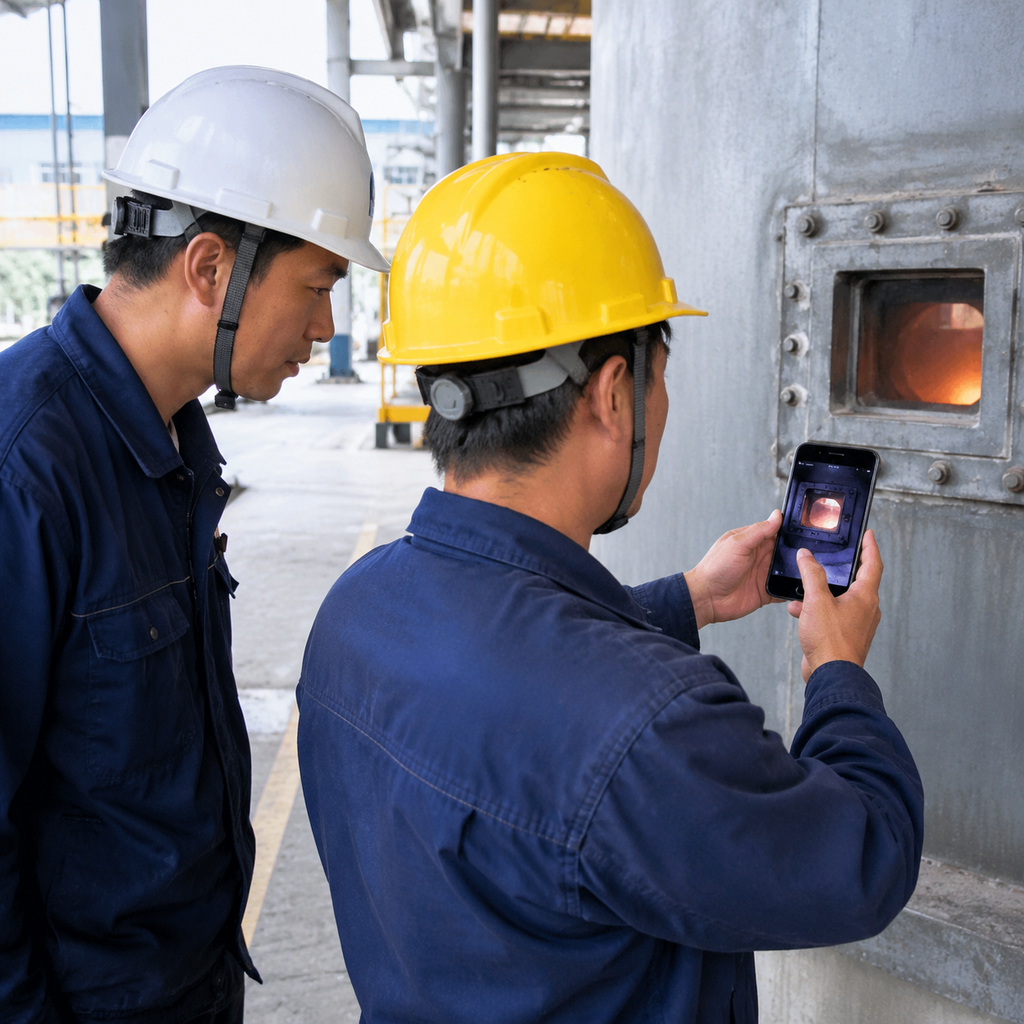
傍晚时,观察孔里的暗色逐渐转成橙红,里面的器物轮廓被亮光吞没,只剩下模糊的弧线。老周没有让我把眼睛凑近,而是递来护目镜,让我站在侧面短暂看一眼。那一眼和白天的工作室完全不同:泥坯、釉层、修坯留下的刀痕都沉在强光里,人的手已经无法进去补救。达到设定温度后,窑炉进入保温,再按照曲线缓慢降温。老周把一张纸贴在窑门上,写下停火时间,也提醒所有人不要因为好奇去碰门把。此时窑内仍热得足以让错误的开门动作毁掉整窑器物。
By evening, the darkness behind the viewing port had turned orange-red. The outlines of the vessels were swallowed by the brightness, leaving only blurred curves. Zhou would not let me bring my face close. He handed me protective glasses and had me look briefly from the side. That glimpse was utterly different from the daytime studio: the clay bodies, glaze layers, and trimming marks were all submerged in fierce light, beyond the reach of any correcting hand. After the target temperature was reached, the kiln held there before beginning a controlled cooling cycle. Zhou taped a note to the door with the shutoff time and warned everyone not to touch the handle out of curiosity. The interior was still hot enough for one premature opening to damage the entire load.
真正的等待发生在停火之后。第二天早晨,窑外已经不再烫手,老周仍旧没有开门,只看了一眼温度便去整理工具。我几次走到窑边,又几次被那张写着时间的纸挡回来。直到下午,温度降到可以开窑的范围,他才先把门留出一道窄缝,让内外温差缓慢缩小。热气没有像蒸锅那样扑出来,却带着干燥的矿物气味。隔着缝隙,我看见釉色第一次显现:昨天灰暗的表面变成了深浅相间的青蓝,有几件器物边缘还闪着玻璃般的光。
The real waiting began after the power was turned off. The next morning the outside of the kiln was no longer painful to touch, yet Zhou still refused to open it. He checked the temperature and went back to arranging his tools. Several times I drifted toward the kiln, only to be stopped by the paper note on the door. Not until the afternoon, when the temperature had fallen into a safe range, did he open a narrow gap and allow the difference between inside and outside to diminish gradually. No cloud of steam rushed out, but the air carried a dry mineral smell. Through the gap I saw the glaze reveal itself for the first time: yesterday’s dull coating had become layered blue-green, and the rims of several pieces shone like glass.
出窑时,老周戴上厚手套,用双手端住窑板边缘,先把最外层的小件逐一移到铺着软布的长桌上。器物之间偶尔发出清脆的轻碰声,所有人说话都压低了音量。我的杯子最后才被取出。它没有炸裂,也没有粘在窑板上,但口沿左侧出现一小片颜色较浅的区域,底足旁还有一粒针尖大小的凸点。我伸手想拿,老周先拦住我,让它在桌上继续散热;刚出窑的瓷看上去安静,内部温度却可能仍比手掌预料得高。
When the kiln was unloaded, Zhou put on thick gloves and gripped the shelf with both hands. He moved the smallest pieces from the outer layer onto a long table covered with soft cloth. Now and then the vessels made a clear, delicate sound as they touched, and everyone instinctively lowered their voices. My cup came out near the end. It had neither exploded nor fused to the shelf, but a pale patch showed on the left side of the rim and a pinhead-sized bump sat near the foot. I reached for it, but Zhou stopped me and told me to let it release more heat on the table. Freshly fired porcelain looks quiet, though its interior may remain much hotter than the hand expects.
等杯子冷下来,检查才真正开始。老周先把它平放在玻璃板上,轻推杯身,看底足是否摇晃;接着用指腹绕过口沿,确认没有割手的锐点;又把杯子举向窗光,查看釉面是否有贯穿裂纹、缩釉或明显气泡。最后,他用小木棒轻敲杯壁,声音清亮而短,没有沉闷的破音。那粒小凸点被细砂片慢慢磨平,浅色区域则保留下来,因为它只影响外观,不影响盛水和入口。检查不是挑出所有“不一样”,而是分清哪些差异属于手工痕迹,哪些问题会妨碍使用。
Only after the cup had cooled did the real inspection begin. Zhou set it on a glass plate and nudged it gently to see whether the foot rocked. He ran a fingertip around the rim to check for sharp points, then held it toward the window to look for deep cracks, crawling glaze, or obvious bubbles. Finally, he tapped the wall with a small wooden stick. The note was bright and brief, without the dull break that might suggest hidden damage. He smoothed the tiny bump with a fine abrasive pad but left the pale patch untouched because it affected appearance rather than drinking or handling. Inspection was not the removal of everything unusual. It was the ability to distinguish a handmade trace from a defect that would interfere with use.
为了确认杯子能不能真正端上桌,老周又倒入半杯温水,让它静置十分钟。我们观察杯底和杯壁是否渗水,也看受热后有没有细裂纹显出来。接着,他把水倒掉,用拇指和食指捏住杯口轻轻转动,检查重量是否偏向一边。我的杯壁确实一侧稍厚,拿起来能感觉到重心不完全居中,但手柄处并不硌手,底足也稳。老周在工作单上写下“可用,留手痕”,没有把它放进精品架,也没有扔进次品筐,而是交回给我。
To confirm that the cup could actually be used at a table, Zhou poured in half a cup of warm water and left it for ten minutes. We watched the base and walls for seepage and checked whether heat would reveal any fine crack. He then emptied it, held the rim lightly between thumb and finger, and turned it to judge whether the weight pulled to one side. One wall was indeed slightly thicker, and the center of gravity was not perfect, but the grip was comfortable and the foot stood firm. On the work sheet Zhou wrote, “Usable—retain the marks of the hand.” He placed it neither on the display shelf nor in the reject basket, but returned it to me.
长桌另一端,几件没有通过检查的器物也没有被悄悄收走。一只白釉小碗在灯下显出发丝般的裂纹,老周用铅笔在底部画了叉;另一只瓶子的釉流到了底足,取下时崩掉一小块,只能留作观察样品。学徒把问题逐项记在本子上,对照它们原先在窑里的位置、釉层厚度和修坯记录。老周说,出窑不是给作品排一场漂亮合影,而是回头追问每个结果为何发生。裂纹可能来自干燥不均,粘底可能因为釉擦得不净,变形也许与坯壁厚薄有关。下一窑怎样调整,常常就藏在这些不能出售的器物里。我看着那只画了叉的小碗,终于明白失败品也不是过程之外的废物,它们替下一次烧制保存了证据。
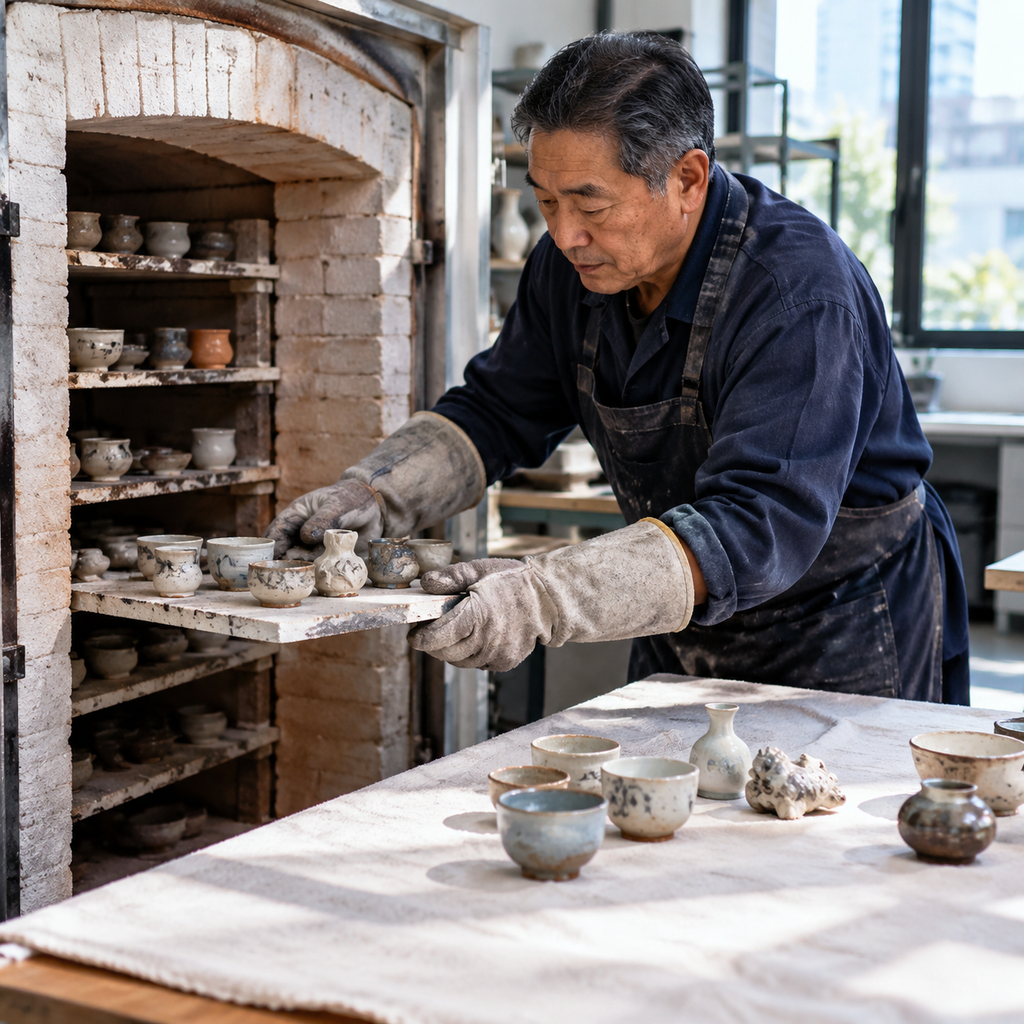
At the other end of the table, pieces that failed inspection were not quietly swept away. A white-glazed bowl revealed a hairline crack under the lamp, and Zhou marked a cross on its base in pencil. Glaze had run onto the foot of another bottle, taking a small chip with it when the piece was removed, so it could be kept only as a study sample. The apprentice recorded each problem and compared it with the piece’s kiln position, glaze thickness, and trimming notes. Unloading, Zhou said, was not a chance to arrange a beautiful group photograph. It was the moment to ask why each result had occurred. A crack might come from uneven drying, a fused foot from glaze that had not been wiped clean, and warping from walls of unequal thickness. The adjustments for the next firing were often hidden in objects that could not be sold. Looking at the crossed-out bowl, I understood that a failed piece was not waste outside the process; it preserved evidence for the next attempt.
出窑记录还没有结束,负责记窑位的学徒小余把方格纸摊在长桌上,请我一起找杯子原来所在的位置。她二十四岁,在这里学了两年,袖口总沾着洗不掉的钴蓝色。每取下一件器物,她就用铅笔在相应方格里画圈,记下颜色、变形和釉面状态。她指着我的杯子说,中层内侧的温度通常比较平稳,但旁边那只高瓶会改变周围热流,因此杯口的浅色未必只是釉没浸匀,也可能与摆放距离有关。她没有把判断写成肯定句,只在纸上标了一个问号,准备下一窑放一块同釉试片验证。这个问号比一句“烧得不错”更诚实,也让我看见年轻学徒如何把一次偶然结果变成可以继续追踪的问题。
The unloading record was not finished. Xiao Yu, the apprentice responsible for mapping kiln positions, spread a sheet of gridded paper across the long table and asked me to help locate where my cup had stood. She was twenty-four and had trained here for two years; cobalt-blue stains permanently marked her cuffs. As each piece came out, she circled its square in pencil and noted its color, distortion, and glaze condition. Pointing to my cup, she explained that the inner part of the middle shelf was usually stable, but the tall bottle beside it could have altered the heat flow. The pale rim might therefore reflect not only uneven dipping but also the spacing between the pieces. She did not write this as a conclusion. She added a question mark and planned to place a test tile with the same glaze there in the next firing. That question mark was more honest than simply saying the firing had gone well, and it showed me how a young apprentice turns an accidental result into something that can be tested.
小余又拿来一只强光手电,把光斜着贴近釉面移动。正面看不见的细小针孔,在低角度光线下会投出短影;胎体内部若有暗裂,敲击声和透光变化也可能给出提醒。她检查到一只青白釉茶杯时忽然停住,杯壁上只有一个不起眼的黑点,我以为用砂片磨掉就行。老周接过去看了看,却说黑点周围的釉略微下陷,可能是烧成时杂质排气留下的孔,不能为了外观硬磨,因为磨穿釉层后反而容易藏污。小余便在杯底写上日期,将它归入日常自用的一栏。精品、可用、观察样和废弃品在桌上分开摆放,每一类都有具体理由,并不是凭第一眼的漂亮程度决定。
Xiao Yu then brought over a bright flashlight and moved it close to the glaze at a shallow angle. Tiny pinholes invisible from the front cast short shadows under raking light, while changes in sound or translucency could warn of a concealed crack in the body. She stopped at a pale celadon teacup carrying a barely noticeable black speck. I assumed it could simply be polished away. Zhou examined it and explained that the glaze around the speck had sunk slightly, suggesting a vent left when an impurity released gas during firing. Grinding it for appearance could break through the glaze and create a place where dirt would collect. Xiao Yu dated the base and placed the cup in the group reserved for everyday studio use. Display pieces, usable ware, study samples, and discards stood in separate areas of the table, each for a specific reason rather than according to beauty at first glance.
随后要检查的是一组带盖茶罐。小余把盖子逐个交换着试,确认每只都回到自己的罐身,因为泥坯在高温里收缩的幅度不会完全相同。第三只罐的盖沿卡得很紧,她没有用力拧,而是垫着棉布轻轻提起,再用卡尺量罐口。老周说,这种器物即使没有裂、没有变形,也可能因为盖子咬死而无法使用;烧成检查必须把人的动作放进去,想象有人每天开盖取茶、清洗、晾干,而不只是把它放在灯下观赏。我试着开合自己的杯子虽然没有盖,但也按照他的提醒模拟了握持:手指湿时会不会滑,杯口贴近嘴唇是否舒服,装满水后重心会不会让手腕发酸。器物通过窑火,只算完成了材料的考验;通过使用,才算完成了人的考验。
Next came a group of lidded tea jars. Xiao Yu tried the lids one by one and made sure each returned to its own jar, because no two clay bodies shrink by exactly the same amount at high temperature. The third lid caught tightly on its rim. Instead of twisting it by force, she lifted it through a piece of cotton cloth and measured the opening with calipers. Zhou explained that even a jar without cracks or visible warping could fail if its lid seized. A post-firing inspection must include the actions of a future user—opening it every day to take out tea, washing it, and leaving it to dry—rather than treating the vessel as something that exists only beneath a display light. My cup had no lid, but I followed his advice and tested the grip: whether wet fingers might slip, whether the rim felt comfortable against the lips, and whether a full cup pulled painfully on the wrist. Surviving the kiln completed the material test; surviving use completed the human one.
离开前,我在工作室门口的小水槽把杯子又洗了一遍。水流经过那片浅色釉面,也绕过底足上淡淡的修坯痕,最后从杯沿成线落下。三天前,我只想做出一只端正、像店里出售的碗;此刻真正拿在手里的,却是一只略歪、略重、颜色也不完全均匀的杯子。它把我按得太快的一道沟、老周修刀的过渡、窑火留下的色差都保留了下来,因此反而比标准答案更具体。
Before leaving, I washed the cup once more at the small sink by the studio entrance. Water crossed the pale area of glaze, circled the faint trimming line on the foot, and finally streamed from the rim. Three days earlier, I had wanted only to make a straight bowl that looked like something sold in a shop. What I now held was a slightly crooked, slightly heavy cup with uneven color. It preserved the groove made by my hurried thumb, the transition cut by Zhou’s trimming tool, and the variation left by the kiln. For that reason, it felt more specific than any perfect answer.
工作室本来可以在这时收工,老周却领我去看窑炉背后的接线箱和通风管。他用笔在烧成曲线上圈出夜里的一小段波动:那时温度升得比计划慢了十几分钟。小余回忆风机声没有变化,另一位负责夜班的师傅阿庆则翻出手机里的巡窑照片,确认观察孔颜色正常。三个人没有急着归咎于设备,而是依次核对窑门密封、装窑密度和当天的室温。阿庆说,守夜最怕的不是困,而是数字稍有变化就慌着调整;一次过度补偿,可能让后半程升温过猛。他那晚只把情况记下,等连续两个读数后才微调功率。烧窑在我眼里曾是一团浪漫的红光,在他们手中却由记录、克制和轮班构成。火并非越旺越好,真正需要经验的,是知道什么时候应该动,什么时候应该忍住不动。
The studio could have ended its work there, but Zhou led me behind the kiln to inspect the electrical cabinet and ventilation duct. On the firing chart he circled a brief fluctuation from the night, when the rise had lagged behind the plan for more than ten minutes. Xiao Yu recalled no change in the fan noise, while Qing, the craftsman on night duty, found phone photographs from his rounds showing a normal color through the viewing port. Rather than blame the equipment at once, the three checked the door seal, loading density, and room temperature in sequence. Qing said the hardest part of a night watch was not fatigue but resisting the urge to adjust the kiln whenever a number shifted. One excessive correction could make the later rise too aggressive. That night he had recorded the change and waited for two consecutive readings before slightly altering the power. I had once seen firing as a romantic mass of red light; in their hands it was made of records, restraint, and shared shifts. The goal was not the fiercest fire. Experience meant knowing when to intervene and when to hold still.
阿庆还给我看了放在墙边的测温锥。烧前,它们是几枚直立的小三角;经历高温后,会按照受热程度弯下不同角度。控制屏告诉人窑炉在某个时刻显示多少度,测温锥则留下器物实际承受热量的痕迹。那一窑的锥体弯曲基本符合预期,说明夜里的短暂迟缓没有破坏整体烧成。老周把它与日期卡放进抽屉,并在下一张装窑图旁写下“高瓶右侧留宽”。这些细节不会被端着茶杯的人看见,却决定了下一次杯口是否还会出现同样的浅斑。景德镇的经验并不只存在于老师傅的手感里,也藏在被保存的曲线、旧锥、照片和一句简短备注中。
Qing also showed me the pyrometric cones kept beside the wall. Before firing they were small upright triangles; after exposure to heat, each bent to an angle that recorded the heatwork it had received. The controller reported the kiln’s displayed temperature at a given moment, while the cones preserved evidence of what the ware had actually endured. The cones from this load had bent almost as expected, showing that the brief nighttime delay had not compromised the overall firing. Zhou stored them with the dated card and wrote “leave more room to the right of tall bottle” beside the next loading diagram. A person drinking from the cup would never see these details, yet they might determine whether the same pale patch appeared on the next rim. Knowledge in Jingdezhen lived not only in an experienced hand, but also in saved curves, old cones, photographs, and one concise note.
杯子已经通过盛水测试,小余仍建议我等它完全回到室温后再做一次复查。她把一张白纸垫在杯底,沿着底足慢慢转了一圈;若有肉眼难见的细砂或毛刺,白纸上会留下划痕。纸面干净后,她又让我把杯子放到耳边轻轻弹一下,再与同窑另一只杯子的声音比较。两个声音并不完全相同,我一度又紧张起来,以为厚壁处藏着裂纹。老周解释,器形、壁厚和大小本来就会影响音色,检查不能只靠“越响越好”的简单标准,而要把声音、外观、触感和盛水结果放在一起判断。他把杯子接过去,沿内外壁重新摸了一遍,确认没有延伸裂线,才把工作单上的勾补完整。
Although the cup had passed its water test, Xiao Yu advised me to inspect it once more after it had returned fully to room temperature. She placed a sheet of white paper beneath the foot and turned the cup slowly; any nearly invisible grit or burr would leave a scratch. When the paper remained clean, she asked me to hold the cup near my ear, flick it gently, and compare its note with another cup from the same kiln. The two sounds were not identical, and I grew anxious again, wondering whether the thicker wall concealed a crack. Zhou explained that form, thickness, and size naturally affect tone. Inspection could not rely on the crude rule that a louder ring was always better. Sound had to be judged alongside appearance, touch, and the water test. He took the cup, felt the inner and outer walls once more, confirmed there was no spreading fracture, and only then completed the check mark on the work sheet.
那天下午还有一位来取货的茶馆老板娘陈姐。她没有先挑颜色最匀的杯子,而是把六只杯子排成一列,逐只倒入同样多的水,再端起来试重量。她淘汰了一只造型很漂亮的薄杯,因为热水注入后杯壁太烫,也留下两只釉色略有差别、握持却更舒服的杯子。陈姐说,客人喝茶时不会拿着放大镜找釉斑,却会记得杯子是否烫手、放在木桌上是否摇、清洗时有没有藏茶垢的死角。她的话把出窑检查从工作室带到了真实桌面:工匠看结构,使用者看动作,两边的标准重叠之处,才是一件器物可以长期留下来的理由。
That afternoon, Sister Chen, who ran a teahouse, arrived to collect an order. She did not begin by choosing the cups with the most uniform color. Instead, she lined up six, poured the same amount of water into each, and lifted them one at a time to test their weight. She rejected one beautifully shaped thin cup because its wall became too hot after filling, while keeping two with slight glaze variations because they were more comfortable to hold. Teahouse customers, she said, would not search for glaze spots with a magnifying glass, but they would remember whether a cup burned their fingers, rocked on a wooden table, or trapped tea stains in a corner that was hard to clean. Her remarks carried the inspection out of the studio and onto an actual table: craftspeople examined structure, users examined actions, and where those standards overlapped lay the reason an object could remain useful for years.
临走时,小余把不合格的白釉碗从桌上拿起,没有马上敲碎。她沿裂纹画出一条细线,又在旁边写下窑位,准备第二天切开观察断面。阿庆则把长桌擦净,将还能使用但外观不够整齐的器物装进周转箱,带到工作室自己的茶桌上。这里没有一个笼统的“好”或“坏”:有的器物适合出售,有的适合自用,有的负责教人看懂失败,有的才真正需要淘汰。我抱着自己的杯子站在门边,忽然觉得出窑并非作品故事的终点,而是一场分流。火给出结果,人再用耐心把不同结果送往各自合适的位置。
Before I left, Xiao Yu lifted the rejected white-glazed bowl but did not smash it. She traced the crack with a fine line, wrote its kiln position beside it, and planned to cut it open the next day to examine the cross-section. Qing wiped the long table and packed the usable but visually irregular pieces into a crate for the studio’s own tea table. There was no single, vague division between “good” and “bad.” Some pieces could be sold, some could serve the studio, some existed to teach the cause of failure, and only some truly had to be discarded. Holding my cup near the doorway, I realized that unloading was not the end of an object’s story but a sorting point. The fire supplied results; patient human judgment sent each result toward the place where it belonged.
我特意把杯口转向光线,又检查了一遍内壁。釉面没有藏着未洗净的砂粒,水倒出后也没有在底部留下异味。那道浅色釉斑随着角度变化时而明显、时而隐去,像窑火替这只杯子留下的一枚小小指纹。确认它不是裂痕后,我才用软布擦干,把检查过的地方朝上放好。
I deliberately turned the rim toward the light and checked the inner wall once more. No unwashed grains were trapped in the glaze, and no strange smell remained after the water was poured away. The pale patch appeared and disappeared as the angle changed, like a small fingerprint left by the firing. Only after confirming that it was not a crack did I dry the cup with a soft cloth and set it down with the inspected side facing upward.
回到住处后,我还照着小余教的方法,把杯子放在平整桌面上从四个方向轻推。窗外晚班公交驶过,桌面微微震了一下,杯底却没有偏移。我倒入热茶,等杯壁升温,再用湿手握住杯身走到窗边,确认它不会突然滑落。茶汤停留半小时后,内壁没有渗色,杯底也没有水印。白天那些看似繁琐的检查,到这一刻都变成了具体而安静的结果:杯子能站稳,能被握住,也能让一口热茶安全抵达嘴边。
Back at my lodging, I followed Xiao Yu’s method and nudged the cup from four directions on a level table. An evening bus passed outside and sent a faint vibration through the tabletop, but the foot did not shift. I poured in hot tea, waited for the wall to warm, then held the cup with a damp hand and walked to the window to make sure it would not slip. After the tea had stood for half an hour, the inner glaze showed no staining and the base left no wet mark. The day’s apparently tedious checks had become quiet, practical results: the cup stood securely, could be held safely, and carried a mouthful of hot tea to the lips.
第二天清晨,我用它喝完一杯温水,清洗后把杯子倒扣在窗边。晨光越过杯底,那圈修坯痕清楚地落在木桌上;杯沿的一小块青蓝仍比别处浅,却没有扩大,也没有渗漏。我给老周发去一张没有滤镜的照片,只写“今天也稳”。几分钟后,他回复了两个字:“常用。”于是我没有把杯子收进纪念品盒,而是又给它添了茶。街上的早点铺刚升起蒸汽,这只从窑里出来、经过一桌人逐项检查的杯子,也开始了它最普通的一天。
The next morning I drank warm water from it, washed it, and left it upside down by the window. Morning light crossed the base and projected the trimming ring clearly onto the wooden table. The small blue-green patch at the rim remained paler than the rest, but it had neither spread nor leaked. I sent Zhou an unfiltered photograph with only four words: “Still steady today.” A few minutes later he replied, “Use it often.” So I did not place the cup in a souvenir box. I filled it with tea again. Steam was rising from the breakfast stall outside, and the cup that had emerged from the kiln and passed through a whole table of careful hands began its most ordinary day.
老周把卷帘门拉下一半时,街上的灯已经亮了。我把杯子包进旧报纸,又套进布袋,走到巷口仍能隔着布摸到底足那圈浅痕。后来在住处泡茶,我没有挑最好看的角度拍照,只把杯子平放在桌上,看热气从不够圆的杯口慢慢升起。它没有因为不完美而失去用途,也没有因为经受窑火就变成奇迹。它只是稳稳装住了第一杯茶。对我来说,这便是景德镇给出的最具体结尾:一团泥经过手、刀、釉、火和检查,终于成为每天可以拿起、放下、再注满的一件东西。
When Zhou pulled the shutter halfway down, the streetlights had already come on. I wrapped the cup in old newspaper, slipped it into a cloth bag, and could still feel the faint ring on its foot through the fabric as I reached the end of the lane. Later, back at my lodging, I brewed tea. I did not search for its best angle for a photograph. I simply set it on the table and watched steam rise through the uneven rim. Imperfection had not made it useless, and surviving the kiln had not turned it into a miracle. It simply held the first cup of tea without complaint. That was Jingdezhen’s most concrete ending for me: a lump of clay had passed through hands, blades, glaze, fire, and inspection, and become an object that could be lifted, set down, and filled again each day.

- 罗平没有油菜花的那天,我还是走上了田野公路 | I Took Luoping’s Country Road Even Without the Canola Blooms
- 新疆北疆12日深度游 | 12-Day Northern Xinjiang In-Depth Tour
- 中国高铁旅行攻略:如何用高铁串联你的中国行 | China by High-Speed Rail: How to Link Your Entire Trip on the Bullet Train
- 我在服务区吃到一碗热汤,才懂中国公路旅行的细节 | A Hot Soup at a Highway Service Area Showed Me the Details of Road Trips in China
- 广州早茶桌上,孩子先学会了听,再学会了说 | At a Guangzhou Dim Sum Table, My Child Learned to Listen Before Speaking
- 配饰指南:扇子、帽子等 | Accessories: Fans, Hats, and More
- 中国园林美学:苏州拙政园到北京颐和园 | Chinese Garden Art: Suzhou to Beijing's Summer Palace
- 沈阳的雨刚收住,街边烧烤味就把傍晚重新点亮了 | As Shenyang’s Rain Let Up, the Smell of Street Barbecue Lit the Evening Again
- 北京周边3日精华短线 | 3-Day Quick Getaway Around Beijing
- 菜市场早餐摊前,我靠一个“这个”吃到了热豆浆 | At a Wet Market Breakfast Stall, One “This One” Got Me Hot Soy Milk
Comments (0)