
扬州早茶不是一张菜单:我在园林之间学会给一顿饭留时间 | Yangzhou Morning Tea Is Not Just a Menu
扬州早茶不是一张菜单:我在园林之间学会给一顿饭留时间 | Yangzhou Morning Tea Is Not Just a Menu
清晨的扬州还没有完全从薄雾里醒来,石板路上先有了自行车铃声和店门卷帘的摩擦声。一名外地访客把手机地图缩到最小,站在老城一处早茶店外,手指在屏幕上划出一条很紧的路线:吃完早饭,赶去园林,再转到下一处街巷。他给自己留了不到半小时,因为在他的经验里,早餐是出发前迅速解决的一件事。门内蒸汽、瓷器相碰和茶水倒入杯中的细响,却让这个计划从第一步就显得过于仓促。
Yangzhou was still half-hidden in morning mist. Bicycle bells and the scrape of shop shutters opening came before the old city fully woke. Outside a morning-tea shop, a visitor from elsewhere pinched his map down to its smallest scale and drew a tight route with his finger: breakfast, a garden, then another set of lanes. He had allowed less than half an hour, because in his experience breakfast was something to finish quickly before setting out. Yet the steam inside, the clink of porcelain, and the soft sound of tea entering cups made that plan feel rushed from the very first step.
他没有把这次用餐理解成一个需要停留的场所,只把它看成路线上的一个补给点。菜单上的点心名称因此像一排必须尽快处理的任务:烫干丝、蒸点、烧卖、包子以及一壶热茶,各自都在等待选择。他不敢多点,担心吃不完,也不敢点得太少,怕离开后找不到合适的东西。旁边桌的人没有催促,服务动作却很连贯,杯子空到某个程度便有人添水,笼屉揭开又合上,桌面因此形成了一种不靠钟表推动的秩序。
He did not initially see the meal as a place that required time. He saw it as fuel along a route. The menu consequently looked like a row of tasks to process quickly: hot-dried tofu shreds, steamed items, shaomai, buns, and a pot of tea, each waiting for a decision. He hesitated to order too much in case he could not finish, yet ordering too little might leave him hungry later. No one at the neighboring table hurried. The service simply flowed: a cup reached a certain level, someone refilled it; a steamer was opened and closed. The tabletop developed an order that was not driven by a clock.
第一道让他停下来的不是最醒目的蒸点,而是一小碟烫干丝。豆腐干切得细,浇汁并不喧闹,香油、酱油和葱花把咸鲜压在一条窄窄的味觉线上。有人用筷子把干丝挑松,再夹起一小撮,动作像是在确认质地,而不是抢着填饱肚子。访客照着做,却因为一开始夹得太大口而失去层次,只好把筷子放低,重新分成几次。食物在这里不只回答“好不好吃”,还要求人调整手的速度。
What first made him pause was not the most impressive steamer, but a small plate of hot-dried tofu shreds. The tofu was cut fine, and the dressing was restrained: sesame oil, soy sauce, and scallions held the savory taste along a narrow line. A diner loosened the strands with chopsticks before lifting a small portion, as if checking texture rather than racing to fill up. The visitor copied the movement, but his first oversized bite erased the layers of flavor. He lowered his chopsticks and divided the next bite into several portions. Here, food did more than answer whether it tasted good; it asked him to change the speed of his hands.
茶壶比他想象中更像一只会参与谈话的器皿。它放在桌边,并没有被某个人牢牢看管;邻桌有人经过���顺手看看壶嘴,自己的杯子浅了,便向旁边示意一下。添水不是突兀的服务插曲,而是桌面节奏里一条很小的回环。热气碰到杯沿,茶叶在水里重新舒展,颜色从清亮变得略深。访客原本把喝茶当作等待点心的空白,后来才发现,等待本身正是这顿饭不可删掉的部分。
The teapot seemed less like a vessel under strict supervision and more like a participant in the conversation. It sat at the edge of the table. When someone passed nearby, a diner glanced at the spout; when a cup grew shallow, a small gesture was enough. Refilling tea was not an interruption but a loop within the tabletop rhythm. Steam met the rim, the leaves opened again, and the color deepened slightly. The visitor had treated tea as empty time while waiting for food. Gradually he understood that the waiting itself was part of the meal and could not simply be deleted.
他第一次抬头看周围,是因为手机上的路线提醒连续跳出。屏幕上的箭头要求他在某个时间前离开,可眼前的桌子并没有出现“结束”的信号。烧卖刚放凉到适口,包子被掰开让热气散掉,茶杯又被添满;每个动作都把离开推迟一点,却没有一个动作显得拖延。那种迟疑使他短暂地烦躁,仿佛一顿早饭正在侵占一条原本��楚的旅行路线。
He first looked up because route reminders kept appearing on his phone. The arrows told him to leave by a certain time, but the table offered no obvious signal that the meal was finished. The shaomai had just cooled enough to eat, a bun was split so its steam could escape, and the tea was topped up again. Each movement delayed departure slightly, yet none felt wasteful. The uncertainty irritated him for a moment, as if breakfast were taking over a travel route that had previously seemed clear.
蒸点上桌后,速度问题更加明显。笼屉里的点心需要一点时间降温,外皮、馅料和蒸汽不能同时被粗暴处理。隔壁一位老人先把笼盖斜放,让水汽沿边缘落下,再用筷子碰了碰点心的侧面。他没有讲话,只用这个动作示范了一个判断:刚出笼不等于马上入口。访客等得不耐烦,咬下一口后被热气逼得停住,随后把剩下的点心摊开,承认桌面比手机倒计时更懂得食物的时间。
Once the steamed dishes arrived, the problem of speed became clearer. The items needed a little time to cool; wrapper, filling, and steam could not be handled roughly at once. An older diner at the next table tilted the steamer lid so condensation ran down its edge, then touched the side of a dumpling with chopsticks. Without saying anything, the gesture offered a lesson: just out of the steamer does not mean ready for the mouth. The visitor bit too soon, stopped when the heat rose, and spread the remaining pieces across the table. The tabletop understood the food’s timing better than his phone did.
点食并不是越多越能证明来过扬州。桌面上的数量会改变后面的动作:点得太满,筷子会在不同碟子间慌张穿梭;点得过少,茶水和坐下的时间又失去承托。访客于是把选择拆开,先让一份干丝和一笼蒸点占据桌面,再观察自己的胃口和邻桌的节奏。他没有根据网络图片追逐“最完整”的组合,而是让第一轮食物告诉他第二轮是否有必要。这种决定很朴素,却比一次性照单全点更接近真实用餐。
Ordering more did not prove that someone had experienced Yangzhou better. Quantity changed what happened next: with too many plates, chopsticks darted anxiously among them; with too little, the time spent sitting and drinking tea had no support. The visitor broke his choices into stages. He let one plate of tofu shreds and one steamer occupy the table, then watched his appetite and the neighboring rhythm. Instead of chasing the most complete combination shown in a photograph, he let the first serving decide whether a second was needed. The decision was simple, but it matched real eating better than ordering everything at once.
他注意到桌面上有几种不同的声音。瓷勺碰到碗底,是清脆的一下;茶盖轻轻合上,声音更闷;筷子夹起干丝时几乎没有声响;有人把手机扣在桌角,塑料壳与木面接触,发出短促的摩擦。声音没有被统一成安静或热闹,而是构成一层可辨认的背景。访客原先用耳机隔开陌生环境,后来摘下一只耳机,想听清楚自己何时该让开过道、何时有人要添茶。
He began to distinguish several sounds on the tabletop. A porcelain spoon touched the bottom of a bowl with one bright note; a tea lid closed with a duller sound; chopsticks lifting the tofu shreds were nearly silent; a phone placed face down at the corner made a brief rub against the wood. The room was neither uniformly quiet nor uniformly loud. Its sounds formed a readable background. The visitor had used earbuds to shield himself from an unfamiliar setting. Later he removed one, listening for when to clear the passage and when someone nearby needed the teapot.
茶水续添也改变了他对“服务”的理解。一次他刚把茶杯推远,准备起身,服务人员便从桌旁经过,先问了一下是否需要续水。他急忙点头,随后意识到自己把杯子放在了不容易看见的位置。下一次,他把杯子留在桌边,杯口朝向通道,既不挥手催促,也不把空杯举到别人眼前。这个微小的摆放动作让他参与进了公共空间的默契;礼貌并不总是一句完整的话,有时只是给别人留下看得见的提示。
Refilling tea changed his understanding of service. Once he had pushed his cup away and was preparing to leave when a staff member passed and asked whether he wanted more water. He nodded quickly, then realized he had placed the cup where it was difficult to see. The next time, he left it near the table’s edge, opening toward the passage. He did not wave impatiently or hold an empty cup up at someone. That tiny placement let him join the room’s shared understanding. Courtesy was not always a complete sentence; sometimes it was simply a visible clue left for another person.
早茶店里的桌面不是静态的餐具陈列,而像一张不断改写的地图。小碟被移到两人中间,空笼屉叠到一旁,茶壶为了避开手肘而转了方向,纸巾被压在菜单边缘防止被风吹走。每次挪动都在回答一个实际问题:谁还要夹菜,哪一处需要腾出空间,什么东西正在变凉。访客看着这些变化,终于不再把桌面杂乱误判成低效率。它只是把用餐过程公开地留在眼前。
The tabletop was not a static display of plates and utensils; it was a map being redrawn. A small dish moved between two diners, empty steamers were stacked aside, the teapot turned away from an elbow, and a napkin was held down by the menu when a draft came through. Each movement answered a practical question: who still needed to reach the food, where space had to be cleared, what was cooling. Watching this, the visitor stopped mistaking visible rearrangement for inefficiency. The table was simply keeping the meal’s process in plain sight.
一笼点心的吃法还牵出另一个区别:同样的食物,入口顺序会改变感受。访客先尝外皮,觉得味道淡;再蘸一点调味,馅料的鲜味才慢慢出来。有人把一只烧卖分成两口,第一口吃皮和馅的关系,第二口才注意到汤汁。没有谁在桌边宣布规则,顺序来自经验和观察。对一个急着拍照、急着离席的人来说,这种经验很难被菜单上的几个字替代。
The way a steamer was eaten revealed another distinction: sequence changed the experience of the same food. The visitor tried the wrapper first and found it mild; after adding a little condiment, the filling’s freshness emerged. Someone split a shaomai into two bites, using the first to understand wrapper and filling together and the second to notice the juice. No one announced a rule at the table. The sequence came from experience and observation. For someone eager to take a photograph and leave, that knowledge could not be replaced by a few words on a menu.
他原本想把早茶压缩成一个明确的时间格:进入、点单、吃完、结账。可现场把这四个动词拆成了许多相互重叠的小动作。点单前先看桌面空间,食物上来后先判断温度,茶水变浅时决定是否续添,吃到一半还要给旁边让出通路。结账也不是按下手机上的一个按钮就结束,杯中余茶、未动的点心和同桌人的停留意愿,都在提醒他不要突然切断一顿饭。
He had wanted to compress morning tea into four clear slots: enter, order, eat, pay. The room broke those verbs into overlapping movements. Before ordering, he checked the available table space; when food arrived, he judged its temperature; when tea grew pale, he decided whether to refill; halfway through, he made room for people passing nearby. Even paying was not the end of a single phone tap. Tea still in the cup, untouched food, and the tablemates’ wish to remain all suggested that a meal should not be cut off abruptly.
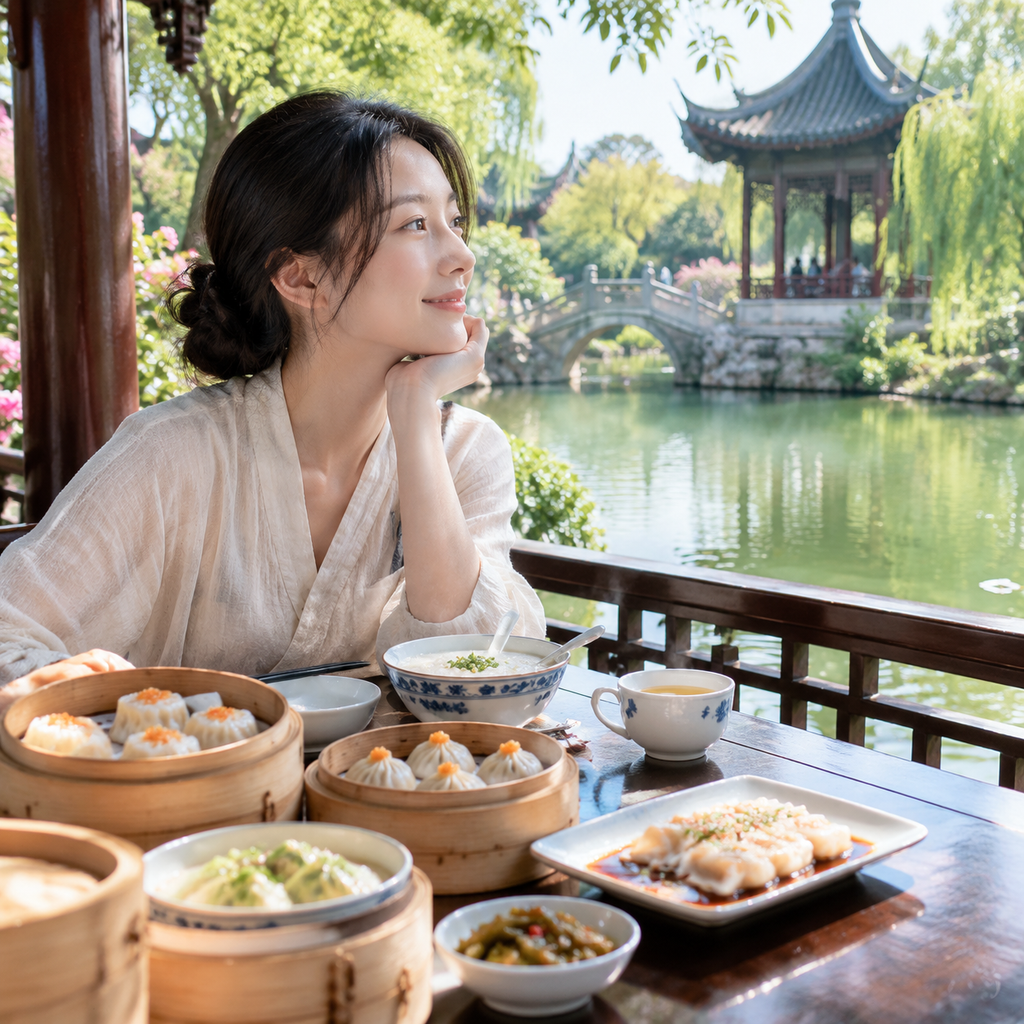
直到这时,他才打开园林的地图。园林看起来离店不远,绿色的步道和水面在屏幕��连成顺滑的一条线,可他已经发现,地图里的距离没有包含身体的变化。早茶有咸鲜、有蒸汽、有连续入口,也有坐下后胃部逐渐暖起来的感觉。若吃完立即快走,脚步可能比胃口更快,注意力也会在半路被饱胀拖住。于是他第一次把“餐后消化”写进路线,而不是把它当成旅行中不值得记录的空白。
Only then did he open the garden map. The garden looked close, its green paths and water forming a smooth line on the screen. But he had learned that the map did not include the body’s changing condition. Morning tea brought savory flavors, steam, repeated bites, and the warmth that settled in the stomach after sitting down. If he walked quickly right afterward, his feet might move faster than his digestion and his attention could be pulled down by heaviness. For the first time, he added post-meal digestion to the route, rather than treating it as an unrecordable blank.
离开前,他没有立刻钻进人流最密的方向,而是沿着较安静的街边慢慢走。早晨的湿气还贴在墙根,树叶上的水珠被风吹落,鞋底从店内平整地面换到略有颗粒感的石板。腹部的饱意没有消失,只是从突出的感觉变成了稳定的重量。这个步行不是为了赶到某个打卡点,甚至不需要连续拍照;它给身体留出把食物安置好的时间,也让刚才桌面上的细节在脑中重新排队。
Before leaving, he did not enter the densest stream of pedestrians. He walked slowly along a quieter edge of the street. Moisture still clung to the base of the walls, droplets fell from leaves when the breeze moved them, and the soles of his shoes changed from the smooth floor inside to textured stone. The fullness in his abdomen did not vanish; it became a steady weight rather than a sharp sensation. This walk was not a race to a photogenic point and did not require constant pictures. It gave his body time to settle the meal and let the tabletop details line up again in his mind.
扬州的园林步行很容易被误解为一串景物的接力:门、廊、窗、石、池水,一个接一个地收进相机。但早茶之后,访客开始把它当作身体与空间的配合。转过一处墙角时,他没有马上穿过月洞门,而是站到一侧让出窄路;看见水面反光时,他也没有为了构图退到别人脚边。胃部的节奏使他的动作慢下来,动作变慢后,他才看见园林里那些需要停一步才显出的层次。
Garden walking in Yangzhou can easily be mistaken for a relay of sights: gate, corridor, window, rock, pond, each collected by a camera. After morning tea, the visitor began to treat it as cooperation between body and space. At a corner he did not immediately pass through a moon gate; he stood aside to leave the narrow way clear. When light reflected on the water, he did not step backward into another person’s path for a composition. A slower stomach made his movements slower, and slower movements revealed layers that required one extra pause to see.
他在廊下坐了片刻,回想刚才那壶茶。茶并非一道独立的饮品,它把桌上的各个阶段串起来:干丝入口时需要清口,蒸点等待时需要陪伴,吃到后面需要一点温热把节奏放缓。不同茶叶的细节不必被夸大,也不必凭空给出专业结论;对这名访客而言,最真实的变化是他开始在杯子里看时间。水面从晃动归于平静,叶片沉下又浮起,人的呼吸也跟着缓下来。
Sitting beneath a corridor, he thought back to the teapot. Tea was not an isolated drink. It joined the meal’s stages: clearing the mouth after tofu shreds, accompanying the wait for steamed items, and slowing the later bites with warmth. There was no need to exaggerate varieties or invent expert judgments. For this visitor, the most honest change was that he began to see time in the cup. The surface settled, leaves sank and rose again, and his breathing slowed with them.
园林里的水面和早茶桌上的茶水,让他发现两种“流动”并不相同。桌面上的水被人续添,是服务、习惯���默契共同完成的流动;园林里的水则在视线中缓慢移动,受桥、岸、树影和风影响。一个让人参与,一个让人观看。两者都不适合被压成一句“很有意境”。当访客把这两个场景放在同一天里,他更清楚地意识到,扬州的舒缓不是空泛的慢,而是许多细小动作有各自的时机。
The water on the garden pond and the tea on the breakfast table showed him two different kinds of flow. Tea was refilled through service, habit, and mutual understanding; garden water moved slowly in view, shaped by bridges, banks, tree shadows, and wind. One invited participation, the other observation. Neither needed to be reduced to the phrase “atmospheric.” Placing the two experiences in one morning made him see that Yangzhou’s ease was not an abstract slowness. It was a collection of small movements, each with its own timing.
他的路线因此被迫缩短,却没有变得贫乏。原本计划连续穿过几处园林和老街,他删掉了中间最远的一段,把时间分给一条有树荫的步行线。地图上的总里程少了,实际观察却增加了:他看见店铺门口清洗过的地面还没有干,看见园林入口处人们自动放低声音,也看见自己在一张长椅前停留时不再焦虑“是不是浪费时间”。快速早餐的假设被现场推翻,替代它的不是懒散,而是更准确的分配。
His route was forced to become shorter, but not poorer. He removed the farthest section from his original plan and gave that time to a tree-shaded walking line. The map showed fewer kilometers, while his actual observations increased: a freshly washed shopfront whose stones were still wet, voices lowered near a garden entrance, and his own ability to sit on a bench without worrying that he was wasting time. The assumption of a quick breakfast had been overturned. What replaced it was not laziness, but a more accurate allocation of attention.
他后来又回到点食本身,试着理解为什么几种看似朴素的食物能把早晨撑开。干丝的细,包子的软,蒸点的热,烧卖外皮与馅料之间的咬合,都要求不同的口腔动作。每一样并不靠浓重调味制造记忆,而是让质地保持可辨。访客曾把“吃饱”当作早餐唯一指标,直到这顿饭里连续出现不同触感,他才明白,点心的丰富不只在数量,也在一张桌子能否容纳几种速度。
He returned in thought to the food itself and wondered why such plain-looking items could open up an entire morning. The fineness of tofu shreds, the softness of a bun, the heat of steamed dishes, and the meeting of wrapper and filling in shaomai required different movements of the mouth. None needed heavy seasoning to become memorable; each kept its texture legible. He had treated fullness as breakfast’s only measure. After encountering so many textures in one meal, he understood that variety was not merely quantity. It was the ability of one table to hold several speeds.
桌边的纸巾也成为一个小小的时间标记。刚开始,访客抽纸很快,擦完手便把纸团塞到碟子边上;吃到后面,他开始先把纸巾折好,再把用过的部分收拢,避免碰到未动的食物。这个改变看起来与路线无关,却让桌面变得清楚,也减少了他起身时的慌乱。旅行中的秩序常常不是宏大的安排,而是这些不占地图空间的整理动作。一个人越能照顾桌面,越不容易被下一步催着走。
Even the napkin became a small marker of time. At first the visitor pulled one quickly, wiped his hands, and pushed the crumpled paper beside a dish. Later he folded it first and gathered the used part away from untouched food. The change seemed unrelated to the route, yet it clarified the table and reduced his rush when standing up. Order in travel is often made not by grand planning but by small acts that take up no space on a map. The better someone cared for the table, the less the next step could push him around.
他观察到,早茶桌上的人并不都以同一种方式停留。有人边吃边谈,话题随着茶水续添慢慢展开;有人安静夹食,偶尔把一只点心分给同伴;也有人吃完主要食物后继续坐着,只让杯中的茶从热变温。访客没有把其中一种方式奉为标准。他只是看见,早茶允许个人节奏共处,桌面不要求所有人同时开始、同时结束。这种容纳感解释了为什么一顿饭会自然延长,却不必显得拖沓。
He noticed that people did not remain at a morning-tea table in one uniform way. Some talked while eating, letting conversation widen as tea was refilled. Some quietly lifted food and occasionally divided a piece for a companion. Others finished the main dishes but remained, allowing the tea to move from hot to warm. The visitor did not turn one style into a rule. He saw that morning tea allowed individual rhythms to share a table: no one had to begin or finish at exactly the same moment. That capacity explained why the meal naturally lasted without feeling sluggish.
这也改变了他对“效率”的判断。若效率只是单位时间内完成更多地点,那么这顿早茶当然会被视为拖慢行程;若效率包括保持体力、减少折返、让注意力持续到下午,那么坐下来吃好、再缓步进入园林,反而可能更稳。访客在地图上删掉了一个地点,却避免了吃得太急后在半途寻找休息处。路线不是被美食打断,而是被一顿真实的饭重新校准。
This changed his definition of efficiency. If efficiency meant completing more locations per unit of time, morning tea would certainly seem to slow the day. If it included preserving energy, avoiding unnecessary backtracking, and keeping attention alive through the afternoon, then eating properly and walking gently into a garden could be steadier. The visitor removed one destination from the map but avoided searching for a resting place halfway through after rushing his meal. Food had not interrupted the route; a real meal had recalibrated it.
午前的光线从灰白变得明亮,园林墙面的颜色也开始显出细微差别。访客没有继续追赶地图上的蓝点,而是在一处靠水的边缘停下来,把手机放在膝上。他想到刚才点单时的犹豫:害怕点多,害怕点少,害怕不知道别人怎样吃。真正帮他作决定的不是一条固定清单,而是观察桌面、听见续茶、感受胃口,再根据身体回应下一步。这个顺序可以带走,却不能被压缩���一个快捷按钮。
Before noon, the light shifted from gray-white to bright, and subtle colors emerged on the garden walls. The visitor stopped chasing the blue points on his map and sat near the water, phone resting on his knee. He remembered hesitating over the order: fearing too much, too little, and not knowing how others ate. What helped him decide was not a fixed list but watching the table, hearing tea being refilled, feeling his appetite, and letting his body answer the next step. That sequence could be carried forward, but it could not be compressed into a shortcut button.
如果把扬州早茶只写成食物名称,许多关键内容会从文章里消失。消失的是入口前等待的几分钟,是茶水把几轮点食连接起来的方式,是空笼屉如何为新碟子让位,是一个人怎样从急着离桌变成愿意把杯子留在手边。食物名称提供入口,桌面行为提供语法,园林步行则把这套语法延伸到街巷和水岸。访客是在身体走出店门之后,才真正读懂这一点。
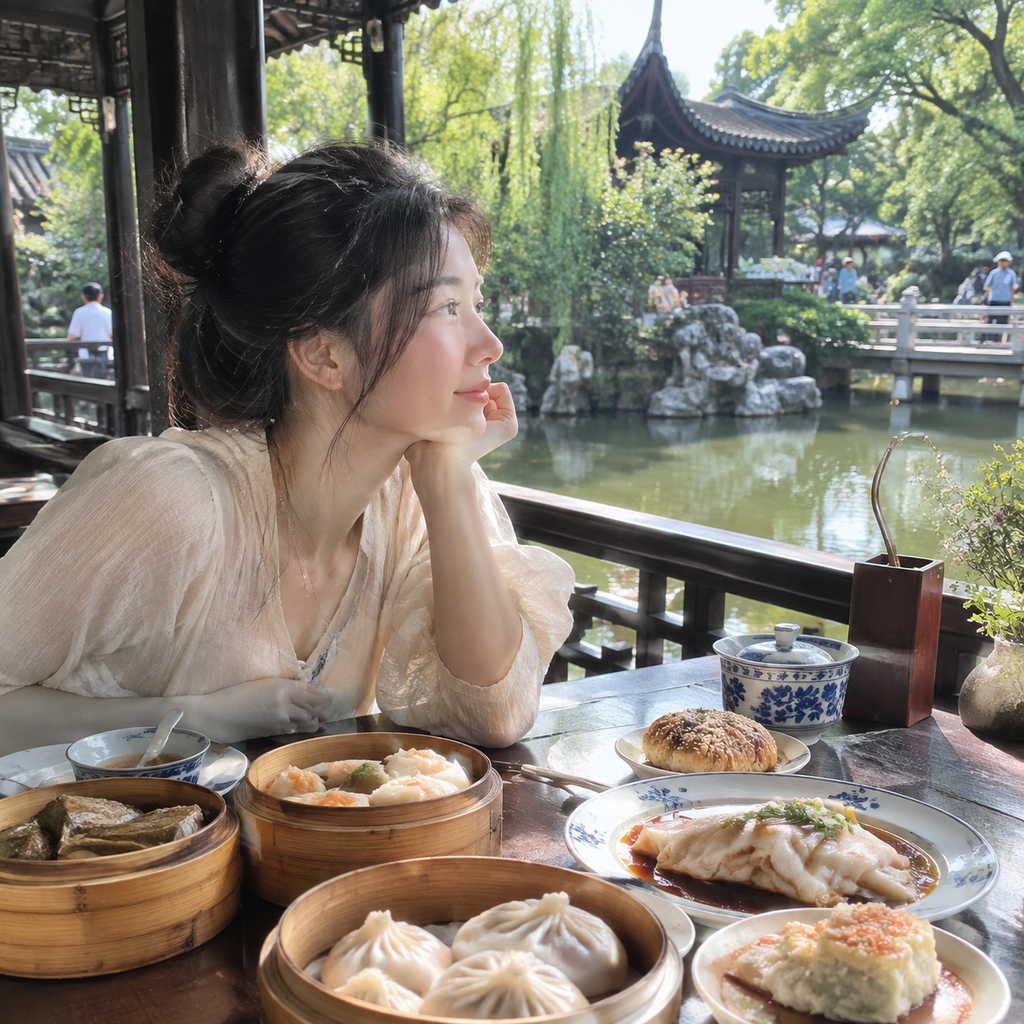
If Yangzhou morning tea is written only as a list of dishes, much of its meaning disappears. Gone are the minutes of waiting before a bite, the way tea joins several rounds of food, the empty steamer making room for a new plate, and the movement by which a person stops rushing from the table and leaves the cup within reach. Dish names provide an entrance; tabletop behavior provides grammar; garden walking extends that grammar into lanes and waterside paths. The visitor truly understood this only after his body had walked out of the shop.
他没有把这次调整夸成一次彻底改变人生的顿悟。下午仍然有可能赶路,手机仍然会提示下一处位置,胃口也不总能准确预测。变化只是很具体:下次遇到当地人用时间慢慢完成的早餐,他不会先问“最快多久能结束”,而会先看食物需要怎样被对待,茶是否还在续,饭后是否有一段舒服的步行空间。旅行计划仍然存在,只是不再把每一分钟都写死。
He did not turn this adjustment into a life-changing revelation. There would still be afternoons when he needed to move quickly; the phone would still announce the next location; appetite would not always be predictable. The change was concrete. The next time he met a local breakfast meant to unfold slowly, he would not first ask how soon it could end. He would watch how the food needed to be handled, whether tea was still being refilled, and whether there was room for a comfortable walk afterward. The plan would remain, but not every minute would be sealed shut.
在园林回廊里,他偶尔还会听见杯盖碰到茶杯的声音,那声音与早茶店里的清响并不完全相同,却让两个空间接上了。早晨的桌面把人从匆忙里拉回,午前的水岸又把吃过的味道慢慢放远。消化并非一个需要被忽略的生理过程,它影响脚步的长度、停留的位置和看景的耐心。对于这名访客而言,路线调整的核心不是少去哪里,而是承认身体也有一张地图。
In the garden corridor, he occasionally heard a lid touch a teacup. It was not exactly the sound from the morning-tea shop, but it connected the two spaces. The breakfast table pulled him out of haste, while the waterside before noon gradually carried the flavors away. Digestion was not a bodily process to ignore; it shaped the length of his steps, where he stopped, and how patiently he looked. For this visitor, the heart of changing the route was not simply where he went less. It was admitting that the body had a map too.
他再次查看时间时,已经错过了最初计划中的一个节点。奇怪的是,他并没有像早晨那样焦急。少掉的地点变成了少一次穿城折返,慢下来的脚步换来一处安静的水面,饭后留下的空档让下午的安排不再从饱胀和疲倦开始。早茶没有给他一套可以复制到所有城市的公式,却让他知道,遇到一座城市独有的生活节拍时���最好的路线往往要从菜单之外重新画起。
When he checked the time again, he had already missed one of the points in his original plan. Oddly, he was no longer anxious as he had been in the morning. The missing destination meant one fewer cross-city detour; slower steps brought him to a quiet patch of water; and the space left after the meal kept the afternoon from beginning with heaviness and fatigue. Morning tea did not give him a formula to copy in every city. It taught him that when a city has its own daily rhythm, the best route may need to be redrawn beyond the menu.
他把手机地图上的那条紧绷蓝线删掉了一小截,换成几个不带时间压力的标记:一张可以慢慢坐的桌子,一段饭后适合散步的路,一处看完水面仍能继续呼吸的廊下。标记并不代表必须抵达,反而提醒他不要把抵达当成唯一价值。早茶结束得比计划晚,园林开始得比计划慢,可这一天因此有了更连贯的身体感。扬州给他的不是一张“必点菜单”,而是一次关于留白如何工作的现场课程。
He deleted a short section of the tight blue line on his phone and replaced it with markers that carried no time pressure: a table where one could sit without hurry, a path suited to walking after a meal, and a corridor where the water could be watched while breathing remained easy. The markers did not mean he had to reach them; they reminded him that arrival was not the only value. Morning tea ended later than planned and the garden began more slowly, yet the day gained a more continuous physical feeling. Yangzhou had not given him a must-order menu. It had shown him, in person, how empty space works.
他后来又回到点食本身,试着把一桌东西看成几个不同的时间单位。刚揭盖的蒸点属于现在,酥皮点心属于需要小心收拾的几分钟,面条则像一段不能被电话打断的热气。若同时把所有东西都当作必须立刻入口,桌面会变得拥挤,味道也会彼此遮住。旅行者因此不再追求每样都拍到、每样都尝到,而是让不同食物按照自己的温度和质地出现。
Later he returned in thought to the dishes themselves and tried to see the table as several different units of time. A freshly opened steamer belonged to the present; flaky pastry required a few careful minutes; noodles were a stretch of heat that should not be interrupted by a phone call. If everything had to be eaten immediately, the table became crowded and flavors covered one another. He therefore stopped trying to photograph and taste everything, allowing each food to appear according to its own temperature and texture.
小笼包的吃法尤其让他记住“等待并非空白”。夹起之后,包子在筷尖上轻轻晃动,里面的汤汁提醒他不能把速度当成本领。他把它放在勺中,先咬开一处小口,让热气和汤水找到出口,再低头慢慢处理。旁边的人已经吃完一只,动作并没有催促他;同一张桌子可以容纳不同的熟练程度,也容纳一个外地人第一次面对这种食物时的谨慎。
The way to eat the small steamed bun made him remember that waiting is not an absence. Held between chopsticks, the bun trembled slightly, and the broth inside warned him that speed was not a skill. He set it in a spoon, opened a small hole, let heat and liquid escape, and dealt with it slowly. Someone beside him had already finished one, but the movement did not pressure him. The same table could hold different levels of familiarity, including the caution of an outsider meeting the food for the first time.
烧麦和包子摆在一起时,他发现外形相近并不代表体验相同。烧麦的开口让里面的馅料暴露在蒸汽里,包子的面皮则把汤汁和热度藏得更深;筷子用力稍有不同,夹取的稳定性就会变化。这个差异让他想到园林里的门洞和漏窗:都在墙上开出空处,却引导视线和身体走向不同的位置。食物与空间之间没有简单的比喻关系,但观察细节的习惯确实从桌边延伸到了墙边。
When shaomai and buns sat side by side, he saw that similar shapes did not promise similar experiences. The opening of the shaomai exposed its filling to steam, while the bun hid its broth and heat more deeply; even a small change in pressure altered how securely it could be lifted. He thought of doorways and framed windows in the garden. Both opened space in a wall, yet sent eyes and bodies toward different places. Food and architecture were not a simple metaphor, but his habit of noticing detail had traveled from table to wall.
茶水续添的间隔也给了他重新安排胃口的机会。第一杯茶让他清醒,第二次添水后,味道没有那么锐利,他开始注意咸点之外的甜香;再往后,杯中温度适合小口饮用,他便不再急着加菜。茶壶并没有替他决定吃多少,却不断提供一个重新判断的节点。每一次把杯子推向桌边,都像在告诉自己:先暂停,看看刚才的选择是否已经足够。
The intervals between refills gave him chances to reset his appetite. The first cup woke him; after the second addition of water, the flavor was less sharp and he noticed sweetness beyond the savory dishes. Later, when the cup had become comfortable for small sips, he no longer felt the need to add food. The teapot did not decide how much he should eat, but it offered repeated points for reconsideration. Each time he moved the cup toward the table’s edge, he was saying: pause and see whether the previous choice is enough.
桌面上的纸巾、空碟和蒸笼也在不断变化。空碟被叠到一旁,新的小碟补进中央,筷架的位置随着端盘路线略微移动。旅行者一开始只看食物,后来开始看这些收拾动作,因为它们决定了下一盘能不能顺利落桌,也决定了几个人伸手时是否会碰在一起。所谓桌面节奏,不是抽象的气氛,而是物件被不断挪动后仍保持可用的秩序。
Napkins, empty dishes, and steamers kept changing positions. Empty plates were moved aside, new ones came into the center, and the chopstick rest shifted slightly as serving routes changed. At first the traveler watched only the food. Later he watched the clearing movements, because they determined whether the next dish could land smoothly and whether several hands would collide. Table rhythm was not an abstract mood. It was a usable order maintained while objects kept moving.
他没有因为自己吃得慢而产生局促感,反而开始注意到本地食客也会临时改变次序。有人先喝几口茶再夹面点,有人将一块酥皮掰开与旁人分食,有人吃完咸味后停下来等一会儿再碰甜食。不同动作并列在同一张桌上,却没有人需要把自己的选择说成标准。旅行者原来想寻找正确吃法,最后明白早茶更像一场允许修正的共同进餐。
He did not feel awkward about eating slowly. Instead, he noticed that local diners also changed their sequence on the spot. Someone drank tea before taking a pastry; someone broke a flaky piece to share; someone waited after savory food before touching something sweet. Different actions coexisted at one table without anyone presenting a personal choice as the standard. He had begun by looking for the correct way to eat and ended by seeing morning tea as a shared meal that allowed revision.
离桌前,他特意没有把所有空碟立刻推到最外沿,而是确认同桌的人是否还要夹最后一块。这个动作来自他早晨对邻桌的观察,如今已经变成自己的判断。食物剩下多少固然重要,怎样让别人不必伸手越过自己的杯子同样重要。旅行者意识到,早茶的礼貌并不靠夸张的客套表现,而是靠对距离、温度、剩余和他人节奏的持续留意。
Before leaving, he did not immediately push every empty dish to the outer edge. He first checked whether anyone at the table still wanted the last piece. The gesture came from observing the neighboring table and had now become his own judgment. The amount of food left mattered, but so did keeping others from reaching across his cup. He realized that the courtesy of morning tea was not performed through elaborate phrases. It came from sustained attention to distance, temperature, leftovers, and other people’s pace.
从茶馆到园林的短路程并没有立即消除饱足感。旅行者走过几处转角后,仍能感觉到胃里沉着热食,于是主动把步幅收小。他没有把这种感觉当作不适的失败,而是把它当作路线信息:这段路可以走,下一段长距离就暂时不必安排。身体的反馈不像导航那样给出精确分钟数,却能告诉他什么时候应该停在树荫下,什么时候适合继续。
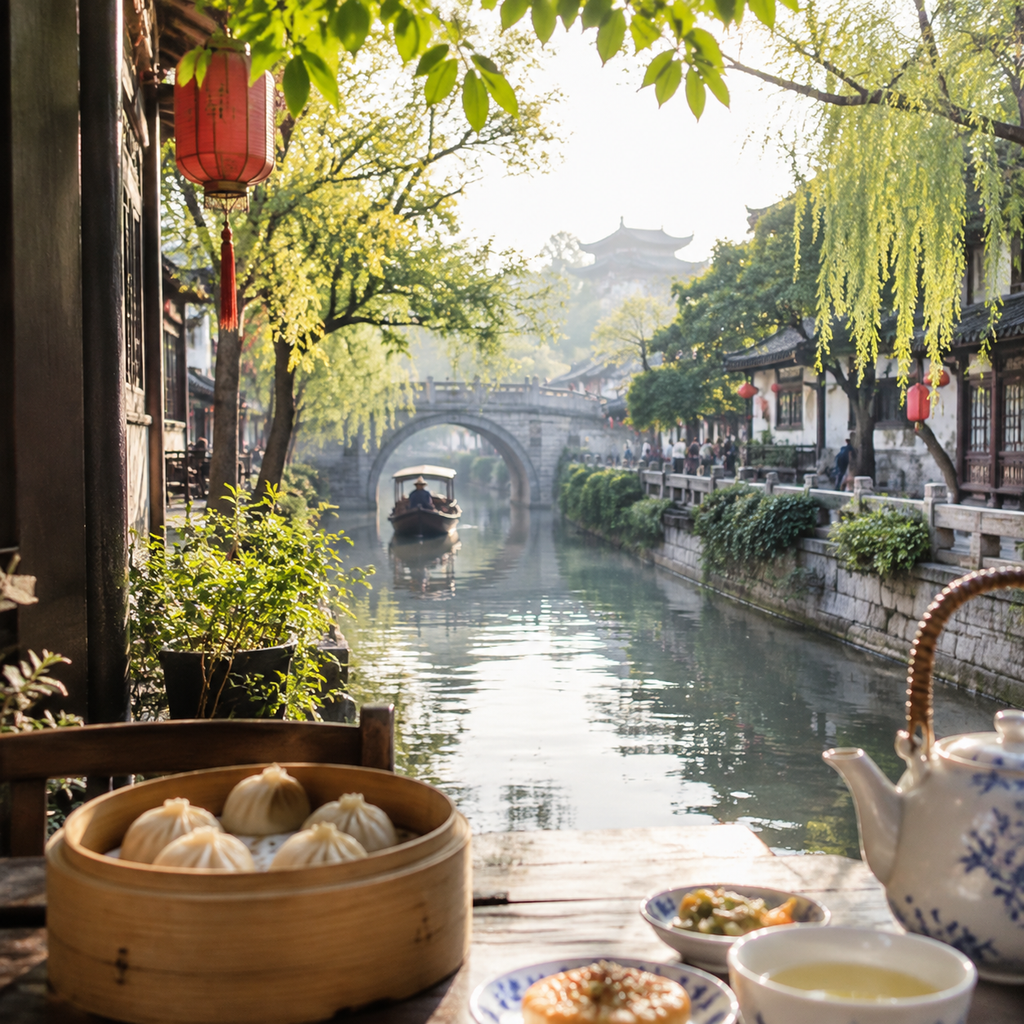
The short walk from the teahouse to the garden did not erase fullness at once. After several turns, the traveler could still feel the weight of hot food, so he shortened his stride on purpose. He did not call the sensation a failure. He treated it as route information: this section was manageable, while the next long stretch could wait. The body did not provide an exact number of minutes like navigation, but it could tell him when to stop in shade and when to continue.
园林里的石阶让这种判断更加清楚。下阶时,他不再边走边看手机,而是先看阶面是否潮湿,再把脚放稳;上到回廊后,他才取出手机确认下一处位置。早茶之前,他可能会把这看成效率损失,早茶之后却觉得这是消化和安全共同提出的要求。行走不是餐后必须完成的惩罚,而是让吃进身体的东西逐渐找到安稳位置的过程。
The garden steps made this judgment clearer. Going down, he stopped looking at his phone while walking and checked whether the stone surface was damp before placing each foot. Only after reaching the corridor did he take out the phone to confirm the next location. Before morning tea, he might have called this a loss of efficiency. Afterward, he understood it as a request from both digestion and safety. Walking was not a punishment required after eating; it was a way for the meal to settle into the body.
他在一处临水座位坐了较长时间,才发现早茶的味道已经从舌面退到记忆里。先前的甜软、咸鲜和茶的微涩不再争着出现,取而代之的是一种更清楚的满足。这个变化也让他理解“餐后消化”为什么值得放进路线设计:它不是把吃饭和游览截然分开的等待区,而是两种体验在身体里交接的阶段。没有这段交接,园林只能成为饭后背景。
He sat by the water for a longer while and noticed that the flavors of morning tea had moved from his tongue into memory. The soft sweetness, savory notes, and slight astringency no longer competed; they had become a clearer sense of satisfaction. He understood why digestion belonged in route design. It was not a waiting area separating food from sightseeing, but a handover between two experiences inside the body. Without that handover, the garden would remain only a post-meal backdrop.
他也重新估量了“早茶吃饱”与“早茶吃舒服”的差别。前者可以用分量描述,后者还要看速度、搭配、温度和饭后安排。若点食过多,后面的步行会被迫缩短;若只顾赶路,茶水和点心的层次又很难被察觉。旅行者没有把这两种选择变成对错题,而是根据当天的体力和天气调整。早晨阴凉,他可以多停一会儿;若阳光变强,就把路线改成树荫更多的方向。
He also recalculated the difference between being full after morning tea and feeling comfortable after morning tea. The first could be described by quantity; the second depended on speed, combination, temperature, and what came afterward. Too many dishes shortened the walk that followed; too much rushing erased the layers of tea and food. He did not turn these choices into a right-or-wrong test. He adjusted them to the day’s energy and weather. In cool shade he could linger; when sunlight strengthened, he chose a route with more cover.
同行者后来问他为什么放弃第二座园林,他没有回答“因为时间不够”。那句话只描述结果,没有说清楚现场发生了什么。他说,第一顿早茶比预想中花了更长时间,身体需要一段平缓的路,第一座园林已经提供了足够多的观察,继续穿行只会把两处都看得仓促。这个解释听上去不像攻略上的最优解,却更贴近那天真正发生的取舍。
When his companion later asked why he had given up the second garden, he did not answer, “Because there was not enough time.” That described the result but not the cause. He explained that the first morning tea had taken longer than expected, his body needed a gentle stretch of walking, and the first garden had already offered enough to observe. Continuing would make both places hurried. The explanation sounded less like an itinerary optimization and more like the actual tradeoff of the day.
下午重新规划时,他给下一顿饭和下一段路之间留出了比以往更宽的空隙。这个空隙不是为了追求一种固定的慢生活,而是为了让不可预见的细节有地方进入:一杯茶可能需要多次续添,一盘点心可能适合分食,一处水面可能让人停留,胃口也可能比预想更早发出结束信号。路线若没有余量,任何一个细节都只能被当成干扰;有了余量,它们才可能成为旅程的一部分。
When he planned the afternoon again, he left a wider gap between the next meal and the next stretch of walking. The gap was not an attempt to perform a fixed slow life. It made room for details that could not be predicted: tea might need several refills, a dish might be best shared, a patch of water might invite a pause, and appetite might signal an ending earlier than expected. Without margin, every detail looks like interference. With margin, details can become part of the trip.
他把这次改变记在备忘录里,却没有写成一串口号,只留下几句与当天有关的提醒:热食不要一口接一口,茶淡了再判断是否续添,吃饱后先走短线,园林不要用数量衡量。每一句都来自一个具体动作,而不是事先设计好的生活原则。旅行者知道,下一座城市可能有完全不同的早餐节奏,但这几条提醒仍能帮助他先观察,而不是先把现场塞进旧习惯。
He recorded the change in his notes, but not as a list of slogans. He wrote reminders tied to that morning: do not eat hot food mouthful after mouthful, judge another refill when the tea becomes light, take a short walk after feeling full, and do not measure a garden by the number of places seen. Each line came from a concrete action, not a predesigned philosophy of life. Another city might have a different breakfast rhythm, but these reminders could still help him observe before forcing the scene into old habits.
他走出园林时,早晨那种急着证明效率的心情已经消失。手机里的未完成标记仍然存在,下一处景点并没有因此失去价值,只是它不再支配当天的每一步。旅行者终于接受,早茶不是一件在景点之外快速处理的事情;它会把自己的温度、重量、声音和等待带进后面的路线。路线因此变慢,却没有失去方向。
When he left the garden, the morning urge to prove efficiency had disappeared. Unfinished markers still remained on his phone, and the next attraction had not lost its value. It simply no longer governed every step of the day. The traveler accepted that morning tea was not something to dispatch outside the sightseeing plan. Its temperature, weight, sounds, and waiting entered the route that followed. The route became slower without losing direction.
傍晚之前,他仍然记得那壶茶的最后一次续添。杯中的颜色已经淡了,茶叶沉在底部,服务人员添水后没有停下来解释什么,只让热气重新升起。访客这一次没有马上端杯,也没有打开导航。他等水温合适,抿了一口,再把杯子放回原位。那个动作很轻,却说明早晨的匆忙已经被重新安排:不是拒绝行走,也不是拒绝计划,而是先让一顿饭完整地成为一天的一部分。
Before evening, he still remembered the last refill from that teapot. The tea had grown pale and the leaves rested at the bottom. After water was added, the staff member did not stop to explain anything; steam simply rose again. This time the visitor did not lift the cup immediately or open navigation. He waited for the temperature, took a sip, and placed the cup back. The gesture was small, but it showed that the morning rush had been rearranged. He had not rejected walking or planning. He had first allowed a meal to become a complete part of the day.
夜色尚未落下时,园林外的街道又响起自行车铃声。那名访客沿着墙根走回更开阔的路口,脚步仍旧不快,却已经不再需要用慢走证明什么。早茶的点食、茶水的续添、桌面上不断发生的让位,以及饭后胃部逐渐松开的过程,共同把他的路线从一条直线变成了有停顿的曲线。曲线不一定更短,却让每一处停留都能被真正消化。
Before darkness settled, bicycle bells sounded again beyond the garden. The visitor walked along the wall toward a wider junction. His steps were still unhurried, but he no longer needed slow walking to prove a point. The dishes, the refilled tea, the small acts of making room on the table, and the gradual easing in his stomach had turned his route from a straight line into a curve with pauses. A curve was not necessarily shorter. It allowed each stop to be properly digested.
后来有人问起扬州早茶,他没有先报出一串点心名称,也没有把它概括成“悠闲体验”。他描述的是一张桌子怎样在食物到来后重新排布,一杯茶怎样让人不必立刻离开,一段园林步道怎样接住餐后的身体。他还会补充那个最初的误判:把早茶当快速早餐,于是把路线排得太满;真正的调整不是多看了什么,而是接受早饭会改变接下来的走法。这个故事的重点不在于慢本身,而在于终于听见现场提出的节拍。
When people later asked about Yangzhou morning tea, he did not begin with a list of dishes or summarize it as a “leisurely experience.” He described how a table rearranged itself as food arrived, how a cup of tea made immediate departure unnecessary, and how a garden path received the body after eating. He also mentioned his original misjudgment: treating morning tea as a quick breakfast and packing the route too tightly. The real adjustment was not seeing more, but accepting that breakfast would change the way the rest of the day had to be walked. The point was not slowness itself, but finally hearing the rhythm the place was offering.
这份节拍没有写在菜单上,也不会因为拍下一张漂亮照片就自动留下。它藏在筷子落下的间隙,藏在茶壶被转向通道的角度,藏在蒸点从烫口变得温和的几分钟里,也藏在餐后没有急着跨大步的脚底。对扬州来说,早茶从来不只是早晨吃了什么;它还在教人如何坐、如何等、如何让胃口和脚步互相商量。访客最终带走的,是一条被删去一段、却更适合身体的路线。
That rhythm is not printed on the menu, and a beautiful photograph cannot preserve it automatically. It hides in the interval after chopsticks are lowered, in the angle at which a teapot is turned toward the passage, in the minutes when a steamer cools from painfully hot to gentle, and in feet that do not rush into long strides after eating. For Yangzhou, morning tea has never been only about what is eaten in the morning. It also teaches how to sit, wait, and let appetite negotiate with footsteps. What the visitor finally carried away was a route shortened by one section, yet better suited to the body.
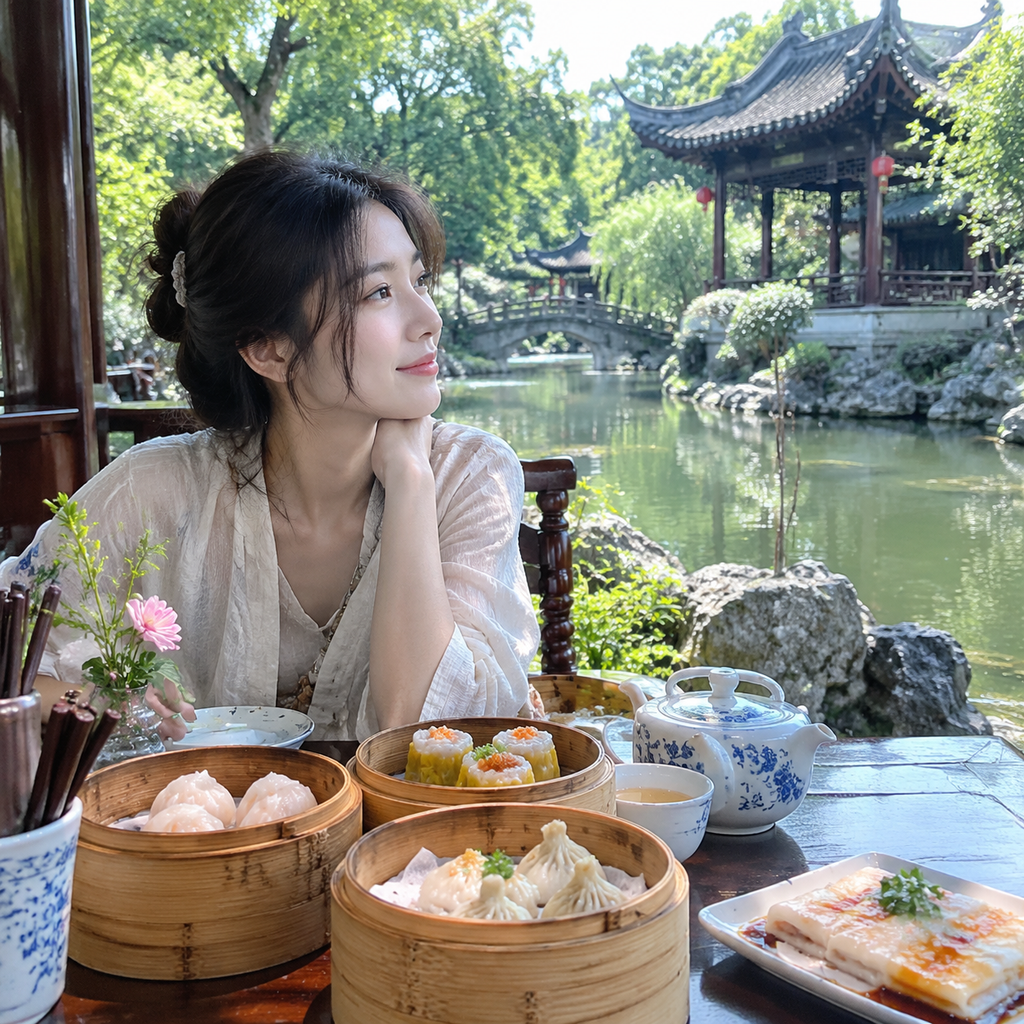
他还重新想起那张最初看起来过于简单的桌子。桌面没有摆满昂贵或稀奇的东西,反而因为碟子大小、笼屉高低和茶壶位置不同,形成了清楚的层次。干丝适合放在容易够到的地方,蒸点需要避开手臂频繁经过的边缘,茶壶则不能挡住同桌人交换食物的路径。一个初来者若只看菜名,可能看不出这种安排;坐得足够久,便会发现每件器物都在参与分配注意力。
He thought again about the table that had first seemed almost too ordinary. It held no expensive or exotic display. Its clarity came from differences in dish size, steamer height, and teapot position. The tofu shreds belonged within easy reach, steamed food needed to stay away from the edge where arms passed often, and the teapot could not block the route by which diners shared dishes. A newcomer looking only at dish names might miss this arrangement. Sitting long enough revealed that every object helped distribute attention.
点心的温度也让他放弃了“全部同时完成”的想法。某些食物适合趁热,某些食物则需要拆开、吹散或放一会儿;如果把所有东西都当成同一种早餐主食,必然会在冷热之间手忙脚乱。访客开始按照温度而不是按照菜单顺序进食,先处理容易降温的,再回到可以慢慢咀嚼的部分。这个顺序没有固定答案,却让每一口都不必与另一口争夺时间。
The temperature of the dishes made him abandon the idea that everything should be completed at once. Some items were best while hot; others needed to be opened, cooled, or left alone for a moment. Treating them all as the same breakfast staple created confusion between heat and haste. He began eating according to temperature rather than menu order, handling the food that cooled quickly and returning to the pieces suited to slower chewing. There was no fixed answer, but each bite no longer had to compete with another for time.
一位同桌客人把吃剩的半只包子向中间挪了挪,先问旁边的人是否还要。访客没有听清全部话,却看明白了手势:食物不是个人边界里不可移动的物件,桌面可以通过询问重新分配。他也学着把自己还没有动过的一块点心放在碟子中间,而不是紧紧护在面前。这个动作没有制造亲密关系,却减少了桌面上的封闭感,也让共享早茶不再只是各吃各的。
A diner beside him moved half a bun toward the center and asked whether anyone else wanted it. The visitor did not catch every word, but he understood the gesture: food was not a fixed object trapped inside one person’s boundary. The table could redistribute it through a question. He copied the habit, placing an untouched piece in the middle of his dish instead of guarding it close to himself. The gesture did not create instant intimacy, but it opened the table and made shared morning tea more than several people eating separately.
这份观察也提醒他,不能把扬州早茶的节奏理解成所有人都必须放慢。有人吃完后很快离开,有人只坐一会儿,有人则把茶当作上午谈话的陪伴。真正稳定的部分不是时长,而是人能根据桌面情况调整自己的动作。访客最终没有照搬邻桌任何人的速度,他只是学会在移动前先看一眼:碟子是否需要收拢,茶壶是否要让开,身边的人是否还在夹取食物。
This observation also kept him from treating Yangzhou morning tea as a command for everyone to slow down. Some diners left soon after eating, some stayed briefly, and others used tea as company for a morning conversation. The stable element was not duration but the ability to adjust movement to the table. The visitor did not copy anyone’s exact pace. He learned to look once before moving: did the plates need gathering, did the teapot need shifting, was someone still reaching for food?
走出店门后,他发现自己对园林入口的判断也变了。以前他会把入口当成路线上的一个坐标,拍照、验票或确认方向之后立即向里走;这一次,他先站在门边看了一会儿人流。有人从里面出来,脚步自然变慢;有人在门槛附近整理衣物和随身物品;几个人把说话声压低,仿佛空间本身要求转换状态。访客没有急着加入最前面的队伍,而是在侧边等出一段空隙,让饭后的身体和园林的安静接上。
After leaving the shop, he judged the garden entrance differently. Before, he would have treated it as a coordinate: take a photograph, confirm the direction, and walk in immediately. This time he watched the flow for a while. People coming out naturally slowed; some adjusted clothing and belongings near the threshold; several lowered their voices as though the space asked them to change state. The visitor did not force himself into the first opening. He waited at the side for a gap, allowing his post-meal body to meet the garden’s quiet.
园林里的曲折路线恰好延续了早茶桌的逻辑。直线并不是唯一有效的走法,绕过一块石头、避开一群停在窗前的人、沿着廊柱之间的阴影移动,都会让身体重新找到合适的速度。访客起初担心绕路会减少观看数量,后来发现弯曲的行走让景物之间出现了间隔。前一个窗口的光还没有从眼睛里退去,下一处水面便已经在另一侧展开,视觉也需要像胃一样慢慢消化。
The garden’s winding paths continued the logic of the breakfast table. A straight line was not the only efficient way to move. Going around a rock, avoiding a group paused at a window, or following the shade between corridor columns helped the body find a suitable pace. At first the visitor feared that detours would reduce the number of sights. He later found that curved walking created intervals between views. The light from one window had time to leave his eyes before another patch of water opened, and vision, like digestion, needed room to process.
他在一处临水的栏杆旁没有久站,只把肩膀靠近栏杆,等腹部的沉重感继续下降。栏杆被日光晒得微温,水面偶尔有风吹出的细纹,远处传来鞋底踩过石路的声音。这里没有任何必须解释的景观,身体状态本身已经成为判断的一部分。若这时强行赶去更远的地点,路线或许仍能完成,但下午的耐心会被消耗;若接受这一小段停留,接下来的观看反而更完整。
By a waterside railing, he did not remain for long. He rested his shoulder against it and waited as the heaviness in his abdomen eased. The rail was warm from the sun, fine ripples crossed the water in the breeze, and footsteps sounded on the stone path in the distance. Nothing here demanded an explanation; his physical state itself had become part of the judgment. Forcing himself toward a farther destination might still complete the route, but it would spend the afternoon’s patience. Accepting a short pause made the next stretch of looking more complete.
他也意识到,餐后消化不是为了把人变得迟钝,反而是在保护观察的准确性。吃得太急时,口腔里还留着热度,胃部在提醒负担,人的眼睛很难真正停在窗棂、花影或水纹上。等身体从“吃饭”切换到“行走”,景物才不再只是经过视野的背景。访客没有把这种体感写成专业建议,而是把它记成当天最可靠的路线依据:饭后先走平缓、留阴影、能随时停下的方向。
He realized that digestion did not make a person dull; it protected the accuracy of observation. After eating too quickly, heat remained in the mouth and the stomach signaled its burden, making it hard for the eyes to settle on latticework, flower shadows, or ripples. Once the body shifted from eating to walking, sights stopped being background passing through vision. The visitor did not turn this sensation into expert advice. He kept it as the day’s most reliable route clue: after breakfast, choose a gentle, shaded direction where stopping remains easy.
这条依据还让他重新看待“必吃”。有些食物可以下次再尝,有些组合若一次点齐,反而会让餐后步行失去空间。没有人替他列出绝对正确的清单,桌面上的真实份量和自己的饥饿程度已经给出答案。对早茶来说,少点并不等于错过,多留一点时间也不等于安排失败;重要的是让点食和之后的移动互相照应,而不是让菜单独自决定一天。
This clue also changed how he viewed the idea of must-eat dishes. Some items could wait for another visit; ordering every possible combination at once could leave no room for a walk afterward. No one gave him an absolute list. The actual portions on the table and his own hunger offered the answer. In morning tea, ordering less did not mean missing out, and leaving more time did not mean the plan had failed. The point was to let the dishes and the movement afterward support each other instead of allowing the menu to dictate the whole day.
下午开始时,他把路线重新分成几个松开的区间:先从茶楼附近走到园林,再在水边停留,最后才决定是否继续去更远的街巷。每个区间之间没有写死分钟数,只留下“身体舒服即可继续”的余地。这种写法看起来不像精密计划,却减少了临时折返和反复查看手机的次数。早茶教他的不是如何逃离时间,而是如何把时间从压力单位改回生活尺度。
When afternoon began, he divided the route into loose sections: walk from the tea shop toward a garden, pause near the water, and decide only then whether to continue toward farther lanes. No exact minute was assigned to the spaces between them; there was simply room to continue when the body felt ready. The plan looked less precise, yet it reduced backtracking and repeated phone checks. Morning tea had not taught him to escape time. It taught him to return time from a pressure unit to a human scale.
临近离开扬州时,他在纸上写下的并不是店铺清单,而是几项可观察的动作:先看桌面,再决定点多少;点心上来后判断温度;杯子留在容易被看见的位置;吃完不立刻冲向最远的景点;经过园林窄处先给别人让路;脚步变沉时选择水边或树荫。它们没有任何传奇色彩,却能在下一次进入陌生城市的早餐空间时派上用场。经验不是一句漂亮的结论,而是手和脚记住的顺序。
Near the end of his stay in Yangzhou, he wrote down not a shop list but several observable actions: look at the table before deciding how much to order; judge the temperature when food arrives; leave the cup where it can be seen; do not rush toward the farthest sight after eating; yield at narrow garden passages; choose water or shade when the feet grow heavy. None of this was dramatic, but it could help the next time he entered a breakfast space in an unfamiliar city. Experience was not a polished conclusion. It was an order remembered by hands and feet.
最后一杯茶没有被喝得很快。访客把杯子捧在手中,等热气不再直冲鼻尖,才低头看见淡色茶水映出一小片窗光。窗外有人推着自行车经过,轮胎碾过湿地,声音短而清楚。早晨那条过分紧凑的路线已经无法恢复原样,也没有必要恢复。它被一顿饭、一段消化和几次不在计划里的停步改成了更有呼吸的走法;而这,正是扬州早茶留给他的最具体的余味。
He did not drink the final cup of tea quickly. Holding it in both hands, he waited until the steam no longer rose sharply toward his face, then looked down and saw a small patch of window light reflected in the pale tea. Outside, someone pushed a bicycle past; the tires crossed damp ground with a brief, clear sound. The overly tight morning route could not return to its original shape, and it did not need to. A meal, a period of digestion, and several unplanned pauses had turned it into a way of walking with more breath. That was the most concrete aftertaste Yangzhou morning tea left with him.
- 两周中国行,我帮你把行程想清楚了 | A 2-Week China Itinerary That Actually Makes Sense
- 中国高铁旅行攻略:如何用高铁串联你的中国行 | China by High-Speed Rail: How to Link Your Entire Trip on the Bullet Train
- 大盘鸡:一盘端上来,整桌人都不说话了 | Dapanji: When This Plate Arrives, the Whole Table Goes Silent
- 中国书法用品 | Chinese Calligraphy Supplies
- 苏州运河边的一碗早面 | A Morning Bowl Beside a Suzhou Canal
- 皮蛋:一颗被误解的中国蛋 | Century Egg: China's Most Misunderstood Delicacy
- 我在上海小学门口等放学时,第一次真正听懂“你吃了吗”为什么不是在问饭 | Waiting Outside a Shanghai Primary School, I Finally Understood Why “Have You Eaten?” Is Not Really About Food
- 坡子街地面刚发亮的时候,我决定不再拿长沙和时间赛跑 | When Pozi Street Began to Shine After Rain, I Stopped Racing Changsha
- 作者在中国一路张口学会的10句中文 | 10 Chinese Phrases the Writer Learned to Actually Use While Traveling in China
- 支付失败怎么办:来华游客应急指南 | Payment Failed? A Visitor's Emergency Guide
Comments (0)