
呼和浩特被雨洗亮以后,连烧麦店门口的白雾都值得慢慢看 | After Rain Brightened Hohhot, Even the Steam Outside a Shaomai Shop Was Worth Slowing For
雨后的呼和浩特,我把赶路改成了慢走 | After Rain in Hohhot, I Changed Rushing into Slow Walking
雨后的呼和浩特像被一只温和的手重新擦亮。清晨的云还没有完全散去,灰蓝色的天幕低低垂在楼群、树梢和远处缓慢起伏的街道上。路面仍然潮湿,细小的水洼收着天空的颜色,也收着行人的脚步声。一个人慢慢走在这座城市里,会发现很多平时被速度忽略的细节:公交站牌边残留的雨滴,早点铺蒸屉里升起的白雾,电动车轮胎压过浅水时留下的弧线,还有路边杨树叶片上轻轻颤动的光。雨并没有让城市沉默,反而让它的声音变得柔软。汽车经过时不再只是发动机的轰鸣,而像在湿润的纸面上拖出一条低声的线;人们说话的声音也被空气包住,短短几句问候,听起来带着一点暖意。
After the rain, Hohhot feels as if a gentle hand has polished it again. The morning clouds have not fully broken apart, and a gray-blue sky hangs low over buildings, treetops, and the slowly rising streets in the distance. The pavement remains damp; small puddles hold the color of the sky and the sound of passing footsteps. Walking slowly through the city alone, one begins to notice details that speed usually erases: raindrops left on the bus-stop sign, white steam rising from breakfast baskets, the curve made by an electric bike tire through shallow water, and the soft trembling light on poplar leaves by the roadside. Rain has not silenced the city. Instead, it has softened its voice. A passing car is no longer merely the roar of an engine, but a low line drawn across wet paper; even people’s conversations seem wrapped by the air, and a few short greetings carry a quiet warmth.
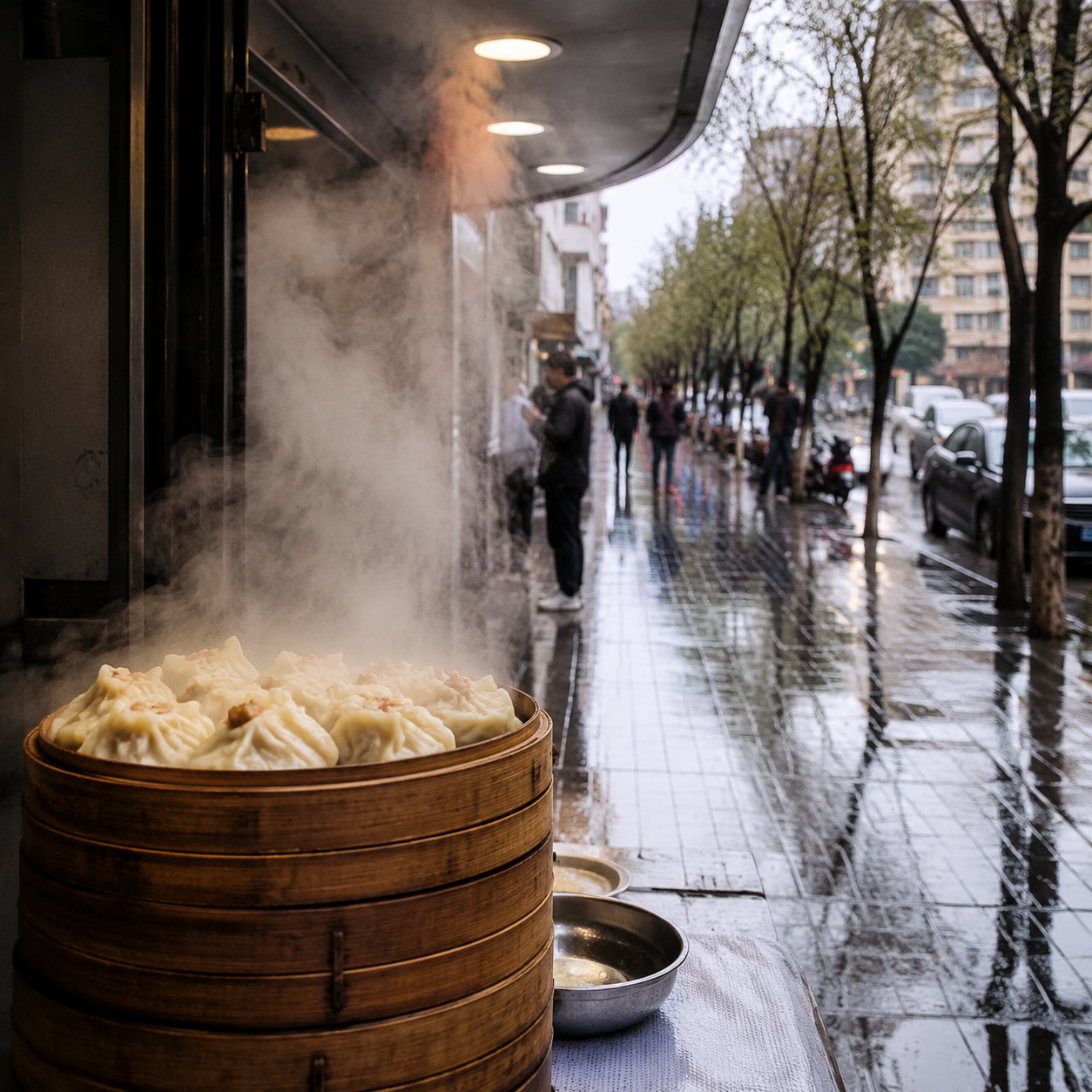
我从一条不太宽的街开始走。街边的店铺陆续开门,卷帘门被拉起时发出清脆的响声,在湿润的早晨里显得格外清楚。卖烧麦的小店最先热闹起来,门口站着等候的人,手里拿着手机或纸袋,目光却常常落在蒸汽升起的地方。呼和浩特的雨后有一种朴素的香气,像面粉、热茶、泥土、青草和远处草原的风混在一起。它不是浓烈的气味,而是慢慢靠近时才会出现。走得越慢,越能分辨出每一种层次:刚烤好的饼有焦香,奶茶有咸香,潮湿的树皮有清苦的味道,路边新翻开的泥土则带着一种深处的凉意。
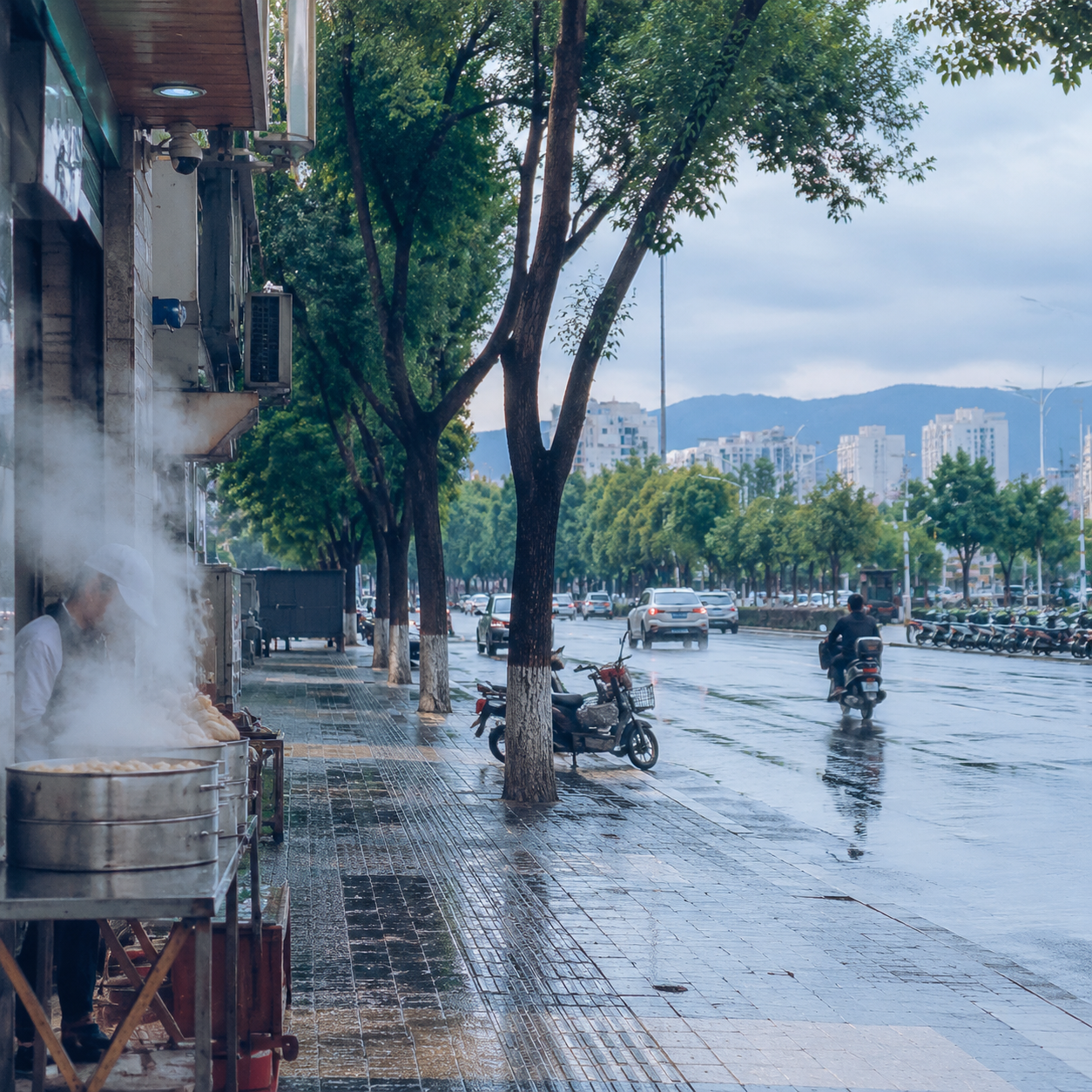
I begin on a street that is not very wide. Shops along the road open one after another, and the rolling shutters make a crisp sound as they are lifted, unusually clear in the wet morning. The shaomai shop becomes lively first. People wait at the entrance with phones or paper bags in their hands, yet their eyes often drift toward the rising steam. After rain, Hohhot has a plain and honest fragrance, like flour, hot tea, soil, grass, and wind from the distant grassland mixed together. It is not a strong scent; it appears only when one approaches slowly. The slower I walk, the more clearly each layer separates itself: freshly baked bread has a toasted aroma, milk tea has a salty richness, damp bark carries a faint bitterness, and the newly turned soil beside the road holds a coolness from deeper below.
慢走的好处,是脚步不急着抵达某个目的地。雨后的城市也不急。红绿灯在路口耐心地变换,行人撑着半干的伞,或把伞收起来夹在臂弯里。有人把裤脚微微卷起,避开积水;有人干脆踩过去,鞋底带起一点水声。年轻的母亲牵着孩子,孩子总是被水洼吸引,想要停下来看看里面倒映的楼房是不是另一座城市。老人从小区门口走出,手里拎着菜篮,步子稳稳的,似乎已经熟悉雨后每一块砖的脾气。每一个人都在生活里前行,但雨让他们的速度降下来,让城市显出更接近本来的模样。
The advantage of slow walking is that the feet are not rushing toward a destination. The city after rain is not in a hurry either. Traffic lights change patiently at intersections. Pedestrians carry half-dry umbrellas or fold them under their arms. Some roll up their trouser legs slightly to avoid puddles; others step through them, bringing up a small splash of sound under their soles. A young mother holds her child’s hand, and the child is always drawn to puddles, wanting to stop and see whether the buildings reflected inside belong to another city. An elderly person walks out of a residential gate with a vegetable basket, steady in pace, as if already familiar with the temper of every brick after rain. Everyone is moving through life, but the rain slows them down and allows the city to reveal a shape closer to itself.
沿着道路往前,远处的青城公园被水汽包着。树木比平时更绿,绿得像刚刚从记忆里洗出来。公园门口有人练太极,动作缓慢而圆,像在潮湿空气里推开一层看不见的水。旁边的长椅上坐着两个老人,他们没有急着说话,只是看着树叶上的水滴一颗一颗落下。雨后的安静不是空的,它里面有很多细小的活动:鸟在枝头抖动羽毛,清洁工用扫帚把落叶聚到一起,自行车铃声从小径那头传来,又很快被树木吸收。这样的时刻让人觉得,城市并不只是道路、楼房和车辆,它也有呼吸,有肌理,有被雨水提醒出来的耐心。
Farther along the road, Qingcheng Park in the distance is wrapped in vapor. The trees are greener than usual, as if freshly washed out of memory. At the park gate, people practice tai chi, their movements slow and circular, like pushing aside an invisible layer of water in the moist air. On a nearby bench, two elderly people sit without hurrying to speak, simply watching drops fall one by one from the leaves. The quiet after rain is not empty. It is filled with tiny activities: birds shaking their feathers on branches, a sanitation worker sweeping fallen leaves into a pile, a bicycle bell arriving from the end of a path and being quickly absorbed by the trees. In such moments, the city feels like more than roads, buildings, and vehicles. It has breath, texture, and a patience brought back to the surface by rain.
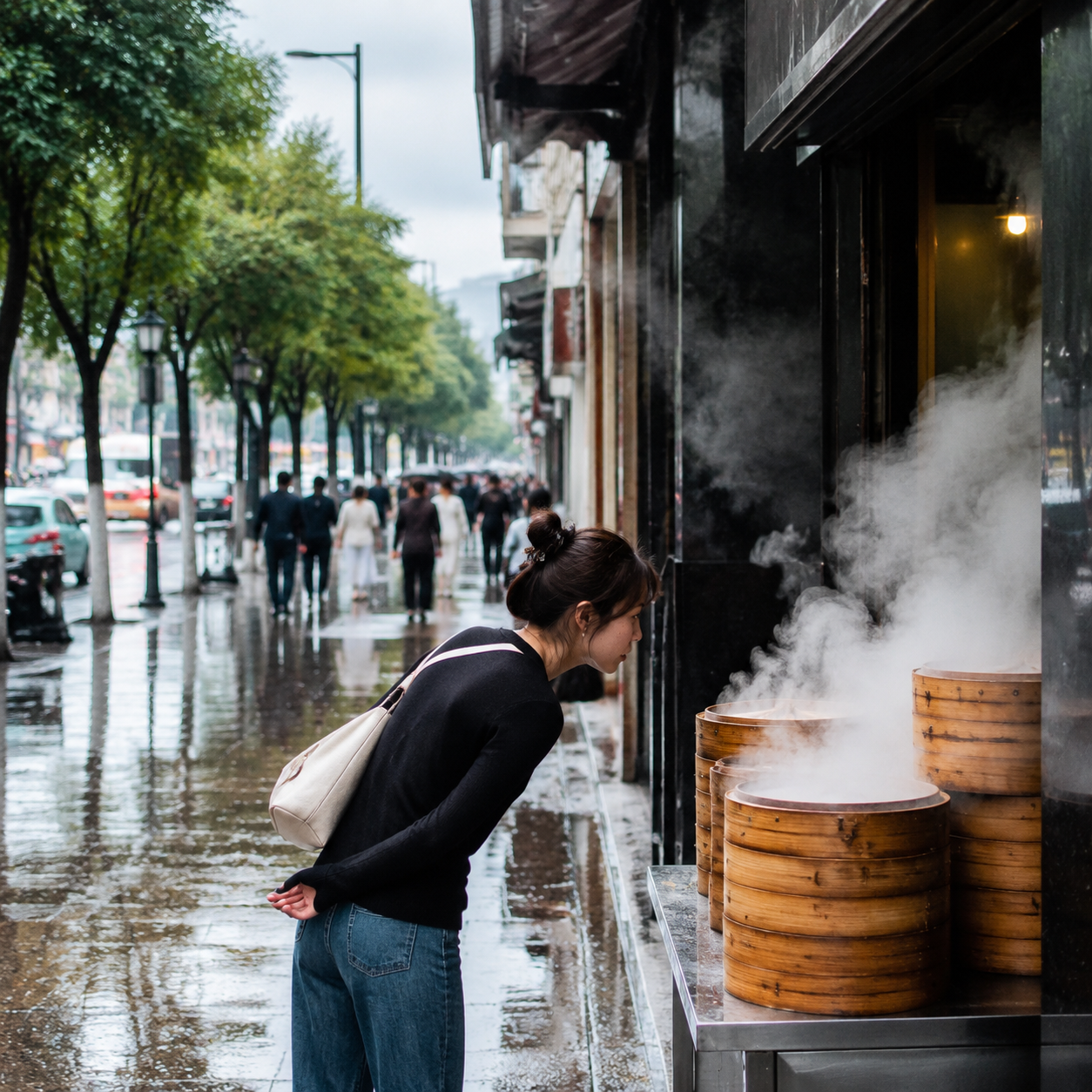
我继续慢慢走,经过一排低矮的商铺。玻璃窗上还挂着雨痕,里面的人影有些模糊。理发店的灯亮着,店主正把门口的脚垫拿出来抖。小超市门前摆着新到的水果,苹果、梨和葡萄的表皮都带着水光,像刚从更远的清晨里运来。一个卖花的小摊把花束往外挪,玫瑰和百合的颜色在阴天里并不刺眼,反而显得沉稳。雨后看花,会觉得花不是为了热闹而开,而是为了提醒人们还有细腻的事物值得靠近。即使只是路过,也能从那一点颜色里得到短暂的安慰。
I keep walking slowly and pass a row of low shops. Rain marks still hang on the glass windows, making the figures inside slightly blurred. The light in a barbershop is on, and the owner is shaking out the doormat at the entrance. In front of a small supermarket, newly arrived fruit has been set out; apples, pears, and grapes all shine with water, as if delivered from a farther morning. A flower vendor moves bouquets outward, and the colors of roses and lilies are not harsh under the cloudy sky but calm and steady. Looking at flowers after rain, one feels that they do not bloom for excitement, but to remind people that delicate things are still worth approaching. Even a passerby can receive brief comfort from that little patch of color.
呼和浩特的街道常常让人想到辽阔。哪怕站在市区里,被楼房和车流包围,仍会在某个路口忽然感到空间打开。也许是风从北边吹来,也许是云层向远处退去,也许是街道尽头露出一片更宽的天。雨后的这种辽阔更明显。空气被洗净,远处的轮廓不再那么含混,城市边缘像轻轻向外伸展。慢走的人会在这种伸展里获得一种平衡:一边是眼前具体的生活,早餐、公交、店铺、伞、泥水;另一边是更大的背景,草原、天空、季节和风。两者并不冲突,而是在同一个步伐里相互照应。
The streets of Hohhot often suggest vastness. Even in the urban center, surrounded by buildings and traffic, one may suddenly feel space opening at an intersection. Perhaps wind comes from the north, perhaps the clouds retreat into the distance, or perhaps a wider piece of sky appears at the end of the road. After rain, this sense of openness becomes clearer. The air is washed clean, distant outlines are less vague, and the city’s edges seem to stretch gently outward. A slow walker finds balance in this stretching: on one side is the concrete life nearby—breakfast, buses, shops, umbrellas, muddy water; on the other side is the larger background—grassland, sky, seasons, and wind. They do not conflict. They answer each other within the same pace.
在一座天桥上停下时,我看见车流从桥下经过。雨水让车顶和挡风玻璃反着淡淡的光,像一条缓慢流动的河。人行道上,几个学生背着书包走过,鞋尖不时碰到水珠。上班的人低头看时间,但步子也比晴天慢一点。天桥栏杆上凝着细小的水珠,手指轻轻碰过去,会沾上一点凉。远处的建筑没有锋利的边界,被雨后的空气柔化。站在高处看城市,会发现它并不是一种固定的结构,而是一种不断流动的关系:人在其中移动,车在其中穿行,云影在玻璃上改变,雨水从屋檐滴落到地面,又被新的脚步带走。
Stopping on a pedestrian bridge, I watch traffic passing below. Rainwater makes car roofs and windshields reflect a pale light, like a slowly flowing river. On the sidewalk, several students walk by with backpacks, their shoes occasionally touching drops of water. Office workers look down at the time, but their steps are a little slower than on sunny days. Tiny beads of water cling to the bridge railing, and a finger brushed across it gathers a bit of coolness. Distant buildings have no sharp edges, softened by the air after rain. From above, the city no longer appears as a fixed structure, but as a constantly moving relationship: people moving within it, cars passing through it, cloud shadows changing on glass, rainwater dripping from eaves to the ground and then being carried away by new footsteps.
午前的光渐渐明亮,云层出现了缝隙。街边的水洼开始变浅,但还没有完全消失。雨后的慢走也进入另一个阶段:最初是清凉和安静,随后是气味和颜色,最后是生活重新加快之前那一段短暂的停顿。许多人已经把伞收起,店铺里的声音变大,路口的等待时间似乎也缩短了。城市很快会回到平常的节奏,但走过这一段的人知道,它曾经以另一种方式存在过。雨让每一面墙、每一片叶、每一块路砖都暂时拥有了更清晰的表情,而慢走让这些表情有机会被看见。
Before noon, the light gradually brightens and gaps appear in the clouds. Puddles by the street begin to shrink, though they have not completely vanished. The slow walk after rain enters another stage: first coolness and quiet, then scents and colors, and finally the brief pause before life speeds up again. Many people have folded their umbrellas, the sounds inside shops grow louder, and waiting at intersections seems shorter. The city will soon return to its usual rhythm, but anyone who has walked through this period knows it once existed in another way. Rain temporarily gives every wall, every leaf, and every paving stone a clearer expression, and slow walking gives those expressions a chance to be seen.
我想,所谓雨后慢走,并不只是天气和速度的组合。它更像一种观看城市的方法。平时我们从一个地点赶到另一个地点,城市只是背景;雨后慢下来,背景便向前走来,成为可以交谈的对象。呼和浩特在这样的时刻显出它温厚的一面:不张扬,不急切,带着北方城市的宽阔,也带着日常生活的细密。它允许风穿过街道,允许云停在楼顶,允许人们在一碗热奶茶和一段湿润的路之间重新找到自己的节奏。走着走着,心也像路面一样被雨洗过,虽然仍有尘土会再次落下,但至少此刻是清亮的。
I think a slow walk after rain is not merely a combination of weather and pace. It is more like a way of seeing a city. Usually we hurry from one place to another, and the city becomes background; after rain, when we slow down, the background steps forward and becomes something we can speak with. In such moments, Hohhot reveals its generous side: unshowy, unhurried, carrying the breadth of a northern city and the fineness of daily life. It allows wind to pass through streets, clouds to rest above rooftops, and people to recover their own rhythm between a bowl of hot milk tea and a damp stretch of road. As I walk, my heart seems washed like the pavement. Dust will settle again, of course, but for this moment it is clear.
到了中午,太阳终于从云后露出一点。它没有一下子照亮整座城市,只是在楼角、车窗和树叶边缘点出几处亮色。雨水被慢慢蒸发,空气里出现一种轻微的暖。街边有人把潮湿的纸箱搬到阳光能照到的地方,孩子们放学经过,笑声把刚才的安静推远。我的脚步仍然不快,因为雨后的呼和浩特还没有完全从清晨里出来。它像一首还留着余音的歌,最后几个音节落在水面上,轻轻荡开。回头看走过的路,那些水洼、树影、蒸汽和人声已经连成一条看不见的线,提醒我慢下来并不是耽误时间,而是把时间重新交还给感官。
By noon, the sun finally shows a little from behind the clouds. It does not brighten the whole city at once, but places a few highlights on building corners, car windows, and the edges of leaves. Rainwater slowly evaporates, and a slight warmth enters the air. Someone by the street moves damp cardboard boxes into a patch of sunlight; children pass after school, their laughter pushing the earlier quiet farther away. My steps remain unhurried, because Hohhot after rain has not completely left the morning. It is like a song whose resonance still lingers, the final notes falling onto water and spreading gently. Looking back at the road I have walked, the puddles, tree shadows, steam, and human voices have become an invisible line, reminding me that slowing down is not a waste of time, but a way of returning time to the senses.
傍晚再想起这段路,会发现记忆留下的不是某一个明确的景点,而是一连串湿润的片段。它们没有宏大的情节,却有足够长的回味:一位店主弯腰擦门槛,一个孩子盯着水洼发呆,一只麻雀从广告牌上飞起,一辆公交车停靠时溅起细小的水珠。城市的美有时不在远方,也不在高处,而在这些被雨水放慢的普通瞬间里。呼和浩特的雨后慢走,让人相信生活并不总是需要被追赶。很多时候,只要愿意放慢脚步,一条熟悉的街也会重新展开,像一本刚被雨水翻开的书,页页都有新的光。
When I think of this walk again in the evening, what remains in memory is not a single clear landmark, but a series of damp fragments. They have no grand plot, yet they leave a long aftertaste: a shopkeeper bending to wipe the threshold, a child staring into a puddle, a sparrow lifting from a signboard, a bus stopping and splashing tiny drops. The beauty of a city is sometimes not far away or high above, but within ordinary moments slowed by rain. A slow walk through Hohhot after rain makes one believe that life does not always need to be chased. Often, if one is willing to slow down, a familiar street will unfold again, like a book just opened by rain, every page holding a new light.
- 中国十大旅游路线 | Top 10 Travel Routes in China
- 五月在宁波老外滩遇到雨,我一个人看着江面发亮,忽然觉得赶路也值得被原谅 | Rain at Ningbo's Old Bund in May Made Me Feel Even a Hurried Life Deserved Forgiveness
- 国庆出行避坑指南 | National Day Travel Tips: Avoiding the Crowds
- 东北三省冬季8日游 | 8-Day Northeast China Winter Tour
- 我在中国学会外卖自取礼貌,不是学会说哪句话,而是先别挡住别人的流程 | Learning Takeout Pickup Etiquette in China Was Not About Memorizing a Phrase, but About Not Blocking Other People’s Flow First
- 在吐鲁番的热度里寻找阴影和葡萄 | Seeking Shade and Grapes in Turpan's Heat
- 二十四节气:中国人骨子里的时间密码 | The 24 Solar Terms: China's Ancient Calendar Hidden in Plain Sight
- 桂林码头清晨的雾,教我别把山水只当背景 | Morning Mist at a Guilin Pier Taught Me Not to Treat Landscape as Background
- 小区门口那段广场舞音乐,让我第一次不再把它只当成噪音 | The Square Dance Music at My Compound Gate Was the First Time I Stopped Hearing It as Just Noise
- 暑期汛期去旅行:那场山里暴雨教我的安全课 | A Mountain Rainstorm Taught Me the Real Safety Lesson of Summer Travel in China
Comments (0)