
暑期汛期去旅行:那场山里暴雨教我的安全课 | A Mountain Rainstorm Taught Me the Real Safety Lesson of Summer Travel in China
暑期汛期去旅行:那场山里暴雨教我的安全课 | A Mountain Rainstorm Taught Me the Real Safety Lesson of Summer Travel in China
“你听见了吗?”阿岚停在石阶上,手指着峡谷深处。我们原本正在往观景台走,山风把树叶吹得发亮,远处却传来一阵闷闷的声音,像有人在厚棉被后面推鼓。我说可能是雷,她摇头:“不是雷,声音在下面。”
“Did you hear that?” Alan stopped on the stone steps and pointed toward the depth of the gorge. We had been walking to the viewing platform. The mountain wind made the leaves shine, but from far away came a dull sound, as if someone were pushing a drum behind a thick quilt. I said it might be thunder. She shook her head. “Not thunder. It’s coming from below.”
那是七月的一个下午,我们同行四人到一处山里景区避暑。上午天气还好,售票口的电子屏滚动着“注意降雨、谨慎涉水”的提示,我们看见了,却没有真正放进心里。夏天的旅行常常让人产生一种错觉:只要照片里有绿树和溪水,危险就会显得很远。
It was a July afternoon, and four of us had gone to a mountain scenic area to escape the heat. The weather had been fine in the morning. At the ticket gate, an electronic screen kept scrolling a warning: pay attention to rain and avoid risky water crossings. We saw it, but we did not really absorb it. Summer travel often creates an illusion: as long as photos show green trees and clear streams, danger feels far away.
阿岚又问:“要不要先回去?”小周看了看手机:“预报说五点以后才有雨,现在才两点半。”我也下意识赞成继续走,毕竟观景台只剩一公里。只有老陈没说话,他蹲下看石阶边的排水沟,里面的水已经从细线变成了小股。
“Should we go back first?” Alan asked again. Zhou checked his phone. “The forecast says rain after five. It’s only two thirty.” I instinctively agreed to continue, because the viewing platform was only one kilometer away. Only Chen stayed silent. He crouched beside the drainage ditch along the steps; the water inside had already changed from a thin line into a small stream.
老陈说:“山里的雨,不一定从你头顶开始。”这句话让我们都安静了。城市里下雨,通常是先看见天黑、再听见雷声、最后撑伞。但山里不同,上游落雨、支沟涨水、路面湿滑,可能在你还没淋到雨时就已经发生。安全不是看自己头顶有没有雨,而是看整个山谷正在发生什么。
“In the mountains, rain doesn’t have to start above your head,” Chen said. That sentence made all of us quiet. In a city, rain usually arrives in a familiar order: the sky darkens, thunder comes, then umbrellas open. Mountains are different. Rain upstream, rising side streams, and slippery paths may already be happening before a drop touches you. Safety is not about whether rain is above your head; it is about what the whole valley is doing.
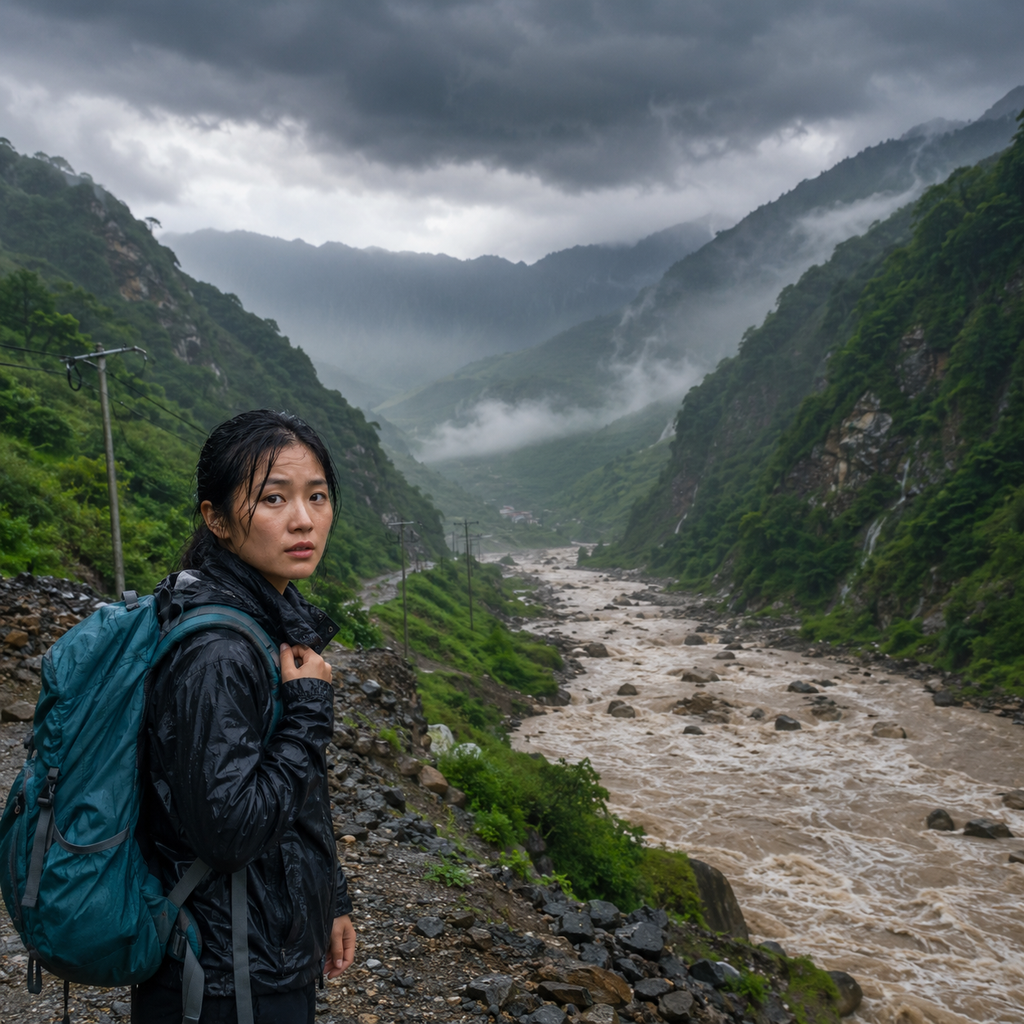
我们决定先往回走。刚转身,景区广播响了,声音被山壁反复弹开:“受局地强降雨影响,部分临水步道临时关闭,请游客尽快离开低洼区域。”小周收起手机,低声说:“预报没错,是我理解错了。它说的是城市天气,不是这条沟里的水。”
We decided to turn back. Just as we did, the scenic area broadcast started, its voice bouncing between the cliffs: “Due to localized heavy rainfall, some waterside trails are temporarily closed. Visitors should leave low-lying areas as soon as possible.” Zhou put away his phone and said quietly, “The forecast wasn’t wrong. I understood it wrong. It described the city weather, not the water in this ravine.”
下行时,雨真正落了下来。先是几滴砸在栏杆上,很大,很散;不到五分钟,整条步道像被水帘罩住。前面一对游客还想停下拍视频,阿岚提醒他们:“别站在转弯口,后面有人下来。”他们愣了一下,才把手机收起。
As we descended, the rain truly arrived. At first, a few large, scattered drops hit the railing. Within five minutes, the entire path seemed covered by a curtain of water. A couple ahead still wanted to stop and film. Alan reminded them, “Don’t stand at the bend. People are coming down behind you.” They paused, then put their phone away.
那一刻我第一次意识到,暴雨里最危险的不一定是宏大的画面,而是很多小动作叠在一起:停在狭窄处拍照,穿着拖鞋跑台阶,低头刷消息,嫌麻烦不穿雨衣,觉得“再走两步就到了”。每一个选择单独看都不严重,可它们会把退路一点点变窄。
At that moment I realized for the first time that the most dangerous things in a rainstorm are not always dramatic scenes. They are small actions piled together: stopping in a narrow place for photos, running down steps in slippers, looking down at messages, refusing to put on a raincoat because it is troublesome, thinking “just a little farther.” Each choice may not look serious alone, but together they narrow the way out.
“靠山体这边走,别贴水边。”老陈走在最后,不断提醒我们。雨水顺着台阶往下冲,落叶被卷成一团,鞋底开始打滑。我们把队形改成两两相隔几米,不催、不跑、不互相开玩笑。人在紧张时很容易用玩笑掩饰害怕,但那天我们都知道,安静反而更有用。
“Walk closer to the mountain side, not the water side,” Chen said from the back, reminding us again and again. Rainwater rushed down the steps, fallen leaves rolled into clumps, and our soles began to slip. We changed our formation, keeping several meters between each pair, without rushing, running, or joking. People often cover fear with jokes when nervous, but that day we all understood that silence was more useful.
到了一个岔路口,左边通向亲水平台,右边通向游客中心。小周看见左边有棚子,问:“去那边躲一下?”工作人员正从雨里跑来,挥手喊:“不要往水边去,游客中心方向!”他的语气很急,却没有责备。我们立刻向右走,后来才知道,亲水平台十几分钟后就被临时封闭了。
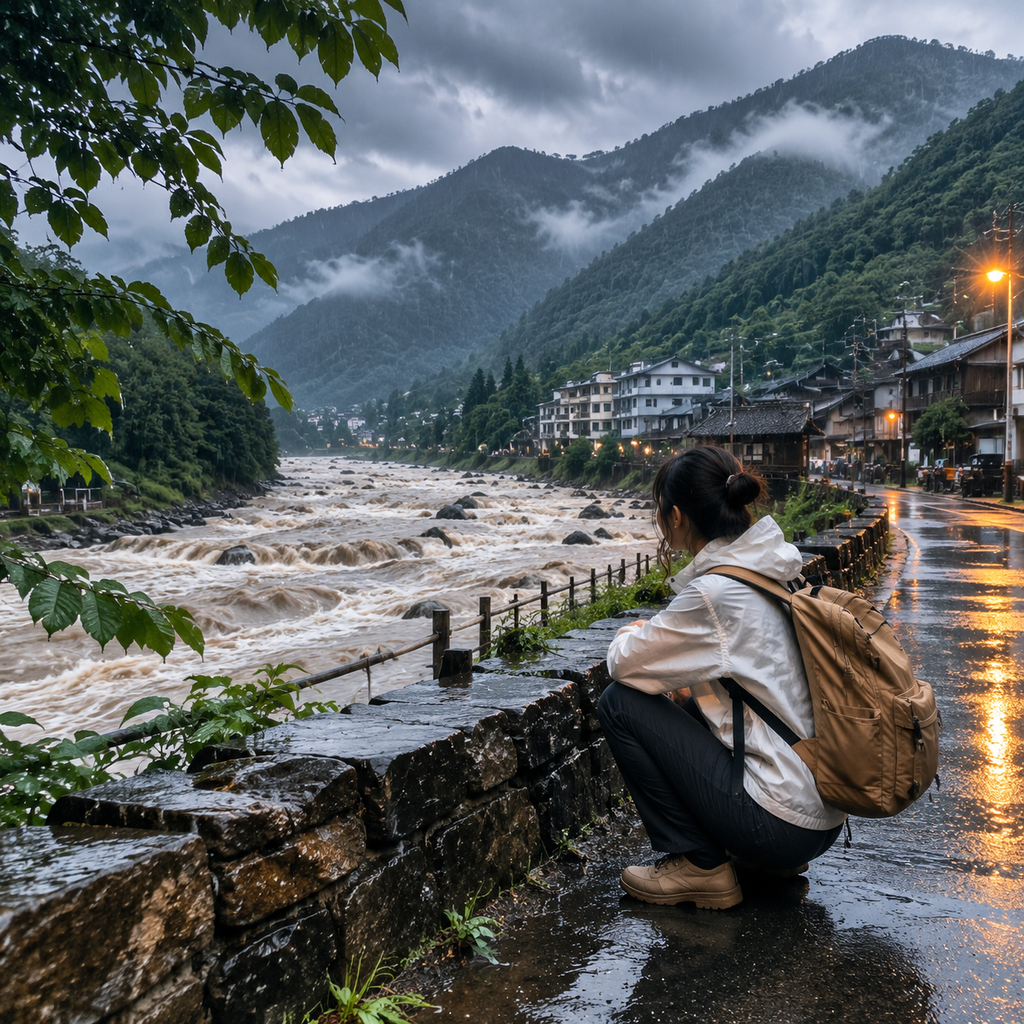
At a fork, the left path led to a waterside platform and the right path to the visitor center. Zhou saw a shelter on the left and asked, “Should we hide there?” A staff member ran through the rain, waving and shouting, “Do not go toward the water. Visitor center direction!” His tone was urgent, but not blaming. We immediately went right. Later we learned that the waterside platform was temporarily closed about ten minutes after that.
在游客中心门口,雨声大到像整座山都在倒水。阿岚拧着袖口说:“如果刚才继续往上走,现在就卡在半路了。”我没有接话,因为脑子里正在回放售票口那行提示。不是没人提醒我们,是我们把提醒当成背景;不是没有信息,是我们只挑了自己愿意相信的部分。
At the entrance of the visitor center, the rain was so loud it felt as if the whole mountain were pouring water down. Alan twisted water from her sleeve and said, “If we had kept going up, we would be stuck halfway now.” I did not answer, because the warning at the ticket gate was replaying in my mind. It was not that nobody had reminded us; we had treated the reminder as background. It was not that there was no information; we had selected only the part we wanted to believe.
游客中心里挤满了人。有人问班车什么时候恢复,有人抱怨鞋湿了,有人给家里报平安。工作人员一遍遍解释:等雨势减弱,确认道路和沟道安全后再安排疏散。小周小声说:“我以前总觉得安全提示是给不懂旅行的人看的。”老陈回答:“安全提示不是看你会不会旅行,是看天气愿不愿意配合你。”
The visitor center was crowded. Some people asked when shuttle buses would resume, some complained about wet shoes, and some called home to say they were safe. Staff explained again and again: evacuation would be arranged after the rain weakened and the roads and gullies were confirmed safe. Zhou said softly, “I used to think safety warnings were for people who didn’t know how to travel.” Chen replied, “Safety warnings are not about whether you know how to travel. They are about whether the weather agrees to cooperate.”
我们在那里等了一个多小时。手机信号时有时无,景区广播比社交媒体更可靠;热水和干纸巾比滤镜更受欢迎;一双防滑鞋比任何穿搭都重要。那场等待没有戏剧性,却把旅行优先级重新排了一遍:先活得稳,再玩得好。
We waited there for more than an hour. Phone signal came and went, and the scenic area broadcast was more reliable than social media. Hot water and dry tissues were more welcome than filters. A pair of non-slip shoes mattered more than any outfit. That waiting period was not dramatic, but it rearranged the priorities of travel: be safe first, enjoy later.
雨小后,工作人员组织我们分批下山。出口附近,一条原本清浅的小溪变成了浑浊急流,水面上漂着树枝和塑料瓶。阿岚看了一眼,说:“上午我还想在那儿拍照。”她的声音很轻。我们都明白,这不是后怕给记忆加戏,而是同一个地点在两个小时里变成了完全不同的地方。
After the rain weakened, staff organized us to leave the mountain in groups. Near the exit, a stream that had been shallow and clear in the morning had turned into a muddy rush, carrying branches and plastic bottles. Alan looked at it and said, “This morning I wanted to take photos there.” Her voice was very quiet. We all understood that this was not memory becoming dramatic after the fact; the same place had become completely different within two hours.
回到酒店后,我们没有立刻洗澡睡觉,而是把当天的判断逐条复盘。第一条:暑期进山,不能只看目的地城市天气,要看景区通知、山区预警、短时强降雨和上游情况。第二条:只要听到广播关闭临水区域,就不要犹豫,更不要为了“来都来了”继续往前。
Back at the hotel, we did not immediately shower and sleep. Instead, we reviewed the day’s decisions one by one. First: when entering mountains in summer, do not only check the destination city’s weather. Check scenic area notices, mountain warnings, short-term heavy rainfall, and upstream conditions. Second: once a broadcast closes waterside areas, do not hesitate, and do not continue forward because “we came all this way.”
第三条:装备不是摆拍。雨衣比伞更适合山路,因为它能空出双手;防滑鞋比凉鞋安全;充电宝要放在防水袋里;身份证件、现金和房卡不要只塞在外侧口袋。第四条:同行人要提前约定撤退信号,谁说不对劲,队伍就先停下来评估,而不是用多数人的兴奋压过少数人的担心。
Third: gear is not decoration. A raincoat is better than an umbrella on mountain paths because it frees both hands. Non-slip shoes are safer than sandals. A power bank should be kept in a waterproof bag. ID, cash, and room cards should not be placed only in outer pockets. Fourth: travel companions should agree on a retreat signal in advance. If anyone says something feels wrong, the group stops and evaluates instead of letting the excitement of the majority drown out the concern of one person.
第五条,是老陈补的:“别把工作人员当成扫兴的人。”很多游客在被劝返时会不高兴,觉得自己的计划被打断。但景区工作人员看见的是水位、落石、路面、雷电和撤离难度,他们不是在破坏旅行,而是在把你从看不见的风险里拉出来。
The fifth point was added by Chen: “Don’t treat staff as people who ruin the fun.” Many visitors are unhappy when advised to turn back, feeling their plans have been interrupted. But scenic area staff are watching water levels, falling rocks, road surfaces, lightning, and evacuation difficulty. They are not destroying the trip; they are pulling you away from risks you cannot see.
那天之后,我对“安全感”的理解变了。它不再是买了保险、带了药、存了攻略就万事大吉,而是愿意根据现场变化修改计划。真正成熟的旅行者,不是永远走到原定终点的人,而是在天气、道路和身体发出信号时,能及时承认:今天到这里就够了。
After that day, my understanding of “feeling safe” changed. It was no longer the idea that buying insurance, carrying medicine, and saving guides meant everything would be fine. It became the willingness to change plans according to conditions on the ground. A truly mature traveler is not someone who always reaches the planned endpoint, but someone who can admit in time, when weather, roads, and the body send signals: today, this is enough.
如果暑期汛期你也要去中国的山里旅行,我会建议你把行程写得松一点。上午进山,下午留退路;临水步道少停留,峡谷沟道不逞强;看到积水变浑、溪水突然变急、山坡落石增多、雷声靠近,就主动离开低洼处。最值得纪念的旅行,不是和暴雨较劲赢了,而是所有人都平安回来,还能坐在灯下把那天讲清楚。
If you plan to travel in China’s mountains during the summer flood season, I would suggest keeping your itinerary loose. Enter the mountain in the morning and leave room to retreat in the afternoon. Spend less time on waterside paths and do not challenge gorges or gullies. If standing water turns muddy, streams suddenly speed up, rocks fall more often from slopes, or thunder moves closer, leave low-lying areas on your own initiative. The trip most worth remembering is not the one where you fought a rainstorm and won, but the one where everyone returned safely and could sit under a light to explain the day clearly.
- 中国旅游紧急情况处理手册 | Emergency Handbook for China Travel
- 我在上海城隍庙买南翔小笼:怎么支付最快、最稳 | Buying Nanxiang Soup Dumplings at Shanghai City God Temple
- 从兰州牛肉面开始理解一座河谷城市 | Understanding a River-Valley City Through Lanzhou Beef Noodles
- 我在上海学会先看地铁口周边,再决定在哪家咖啡馆坐下 | In Shanghai I Learned to Read the Metro Exit Area Before Choosing a Café
- 泉州古城的香火与街巷 | Incense and Lanes in Quanzhou Old City
- 两周中国行,我帮你把行程想清楚了 | A 2-Week China Itinerary That Actually Makes Sense
- 八月节庆旅游:赶上最热闹的庙会 | August Festival Travel: Catch the Liveliest Temple Fairs
- 在景区买票前,我先学会确认日期和入园时段 | Before Buying Scenic Tickets, I Learned to Confirm Date and Entry Time
- 臭豆腐:闻着臭吃着香的街头传奇 | Stinky Tofu: The Street Snack That Smells Awful and Tastes Amazing
- 扬州早茶的一场耐心训练 | A Lesson in Patience at Yangzhou Morning Tea
Comments (0)